
Journalist

Lee Hugh
-
 Gallery Yujeong to Open Kwon Doo-hyeon’s ‘Length’ Painting Exhibition “Selling out during a downturn was no accident.” Gallery Yujeong will present “Length,” the second solo exhibition by painter Kwon Doo-hyeon, whose previous show drew attention after all works sold despite a sluggish art market. The exhibition is also the second series in his project, “Width, Length, Height and Depth.” It runs from May 9 to June 19. Following the earlier “Width” show, “Length” interprets the fundamentals of painting through the idea of distance, focusing on bringing unseen wind and the passage of time onto the canvas. The gallery said the earlier exhibition recorded steady sales across sizes, from large No. 80 works to small pieces under No. 10, even as the broader market weakened. It added that figures in the arts, including classical music critic Jang Il-beom, visited and acquired works, which it said supported Kwon’s stable market value. In “Length,” Kwon shifts from spatial reflection to an expanded gaze and a sense of distance. His canvases are filled with blue skies, green fields and a horizon that appears to stretch on. Viewers’ eyes move from nearby blades of grass toward a distant, fading point, allowing them to experience “length” directly. The works depict invisible wind through swaying grass and the artist’s dense, textured brushwork. The gallery also emphasized the connection between the works and the venue. The exhibition spaces, “Space Ellie” and “Space Elliot,” are arranged to use contrasts of light and visitor flow so audiences can study texture and color. The open view of Seoul from the 12th floor of the Duam Building is presented as a natural extension of the horizon theme. Kwon, who worked at the studio of the Leipzig contemporary art platform halle 14 in Germany, has focused on expressing an East Asian sensibility through Western painting techniques. His method of building density through repeated brushstrokes and leaving traces of time has been described as similar to Gerhard Richter’s approach to painterly exploration. A Gallery Yujeong official said the exhibition is meant to go beyond a simple opening event and to reinforce the gallery’s artistic standards. The official said the series will continue with “Height” and “Depth” to present the artist’s world in greater dimension. The exhibition is open Tuesdays through Saturdays from noon to 5 p.m.* This article has been translated by AI. 2026-05-06 15:58:51
 -
 Coupang Posts 12.46 Trillion Won in Q1 Revenue but Swings to Operating Loss Coupang posted 12 trillion won in first-quarter revenue but swung to an operating loss of about 350 billion won, weighed down by costs tied to a personal data breach and inefficiencies in its logistics network. Coupang Inc. Chairman Kim Beom-seok said Wow, the company’s paid membership service, is rebounding after last year’s breach but will take time to fully normalize. Coupang Inc. said on the 6th (Korea time) that first-quarter revenue rose 8% from a year earlier to 12.4597 trillion won, from 11.4876 trillion won. It reported an operating loss of 354.5 billion won, its largest in 4 years and 3 months. Net loss totaled 389.7 billion won. On a conference call, Kim said product commerce revenue growth hit its low point in January, then improved each month year over year, with the pace of improvement accelerating in February and March. He said most existing customers and Wow members did not leave after the breach and continued to increase spending. As of the end of last month, he said, rejoining by former members and growth in new sign-ups restored about 80% of the Wow membership decline after the incident. A key driver of the loss was the purchase credits issued to customers affected by the data breach. In January, Coupang provided 50,000 won in purchase credits to each of 33.7 million affected customers, for a total cost of 1.685 trillion won. Kim said the credits were a one-time item, with most of the impact limited to the first quarter, though some effects were expected to continue into early in the second quarter. Kim also cited logistics-network inefficiencies. Coupang has expanded facilities and adjusted supply-chain planning to match predictable demand patterns, but the external shock from the breach left actual demand below planned levels, creating idle capacity and inventory costs, he said. Kim said efforts continue beyond recovery to strengthen the business. He said the company is introducing automation and artificial intelligence across logistics and delivery networks to raise service levels while cutting costs, which he said should help improve customer experience and expand margins over time. Among overseas operations, Kim pointed to Taiwan as a key growth engine. He said Coupang’s in-house last-mile network that guarantees next-day delivery now covers most volume in Taiwan and continues to expand. He said providing the full Rocket Delivery service lineup in Taiwan remains at an early stage, but customer response has been strong, and the company will focus this year on building a top-tier customer experience and a foundation for long-term growth there. The conference call also addressed the issue of Korea’s designation of Coupang’s “same person,” a label used to identify a controlling owner. CFO Gaurav Anand said the company is aware of the designation in Korea and is reviewing it closely, adding that Coupang is committed to complying with regulatory requirements in every market where it operates. The Korea Fair Trade Commission recently changed Coupang’s designated controlling owner from the corporation to Kim personally. The change increases scrutiny of governance-related rules and subjects the company to regulations on unfair private benefits. Coupang has said Kim meets conditions for an exception and plans to contest the designation through an objection and an administrative lawsuit. 2026-05-06 15:57:28
 -
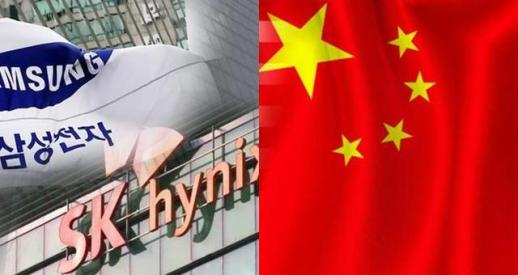 Chinese Workers Demand Bonus Increases from Samsung and SK Hynix Samsung Electronics and SK Hynix are facing demands for bonus increases from their local employees in China, prompting reactions from South Korean netizens. On May 6, New Daily reported that employees at Samsung's semiconductor plant in Xi'an and SK Hynix's facility in Wuxi are advocating for higher bonuses. An industry insider noted, "Local hires at overseas subsidiaries are aware of how much headquarters employees earn, which is why they are clamoring for more bonuses. News about Samsung and SK Hynix's performance and bonuses is circulating on Chinese portals like Baidu." The report also mentioned that an SK Hynix representative stated, "We operate our bonus system according to the characteristics of each country." According to New Daily, SK Hynix is aware of the demands for bonus increases from its local hires in China. The Wuxi plant is a critical site, responsible for about half of the company's DRAM production, and it is estimated that at least 4,000 employees work there. In response to the news, South Korean netizens expressed negative opinions. Comments included, "It's chaos everywhere," "The yellow envelope law is causing a mess in no time," and "Those who think subcontractors should receive bonuses probably believe the same should apply to China." Other reactions included, "People are making a fuss both inside and outside the country," and "Did they return their salaries when the market was bad? Investors understand the risks they took, but it's frustrating," along with remarks about a global trend of seeking bonuses. 2026-05-06 15:56:40
 -
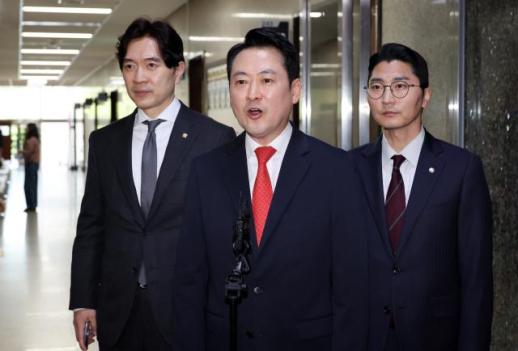 National Assembly Speaker Woo asks People Power Party leader Jang to back constitutional amendment vote National Assembly Speaker Woo Won-shik on May 6 again asked People Power Party leader Jang Dong-hyeok to cooperate on a floor vote on a constitutional amendment bill, a day before it is to be brought to the plenary session. Jang reaffirmed his opposition, saying it is not appropriate to discuss constitutional revision while the ruling party is pursuing what he called an unconstitutional special counsel probe. Woo visited the People Power Party leader’s office at the National Assembly and met with Jang. After the meeting, Woo told reporters he had asked for cooperation ahead of the May 7 vote on the amendment. Jang was reported to have reiterated that his party’s position is to oppose the amendment bill. He also cited the Democratic Party’s April 30 introduction of a special counsel bill titled the “special counsel bill to uncover the truth behind allegations of manipulated investigations and indictments by the Yoon Suk Yeol administration,” and voiced strong opposition to moving ahead with constitutional revision. Speaking to reporters, Jang criticized what he described as unconstitutional moves, including increasing the number of Supreme Court justices, adopting a four-tier court system and a “special counsel to cancel indictments.” “It is contradictory and unacceptable to even talk about constitutional revision while engaging in such unconstitutional behavior,” he said. “More important than constitutional revision is an attitude of respecting the current Constitution.” Lawmakers from six parties excluding the People Power Party — the Democratic Party, the Rebuilding Korea Party, the Progressive Party, the New Reform Party, the Social Democratic Party and the Basic Income Party — along with independents, totaling 187 lawmakers, introduced the constitutional amendment bill on April 3. The bill would add the spirit of the Bu-Ma Democratic Protests and the May 18 Democratization Movement to the Constitution’s preamble and strengthen National Assembly control over a president’s declaration of martial law. The People Power Party has opposed the bill, calling instead for a special committee on constitutional revision to be formed after the June 3 local elections to discuss the issue comprehensively. Woo and the six parties backing the bill favor a “step-by-step” approach, revising provisions that draw no disagreement first. Woo and the Democratic Party plan to submit the amendment bill to the plenary session on May 7, aiming to hold a national referendum on the amendment at the same time as the June 3 local elections. With the People Power Party opposing the bill as a party line, however, passage remains uncertain. Approval requires support from at least two-thirds of all lawmakers. The National Assembly currently has 286 members, meaning 191 votes are needed. Assuming independent lawmaker Kang Sun-woo, who is in detention, cannot vote, at least 12 People Power Party lawmakers would need to support the bill.* This article has been translated by AI. 2026-05-06 15:55:43
 -
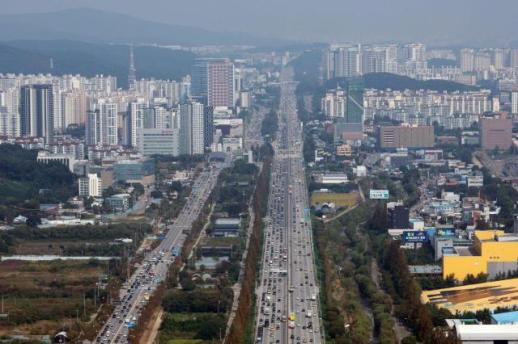 Yongin’s Suji District Home Prices Rise 2.7 Times Faster Than Seoul, Data Show Seoul apartment prices are still rising but have cooled somewhat, while prices in some key residential areas of Gyeonggi Province are climbing faster. As housing costs in Seoul remain high, end-users are shifting demand to major Gyeonggi markets rather than to the far outskirts of the capital region, adding upward pressure on prices. According to the Korea Real Estate Board’s weekly apartment price trends released Tuesday, apartment sale prices in Suji District of Yongin were up 7.24% year to date, about 2.7 times Seoul’s average increase of 2.65%. The industry attributed Suji’s jump largely to a shortage of listings, especially around station areas with large complexes and relatively new buildings, as demand pushed out of Seoul added to competition. While Gyeonggi’s average gain remains below Seoul’s, buying has concentrated in areas like Suji that combine transportation, schools and daily-life infrastructure. Demand has been boosted by Suji’s access to Seoul’s Gangnam area via the Shinbundang Line, along with preferences for strong school districts, settled living conditions and newer or near-new apartment complexes. With prices in Seoul’s prime neighborhoods staying high, buyers seeking more space or newer housing within the same budget have been moving into southern Gyeonggi. Suji is also favored by commuters because of its relatively convenient access to Gangnam. The Shinbundang Line has reinforced that demand. Residential preference is strong along stations including Dongcheon, Suji-gu Office, Seongbok and Sanghyeon, with comparatively short travel times to Gangnam and proximity to the Pangyo, Bundang and Gwanggyo areas. The Korea Real Estate Board said in its fourth-week-of-April report that Suji rose mainly on gains in major complexes in Seongbok and Sinbong. Schools and local amenities have also supported demand. The Seongbok, Sinbong and Sanghyeon areas are seen as having solid education demand and good access to large retail facilities, green space and everyday conveniences. Analysts said that helped keep would-be buyers on the sidelines during the market’s adjustment period, and that prices then rose quickly as the market recovered. Elsewhere, Suwon’s Yeongtong District rose 3.67%, also outpacing Seoul’s average. Hwaseong’s Dongtan District was up a cumulative 2.88% after an administrative boundary change in February. The Korea Real Estate Board said Yeongtong rose mainly in relatively new complexes in Mangpo and Woncheon. Gyeonggi’s strength is also reflected in population movement. In the first quarter, 83,984 people moved from Seoul to Gyeonggi, up about 31% from the previous quarter. It was the highest level since 85,481 in the fourth quarter of 2021. The shift is being read as Seoul residents moving out as housing costs and purchasing limits weigh on buyers. The market view is that as Seoul’s price burden grows, end-user demand is spreading into southern Gyeonggi areas with strong transportation links and living infrastructure. Suji, Yeongtong and Dongtan are often cited as places where access to Seoul and job-housing proximity both support demand. Analysts said that with Seoul’s key districts already at high price levels, buyers are looking to Gyeonggi for larger homes or newer and near-new complexes within the same budget. Still, not all of Gyeonggi is rising. Over the same period, Gyeonggi’s average increase was 1.54%, below Seoul’s 2.65%. Some areas, including Icheon and Yeoju, posted weekly declines. That suggests the rise is less a broad-based rebound than localized gains in a handful of in-demand districts. Even if Seoul’s pace continues to slow, upward pressure in Gyeonggi’s core markets is expected to persist for now. A real estate industry official said buying demand is flowing into areas with good access to Seoul and solid living conditions, but added that places with sharp short-term gains could see widening differences by district as loan burdens grow and buyers turn cautious.* This article has been translated by AI. 2026-05-06 15:50:14
 -
 South Korea Inflation Hits 19-Month High as Growth Picks Up, Raising Rate-Hike Talk Rising consumer prices and stronger-than-expected growth are fueling debate over whether the Bank of Korea may shift toward tighter monetary policy. While a hold in the benchmark rate is widely expected this month, markets are increasingly focused on when a hike could come. According to the National Data Agency on the 6th, consumer prices in April rose 2.6% from a year earlier, the highest increase since July 2024, when inflation was also 2.6%. The central bank expects upward pressure on prices to persist for now. At a price review meeting that day, Senior Deputy Gov. Yoo Sang-dae said May inflation is likely to accelerate as oil prices remain elevated and base effects from agricultural, livestock and fisheries products add to the increase. Against that backdrop, the Monetary Policy Board is seen as likely to keep the benchmark rate unchanged at its meeting on the 28th. The Bank of Korea has held the rate at 2.50% after cutting it four times from October 2024 through May last year. Still, a revision to the inflation path appears unavoidable. The bank has projected inflation of 2.2% this year and 2.0% next year, but those forecasts were issued in February, before the Middle East war. With oil prices rising, the inflation outlook in this month’s economic projections is likely to be revised higher. Minutes from last month’s policy meeting show differing views inside the board. Some members said it would be desirable to maintain a wait-and-see stance for the time being. Yoo, speaking recently at a news briefing during the Asian Development Bank’s annual meeting, said it was time to consider raising rates. Growth data are also adding to pressure for a shift. The preliminary estimate for first-quarter real gross domestic product showed 1.7% growth from the previous quarter, far above the Bank of Korea’s forecast of 0.9%, prompting assessments that the case for maintaining an accommodative stance has weakened. Global investment banks have also raised their growth forecasts. JPMorgan (3.0%), Citi (2.9%) and BNP Paribas (2.7%) project growth up to 1.0 percentage point above the Bank of Korea’s 2.0% outlook. External conditions remain challenging. The U.S. Federal Reserve, at last month’s Federal Open Market Committee meeting, upgraded its assessment of inflation to “high” and stressed increased uncertainty. This month’s meeting is also drawing attention as the first under Gov. Shin Hyun-song, who is viewed as a “pragmatic hawk,” raising market interest in whether any signal of a policy shift will emerge. Some in the market are placing more weight on the possibility of a rate hike as early as the third quarter. Cho Yong-gu, a researcher at Shinyoung Securities, said inflation could rise to around 3% from May through August due to the fallout from the Middle East war, and forecast a 25-basis-point hike in August. He added that any additional increases would likely come in the first half of next year, and that the Bank of Korea could opt for a stance of strategic patience.* This article has been translated by AI. 2026-05-06 15:49:12
 -
 Why More Vietnamese Students Are Being Denied South Korea Study Visas Interest among Vietnamese students in studying in South Korea is rising, but tougher visa reviews are also increasing the number of applicants who fail financial screening, Vietnamese media reported. The trend is fueling calls for clearer, more accurate guidance on study requirements. Citing multiple Vietnamese outlets including VnExpress, reports on May 5 (local time) said statistics released in March by the Korea Immigration Service under the Ministry of Justice showed the number of international students in South Korea had topped 310,000. Vietnamese students ranked first at about 110,000. As the student population grows, the share of rejected study-visa applications is also rising. Reports said rejections are especially common when applicants fail to meet requirements for proof of funds or submit study plans that do not satisfy screening standards. The South Korean Embassy in Vietnam announced March 20 that it would strengthen financial reviews for study-visa applications, a step aimed at preventing illegal stays. Experts said applicants can be flagged as high risk even if other conditions are met when bank accounts are opened late, account balances do not match actual income, or the source of funds is unclear. They also cited factors that can weaken an application, including long gaps in schooling, an unexplained low GPA, weak interview answers, and limited understanding of the school being applied to. Ha Thi Phuong, head of CMTC Vietnam, a consulting firm that provides financial-document services for Vietnamese students, said more than half of her clients run into problems because bank accounts are set up incorrectly, creating inconsistencies across documents. “Many applicants go back and forth between banks, notary offices and study-abroad agencies several times, but still end up unable to complete the paperwork properly,” she said. She added that visa officers focus less on the balance itself than on how the money was accumulated. “They place more weight on how long the funds have been deposited and on the family’s actual household income and overall financial situation,” she said. Whether the account is in the student’s name or a parent’s name can also matter. For applicants under 18, using a parent’s account is often legally advantageous, while some adult students choose accounts in their own names. Timing can be critical as well, because some schools or consulates accept only balance certificates issued close to the submission deadline. Reports warned that even a small error can quickly lead to a denial or a delayed review. Need grows for accurate study-abroad information↑ Against that backdrop, interest is increasing in reliable information about studying in South Korea. From April 20 to 26, YT Korea, a study-abroad consulting organization, held the “1st Korea Education Seminar 2026” in major Vietnamese cities including Hanoi, Nghe An, Ho Chi Minh City and Da Lat, drawing attention, reports said. Representatives from Silla University, Busan University of Foreign Studies, Kyungnam College of Information & Technology, Busan Catholic University and Ulsan College attended in person. Students asked questions on the spot about admissions requirements, scholarships, and education and living conditions in South Korea. An organizer at the Nghe An event said interest was particularly strong in the possibility of obtaining an E-7 visa and permanent residency after graduating in technology and engineering fields. Organizers said the event aimed to move students and parents beyond choosing schools based on trends and toward planning for careers and permanent residency. Bui Thi Tam, a representative of the organizer, said, “In each region, our goal was not simply to pick a school, but to draw a future roadmap together for each student.” She added, “YT Korea promises to stay with students from the moment they begin learning Korean in Vietnam until they settle in Korea and find formal employment.” Reports said one-on-one consultations continued throughout the event, and the final stop in Da Lat drew hundreds of application registrations. With study-visa screening becoming more stringent, experts advised students to begin financial preparations at least six months to a year in advance and to ensure consistency across documents, saying it is the fastest way to save both time and money.* This article has been translated by AI. 2026-05-06 15:42:18
 -
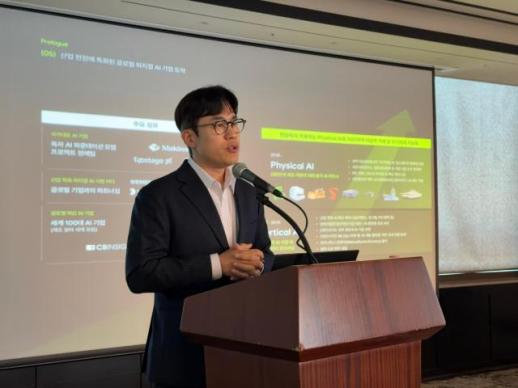 MachinaRocks Lays Out KOSDAQ IPO Plan, Pitches On-Site AI Operating System MachinaRocks, which is set to list on the KOSDAQ on the 20th, outlined a growth strategy centered on what it calls “on-site AI” at an IPO news conference. The company said it aims to expand its market with an AI operating system designed to run in industrial settings such as manufacturing and defense. CEO Yoon Sung-ho said the company’s core product, the AI operating system “Runway,” will serve as a platform to integrate and manage how companies use foundation models in their own environments. “As the AI market changes rapidly, companies want to use foundation models in ways that fit their own settings,” Yoon said at the event held Tuesday at 63 Square in Seoul. “Runway will take on the role of a platform that can integrate and manage that.” Yoon said a key differentiator is that the operating system can run on closed networks as AI moves beyond computers and into real-world industrial sites. He also drew a line between MachinaRocks and global big tech firms such as Nvidia, Microsoft and OpenAI, emphasizing a focus on field operations. “Global big tech companies are also entering physical AI, but for now they are focused on cloud-based decision support or the research stage,” Yoon said. “MachinaRocks is focused on operating in real time at sites such as factories or battlefields on closed networks where connectivity is cut off.” He said the company’s competitiveness is backed by more than 6,000 references built while meeting high security requirements in manufacturing and defense. MachinaRocks also detailed its overseas strategy, naming Japan as its top priority. The company said it signed contracts with four “1 trillion won club” companies within a year of establishing its Japan unit. “Japan, with a similar manufacturing structure and a large market, is the region where we can deliver results the fastest,” Yoon said. He said the company will focus on Japan and Europe for the time being and raise the share of global sales to about 20% to 30% by 2030. He said North America will be pursued after strengthening fundamentals, while the Middle East will be explored through participation in national strategic projects. The company said proceeds from the IPO will be concentrated on upgrading Runway. It plans to develop a “Dark Factory OS” for autonomous manufacturing and a defense-focused “Defense OS” to strengthen competitiveness and speed global expansion. To companies hesitant to adopt AI, Yoon pointed to references and measurable results. “Customers in manufacturing and defense place the greatest importance on cases where real economic effects have been proven,” he said. “MachinaRocks is competitive in that we can present verified results in numbers, such as cost reductions or productivity gains.” MachinaRocks set an IPO price band of 12,500 won to 15,000 won and plans to take retail subscriptions May 11-12 before listing on the KOSDAQ on the 20th.* This article has been translated by AI. 2026-05-06 15:40:18
 -
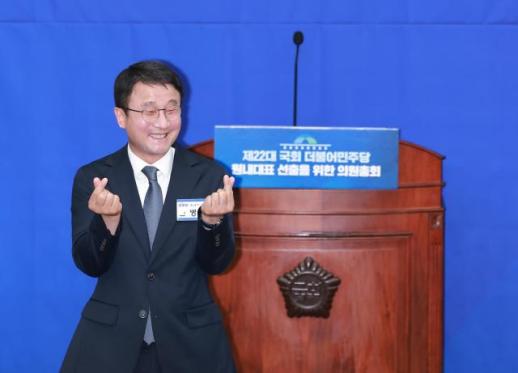 Democratic Party Reelects Han Byung-do as Floor Leader, a First for the Party Democratic Party lawmaker Han Byung-do, who ran unopposed, was elected floor leader on May 6. He is the first floor leader in the party to win a second consecutive term. The party held a lawmakers’ meeting at the National Assembly and conducted a confidence vote on Han. He won a majority under the party’s rules, which combine 80% of lawmakers’ votes and 20% of votes from dues-paying party members. The exact vote totals were not released under election regulations. Party leader Jung Cheong-rae called it a “clean election” without negative campaigning and described Han as “a leader with a gentle temperament, flexible leadership and strong attention to detail.” Election committee chair So Byeong-hoon said the party debated how to handle an uncontested race but decided to hold a vote because party members participate in the process. Ahead of the vote, Han said “this is the golden time,” pledging to “maximize the governing momentum of the Lee Jae-myung government” with bold leadership and to be a floor leader who shares lawmakers’ legislative work and concerns. In his acceptance speech, he said he would finish all legislation tied to the government’s policy agenda by the end of the year. Han began his duties immediately. With a National Assembly plenary vote on a constitutional amendment bill scheduled for May 7, he is expected to take a leading role. With National Assembly Speaker Woo Won-shik holding a surprise meeting ahead of the lawmakers’ session with Jang Dong-hyuk of the People Power Party, there is also talk that Han and PPP floor leader Song Eon-seok could coordinate positions before the plenary session. Han is also expected to negotiate the content and timing of a controversial special counsel bill on alleged fabricated prosecutions. President Lee Jae-myung said on May 4 that the bill requires public input and deliberation. With disagreements emerging within the party over timing, Han said immediately after his election that it would be handled after the local elections. Another major task is whether to allow prosecutors to retain supplementary investigative powers, a key flashpoint in prosecutorial reform. The party previously passed bills to create a Major Crimes Investigation Agency and a Prosecution Service, but delayed further action after internal conflict over supplementary investigative authority. Lee has said prosecutors need such powers in exceptional cases, while hard-liners in the party argue they should not be allowed at all. Han also holds authority over the makeup of standing committees for the second half of the term. He has warned that if committees chaired by People Power Party lawmakers fail to function and obstruct state affairs, the Democratic Party could consider taking all chair posts. Han was elected in a January by-election and led the parliamentary caucus for 101 days before resigning on April 21 to run again. He has been credited with stabilizing the caucus after former floor leader Kim Byung-ki resigned abruptly amid various allegations. * This article has been translated by AI. 2026-05-06 15:39:14
 -
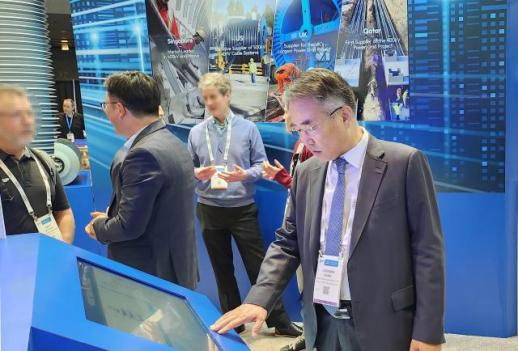 Taihan targets North American grid investment with HVDC and subsea cables Taihan Electric Wire said it is stepping up its push into the North American power-infrastructure market, highlighting high-voltage direct current (HVDC) and subsea cable technologies. The company said Tuesday it is taking part in the 2026 IEEE PES T&D exhibition in Chicago from May 4 to 7. The event is the largest U.S. gathering in the transmission and distribution sector, bringing together power-equipment makers, utilities and related organizations. Taihan said it is featuring HVDC cables, subsea cables and technologies for replacing aging power grids, focusing on areas where it sees strong project potential as electricity demand rises, renewable energy expands and existing grids age across North America. HVDC was the main focus. Citing its experience supplying 320kV-class HVDC cables in the United States, Taihan introduced solutions for 525kV-class underground and subsea HVDC cables. It also put forward a 525kV-class HVDC subsea cable that it said could be applied to South Korea’s “West Coast Energy Highway” project, underscoring its ability to serve long-distance, large-capacity transmission needs. The company also outlined plans to expand its subsea cable business. Taihan shared its domestic and overseas order track record and provided an update on construction of its second subsea cable plant in Dangjin, which it is pursuing with a target completion in 2027. It also introduced the “Palos” cable-laying vessel dedicated to offshore wind projects and its subsea cable installation subsidiary, Daehan Ocean Works, emphasizing end-to-end capabilities from manufacturing to installation. Solutions for replacing aging grids were also highlighted. Taihan said the technology can increase transmission capacity while using existing conduits, making it suitable for the U.S. market, where demand for grid reinforcement is high. The industry expects demand for related equipment to rise quickly as AI data centers expand and electrification increases pressure to add grid capacity in the United States. Industry observers also say regional transmission bottlenecks are worsening as AI data centers concentrate in areas including Virginia and Texas, potentially accelerating demand for extra-high-voltage cables and substation equipment replacements. For Taihan, securing U.S. references could serve not only to win orders but also as a prequalification factor for future utility tenders, the company said. Song Jong-min, Taihan’s vice chairman, visited the exhibition and met with major North American utilities and business partners. The company said Song reviewed ongoing business with local subsidiary staff and discussed ways to expand cooperation. “North America is seeing rapid market growth as grid investment expands and renewable energy spreads at the same time,” Song said. “Based on the experience and references we have built in the United States, we will continue to expand results in key areas such as HVDC, subsea cables and solutions for aging power grids.”* This article has been translated by AI. 2026-05-06 15:34:09