

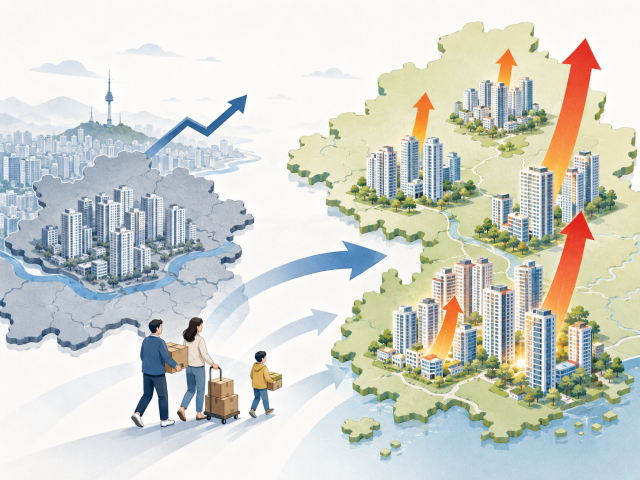
Seoul apartment prices are still rising but have cooled somewhat, while prices in some key residential areas of Gyeonggi Province are climbing faster. As housing costs in Seoul remain high, end-users are shifting demand to major Gyeonggi markets rather than to the far outskirts of the capital region, adding upward pressure on prices.
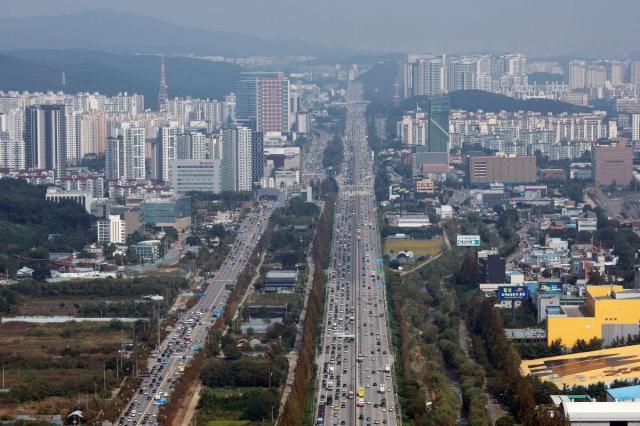
According to the Korea Real Estate Board’s weekly apartment price trends released Tuesday, apartment sale prices in Suji District of Yongin were up 7.24% year to date, about 2.7 times Seoul’s average increase of 2.65%. The industry attributed Suji’s jump largely to a shortage of listings, especially around station areas with large complexes and relatively new buildings, as demand pushed out of Seoul added to competition. While Gyeonggi’s average gain remains below Seoul’s, buying has concentrated in areas like Suji that combine transportation, schools and daily-life infrastructure.
Demand has been boosted by Suji’s access to Seoul’s Gangnam area via the Shinbundang Line, along with preferences for strong school districts, settled living conditions and newer or near-new apartment complexes. With prices in Seoul’s prime neighborhoods staying high, buyers seeking more space or newer housing within the same budget have been moving into southern Gyeonggi. Suji is also favored by commuters because of its relatively convenient access to Gangnam.
The Shinbundang Line has reinforced that demand. Residential preference is strong along stations including Dongcheon, Suji-gu Office, Seongbok and Sanghyeon, with comparatively short travel times to Gangnam and proximity to the Pangyo, Bundang and Gwanggyo areas. The Korea Real Estate Board said in its fourth-week-of-April report that Suji rose mainly on gains in major complexes in Seongbok and Sinbong.
Schools and local amenities have also supported demand. The Seongbok, Sinbong and Sanghyeon areas are seen as having solid education demand and good access to large retail facilities, green space and everyday conveniences. Analysts said that helped keep would-be buyers on the sidelines during the market’s adjustment period, and that prices then rose quickly as the market recovered.
Elsewhere, Suwon’s Yeongtong District rose 3.67%, also outpacing Seoul’s average. Hwaseong’s Dongtan District was up a cumulative 2.88% after an administrative boundary change in February. The Korea Real Estate Board said Yeongtong rose mainly in relatively new complexes in Mangpo and Woncheon.
Gyeonggi’s strength is also reflected in population movement. In the first quarter, 83,984 people moved from Seoul to Gyeonggi, up about 31% from the previous quarter. It was the highest level since 85,481 in the fourth quarter of 2021. The shift is being read as Seoul residents moving out as housing costs and purchasing limits weigh on buyers.
The market view is that as Seoul’s price burden grows, end-user demand is spreading into southern Gyeonggi areas with strong transportation links and living infrastructure. Suji, Yeongtong and Dongtan are often cited as places where access to Seoul and job-housing proximity both support demand. Analysts said that with Seoul’s key districts already at high price levels, buyers are looking to Gyeonggi for larger homes or newer and near-new complexes within the same budget.
Still, not all of Gyeonggi is rising. Over the same period, Gyeonggi’s average increase was 1.54%, below Seoul’s 2.65%. Some areas, including Icheon and Yeoju, posted weekly declines. That suggests the rise is less a broad-based rebound than localized gains in a handful of in-demand districts.
Even if Seoul’s pace continues to slow, upward pressure in Gyeonggi’s core markets is expected to persist for now.
A real estate industry official said buying demand is flowing into areas with good access to Seoul and solid living conditions, but added that places with sharp short-term gains could see widening differences by district as loan burdens grow and buyers turn cautious.
* This article has been translated by AI.
Copyright ⓒ Aju Press All rights reserved.