
Journalist

Lee Jai-hee
-
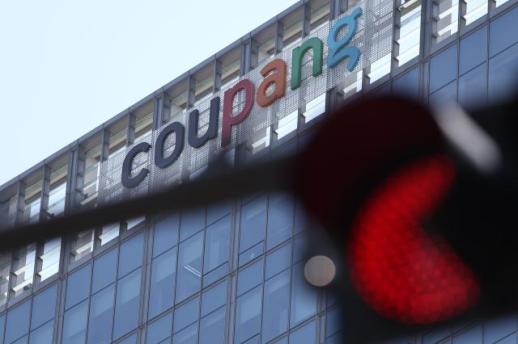 Complaints involving online platforms surge, with Coupang most frequent SEOUL, May 13 (AJP) - A record number of disputes and similar cases were handled last year, driven largely by a sharp increase in online platform-related complaints, with Coupang accounting for the largest among platform operators, the Korea Fair Trade Mediation Agency (KFTMA) said on Wednesday. According to the agency, the number of such cases stood at 4,726 in 2024, up 17 percent from 4,041 a year earlier, the highest level since relevant statistics began being compiled in 2008. Among them, some 1,709 cases, or about 39 percent, were resolved successfully, up 18 percent from the previous year. The total amount of direct and indirect financial relief provided through mediation reached 122 billion won ($818.3 million). Fair trade-related disputes accounted for the largest proportion at 2,424 cases, seeing the sharpest increase of 35 percent from a year earlier, followed by those involving subcontractors with 1,040, franchise businesses with 691, and contract terms and conditions with 451. Notably, disputes involving online platforms rose 32 percent to 440 cases during the same period. The number has continued to grow steadily, quadrupling from 111 cases in 2022. Among online platform operators, Coupang-related disputes were the most frequent, with 203 cases. Franchise business disputes also rose 18 percent to 584 cases. Disputes between convenience store franchisees and franchisors accounted for the largest share at 242 cases. By contrast, cases involving subcontractors fell 6 percent from 1,105 cases. The decline was largely attributed to a drop in construction-sector disputes, which decreased 10 percent from 660 to 593 cases. The agency said the overall slowdown in the housing construction sector appeared to have reduced related disputes. Complaints involving contract terms remained largely unchanged, edging down from 457 to 451. Among them, disputes over penalties for early termination of rental contracts were the most common at 124 cases. The KFTMA is a state-run agency that helps resolve business disputes involving unfair trade practices through deliberations by a group of experts. Any complaints or cases can be brought directly by businesses and individuals or referred by the Fair Trade Commission (FTC). 2026-05-13 16:35:48
 -
 Samyang Foods hits record Q1 on Buldak demand SEOUL, May 13 (AJP) - Samyang Foods reported its highest-ever quarterly earnings for the first quarter of 2026, lifted by resilient overseas demand for its Buldak instant noodles, expanded production capacity and a favorable exchange rate. The South Korean noodle maker announced Wednesday through regulatory filings that consolidated revenue rose 35 percent from a year earlier to 714.4 billion won ($480.1 million), while operating profit climbed 32 percent to 177.1 billion won. Both figures marked all-time quarterly highs. Overseas sales, which drove the growth, surged 38 percent on year to 585 billion won as higher utilization at the company's second Miryang plant unlocked additional supply for fast-growing markets in Europe and the Americas. Europe led the charge with a 215 percent jump in revenue to 77 billion won, aided by the launch of a UK subsidiary and broader placement in mainstream retail channels in Germany, the Netherlands and other Western European markets. Sales in the United States, Samyang's largest export market, rose 37 percent to 185 billion won, and China revenue climbed 36 percent to 171 billion won. The operating margin came in at 24.8 percent, the fifth straight quarter above 20 percent, as steady offshore demand combined with a weaker won amplified profitability. The Korean currency traded near 1,486 per dollar this week amid Middle East tensions, sharpening the conversion benefit for exporters. "Despite a challenging external environment, we delivered strong results that once again validated the competitiveness of the Buldak brand and the durability of our growth," said a Samyang Food spokesperson, adding that the company will focus this year on strengthening its global operations and expanding production and sales infrastructure. Shares of Samyang Food ended at 1,359,000 won per share, 2.1 percent higher than a day before. 2026-05-13 16:18:50
 -
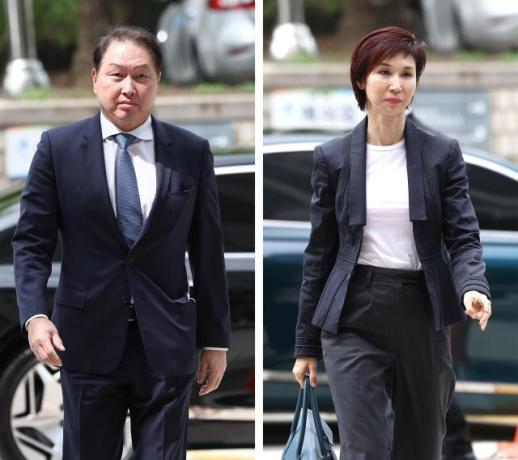 Ex-SK couple enters court-led mediation over billion-dollar asset split SEOUL, May 13 (AJP) - SK Group chairman Chey Tae-won and his estranged wife Roh Soh-yeong entered a court-led mediation process on Wednesday in South Korea's closely watched "divorce of the century" battle over one-billion-dollar property split. The Seoul High Court's family division held the first hearing in the remand trial at 10 a.m. Wednesday and wrapped up the session about an hour later after hearing positions from both sides. The court said it would hold another mediation session at the earliest possible date when both parties can attend. Roh dressed in black appeared in person alongside her legal team, while Chey was represented only by attorneys. Speaking briefly to reporters before entering the courthouse, Roh declined to answer questions on whether the recent surge in SK Group shares should be reflected in the property division or whether negotiations had made progress. The mediation follows a Supreme Court ruling last year partially overturning an appellate court decision that ordered Chey to pay Roh about 1.38 trillion won ($1 billion) in property division, one of the largest divorce settlements ever seen in South Korea. In October last year, the Supreme Court upheld the couple's divorce and a separate 2 billion won ($1.4 million) alimony award, while sending the property division portion of the case back to the Seoul High Court for reconsideration. The remand trial is now focused solely on recalculating how much of Chey's assets should be shared with Roh. If mediation fails, the court is expected to issue a new ruling based on the Supreme Court’s guidance regarding the valuation of Chey's holdings and Roh's contribution to the accumulation of family wealth. The case has drawn intense public attention not only because of the massive scale of wealth involved, but also because it could set a major legal precedent for how South Korean courts recognize a spouse's indirect contribution to the rise of family-controlled conglomerates and inherited corporate wealth. Roh is the daughter of late former President Roh Tae-woo, who governed South Korea from 1988 to 1993 during a key period of the country's industrial expansion. She married Chey in 1988, before SK Group transformed into one of Asia's largest semiconductor and telecommunications conglomerates. Their marriage publicly unraveled in 2015 after Chey disclosed he had fathered a child outside the marriage and sought a divorce. Formal legal proceedings began in 2017 after earlier mediation attempts collapsed. In the first trial in 2022, a family court ordered Chey to pay Roh 66.5 billion won in property division and 100 million won in alimony, ruling that much of Chey's SK holdings could not broadly be considered jointly accumulated marital assets. But an appellate court sharply increased the amount in 2024, awarding Roh roughly 1.38 trillion won and 2 billion won in alimony after determining that Roh had contributed to the growth of SK Group and the appreciation in value of Chey's shares. The appellate court also acknowledged Roh's role in child-rearing, household management and public-facing responsibilities as the spouse of a chaebol chairman. However, the Supreme Court later ruled that 30 billion won in funds linked to former President Roh Tae-woo constituted illegal slush funds and therefore could not be counted as Roh's contribution to the formation of SK Group's wealth, sending the case back for another review. 2026-05-13 16:00:51
 -
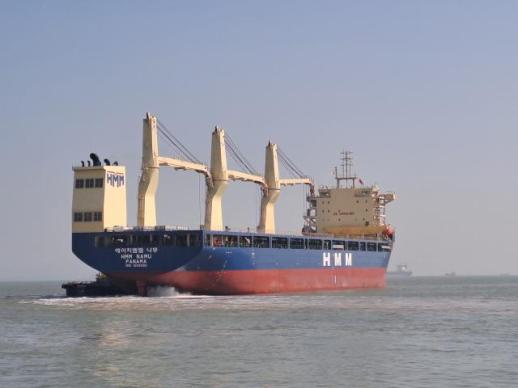 HMM Q1 profit slumps 56% on Mideast war, tariffs SEOUL, May 13 (AJP) - South Korea's largest container carrier HMM reported first-quarter operating profit tumbled 56 percent from a year earlier, hit by sliding freight rates on its core transpacific lanes, surging bunker fuel costs tied to the war in the Middle East and the lingering drag of U.S. tariffs. According to regulatory filings released Wednesday, operating profit fell to 269.1 billion won ($180.6 million) in the three months to March, from 613.9 billion won a year earlier. Revenue slipped 4.8 percent to 2.72 trillion won, while net profit dropped 52 percent to 353.6 billion won. The Shanghai Containerized Freight Index, a benchmark for global box rates, averaged 1,507 points in the quarter, down about 14 percent from a year earlier. Rates on HMM's flagship U.S. routes were hit far harder, plunging 38 percent on the West Coast and 37 percent on the East Coast as President Donald Trump's tariff regime continued to squeeze China-U.S. cargo volumes. The Iran war, which has largely shut the Strait of Hormuz since late February, has rippled through the industry by tightening bunker fuel supplies and lifting oil prices. The price of Singapore 380 CST bunker, a key fuel for large vessels, climbed about 9% to $530 per ton from $486 a year earlier. The crisis hit even closer to home on May 4, when the HMM Namu, a multipurpose carrier operated by the company, was struck by two unidentified flying objects while anchored off the United Arab Emirates, injuring one crew member. "The conflict has driven almost all global shipping lines deeper into the red," said HMM CEO Choi Won-hyok during a press conference concerning the relocation of its headquarters to Busan. The first quarter is traditionally a seasonal trough for container demand, and HMM said it still posted an operating margin of 9.9 percent, among the highest of major global carriers. The company plans to optimize fuel costs, open new African routes under a "hub-and-spoke" strategy and secure long-term bulk contracts. Shares of HMM ended at 19,830 per stock, 0.15 percent higher than the day before. 2026-05-13 15:45:10
 -
 Nongshim's Shin Ramyun marks 40 years with 20 trillion won in cumulative sales SEOUL, May 13 (AJP) - Instant noodle maker Nongshim has achieved a milestone of more than 20 trillion won (about US$13.8 billion) in cumulative sales of its flagship Shin Ramyun since it first went on sale about 40 years ago, the company said on Wednesday. First hitting store shelves in October 1986, Shin Ramyun became the top-selling instant noodle brand in South Korea in 1991 and has held the top spot ever since, with cumulative sales volume reaching about 42.5 billion packs. "It is proof that we have been part of consumers' daily lives in South Korea as well as around the world for 40 years," said CEO Jo Yong-chul at an event in Seoul, touting it as a "rare milestone for a single food brand" in the country. "What Shin Ramyun has built is ultimately time, memories, and moments in people's lives," he added. He then recalled the late Shin Choon-ho, the company's founder, citing him as saying, "Korean flavors will become the most global flavors." Cho also unveiled ambitious plans to raise sales to 7.3 trillion won by 2030 while increasing the share of overseas revenue to more than 60 percent. He pointed to the upcoming completion of an export-dedicated factory in Busan, the company's expanding confectionery business in the U.S. market, and diversification into new business areas as reasons for optimism. The company has also been boosting its global marketing and promotional activities. "Shin Ramyun has become a product representing Korean culture beyond just food," a Nongshim executive said, citing its first advertisement featuring K-pop girl group aespa, which drew more than 500 million views worldwide shortly after its release. To mark the 40th anniversary, a new product called "Shin Ramyun Rose" is set to go on sale next week in South Korea and Japan, with plans to expand into global markets starting in June. Nongshim said it spent about four years planning and developing the new variant, which blends tomato and cream sauces for a milder taste compared with the signature spicy original, in a bid to broaden its appeal to overseas consumers. The company also plans to open space in Seoul's hip, trendy neighborhood of Seongsu next month, where young people and foreign visitors can sample its products. "Today's consumers are not just looking for one tasty product," Cho said, stressing a multi-faceted approach to meet their diverse needs, whether health-conscious, convenience-seeking, or culturally driven. "Nongshim will become a company that can satisfy any consumer taste through noodles, no matter what flavors they want," he vowed, reminding that its achievement of exporting to about 100 countries and becoming a top-five brand in the global instant noodle market did not come easily. 2026-05-13 15:42:31
 -
 South Korea launches expert council to chart AI-driven future SEOUL, May 13 (AJP) - South Korea convened the inaugural meeting of a new expert advisory body tasked with shaping the government's policy response to artificial intelligence and the sweeping societal shifts it is expected to bring. The Ministry of Science and ICT said Wednesday its special council for technology and artificial intelligence met for the first time at the Presidential Advisory Council on Science & Technology in Gwanghwamun, Seoul, drawing 17 specialists from fields spanning the economy, industry, education, healthcare, culture and law. The ministry said the cross-disciplinary lineup was designed to dissect how cutting-edge technologies intersect with each sector and to forecast the future through a wider analytical lens than a purely scientific panel would allow. The council will convene quarterly, with its membership set to expand to capture a wider range of voices, while agendas identified at the sessions will be developed into in-depth studies released as a "Future Agenda Series" in cooperation with affiliated research institutes, the ministry said. Cross-ministerial issues will be escalated to the Science and Technology Ministers' Meeting to secure follow-through on policy. "Advances in cutting-edge technologies such as AI are accelerating, and technological innovation is fundamentally reshaping not only industries but also national systems and daily life," said Bae Kyung-hoon, Deputy Prime Minister and Minister of Science and ICT, pledging to "tear down the wall between the public and private sectors" and pool expertise to design a hopeful blueprint for future generations. 2026-05-13 15:12:10
 -
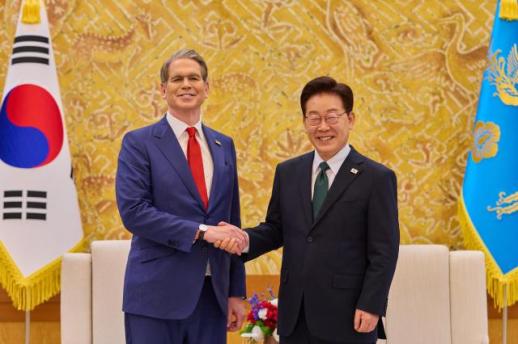 Lee hosts U.S., Chinese economic chiefs ahead of Trump-Xi summit SEOUL, May 13 (AJP) - President Lee Jae Myung on Wednesday had back-to-back meetings with U.S. Treasury Secretary Scott Bessent and Chinese Vice Premier He Lifeng, who visited South Korea just a day before the scheduled U.S.-China summit in Beijing. According to the presidential office, Lee met He and Bessent separately on Wednesday morning. Following their meetings with the president, the two officials united at Incheon International Airport for last-minute fine-tuning ahead of the summit between the United States and China, set to take place in Beijing from Thursday. During the meeting with Bessent, Lee reportedly explained the South Korean government's commitment to implementing investments in the United States, including the MASGA project. It is also speculated that Lee requested cooperation on security and economic issues, such as the introduction of nuclear-powered submarines, which was previously discussed between the leaders of South Korea and the U.S. In the meeting with He - accompanied by Li Chenggang, China's international trade representative and vice minister of commerce - discussions reportedly centered on South Korea-China relations and economic cooperation measures. Lee referred to China as a key strategic cooperative partner for South Korea and emphasized the necessity of horizontal and mutually beneficial cooperation between the two nations. Bessent and He began a private meeting in the VIP lounge of Incheon International Airport around 12:30 p.m. Bessent arrived at Incheon Airport earlier in the morning, traveled to the Blue House to meet Lee, and then returned to the airport for the consultation. The two sides are expected to coordinate economic and trade issues, including tariffs and global supply chain stability, ahead of the summit. Both parties entered the meeting without making any public remarks. Bessent is flying to Japan to meet Finance Minister Satsuki Katayama before joining Trump in Beijing. 2026-05-13 15:04:57
 -
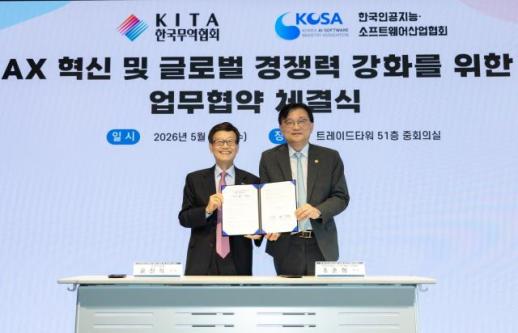 KITA and KOSA partner to accelerate artificial intelligence adoption in trade sector SEOUL, May 13 (AJP) - The Korea International Trade Association and the Korea Artificial Intelligence and Software Industry Association signed an agreement on May 13 to accelerate artificial intelligence transformation and enhance the global competitiveness of South Korean exporters. The two organizations established the partnership at the Trade Tower in Seoul to help businesses navigate changing international trade conditions, the Korea International Trade Association said Wednesday. A recent survey conducted by the Korea International Trade Association (KITA) highlighted a significant gap between the perceived importance of artificial intelligence and its actual implementation. Among 444 exporting firms surveyed between March 30 and April 10, 2026, only 17.9 percent of manufacturing companies reported using the technology in their operations. Under the new memorandum of understanding, the associations will launch a joint consultative body to facilitate business matching between member companies and foster specialized digital talent. The Korea Artificial Intelligence and Software Industry Association (KOSA) will work with KITA to organize networking events that connect export firms with software providers to identify practical technical solutions. The groups also plan to hold joint seminars and one-on-one technical consultations to share successful cases of digital transformation. These programs are designed to provide customized support for individual exporters looking to optimize supply chains and manage regulatory risks through digital integration. "From discovering overseas buyers to optimizing supply chains and predicting regulatory risks, the use of artificial intelligence in the export field is a task that can no longer be delayed," said KITA Chairman Yoon Jin-sik. KOSA Chairman Cho Jun-hee added that the joint consultative body will provide practical support to help software companies expand into the global market alongside the trade industry. 2026-05-13 14:52:35
 -
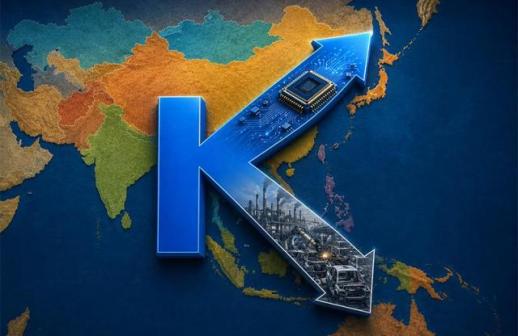 K-shaped economy deepens across Asia on AI momentum SEOUL, May 13 (AJP) - A widening economic divide is emerging across Asia, as semiconductor-driven economies such as South Korea and Taiwan ride record-breaking stock rallies while manufacturing-heavy nations including India, Thailand and the Philippines struggle under the weight of a historic oil shock. The bifurcation, sharpened by the near-total closure of the Strait of Hormuz, has produced what economists describe as a "K-shaped" recovery, in which the gains from the artificial intelligence boom and the pain of fuel scarcity move in opposite directions across the region. Taiwan’s first-quarter GDP expanded 13.69 percent, the fastest pace in 39 years, as its stock market surpassed Canada’s to become the world’s sixth largest. South Korea’s KOSPI has also overtaken the stock markets of London and Toronto, propelled by chipmakers Samsung Electronics and SK Hynix, whose first-quarter profits reached fresh records. Samsung’s market capitalization has climbed above $1 trillion, while Taiwan Semiconductor Manufacturing Company now accounts for more than 40 percent of the Taiwan Stock Exchange. A report by the United Nations Trade and Development projects the global AI market will expand to $4.8 trillion by 2033, roughly 25 times its 2023 size. A contrasting picture emerges in the south and west. In the Philippines, where more than 36 percent of the consumer price basket is linked to oil, fuel prices have surged past 100 pesos ($5.81) per liter. The central bank is weighing whether to raise interest rates to contain inflation or hold them steady to protect growth. Manila has also introduced a four-day workweek to curb fuel demand. Thailand has reported nationwide fuel shortages, while Pakistan has urged cricket fans to watch matches from home to conserve gasoline. The United Nations Development Programme estimates the war has placed about 8.8 million people in the Asia-Pacific at risk of falling into poverty and could shave 0.3 to 0.8 percentage point off regional GDP. At the heart of the divide is intensifying competition for medium and heavy crude oil, the grades that generate the highest refining margins and underpin Middle Eastern exports. Although the United States is the world’s largest oil producer, its output is heavily weighted toward light, sweet shale crude, leaving Asian refiners competing fiercely for sour crude from non-Hormuz suppliers. "Unless the war ends on reasonable and viable terms good enough to convince shipowners and insurance companies, it may be extremely difficult for oil prices to return to post-war levels even in the long run," said Chung Tae-hun, an associate research fellow at the Korea Energy Economics Institute. "We still face competition for heavy crude oil outside the Middle East if the war becomes prolonged, with China and Japan also bidding for supplies," he said. Brent crude hovered around $106 a barrel on Wednesday, while daily transits through the Strait of Hormuz fell to roughly 18 vessels from a prewar average of 135. The World Bank reported that by the end of March, Brent prices had risen about 65 percent, marking the largest monthly oil-price increase on record. The wealth generated by the AI boom has also failed to spread evenly within the region’s winning economies. In South Korea, more than 30,000 unionized workers at Samsung Electronics’ semiconductor division have scheduled a strike from May 21 to June 7 after wage negotiations collapsed Tuesday. The union is demanding a 15 percent operating-profit bonus and a 7 percent increase in base pay. JPMorgan Chase estimates the 18-day stoppage could reduce Samsung’s quarterly profits by as much as 12 percent. In Taiwan, the semiconductor industry employs only about 4 percent of the workforce, yet entry-level chip-sector salaries can be five times higher than wages in other industries, fueling concerns over growing inequality and economic concentration. Officials and analysts warn that the widening divergence could have consequences far beyond Asia. Deepening inequality threatens to weaken consumer spending, complicate monetary policy and disrupt global trade flows. Analysts also warn that the fuel shortage could soon become critical. "We are going to start to see some import-dependent countries potentially face critical shortages as we get into the June-July timeframe," said Andy O’Brien, chief financial officer of ConocoPhillips, during the company’s first-quarter earnings call. Valero Energy also warned of worsening supply pressures. Chief executive Lane Riggs said that for every day the strait remains closed, "it takes a minimum of three days to rebuild stocks," meaning it could take six to 12 months to fully replenish inventories. 2026-05-13 14:46:57
 -
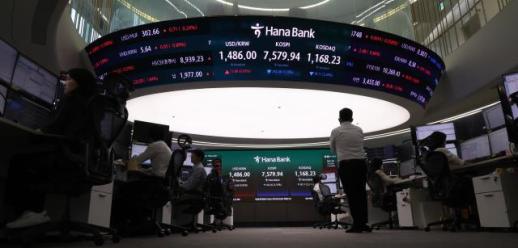 KDI bumps up 2026 growth estimate to 2.5%, chips drive half of upgrade SEOUL, May 13 (AJP) -State think tank Korea Development Institute on Wednesday projected South Korea’s economy to grow at its fastest pace in three years at 2.5 percent this year, while inflation is expected to accelerate to 2.7 percent — a combination suggesting the economy may sidestep stagflation fears for now even as growth momentum is likely to cool next year alongside moderating chip demand. At the same time, the institute warned inflation risks were intensifying from both demand and supply pressures and called for flexible monetary policy, including the possibility of interest rate hikes should inflation expectations become unstable. “Should the possibility of persistently high inflation increase, rates would need to rise,” KDI said in its revised economic outlook, while adding that uncertainty remains too high to determine the timing of any potential move. Its latest outlook marks a sharp 0.6 percentage-point upgrade from the institute’s February forecast issued before the outbreak of the Middle East conflict and reflects stronger-than-expected first-quarter growth, when the economy expanded 1.7 percent from the previous quarter. The state-run think tank raised its inflation forecast for this year by 0.6 percentage point, warning that rising global oil prices and recovering domestic demand were adding upward pressure on consumer prices. “The Korean economy has continued its recovery trend as growth expanded at a relatively strong pace, driven by the semiconductor boom and expanding domestic demand,” the KDI said. The KDI expects the economy to grow 1.7 percent in 2027, while describing both this year and next year as an expansionary phase because growth is projected to exceed the country’s estimated potential growth rate. Still, the recovery remains heavily skewed toward semiconductors. According to the KDI, semiconductor exports accounted for more than half of the upward revision in this year’s growth outlook. “Compared with the negative impact from the Middle East war, the positive effect from semiconductor exports was larger,” Jung Kyu-chul, head of KDI’s macroeconomic and financial policy division, said during a briefing in Sejong. “Out of the 0.6 percentage-point upward revision, semiconductors contributed more than 0.3 percentage point.” Jung estimated the Middle East war shaved roughly 0.5 percentage point off growth, while supplementary budget spending added about 0.2 percentage point. He added that surging semiconductor demand and supply shortages had sharply lifted chip prices, suggesting growth could improve further if production capacity expands more quickly. The KDI, however, warned that prolonged high oil prices could derail the outlook. The institute assumes Dubai crude will average $91 per barrel this year before easing to $82 next year, compared with $69 last year, while the won-dollar exchange rate is assumed to remain near the current 1,475 won level. The think tank projected exports would rise 4.6 percent this year on robust semiconductor demand before moderating to 2.2 percent next year, while the current account surplus is expected to reach a record $239 billion this year. Private consumption is forecast to increase 2.2 percent this year and 1.5 percent next year despite inflationary pressures from the Middle East conflict, supported by improving income conditions and government stimulus measures. Jung added that rising stock prices were also likely to support consumption through wealth effects. The KDI also projected employment would continue improving moderately, with the number of employed persons increasing by 170,000 in both this year and next year despite demographic changes. The institute additionally urged the government to focus fiscal spending on boosting potential growth and supporting vulnerable households while improving spending efficiency. It specifically called for reforms to basic pensions and local education subsidies, which are projected to exceed 100 trillion won next year. 2026-05-13 14:30:52