
Journalist

Lee Su Wan
-
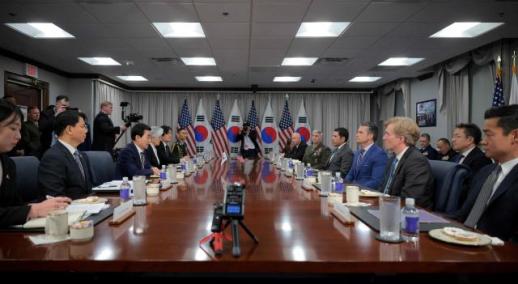 Seoul walks tightrope at Korea-U.S. defense talks amid Hormuz crisis SEOUL, May 12 (AJP) - South Korea and the United States used their first defense ministerial meeting in six months to steady alliance coordination at a moment when the widening Iran conflict and mounting U.S. pressure over the Strait of Hormuz are testing Seoul’s strategic balancing act. The talks between South Korean Defense Minister Ahn Gyu-back and U.S. Secretary of War Pete Hegseth at the Pentagon came as Washington intensifies calls for allies, including Seoul, to play a more proactive role in reopening the Strait of Hormuz following attacks on commercial shipping and escalating Iranian threats. The backdrop to the meeting was the recent strike on the Korean-operated bulk carrier HMM Namu near Hormuz, which Seoul concluded was caused by an “external strike” involving unidentified airborne objects. While South Korea strongly condemned the attack and vowed a response, it has stopped short of publicly naming Iran as the perpetrator despite repeated pressure from U.S. President Donald Trump. Trump earlier alleged Iran attacked the vessel and publicly urged South Korea to support U.S.-led efforts to secure maritime routes through Hormuz, arguing that countries benefiting from Gulf energy shipments should contribute more directly to reopening the strategic waterway. Hegseth used the Pentagon meeting to sharpen Washington’s message on burden-sharing and a greater South Korean security role within the alliance framework, linking the Korean Peninsula more directly to broader global security challenges. “Our meeting today arrives at a pivotal moment for the U.S.-ROK Alliance,” Hegseth said in opening remarks. “Together, our nations are taking strong actions to ensure our combined readiness and to defend vital national security interests.” Referring to the U.S. military campaign against Iran, dubbed “Operation Epic Fury,” Hegseth said the operation demonstrated “this administration's unwavering commitment to confronting threats and defending those interests.” “In this current global threat environment, the strength of our alliance is critical, and we look to our partners to stand shoulder-to-shoulder with us,” he added. Hegseth also renewed pressure on Seoul over defense burden-sharing, praising South Korea’s pledge to raise defense spending and assume greater responsibility for peninsula security. The Pentagon later explained that greater allied burden-sharing forms one of the four core pillars of the 2026 U.S. National Defense Strategy alongside homeland defense, deterring China in the Indo-Pacific and strengthening the U.S. defense industrial base. “As I noted during my visit to Seoul last November, Republic of Korea's commitment to increase defense spending and your leadership in assuming primary responsibility for the security of the Korean Peninsula is very important,” Hegseth said. “Real burden-sharing is the foundation of a resilient alliance, and it is essential for effectively deterring our mutual adversaries.” Though the official Pentagon and Defense Ministry readouts did not explicitly mention Hormuz, officials in Seoul acknowledged the regional crisis and maritime security concerns formed part of the broader consultations surrounding Ahn’s Washington trip. Seoul has so far attempted to calibrate its response carefully. The presidential office condemned attacks on civilian shipping as unacceptable and pledged continued participation in international efforts to ensure freedom of navigation, while avoiding direct attribution to Tehran pending further analysis. That cautious approach reflects Seoul’s concern over being drawn deeper into a U.S.-Iran confrontation while still preserving close alliance coordination with Washington. South Korea remains heavily dependent on Middle Eastern crude imports and has historically sought to maintain working diplomatic channels with Iran. Ahn, while avoiding direct references to Iran, stressed alliance unity amid what he described as “difficult conditions.” “Just because we get to see familiar faces today, it really epitomizes what an alliance truly is,” Ahn said. “It's a big honor to have such a good meeting between the two countries, despite the difficult conditions that we're facing today.” At the same time, Seoul continued emphasizing its long-term objective of a more autonomous defense posture. “We are also keeping pace, putting our utmost efforts into achieving a ROK-led defense of the Korean Peninsula by acquiring critical national defense capabilities through measures such as increasing defense spending,” Ahn said. According to the joint readout, the two ministers discussed wartime operational control transition and “Alliance modernization,” while agreeing to strengthen cooperation moving forward. The issue remains one of the alliance’s most sensitive fault lines. U.S. Forces Korea Commander Gen. Xavier Brunson recently referred to the first quarter of 2029 as a possible timeline for OPCON transition during congressional testimony, exposing differences in expectations between the allies. The Lee Jae Myung administration is understood to be seeking progress before the current administrations in Seoul and Washington end in 2028. The ministers reaffirmed the importance of this week’s Korea-U.S. Integrated Defense Dialogue (KIDD) in Washington, describing it as a key mechanism for advancing alliance cooperation and national interests. The three-day meeting through Wednesday is being led by South Korean Deputy Defense Minister for Policy Kim Hong-cheol and U.S. Assistant Secretary of Defense for Indo-Pacific Security Affairs John Noh, with senior officials from both defense and foreign affairs agencies participating. The KIDD agenda is expected to cover broader alliance security issues including OPCON transition, combined defense posture and alliance modernization. “I believe this meeting is a significant opportunity to assess the achievements of the joint fact sheet between the presidents last year and the 57th Security Consultative Meeting, and to communicate about the alliance's direction moving forward,” Ahn said. “As a ROK-U.S. alliance has stood together upon a bedrock of unwavering trust even through hard times, we remain committed to close cooperation in the future in one voice.” At the same time, Seoul expanded its defense outreach beyond the traditional alliance framework. South Korea and North Atlantic Treaty Organization held their second defense industry consultative meeting Monday as Seoul seeks to deepen coordination with Western partners amid growing links between Indo-Pacific and European security following the Ukraine war and Middle East instability. The consultative body was launched after South Korea and NATO agreed during the 2025 NATO summit in The Hague to establish a working-level framework for defense industrial cooperation. The first session was held at NATO headquarters in Brussels in September last year. At the second meeting held eight months later, the two sides shared information on potential cooperation areas and discussed concrete defense industrial collaboration. South Korea stressed that access to NATO standards was essential to improve interoperability of Korean weapons systems, while NATO requested Seoul’s participation in multilateral projects in areas such as ammunition and space cooperation. DAPA Commissioner Lee Yong-chul said Seoul hopes to establish itself as “a reliable IP4 partner nation,” referring to NATO’s Indo-Pacific partners of South Korea, Japan, Australia and New Zealand. He added that the Indo-Pacific and NATO security environments have become “more closely connected” following Russia’s war in Ukraine and pledged continued coordination with NATO’s international staff to develop concrete cooperation frameworks. The NATO delegation’s visit followed a trip last month by ambassadors from 30 NATO member states to South Korea, during which they toured major defense firms including HD Hyundai Heavy Industries and Hanwha Aerospace, underscoring growing European interest in South Korea’s defense manufacturing capabilities. 2026-05-12 07:51:42
 -
 KOSPI Hits Record High Amid Samsung and SK Hynix Surge, Deepening 'K-Shaped' Market ◆Ajou Economic Major News ▷KOSPI reaches all-time high as semiconductor stocks rally - The KOSPI index has once again set a record high. - A rally in major semiconductor stocks, led by Samsung Electronics and SK Hynix, has pushed the KOSPI index close to the 7,900 mark. - However, the upward trend is concentrated on these two large-cap semiconductor stocks, leading to a pronounced 'K-shaped' divergence in stock performance. - Analysts are expressing optimistic forecasts, with domestic brokerages suggesting that the KOSPI could surpass 8,000 and even reach 9,000. Foreign investment bank JP Morgan has projected that the KOSPI could exceed 10,000. - The recent surge is primarily driven by the semiconductor sector. - On this day, Samsung Electronics and SK Hynix saw their shares rise by 6% and 13%, respectively, as expectations for increased demand for AI semiconductors grow, effectively leading the market's rise. ◆Key Reports ▷Impact of high oil prices expected to intensify by August - As the U.S.-Iran conflict drags on, the actual frequency of price increases will be determined by the secondary effects of rising oil prices. - The secondary effects are theoretically significant due to demand, and with South Korea's economic growth rate likely to rise to the upper 2% range this year, concerns are heightened. - The challenge is that the recent economic upturn is largely attributed to the semiconductor cycle, making it difficult to isolate the intensity of 'demand-side' inflation. - However, despite the current growth rate, particularly in private consumption, being lower than in the past, the actual extent of economic sluggishness is not as severe compared to the reduced potential growth rate, warranting careful monitoring of inflation trends. ◆Major Announcements After Market Close (May 11) ▷Lotte Shopping reports Q1 operating profit of 252.9 billion won, a record for department stores. ▷S-Oil posts Q1 operating profit of 1.2311 trillion won, influenced by rising oil prices. ▷Hanwha Ocean secures an additional order for an LNG carrier worth 363.2 billion won. ▷IS Dongseo signs a construction contract worth 63.5 billion won with SK Eco Plant for a new project in Cheongju. ▷KR Motors decides on a 5-for-1 stock consolidation to maintain appropriate circulating shares. ▷Korea Electric Power Corporation (KEPCO) reports Q1 operating profit of 37 billion won, up 374.6% year-on-year. ▷TYM announces Q1 operating profit of 35 billion won, a 131.5% increase year-on-year. ▷Kia changes its CEO, with Song Ho-sung becoming the sole representative director. ▷Samsung Securities reports Q1 operating profit of 609.5 billion won, an 82.1% increase year-on-year. ◆Fund Trends (as of May 8, excluding ETFs) ▷Domestic equity funds: -197.9 billion won ▷Overseas equity funds: -26.4 billion won ◆Key Schedule for Today (May 12) ▷China: Automobile sales (April) ▷Germany: Consumer Price Index (final, April), ZEW Economic Sentiment Index (May) ▷United States: Small Business Optimism Index (April), Consumer Price Index (April)* This article has been translated by AI. 2026-05-12 07:33:07
 -
 Trump Says Iran Ceasefire is Fragile, Considers Resuming Project Freedom On May 11, Donald Trump, President of the United States, stated that the ceasefire with Iran is tenuous and indicated he is considering the resumption of the halted "Project Freedom." During a press briefing at the White House, Trump described the ceasefire as "incredibly weak, in the weakest state." He elaborated, saying, "The ceasefire is heavily reliant on life support, and the doctor says there’s about a 1% chance of survival." Trump emphasized that he finds Iran's proposals unacceptable and foolish, asserting that he has a very simple plan to end the war with Iran and that the country cannot possess nuclear weapons. He also claimed that Iran had initially agreed to transfer highly enriched uranium to the U.S. but later changed its mind. "Two days ago they said yes, then they changed their minds because it wasn’t specified in the documents," he said. Trump urged attendees at a White House event not to speak for too long, noting, "Many generals are waiting for me. This is important, and it concerns the lovely country of Iran." While meant as a joke, his comment hinted at a potential review of military operations against Iran. Meanwhile, Trump had previously been pushing for a declaration to end the war with Iran before his planned visit to China from May 13 to 15, but it now appears that a resolution before the trip is unlikely. As a result, Trump may ask Chinese President Xi Jinping for assistance in persuading and pressuring Iran during his visit, aiming to resolve the conflict with Iran through Xi's cooperation.* This article has been translated by AI. 2026-05-12 06:15:24
 -
 U.S. and South Korea Defense Ministers Discuss Strengthening Cooperation On May 11, South Korean Defense Minister An Gyu-baek met with U.S. Secretary of Defense Pete Hegseth in the United States. According to Yonhap News, the two ministers held talks at the Pentagon near Washington, D.C. This meeting marked the first time the defense ministers have convened since their discussions during the 57th Korea-U.S. Security Consultative Meeting (SCM) in Seoul on November 4 of the previous year. In his opening remarks, Hegseth referenced the U.S. military operation against Iran, dubbed 'Epic Fury,' emphasizing the importance of the alliance's strength and urging partners to stand shoulder to shoulder with the U.S. He further stated that South Korea's commitment to increasing its defense budget and taking a leading role in the defense of the Korean Peninsula is "very important," adding that it is essential for all U.S. partners to demonstrate true burden-sharing to build a resilient alliance and effectively deter regional adversaries. Regarding South Korea's promise to increase its defense spending, the U.S. Department of Defense noted in a press release that expanding defense cost-sharing with allies and partner nations is one of four key priorities outlined in the 2026 U.S. National Defense Strategy (NDS), alongside homeland defense, deterring China through strength in the Indo-Pacific region, and strengthening the U.S. defense industrial base. In his subsequent remarks, An highlighted the 'peace through strength' approach of the Trump administration and the need to enhance military capabilities in line with this philosophy. He stated, "We are making every effort to secure core national defense capabilities through increased defense spending to realize our leadership in the defense of the Korean Peninsula." An emphasized, "The Korea-U.S. alliance has been a reliable foundation even in difficult times, and we will continue to work closely together with one voice in the future." In a joint press release summarizing the meeting, both ministers discussed the security situation on the Korean Peninsula and reaffirmed that the upcoming Korea-U.S. Integrated Defense Consultative Body (KIDD) meeting in Washington this week will play a significant role in enhancing alliance cooperation and advancing the national interests of both countries. They agreed to maintain close communication and enhance cooperation in areas of mutual security interest. The release also noted that Hegseth stressed the importance of adopting a realistic and practical approach to modernizing the alliance, deterring threats, and strengthening the Korea-U.S. combined defense posture. Additionally, An explained South Korea's recent efforts to increase defense spending, secure core military capabilities, and take the lead in the defense of the Korean Peninsula. The joint press release concluded that both ministers discussed key alliance issues, including the transfer of wartime operational control and alliance modernization, and agreed to strengthen future cooperation.* This article has been translated by AI. 2026-05-12 06:12:38
 -
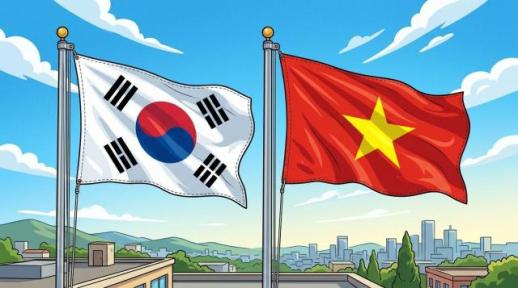 Korea-Vietnam Copyright Forum Addresses Content Protection in the AI Era The Vietnamese government has launched a crackdown on intellectual property violations, targeting online piracy and counterfeit goods. This initiative stems from the belief that issues related to intellectual property infringement directly impact Vietnam's investment climate and national credibility. In conjunction with this effort, the Korea-Vietnam Copyright Forum was held to discuss protective measures suitable for the digital and artificial intelligence (AI) era. According to various Vietnamese media outlets, Deputy Prime Minister Ho Quoc Dung signed a directive on May 5, announcing a nationwide crackdown on intellectual property violations from May 7 to May 30. Despite previous successes in enforcement, complexities remain in certain sectors and regions, threatening both the investment environment and the legitimate rights of individuals and businesses. The special enforcement campaign will adhere to a 'zero tolerance' principle. Authorities aim to strictly punish violations under a policy of no safe zones or exceptions, with a target to increase the number of detected and processed cases by at least 20% compared to May of last year. Each ministry and local government will implement a rapid reporting system to immediately notify the Ministry of Science and Technology of serious or complex cases, with a comprehensive report due by May 31. Online copyright infringement is a primary focus. The Ministry of Public Security will collaborate with relevant agencies to investigate and prosecute serious cases related to copyright, trademark, and geographical indication violations, while also shutting down websites and organizations that illegally store and distribute foreign films, music, mobile games, and TV programs, including those in English. The Ministry of Defense will join the effort, coordinating with border guards and coast guards. The Ministry of Culture, Sports and Tourism will check compliance with copyright laws regarding software used by businesses, as well as the adherence to copyright laws for films, music, TV programs, and video games online. The Ministry of Industry and Trade and local people's committees will focus on enforcing industrial property rights and cracking down on counterfeit goods, while the Ministry of Finance will halt customs clearance for goods clearly violating intellectual property rights. Local governments will also bear greater responsibility. Each provincial and municipal people's committee chairperson is required to establish a joint task force under their direct supervision to oversee enforcement, while party secretaries are instructed to mobilize the entire political system to achieve tangible results. Korea-Vietnam Copyright Forum Held Amid these developments, the 'Korea-Vietnam Copyright Forum 2026' was held in Hanoi on May 7, organized by the Copyright Office under Vietnam's Ministry of Culture, Sports and Tourism, along with South Korea's Ministry of Culture, Sports and Tourism and the Korea Copyright Protection Agency. The forum's theme was 'Copyright Protection in the Digital Age and AI-Driven Content Industry,' bringing together government officials, experts, and industry professionals from both countries. During the forum, South Korean representatives introduced copyright monitoring and infringement prevention systems utilizing AI, and discussions were held on copyright protection in the gaming industry and potential cooperation between the two nations. Tran Hoang, head of Vietnam's Copyright Office, stated, "In this new era, copyright is no longer just a legal tool but an essential infrastructure supporting the creative economy. In an environment where content is generated, replicated, and distributed almost in real-time, copyright and related rights must be effectively and transparently protected in line with technological changes." Mai Tuan, vice president and secretary-general of the Vietnam Copyright Association, noted that the distribution of illegal content is becoming increasingly organized and large-scale. He emphasized the need to move beyond merely punishing violations to creating mechanisms for legal use. He referenced the collective management model recommended by the World Intellectual Property Organization (WIPO), highlighting the urgent need for a system that adequately protects the rights of copyright holders. Professor Huynh Hoa Dai Nghia from the Vietnam National University in Ho Chi Minh City urged that intellectual property issues should not be viewed solely from a legal or market management perspective but recognized as directly linked to national competitiveness. He reiterated that for Vietnam to transition to an innovation-driven economy, strict protection of intellectual property rights is essential. The Vietnamese government plans to continue monitoring intellectual property enforcement across ministries and local governments, establishing a consistent and systematic framework for ongoing efforts.* This article has been translated by AI. 2026-05-12 06:08:55
 -
 To Avoid Increasing Debt, Inclusive Finance Must Evolve While walking through my hometown recently, I counted the "For Rent" signs on buildings that had housed businesses for decades. The closure of these shops starkly illustrates the challenges faced by self-employed individuals.The difficulties in the field are reflected in the numbers. As of the end of last year, six out of ten self-employed individuals who borrowed from financial institutions were found to be multiple debtors, having taken loans from three or more sources. This indicates a reliance on borrowing from various financial sectors to maintain their livelihoods and repay existing debts.In response, the government has proposed "inclusive finance" as a solution. This initiative aims to expand financial support for vulnerable groups and self-employed individuals, enhancing their access to financial services. The government is also significantly lowering interest rates on policy products such as the New Hope Seed Loan, Sunshine Loan, and Youth Future Connection Loan through the Financial Stability Fund. Discussions are ongoing to improve the credit evaluation system to lower barriers for low- and medium-credit borrowers.While the expansion of inclusive finance is undoubtedly a necessary policy direction, there is a risk that discussions may focus solely on "increased lending." Currently, the self-employed sector faces not just a lack of liquidity but also structural challenges stemming from decreased consumer spending and rising costs.In fact, a survey conducted in February by the National Assembly Future Research Institute among 3,088 self-employed individuals revealed that 68.7% reported difficulties due to "raw material and supply costs," while 66.2% cited "intensified competition within the same industry." Additionally, 65.9% indicated that acquiring new customers is challenging. In such a context, if short-term loan supply is repeatedly provided, there is a risk that financial support will serve as a means to maintain existing debt rather than a stepping stone to recovery.Therefore, inclusive finance must evolve beyond mere loan support to genuinely assist financially vulnerable groups in achieving self-sufficiency. The Financial Services Commission declared a "transformation to inclusive finance" in January, setting the establishment of vulnerable groups within the formal financial system and their self-reliance as core values. For this declaration to lead to tangible results, a structure must be created that facilitates the recovery and resurgence of self-employed individuals and other financially vulnerable groups.First, policies are needed to help them survive in the changed domestic market and social structure. The focus should not only be on increasing the total amount of loans but also on the actual recovery and resurgence of vulnerable groups. For those diligently repaying their debts, options to reduce interest burdens and swiftly adjust unmanageable debts could be considered. For those unable to continue their businesses, support for transitioning to wage employment or orderly closures may be more effective than pressuring them to extend operations.Non-financial support is also essential to enhance the survival capacity of self-employed individuals. Training for digital transformation and support for market access should be provided to help them adapt to an environment where delivery platforms and online distribution are predominant. Additionally, vocational training and support for living stability should be examined for those undergoing industry transitions or re-employment. The success of inclusive finance should be evaluated not by how much capital is supplied to the market, but by how many individuals can continue their economic activities. Only then can inclusive finance establish itself as a genuine financial policy. * This article has been translated by AI. 2026-05-12 06:07:06
 -
 Vietnam Launches Crackdown on Illegal Streaming Platforms The popular Vietnamese free streaming site DoraWatch has announced its closure. This decision comes as the Vietnamese government has intensified its nationwide crackdown on intellectual property infringement starting in May, casting a shadow over illegal content distribution within online communities. Despite this, illegal movie sites continue to reappear under different domains, testing the response capabilities of authorities and the industry. According to various Vietnamese media outlets, MonFanSep, the operator of DoraWatch, announced on May 6 via its fan page that the site would "gradually disappear today or tomorrow." The company cited the increasingly stringent copyright regulations as the backdrop for this decision, stating that it would transition the website into a space for user posts and communication. This move aligns precisely with a directive signed by Deputy Prime Minister Ho Quoc Dung on May 5, which mandates a nationwide crackdown on intellectual property infringement from May 7 to May 30. The directive emphasizes strict action against websites that illegally distribute movies, TV programs, and digital content. Earlier, the National Assembly passed a resolution at the end of April that defined copyright protection in the online environment and digital cultural sovereignty as a pillar of cultural security, outlining measures to enhance scanning, monitoring, and processing of infringing content. The Vietnamese government's regulatory approach has also led to increased administrative penalties. In March, the Ministry of Public Security proposed a draft administrative penalty for the cybersecurity and personal data protection sectors, which includes fines ranging from 10 million to 20 million dong (approximately $420 to $840) for illegally digitizing and sharing electronic publications for profit. Following this, many unauthorized e-book sharing groups announced immediate operational shutdowns. Resilient Illegal Sites However, industry insiders continue to express concerns about the persistent resilience of illegal sites. A representative from a Vietnamese online TV and entertainment platform reported that they currently employ about 10 staff members dedicated to copyright protection. He stated, "We have dismantled large networks before, but illegal sharing websites keep sprouting up like mushrooms after rain. This is the most urgent issue." Notably, films released in theaters or exclusive content that airs simultaneously are often illegally uploaded within hours of their broadcast. The representative added, "TVB dramas, Korean dramas, European and American films, and exclusive simultaneous broadcasts right after theatrical releases incur enormous costs for copyright acquisition. Yet illegal sites often download and stream these before legitimate broadcasters." For non-exclusive films, there are calls for better cooperation among domestic platforms and more decisive support from regulatory agencies. The representative noted, "Even if we manage to take down a film, it might be after its screening has already ended." Bui Hoai Son, former chairman of the National Assembly's Culture and Social Committee, warned against viewing digital copyright infringement merely as a 'free viewing' issue. He remarked, "The Prime Minister's directive to dismantle high-traffic illegal sites accurately identifies the core of digital copyright infringement. Without protecting intellectual property, the cultural industry cannot thrive, and in an environment where creators do not receive proper compensation, creativity cannot be encouraged." Authorities also view the current situation as a 'race against time.' Nguyen Thanh Cuong, director of the Department of Cinema, stated, "Even if we block one website for a day, it immediately reappears with a new domain and server or continues operating using overseas servers." He explained that some systems maintain multiple domains like Motchi**, Roph**, and Ghien Ph** to prepare for shutdown measures in advance. In response, inter-agency cooperation has strengthened, with specialized regulatory bodies and cybersecurity and investigative agencies now conducting joint inspections and actions. Cuong stated, "The Department of Cinema will collaborate with the copyright office and relevant agencies to jointly identify violating websites and problematic content, assess the impact on the film market, and actively support the processing of copyright holders and distribution activities." * This article has been translated by AI. 2026-05-12 06:04:59
 -
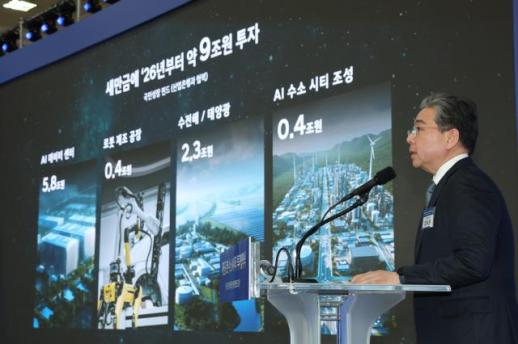 Hyundai Vice Chairman Jang Jae-hoon Receives Gold Tower Industrial Medal Jang Jae-hoon, Vice Chairman of Hyundai Motor, has been awarded the Gold Tower Industrial Medal for his leadership in transitioning to future vehicles through significant domestic investments and securing key technologies. The Ministry of Trade, Industry and Energy presented the awards during the 23rd annual Automotive Day ceremony held at the JW Marriott Hotel in Seoul on May 12. The event was attended by over 300 industry representatives, including Deputy Minister Moon Shin-hak, Korea Automobile Mobility Industry Association President Jung Dae-jin, Korea Automobile Industry Cooperative Chairman Lee Taek-seong, and Jang Jae-hoon. This year’s Automotive Day event commemorated the 50th anniversary of the Pony's export and last year's record-high export performance, marking the first Gold Tower Industrial Medal awarded since 2007. Jang was recognized for leading a historic 125 trillion won investment aimed at enhancing competitiveness in core future industries and revitalizing the mobility industry ecosystem. His efforts to establish and expand electric vehicle manufacturing plants in key locations such as Ulsan and Gwangyang also contributed to local economic development and job creation. The Silver Tower Industrial Medal was awarded to Ham Seong-sik, CEO of MR Infra Auto, for being the first in South Korea to apply fine blanking technology for precision cutting and processing of metal sheets in automotive parts production. The Bronze Tower Industrial Medal went to Hwang Gi-young, CEO of KG Mobility, for pioneering new overseas markets, particularly in Turkey and Dubai, focusing on eco-friendly SUVs. Other recipients of industrial commendations included Lee Jong-ha, Executive Director of Hyundai Mobis; Kim Hyun-cheol, Research Fellow at the Korea Automotive Technology Institute; Jang Gil-jae, Executive Director of GM Korea; and Min Seung-jae, a professor at Hanyang University. Deputy Minister Moon Shin-hak emphasized the need to maintain domestic automobile production above 4 million units and to proactively prepare for a rapid transition to future vehicles. He stated that the ministry would focus its policy efforts on ensuring the existing internal combustion engine parts ecosystem remains robust in the future vehicle market by establishing an 'Automotive Ecosystem Transition Council' and developing comprehensive support measures for the transition.* This article has been translated by AI. 2026-05-12 06:03:27
 -
 What’s Next for Seoul Housing Prices After May 9? On May 4, the head of the Presidential Policy Office held a briefing on the real estate market, stating that there would be no surge in housing prices after May 9, but rather a gradual increase. While this was meant to emphasize that a price spike was unlikely, some critics argued that the use of the term "increase" was premature. President Yoon Suk Yeol expressed a strong commitment to normalizing housing prices in Seoul through social media, hinting at a reversal in housing price forecasts and the emergence of bearish sentiment after three months. Following the pivotal date of May 9, it is essential to analyze the direction of the real estate market. The President's mention of a reversal in housing price forecasts aligns with findings from the 2026 KB Real Estate Report released on May 5. Earlier this year, both experts and real estate agents anticipated price increases, but as the likelihood of tax hikes in the second half of the year grew, a majority of agents shifted their outlook to predict declines. When examining the survey results, it is crucial to consider the timing and scope of the survey. The survey was conducted from March 31 to April 3 and included agents from across the country. In early April, the Gangnam area continued to experience a downward trend, and the panic that had gripped the market in February had not yet dissipated. However, signs of a rebound began to emerge in Gangnam after mid-April as the number of urgent sales decreased. Had the survey been conducted in early May, the outlook might have been significantly different. The demographics of the survey participants also varied. Most experts were based in the Seoul metropolitan area, while agents were spread nationwide, reflecting the stagnant real estate conditions in other regions. Narrowing the focus to the metropolitan area, the percentage of experts predicting an increase in housing prices dropped from 93% in January to 72% in April, while agents' predictions fell from 84% to 66%. Despite the decline in optimistic forecasts, both groups still leaned towards an increase in the metropolitan area. What will happen to housing prices in Seoul after the implementation of the increased capital gains tax on multiple homeowners starting May 10? From that date, homeowners with two properties in regulated areas will face a maximum tax rate of 71.5%, while those with three or more properties will be subject to a staggering 82.5% rate. For a homeowner with three properties and a market gain of approximately 1 billion won, the capital gains tax could amount to around 750 million won, leaving little profit after accounting for mortgage interest and holding costs. I have yet to see anyone willing to sell while incurring such high taxes. Homeowners who must sell have already listed their properties as urgent sales before mid-March. After May 10, it is likely that these homeowners will withdraw their listings or even raise their asking prices. No one would be foolish enough to sell at a loss while facing increased taxes, and those unwilling to sell will likely increase their asking prices even if transactions slow. Properties that were left vacant for sale may be filled with tenants again, potentially increasing rental inventory. However, considering the ongoing rental crisis and the likelihood of rising holding costs, rental prices may increase further. Some speculate that the market could see a surge in prices due to a lack of available properties, but until August, intense negotiations will likely lead to a stagnation in transactions, making a price surge unlikely. Potential buyers, having experienced the urgency of sales in February and March, are unlikely to jump back into the market, especially with lending conditions remaining tight. However, if no effective policies emerge to shift the housing market before the Chuseok holiday in September, the fear of missing out (FOMO) could lead to renewed volatility. So far, the discussion has focused on the high-end apartment market, which is feeling the pressure of increased capital gains taxes. The mid-priced apartment market, particularly those valued under 1.5 billion won, is unlikely to see a quick resolution to the severe rental crisis, and a shortage of new units could lead to price increases spreading beyond Seoul to Gyeonggi and Incheon. The government is expected to implement further demand suppression strategies through tax regulations before the Chuseok holiday in September. Hints from the Presidential Policy Office briefing suggest that multiple homeowners, non-resident single homeowners, and high-value properties will be targeted. The government plans to raise tax rates for multiple homeowners and properties valued over 5 billion won, increasing the fair market value ratio from 60% to 80% to heighten the burden of comprehensive real estate taxes. Additionally, non-resident single homeowners may see reductions in long-term holding tax benefits. The government's intention is to pressure multiple homeowners and non-resident single homeowners to curb investment demand and encourage property listings. However, the likelihood of the real estate market responding as the government intends seems low. The high-end apartment market in areas like Gangnam has only resilient sellers remaining, and reducing long-term holding tax benefits for non-resident homeowners may lead them to choose to occupy their properties, further destabilizing the rental market. The reason for targeting high-value properties for increased holding taxes is that raising the tax burden on properties valued under 3 billion won could be politically risky for the ruling party ahead of the 2028 general elections. The apparent lack of an exit strategy for stabilizing housing prices in Seoul stems from the government's approach of applying standards of unearned income and fairness to real estate, which has narrowed the scope of its policies. Instead of a punitive strategy of raising both capital gains and holding taxes, a more effective approach could involve increasing holding taxes while lowering capital gains taxes to facilitate property listings. If the issue of unearned income is a concern, the government could consider allowing the sale of Seoul apartments to purchase unsold properties in other regions or offer capital gains tax reductions for sales below market value. Creating an environment that encourages a desire to study, rather than using punitive measures, is key to addressing these challenges.* This article has been translated by AI. 2026-05-12 05:45:42
 -
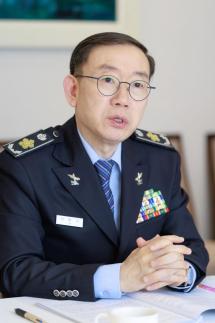 Customs Chief Lee Myung-goo: Strengthening Drug Prevention Efforts Lee Myung-goo has become the fourth internal appointee to serve as the head of the Korea Customs Service since its establishment. Born in 1969 in Miryang, South Gyeongsang Province, he graduated from Seoul National University with a degree in business administration and earned a Ph.D. in economics from the University of Birmingham. He entered public service after passing the 36th National Civil Service Examination and has held various key positions within the Customs Service. Lee has served as the director of the Foreign Exchange Investigation Division, the Planning and Finance Officer, and the Director of Customs Support. He also gained practical experience as the head of customs in Daegu, Seoul, and Busan. From 2007 to 2011, he worked at the World Customs Organization, broadening his expertise in international trade and customs. Uncommonly for a customs official, he was recognized for his tax expertise while serving as a permanent judge at the National Tax Tribunal. After being appointed as the Deputy Commissioner of the Korea Customs Service in September 2023, Lee was promoted to Commissioner in July of the following year. This marks the first time since 2020 that an internal candidate has been appointed as Commissioner, and it is only the fourth instance since the agency's founding in 1970. Recently, Lee has focused on efforts to restore the country’s status as a 'drug-free nation.' He noted, "As of last year, the majority of drug inflows occurred through travelers, international mail, and express cargo," adding that customs inspections are being significantly strengthened to prevent smuggling through travelers. To combat the spread of drugs via international mail, the Customs Service is enhancing its so-called 'secondary barrier' system. This involves redesigning the postal logistics network to improve inspection efficiency and accuracy. Targeted inspections of express cargo from high-risk countries have resulted in a 5% increase in the weight of seized drugs compared to the previous year as of the end of March. Lee is also intensifying vigilance against new drugs such as fentanyl. He stated, "Fentanyl poses a serious threat to our society. It has already become a significant social issue in the United States, with considerable concerns about misuse." He emphasized that while domestic seizures are currently low, investigators must continue to monitor the situation closely. Furthermore, he noted, "Recently, there have been attempts to import raw materials for drug manufacturing and produce them domestically," and pledged to enhance information analysis capabilities and tighten the secondary barrier system to improve inspection accuracy.* This article has been translated by AI. 2026-05-12 05:43:21