

Journalist

Lester Munson
-
 South Korea's Path to Becoming a Global AI Leader: A Critical Juncture 21st-century humanity stands at the threshold of a monumental civilizational shift. The steam engine sparked the Industrial Revolution in the 18th century, electricity and oil ushered in the mass production era in the 20th century, and the internet led to the information revolution. Now, artificial intelligence (AI) is emerging as the starting point of a new civilizational revolution that surpasses all previous changes. Today, AI is more than just a technology; it is a universal technology that transforms economies, industries, defense, diplomacy, education, healthcare, culture, and even concepts of human thought and labor. In the past, steel production determined national power, and the ability to secure oil shaped a nation's fate. Today, semiconductors and AI are the key determinants of national competitiveness. Recently, semiconductor expert Kwon Seok-jun, a professor at Sungkyunkwan University, raised a significant point in an interview. He emphasized that while South Korea's strength has been its 'Survival Mind' in overcoming crises, the AI era requires a 'Great Mind' to lead the world. Many experts share this perspective. South Korea has successfully achieved industrialization, democratization, and informatization, but it must now evolve from a follower to a nation that designs a new civilization. Experts analyze that the recent rise in the South Korean stock market is closely related to this trend. The semiconductor supercycle led by Samsung Electronics and SK Hynix reflects not just a recovery in the industry but also the anticipated future value in the AI era. The stock market does not merely evaluate the present; it anticipates the future. The current value of semiconductor companies is being reassessed as not just manufacturers of memory chips but as key infrastructure providers for the upcoming AI era. The advancement of generative AI is dramatically increasing the importance of memory semiconductors. As AI evolves from GPT-3.5 to GPT-4 and GPT-5, it must remember more documents, maintain longer conversations, and understand more complex contexts. Experts believe that the future competition in AI will hinge not on mere computational speed but on storage and memory capabilities. As AI begins to think more like humans, the significance of memory will only grow. For the past 80 years, the computer industry has developed based on the von Neumann architecture, which separates computational and storage units. However, as the performance of CPUs and GPUs has improved, memory has struggled to keep pace, leading to bottlenecks. High Bandwidth Memory (HBM) has emerged as a solution to this issue. Today, the competitiveness of AI data centers can be said to hinge on HBM. However, experts argue that true competitiveness in the AI era will come from comprehensive memory solutions that include DRAM, NAND flash, SRAM, and VRAM. In this field, South Korea possesses world-class competitiveness. The AI revolution does not only boost semiconductors. As data centers proliferate, power demand surges, leading to growth in the power transmission and distribution equipment, transformers, and wiring industries. Developments in autonomous vehicles, robotics, smart factories, and smart logistics are also expected. Ultimately, the AI revolution is not just an industrial revolution; it is a civilizational transformation that changes entire industries. In the midst of this vast change, the world is being restructured around four main axes: the United States, China, Taiwan, and Japan. The United States: The Center of the AI Empire Currently, the leading nation in the AI competition is undoubtedly the United States. The U.S. possesses all the elements of the AI ecosystem. Companies like OpenAI, Google, Meta, Microsoft, Amazon, NVIDIA, Apple, and Tesla dominate the global AI industry across all sectors. NVIDIA, in particular, is often referred to as the new oil company of the AI era. Just as oil was the lifeblood of industrial society, computational power is the lifeblood of the AI era. NVIDIA is a key supplier of that computational power. America's true strength lies not only in technology but also in its ecosystem of top universities, research institutions, and venture capital systems. Stanford, MIT, Berkeley, Carnegie Mellon, Harvard, and Princeton produce some of the world's best AI talent each year. Silicon Valley fosters a unique culture that encourages innovation while accepting failure. The U.S. is the only country that possesses technology, capital, talent, and platforms. It is likely to remain the strongest candidate for AI supremacy over the next 20 years. However, the U.S. also has weaknesses. While it excels in design, it relies heavily on Taiwan and South Korea for production. This is why the U.S. has recently invested hundreds of trillions of won in revitalizing its semiconductor manufacturing sector. China: The AI Journey of 1.4 Billion People China is the only competitor that can challenge the United States. China's greatest assets are its population and market. The vast data generated by its 1.4 billion people is a significant resource in the AI era. Additionally, the Chinese government has the capability to push long-term strategies over 10 or 20 years. China is pursuing semiconductor and AI advancements as national strategies. Companies like Huawei, SMIC, Baidu, Alibaba, Tencent, and DeepMind are central to China's AI ecosystem. In the fields of manufacturing AI, robotics, and smart cities, China has already reached a considerable level of development. Its pace of factory automation is among the fastest in the world. In the electric vehicle, drone, and industrial robotics sectors, China shows competitiveness that even makes the U.S. uneasy. China's weakness lies in advanced semiconductors. U.S. export restrictions pose a significant burden for China. However, paradoxically, this has strengthened China's resolve for technological self-sufficiency. The next 20 years are likely to see a new Cold War between the U.S. and China over AI supremacy. Taiwan: The Heart of the Global Economy Taiwan may be a small island nation, but its significance in the global economy is substantial. This is largely due to TSMC, the absolute leader in the world's advanced foundry market. Major global companies like Apple, NVIDIA, AMD, and Qualcomm all rely on TSMC's production capabilities. Today, the AI industry cannot function without TSMC. However, Taiwan's greatest variable is geopolitical risk. Any conflict in the Taiwan Strait could disrupt the entire global supply chain. This is why the U.S., Japan, and Europe are pursuing supply chain diversification. This is where South Korea's strategic value increases. The world can no longer depend solely on specific regions. Japan: Dreaming of Semiconductor Revival In the 1980s, Japan was the undisputed leader in the global semiconductor industry. Companies like Toshiba, NEC, Hitachi, and Fujitsu dominated the market. However, Japan lost its lead due to its inability to adapt to the digital revolution. Recently, Japan has been pursuing a national strategy for semiconductor revival. It still maintains world-class competitiveness in materials and equipment. Many of the essential materials and precision equipment needed for semiconductor manufacturing come from Japanese companies. The challenges it faces include a declining population and aging workforce. Additionally, its relatively conservative corporate culture is seen as a factor limiting innovation speed. Nonetheless, Japan remains a formidable competitor, particularly in the materials and equipment sectors, where it is still among the best in the world. Opportunities for South Korea So, where does South Korea stand? South Korea possesses the world's leading competitiveness in memory semiconductors. Samsung Electronics and SK Hynix effectively dominate the HBM market, a key component in the AI era. As AI advances, the demand for memory is expected to skyrocket. AI is fundamentally a remembering machine. However, it must be said that South Korea is still a semiconductor powerhouse, not yet an AI powerhouse. While strong in hardware, it is weak in platforms. It excels in manufacturing but lacks in software. South Korea is strong in technology but needs to face more challenges in the global ecosystem. Thus, the path forward is clear: South Korea must evolve from a semiconductor powerhouse to an AI powerhouse. The Era of Physical AI: South Korea's New Leap The key term for the next 20 years will be Physical AI. The era of AI existing only on screens is coming to an end. AI is becoming robots, vehicles, factories, and logistics centers. It is evolving into drones, smart agricultural machinery, and will replace human hands and feet. South Korea has a comprehensive industrial structure that includes automotive, shipbuilding, machinery, batteries, semiconductors, and telecommunications. This is a rare industrial structure on a global scale. Therefore, in the era of Physical AI, South Korea has ample potential to emerge as a leading nation. In particular, the AI transformation (AX) of manufacturing is a key task that will determine South Korea's future. AI must be integrated into shipbuilding, automotive, steel, and petrochemical industries. Automation in factories, dark factories, and robot-based production systems must be established and exported to global markets. A Declaration of a Second Founding South Korea now needs a new national vision. The industrialization of the 1960s was the first miracle. The democratization of the 1980s was the second miracle. The informatization of the 1990s was the third miracle. Now, South Korea must challenge the fourth miracle: a national transformation into an AI powerhouse. The government must nurture AI as a top national strategic industry. Companies should expand their research and development investments. Universities must cultivate world-class AI talent. Research institutions should focus on developing foundational technologies. Political factions must cease their conflicts and cooperate on national strategies. Businesses must create new social compacts for future competitiveness. South Korea already has experience in successfully achieving industrialization, democratization, and informatization. The question is not whether it can be done; the question is whether it will be done. The next decade will be a golden time that determines South Korea's fate. AI is not just an industry; it is a national survival strategy. The AI supremacy competition between the U.S. and China will shape the global order for the next century. South Korea can either be a spectator in this competition or actively participate as one of the three global AI powers. Now, South Korea must move beyond a survival mindset to a great mindset. It must become a leader, not a follower. It should be a nation that creates technology standards rather than one that imports technology. South Korea must become a new civilizational state that connects AI, semiconductors, robotics, space industries, biotechnology, and energy. History has always favored prepared nations. The Industrial Revolution was one such instance, as was the Information Revolution. The AI revolution will not be an exception. South Korea's time is not over yet. Perhaps the true time for South Korea is just beginning.* This article has been translated by AI. 2026-05-30 08:51:00
 -
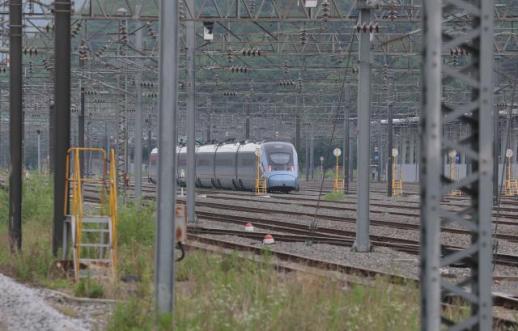 Gyeongui Line Train Services Resume After Four Days of Disruption Train services on the Gyeongui Line resumed on May 30, four days after disruptions caused by the collapse of the Seosomun Overpass in Seoul. The KTX-Eum service on the Gangneung and Jungang lines also returned to normal operations, with a full restoration expected by May 31. According to Yonhap News, Korail reported that KTX train No. 405 departed from Haengsin Station in Goyang at 6 a.m. on May 30. This marked the first train to operate since the Seosomun Overpass collapse on May 26. The train passed through the affected area around 6:18 a.m. and arrived at Seoul Station shortly after. The first Gyeongui Line commuter train, which travels from Munsan through Paju, Ilsan, and Haengsin to Seoul Station, also departed on time at 5:37 a.m. Korail added that the entire metropolitan area rail service is operating normally. Previously, railway authorities completed the demolition of the Seosomun Overpass and proceeded with the removal and installation of overhead lines, cables, and signal equipment. They also conducted overnight repairs and safety inspections to check for track damage and the condition of the rail lines. Korail anticipates that all train services will gradually return to normal by May 31. KTX trains, which had been making temporary stops at all stations, will resume their regular schedules starting May 30. However, Korail urged passengers to check train schedules and conditions through the Korail Talk app, website, or customer service center before traveling. There will be no penalties for refunds on adjusted tickets, and tickets purchased with credit cards will be automatically refunded.* This article has been translated by AI. 2026-05-30 08:39:00
 -
 Masayoshi Son's Strategic Vision: The AI War Began a Decade Ago In the summer of 2016, Masayoshi Son, chairman of SoftBank, acquired the British semiconductor design company ARM for 3.3 trillion yen. At the time, both Japanese media and global financial markets were puzzled. "Why is a telecom company president buying a semiconductor firm?""Isn't that too expensive?""What is the synergy?" Questions poured in. Son's response was unexpected. "In terms of Go, it's like placing a stone 50 moves ahead." Few understood the significance of his statement back then. Now, a decade later, the meaning of those 50 moves is gradually becoming clear. Today, three companies sit at the center of the global AI industry: OpenAI, NVIDIA, and ARM. Son had already secured one of them a decade ago. He is now investing tens of trillions of yen into OpenAI. In Japan, Son's approach to mergers and acquisitions is referred to as 'Go-style M&A.' In South Korea, mergers and acquisitions are often viewed through the lens of market share expansion or economies of scale.However, Son's method is different. He is not merely a man of the present; he is more like a visionary who sketches the future and moves the present accordingly. A look at SoftBank's history reveals consistency. In the 1990s, he invested in Yahoo. In the 2000s, he nurtured Alibaba. During the mobile era, he dominated telecommunications networks. Now, with the advent of the AI era, he has chosen ARM and OpenAI.On the surface, it may seem that his investment targets are constantly changing. Yet the essence remains unchanged. He has always aimed to capture both platforms and infrastructure. In the internet era, it was Yahoo and telecommunications; in the AI era, it encompasses OpenAI and semiconductors. Son sees not just technology but the world that technology will transform. This perspective often leads Japanese business circles to regard him more as a futurist than an entrepreneur. Interestingly, Japanese society traditionally does not favor this type of leader. The core of Japanese corporate culture is stability and accumulation. Toyota has integrated subsidiaries over decades through relationship-building, and Japanese companies have generally preferred gradual evolution over rapid change. Choosing a proven path over high-risk ventures is characteristic of Japanese management. In this context, Son has always been an outlier. As a third-generation Korean resident in Japan, he grew up outside the norms of mainstream Japanese society. From a young age, he traveled between Japan and the United States to conceptualize business ideas, free from the hierarchical and organizational constraints typical of Japanese corporations. He is one of the few Japanese business leaders who openly discusses "10 years later" or "30 years later."In fact, Son has spoken of the concept of a 300-year company since his early days. He has expressed the desire for SoftBank to remain a company that contributes to human civilization even after his death. This renewed attention from Japanese media towards Son stems from this vision. While he was once seen as a reckless gambler, the arrival of the AI era is gradually validating his long-term strategies. Of course, his path has not always been successful. The failed investment in WeWork is a notable example, resulting in significant losses for SoftBank. In Japan, some have declared that "the Masayoshi Son myth has ended." However, Son did not retreat. Instead, he intensified his focus on AI. Recent developments at SoftBank indicate a clear intention to transform from a mere investment company into an AI enterprise. They are developing semiconductors, constructing one of the world's largest data centers, acquiring robotics companies, and collaborating with OpenAI to build a new AI ecosystem. This signifies a commitment not just to invest but to take the lead in the AI industry. The Japanese economy has long grappled with the narrative of the 'lost 30 years.' During this time, while Japanese companies succeeded in stable management, they struggled to position themselves at the forefront of new industrial revolutions. There was a time when Sony, Panasonic, Toshiba, and Sharp led the global electronics industry. However, in the smartphone and platform revolutions, American and Chinese companies seized the initiative. In this sense, Masayoshi Son symbolizes the lost spirit of challenge in the Japanese economy. The outcome remains uncertain. It is unclear whether OpenAI will maintain its current position, or if Chinese companies will dominate the AI robotics market. The effectiveness of ARM's strategy is also uncertain. However, one thing is clear: amid the global competition for AI supremacy, the person with the biggest dreams in Japan is Masayoshi Son. And that dream did not begin yesterday; it started a decade ago with the acquisition of ARM. In Go, the move made now often determines the outcome. However, true masters see not just the current move but the 50 moves yet to come. The reason Masayoshi Son continues to astonish the world may lie in this very difference. The battle of the AI era is not just about technology; it is a contest of time and imagination. Son aims to arrive at the future ahead of everyone else and bring that future into the present.* This article has been translated by AI. 2026-05-30 08:03:00
 -
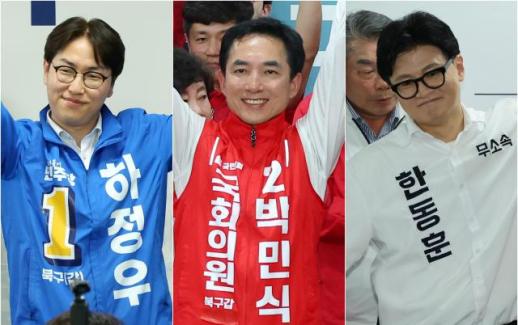 SWOT Analysis of Candidates in Busan North District for June 3 By-Election The Busan North District is considered a key battleground in the upcoming June 3 by-election. Initially, Ha Jung-woo of the Democratic Party held a lead in the three-way race against Park Min-sik of the People Power Party and independent Han Dong-hoon. However, as the election approaches, Han has shown a rapid rise in support, shaking up the dynamics of the race. Analysts suggest that this election will serve as a test for Han's potential to reshape the conservative landscape and for the capabilities of newcomer Ha. Recent polling indicates that while Ha initially led by a significant margin, Han has quickly narrowed the gap. Some surveys suggest a near tie or even a potential reversal in fortunes for Ha. In contrast, Park has struggled to break out of the 20% range, facing challenges in gaining traction. Ha's strengths include the advantages of being the ruling party candidate and strong connections to the central government. His association with the ruling party and support from President Lee Jae-myung and Busan Mayor Jeon Jae-soo are significant assets. Ha has focused on grassroots campaigning, targeting moderate voters and public sentiment. However, he faces vulnerabilities, including controversies such as the 'handshake controversy,' 'brother controversy,' and allegations of stock manipulation. Critics point out that his lack of direct ties to the district and his AI-focused messaging may not resonate with local issues. Despite these challenges, Ha has an opportunity due to the division within the conservative vote. The failure of a unification between Park and Han could allow the Democratic Party to benefit from a split in conservative support. However, Han's rapid ascent poses a significant threat, with reports indicating that not only moderate voters but also some Democratic-leaning constituents are shifting toward him. Han, a prominent figure, is the biggest wildcard in this election. His recent polling surge has bolstered his image as a symbol of conservative reorganization. He aims to attract moderate voters and disillusioned conservatives by presenting a distinct image from the People Power Party. Some surveys suggest he could be competitive against Ha in a head-to-head matchup. Han has been actively engaging with voters in the district, visiting markets and neighborhoods, which is seen as a key factor in his recent rise. However, as an independent candidate, he faces limitations in organizational strength, and his presidential aspirations may not align with local election dynamics. His confrontational stance against the People Power Party could also pose challenges for future conservative unity. Han's opportunity lies in the narrative of conservative reorganization. If he can attract both disillusioned conservatives and moderate voters, he could not only secure a local victory but also gain symbolic leverage in the broader conservative landscape. Nevertheless, the potential for strategic voting, especially with support from former President Park Geun-hye and the organizational strength of the People Power Party, could threaten Han's prospects. Additionally, the issue of conservative unity post-election remains a concern. Park's strengths include the organizational power of the People Power Party and the consolidation of traditional conservative support. Drawing on his experience as a former Minister of Veterans Affairs and a lawmaker, he emphasizes stability. Notably, the public support from former President Park Geun-hye is seen as a strategy to rally hardline conservatives. However, the failure to unify with Han has weakened his position. Concerns about the fragmentation of conservative votes are becoming a reality, leading to increased pressure for strategic choices among his supporters. There are assessments that his visibility has diminished as he competes with Han for conservative votes. Park's opportunity lies in the potential hidden conservative support. Given that Busan North District has a significant elderly population, there remains a chance for a last-minute consolidation of conservative votes. His campaign is banking on organizational voting power and the support of 'shy conservatives.' However, Han's ability to attract not only moderate voters but also some conservatives poses a significant challenge to the traditional People Power Party dynamics. The failure to unify could also lead to internal conflicts within the party post-election. Political analysts suggest that the outcome in Busan North District will hinge on the moderate vote and strategic voting. Regardless of whether a conservative unification occurs, the key variable will be which candidate can more effectively capture the sentiments of undecided and moderate voters in the final stretch. 2026-05-30 08:03:00
 -
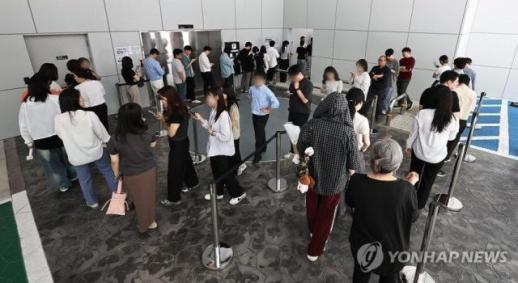 Record High Early Voting Rate Signals Hope in South Korean Democracy On May 29, the first day of early voting for the 9th nationwide local elections recorded a turnout of 11.6%. According to the National Election Commission, this marks the highest first-day turnout for early voting in local elections to date. This figure surpasses the first-day turnout of 10.18% from the 8th local elections in 2022 by 1.42 percentage points and more than doubles the 4.75% recorded during the first early voting in the 6th local elections in 2014. Interpreting this turnout as a direct reflection of public interest in politics requires caution. The Election Commission noted that the relatively low enthusiasm during the 2022 local elections was due to their timing shortly after the presidential election. Nevertheless, the significance of this record should not be underestimated. Even in an era marked by deep political distrust, citizens continue to express their will through voting, demonstrating a desire for a better future. The public's view of politics remains critical. The National Assembly is mired in conflict, and political parties are trapped in partisan logic, with trust in the political sphere slow to recover. Yet, citizens consistently turn out to vote during elections, not necessarily out of satisfaction with politics, but because they recognize that politics is the most practical and peaceful means to change their lives. Democracy is realized through voting. A democracy without citizen participation is merely a shell. In contrast, an actively participating democracy can correct its own mistakes and evolve. High voter turnout is one of the most important indicators of a healthy democracy. It is evidence that citizens are not indifferent to politics but are demanding better governance. Local elections have traditionally been viewed as less significant than presidential or general elections. However, local governments and councils have the most direct impact on citizens' lives. Many policies regarding transportation, welfare, education, urban planning, environment, and local economies are determined by local authorities. The quality of administrative services that residents experience daily also varies based on the capabilities of local administrations. In this context, the enthusiasm for early voting can be interpreted as a sign that local governance is maturing. Residents are actively showing their commitment to deciding the future of their communities. Political leaders must take the message conveyed by this voter turnout seriously. Citizens are not apathetic toward politics; rather, they are disappointed by the current political system's failure to meet expectations. An increase in voter turnout may not signify support for the political establishment but rather a demand for improvement. After the elections, political leaders should not forget this message. Today marks the last day of early voting. Voting is not an act for a specific party or candidate; it is a civic responsibility to determine the future of one's community and to uphold democracy in South Korea."What difference does my one vote make?" some may wonder. However, history has always been shaped by each individual vote. Presidents, lawmakers, and local leaders are ultimately elected by the people's votes. Democracy begins not with grand slogans but at the ballot box. Winston Churchill once said, "Democracy is the worst form of government, except for all the others that have been tried." Democracy functions because citizens monitor and evaluate power through their votes. The moment one gives up voting, the right to criticize politics weakens as well. The record high early voting turnout for this local election clearly shows one fact: the public still believes in democracy. Despite significant disappointment in politics, citizens have not abandoned hope in voting. This is the strength of democracy in South Korea. Voting is both a right and a responsibility, and it is the most powerful force driving democracy. The meaning of the highest early voting rate is fulfilled not by numbers but by participation. Each citizen's vote shapes the future of their community and determines the future of South Korea. This is the essence, principle, and common sense of democracy.* This article has been translated by AI. 2026-05-30 07:42:00
 -
 Hyundai Motor Group Unions Unite for Collective Action Amid Industry Transition Unions from Hyundai Motor Group's affiliates have initiated a joint action for the first time in history. Discussions are underway among 38 major unions, including those from Hyundai Motor, Kia, Hyundai Mobis, Hyundai Steel, and Hyundai Glovis. The total membership of these unions is approximately 87,000, raising the possibility of a large-scale collective action involving nearly 90,000 members depending on the outcome of future discussions. The unions plan to discuss specific strategies in a meeting scheduled for early next month. The significance of this movement is substantial, as it represents the first instance of collective bargaining and joint action encompassing both primary contractors and affiliates since the implementation of the so-called Yellow Envelope Law in March. Hyundai Motor Group is a symbol of South Korean manufacturing. The automotive industry is interconnected with numerous sectors, including steel, parts, logistics, semiconductors, and batteries. Disruptions in Hyundai Motor Group's production lines can significantly impact not only its suppliers and local economies but also the national economy. This issue is garnering attention as it transcends mere labor disputes and touches upon the competitiveness of our industry. In recent years, Hyundai Motor Group has achieved record-high performance. Amid the industry's transition to electrification and the rise of artificial intelligence (AI), workers are expressing concerns about job security. The unions are raising issues regarding retirement age extension, reduced working hours, and changes in employment due to AI implementation. However, it is essential to view the reality with a clear perspective. The global automotive industry is undergoing a significant transformation not seen in a century. Chinese electric vehicle companies are growing at an alarming rate, and American and European firms are fiercely competing in the future vehicle market. Notably, Chinese companies are gaining ground in the global market by leveraging both price competitiveness and technological prowess. In this context, the greatest threat to our automotive industry is the weakening of competitiveness due to internal conflicts. Hyundai Motor Group cannot rest on its current successes, and labor unions should not base their future judgments solely on present achievements. In today's global market, competition is not between individuals but between companies and nations. The automotive industry is rapidly evolving into one centered around AI and software. Autonomous driving, robotics, software-defined vehicles (SDVs), and battery technology will determine future competitiveness. Maintaining the employment structure and production methods of the internal combustion engine era is no longer feasible. It has become increasingly important for labor and management to collaboratively create new jobs and adapt to new technologies. Concerns are also rising about increased uncertainty in the industrial sector following the implementation of the Yellow Envelope Law. While protecting workers' rights is crucial, it should not stifle corporate management activities and investment enthusiasm. The intent of the law should be respected, but complementary measures to minimize disruption in the industrial sector must also be established. Above all, what is needed is dialogue, not confrontation. While unions may use strikes as a negotiating tool, it should not become their primary objective. Companies should share successes during prosperous times and present a vision for future employment. A labor-management relationship devoid of trust ultimately leads to losses for all parties involved. The South Korean economy faces significant challenges, including low growth, an aging population, and the restructuring of global supply chains. If manufacturing competitiveness falters, the entire national economy will inevitably suffer. Both labor and management at Hyundai Motor Group must recognize the profound impact their decisions will have on the broader South Korean industry. The fundamentals, principles, and common sense are surprisingly simple. Companies must maintain competitiveness to create sustainable jobs, and workers need stable employment to plan for the future. The labor-management relationship is ultimately about coexistence. It is essential to seek paths for mutual survival rather than victories for one side. The choices made by labor and management at Hyundai Motor Group are not merely issues for a single company; they are directly linked to the future of South Korean manufacturing. Both sides must demonstrate the wisdom to look beyond immediate interests and consider the industry's competitiveness in 10 or 20 years. What is needed now is not an escalation of conflict but a shared solution for the future.* This article has been translated by AI. 2026-05-30 07:42:00
 -
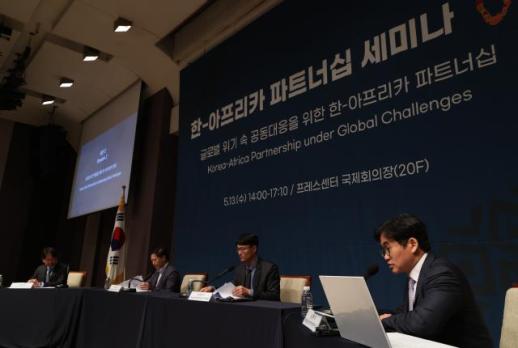 South Korea to host first Korea-Africa foreign ministers' meeting SEOUL, May 30 (AJP) - South Korea will host its first standalone Korea-Africa Foreign Ministers' Meeting next week, bringing together representatives from 54 African countries and four regional organizations as Seoul seeks to deepen economic ties, diversify supply chains and strengthen cooperation on global challenges. The three-day gathering, scheduled for May 31 to June 2 in Seoul, comes as governments worldwide race to secure critical mineral supplies and build more resilient supply chains amid growing geopolitical and trade uncertainties. The meeting will be accompanied by a Korea-Africa Business Forum involving government agencies and private-sector participants. The Ministry of Foreign Affairs said the conference will focus on expanding practical cooperation for shared prosperity and coordinating responses to challenges ranging from supply chain disruptions and climate change to development and security issues. The main ministerial session on June 1 will be co-chaired by Foreign Minister Cho Hyun and Ghanaian Foreign Minister Samuel Okudzeto Ablakwa, representing the African Union's vice chair country for 2026. Ministers will hold two plenary sessions. The first session, titled "Strengthening Economic Cooperation: Promoting Shared Prosperity and Sustainable Growth," will review cooperation in trade, investment, infrastructure, science and technology, education, food security and supply chains, while exploring ways to expand economic engagement between South Korea and African economies. The second session, "Joint Responses to Global Challenges: Korea-Africa Solidarity," will discuss practical cooperation in development assistance, climate action, public health, peace and security, and people-to-people exchanges. On the sidelines of the meeting, Cho is expected to hold a series of bilateral talks with participating foreign ministers to discuss issues including Korean business expansion in Africa, supply chain cooperation and the protection of overseas nationals. The ministry will also host the Korea-Africa Business Forum on June 2 jointly with the Korea-Africa Foundation, KOTRA, the Korea International Trade Association and Yonhap News Agency. The forum will provide a venue for businesses and institutions to explore investment opportunities and discuss practical cooperation measures related to global supply chain challenges. The meeting marks South Korea's first foreign ministers' conference dedicated exclusively to Africa and follows Seoul's broader diplomatic push to diversify its partnerships beyond traditional allies while expanding its role as what the government describes as a "globally responsible state." Separately, Hyundai Motor Group will provide transportation support for visiting delegations under an agreement with the Foreign Ministry. 2026-05-30 07:41:11
 -
 Pet Insurance Market Shifts Toward Everyday Coverage as Vet Visits Rise As pet owners increasingly utilize veterinary services, the pet insurance market is seeing a rise in products that offer coverage for routine exams and minor illnesses. While past policies focused primarily on high-cost surgeries and severe conditions, there is now a growing demand for coverage that can be used frequently during regular vet visits. A survey conducted by MyBrown, a pet insurance company, among 300 female pet owners aged 30 to 49 living in Seoul and the surrounding metropolitan area, revealed that over 70% reported visiting the vet two to five times a year. The primary reasons for these visits were vaccinations and parasite prevention. The survey also indicated a high demand for treatment related to common conditions such as skin diseases, gastrointestinal issues, and dental problems. The financial burden of veterinary care is a consistent concern. The average cost per vet visit was approximately 150,000 won, with annual veterinary expenses averaging around 580,000 won. Pet owners of cats reported even higher annual costs, averaging 710,000 won. Pet medical expenses are increasingly resembling regular living costs, as they are incurred repeatedly with each vet visit rather than as one-time expenses for surgeries. Unexpected situations, such as pets swallowing toys or foreign objects, or the rising demand for MRIs and CT scans for aging pets, contribute to the financial strain that owners frequently experience. Conditions like skin diseases and gastrointestinal issues, which require frequent vet visits, also lead to recurring expenses. In response, the pet insurance market is expanding its coverage to include not only major surgeries but also the frequent exams and treatments that pet owners encounter. This trend is reflected in insurance claim data. The most commonly claimed conditions included atopic, bacterial, and fungal dermatitis (10.7%), otitis externa and ear canal infections (10.2%), and gastroenteritis (5.5%). Other common issues, such as foreign bodies in the gastrointestinal tract and vomiting, also ranked among the top claims. Lee Yong-hwan, CEO of MyBrown, stated, "As pet ownership involvement increases, there is a growing interest in insurance that covers not only major surgeries and severe illnesses but also everyday diseases that require frequent care."* This article has been translated by AI. 2026-05-30 07:03:00
 -
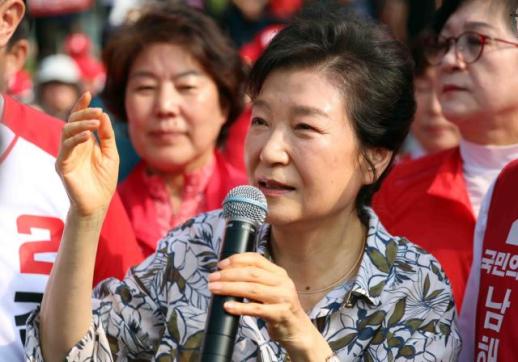 Former Presidents Park Geun-hye and Moon Jae-in Take Divergent Paths Ahead of Local Elections As the local elections approach, the contrasting actions of former presidents are drawing attention. Park Geun-hye and Lee Myung-bak are actively campaigning for People Power Party candidates, while Moon Jae-in is taking a quieter approach without public endorsements.According to political sources on May 30, Park, once dubbed the 'Queen of Elections,' has been making extensive campaign appearances in regions including Daegu, Chungcheong, and now Busan, Ulsan, and Gyeongnam. This marks her first significant election support effort since her impeachment in 2017, nearly nine years ago. During her visits, she has been accompanied by candidates for local and national offices from the People Power Party, urging voters to support them.Lee Myung-bak has also joined the campaign efforts. On May 15, he walked along Cheonggyecheon in Seoul with Oh Se-hoon, the People Power Party's candidate for mayor, encouraging supporters to back him. He is scheduled to visit Busan on May 31 to express his support for Park Hyung-joon, the candidate for mayor there.In contrast, Moon Jae-in has refrained from any official external activities during this election cycle. Analysts suggest that the poor results of the Democratic Party in the Gyeongnam region during the April 10 elections two years ago may have influenced his decision. Despite his efforts to campaign in Gyeongnam, Busan, and Ulsan at that time, the Democratic Party only secured three seats in the region.The involvement of former presidents in the election is seen as an attempt to galvanize voter turnout among their support bases. With traditional supporters potentially less likely to vote, they are calling for unity. However, there are concerns that such endorsements could backfire. While they may help consolidate support, they could also alienate moderate voters.In Park's case, her return to the political scene after being the first president in South Korea to be impeached could lead to voter fatigue. Therefore, it has been suggested that the messages from former presidents should focus on national unity rather than deepening political divides or reverting to past conflicts.* This article has been translated by AI. 2026-05-30 07:03:00
 -
 White House Meeting on Iran Peace Talks Concludes; Trump Yet to Decide President Donald Trump has concluded a meeting in the White House Situation Room regarding peace negotiations with Iran, according to an official cited by AFP. On May 29, Trump announced via his Truth Social account that he would hold a meeting to make a final decision, stating, "I will be in the Situation Room now to make a final decision." The meeting began at 10:51 a.m. Eastern Time. With the meeting now over, Trump is expected to soon reveal whether he will approve the contents of a memorandum of understanding (MOU) tentatively agreed upon by U.S. and Iranian officials. The New York Times reported, citing an anonymous senior official, that although the Situation Room meeting lasted about two hours, Trump has not yet made any decisions. The official noted, "The administration believes it is close to an agreement, but specific issues, including the release of frozen Iranian assets, are still under discussion."* This article has been translated by AI. 2026-05-30 06:09:00