

Journalist

Lester Munson
-
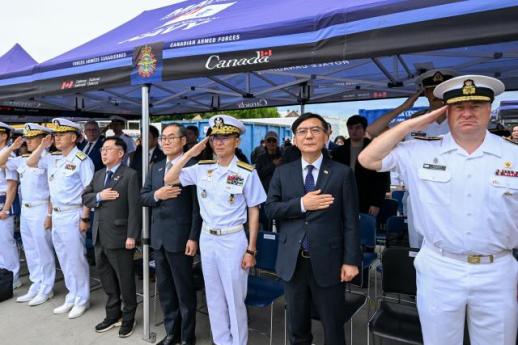 Korean submarine scores high with Canadian crew ahead of Ottawa decision SEOUL, May 26 (AJP) - The Canadian crew after their first onboard journey aboard a South Korean submarine had only high praise for the ROKS Dosan Ahn Chang-ho, boosting Team Korea’s momentum in the final stretch of Ottawa’s multibillion-dollar competition to replace its aging submarine fleet. The KSS-III-class diesel-electric submarine arrived at Canadian Forces Base Esquimalt on Saturday after a nearly two-month voyage from Jinhae in southern Korea, marking the first trans-Pacific deployment by a South Korean submarine. The vessel was officially welcomed Monday before scheduled joint exercises with the Royal Canadian Navy and allied forces. The visit comes at a crucial stage in Canada’s Canadian Patrol Submarine Project, or CPSP, aimed at replacing the country’s aging Victoria-class submarines with up to 12 modern diesel-electric vessels. Glenn Copeland, managing director of Hanwha Defence Canada, described the timing of the submarine’s arrival as significant as Ottawa prepares to narrow the field. Hanwha Ocean, the maker of ROKS Dosan, is leading the Korean consortium against the European rival led by Germany’s ThyssenKrupp Marine Systems, with the Canadian government expected to make its choice as early as next month. “I think this is the best conventional submarine available in the world today,” Copeland said, arguing that the KSS-III meets Canadian operational requirements in range, endurance, size and weapons capability. “We feel very positive about our chances,” he added. “Right now, if you ask anyone, they will say it is 50-50. But there are clearly factors working in our favor.” The Dosan Ahn Chang-ho departed Jinhae on March 25 and traveled roughly 15,000 kilometers across the Pacific, stopping in Guam and Hawaii for supplies. Two Canadian sailors boarded the submarine in Hawaii on May 7 and sailed aboard the vessel to Victoria, giving Ottawa a rare firsthand opportunity to evaluate Korean submarine operations at sea. Their reactions were notably enthusiastic. Petty Officer 2nd Class Jake Dixon compared the experience to “buying a brand-new Tesla and then you’re coming out of a ’99 Honda Civic,” according to local media reports. Lieutenant-Commander Brittany Bourgeois, who also spent about two weeks aboard the submarine, praised the vessel’s condition and spacious interior. “Being on board a modern submarine really opened our eyes to the possibilities ahead of us,” she said. The positive reviews could strengthen South Korea’s standing as Canada grapples with severe operational strain in its submarine fleet. Ottawa currently operates four Victoria-class submarines purchased secondhand from Britain in 1998, but reports indicate only one remains operational while the others are undergoing repairs. Rear-Admiral David Patchell, commander of Canada’s Pacific fleet, recently told CBC that the country needed replacement submarines “yesterday.” “We’ve operated submarines for more than 100 years, but we have not truly been a submarine-owning nation,” Patchell said. “With 12 modern submarines, Canada can become one.” The contest has increasingly evolved beyond submarine specifications into a broader strategic and industrial competition. Hanwha Ocean has sought to distinguish itself through wider economic cooperation proposals, including an equity investment in Canadian space startup Reaction Dynamics and a $345 million steel infrastructure project tied to Algoma Steel. Canadian media have generally viewed the Korean bid favorably compared with TKMS’ proposal centered on German launch infrastructure technology. Still, analysts note that the KSS-III’s strengths could also pose questions for Canadian planners. Its vertical launch system and heavy strike capability — developed in response to threats from North Korea and broader regional tensions involving China — may exceed the Royal Canadian Navy’s current operational requirements, which do not include ballistic or cruise missile submarine missions. By contrast, TKMS’ Type 212CD is widely viewed as highly suitable for Arctic operations because of its smaller size, maneuverability and ability to operate in shallow and ice-covered waters across Canada’s Arctic archipelago. But the German bid faces mounting concerns over delivery schedules. TKMS already has a substantial production backlog tied to orders from Germany, Norway, Singapore, Türkiye and India, leading some Canadian defense analysts to question whether deliveries could realistically meet Ottawa’s target timeline in the mid-2030s. For South Korea, the Pacific crossing itself may prove strategically significant beyond the Canadian bid. The deployment demonstrated not only the endurance and operational reliability of the KSS-III platform, but also Seoul’s growing ambition to compete directly with established European defense manufacturers in high-end naval procurement markets increasingly shaped by geopolitical competition and supply-chain reliability. A South Korean Navy official said the Dosan Ahn Chang-ho is expected to participate in joint exercises with Canadian forces in early June, though exact schedules have not been disclosed. 2026-05-26 16:57:59
 -
 KOSPI touches down above 8,000 for first time amid flat Asian market SEOUL, May 26 (AJP) -South Korean stocks closed above the 8,000 mark for the first time Tuesday as investors rushed to compensate for Monday's market holiday and price in the broader Asian rally fueled by hopes for a reopening of the Strait of Hormuz and renewed momentum in AI-related shares. The benchmark KOSPI surged 2.6 percent to close at 8,047.50 after climbing as high as 8,131.15 during the session. The index stayed above the 8,000 threshold throughout the day and passed the test above the new four-digit territory, a yawning stretch from the mid-2,000 range just a year ago. Institutional investors led the advance, purchasing a net 911.1 billion won ($605.5 million) worth of shares on the main bourse. Retail investors sold a net 616.7 billion won, while foreign investors offloaded 184.1 billion won after reversing from earlier buying and extending their recent selling streak. The junior KOSDAQ rose 1.0 percent to 1,172.50 after touching an intraday high of 1,205.12. Retail investors bought a net 224.2 billion won, while foreign and institutional investors sold 148.6 billion won and 33.7 billion won, respectively. Semiconductor heavyweights drove the broader market higher as investors reinforced bets that South Korea's AI-led chip rally still has room to run. Samsung Electronics rose 2.2 percent to close at 299,000 won, while SK hynix jumped 5.7 percent to 2,052,000 won, reinforcing expectations that the two stocks may settle into a new trading range after breaking major price milestones. Gains spread across the semiconductor supply chain. Samsung Electro-Mechanics surged 17.3 percent to 1,572,000 won, while DB HiTek soared 21.8 percent on expectations for passive fund inflows tied to its upcoming inclusion in the KOSPI 200 index. AI-related component makers also rallied sharply. Samwha Capacitor hit the daily trading limit with a 30 percent jump as investors bet on stronger demand for multilayer ceramic capacitors, or MLCCs, used in AI servers and advanced electronics. LG Innotek climbed 23.6 percent to 1,096,000 won, while Samwha Electronics rose 29.9 percent. Shipbuilders were another major source of strength as expectations for expanding global defense and energy infrastructure spending continued lifting the sector. Hanwha Ocean advanced 10.2 percent to 134,700 won, while HD Hyundai Heavy Industries gained 9.6 percent. Automakers also joined the rally, with Hyundai Motor Company rising 5.2 percent to 689,000 won. LG Electronics added 1.1 percent to 239,500 won. Some large-cap shares, however, lagged the broader market. POSCO Holdings fell 1.2 percent to 442,000 won, while Naver slipped 1.5 percent to 200,000 won. Samsung SDI declined 0.8 percent to 642,000 won and SK Square edged down 0.3 percent to 1,181,000 won. The Korean won strengthened as risk appetite improved, closing at 1,504.30 per dollar, up 12.90 won from the previous session. The currency opened at 1,515.0 won and briefly weakened to around 1,516 won before reversing course during afternoon trading. Still, foreign selling in equities suggested overseas investors have yet to fully return despite the record-setting rally. Foreigners were net buyers earlier in the session before turning sellers shortly before the close, according to market data. Oil prices also rebounded Tuesday after plunging the previous session, reflecting lingering caution over Middle East developments despite growing optimism surrounding U.S.-Iran negotiations. Brent crude traded above $98 per barrel, while West Texas Intermediate hovered near $91.60. Prices remained below recent highs as markets monitored whether diplomacy could eventually reopen the Strait of Hormuz. Regional markets were mixed. Japan's Nikkei 225 slipped 0.3 percent after hitting a record high in the previous session, while China's Shanghai Composite also fell 0.3 percent. Hong Kong equities edged higher, supported by semiconductor-related shares. 2026-05-26 16:54:22
 -
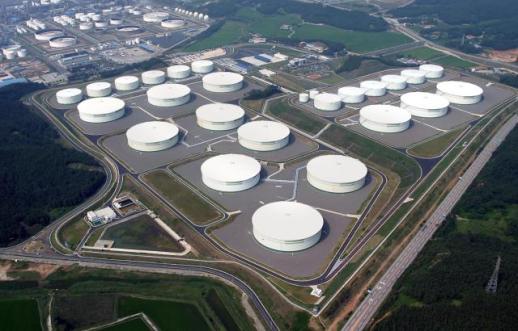 Korea holds off on IEA oil release, eyeing August crunch SEOUL, May 26 (AJP) - South Korea is holding back on releasing its share of the International Energy Agency's record emergency oil stockpile, opting to preserve the buffer for a potentially graver supply crunch in August as the Strait of Hormuz remains effectively shut. With the June 9 deadline for Seoul's pledged contribution just two weeks away, Yang Ki-wook, director general for industrial resources security at the Ministry of Trade, Industry and Resources, told reporters Tuesday at the Sejong government complex that the country sees little immediate need to tap its reserves. The IEA in March coordinated the largest emergency stock release in its 52-year history, with its 32 member states agreeing to put 400 million barrels on the market to blunt the supply shock from the U.S.-Israel-Iran conflict. South Korea's quota stands at 22.46 million barrels, or about 5.6 percent of the total. Officials are betting that the worst is yet to come. Although recent diplomatic overtures between Washington and Tehran have stirred cautious hopes of a ceasefire, a prolonged closure of the Strait of Hormuz could leave Korean refiners scrambling for crude from August onward, when domestic stockpiles are projected to thin sharply. IEA Executive Director Fatih Birol warned that global oil markets could slip into a "red zone" in July or August as inventories drain and summer travel demand swells, with Middle Eastern barrels still largely absent from the market. "Government stockpiles are a tool for the worst-case scenario, so we believe a release should be considered cautiously, keeping the card in hand for what may come," Yang said, adding that domestic refiners have responded positively to the existing swap arrangement, under which the government lends out reserves against verified overseas purchases. Seoul is also reshaping its supply map. Non-Middle Eastern crude is projected to account for 51.5 percent of imports from May through July, up sharply from 30.9 percent a year earlier — a shift Yang called unprecedented and a strategic imperative for the country's resource security. 2026-05-26 16:53:23
 -
 N. Korea tests mixed-fire tactics as Xi's possible Pyongyang trip looms SEOUL, May 26 (AJP) - North Korea fired several close-range ballistic missiles and artillery rockets into the Yellow Sea on Tuesday, South Korea’s military said, amid speculation that Chinese President Xi Jinping could visit Pyongyang soon. The Joint Chiefs of Staff said it detected various types of projectiles, including close-range ballistic missiles, fired from the area of Jongju, North Pyongan Province, toward waters off the North’s west coast at around 1 p.m. The close-range ballistic missiles flew about 80 kilometers, and the military believes North Korea also fired artillery rockets, a type of multiple rocket launcher system, along with them. It is unusual for North Korea to fire close-range ballistic missiles and artillery rockets at the same time. The launch is seen as an apparent attempt to demonstrate its ability to evade air defenses and conduct mixed-fire strikes. Military authorities are also keeping open the possibility that loitering munitions, or so-called suicide drones, may have been used in the launch. Officials reportedly detected trajectories on radar that differed from those of typical ballistic missiles or artillery rockets, raising the possibility that a new weapons system was involved. The military said further analysis is needed to make a precise assessment. The launch marked North Korea’s first ballistic missile firing in 37 days and its eighth such launch this year. On April 19, North Korea fired several short-range ballistic missiles from the eastern coastal area of Sinpo, South Hamgyong Province, toward the East Sea, claiming they were equipped with cluster warheads. North Korean state media said Kim Jong-un oversaw the launch of five upgraded Hwasong-11 Ra tactical ballistic missiles, which struck a target zone 136 kilometers away and covered an area of about 12.5 to 13 hectares. The test was aimed at assessing new warheads carrying cluster bombs and fragmentation mines. The South Korean Unification Ministry later noted that an unusually large number of commanders from North Korean frontline units were present at the test, saying this appeared to underscore Kim’s push to expand tactical missile deployments against South Korea. Tuesday’s launch drew attention as it came amid speculation that Xi could visit North Korea as early as this week. If Xi’s visit takes place following recent U.S.-China and China-Russia summits, it would be Xi’s first trip to North Korea since June 2019. “The government once again calls on North Korea to respond to our peace policy and efforts to reduce tensions,” South Korean Foreign Ministry spokesperson Park Il said at a briefing Tuesday. Park said South Korea will continue pursuing a phased and pragmatic approach to resolving the North Korean nuclear issue while maintaining close coordination with the international community. 2026-05-26 16:07:04
 -
 At least 3 dead as old overpass in Seoul partially collapses during demolition SEOUL, May 26 (AJP) - An old overpass in Seoul partially collapsed on Tuesday while workers were demolishing it, as part of the city's broader effort to remove aging infrastructure and spruce up the capital. The accident occurred at around 2:30 p.m. on the overpass in Seosomun, western Seoul, which has been gradually removed since last Summer and is scheduled to be fully demolished by early next month. At least three were dead, several were injured, and rescuers are still searching for others who may be trapped under the rubble. Fire authorities immediately deployed over 60 firefighters, a dozen vehicles, and five ambulances to the scene, accompanied by around 30 police officers. Train service between Seoul Station nearby and Sinchon Station has been suspended due to the collapse, with other services also affected. 2026-05-26 16:06:07
 -
 YouTuber faces arrest warrant in defamation case against Kim Soo-hyun SEOUL, May 26 (AJP) - Kim Se-eui, the head of YouTube channel Garo Sero Institute, also known as HoverLab, is facing an arrest warrant over defamation allegations and other charges involving actor Kim Soo-hyun. Kim appeared at the Seoul Central District Court at around 10:30 a.m. on Tuesday, where he denied all charges, adding that he would file a complaint against the police officers and prosecutors handling the case. "I do not admit to any of them," Kim said before entering the court. The case stems from a series of YouTube broadcasts and claims in which Kim alleged that the actor had been in an "inappropriate" romantic relationship with the late actress Kim Sae-ron while she was still a minor. Kim is also accused of falsely claiming that the actor pressured the actress over debt repayment, leading to her death. Police suspect Kim of spreading false information to defame the actor. They also believe some of the evidence lacks credibility including KakaoTalk messages suspected of being fabricated and an audio recording allegedly created or doctored using artificial intelligence. Kim said the request for an arrest warrant against him was "intentional and hastily prepared," claiming it was aimed at obstructing his business and vowing to take legal action against investigators. The court is expected to decide on Kim's arrest warrant later in the day or the following morning. Meanwhile, the actor, who has suspended activities amid the scandal, has filed a complaint against Kim and a separate civil suit seeking 12 billion won (about US$8 million) in damages. 2026-05-26 15:46:59
 -
 BOK to hold rate for yearlong this week and hike growth target SEOUL, May 26 (AJP) - The Bank of Korea is widely expected to hold the benchmark rate at 2.50 percent, unchanged for a year, while sharply raising its 2027 growth outlook to around 2.5 percent from 2 percent to lay the groundwork for eventual tightening against mounting inflationary pressures from elevated energy prices, rising wages and overheated asset markets as the AI boom cushions the economy from the prolonged Gulf crisis. An AJP poll on economists found unanimous expectations for a rate freeze at Thursday’s meeting under newly appointed Governor Shin Hyun-song and newly seated board member Kim Jin-ill. But consensus increasingly shifted toward a rate hike in July as growth and inflation forecasts move higher. “From the growth and inflation trajectory, the current situation warrants a review of a rate hike,” said Cho Yong-gu, a fixed-income analyst at Shinyoung Securities. “Rather than an actual rate hike, the upcoming meeting is highly likely to deliver messages hinting at the possibility of future increases.” Cho pointed to lingering oil-price risks stemming from the Middle East conflict, upward revisions to domestic growth and inflation forecasts, financial stability concerns tied to a weak won and overheating real estate prices in the Seoul metropolitan area as key reasons for maintaining rates while turning more hawkish. Dissenting voices within the Monetary Policy Board are also expected to grow. About 75 percent of economists surveyed projected that as many as two members could dissent in favor of tighter policy. Yoon Yeo-sam, chief analyst at Meritz Securities, likewise forecast a freeze this week but said the central bank could begin openly signaling future tightening. “The committee may address whether oil prices stabilize after the conclusion of the Middle East war and evaluate the impact of the improving semiconductor cycle on growth,” Yoon said. “A clause implying that the BOK will review the timing of a rate hike to ensure price stability could be inserted.” Analysts said South Korea’s unexpectedly strong first-quarter GDP growth of 1.7 percent — nearly double the BOK’s earlier forecast — alongside government relief spending tied to high energy prices has strengthened the case for hawkish dissents within the board. “Recently, domestic inflationary pressures have been expanding not only due to external factors like exchange rates and rising crude prices but also because consumption and domestic demand are reviving alongside economic recovery,” said Woo Hye-young, analyst at LS Securities. “Some board members may deem an additional rate hike necessary based on these factors.” Attention has also centered on Kim Jin-ill, who recently described himself as “half a click above” the BOK’s current policy outlook. Most economists, however, remained skeptical that he would immediately cast a dissenting vote during his first meeting. “Even former board member Shin Sung-hwan, who was widely considered dovish, followed the consensus during his first monetary policy meeting,” one monetary policy expert said on condition of anonymity. “If Kim voices dissent for a hike, it will likely come in the second half of the year.” Regarding the second-half rate path, economists increasingly pointed to July as the first likely window for tightening. Cho projected a 25-basis-point hike in July followed by additional increases in the fourth quarter and early next year. Yoon similarly forecast two hikes — in July and October — lifting the benchmark rate from the current 2.50 percent to 3.00 percent by year-end. The central bank’s challenge reflects an economy increasingly split between booming AI-linked sectors and mounting inflation risks. South Korea’s semiconductor-driven AI boom has powered exports, equities and growth expectations sharply higher. The KOSPI has surged 86.2 percent from end-2025 levels to 7,847.7, while the tech-heavy KOSDAQ climbed 25.5 percent, according to weekly financial market data. At the same time, financial stability concerns have intensified. The won weakened to 1,517.2 per dollar from 1,439 at the end of last year as higher oil prices and imported inflation pressures weighed on sentiment. Inflation indicators also accelerated. Producer prices jumped 6.9 percent in April from a year earlier, while consumer inflation climbed to 2.6 percent. Bond markets, however, rallied Tuesday as traders leaned toward a prolonged rate freeze despite the central bank’s increasingly hawkish tone. By midday, the benchmark 10-year government bond yield had fallen 7.1 basis points to 4.057 percent, while the three-year yield dropped 5.3 basis points to 3.683 percent on expectations that the benchmark rate would remain unchanged until at least the next policy meeting in mid-July. For now, economists expect the BOK to use Thursday’s meeting primarily to recalibrate market expectations — upgrading growth projections sharply while cautiously preparing investors and households for a gradual return to tightening as the AI boom reshapes South Korea’s economic cycle. 2026-05-26 15:38:52
 -
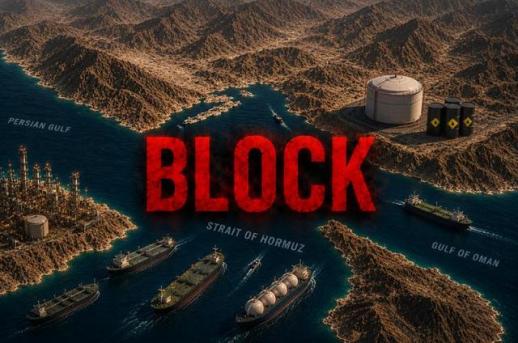 AJP Focus: Asia's energy shock far from over despite Hormuz reopening talks SEOUL, May 26 (AJP) - South Korea and other Asian economies heavily dependent on Gulf energy supplies are bracing for prolonged disruptions even as diplomatic momentum builds toward a potential reopening of the Strait of Hormuz, with analysts warning that supply chains, refining operations and shipping flows could take months to normalize. Iran is expected to allow commercial shipping through the strait about 30 days after a peace agreement with Washington is finalized, Nikkei reported Monday, citing a source familiar with the negotiations. U.S. President Donald Trump said over the weekend that a deal had been "largely negotiated," while Iran's foreign ministry described the arrangement as a memorandum of understanding ahead of broader talks expected within 30 to 60 days. But the situation remains fragile. The diplomatic push intensified after U.S. forces struck missile sites and Islamic Revolutionary Guard Corps vessels in southern Iran on Monday in what Washington described as defensive operations, underscoring the volatility surrounding the conditional ceasefire in place since early April. The Strait of Hormuz has effectively remained closed since March 2. IMF PortWatch data showed only two commercial vessels transited the chokepoint on May 17, compared with a pre-crisis average of roughly 95 ships per day. Brent crude rose 2.43 percent Monday to around $116.73 per barrel, more than 60 percent above prewar levels. For South Korea, where roughly 99 percent of Middle Eastern crude imports normally pass through Hormuz, the gap between a diplomatic breakthrough and a meaningful restoration of energy flows is expected to extend far beyond the tentative 30-day reopening timeline. According to Korea International Trade Association data, South Korea's crude imports fell 22.8 percent on-year in April to about 8.46 million tons, while imports from the Middle East plunged 37.3 percent to 4.49 million tons amid the Hormuz disruption. The Middle East still accounted for the largest share of South Korea's oil imports, but its portion dropped sharply to 53.1 percent from 65.2 percent a year earlier. Imports from Saudi Arabia, Korea's largest supplier, fell 37.6 percent to roughly 2.15 million tons. Iraqi shipments dropped 42.4 percent, while imports from Kuwait nearly collapsed, plunging 98.2 percent. Imports from Qatar were halted entirely. The data underscore how rapidly Asian importers have been forced to redraw supply chains as the Hormuz crisis deepened. The United States, already South Korea's second-largest crude supplier, nearly overtook Saudi Arabia last month. Imports of U.S. crude rose 13.4 percent to about 2.145 million tons, narrowing the gap with Saudi shipments to barely 1,000 tons from more than 1.45 million tons just a month earlier. Seoul has also accelerated diversification toward North America, Oceania and Africa. Imports from Australia surged 89 percent, while Canadian shipments more than tripled. Crude purchases from African producers including Nigeria and Mozambique jumped more than fivefold. North America's share of South Korea's crude imports climbed to 28.3 percent, up 10.3 percentage points from a year earlier. Still, industry analysts caution that reopening the strait would mark only the beginning of a lengthy normalization process. Mine-clearance operations, military escort requirements and a backlog of roughly 1,500 stranded vessels are expected to delay normal shipping flows by another two to three weeks even after transit resumes. "Fully loaded tankers must first pass through, and empty vessels must then enter and drain the stockpiles before oil-producing states can resume output," said Yoon Jae-sung, analyst at Hana Securities. "Given that a voyage to Asia takes four weeks and that 30 to 40 percent of Gulf refining capacity has been damaged — with normalization expected to take at least three months — restoring the supply chain will require considerable time," Yoon said. "Crude oil and gas would take priority, pushing petrochemical products and naphtha further down the queue." Shipping costs have also surged. According to Lloyd's Joint War Committee data, war-risk insurance premiums for very large crude carriers transiting the Gulf have climbed to roughly eight times pre-crisis levels, with single-voyage coverage now costing around $2.5 million per tanker. Six major protection and indemnity insurers, including Gard, Skuld and North Standard, have withdrawn Hormuz transit coverage altogether. South Korean petrochemical firms have partially stabilized operations by increasing naphtha cracking center utilization rates to 85–90 percent of prewar levels through alternative sourcing from Russia, Kazakhstan and the United States. But officials continue warning that liquefied natural gas markets could tighten sharply in the second half as bargaining power shifts back toward suppliers. Compounding concerns, QatarEnergy's force majeure declaration on long-term LNG contracts remains in effect after damage to two production trains at Ras Laffan affected roughly 17 percent of Qatar's LNG exports. Full restoration is expected to take between three and five years. "Unless the war ends on reasonable and viable terms good enough to convince shipowners and insurance companies, it may be extremely difficult for oil prices to return to post-war levels even in the long run," said Chung Tae-hun, associate research fellow at the Korea Energy Economics Institute. "We still face competition for heavy crude supplies outside the Middle East if the conflict becomes entrenched, with China and Japan also aggressively seeking alternative sourcing," Chung added. A diplomatic breakthrough could mark a turning point in the crisis. But for South Korea and much of Asia, the broader energy shock is increasingly shifting from an emergency disruption into a structural adjustment — one likely to leave elevated shipping costs, higher energy premiums and intensified competition for non-Gulf supplies well into 2027. 2026-05-26 15:36:03
 -
 Taiwan overtakes India as world's fifth-largest stock market on TSMC-led AI rally SEOUL, May 26 (AJP) - Taiwan's stock market has edged past India to become the world's fifth-largest, propelled by a surge in Taiwan Semiconductor Manufacturing Co. that underscores how the global rally in artificial-intelligence stocks is reshaping the hierarchy of world markets. Taiwan's market capitalization reached $4.95 trillion as of Monday's close, according to a Bloomberg tally, narrowly surpassing India's $4.92 trillion — a margin of about $30 billion, or less than 1 percent, that leaves the ranking vulnerable to reversal on any sharp swing. The shift places Taiwan behind only the United States, mainland China, Japan and Hong Kong, while South Korea ranked seventh, just ahead of Canada. The two markets are moving in opposite directions for a single underlying reason: exposure to technology hardware at the center of the AI investment cycle. Taiwan has risen on the strength of TSMC, the world's largest contract chipmaker, whose shares have jumped 49 percent this year; India has fallen as foreign capital, deterred by high valuations and a weakening currency, rotates out of its market and toward the chip-heavy economies of Northeast Asia and Taiwan. TSMC's influence on its home market is difficult to overstate. The company accounts for roughly 42 percent of Taiwan's benchmark index, so its rally has lifted the entire market's standing. Bloomberg described the rise in Taiwan's value as an illustration of the AI-driven technology rally, noting that Taiwan and South Korea — both anchored in semiconductor and technology-hardware manufacturing — have benefited disproportionately. "Taiwan's rise in market capitalization fundamentally reflects its high concentration in technology hardware," said Liao Yi-ping, a fund manager at Franklin Templeton, adding that the sector "sits at the center of the current AI investment cycle." Markets with limited exposure to technology hardware, he said, are increasingly being overshadowed by hardware-heavy ones such as Taiwan and South Korea. A regulatory change has reinforced the trend. Last month, Taiwan's financial authorities raised the ceiling on how much a domestic fund may hold in a single stock to 25 percent, from 10 percent. The rule applies only to companies that exceed 10 percent of the Taiwan Stock Exchange — a threshold currently met by TSMC alone — and JPMorgan Chase estimated the change could channel more than $6 billion into the market, almost all of it toward the chipmaker. India's decline has been correspondingly steep. High valuations, a weakening rupee and inflation concerns tied to rising energy costs have driven foreign investors away, with global funds net-selling about $24 billion of Indian equities so far this year. The country's benchmark index has fallen 8 percent, and should the trend persist, India could record its first annual decline in a decade. Its weighting in the MSCI Emerging Markets Index has slipped to roughly 12 percent, from 19 percent a year earlier. The reshuffling is recent and closely contested. South Korea overtook Taiwan in market value earlier this month, on May 12, only for Taiwan to surge ahead of India by late May — a sequence that illustrates how narrowly the AI beneficiaries are now separated, and how quickly the order can change. The shift in equity rankings does not, however, reflect the relative size of the underlying economies. India's gross domestic product, estimated by the International Monetary Fund at about $4.15 trillion, is itself the world's fifth-largest and dwarfs Taiwan's roughly $977 billion. That a market one-quarter the economic size can command a larger equity value points to the same concentration driving the rally: Taiwan's listed value is bound up overwhelmingly in a single global chipmaker, whereas India's broader, more domestically oriented economy is less exposed to the AI trade lifting markets elsewhere. India's economy grew 7.8 percent last year, sustaining one of the fastest rates in the world. 2026-05-26 15:12:46
 -
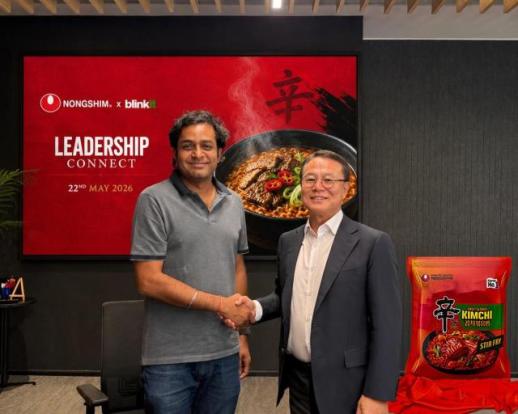 Nongshim signs deal with Indian grocery delivery app SEOUL, May 26 (AJP) - Instant noodle giant Nongshim has partnered with India's leading quick-commerce platform to expand its presence in one of the world's most populous countries. Nongshim said it held a launch event in New Delhi over the weekend for its signature "Shin Ramyun" series, after signing a deal with Blinkit to distribute its products there. Blinkit is the leading player in India's quick-commerce market, with around a 50-percent market share. The event featured a pop-up booth and photo zones where local influencers and visitors could sample products and share their experiences on social media. In particular, a highlight was stir-fried noodles, tailored to local tastes and younger consumers who frequently use quick-commerce platforms. With the latest deal, Nongshim aims to leverage Blinkit's delivery infrastructure to rapidly distribute its key products in major cities such as New Delhi and Mumbai, tapping into India's booming online commerce market. According to the Korea International Trade Association, India's e-commerce market is projected to grow from US$90 billion in 2025 to $240 billion by 2030. "By cooperating with Blinkit, we plan to promote our Shin Ramyun products throughout India, ensuring that local customers can enjoy them in their daily lives," said a Nongshim staffer. 2026-05-26 15:05:37