

Journalist

Lester Munson
-
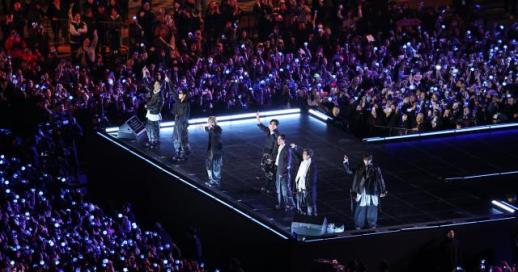 BTS comeback and legacy SEOUL, March 22 (AJP) - On the night of March 21, Gwanghwamun Plaza became a festival ground for the world. 'BTS THE COMEBACK LIVE: ARIRANG,' BTS members' first full-group stage in 3 years and 9 months since their military discharge, concluded with long preparation and a spectacular finale. That day, Gwanghwamun was not simply a concert venue. It was a place of harmony, a moment when the world became one. A plaza where the world gathered Those filling the plaza were not only Koreans. Fans flew in from Japan, America, Europe, South America, and Southeast Asia, gathering in one place. English, Japanese, Chinese, Spanish, Thai. Different languages mixed, but everyone communicated in one language. The language of music. Even foreigners became friends with each other. They took photos with light sticks together. Shared gifts. Their faces were full of smiles. Police and volunteers in yellow vests were armed with foreign languages. They guided in English, Japanese, and Chinese. But many foreigners had studied Korean. Instead of "Where go?" they asked "Where should I go?" Some had practiced "Thank you." Awkward Korean met awkward English, creating amusing scenes. Everyone smiled and communicated. A festival that began while waiting in line The festival began even while lining up to enter the venue. People yielded to each other. Those who came first held their places, those who came later stood behind. There was no cutting in line. Instead, there was laughter. Even waiting was enjoyable. A plaza that became one When the performance started, the plaza became completely unified. Tens of thousands of purple light sticks swayed together. When songs played, everyone sang along. Fans who didn't know Korean had memorized the lyrics. Pronunciation didn't matter. Singing together was enough. When someone fell, people around helped them up. In front of shorter people, others naturally lowered their posture. While enjoying the performance, they considered each other. Lingering echoes Even as people left after the performance, the festival continued. No pushing. No rushing. Moving slowly, in order, exchanging greetings like "Good job," "It was fun." Fans naturally picked up what had fallen on the ground. Those who enjoyed the festival took responsibility for its ending. The real stage was the entire plaza BTS sang on stage. But the real stage was the entire plaza. The harmony, consideration, and joy ARMYs showed. That was the real performance. The next day, March 22, Gwanghwamun Plaza returned to daily life. But those passing through know. The day before, something special happened here. People from around the world gathered in one place to enjoy music, respect each other, and laugh together. Different languages, different skin colors, different ages—all were one. What happened at Gwanghwamun Plaza wasn't simply a concert. It was a global festival. A moment of harmony. A miracle created by music. Where the purple wave passed, warmth remained. And in everyone's memory, this day will last long. A global festival unfolded at Gwanghwamun. That night, Seoul was the center of the world. 2026-03-22 20:48:54
 -
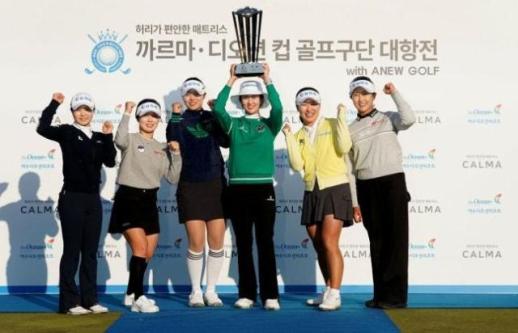 Samchully wins Karma-Diocean Cup KLPGA club team championship Samchully Golf Team captured the title at the Korea Ladies Professional Golf Association club team championship. Samchully posted a combined 11-under 61 in the third and final round of the Karma-Diocean Cup Golf Club Team Championship with ANEW GOLF on March 22 at The Ocean Country Club (par 72) in Yeosu, South Jeolla Province. With a tournament total of 19-under 197, Samchully beat the Korea Golf Association women’s national team (17-under 199) by two strokes to lift the trophy. The winner’s prize was 50 million won. Launched in 2022, the event marked its fifth edition this year and is the country’s only KLPGA club team competition. Ten teams competed, including inaugural champion Mediheal, Samchully, SBI Savings Bank, Daebo Construction, Karma, Daebang Construction, Daesun Distilling, Amano Korea, Rejuran Golf Team and the KGA women’s national team. The first and second rounds were played in foursomes, with two players alternating shots with one ball. The final round used a scramble format, with teammates choosing the better-positioned ball for the next shot. Samchully’s roster includes 11 KLPGA Tour players: Ko Ji-won, Ko Ji-woo, Ma Da-som, Park Bo-gyeom, Lee Jae-yoon, Lee Se-hee, Seo Gyo-rim, Jeon Ye-seong, Kim Min-ju, Hong Jin-young and Choi Ga-bin. Jeon and Seo played the final round, making a birdie at the par-3 12th and then cutting two more strokes over the next six holes to secure the team’s first title in the event. The KGA team of Kim Gyu-min and Yang Yun-seo briefly closed within one stroke in the final round but finished second. SBI Savings Bank, represented by Kim Ga-hee and Kim Ji-yoon, took third at 13-under 203.* This article has been translated by AI. 2026-03-22 19:33:00
 -
 Culture minister credits public, fans for safe BTS Gwanghwamun concert Culture, Sports and Tourism Minister Choi Hwi-young thanked the public and fans after BTS’ comeback concert at Seoul’s Gwanghwamun Square ended without any safety incidents. In a social media post on March 22, Choi said the group’s “Arirang” performance at Gwanghwamun “ended safely without a single safety accident,” crediting “the mature civic awareness of our people” and the cooperation of the global BTS fan base, known as ARMY. Choi also praised BTS, which returned as a full group after three years and five months. He said the group’s vocals and dynamic choreography, performed before a crowd that turned the square purple, drew admiration from fans. He added that the concert was livestreamed to viewers in more than 190 countries and thanked residents who tolerated inconvenience, along with volunteers, public officials and others who worked to keep the site safe. Choi pledged continued government support for Korean pop culture, saying the government would do its best to help K-culture spread “faster and more widely” worldwide. Organizers estimated 104,000 people attended the March 21 “BTS THE COMEBACK LIVE|ARIRANG” concert, while Seoul’s real-time city data put the crowd at 42,000. After finishing domestic schedules, BTS is set to begin overseas activities starting March 23 with a Spotify stage in New York, including an appearance on “The Tonight Show Starring Jimmy Fallon.” The group is also scheduled to launch its new “Arirang” world tour on April 9 at Goyang Stadium.* This article has been translated by AI. 2026-03-22 17:54:00
 -
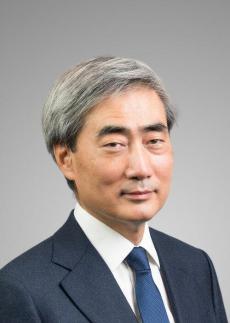 Shin nomination signals BOK shift toward financial stability, external shock shield SEOUL, March 22 (AJP) - President Lee Jae Myung on Sunday nominated Shin Hyun-song, economic adviser and head of the Monetary and Economic Department at the Bank for International Settlements (BIS), as the next governor of the Bank of Korea, tasked with navigating monetary policy amid the economic fallout from the Gulf war crisis. The presidential office said Shin’s combination of academic depth and policy experience makes him well suited to manage rising uncertainty linked to geopolitical tensions and inflation risks, while balancing price stability and growth. Shin, a former Princeton University professor and senior adviser to former conservative President Lee Myung-bak in 2010, has spent the past decade at the Bank for International Settlements, where his work has centered on global liquidity, financial cycles and systemic risk. Shin’s research indicates a policy approach that places financial stability at the core of monetary decision-making. In “Global Banking Glut and Loan Risk Premium” (IMF Working Paper, 2011), Shin argues that financial conditions are driven by the balance sheet expansion of global banks and leverage cycles, rather than policy rates alone. In a related line of work, “Global Liquidity and Procyclicality” (BIS/NBER), he elaborates that credit supply expands and contracts with global banking conditions, amplifying boom-bust cycles across economies. These findings suggest that central banks need to monitor credit growth, leverage and asset prices alongside inflation. His arguments point to the need for close attention to household debt management and macroprudential policy tools. A central theme in Shin’s work is the dominant role of the U.S. dollar in the global financial system. In BIS Quarterly Review articles, including “The Dollar, Bank Leverage and the Deviation from Covered Interest Parity” (BIS, 2018), Shin documents how dollar-denominated credit outside the United States exposes borrowers to funding risks when the dollar strengthens. His research shows that tighter global dollar liquidity can lead to capital outflows, currency depreciation and tighter financial conditions, regardless of domestic policy settings. Shin’s appointment comes as the won is at its weakest level against the U.S. dollar since the global financial crisis, ending last week at around 1,500 per dollar. Shin has also emphasized that inflation dynamics are increasingly influenced by external forces. In a BIS speech, “Inflation: Drivers and Dynamics” (2022), he highlights the role of commodity prices, exchange rates and global financial conditions in shaping inflation, especially in open economies. This suggests that monetary policy decisions will need to account for imported inflation and exchange rate pass-through, particularly as oil prices and energy supply disruptions weigh on import-dependent Korea. Under his watch, the Bank of Korea may prioritize financial stability and systemic risk monitoring, global liquidity and capital flow conditions, and exercise caution on rate cuts amid U.S. dollar strength. Following a parliamentary confirmation hearing, Shin is expected to succeed current Bank of Korea Governor Rhee Chang-yong, whose four-year term ends on April 20. 2026-03-22 17:27:40
 -
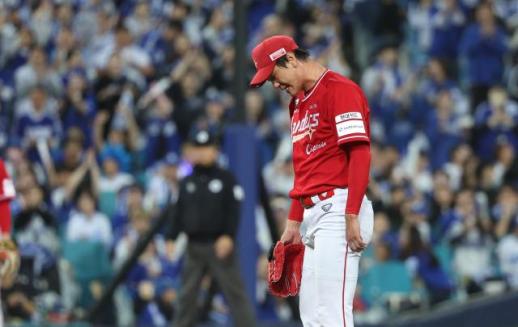 SSG’s Kim Gwang-hyeon to Have Shoulder Surgery; Rehab Expected to Take 6+ Months SSG Landers left-hander Kim Gwang-hyeon will undergo shoulder surgery. SSG said March 22 that Kim was diagnosed with a bone spur in the back of his left shoulder and will have surgery at a hospital in Nagoya, Japan, later this month. The club said rehabilitation is expected to take more than six months and that it will fully support Kim so he can focus on recovery. In a post on social media, Kim said he decided on surgery after “a lot of 고민.” He wrote that he understands shoulder surgery can be “devastating” for a baseball player, but said he hopes it will allow him to return healthier and stay on the mound “even one year longer.” He apologized to fans and teammates for being sidelined by injury. Kim felt shoulder pain during training at SSG’s spring camp in the United States on Feb. 15 and returned to South Korea. Tests found a bone spur in the back of his left shoulder, a condition in which repeated pitching causes bone to grow and irritate surrounding areas. To avoid surgery, Kim began a customized rehabilitation program in Japan on March 9, but it was ultimately determined that rehab alone would not resolve the injury. The surgery poses a major threat to Kim’s career, as shoulder operations are considered especially risky for pitchers. Given that Kim was born in 1988, there are concerns his recovery could be slow and that he could miss the entire season. Kim, who debuted in 2007, has a 180-108 record with two holds and a 3.43 ERA in 415 KBO League games. He has pitched 2,321 2/3 innings with 2,020 strikeouts and ranks third on the league’s career wins list.* This article has been translated by AI. 2026-03-22 17:12:00
 -
 IVE’s ‘HEYA’ Music Video Tops 100 Million YouTube Views; Three Hits Pass 300 Million IVE has earned its sixth music video to surpass 100 million views on YouTube with “HEYA.” Starship Entertainment said the music video for “HEYA,” the title track from IVE’s second EP, “IVE SWITCH,” topped 100 million views on Friday. The milestone gives the group six music videos with more than 100 million views. Since its debut with “ELEVEN,” IVE has continued to post blockbuster view counts through “HEYA,” reinforcing its popularity. “LOVE DIVE,” “After LIKE” and “I AM” have each exceeded 300 million views, showing sustained interest over time. Released April 29, 2024, “HEYA” pairs narrative lyrics inspired by folklore with a powerful hip-hop sound. The song ranked high on major domestic streaming charts after its release and also gained traction on iTunes’ Top Song chart, the agency said. The “HEYA” music video passed 10 million views within 19 hours of release and reached No. 1 on YouTube’s worldwide music video trending list. The track also placed in the upper ranks of the “2024 Melon Year-End Chart” Top 100, indicating long-running performance. IVE held its fourth fan concert, “DIVE INTO IVE,” on Friday at Inspire Arena in Incheon and is set to meet fans again at a 4 p.m. show Saturday. The performance will be livestreamed on Beyond LIVE.* This article has been translated by AI. 2026-03-22 15:51:37
 -
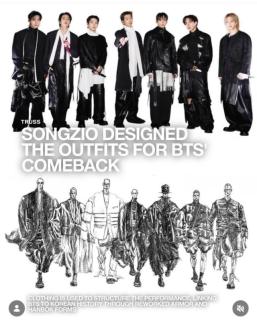 SONGZIO X BTS turns comeback stage into a living archive of Korean history SEOUL, March 22 (AJP) -SEOUL, March 22 (AJP) — BTS’s comeback stage at Gwanghwamun was not only a musical return but a carefully constructed visual manifesto, where fashion became the medium through which history, identity and future ambition converged. At the center of that statement was “Lyrical Armor,” a collaborative collection with Korean designer Songzio, which transformed the seven members into embodiments of Korea’s evolving cultural narrative. Rather than treating costume as embellishment, the collection functioned as narrative architecture — a wearable interpretation of Korea’s past reframed for a global present. The conceptual foundation drew from early Joseon-era armor, juxtaposed with the fluidity of hanbok and the expressive tradition of poets, painters and sorigun (traditional vocal performers). Armor plates became fragmented panels. Hanbok lines were stretched, tilted and reassembled. Seams were deliberately left raw, exposing what appeared to be the “wounds” of history — not concealed, but integrated into the design language. Within this framework, each BTS member occupied a symbolic role, turning the stage into a tableau of archetypes. RM, positioned as the “Hero,” wore a long, hanbok-inspired coat structured with armor-like plating. The piece balanced weight and flow, authority and restraint — a visual articulation of leadership grounded in cultural lineage. Jin’s “Artist” translated traditional elegance into modern tailoring, with layered structures referencing armor yet softened through draped movement, suggesting the transformation of emotion into form. SUGA, cast as the “Architect,” embodied construction itself. His look emphasized structure and tension — rigid elements offset by fluid lines — mirroring the duality of composition and introspection that defines his musical identity. J-Hope’s “Sorigun” brought rhythm into fabric. A reinterpretation of the dopo through a streetwear lens, his silhouette moved with kinetic asymmetry, reflecting both performance and improvisation. Jimin’s “Poet” leaned into fragility and lightness. His layered armor dissolved into air-like textures, with delicate embellishments that captured motion as if writing verse through movement. V’s “Doryeong” distilled restraint. Drawing from the scholar class, his look combined controlled tailoring with layered drapery, projecting quiet authority rather than overt spectacle. Jungkook, as the “Vanguard,” pushed forward. His deconstructed, military-inflected silhouette conveyed propulsion — a figure not rooted in history but moving through it, carrying its fragments into the future. Across all seven, a common language emerged: asymmetry, layering, and tension between structure and flow. It was a language that spoke to rupture — and to rebuilding. In doing so, “Lyrical Armor” aligned seamlessly with the broader arc of BTS’s comeback project, “Arirang,” which seeks to reconnect with Korean identity at a moment of global saturation. The conceptual core of “Lyrical Armor”, explained designer Jay Songzio in his homepage, lies in the fusion of strength and lyricism — combining the rigid armor worn by early Joseon warriors with the flowing hanbok of poets and sorigun who distilled collective grief and aspiration into verse and song. The result is a vision of “new-era heroes” who carry history not as burden, but as momentum toward the future. Songzio described the collection as an act of resistance against conventional boundaries of time, form and dress. Traditional structures were dismantled and reassembled into abstract fragments, creating avant-garde silhouettes that oscillate between expansion and restraint. Volumes swell and recede, while non-structural patterns and fluid draping move like kinetic sculpture, blurring the line between reality and imagination. As BTS stood before a crowd of more than 100,000 and millions more watching worldwide, they were not only performing songs. They were wearing a narrative — one that suggested that the future of K-fashion, like K-pop itself, based on hanbok identity. 2026-03-22 15:36:48
 -
 Hyundai Targets China and India Rebound With 46 New Models, Aiming for 1.28 Million Sales by 2030 Hyundai Motor is seeking a rebound in China and India, the world's No. 1 and No. 3 auto markets, by sharply expanding new-model launches. The push signals the company does not intend to abandon key markets, though intensifying competition from fast-growing local brands makes success uncertain. Hyundai said March 22 that CEO Jose Munoz, in a recent shareholder letter, set a goal of lifting combined annual sales in China and India to 1,276,500 vehicles by 2030. The targets are 832,500 in India and 444,000 in China. Based on last year's global sales of 7.27 million vehicles, the 2030 goal would represent about 23% of Hyundai's total, meaning roughly one in four vehicles would be sold in China or India. With sales in the two markets totaling 702,000 last year, the plan implies growth of about 82%. Both markets are considered essential, but Hyundai has struggled amid tougher competition. In China, Hyundai sales fell to 130,005 last year from 181,993 in 2024. In India, sales slipped to 571,878 from 607,934. Hyundai plans to launch 46 new models in China and India over the next five years, about 2.6 times the 18 introduced over the past five years. By year, new-model launches were 6 in 2021, 3 in 2022, 6 in 2023, 1 in 2024 and 2 in 2025. Munoz said Hyundai will introduce 20 new models in China over five years under a strategy of "in China, for China, to the world." For India, he said the company plans to roll out 26 new models backed by $5 billion in investment through 2030. Hyundai is also emphasizing localization. In India, it plans an electric SUV that will be planned, designed and produced locally, and it is considering bringing its premium Genesis brand to the market. In China, Hyundai last year launched its first strategic model there, the electric SUV Elexio. An auto industry official said local EV brands already dominate China, making a new approach urgent.* This article has been translated by AI. 2026-03-22 15:12:16
 -
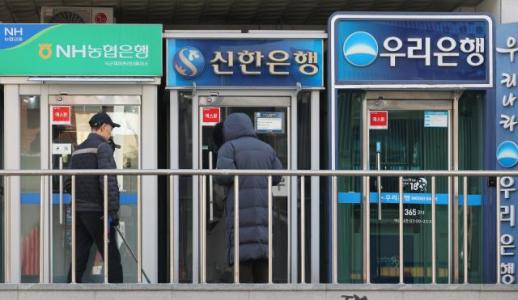 Korean Banks Brace for Asset Quality Strain as Middle East Tensions Lift Rates, Oil Rising global oil prices and bond yields tied to turmoil in the Middle East are heightening concerns over asset quality at South Korea’s banks. Vulnerable borrowers such as the self-employed and small businesses have struggled with debt service since the COVID-19 pandemic, and higher costs from a spike in oil prices are seen further weakening companies’ ability to repay. As of the end of February, the overall delinquency rate on won-denominated loans at the five major banks — KB, Shinhan, Hana, Woori and NH NongHyup — stood at 0.46%, according to the financial sector on Saturday. That was up 0.1 percentage point from 0.36% at the end of December, rising over two months. By borrower type, delinquency rates were 0.35% for households, 0.11% for large companies, 0.67% for small and midsize enterprises, and 0.56% for all corporate borrowers. Compared with the end of last year, the rates rose 0.05 percentage point for households, 0.08 point for large companies, 0.17 point for SMEs and 0.15 point for all corporate borrowers. The ratio of nonperforming loans on won-denominated lending at the five banks also increased to 0.40% at the end of February from 0.34% at the end of last year. The rise was largest for SMEs, up 0.12 percentage point, compared with 0.08 point for large companies and 0.04 point for households. Analysts warn the indicators could deteriorate further if the oil surge and Middle East risks persist. A prolonged period of uncertainty could squeeze corporate profitability and hit financially fragile SMEs hardest. The four major banks held 29.0567 trillion won in outstanding loans to petrochemical, airline and shipping companies as of the end of the fourth quarter of last year, the financial sector said. Within nine days of the Iran situation, the price of naphtha — a key feedstock those industries largely source from the Middle East — rose 28%, raising expectations of significant damage. Even so, corporate lending has continued to grow since the end of last year, adding to banks’ risk exposure. As of the end of last month, corporate loans at the five major banks totaled 854.3288 trillion won, up 6.9759 trillion won from the previous month. Looking ahead, if oil prices keep rising and supply-chain instability persists, the policy rate could shift back toward increases to curb inflation. Yields on one-year and five-year bank bonds climbed from 2.900% and 3.572% on Feb. 27, just before the Iran situation, to 3.033% and 3.907% as of March 20 — jumps of 0.133 percentage point and 0.335 point in three weeks. Banks have responded by building reserves. Major lenders are keeping loan-loss reserve coverage ratios between 160% and as high as 220%, and are monitoring lending in real time, including by adopting a risk-adjusted return on risk-weighted assets (RoRWA) metric to manage capital adequacy. “After the Middle East war, the uptrend in market rates and lending rates has strengthened,” a financial industry official said. “As shocks to the real economy accumulate, bad loans could visibly swell in a few years.” * This article has been translated by AI. 2026-03-22 15:03:00
 -
 South Korea’s Lee Sang-ho Wins Season-Ending Snowboard World Cup, Claims Record Fifth Title Lee Sang-ho, known as "Cabbage Boy," won the final event of the International Ski and Snowboard Federation (FIS) Snowboard World Cup alpine season. Lee defeated Austria’s Christoph Karner in the men’s parallel slalom final at the 2025-2026 FIS Snowboard World Cup in Winterberg, Germany, on March 21 local time. The victory was Lee’s fifth career World Cup win, making him the first South Korean to reach five FIS World Cup victories. Choi Ga-on, who won gold in the women’s snowboard halfpipe at this year’s Milan-Cortina d’Ampezzo Winter Olympics, is second among South Koreans in this category with four World Cup wins. Lee closed the season with two gold medals and one silver, including gold at the Slovenia World Cup in February and silver at an event in Poland in March. In a post on social media, Lee said he did his best to meet the expectations of those who supported him but still had many regrets about the season. He added that their support helped him finish strong despite difficult conditions, and he thanked them sincerely.* This article has been translated by AI. 2026-03-22 14:54:00