

Journalist

Lester Munson
-
 Asian markets edge up as Strait of Hormuz fears ease SEOUL, March 18 (AJP) - Asian stock markets opened higher Wednesday as concerns over supply chain disruptions involving the Strait of Hormuz eased slightly amid the prolonged Middle East conflict. South Korea's benchmark KOSPI extended its gains from the previous session as improving sentiment toward chipmakers outweighed concerns over volatile oil prices. Market sentiment remained fragile overnight amid rising crude oil prices and the ongoing U.S. Federal Open Market Committee (FOMC) meeting. Bust several reports that oil tankers have begun passing through the strategically important waterway helped ease supply concerns. Kevin Hassett, a White House official said tanker traffic is resuming through the critical chokepoint for roughly one-fifth of the world's oil supply. Geopolitical tensions remain high, however. U.S. President Donald Trump signaled a tougher stance on Iran as the Middle Eastern country continues retaliatory attacks including strikes near the UAE's Fujairah port, an alternative export route. Oil prices rose on the lingering uncertainty. West Texas Intermediate crude gained 3.32 percent to settle at $95.53 per barrel, while Brent crude climbed 3.20 percent to $103.42. At 9:41 a.m., Samsung Electronics surged 5.08 percent to 203,750 won, reclaiming the 200,000-won level for the first time since Feb. 27 before the outbreak of the conflict. SK hynix also rose 3.61 percent to 1,005,000 won, crossing the 1 million-won mark for the first time since the war began. Other chip-related stocks traded higher as well, with SK Square gaining 5.45 percent, Hanmi Semiconductor rising 1.33 percent and Samsung Electro-Mechanics advancing 1.34 percent. The rally followed gains in U.S. chip stocks, led by Micron Technology, which jumped 4.5 percent to a record high ahead of its earnings report, with expectations of a beat further boosting sentiment across the sector and spilling over into Korean equities. In South Korea, Samsung Electronics is holding its annual shareholders' meeting at its headquarters in Suwon, Gyeonggi Province. Key agenda items reportedly include a special dividend worth 1.3 trillion won, along with amendments to its articles of incorporation aimed at strengthening minority shareholder rights. Among other large-cap stocks, Samsung C&T rose 7.51 percent to 300,500 won, and Samsung Life Insurance advanced 12.67 percent to 244,500 won. SK Square climbed 5.96 percent to 622,000 won, and Samsung Biologics gained 2.52 percent to 1,627,000 won. Automakers also traded higher, with Hyundai Motor up 3.93 percent at 542,500 won and Kia advancing 4.24 percent to 174,400 won, and Hyundai Mobis rising 4.12 percent to 429,500 won. In the financial sector, KB Financial Group gained 2.52 percent to 154,500 won and Shinhan Financial Group rose 2.96 percent to 93,900 won. Among other notable movers, Doosan Enerbility added 2.97 percent to 107,500 won, HD Hyundai Electric jumped 4.19 percent to 970,000 won, and Korea Zinc climbed 3.29 percent to 1,665,000 won. The gains were supported by expectations for alternative energy demand as oil prices fluctuated above $100 amid prolonged Middle East tensions. As of 10:13 a.m., the benchmark KOSPI rose 3.72 percent to 5,850.28, and the tech-heavy KOSDAQ gained 1.16 percent to 1,150.17. The Korean won strengthened to 1,487.00 per dollar from the previous close of 1,492.5. Elsewhere in Asia, Tokyo stocks advanced, with the Nikkei 225 gaining 1.38 percent to 54,442.94 as easing concerns over oil supply disruptions prompted bargain buying. Semiconductor-related shares led the gains, tracking overnight strength in the Nasdaq. Advantest surged 4.16 percent to 24,525 yen, and Tokyo Electron rose 1.39 percent to 39,320 yen. Sentiment was further supported by a report from the Mainichi Shimbun that Japan could signal increased imports of U.S. crude at an upcoming summit between Trump and Japanese Prime Minister Sanae Takaichi in Washington, D.C. later this week, easing supply concerns. Hong Kong's Hang Seng Index rose 0.21 percent to 25,923.03. China's Shanghai Composite Index edged up 0.03 percent to 4,051.29. Taiwan's TAIEX also climbed 1.53 percent to 34,355.76 in the morning. 2026-03-18 11:49:08
 -
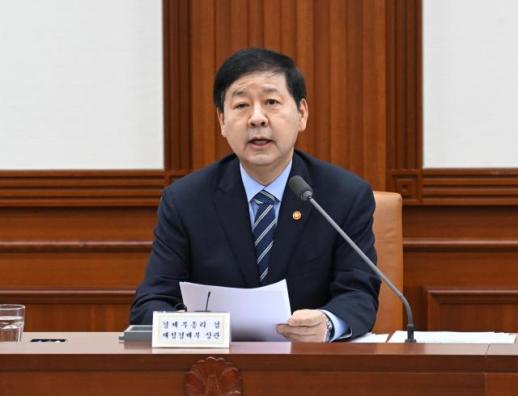 South Korea to inject over 1 billion in supplementary budget SEOUL, March 18 (AJP) - The government is coming up with a set of measures including a 1.5 trillion won (US$1.01 billion) in supplementary budget to buttress an economy hit by the escalating conflict in the Middle East, which began with U.S.‑led airstrikes on Iran late last month. In an emergency meeting chaired by Deputy Prime Minister and Minister of Economy and Finance Koo Yun-cheol in Seoul on Wednesday, he pledged the swift implementation of the supplementary budget and other immediate measures to provide fiscal relief, stressing that "timing is key" in responding to a crisis. With no end in sight to the conflict in the already volatile region as it enters its third week since U.S. and Israeli strikes on Iran on Feb. 28, the ministry decided to designate naphtha as a temporary "economic security item" to mitigate its supply. The move allows energy authorities to secure alternative import routes or restrict exports through active interventions, if necessary. To help firms heavily reliant on Middle Eastern imports, a support program with a 1.5 trillion won fund will be offered, giving them a lifeline through interest rates about 2.3 percentage points lower. Koo also warned again that the government will take a hardline stance against refiners and others seeking to profit from soaring energy prices, following the ministry's earlier measure of a price ceiling on petroleum products. "Retail gas stations must comply with the measure without delay," Koo said, vowing to intensify on-site inspections to crack down on unfair practices such as hoarding. The supplementary budget aims to ease the burden on vulnerable companies including small- and medium-sized enterprises (SMEs) directly hit by soaring logistics and fuel costs, with the ministry also weighing an additional supplementary budget. It is also tapping into International Energy Agency (IEA) emergency oil reserves and exploring alternative suppliers through diplomatic channels to ensure a stable energy supply amid disruptions to maritime routes. Meanwhile, the ministry reaffirmed its commitment to long-term industrial innovation, having already earmarked 754 billion won to develop 246 artificial intelligence (AI)-driven products over the next two years under a new project called "AX-Sprint." The project aims to accelerate AI-driven transformation across all industries by providing tailored support for them. "Despite February's employment data showing an increase of 234,000 jobs, many young jobseekers are still struggling in the job market," Koo said, emphasizing that the technological push aims to secure long-term labor market stability amid global volatility. 2026-03-18 11:13:17
 -
 Chabot Mobility Named to FT-Statista Asia-Pacific High-Growth List for Third Straight Year Mobility platform company Chabot Mobility said Tuesday it was named for a third consecutive year to the “2026 Asia-Pacific High-Growth Companies” list jointly compiled by the Financial Times and global research firm Statista. Now in its eighth edition, the annual ranking selects 500 companies across 14 Asia-Pacific countries based on high compound annual revenue growth. The list is widely watched as a gauge of growth momentum among startups and technology firms because it emphasizes revenue performance rather than company size or brand recognition. The latest assessment was based on revenue growth from 2021 to 2024. Chabot Mobility ranked No. 237 among the 500 companies. In the IT and software category, which accounts for about 21% of the list, it placed No. 42. Among South Korean companies, which make up about 15% of the total list with 79 firms, Chabot Mobility ranked No. 59. It placed No. 15 in South Korea’s IT and software category, the company said. Founded in 2016, Chabot Mobility said it has expanded from new-car quote comparisons into auto finance brokerage, direct insurance and vehicle management services, linking drivers’ needs across the vehicle life cycle on a single platform. It reported cumulative transaction volume of about 1.4 trillion won and 1.7 million cumulative users, and said it has built a nationwide network of about 32,000 auto dealers. The company said it completed a Series C funding round in 2024, bringing cumulative investment to about 25.6 billion won. It said it is also pursuing additional pre-IPO funding to support expansion into the United States, Japan and Mongolia and to build a foundation for an initial public offering. Chief Executive Officer Kang Seong-geun said the third straight selection reflects global recognition of the market competitiveness and growth momentum of Chabot’s auto-commerce platform. He said the company will further advance its data-driven mobility platform connecting vehicle purchases and management and pursue meaningful growth beyond Asia in global markets.* This article has been translated by AI. 2026-03-18 10:33:17
 -
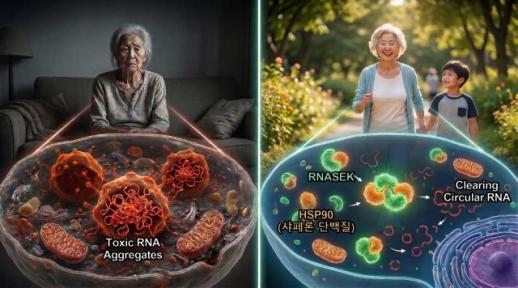 S. Korean researchers find cellular waste clearing process capable of lifespan expansion SEOUL, March 18 (AJP) - South Korean scientists have discovered that clearing molecular debris from cells can significantly slow the aging process and extend lifespan. Researchers at the Korea Advanced Institute of Science and Technology (KAIST) announced on March 18, 2026, that they identified a specific protein responsible for removing genetic waste that typically builds up as organisms get older. The study focuses on circular RNA, a type of molecule that essentially acts as cellular trash. Unlike other genetic materials that the body recycles easily, these circular strands are highly resistant to being broken down. As a result, they clutter the cell over time and interfere with normal biological functions. The research team found that a protein called RNASEK serves as a primary cleaning crew for this waste. By studying roundworms, mice, and human cells, the scientists observed that levels of this protein naturally drop with age. This decline allows circular RNA to pile up and form toxic clumps known as stress granules. When the researchers artificially increased RNASEK levels, the test subjects lived significantly longer and remained in a healthier state. The protein works alongside other helper molecules to prevent genetic waste from sticking together and damaging the cell. These results remained consistent across different species, including mammals. "Until now, circular RNA was largely seen as just a byproduct or an indicator of getting older," said Professor Lee Seung-jae. "This research proves that the accumulation of circular RNA actually drives the aging process, and that the RNASEK protein is a vital regulator that can slow this down to promote a healthy lifespan." The project was a collaborative effort involving Professor Lee Seung-jae, Professor Kim Yun-ki, and Professor Lee Kwang-rok. The study included contributions from lead researchers Kim Si-eun, Ham Seok-jin, Bu Seong-ho, and Lee Dong-hun. The findings were published in the scientific journal Molecular Cell on February 24, 2026. (Reference Information) Journal/Source: Molecular Cell Title: Ribonuclease κ promotes longevity by preventing age-associated accumulation of circular RNA in stress granules Link/DOI: https://doi.org/10.1016/j.molcel.2026.01.031 2026-03-18 10:06:36
 -
 KB Kookmin Bank to Hire About 110 Entry-Level Employees in First Half of 2026 KB Kookmin Bank said March 18 it will recruit about 110 entry-level employees for the first half of 2026. Hiring will be conducted in five categories: UB (corporate client finance and wealth management), UB (regional talent), discharged officers, ESG shared growth, and veterans. Applications will be accepted through March 25 on the bank’s official recruitment website. The process includes document screening, a written test, a first interview and a second interview. Final successful candidates are expected to be announced in June. The UB (Universal Banker) track will select candidates to develop into private bankers and corporate relationship managers. The UB (regional talent) track aims to train regional finance specialists. The bank will also hire discharged officers to recruit candidates with organizational management experience and leadership. The ESG shared growth category targets people with disabilities, recipients of basic livelihood support, North Korean defectors, and children of multicultural families. The veterans category is for eligible national veterans or their family members. A KB Kookmin Bank official said the bank hopes for strong interest and applications from young people who understand the value of challenge and innovation and can help shape the future of finance. The official said the bank will continue inclusive hiring efforts to fulfill its social responsibilities.* This article has been translated by AI. 2026-03-18 10:06:00
 -
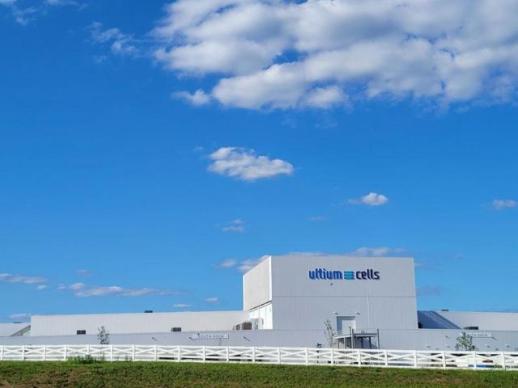 LG Energy Solution to start producing ESS batteries at Tennessee plant SEOUL, March 18 (AJP) - LG Energy Solution (LGES) will begin producing lithium iron phosphate (LFP) battery cells for energy storage systems at its plant in Spring Hill, Tennessee, the battery maker said on Wednesday. Production will be carried out through LGES' joint venture with General Motors, Ultium Cells, with an investment of about US$70 million to convert part of its existing electric-vehicle battery line for ESS production. Mass production is scheduled to start in the second quarter of this year. LGES said the move aims to operate production lines more efficiently as EV sales growth slows, while also protecting jobs. Ultium Cells is currently converting equipment at the plant and training workers to meet ESS production requirements, with 700 staffers who were on temporary leave in January returning. Battery cells produced at the plant will be supplied through LGES' North American unit for ESS, Vertech. LGES said the batteries are expected to be used in projects for energy grid support systems, renewable energy–linked ESS installations, and power infrastructure for artificial intelligence–related data centers. Park In-jae, head of Ultium Cells, said the move marks the plant's first large-scale revamp to evolve into a more diversified battery cell manufacturer. "We will upgrade the production system to meet shifting demand and become a core player and technology leader in the U.S. battery industry," he said. With the latest makeover of its Tennessee plant, LGES now has five ESS production sites across North America. 2026-03-18 09:59:28
 -
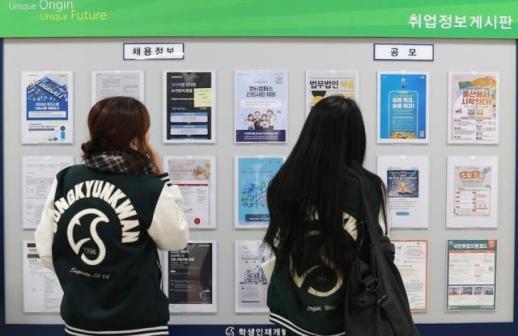 Korea's Feb job growth led by elderly and service, AI substitution hits entry jobs SEOUL, Mar. 18 (AJP) — South Korea’s labour market showed a deceptive resilience in February, with headline employment rising for the second consecutive month, but the underlying data reveals a deteriorating quality of jobs and a deepening structural crisis, as high-value industries shed workers and youth unemployment surged to its highest level in years. The number of employed people rose by 234,000 (0.8 percent) from a year earlier to 28.41 million, according to data released by the Ministry of Data and Statistics on Wednesday. While this marks a modest rebound from January's 194,000 (0.7 percent) gain, it remains significantly lower than the 300,000-plus levels seen late last year. The employment rate for those aged 15 to 64 stood at 69.2 percent, up 0.3 percentage points on-year. Youth employment hit by "hiring freeze" and automation The headline growth failed to hide a grim reality for the younger generation. The employment rate for those aged 15 to 29 plummeted by 1.0 percentage point to 43.3 percent, marking the sharpest decline in recent years. Simultaneously, the youth unemployment rate jumped 0.7 percentage points to 7.0 percent. In stark contrast, job gains were almost entirely driven by the elderly. Employment among those aged 60 and above surged by 284,000 (4.5 percent), indicating that the nation’s job growth is currently sustained by government-led welfare positions and roles for senior citizens rather than private-sector hiring for the youth. The impact of AI-driven automation is a significant factor in this shift. According to a Bank of Korea report released last October, 98.6 percent of the 211,000 youth jobs lost over the past three years were in occupations with high exposure to AI. This underscores a rapid structural displacement in the entry-level job market. High-value sectors in retreat A particularly concerning trend is the ongoing contraction in knowledge-intensive industries, a sector previously identified as a key engine for high-quality job creation. The professional, scientific, and technical services sector—which includes R&D and specialized consulting—shed 105,000 jobs (7.8 percent) in February. This marks a second consecutive month of decline following a loss of 107,000 jobs (8.0 percent) in the previous month. This follows a broader trend of weakening demand in high-value services, compounded by a decline of 42,000 jobs (3.2 percent) in the information and communications sector. The combination of high interest rates and reduced corporate investment has led to a noticeable contraction in quality employment opportunities within these knowledge-based industries. Service sector bloat and shorter hours The concentration of job growth in the service sector further underscores the fragile nature of the recovery. The health and social welfare sector added 284,000 jobs (9.9 percent), effectively accounting for more than the total increase in headline employment. Meanwhile, the agriculture, forestry, and fisheries sector saw a sharp decline of 90,000 jobs (8.2 percent), the largest drop since 2017. Furthermore, the quality of employment is shifting towards precarious, short-term roles. The number of people working less than 36 hours a week rose by 281,000 (4.6 percent), while the headcount for those working 36 hours or more fell by 94,000 (0.4 percent). Average weekly working hours dropped by 0.4 hours to 37.7 hours, signaling a softening in overall labor demand despite the increase in headcount. Rising unemployment and inactivity The total number of unemployed reached 993,000, up 54,000 (5.8 percent) on-year, with the overall jobless rate rising to 3.4 percent, up 0.2 percentage points. As inflation persists, more individuals are entering the job market, yet the economy is failing to absorb them into productive roles. While the economically inactive population decreased slightly by 39,000 (0.2 percent), the number of people who reported they were simply "taking a break"—not seeking work despite being capable—remains a persistent concern, particularly among those in their 20s and 30s. The February data confirms that while the quantity of jobs is being propped up by an aging population and welfare demand, the structural core of the labor market is facing increasing fragility. 2026-03-18 09:21:53
 -
 Doosan Enerbility Wins First U.S. Order for Large Combined-Cycle Steam Turbines Doosan Enerbility said it has won a U.S. contract to supply steam turbines for data center power generation, expanding its footprint in the North American electricity market serving AI data centers. The company said March 18 that it recently signed a supply agreement with a U.S. company for two 370-megawatt steam turbines and two generators to provide electricity for data centers. It said this is its first steam turbine supply deal in North America. Doosan Enerbility said the contract demonstrates its ability to deliver combined-cycle solutions that pair gas turbines with steam turbines. In combined-cycle generation, steam turbines use waste heat from gas turbines to produce additional power, improving overall efficiency. The company said AI data centers, which consume large amounts of electricity around the clock, require highly efficient and reliable generation equipment. Doosan Enerbility said it plans to use the order as a springboard to accelerate exports of its combined-cycle model to utility companies and independent power producers in North America. "This order once again confirms that the North American power generation market has strong trust in Doosan's power generation technology," said Son Seung-woo, head of Doosan Enerbility's Power Service BG. "We will further strengthen cooperation with customers in North America and solidify our position as a comprehensive supplier covering both gas turbines and steam turbines."* This article has been translated by AI. 2026-03-18 09:21:34
 -
 Hana Bank Rolls Out Generative AI for Corporate Credit Reviews, Cutting Draft Time to 10 Seconds Hana Bank said on March 18 it has developed an in-house generative AI-based “corporate credit review opinion generation system” and deployed it across all branches. The system analyzes a range of data — including financial statements, company information and industry trends — and automatically produces a draft review opinion needed in the credit rating process for audited and non-audited companies. Hana Bank said staff previously spent an average of more than 30 minutes analyzing indicators and writing narrative opinions, but the new system can generate a draft in about 10 seconds. The bank expects the rollout to save more than 27,000 working hours a year across roughly 70,000 annual credit rating cases for audited and non-audited companies. Hana Bank said the tool is an in-house model, with algorithms designed and implemented independently. Through collaboration among internal departments, it incorporated evaluation guidelines used by loan specialists to standardize review opinions more precisely and improve effectiveness. The bank described an in-house model as one planned, developed and operated directly using a company’s own staff and technology. Hana Bank said it plans to expand automation across household and corporate loan reviews to accelerate the AI transformation of its lending operations. A Hana Bank official said the project is intended to maximize efficiency through AI, raise productivity and help employees better understand customers and companies. The official said the bank will continue to reflect feedback from the field, apply AI to more work areas and develop the system in ways that provide practical help to branches and customers.* This article has been translated by AI. 2026-03-18 09:18:49
 -
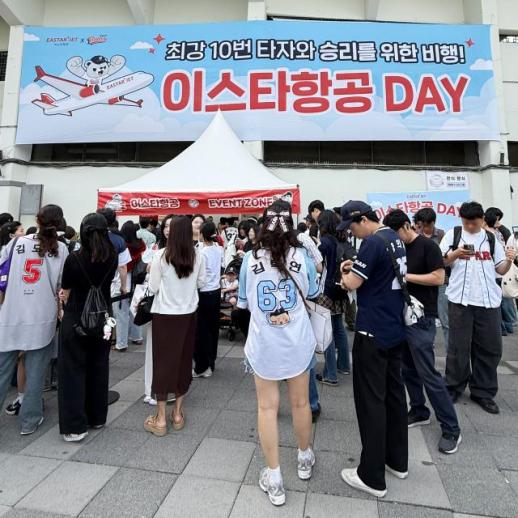 Eastar Jet Expands Co-Marketing With Doosan Bears to Reach Younger Baseball Fans Eastar Jet said Tuesday it will continue co-marketing with KBO team the Doosan Bears. The airline and the Bears have expanded their brand collaboration for a third straight year since signing a “strategic business agreement for joint marketing” at Jamsil Baseball Stadium in August 2024. Under the agreement, Eastar Jet provides prizes such as airline tickets for events aimed at fans attending the Bears’ home games, while the Bears support promotion of the carrier through advertising placements at Jamsil. With the start of the 2026 KBO League regular season, the partners will roll out additional promotions, including a ticket giveaway tied to the in-stadium cheering event known as “Bravo Time.” Eastar Jet will also hold an “Eastar Jet Brand Day” event next month. “We decided to continue joint marketing with the Doosan Bears this year as well to communicate more closely with pro baseball fans,” an Eastar Jet official said.* This article has been translated by AI. 2026-03-18 09:12:51