

Journalist

Lester Munson
-
 Porsche Korea Opens First Official Showroom in Jeju Porsche Korea said Tuesday it has opened Porsche Center Jeju, an official showroom for the Jeju region. The center opened Monday, marking the first official Porsche showroom on Jeju since the company operated the “Porsche Now Jeju” pop-up store in 2021. It will be run by Porsche Korea’s authorized dealer, Deutsche Auto. Porsche Center Jeju spans 3,944.54 square meters (about 1,193 pyeong) from one basement level to three stories above ground. The company said the facility features an interior concept using basalt stone and a space design reflecting Jeju’s local character. Customers can receive one-stop service on site, from consultation and test drives to contracts and vehicle delivery. The center includes 15 work bays and charging equipment, and will provide integrated services ranging from routine maintenance to accident repairs, including bodywork and painting. “Based on a value-driven growth strategy with a long-term perspective, Porsche continues to expand the brand experience nationwide,” Porsche Korea CEO Mathias Busse said. “Through Porsche Center Jeju, the first official hub in the Jeju region, we will provide the expertise and differentiated service expected of a premium brand.” Bae Hyun-seok, CEO of Deutsche Auto, said the company will offer a brand experience that fits with Jeju’s natural environment while improving service and convenience for customers.* This article has been translated by AI. 2026-03-18 08:57:18
 -
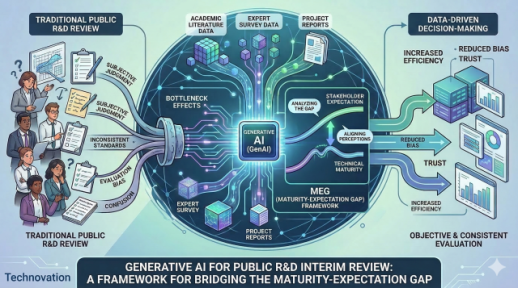 Kookmin University professor develops AI framework for public R&D evaluation SEOUL, March 18 (AJP) - A research team led by Professor Kim Do-hyung of the KMU International Business School (KIBS) at Kookmin University (KMU) has developed a generative artificial intelligence framework to enhance decision-making in public research and development (R&D) evaluations, the university said Tuesday. The study introduces a systematic approach to bridging the gap between technical capabilities and stakeholder expectations. The research paper, titled "Bridging the maturity-expectation gap: Generative AI in strategic decision-making for public R&D interim review," was published in the international journal Technovation. It addresses the limitations of current public R&D interim reviews, which often depend on the subjective judgment of experts. These traditional methods frequently face criticism for lacking consistency and being prone to evaluation bias. To resolve these issues, the team proposed the Maturity-Expectation Gap (MEG) framework. This model analyzes the difference between the actual maturity of generative AI technology and the performance levels expected by stakeholders. By combining survey data from experts with machine learning-based literature analysis, the researchers quantified how perceptions of AI vary across different groups. The findings revealed that significant discrepancies between expectations and technical maturity can reduce trust and the willingness to adopt AI tools. The study also categorized evaluation areas where generative AI could be easily integrated, as well as those that require additional preparation. This provides a clear roadmap for public sectors to build data-driven decision-making systems. "Generative AI has the potential to increase efficiency and consistency in the public R&D evaluation process," said Professor Kim Do-hyung. "However, if the gap between expectations and actual technical maturity is not managed, it can lead to distrust and resistance during implementation. The MEG framework proposed in this study can be used to diagnose these gaps and establish phased introduction strategies." The project was a collaboration between lead author Professor Kim Do-hyung, co-author Professor Kang Song-hee of the Tech University of Korea, and corresponding author Professor Hong Ah-reum of Kyung Hee University. The researchers expect the framework to contribute to more consistent and objective R&D management in the future. (Reference Information) Journal/Source: Technovation Title: Bridging the maturity-expectation gap: Generative AI in strategic decision-making for public R&D interim review Link/DOI: https://doi.org/10.1016/j.technovation.2024.103110 2026-03-18 08:43:19
 -
 LG Energy Solution, GM JV to Start LFP Battery Cell Production for U.S. Energy Storage LG Energy Solution and General Motors’ joint venture, Ultium Cells, will begin producing LFP (lithium iron phosphate) battery cells for energy storage systems at its Spring Hill, Tennessee, plant, the company said. LG Energy Solution said it is investing about $70 million to convert part of an existing electric-vehicle battery line to ESS production, with mass production set to start in the second quarter. Cells made at the Tennessee plant will be supplied through LG Energy Solution’s North American ESS system integration unit, Vertech. The company said the batteries are expected to be used in grid-stabilization projects, renewable energy-linked ESS installations and power infrastructure for AI data centers. LG Energy Solution said the shift is a strategic move to raise line utilization and improve operating efficiency as growth in the EV market slows. It said converting some EV equipment to ESS production could also strengthen job stability. Ultium Cells is converting equipment at the Tennessee plant and retraining workers to meet requirements for ESS-grade LFP cell production. The company said 700 employees who were temporarily laid off in January will return to support line construction and new product output. Park In-jae, head of Ultium Cells, called the move the plant’s first large-scale conversion and said it shows Ultium Cells is evolving into a more diversified battery cell manufacturer. He said the company will upgrade its production system in line with shifts in demand and strengthen its position as a core player and technology leader in the U.S. battery industry. LG Energy Solution said the conversion gives it a total of five ESS production sites in North America. An LG Energy Solution official said the company will seek to solidify its leading position in the North American market after securing what it described as an overwhelming level of production capacity in the ESS business. * This article has been translated by AI. 2026-03-18 08:39:52
 -
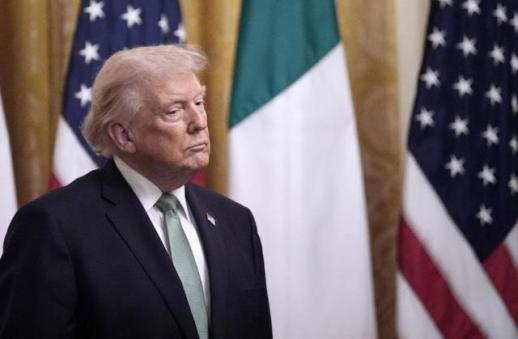 US no longer needs help from allies including South Korea, Trump blasts SEOUL, March 18 (AJP) - U.S. President Donald Trump said Tuesday that his country no longer needs naval assistance from North Atlantic Treaty Organization (NATO) member countries, as well as Australia, Japan, and South Korea, to keep the Strait of Hormuz open and secure. "Because of the fact that we have had such Military Success, we no longer 'need,' or desire, the NATO Countries' assistance - WE NEVER DID! Likewise, Japan, Australia, or South Korea," Trump wrote on his own social medial platform Truth Social. He then fumed, "In fact, speaking as President of the United States of America, by far the Most Powerful Country Anywhere in the World, WE DO NOT NEED THE HELP OF ANYONE." In an abrupt reversal, the remarks came just days after Trump had urged allies to dispatch warships to the strategically important waterway, a critical chokepoint for roughly one-fifth of the world's oil supply, amid the escalating conflict in the Middle East which began with U.S.-led airstrikes on Iran late last month and now in its third week. The outburst appeared to reflect his frustration and anger after most NATO members declined to get involved, while others remained cautious. "I am not surprised by their action, however, because I always considered NATO, where we spend Hundreds of Billions of Dollars per year protecting these same Countries, to be a one way street - We will protect them, but they will do nothing for us, in particular, in a time of need," he also wrote, criticizing NATO for "making a foolish mistake." South Korea has remained cautious, saying it is "in close consultation with Washington," since Trump singled out the country, along with several others earlier in the week. 2026-03-18 08:32:58
 -
 Film Review: Lee Dong-hwi’s ‘Method Acting’ Finds Pathos Beneath the Laughs “It feels romantic — this lighting, the temperature, the humidity …” a guest once said on a variety show. The point was that place, weather and even how you feel can combine to create a mood. Movies are no different. Your mood that day, and your own experiences, can become part of how you judge what you see. “Choi’s Review” introduces films through the writer’s perspective and lived experience, in a more relaxed, everyday tone. There is a clear gap between the craft of making people laugh and the humiliation of becoming the joke. If a planned laugh is a professional win, being laughed at by accident can feel like a private defeat. The comedy film “Method Acting” follows a man determined to be seen as a serious actor, even as everyone around him keeps consuming “funny Lee Dong-hwi.” Lee Dong-hwi plays an actor who built a name on the mega-hit comedy “Algae-in.” Loved for comedy, he stops working because he no longer wants to be remembered only as “the funny actor,” and waits for a chance to break out. When he is finally cast in the traditional historical drama “Gyeonghwa Suwol,” he treats method acting — total psychological identification with a role in pursuit of extreme realism — as both an escape hatch and his last line of proof. The reality of serious drama, however, does not cooperate. From the first day of shooting, mistakes pile up. His older brother Dong-tae (Yoon Kyung-ho), filling in as a stand-in manager, creates new problems with unpredictable moves. Tensions also rise with Taemin (Kang Chan-hee), a younger top star whose status has overtaken his senior’s, turning their relationship into a contest for control as the set slides toward chaos. Director Lee Gi-hyeok, himself an actor, expands his short film of the same name into a feature, widening the lens to the private life behind the idea of “method acting.” The film’s strength lies beyond the slapstick of a man trying to shed a comic persona. It is in his decision to face his limits head-on, and in the isolation that pushes him toward a truth he can live with. The performance he reaches at the edge of collapse is, ironically, not fully captured by the camera. What follows is a quieter daily life — and only after accepting ordinary reality does he return, on and off set, to his own version of “method acting.” The family life shown beyond the unruly shoot provides the film’s firmest foundation. Against the noisy struggle in front of the camera, the film lingers on small, plain images — a mother’s back, a silent living room — to show loneliness without forcing it. Those moments make clear this is not a comedy aimed only at laughs. The characters’ growth invites viewers to recognize pieces of themselves and draws empathy and comfort from that recognition. Performances complete the film’s tone. Lee Dong-hwi uses his own name and image, turning himself into the target while pulling pathos from behind the jokes. Yoon moves between easy humor and heavy sincerity as the brother, steering the audience’s emotions. Kim Geum-soon, as the mother, anchors the film’s emotional center as a grounded parent who loves her son’s comedy more than anyone. Kang, as top star Jeong Taemin, stands out with a character who is irritating but not easy to hate, showing a broader acting range than before. Viewers may enter expecting familiar Lee Dong-hwi comedy, but what they leave with is the idea that everyone has a kind of “method acting” that holds up daily life. On the stage of life, the film suggests, people wear their masks and endure the roles they have been given. By playfully twisting the line between reality and fiction, “Method Acting” highlights the comedy and tragedy behind laughter and offers a quiet pat on the back to anyone who made it through the day. It opens in theaters March 18. Running time is 92 minutes. The rating is for ages 12 and up. * This article has been translated by AI. 2026-03-18 00:05:03
 -
 BTS comeback project turns Seoul into citywide 'THE CITY ARIRANG' festival Ahead of BTS’ comeback, Seoul is set to be washed in what organizers call a “purple Arirang.” Beyond a standard album release, the plan is to turn the capital into a monthlong, citywide festival space tied to the group’s return. HYBE on March 16 released details on Weverse for its urban project “BTS THE CITY ARIRANG SEOUL.” The events will run from March 20, the release date of BTS’ new album “ARIRANG,” through April 19 across central Seoul. “THE CITY” is HYBE’s in-house format that layers exhibitions, pop-up stores, hotel packages and other tie-ins around concerts or album releases. BTS previously staged “THE CITY” in Las Vegas and Busan. Organizers said the Seoul edition expands the concept with comeback messaging, large-scale media displays and hands-on programs spread across the city. The biggest concentration of events is planned for March 20. At 7 p.m., media facade shows are set for landmarks including Sungnyemun and N Seoul Tower. At 8:30 p.m., a 15-minute drone light show is scheduled over Ttukseom Hangang Park. Gwanghwamun Square will also be filled with comeback content. From 7 p.m. March 20 to midnight March 21, related videos will run on large screens around the square. Music-and-light shows tied to the new album are planned at Dongdaemun Design Plaza and at Banpo Bridge’s Moonlight Rainbow Fountain. The DDP program is scheduled to continue through April 12. Beyond watching, fans will be able to take part in experience-based programs, including a “stamp rally” linking major sites such as Yeouido, DDP and Shinsegae Square. Participants collect stamps at each location while moving through the city. An event plaza at Yeouido Hangang Park will be turned into a “Love Song Lounge” for three days starting March 20, featuring busking and photo zones tied to the album campaign phrase, “WHAT IS YOUR LOVE SONG?” Beginning April 6, DDP Exhibition Hall 1 will be decorated as “ARMY Madang,” and media installations using light and video are planned for areas including Cheonggyecheon and Yongsan Station under the name “Love Quarter.” Organizers said the project is also designed to connect with commercial and tourism spaces. HYBE said it is partnering across sectors including mobility, finance and food and beverage, as well as the hotel industry. Major hotels in Seoul will offer BTS-themed packages aimed at demand from global fans. HYBE described “BTS THE CITY ARIRANG SEOUL” as a test and showcase of how BTS’ intellectual property can combine with a city’s tourism offerings. It said areas stretching from Gwanghwamun to Cheonggyecheon and the Han River are being repositioned as places to see, hear and experience the group’s music, not simply pass through. Detailed information is available on Weverse and the project’s official website. Some programs will operate by advance reservation. * This article has been translated by AI. 2026-03-18 00:03:29
 -
 SK hynix owed 70% to US and 25% to Nvidia for record 2025 sales SEOUL, March 17 (AJP) - SK hynix has effectively pivoted into an American-centric powerhouse, with nearly 70 percent of its record-breaking 2025 revenue originating from U.S. customers, with NVIDIA alone accounting for a quarter, according to its annual business report released Tuesday. The fiscal transformation, fueled by an insatiable appetite for High Bandwidth Memory (HBM) among Silicon Valley giants, pushed the company into a "net cash" position for the first time in six years. Cash and cash equivalents skyrocketed by 146.8 percent to 34.94 trillion won (approximately $26.47 billion), far outstripping its total debt of 22.25 trillion won (approximately $16.86 billion). The American Surge The report underscores a dramatic shift in the company’s geographic footprint. Revenue from the U.S. market hit 66.89 trillion won ($50.67 billion) in 2025, a staggering jump from previous years when the U.S. share hovered between 39 percent and 53 percent. This 68.9 percent revenue concentration in the U.S. highlights the success of SK hynix’s strategy to tether its fate to the North American AI infrastructure build-out. While China sales grew to 19.14 trillion won (approximately $14.50 billion), the U.S. market expanded by more than 47 trillion won in a single year, widening the gap between the two regions to an all-time high. The NVIDIA Anchor Central to this U.S. dominance is a tightening grip on the supply chain for NVIDIA. SK hynix generated an estimated 23.26 trillion won ($17.62 billion) from the California-based AI leader alone—accounting for nearly a quarter (23.9 percent) of its total global sales. Following its success as a primary supplier of HBM3E, the company is now accelerating its transition to next-generation HBM4.The improved financial liquidity, characterized by a debt-to-equity ratio that fell to 45.95 percent from 62.15 percent, provides the necessary capital to lead the high-stakes AI memory race. Financial Fortification This robust cash flow is now being channeled into a massive R&D push. SK hynix reported a 35.9 percent increase in research and development spending, reaching 6.73 trillion won ($5.10 billion) in 2025. This record investment specifically targets the development of 16-layer HBM4 and next-generation packaging technologies essential for the evolving AI ecosystem. 2026-03-17 19:39:55
 -
 Janggeum Shipping Emerges as Key VLCC Player as War Roils Tanker Market Middle East-driven war fallout is jolting global shipping markets, and South Korea’s Janggeum Shipping is being cited as a quiet winner. The privately held company is little known at home, but industry watchers say it has become a core player in the tanker market, led by very large crude carriers, or VLCCs, and is generating daily earnings in the hundreds of millions of won. Industry sources said March 17 that Janggeum Shipping has recently been securing about $500,000 a day in charter fees for VLCCs, or about 750 million won. That is about 10 times last year’s average, as freight rates that jumped after the war have flowed directly into profits. The gains did not come by chance. Before the war intensified, Janggeum Shipping, through its tanker unit Janggeum Maritime, moved aggressively to secure VLCCs. Ship data firm VesselsValue said Janggeum Maritime has completed about 30 VLCC transactions so far this year. With those deals, the VLCCs it operates have risen to more than 100 ships, about 12% of the estimated global VLCC fleet of 880. Janggeum Maritime is led by Chung Ga-hyun, vice chairman and son of Janggeum Shipping Chairman Chung Tae-soon. Chung Ga-hyun owns 100% of Janggeum Maritime, which the industry views as a key growth pillar for the group. Analysts say a shift toward a tanker-heavy portfolio and early investment have put management to the test, with this shipping cycle offering evidence of results. The article said the war’s impact has also lifted earnings as the Strait of Hormuz was blocked, turning Janggeum’s VLCCs into floating crude storage. With onshore storage reaching its limits, refiners have increasingly chartered tankers as temporary storage, it said. The strategy has drawn attention abroad. Bloomberg recently highlighted Janggeum Shipping’s tanker buildup and profit structure, calling it “one of the smartest beneficiaries” amid turmoil in global energy markets. Bloomberg said Janggeum Shipping amassed large crude tankers before the war and, as a result, has emerged as one of the biggest winners from the disruption. It also said early fleet deployment and aggressive investment have shaken up the global tanker market. Janggeum Maritime’s rapid growth is also being watched for what it could mean for governance. As fleet size and profitability expand, the unit could become central to a future succession structure, the article said. The broader shift in emphasis from containers to bulk and tankers is also expected to accelerate alongside second-generation management. “One industry boom at Janggeum Shipping is not just a simple wartime windfall, but the result of a generational transition and a shift in business structure coming together,” a shipping industry official was quoted as saying. “On top of a strategy that quietly expanded the fleet, the second generation’s execution is emerging as a variable that can reshape the global shipping market.”* This article has been translated by AI. 2026-03-17 18:03:21
 -
 KOSPI outperforms on Nvidia-driven momentum despite oil jitters SEOUL, March (AJP) — South Korean equities outperformed regional peers on the back of AI-driven buying, brushing aside rising oil prices that weighed on broader Asian markets. Seoul’s main bourse drew strength from its exposure to Nvidia’s supply chain, as momentum from the U.S. chipmaker’s GTC 2026 conference continued to support investor positioning in artificial intelligence-related stocks. Brent crude rose 3 percent to $103.23 a barrel, while West Texas Intermediate gained 3.6 percent to $96.80, bringing energy risks back into focus as tensions around the Strait of Hormuz intensified. Across Asia, the divergence was clear. Japan’s Nikkei 225 fell 0.2 percent and China’s Shanghai Composite dropped 0.9 percent, while Hong Kong’s Hang Seng Index edged up 0.2 percent. The benchmark KOSPI rose 1.63 percent to 5,640.48, supported primarily by strong institutional buying that offset selling by foreign and retail investors. Institutions bought a net 733.8 billion won ($492 million), effectively driving the market higher, while foreigners and individuals sold 173.8 billion won and 575.2 billion won, respectively — highlighting fragile underlying sentiment despite the headline gains. Technology and AI-linked stocks led the advance. Samsung Electronics rose 2.8 percent, while SK hynix briefly reclaimed the 1 million won level before paring gains. SK Square added 4.5 percent, reflecting continued positioning in AI infrastructure and platform exposure. Both Samsung Electronics and SK hynix took part in Nvidia’s event as key suppliers of next-generation HBM4 chips. Gains extended to autos and battery makers, with Hyundai Motor rising 3.2 percent and LG Energy Solution adding 4 percent. Platform and biotech shares also moved higher. NAVER climbed 2.8 percent, while Samsung Biologics rose 1.2 percent and Celltrion gained 3 percent. In contrast, defense and energy-related names lagged despite ongoing geopolitical tensions. Hanwha Aerospace fell 5.4 percent and Doosan Enerbility slipped 1.2 percent. The index, however, gave up much of its intraday gains after rising nearly 3 percent earlier in the session, as higher oil prices and late-session profit-taking weighed on sentiment. The tech-heavy KOSDAQ underperformed, slipping 0.12 percent to 1,136.94 after surrendering earlier gains. Foreign and institutional investors led the decline, selling a combined 94.6 billion won, while retail investors stepped in with net purchases of 140.1 billion won. The reversal underscored weakening momentum in smaller-cap and growth-oriented stocks, in contrast to the relative resilience of large-cap AI-linked names on the KOSPI. In currency markets, the Korean won held near 1,490 per dollar, supported by a modest pullback in the U.S. currency. 2026-03-17 17:46:18
 -
 Korea Zinc’s indium draws U.S. attention as quantum computing material Korea Zinc, the only producer of the strategic mineral indium in South Korea, is drawing attention as indium gains prominence as a key material for the fast-growing quantum computing industry. With competition intensifying over next-generation technologies tied to quantum computing, industry officials say Korea Zinc’s stable indium output is positioning it as an important partner in advanced-industry supply chains, including those linked to South Korea and the United States. According to the industry on March 17, quantum computers use quantum mechanics — including superposition and entanglement — to perform complex calculations far faster than conventional computers. As the quantum computing sector enters a growth phase, indium’s strategic value has risen. Academic sources say indium is needed to make connectors for QPU (quantum processing unit) chipsets, which serve as the “brain” of quantum computers. Indium phosphide (InP) is also cited as a key material for producing photonic integrated circuits (PIC). Demand for indium is likely to increase as quantum computers improve and move closer to commercialization. The United States, home to many advanced technology companies, is working at the national level to advance quantum computing. In November 2025, the U.S. Department of Energy said it would provide $625 million to support next-generation research programs at the National Quantum Information Science Research Centers (NQISRC). The U.S. has also supported quantum technology research systematically since enacting the National Quantum Initiative Act in 2018. As the industry develops, securing stable supplies of key materials is increasingly seen as central to competitiveness and economic security. Indium is used not only in quantum computing but also widely in displays, touchscreens, thin-film solar power systems and advanced semiconductors. With indium’s importance growing, Korea Zinc has also come into focus. The company produces 99.999% high-purity indium using what it calls rare-metal concentration and recovery technology based on an integrated zinc, lead and copper process. After Chairman Choi Yun-beom took office, Korea Zinc raised indium output to about 90 to 100 metric tons a year. It produced 97 tons in 2025. Korea Zinc’s role in the U.S. indium supply chain is significant. According to the U.S. Geological Survey, South Korea ranked No. 1 in indium exports to the United States from 2020 to 2023, accounting for 29% of U.S. indium imports over that period. Given that Korea Zinc is the only indium producer in South Korea, the company effectively serves as a key partner supporting U.S. supply chains for advanced industries. “Indium is a critical mineral whose strategic importance is being highlighted not only in displays and semiconductors but also recently in the quantum computing industry,” a Korea Zinc official said. “As the only indium producer in South Korea, Korea Zinc will fulfill its role and responsibility as a backbone industry, based on world-class rare-metal recovery technology.”* This article has been translated by AI. 2026-03-17 17:37:38