
Journalist

Lim, Kwu Jin
-
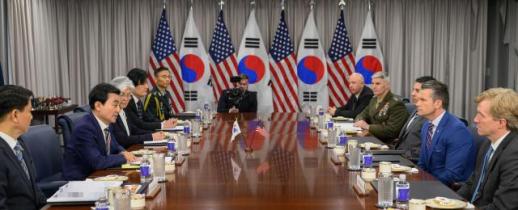 U.S. and South Korea Defense Ministers Discuss Key Security Issues South Korea's Defense Minister An Kyung-bak met with U.S. Secretary of Defense Pete Hegseth on May 11 at the Pentagon in Washington, D.C., to discuss key issues including the transition of wartime operational control. This meeting marked the first time the two defense ministers have convened since their discussions during the 57th U.S.-South Korea Security Consultative Meeting in Seoul on November 4, 2025. According to the Ministry of National Defense, the ministers discussed the security situation on the Korean Peninsula, including the transition of wartime operational control, and reaffirmed the significant role of the Korea-U.S. Integrated Defense Dialogue (KIDD) in enhancing alliance cooperation and national interests. The 28th KIDD meeting is scheduled for May 12-13, 2026. KIDD is a high-level regular meeting held twice a year since 2011, with the upcoming meeting featuring senior representatives, including Kim Hong-cheol, Director of Defense Policy, and John No, Assistant Secretary of Defense for Indo-Pacific Security Affairs. Key topics for discussion will include the transition of wartime operational control and the introduction of South Korea's nuclear-powered submarines. During the meeting, Minister An explained South Korea's recent efforts to lead defense on the Korean Peninsula through increased defense spending and securing core military capabilities, while discussing ways to strengthen future cooperation. Attendees from the U.S. side included Elbridge Colby, Deputy Assistant Secretary of Defense for Strategy and Force Development; John No; Ricky Buria, Chief of Staff; and Christopher Mahoney, Vice Chairman of the Joint Chiefs of Staff. South Korea's delegation included Ambassador to the U.S. Kang Kyung-wha, Brigadier General Yoon Hyung-jin, Defense Attaché to the U.S., Kim Hong-cheol, Spokesperson Jeong Bit-na, and International Policy Director Lee Kwang-seok. The transition of wartime operational control was a central agenda item for this meeting. The Yoon Suk-yeol administration is considering 2028 as a target for the transition before the current U.S. administration ends its term. U.S. Forces Korea Commander Javier Brunson recently mentioned a goal of transitioning in the first quarter of 2029 during a congressional hearing. Additionally, sensitive issues such as cooperation on the construction of nuclear-powered submarines and contributions to the resumption of navigation through the Strait of Hormuz were likely discussed. The agreement on nuclear-powered submarine construction cooperation, reached by the leaders of the two countries last year, has not progressed as expected. The recent fire on the South Korean cargo ship HMM Namwoo in the Strait of Hormuz has been confirmed as an external attack by an unidentified aerial vehicle, which likely prompted discussions on this matter as well. The South Korean government condemned the attack on the Namwoo on May 11, stating, "We will continue to participate in international efforts to ensure the safety and freedom of navigation for all vessels, including those from South Korea." President Donald Trump has continued to urge contributions from various countries, including South Korea, for the resumption of navigation through the Strait of Hormuz. In his opening remarks, Minister An praised Secretary Hegseth for strengthening the U.S. military under the banner of peace through strength since his appointment, stating, "I commend the efforts to restore the fighting spirit of the U.S. military, making it an even stronger force in the world." He added, "We are also making our best efforts to secure core defense capabilities through increased defense spending to realize a South Korean-led defense of the Korean Peninsula." Secretary Hegseth, in his opening remarks, referred to the U.S. military operations against Iran as 'Epic Fury' and emphasized the importance of the strength of the alliance, urging partners to stand shoulder to shoulder with the U.S. He noted that South Korea's commitment to increasing defense spending and taking a leading role in the defense of the Korean Peninsula is "very important" and highlighted the necessity of burden sharing among all U.S. partners to build a resilient alliance and effectively deter regional adversaries. Later that afternoon, Minister An visited Arlington National Cemetery to pay his respects to the noble sacrifices of veterans who dedicated their lives to freedom and peace. 2026-05-12 09:00:27
 -
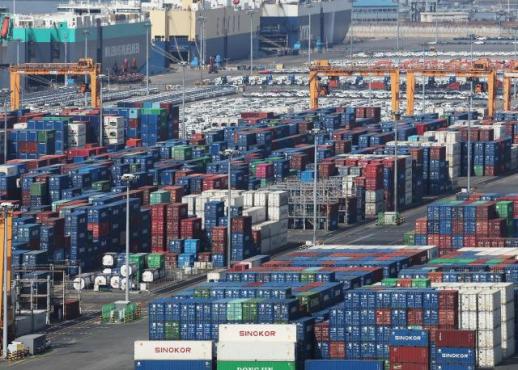 South Korea Posts Highest GDP Growth Among Major Economies in Q1 South Korea's economy recorded the highest growth rate among major economies in the first quarter of this year. Driven by strong exports, the country achieved a surprising growth, but concerns about base effects and external uncertainties suggest that growth may slow in the second quarter. According to the Bank of Korea's economic statistics system, South Korea's GDP growth rate for the first quarter was 1.694%, the highest among 22 countries that released preliminary figures as of the previous day. Indonesia (1.367%) and China (1.3%) followed, but the gap between them and South Korea was significant. Only these three countries recorded growth rates above 1% for the first quarter. Other major countries reported growth rates below 1%, including Finland (0.861%), Hungary (0.805%), Spain (0.614%), Estonia (0.581%), the United States (0.494%), Canada (0.4%), and Germany (0.334%). In contrast, France (-0.005%), Sweden (-0.21%), Lithuania (-0.444%), and Mexico (-0.8%) experienced negative growth, with Ireland showing a significant decline at -2.014%. After a fourth-quarter growth rate of -0.161% last year, South Korea fell to 38th among 41 major countries included in the Bank of Korea's statistics. However, the country has seen a dramatic rebound in rankings this year. If South Korea maintains its position after other countries release their final figures, it will mark the first time since the first quarter of 2010 (2.343%) that it has ranked first in quarterly growth in nearly 16 years. This unexpected growth in the first quarter was largely attributed to exports, particularly in the semiconductor sector. Exports surged by 5.1%, primarily driven by information technology (IT) products, contributing 1.1 percentage points to net exports. Samsung Electronics and SK Hynix reported impressive results of 57.2 trillion won and 37.6 trillion won, respectively, helping to drive the economic rebound. In light of the better-than-expected growth rate, both domestic and international institutions are adjusting their economic forecasts upward. The actual growth figure is nearly double the Bank of Korea's earlier forecast of 0.9% for the first quarter. However, it remains uncertain whether this growth trend will continue into the second quarter. Due to the nature of quarter-over-quarter growth rates, there is a tendency for growth rates to slow after reaching a high base. The government stated on April 23 that "the base effect from the significant growth in the first quarter, combined with the intensifying impacts of the Middle East conflict, suggests that a correction in growth is likely in the second quarter."* This article has been translated by AI. 2026-05-12 08:57:37
 -
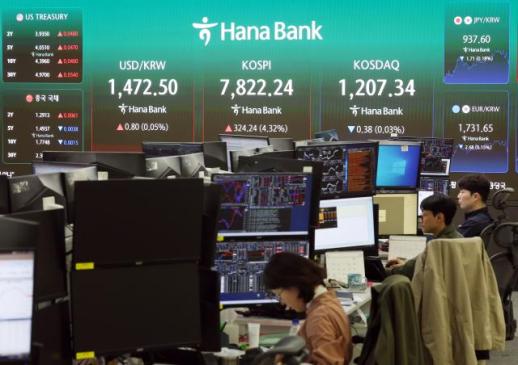 South Korea's Stock Market Capitalization Surpasses Taiwan's South Korea's stock market capitalization has surpassed that of Taiwan. Following a record high for the KOSPI, the rankings of the two countries' stock markets flipped in just one day. According to the Korea Exchange and the Taiwan Stock Exchange, as of May 11, South Korea's stock market capitalization was recorded at 7,084 trillion won. When converted at the exchange rate of 1,472 won to the dollar, this amounts to approximately $4.81 trillion. In contrast, Taiwan's stock market capitalization was about $4.34 trillion in dollar terms. South Korea's market capitalization is now approximately $470 billion higher than Taiwan's. Just a day earlier, on May 10, Taiwan's market capitalization was $4.72 trillion, while South Korea's was at $4.55 trillion, indicating that Taiwan had the upper hand before the rankings changed. Market analysts attribute the rise in the KOSPI to the expansion of market capitalization. The KOSPI index recently broke the 7,800 mark for the first time, consistently setting new records. The strong performance of large-cap stocks, particularly in semiconductors and secondary batteries, has contributed to the rapid growth of South Korea's overall market capitalization. On May 11, the KOSPI surged over 4%, closing at a historic high of 7,820. The index opened at 7,775.31, up 3.70% from the previous trading day, and at one point reached 7,899.32, nearing the 7,900 mark.* This article has been translated by AI. 2026-05-12 08:56:11
 -
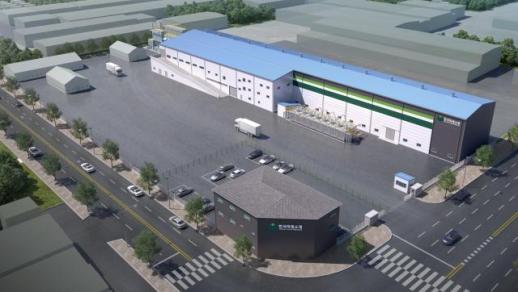 LS Cable Expands Eco-Friendly Copper Material Business with New Factory LS Cable is making a significant move into the eco-friendly copper material sector, establishing a resource recycling supply chain amid a surge in copper demand driven by AI data centers and power grid expansions. The company aims to secure competitiveness from the material stage onward. On May 12, LS Cable announced that its subsidiary, Korea Future Materials, has completed a factory in Gunsan, North Jeolla Province, and has begun mass production of eco-friendly advanced materials, including recycled copper and Cuflake. This investment marks the first establishment of a resource recycling supply chain in South Korea's wire industry, encompassing everything from eco-friendly material production to wire manufacturing. Korea Future Materials, established by LS Cable in 2023, produces recycled copper, Cuflake for copper foil, high-purity oxygen-free copper (OFC), and copper alloys at the Gunsan facility. Notably, recycled copper is produced by reusing copper recovered from waste cables, which can reduce carbon emissions by up to 80% compared to traditional mining methods. Cuflake is a new material for copper foil that utilizes copper in flake form instead of wire, simplifying the manufacturing process, reducing energy consumption, and enhancing raw material supply stability. LS Cable believes this technology will strengthen its competitiveness in the wire and battery material sectors. LS Cable plans to expand its North American market presence in collaboration with its affiliates, including LS Green Link, Gaon Cable, LS Eco Energy, and LS Eco Advanced Materials. Korea Future Materials is also pursuing the construction of a factory near LS Green Link in Virginia, USA, to establish a local production system and enhance its global supply chain responsiveness. Jeon Ik-soo, CEO of Korea Future Materials, stated, "We will expand our eco-friendly resource recycling business and strengthen our capacity to supply high-value materials needed in the era of electrification." Industry experts note that as copper demand structurally increases due to AI data centers and power grid expansion, LS Cable's expansion into the material stage is noteworthy. An increase in recycled copper supply is expected to lower raw material price volatility risks and improve compliance with global eco-friendly regulations. 2026-05-12 08:51:22
 -
 Applied Materials Partners with TSMC to Accelerate AI Semiconductor Development Applied Materials is teaming up with TSMC to accelerate the development of next-generation artificial intelligence (AI) semiconductor technologies. The two companies plan to conduct joint research and development at the EPIC Center, currently being established in Silicon Valley, with a strategy to innovate advanced processes and expedite the transition to mass production. On May 12, Applied Materials announced the expansion of its strategic partnership with TSMC to hasten the commercialization of semiconductor technologies for the AI era. Building on over 30 years of collaboration, the companies aim to jointly develop materials engineering, equipment, and process integration technologies. This collaboration will center around the EPIC (Equipment and Process Innovation and Commercialization) Center in Silicon Valley, where key technologies will be developed to create high-performance, low-power semiconductors required for data centers and edge environments. The focus will be on accelerating the speed of technology transfer from research to mass production. In response to the growing demand for AI and high-performance computing (HPC), the companies plan to develop technologies that improve the power, performance, and area of advanced logic processes, as well as introduce new materials and next-generation equipment to implement 3D transistors and interconnect structures. They will also collaborate to enhance process integration technologies to improve yield and reliability. As semiconductor miniaturization approaches its limits, this partnership is seen as a model for collaborative innovation across the industry, highlighting that maintaining competitiveness cannot rely solely on the technological advancements of individual companies. Gary Dickerson, President and CEO of Applied Materials, stated, "The two companies have collaborated at the forefront of semiconductor technology for a long time. Through the EPIC Center, we will accelerate technology development and address manufacturing complexities." Meanwhile, Miwije TSMC Senior Vice President remarked, "Next-generation semiconductor technology hinges on materials engineering and process integration capabilities, and our collaboration at the EPIC Center will expedite technology commercialization." The EPIC Center is a large semiconductor equipment research and development facility being established with an investment of approximately $5 billion, providing a collaborative environment that spans the entire process from initial research to mass production. This is expected to shorten the time for semiconductor companies to validate technologies and transition to mass production.* This article has been translated by AI. 2026-05-12 08:47:07
 -
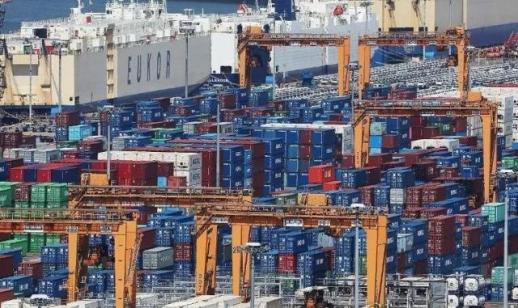 South Korea Reports Highest GDP Growth Among Major Economies in Q1 South Korea recorded the highest GDP growth rate among major economies in the first quarter of this year. According to the Bank of Korea's economic statistics system, the country's real GDP growth rate for Q1 was 1.694% compared to the previous quarter, marking the highest rate among major countries that have released preliminary figures so far. This rebound is unexpected, especially considering the economy had contracted in the fourth quarter of last year. The surge in exports, particularly in semiconductors, has driven this growth, with significant improvements in the performances of Samsung Electronics and SK Hynix contributing as well. This growth indicates that South Korea's manufacturing competitiveness remains intact despite global economic slowdowns, geopolitical risks from the Middle East, high oil prices, and supply chain uncertainties. Notably, the rising demand for high-bandwidth memory (HBM) alongside the expansion of the AI industry highlights the strategic value of South Korea's semiconductor sector. The increase in exports boosting the growth rate suggests that the South Korean economy continues to rely on its manufacturing and technological competitiveness. However, a realistic assessment of the situation is more crucial than optimism. It would be premature to conclude that the South Korean economy has entered a full recovery phase based solely on this growth rate, as there are numerous uncertainties. Both the government and market analysts are warning of potential slowdowns in growth after Q2. Given the substantial growth in Q1, the base effect is becoming a concern, and the prolonged conflict in the Middle East is raising international oil prices and creating uncertainties in maritime logistics. Moreover, it is essential not to overlook that a significant portion of this growth is concentrated in the semiconductor sector. While semiconductors are a core industry for South Korea, they are also highly volatile. A structure where a specific industry's boom lifts the entire economy means that any disruption in that sector could lead to significant shocks. Historically, South Korea's economic growth rates have fluctuated dramatically in line with semiconductor market cycles. If the current concentration of growth drivers in semiconductors and certain IT products continues, the economy could become more vulnerable. Domestic demand remains a serious concern. The downturn in small businesses and the construction sector is prolonged, and consumer recovery is lagging under high interest rates. The employment situation for young people has not improved sufficiently. The revival of exports does not necessarily translate to an economic recovery felt by the public. In fact, there are remarks in the economic community suggesting that it is a "semiconductor-only good economy." As the gap widens between growth rate figures and the public's economic experience, trust in economic policies is likely to erode. The global economy is now operating under a structure that is entirely different from the past. The United States is strengthening protectionism and industrial subsidies, while China is leveraging supply chains and rare earths as strategic assets. We are in an era of economic security where energy, technology, security, and trade are intertwined. South Korea cannot be satisfied with merely recovering exports. Alongside maintaining semiconductor competitiveness, it must also broaden its future industrial base in sectors like batteries, biotechnology, artificial intelligence, defense, and shipbuilding. Failing to diversify growth drivers and reduce dependency on specific industries could leave the economy vulnerable to even minor external shocks. South Korea's economy has clearly shown signs of rebound. However, this does not equate to structural recovery. Improved figures do not eliminate existing risks. In fact, it is crucial to remain more vigilant during times like these. The economy cannot be sustained by expectations alone. Only by preparing for the next growth foundation while being wary of illusions can this rebound lead to genuine recovery. 2026-05-12 08:39:21
 -
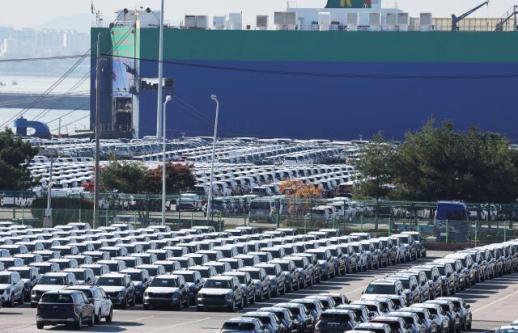 Korean Automakers Reach 76 Million Exports After 50 Years in Global Markets Korea's automotive industry has achieved a significant milestone, reaching a cumulative export total of 76 million vehicles after 50 years in international markets. This accomplishment reaffirms the industry's vital role in the nation's economic growth. According to the Korea Automobile Mobility Industry Association (KAMA), as of last month, a total of 76,548,569 vehicles have been exported. This record comes 50 years after Hyundai Motor Company exported its first domestic passenger car, the Pony, to Ecuador in June 1976. Korean automobile exports surpassed the 10 million mark for the first time in 1999, with 11,073,814 vehicles shipped. The rise of Hyundai and Kia as top-tier global automotive brands has significantly elevated the status of the Korean automotive industry. Since then, exports have increased by approximately 10 million units every three to four years, with figures of 51,098,839 in 2015, 61,093,781 in 2019, and 70,087,640 in 2023. Industry insiders suggest that if the current trend continues, cumulative exports could exceed 80 million next year. As competition intensifies in the global market, the automotive sector continues to expand. A recent report from HMG Strategy Institute forecasts that the global automotive market will grow by 0.2% year-on-year to approximately 87.93 million units. While growth in advanced markets like the U.S. and Western Europe is expected to slow, emerging markets such as India are anticipated to gain momentum. The domestic automotive production sector also reached a historic milestone this year. Cumulative production, which totaled 129,110,000 vehicles last year, surpassed 130 million with an additional 1,387,043 units produced from January to April this year. On the same day, KAMA and the Korea Automobile Industry Cooperative (KAICA) held the 23rd annual Automotive Day ceremony in Seocho-gu, Seoul, honoring 36 individuals for their contributions to the development of the automotive industry. The highest honor, the Gold Tower Industrial Medal, was awarded to Jae-hoon Chang, Vice Chairman of Hyundai Motor Group. The Silver Tower Industrial Medal went to Sang-sik Ham, CEO of MR Infra Auto, while the Bronze Tower Industrial Medal was awarded to Ki-young Hwang, CEO of KG Mobility. This year's awards focused on individuals who have strengthened the competitiveness of future vehicles through initiatives such as attracting domestic production of eco-friendly cars, technological development, innovations in AI, software, and autonomous driving technologies, advancements in smart manufacturing, building a future vehicle industry ecosystem, and exploring new markets through cooperative efforts. Jung Dae-jin, President of KAMA, stated, "The 50 years of automotive exports reflect the history of South Korea's economic growth. To maintain our lead in the global future vehicle competition, we need to secure domestic production bases and expand research and development and investment through public-private cooperation."* This article has been translated by AI. 2026-05-12 08:33:27
 -
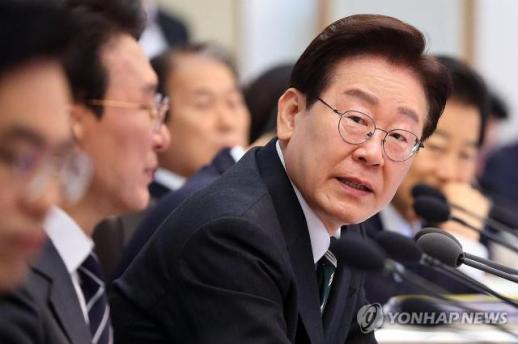 Lee Jae-myung's Inclusive Finance and the Challenges for Financial Leaders President Lee Jae-myung described the achievements of the Financial Services Commission in inclusive finance as "remarkable" during a Cabinet meeting, highlighting a significant shift in approach. Banks are reducing the external sale of delinquent debts, a long-standing practice, and are expanding internal debt restructuring and collection efforts. This change marks a transition from a focus on debt recovery to supporting economic recovery, reflecting a broader change in the perception of finance's role. Supporting data backs this shift. The number of self-managed debt restructuring cases among the five major banks rose dramatically from 989 in the first quarter of 2025 to 3,456 in the fourth quarter of the same year. In contrast, external sales of delinquent debts plummeted from approximately 35,000 cases in 2025 to just 11 in the first quarter of 2026. The completion and disposal of long-term delinquent debts have also seen significant increases in both number and amount. The trend indicates a clear movement within the financial sector to manage bad debts internally rather than outsourcing to external collection agencies. President Lee's perspective is clear. His statement that "squeezing every last penny is not desirable" signifies a commitment to viewing finance not merely as a debt collection system but as a pathway for economic rehabilitation. This reflects a determination to reintegrate those excluded from the financial system due to long-term delinquency. Some policy effects are already evident. A total of 2.928 million people have received credit forgiveness, with 154,000 of them resuming normal financial transactions such as new loans or credit card issuance. This indicates a meaningful change as some previously marginalized groups are returning to economic activity. However, it is essential to approach this trend with caution rather than viewing it as a mere success. Finance is fundamentally an industry that manages risk. Changes in the management of delinquent debts will inevitably lead to shifts in risk management structures. This is where the role of financial leadership becomes crucial. For financial leaders such as Jin Ok-dong of Shinhan Financial, Yang Jong-hee of KB Financial, Ham Young-joo of Hana Financial, Im Jong-ryong of Woori Financial, and Lee Chan-woo of NH Nonghyup Financial, this change is not just a policy response. It presents a managerial challenge of balancing public interest, profitability, inclusivity, and soundness, which are often in tension with one another. Historically, the external sale of delinquent debts was the fastest and most certain means of risk elimination for financial institutions. In contrast, internal debt restructuring and collection come with the potential for lower recovery rates and increased costs, which can negatively impact short-term performance. This creates a structure where financial institutions bear the burden internally. Nonetheless, the shift in the financial sector can be viewed as a result of the government's inclusive finance policy aligning with structural necessities. Neglecting long-term delinquents could expand the financially vulnerable population, ultimately returning the burden to the entire financial system. Inclusive finance is not merely a welfare measure; it can serve as a pillar for maintaining financial stability. The challenge lies in achieving balance. If inclusive finance devolves into indiscriminate debt relief or superficial performance competition, it could lead to moral hazard. Issues of fairness may arise for borrowers who have diligently repaid their debts. It is crucial to remember that trust in finance is rooted in fairness. President Lee's remarks on the evaluation and incentive systems for financial institutions are also significant in this context. The goal should not be merely to expand the quantitative metrics of inclusive finance but to ensure that it operates effectively for borrowers with genuine potential for recovery. Mechanisms are needed to prevent financial institutions from pursuing excessive adjustments for short-term results. The Financial Services Commission's institutionalization plans must be approached with caution. While public disclosure of delinquent debt management performance and incentive systems can be positive measures, excessive intervention could undermine the autonomous risk assessment capabilities of financial institutions. Striking a balance between policy and market dynamics is essential. Ultimately, the essence of this change lies in redefining the role of finance. It tests whether finance can transcend its traditional role as a mere intermediary of funds to become a foundation for economic recovery and rehabilitation. At the same time, it will also be evaluated whether the fundamental principles of soundness and responsibility in finance can be maintained throughout this process. If President Lee has set the direction, financial leaders like Jin Ok-dong, Yang Jong-hee, Ham Young-joo, Im Jong-ryong, and Lee Chan-woo must implement that direction in practice. Balancing inclusivity and soundness, support and accountability, is the core challenge. Inclusive finance is necessary. However, to be sustainable, it must operate within the bounds that do not undermine the fundamental order of finance. A structure that aids recovery without compromising accountability and a system that supports while maintaining trust are essential. The success of this transition ultimately hinges on achieving that balance.* This article has been translated by AI. 2026-05-12 08:20:50
 -
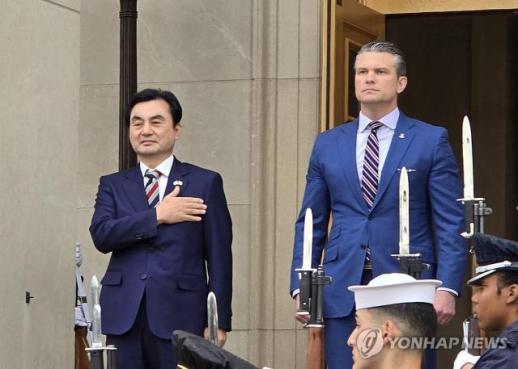 U.S.-South Korea Relations Face Critical Challenges Amid Global Tensions As a summit between U.S. President Donald Trump and Chinese President Xi Jinping approaches, tensions in Northeast Asia and global supply chains are rising. The U.S. and China continue to clash over tariffs, rare earth elements, semiconductors, and security issues, while also accelerating efforts to manage conflicts. Amid this shifting global order, concerns are growing that South Korea is not demonstrating clear leadership in coordinating key issues with the United States. Currently, sensitive topics between South Korea and the U.S. are piling up, including defense cost-sharing, the transfer of wartime operational control, adjustments to the role of U.S. troops in South Korea, restructuring supply chains with China, cooperation in the semiconductor and battery industries, and coordination on North Korea policy. Given President Trump's repeated emphasis on the costs of alliances, it is difficult to predict the intensity of future U.S. pressure. In particular, there is an increasing demand within the U.S. for allied nations to expand their defense responsibilities. Many analysts believe that South Korea will not be exempt from this trend of American prioritization. The issue is that these changes are likely to extend beyond just defense matters. The defense cost-sharing and U.S. troop presence in South Korea are closely linked to trade, industry, and technological cooperation. In fact, the U.S. has emphasized the strategic role of its allies in the context of semiconductor supply chains, battery investments, and advanced technology collaborations. For South Korea, it has become challenging to approach security and economic issues separately. The U.S. market is a key export destination for South Korean companies, while China remains its largest trading partner. The U.S. is demanding a restructuring of supply chains, and China is increasing its countermeasures. In this context, if South Korea responds to individual issues without a clear strategy, it could face greater diplomatic burdens and industrial uncertainties. A more significant problem is that discussions on U.S. strategy are fragmented amid domestic political schedules and conflicts. What is needed now is a high-level strategic dialogue that can calmly identify differences in perception between South Korea and the U.S. and coordinate based on national interests. While trust between leaders is important, it is essential to have a system where diplomatic, security, and industrial lines operate organically and continuously adjust differences with the U.S. Take the issue of wartime operational control transfer, for example. This is not merely a matter of military command transfer; it is directly linked to the South Korea-U.S. combined defense system. It could also relate to changes in the role of U.S. troops in South Korea. Defense cost negotiations are not just about numbers; they must be viewed within the broader context of restructuring alliance frameworks and strategic roles. As we enter an era where semiconductors, artificial intelligence, and battery industries are considered security assets, the boundaries between industrial policy and diplomatic strategy are effectively disappearing. In such times, the diplomatic capabilities of the South Korean government become even more crucial. It is necessary to maintain cooperation with the U.S. while engaging in detailed negotiations that protect both South Korean industrial and security interests. Alliances are important, but they cannot take precedence over national interests. Conversely, strategic communication should not be neglected in the name of national interests. Ultimately, the key lies in the ability to coordinate at a high level based on trust. The international order is rapidly reshaping. The U.S.-China conflict is becoming prolonged, and the alliance system is operating in ways different from before. During such times, South Korea must avoid revealing diplomatic vacuums or strategic absences. As sensitive issues pile up between South Korea and the U.S., what is needed is not louder political rhetoric but calm and meticulous high-level consultations. National interests are safeguarded not as slogans but as the results of negotiations and coordination. 2026-05-12 08:06:05
 -
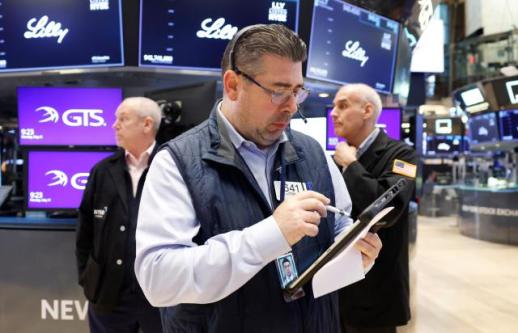 U.S. Stocks Rise Amid Middle East Tensions, S&P 500 Surpasses 7400 for First Time Donald Trump, the President of the United States, highlighted the precarious nature of the ceasefire with Iran, bringing renewed attention to tensions in the Middle East. Despite this, U.S. stocks closed slightly higher, buoyed by a rally in artificial intelligence (AI) stocks. On May 11, the Dow Jones Industrial Average finished up 0.19%, or 95.31 points, at 49,704.47. The S&P 500 index, which is heavily weighted toward large-cap stocks, rose 0.19%, or 13.91 points, to close at 7,412.84, marking its first-ever close above 7,400. The tech-heavy Nasdaq Composite Index increased by 0.10%, or 27.05 points, to finish at 26,274.13. Earlier, President Trump responded to questions about the ceasefire with Iran, stating, "It’s unbelievably weak, in the weakest state. It’s heavily reliant on life support, and the doctor says there’s about a 1% chance of survival." As tensions in the Middle East escalated, international oil prices also rose. Brent crude futures closed at $104.21 per barrel, up 2.9% from the previous trading day, while West Texas Intermediate (WTI) crude futures rose 2.8% to $98.07 per barrel. Despite geopolitical uncertainties, semiconductor and technology stocks showed strength. Qualcomm surged by 8.42%, while Micron Technology (6.5%), Western Digital (7.46%), and Seagate (6.56%) continued their upward momentum from the previous week. The Philadelphia Semiconductor Index increased by 2.6%. The performance of the seven major tech stocks, known as the "Magnificent 7 (M7)," was mixed. Nvidia (1.97%) and Tesla (3.89%) saw gains, while the other five—Alphabet, Amazon, Apple, Meta, and Microsoft—experienced declines. Jay Hatfield, founder and CEO of Infrastructure Capital Advisors, told CNBC, "The tech boom is so strong that rising energy prices are not allowed to affect the U.S. economy or the U.S. stock market. Everyone is tuning out the Middle East issues."* This article has been translated by AI. 2026-05-12 08:04:20