
Journalist

Lim, Kwu Jin
-
 Philip Morris Korea Expands Safety Partnership Program to Prevent Workplace Accidents Philip Morris Korea is expanding a workplace safety initiative aimed at improving conditions for partner companies and the local community. The company said Thursday that it held a launch ceremony and seminar May 6 at the Gyeongnam Eastern Branch of the Korea Industrial Safety Association in Yangsan, South Gyeongsang Province, for a “large-small business safety and health partnership program” jointly promoted with the Korea Occupational Safety and Health Agency. At the event, the Yangsan plant and the association’s Gyeongnam Eastern Branch signed a memorandum of understanding to help eliminate industrial accidents in the region, the company said. The two sides said they will cooperate on on-site technical support, tailored consulting and the sharing of professional safety expertise. The program will be run through a consultative body made up of internal and external partner companies and local small and midsize businesses, focusing on detailed risk assessments and customized on-site support reflecting each workplace’s conditions. The company said this year’s program significantly expands both funding and participants. With four additional in-house partner companies and one local small business added, the number of beneficiary sites rises to 10: four in-house partners, four outside partners and two local small and midsize businesses. The support package has also been refined, including new assistance for foreign workers, who make up a growing share of the industrial workforce. To reduce accidents linked to language barriers, the company said it will distribute safety manuals translated into multiple languages and provide on-site interpretation and tailored consulting. A campaign to prevent heat- and cold-related illness during periods of extreme heat and cold will also be conducted, it said. The company said the program will follow a phased roadmap for about five months, starting with the launch event and continuing through joint inspections, safety equipment support and on-site training, before a final results seminar in September. Philip Morris Korea said it ran the program last year with eight partner companies and small businesses, providing six months of consulting and supplying essential safety and health items, including automated external defibrillators, to help spread a safety culture across its supply chain. Haroon Basheer, head of the company’s Yangsan plant, said, “As we participate for the second year in a row, we will build on the experience we have accumulated and focus on sharing safety management know-how by expanding the scope beyond in-house partners to include local small businesses and foreign workers.”* This article has been translated by AI. 2026-05-07 13:49:19
 -
 GC녹십자 Wins Peru Approval for Hunter Syndrome Drug Hunterase ICV GC Green Cross, which is nearing the 2 trillion won revenue mark, has secured marketing approval in Peru for its intraventricular Hunter syndrome treatment, Hunterase ICV, following approvals in Japan and Russia, the company said. The move supports its push to expand overseas sales and diversify exports as it focuses on high value-added products in advanced markets such as the United States and Japan while accelerating entry into emerging markets. The company said Tuesday that Peru’s drug regulator, DIGEMID, recently granted approval for Hunterase ICV. Hunterase ICV is administered directly into the brain’s ventricles and is given once a month. In clinical trials conducted in Japan, the treatment significantly reduced heparan sulfate, a key substance linked to central nervous system damage. It also showed effects in improving or stabilizing developmental age, a measure used to assess patients’ intellectual and physical development. Lee Jae-woo, head of development at GC Green Cross, said, “Based on long-term clinical data, we will work to address unmet medical needs in severe Hunter syndrome.” Hunter syndrome is a congenital rare disease in which a deficiency of the IDS enzyme causes glycosaminoglycans (GAG) to accumulate in the body. Symptoms include skeletal abnormalities, joint deformities, respiratory and cardiac dysfunction, and cognitive decline. It is known to occur in about one out of every 100,000 to 150,000 boys. About two-thirds of patients are believed to have a severe form accompanied by central nervous system damage. As the disease progresses, cognitive decline and behavioral abnormalities can appear, significantly affecting quality of life and prognosis. GC Green Cross posted record annual revenue of 1.9913 trillion won last year. Market observers say the company has a strong chance of surpassing 2 trillion won this year as its core businesses, including blood products and vaccines, are expected to grow.* This article has been translated by AI. 2026-05-07 13:48:05
 -
 Kakao Posts Record Q1 Results, Pushes KakaoTalk-Based Agent AI Platform Kakao posted its strongest quarterly results on record in the first quarter, with both revenue and operating profit reaching all-time highs, the company said Thursday. Growth was broad-based across its core platform businesses, including advertising, commerce, mobility and payments. Kakao said it will use that momentum to accelerate its shift into an “agent AI platform” company. Over the medium to long term, Kakao aims to onboard all 50 million KakaoTalk users to AI services. It plans to expand in-house offerings including “ChatGPT for Kakao,” “Kanana in KakaoTalk” and “Kanana Search,” and is preparing to unveil its next model, “Kanana 2.5.” Kakao said in a regulatory filing that first-quarter revenue on a consolidated basis rose 11% from a year earlier to 1.9421 trillion won, while operating profit jumped 66% to 211.4 billion won. By segment, platform revenue increased 16% to 1.1827 trillion won. Within that, Tok Biz revenue rose 9% to 608.6 billion won, and Tok Biz advertising revenue climbed 16% to 338.4 billion won. Demand from financial-sector advertisers helped lift overall message volume, and a broader lineup of messaging products expanded how advertisers used the service. Business messaging revenue rose 27% from a year earlier, while display advertising revenue increased 10%. Tok Biz commerce, which includes Gift and Tok Deal, posted combined gross transaction value of 2.9 trillion won, up 10% from a year earlier. Kakao attributed the gain to a stronger product mix centered on fresh food and home appliances and more tailored user benefits. During the “Kakao Shopping Festa” held in March, Tok Store transaction value rose 18% year over year, and self-purchase transaction value within Gift surged 53%. First-quarter commerce revenue rose 1% to 270 billion won. Other platform revenue, including mobility and payments, rose 30% to 506.5 billion won. Kakao said its mobility business — spanning taxis, parking, last-mile logistics and advertising — delivered double-digit year-over-year revenue growth for a third straight quarter. Payments revenue topped 300 billion won for the first time, driven by growth across payments, financial and platform services. Content revenue rose 5% to 759.4 billion won. Music revenue increased 11% to 484.6 billion won, and media revenue climbed 23% to 92.4 billion won. Story revenue totaled 182.4 billion won. Kakao said profitability typically is weaker in the first quarter due to seasonal factors, but this year improved as efficiency efforts focused on core businesses were reflected in results. Kakao said it will step up its transition to an agent AI platform this year, with the goal of having all 50 million KakaoTalk users onboarded to AI services. In the second half, it plans to roll out agent commerce more fully, enabling reservations and payments within KakaoTalk based on conversational context. Kakao has already launched AI services that use KakaoTalk chat context, including Kanana in KakaoTalk and Kakao Search, in stages. The company said it is building a flow that links identifying user needs in conversation to reservations and payments. Jeong Shin-a, Kakao’s CEO, said on a first-quarter 2026 earnings conference call Thursday that “the second half will be an important turning point when anyone can experience an agent that starts from a domestic conversation and completes payment.” Kakao’s AI services currently available in KakaoTalk are ChatGPT for Kakao, Kanana in KakaoTalk and Kanana Search. Kakao said it segments target users based on AI familiarity and whether they use paid services — offering ChatGPT for Kakao to users with higher AI understanding, and positioning Kanana in KakaoTalk for users who can experience AI naturally in daily life without paying. ChatGPT for Kakao has surpassed 11 million cumulative sign-ups. Compared with the previous quarter, monthly active users and monthly messages sent per user more than doubled. Jeong said the service is moving beyond one-time visits into repeated use. Kanana in KakaoTalk is designed to identify user needs from conversational context and connect information delivery to reservations and payments. Kakao said it linked Kanana in KakaoTalk with its Gift service starting last month. Jeong said she expects 31 million users to download and use the Kanana in KakaoTalk model by year’s end. She said positive evaluations of AI response quality are “around 80%,” adding that Kakao will continue improving the model and raise service completeness so more users can experience higher-quality AI. Kakao also said it will focus on upgrading Kanana Search, a conversational-context-based discovery service that provides place and product search results and trend-topic exploration within KakaoTalk chat rooms. Kakao is also strengthening its in-house AI models. Following Kanana 2, unveiled last year, the company is preparing to release Kanana 2.5, sized at 150B parameters. Jeong said Kakao has confirmed Kanana 2.5 delivers the best performance among domestic and overseas large language models of similar parameter size, and that it showed strong performance in execution-focused areas such as function calling compared with top global models. Jeong said Kanana in KakaoTalk and Kanana Search are new types of services even in global markets and could become key entry points for expansion into agent AI. Kakao’s medium- to long-term AI vision, she said, is for all 50 million KakaoTalk users to have personalized agents. * This article has been translated by AI. 2026-05-07 13:45:20
 -
 APR posts record Q1 operating profit as overseas sales near 90% Beauty company APR posted its strongest quarterly results on record in the first quarter, driven by a surge in overseas business as K-beauty demand lifted its performance in the U.S. market, including a No. 1 ranking in Amazon’s U.S. beauty category. APR said in a preliminary earnings filing on Wednesday that 2026 first-quarter consolidated revenue rose 123.0% from a year earlier to 593.4 billion won, while operating profit jumped 173.7% to 152.3 billion won. Both were the highest quarterly figures since the company’s founding. Overseas sales led the gains. First-quarter international revenue climbed 179.9% to 528.1 billion won, topping 500 billion won for the first time. Overseas sales accounted for 89.0% of total revenue, up 18.1 percentage points from a year earlier. The U.S. market posted the sharpest growth. U.S. first-quarter revenue surged 250.8% to 248.5 billion won, representing 41.9% of total sales. U.S. market research firm Navigo Marketing said APR ranked first in Amazon’s U.S. beauty category in the first quarter with a 14.1% share. APR’s flagship brand, Medicube, is set to expand beyond Ulta Beauty, with placements planned at multiple major U.S. offline retail channels in stages within the year starting in the second quarter. Outside the U.S., Japan revenue rose 100.8% to 58.9 billion won. Sales in other regions increased 216.1% to 190.0 billion won from 60.1 billion won a year earlier. By business segment, cosmetics and beauty revenue climbed 174.3% to 452.6 billion won. Medicube’s PDRN product line surpassed 50 million units in cumulative global sales in February, and its toner pads sold more than 20 million units on a first-quarter basis. During Amazon’s Big Spring Sale in March, 10 Medicube products entered the beauty category’s top 100 best-seller list, the company said. Beauty device revenue rose 46.0% to 132.7 billion won, also a record quarterly result. APR said it plans to use its online momentum to accelerate offline distribution, aiming to reinforce a self-sustaining growth cycle. In the U.S., it expects additional major offline channel rollouts beyond Ulta Beauty beginning in the second quarter. The company is also expanding in other markets. In March, it launched Medicube through Sephora’s online and offline channels across 17 European countries, including France and Germany, and signed a partnership with Nykaa, India’s largest beauty and lifestyle platform. APR recently was named to Time magazine’s list of the “100 Most Influential Companies” in the world, the company said, calling it the only South Korean company on the list this year and the first K-beauty company to be included. Time’s website shows APR was selected in the “Titans” category, alongside companies including Nvidia, Google, SpaceX, Meta and Saudi Aramco. “While pursuing sustained growth through entry into new markets and diversification of distribution channels, we will also actively launch new products that reflect customer and market trends to continue a quantum jump,” an APR official said.* This article has been translated by AI. 2026-05-07 13:43:26
 -
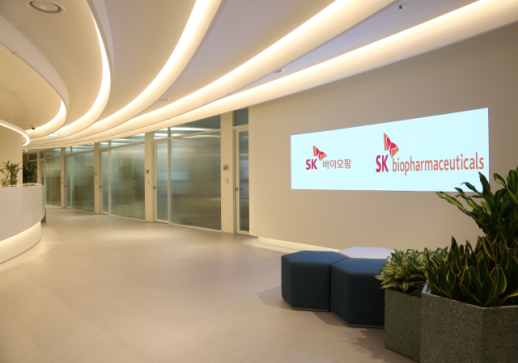 SK Biopharm Posts Record Q1 Profit on Xcopri, Accelerates TPD Drug Development SK Biopharm said it posted its best-ever first-quarter results, driven by strong sales of its epilepsy drug cenobamate, sold in the U.S. as Xcopri. The company said it plans to use the momentum and cash flow to speed research and development centered on targeted protein degradation, or TPD, along with next-generation pipeline and proprietary platform technologies. In a regulatory filing on 7일, SK Biopharm said its consolidated operating profit for the first quarter was 89.8 billion won, up 249.7% from a year earlier on a preliminary basis. Revenue rose 57.8% to 227.9 billion won. U.S. sales of cenobamate, the company’s main profit driver, increased 48.4% to 197.7 billion won. To expand cenobamate’s indications, the company said it submitted a U.S. Food and Drug Administration new drug application in March for an oral suspension formulation. It is also pursuing filings within the year to expand indications to primary generalized tonic-clonic seizures, or PGTC, and pediatric patients. In China, it began commercialization in March through partner Ignis Therapeutics. Approval procedures are also underway in Japan within the year, it said. SK Biopharm said it is stepping up R&D investment based on cash flow from cenobamate. Building on its central nervous system focus, it is expanding pipelines in radiopharmaceutical therapeutics, or RPT, and TPD. The company has previously identified RPT, TPD and cell and gene therapy, or CGT, as three new growth platforms. On a post-earnings conference call, SK Biopharm detailed development of SKT-18416, a p300 selective degrader candidate. The TPD candidate is designed to selectively degrade the p300 protein, which is involved in cancer cell growth and survival. Choi Jong-gil, head of strategy at SK Biopharm, said SKT-18416 is a first-in-class candidate that selectively degrades p300. He said the company has confirmed in preclinical work that a p300 selective degrader can reduce the risk of hematologic toxicity and is advancing development based on those findings. The company said it confirmed tumor growth inhibition in preclinical models of prostate cancer and CBP-mutant cancers. It is preparing a preclinical package for an investigational new drug application, targeting submission in the first half of next year. Indications under review include cancers with high p300 dependency, with prostate cancer and multiple myeloma prioritized, it said. The conference call also introduced the company’s proprietary platform, MOPED, a technology for discovering compounds that selectively degrade specific proteins by inducing protein-protein interactions. SK Biopharm said molecular glues discovered through MOPED show improved drug-like properties and blood-brain barrier penetration compared with conventional heterobifunctional TPD approaches, and have demonstrated scalability, supporting differentiated technological competitiveness.* This article has been translated by AI. 2026-05-07 13:39:15
 -
 Kim Tae-nyeon touts policy record in bid for National Assembly speaker With the Democratic Party set to choose the speaker for the second half of the 22nd National Assembly, a three-way race is intensifying among Park Ji-won, Cho Jung-sik and Kim Tae-nyeon, in ballot order. Kim is seeking to stand out by stressing his experience designing policy and his ability to deliver results, though allies acknowledge his name recognition lags behind the other two contenders. ■Strengths(강점) Kim is widely regarded within the party as a policy specialist and strategist, political circles said. First elected in 2004 in Seongnam’s Sujeong district in Gyeonggi province, he has held senior posts including party policy chief and floor leader. He also led the party’s “Economy Is the Democratic Party” study group, with about 120 lawmakers participating, for five years, shaping internal debate on economic issues. Ahead of the June 3 local elections, he has served as head of a drive for a “leap” in the people’s economy, unveiling livelihood-focused pledges under what he called the “Chakbut Project.” At his May 4 announcement, Kim framed his policy credentials as central to his bid. “To build a ‘National Assembly that works well,’ we need a ‘speaker who works well,’” he said, adding that he was “the right person.” He pointed to initiatives he pushed as policy chief — including the 52-hour workweek, minimum wage increases and regulatory sandboxes — as achievements he helped translate into results. ■Weaknesses(약점) Despite being seen as a heavyweight, Kim is viewed as less well-known than his rivals. The speaker will be chosen through a combined vote: 80% by lawmakers and 20% by party members, a system introduced for the first time after revisions to party rules. That structure increases the need to win both lawmakers and the party base. Park is seen by many analysts as well-positioned with party members, backed by broad public recognition built through roles including chief of staff to former President Kim Dae-jung, director of the National Intelligence Service under the Moon Jae-in government, and service as a member of the 22nd Assembly’s Legislation and Judiciary Committee. Cho, a six-term lawmaker who served as special political adviser to President Lee Jae-myung, has been building support among first- and second-term lawmakers with what is described as backing from the president’s inner circle. Kim has been consolidating support among lawmakers in their second term or higher, but how much he can expand that bloc and win party members is expected to be decisive. ■Opportunities(기회) With the Middle East crisis and domestic stability cited as pressing concerns, Kim’s policy experience and drive are being cast as assets. As floor leader during the COVID-19 period, he oversaw legislation and helped pass multiple reform bills. He has pledged to create a speaker-led “livelihood and economic strategy council” bringing together the ruling and opposition parties, the government and industry to debate key agendas for the country’s economic future and link legislation with the budget. “There is no ruling party or opposition when it comes to people’s livelihoods and the economy,” he said. Kim also said he would push what he calls an “Assembly that works well” bill to speed up lawmaking. The proposal includes provisions to replace a standing committee chair who, without just cause, fails to convene meetings or delays bill reviews. “I will not tolerate intentional delays and disruption,” he said, adding he would disclose legislative performance to the public and be judged on results. Kim, a five-term lawmaker from Seongnam, has also highlighted that he shares a regional base with President Lee. “I have shared the direction of politics with President Lee for more than 30 years and understand his philosophy deeply,” he said, arguing he can support the administration’s policy agenda. ■Threats(위협) Some analysts caution that Kim’s emphasis on execution could be seen as overly hard-line. Within the Democratic Party, some have argued for taking all standing committee chair posts. As floor leader, Kim once secured all 18 chairmanships. He has defended that approach by saying it enabled the passage of the largest number of reform bills since democratization in 1987, even during the COVID-19 crisis. Critics, however, warn that similar tactics could become a liability in a second-half Assembly expected to face sharp partisan confrontation. 2026-05-07 13:36:19
 -
 Seoul mayoral candidate Oh Se-hoon vows faster redevelopment, expanded relocation loans Oh Se-hoon, the People Power Party’s candidate for Seoul mayor, said May 7 he would introduce a “fast-track integrated” system and expand the city’s tailored consulting service known as “Shintong 120” to cut redevelopment and reconstruction timelines to within 10 years and broaden relocation-loan support for cooperative members. Oh announced the housing pledges at a rooftop event at the Shilla Building in the Daerim 1 redevelopment area in Seoul’s Yeongdeungpo District. The plan followed his previous day’s pledge to supply 130,000 public housing units. Oh said he has long pursued what he called a “supply-first” strategy and argued that speeding up stalled supply is key. He pledged to start construction on a total of 310,000 housing units by 2031, saying a chain of moves from older apartments and villas into newly built apartments would create a virtuous cycle in housing supply. Of the groundbreaking target, 87,000 units would be net new supply, his campaign said. It said that figure is well above the 32,000 units the Lee Jae-myung government said it would start by 2030 under its Jan. 29 measures. The pledges focus on shortening project timelines by building on the “rapid integrated planning” approach introduced during Oh’s time as mayor. Under the proposed fast-track integrated system, organizers would skip forming a redevelopment cooperative promotion committee and process project implementation approval and the management-and-disposition plan approval at the same time. Oh said the city would also provide guidelines so building plans and cost-sharing can be set while the two plans proceed in parallel. Oh said Shintong 120, a unified phone-consultation platform, would provide guidance on land status and applicable development options to reduce confusion. He also pledged to introduce “Shintong AI Planning,” using artificial intelligence to prevent repeated rejections during review. In areas where private-sector 추진 is not smooth, he said the Seoul Housing & Communities Corp. (SH) would lead a “public rapid integrated” program. Oh also pledged support for cooperative members struggling to relocate amid government lending restrictions. He said Seoul would significantly expand its housing promotion fund, financed by subscription-savings resources, to increase loans for relocating households and help projects break ground sooner. Oh continued sharp criticism of Jung Won-oh, the Democratic Party’s Seoul mayoral candidate. “The housing type Seoul citizens prefer most is newly built apartments,” Oh said, calling Jung’s proposal to supply villas and residential-style lodging facilities an idea that ignores market principles. He added that the Democratic Party has been hostile to redevelopment and reconstruction and “still is,” in his view. Responding to Jung’s criticism that housing supply fell sharply during Oh’s time as mayor, Oh said it misleads voters. “Construction is done by the private sector, and Seoul’s role is to create the business environment through swift permitting,” Oh said. He added that Jung, having served as a district mayor for more than 10 years, should know that, and said portraying an opponent as if he did not deliver housing supply is misleading and “not conscientious.”* This article has been translated by AI. 2026-05-07 13:06:15
 -
 SK Telecom turns to AI infrastructure as core mobile business weakens SEOUL, May 7 (AJP) - South Korea's largest mobile carrier SK Telecom is increasingly turning to artificial intelligence (AI)-driven infrastructure as its new growth engine. According to its first-quarter earnings report released on Thursday, SK Telecom posted an operating profit of 537.6 billion Korean won (US$393 million) in the first three months of this year, down 5.3 percent from a year earlier, reflecting a slump in its core telecom business. Revenue also fell 1.4 percent to 4.39 trillion won, while net profit declined 12.5 percent to 316.4 billion won, sending its shares down 2.2 percent to 93,400 won later in the day. Its AI data center business, however, emerged as the fastest-growing sector, with revenue up 89.3 percent from a year earlier to 131.4 billion won, driven by higher utilization at new facilities and increased demand for GPU-as-a-Service (GPUaaS), a cloud computing subscription service that allows individuals and organizations to rent high-performance graphics processing units (GPUs). SK Telecom is now repositioning itself as an all-in-one AI company offering everything from underlying technology, infrastructure and AI models to consumer apps and services, in a bid to capitalize on growing demand in the emerging AI market. Meanwhile, smaller rival LG Uplus posted stronger earnings as AI-related infrastructure and mobile service revenue supported profitability. Operating profit reached 272.3 billion won, up 6.6 percent from a year earlier. Revenue rose 1.5 percent to 3.80 trillion won and net profit increased 8.4 percent to 176.0 billion won. Like SK Telecom, LG Uplus is rapidly expanding its AI offerings for both consumers and businesses. The company is rolling out AI-powered customer service centers, virtual call assistants and autonomous network systems to reduce costs and improve efficiency. But shares of LG Uplus slipped 0.3 percent to 15,360 won, despite its rosy performance. 2026-05-07 12:28:30
 -
 Kang Dong-won, Uhm Tae-goo and Park Ji-hyun’s ‘Wild Thing’ Targets Summer Box Office "What on earth made you decide to do this?" The music video for “LOVE is,” an original song from the film “Wild Thing,” has stirred buzz online and off since its release. Actor Kang Dong-won, long known for his looks, appears performing flashy dance moves; Uhm Tae-goo, often described as introverted, delivers an unexpected rap; and Park Ji-hyun leads choreography at center. With Kang, Uhm, Park and Oh Jung-se embracing against-type roles, expectations are rising over whether “Wild Thing” can shake up the summer box office. A production presentation for “Wild Thing,” directed by Son Jae-gon, was held Tuesday morning at Lotte Cinema Konkuk University in Seoul’s Gwangjin district. Son and cast members Kang, Uhm, Park and Oh attended and discussed the project. “Wild Thing” follows “Triangle,” a three-member co-ed dance group that once dominated the music scene but disbanded overnight after becoming entangled in an unexpected incident. Twenty years later, the group seizes a chance at a comeback and takes on a reckless challenge. The film pairs Son, whose credits include “The Villain on the Second Floor” and “Secret Zoo,” with About Film, the production company behind “Extreme Job.” Kang plays Triangle’s leader, Hyun-woo, described as a dance machine. “Comedy is my favorite genre,” Kang said. “When I read the script, it was really fun, and I thought it was a full-on comedy.” He added that he liked the “fully closed” ending and said the run-up to the finale and the four characters’ stories were “really fun.” Uhm, who plays the youngest member and rapper Sang-gu, also pointed to the script. He said meeting Son left a strong impression, and that Kang had already been cast as Hyun-woo, which became “the biggest reason” for his decision. Park, who plays center and main vocalist Do-mi, said she had long been a fan of Son. She said she enjoyed Son’s earlier film “The Villain on the Second Floor,” and wanted to portray Do-mi’s dual nature. Park said she had been eager to do comedy, and that imagining Kang as Hyun-woo and Uhm rapping sounded “so fun.” Oh joins as Triangle’s rival, Seong-gon, a ballad singer with a hard-luck story. Oh said the question of “Kang Dong-won dancing, Uhm Tae-goo rapping, and Park Ji-hyun doing idol-style performance” sparked curiosity and interest, adding that playing a ballad singer also appealed to him. He said he was eager to see how Son’s style would come through. Music for the film was led by composer Shim Eun-ji, who has worked with Twice, SHINee and IU. Son said the debut song “LOVE is” needed to evoke the mood of its era while still sounding good to today’s audiences. He said he asked for a track that would feel instantly appealing in a theater, and praised Shim’s work. The actors said they trained for five months in what they described as an “idol experience.” Uhm said he commuted to JYP’s headquarters for rap practice and tried to rehearse as often as possible, practicing whenever he had time for about five months. Kang said preparing for the film made him realize how demanding idol work is, adding that he came to respect it more while filming. Oh spoke about his song “I Like You.” He said he let out a dry laugh when he first received it, but found it highly addictive the more he listened, and came to see it as a sad song. He said he worked with the director to create hand motions that were more like ad-libs than choreography. Performance scenes designed to resemble a real concert are another highlight, Son said. He said the film’s crew worked with an actual concert production team to build the stage and raise its quality. Kang said the scenes felt like a real stage, joking that he worried the younger extras in front might not recognize him and wonder, “What’s that older guy doing up there?” Park praised her co-stars’ unexpected sides. She said she had known Uhm as an introvert, but that he became a different person on stage, practiced constantly and performed so well she felt the center position was being overshadowed. Park said she referenced 2000s-era girl groups Fin.K.L and S.E.S, adding that she was glad to take on both singing and dancing through the film. With “challenge” dance trends sweeping pop music, the Triangle track “LOVE is,” which has drawn attention on YouTube and elsewhere, is also drawing interest over whether it could catch on as a challenge. The actors said they would be grateful to anyone who participates. Kang added that while he would appreciate anyone taking part in the “LOVE is” challenge, the first group that came to mind was BTS. He said he would be “very grateful” if BTS joined, drawing laughter. In closing, Kang said he hoped audiences would enjoy the film, noting that everyone has a time when they shined and moments when they want to shine. Oh said the team worked hard to make it an exciting, warm and feel-good movie, and said he hoped it would be remembered that way. “Wild Thing” is scheduled to open in theaters June 3.* This article has been translated by AI. 2026-05-07 12:27:16
 -
 Kakao CEO: Shift to Agent AI Platform Aims to Onboard 50 Million Users Kakao is accelerating a strategy to “onboard 50 million users” to AI services as it pivots toward an agent AI era. Rather than relying on a single, massive model, the company plans to combine a lightweight top-level orchestrator with domain-specific agents to improve cost efficiency and scalability. CEO Jeong Shin-a said on a conference call for Kakao’s 2026 first-quarter earnings that many agent AI services drawing attention today face limits, including excessive token consumption and privacy risks. “Those limits will be a clear opportunity for Kakao in the coming agent AI era,” she said. Jeong described many web-based agent designs as “one huge agent” handling all domains and tools. She said screenshot-based vision-language models and computer-use agents can consume large numbers of tokens and may take longer to produce desired results. By contrast, Kakao’s agent AI platform is designed so a lightweight orchestrator analyzes user intent while specialized agents collaborate. “We built it so tasks are carried out organically through protocols between agents,” Jeong said, calling it a structure that sharply reduces token use and processing time. Kakao also previewed plans to disclose “Kanana 2.5,” a 150B-parameter model, following last year’s “Kanana 2.” Jeong said Kanana 2.5 was developed from scratch and optimized for the agent AI platform, showing stronger performance in execution-focused areas such as planning and function calling compared with leading global models. She said Kakao’s in-house “Kanana tokenizer” also improved training costs and inference speed. Jeong said Korean can require up to three times more tokens than English when using general-purpose tokenizers. With the Kanana tokenizer, she said, Kakao confirmed up to a 40% reduction in training costs and up to a 60% improvement in inference speed. This year, Kakao plans to expand user touchpoints, a key element of an agent AI ecosystem, with the goal of onboarding all 50 million KakaoTalk users through multiple service formats. For users with higher AI familiarity and an intent to use paid services, Kakao pointed to “ChatGPT for Kakao.” For a more natural, everyday AI experience without charges, it highlighted “Kanana in KakaoTalk.” Kanana in KakaoTalk uses conversation context to identify user needs and connect services from information to reservations and payments. Kakao said user activity has improved steadily after an iOS closed beta test and an Android launch, and retention has held at about 70%, similar to the closed beta. Jeong said the service remains in an early stage, with work still needed to improve answer accuracy and quality and to refine when the AI should step in. She said Kakao will raise user satisfaction through model upgrades. Kakao last month also introduced “Kanana Search,” a context-based discovery service. It provides place and product search results and trend-topic exploration inside KakaoTalk chat rooms. Jeong said that even in the third week after the beta launch, activity rose meaningfully compared with traditional keyword-driven search. Jeong also cited momentum for ChatGPT for Kakao, which has surpassed 11 million cumulative sign-ups. She said monthly active users nearly doubled from the previous quarter, and monthly messages sent per user more than doubled, indicating the service is moving beyond one-time visits into repeated use. “Kakao’s mid- to long-term AI vision is for all 50 million KakaoTalk users to have personalized agents,” Jeong said. On advertising, Jeong said growing short-form and content consumption inside KakaoTalk is translating into stronger ad performance, making ads another key growth engine alongside AI. She said average daily valid short-form plays as of April more than doubled from shortly after the service launched, and demand for video-focused ads is flowing in quickly. She said the revenue share from display ad products other than Bizboard expanded from the 10% range in the first quarter of last year to about 30% in the first quarter of this year, as the ad revenue mix diversifies beyond a single product and a small number of large advertisers. Kakao said consolidated first-quarter revenue rose 11% from a year earlier, marking its first double-digit growth in eight quarters. Jeong said the company achieved “qualitative growth” by strengthening its core competitiveness. Jeong said the second half will be an important turning point as users can broadly experience agents that start with domestic conversations and complete payments. She said Kakao will show a future in which all 50 million users communicate routinely with personalized AI agents on KakaoTalk. 2026-05-07 12:09:14