

Journalist

Lim Byung-sik
-
 Han Dong-hoon Claims Local Election Results Signal Call for Conservative Revival Han Dong-hoon, the independent candidate who won the Busan Buk-gap by-election, stated that the results of the June 3 local elections reflect a public mandate to rebuild conservatism.At a press conference on June 4 at his election office in Busan, Han expressed his belief that the public is "very wise and great," noting that significant victories in areas that did not completely abandon conservative parties suggest a shared understanding of the need for conservative revival.He also remarked, "The public has issued a meaningful warning to the Lee Jae-myung Democratic Party government," pointing out that a candidate backed by President Lee ultimately lost to him, an independent. He emphasized that citizens should consider how they judge actions like the cancellation of charges against candidates, which he discussed throughout the campaign.Han indicated his intention to rejoin the People Power Party, stating, "I promised to return on the day I was unjustly expelled, and this election victory is part of fulfilling that promise." He added that many lawmakers he has spoken with agree on the necessity of rebuilding conservatism based on the sentiments expressed in this election.Furthermore, he criticized the current leadership of the People Power Party, saying their actions do not reflect the dignity or capability expected of a conservative party. He urged them to reflect on their conduct and realign their direction.* This article has been translated by AI. 2026-06-04 15:39:00
 -
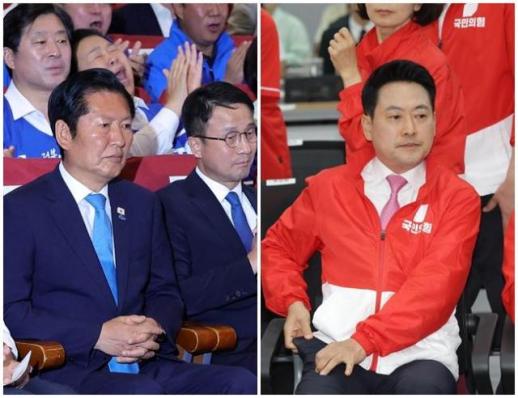 Democratic Party Wins 12 Local Governments, Seoul Mayor Race Goes to People Power Party In the June 3 local elections, the Democratic Party achieved a significant victory by retaining 12 out of 16 regional government positions. However, the party's loss of Seoul to the People Power Party left some disappointment. The People Power Party managed to secure victories in Daegu and other areas in the Yeongnam region, avoiding a complete defeat by holding onto Seoul. According to political sources on June 4, the Seoul mayoral race, initially seen as the most competitive, began with Jung Won-o leading by more than 10 percentage points. However, as the counting progressed, conservative support consolidated in the Gangnam area. By 7:16 a.m., 13 hours after the counting began, Oh Se-hoon of the People Power Party overtook Jung by a narrow margin of 0.04%, eventually widening the gap to secure victory. The results of the Seoul mayoral election brought mixed reactions from party leaders. Jung Cheong-rae, the Democratic Party leader, expressed gratitude for the voters' wise choice but lamented the loss of Seoul, stating, "It hurts not to have reclaimed Seoul." Jang Dong-hyuk, leader of the People Power Party, described the outcome as "disappointing" but emphasized that they had preserved a spark of hope, calling it a mandate from the people to protect the country against the arrogance of Lee Jae-myung and the Democratic Party. Analysts noted that while the Democratic Party's overall victory in the local elections was significant, losing Seoul was a setback. Political commentator Park Sang-byeong remarked, "Although we lost the Seoul mayoralty, the Democratic Party won significantly, and the People Power Party essentially suffered a defeat. Winning Seoul would have made it a perfect victory. The Democratic Party may view this as an unsatisfactory win." Another commentator, Choi Yo-han, stated, "The score indicates a significant win for the Democratic Party, but it feels like an uneasy victory. For the People Power Party, it’s neither a win nor a loss." In addition to the local elections, by-elections for 14 parliamentary seats were held concurrently, with the Democratic Party winning 9 seats, compared to 4 for the People Power Party and 1 for independents, indicating continued momentum for the Democratic Party. Commentators were firm in their assessment that the People Power Party did not perform well in the by-elections. They expressed pessimism about the future political prospects of Cho Kuk, the candidate from the Justice Party who lost in Pyeongtaek, while opinions on a potential merger with the Democratic Party after the local elections were mixed. Park noted, "It cannot be said that the People Power Party performed well. In Pyeongtaek, the fragmented opposition allowed Yoo Yi-dong to win by chance," adding that while Cho's political life is not over, his wings have been clipped. He predicted that the Justice Party would inevitably be absorbed by the Democratic Party. Choi also remarked, "Many people do not see the by-elections as a victory for the People Power Party," and noted that Cho's standing has significantly diminished due to emotional conflicts with the Democratic Party during the election process, making a merger seem unlikely. 2026-06-04 15:36:00
 -
 Korea's FAST Ecosystem Development to Enhance Global Competitiveness The Broadcasting and Media Commission (BMC) is taking steps to establish a Korean-style FAST (Free Ad-supported Streaming Television) ecosystem aimed at enhancing the global competitiveness of the FAST service market. On June 4, the BMC held an industry meeting at the Samsung Innovation Museum in Suwon, Gyeonggi Province, to discuss strategies for strengthening the global competitiveness of FAST services. FAST allows viewers to enjoy real-time channels and content for free in exchange for watching advertisements, and it has been rapidly growing, particularly in North America. According to market research firm Mordor Intelligence, the global market size for FAST is estimated to reach $14.33 billion this year and is projected to grow to $31.29 billion by 2031, with an average annual growth rate of 16.91%. The meeting was attended by 25 participants, including BMC Chairman Kim Jong-cheol, representatives from Samsung Electronics and LG Electronics, channel operators such as NewID and Smart Media Lab, broadcasters like KBS, MBC, and SBS, content producers, and AI technology companies like HudsonAI and Eastsoft. Before the meeting, attendees observed a service demonstration by Samsung Electronics and heard from President Lee Won-jin about future business strategies. During the meeting, Samsung Electronics and NewID presented their current status and future strategies for global platform and channel operations. HudsonAI shared examples of localizing broadcast content using AI technology. Participants agreed that the growth of the FAST market could provide new revenue opportunities for domestic broadcasters and content producers. They shared challenges and tasks necessary for securing competitiveness in the global market, discussing reasons why Korean content has not met viewership expectations in the global FAST market. They noted that current FAST channels primarily repackage and broadcast previously produced content, failing to adequately reflect local viewer demand. To enhance the competitiveness of Korean content, they suggested a strategic approach that analyzes North American viewer preferences and demands to plan and schedule content accordingly. Discussions also included the K-FAST initiative, which aims to develop customized content planning linked to advertising based on viewer data. Chairman Kim emphasized, "For the domestic broadcasting and media industry to find new avenues, it is essential to actively utilize global distribution platforms like FAST. The BMC will closely collaborate with relevant departments to foster the K-FAST ecosystem and enhance the distribution competitiveness of domestic broadcasting and media companies."* This article has been translated by AI. 2026-06-04 15:33:00
 -
 LG Innotek Expands Semiconductor Substrate Plant in Vietnam, Aiming for 3 Trillion Won Revenue by 2030 LG Innotek plans to expand its semiconductor substrate plant in Vietnam, targeting over 3 trillion won in revenue from its package solution business by 2030. On June 4, LG Innotek signed a memorandum of understanding (MOU) with Hai Phong City at its LG Science Park in Magok, Seoul, regarding the investment for the plant expansion. The new semiconductor substrate plant will cover approximately 33,000 square meters, equivalent to 45 soccer fields, in the Hai Phong area. The plant, which will be directly invested in by LG Innotek's Vietnamese subsidiary, is set to begin construction in July and is expected to be completed by May 2027. It will produce key semiconductor substrates, including RF-SiP, FC-CSP, and FC-BGA. This investment is a response to the increasing demand for semiconductor substrates driven by the expansion of on-device artificial intelligence (AI) and the growing investments in AI by global tech giants. Currently, the semiconductor substrate production line at the Gumi facility is operating near full capacity. LG Innotek stated, "We plan to develop the Gumi facility into a 'mother factory' dedicated to the development of new semiconductor substrate technologies and high-value product production, while utilizing the expanded plant in Vietnam as a base for general-purpose products, implementing a dual production site strategy." Hai Phong offers advantages such as strong customer responsiveness due to its established infrastructure and proximity to major semiconductor backend processing companies, as well as excellent cost competitiveness. Moon Hyuk-soo, CEO of LG Innotek, said, "Through our dual production site strategy, we aim to grow our package solution business revenue to over 3 trillion won by 2030 and increase its profit contribution to the level of our optical solution business."* This article has been translated by AI. 2026-06-04 15:33:00
 -
 AI-Driven Insurance Fraud on the Rise, Regulators to Establish Unified Detection System As new forms of insurance fraud utilizing generative artificial intelligence (AI) for forgery of medical certificates and receipts proliferate, financial authorities are moving to establish a unified detection system that links data from the insurance sector and public institutions. Unlike traditional forgery methods using Photoshop and manual alterations, AI-generated forgeries leave fewer traces, making them harder to detect. This initiative marks the beginning of a comprehensive government response aimed at preventing insurance losses and the deterioration of health insurance finances. On June 4, the Financial Services Commission held a kickoff meeting for the "AI-Based Insurance Fraud Prevention Task Force (TF)" alongside an insurance investigation council. The financial authorities plan to operate the TF for three months, with the goal of preparing a plan for an "AI-Based Insurance Fraud Prevention System" by September. Following this, they intend to implement legislative amendments and enhance platforms starting in October. Last year, the amount of detected insurance fraud was reported at 1.1571 trillion won. Considering undetected fraud, the total is estimated to reach approximately 9 trillion won. By category, long-term damage insurance, including health insurance, accounted for 44.7%, followed by auto insurance at 22.4% and life insurance at 21.8%. Recently, there have been cases where generative AI and deepfake technology have been misused to forge identification documents, medical certificates, and photos of vehicle damage throughout the entire insurance process, from enrollment to claims. A 20-year-old individual in Busan was sentenced to two years in prison for forging a hospitalization confirmation letter using generative AI, defrauding a total of 150 million won from 11 insurance companies. Concerns are high regarding AI forgery, as it is difficult to detect with existing methods. In the past, when receipts or medical records were cut and pasted or manipulated using Photoshop, there were often clues left, such as changes in font or spacing. In contrast, generative AI can create new image pixels, eliminating traces of manipulation. The TF will discuss establishing legal grounds for the centralized sharing of information related to insurance fraud, real-time information sharing among relevant agencies, and the analysis of AI-based fraud patterns and risk indices. Plans are also in place to enhance the "AI-Based InsurTech Platform" of the Korea Credit Information Corporation as a unified infrastructure for preventing insurance fraud across all insurance sectors and to activate a system for original data verification with public institutions.* This article has been translated by AI. 2026-06-04 15:30:00
 -
 Post-Election Push for Prosecutorial Reform in South Korea Following the local elections on June 3, the South Korean government and ruling party are expected to intensify discussions on prosecutorial reform legislation that had been postponed. The Prosecutorial Reform Promotion Team under the Prime Minister's Office plans to unveil a draft amendment to the criminal procedure law this month, with the future of supplementary investigation rights emerging as the primary issue in the second phase of prosecutorial reform. According to legal sources on June 4, the Prosecutorial Reform Promotion Team intends to announce the draft amendment within this month. With the local elections concluded and the upcoming Democratic Party convention scheduled for August, discussions on prosecutorial reform are anticipated to gain momentum. The most significant point of contention is the supplementary investigation rights of prosecutors. Concerns have been raised that if these rights are abolished, prosecutors would only be able to decide on indictments based on cases handed over by primary investigative agencies like the police, potentially leading to delays in case processing and gaps in investigations. The Supreme Prosecutors' Office reported that 45.6% of cases handled by prosecutors in March and April of this year underwent supplementary investigations, underscoring the need to maintain the system. Conversely, hardliners within the ruling party argue that supplementary investigation rights are an extension of prosecutorial powers and should be abolished to uphold the principle of separating investigation and prosecution. They contend that allowing supplementary investigations could lead to an expansion of prosecutorial authority in the future. While supplementary inquiry rights have been proposed as an alternative, there is considerable debate surrounding this issue. Critics argue that supplementary inquiry rights resemble administrative investigations rather than criminal investigations, making it difficult to recognize evidence in court and limiting the protection of defendants' rights, such as the right to refuse testimony and the right to legal counsel. The law firm Hwawoo identified the fate of supplementary investigation rights as a crucial variable in prosecutorial reform in a report released on the same day, titled "Outlook on Corporate Regulatory Environment Following the June 3 Local Elections." Hwawoo stated, "The issue of granting supplementary investigation rights to public prosecutors will emerge as the key point determining the practical success of prosecutorial reform." Discussions regarding the transition to a public prosecution and serious crimes investigation agency system, another key aspect of the second phase of prosecutorial reform, are also expected to become more active. The Serious Crimes Investigation Agency, which is being prepared for launch in October, will be responsible for investigating six major crimes: corruption, economic offenses, defense industry crimes, drug offenses, national security crimes, and cybercrimes. Consequently, a significant number of investigations currently handled by prosecutors in areas such as securities, finance, fair trade, and corporate crimes are likely to be transferred to the Serious Crimes Investigation Agency. Hwawoo advised that businesses should focus on the diversification of investigative agencies rather than merely the reduction of prosecutorial powers. The report predicts that with the establishment of the public prosecution and serious crimes investigation agency system, companies will face a landscape where they must respond to multiple investigative bodies, including the police and special judicial police. Discussions on the so-called "special prosecution law for fabricated charges," promoted by the ruling party, may also resume following the local elections. In April, the Democratic Party proposed a special prosecutor bill aimed at uncovering allegations of fabricated investigations and charges by the prosecution, the National Intelligence Service, and the Board of Audit and Inspection during the Yoon Suk Yeol administration. The provision allowing the special prosecutor to decide on the maintenance of charges for cases they inherit has sparked controversy among opposition parties, who have labeled it a "self-pardon" issue. In addition to prosecutorial reform, corporate regulatory legislation is expected to be a major agenda item in the upcoming regular session of the National Assembly in the second half of the year. Hwawoo highlighted the establishment of a platform law and the abolition of exclusive reporting rights as key variables in the fair trade sector. According to the report, the platform law will regulate practices such as preferential treatment for a company's own products, tying sales, and demands for the best treatment, and discussions may also include the introduction of a cap on delivery app commissions. The abolition of exclusive reporting rights is also a concern for businesses. Hwawoo predicts that the criminalization of fair trade cases could accelerate, with the possibility of direct indictments without going through the Fair Trade Commission and an expansion of reporting rights for local governments. In the labor sector, extending the retirement age to 65 and mandating retirement pensions are identified as key legislative tasks. Hwawoo anticipates that the government and ruling party are likely to push for the extension of the retirement age, the expansion of labor law applicability, and the mandatory retirement pension system. Particularly, following the implementation of the Yellow Envelope Law, disputes surrounding the responsibilities of primary contractors and the scope of collective bargaining are expected to increase. The legal community views the upcoming regular session of the National Assembly as a critical juncture for prosecutorial reform and regulatory legislation. Starting with the debate over supplementary investigation rights related to the amendment of the criminal procedure law, discussions on the transition to a public prosecution and serious crimes investigation agency, platform law, abolition of exclusive reporting rights, and labor legislation are expected to follow, making it increasingly important for businesses to address judicial and regulatory risks.* This article has been translated by AI. 2026-06-04 15:30:00
 -
 Interest Rate Hike Looms: Fixed vs. Variable Mortgage Rates As the Bank of Korea formalizes its trend of increasing interest rates, borrowers are facing tough decisions. Typically, fixed-rate loans are preferred during periods of rising rates due to their stability, but current fixed rates are about 1 percentage point higher than variable rates. While variable rates are lower, they can lead to rapidly increasing principal and interest payments if rates rise further. So, which option is better for new borrowers? According to financial sector data, the fixed-rate mortgage rates from the five major banks (KB Kookmin, Shinhan, Hana, Woori, and NH Nonghyup) are currently between 4.33% and 7.34%. This marks an increase from the previous month’s range of 4.26% to 7.10%, with the upper limit rising by 0.24%. Compared to the end of last year, when the upper limit was in the 6% range, this represents a jump of over 1 percentage point in just five months. The sharp rise in fixed mortgage rates is attributed to an increase in the five-year bank bond rates, which serve as a benchmark for fixed rates. Bank bond rates reflect the costs banks incur when securing funds for loans. As market interest rates rise, bank bond rates increase, which subsequently affects loan rates after a delay. Variable rates are also under upward pressure. According to the Bankers Association, the new CoFIX (Cost of Funds Index) for April was 2.89%, up 0.08 percentage points from the previous month. The balance-based CoFIX was 2.87%, and the new balance CoFIX was 2.49%, rising by 0.02 and 0.04 percentage points, respectively. Generally, fixed rates are considered more favorable during periods of rising interest rates. Although the fixed rates are higher than variable rates, they allow borrowers to manage their finances more predictably due to the stability of fixed interest payments. However, the current situation is complicated by the fact that fixed mortgage rates are now higher than variable rates. The variable mortgage rates from the five major banks are currently between 3.67% and 6.35%, with the upper limit nearly 1 percentage point lower than fixed rates. As a result, many borrowers are opting for the lower initial payments associated with variable rates. According to the Bank of Korea, as of the end of April, the proportion of new variable-rate mortgages surged to 52.2%, an increase of 13 percentage points from the previous month. This means that more than half of the mortgages issued by banks are now variable rates, marking the first time since August 2021 that variable rates have exceeded 50%. Given the likelihood of future rate hikes amid high inflation, banks advise borrowers to consider fixed rates for long-term financial stability. With mortgage terms typically lasting at least 30 years, reducing uncertainty is crucial. Particularly with variable rates, interest rate increases are reflected periodically, which could lead to higher burdens for borrowers in the future. The Bank of Korea estimates that if loan rates rise by 0.25 percentage points, the total interest burden for borrowers would increase by 3.2 trillion won, and a 1 percentage point rise would add 12.8 trillion won. This translates to an average annual increase of 163,000 won in interest payments per borrower. For those who find the high fixed rates burdensome, choosing a variable rate now and switching to a fixed rate after three years could be a viable strategy. After three years, borrowers can take advantage of a program that waives prepayment penalties when switching from a variable to a fixed rate. A banking official stated, "In a situation where the Bank of Korea is expected to raise interest rates further, borrowers must weigh their current and future interest burdens. Since the rate hikes have not yet fully materialized, it may be strategically advantageous to monitor future rate trends before making a switch."* This article has been translated by AI. 2026-06-04 15:30:00
 -
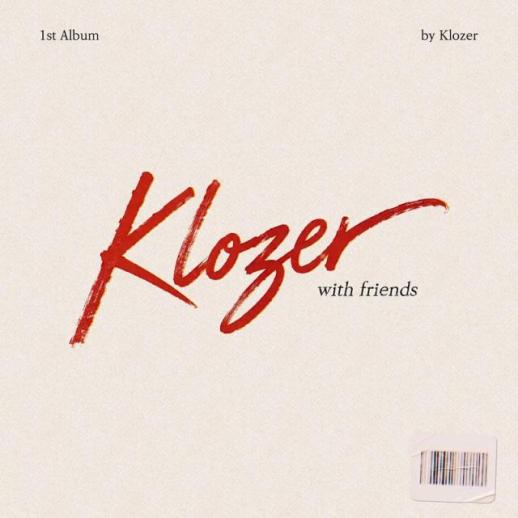 Producer Klozer set to release first full-length album SEOUL, June 4 (AJP) - South Korean producer and artist Klozer is set to release his first full-length album on Thursday, according to distributor Danal Entertainment. The 10-track eponymous album is scheduled to be available on AURORA, Danal Entertainment’s global music distribution platform, as well as other music streaming sites. All songs on the album were written and composed by Klozer. The title track, "More Than Expected," features Babylon and Newaile. The R&B soul track was written and composed by Klozer, Kangta, a former member of K-pop group H.O.T., Youngjun, Babylon and Newaile. The album also includes "Falling," featuring Kim Won-jun; "Only for a While," featuring Dmeanor; "YUSE," featuring Jin Hyo-jung; "Watermelon," featuring Byeol Eun; and "Once Again." Previously released tracks "Lowkey," featuring Lee Ba-da; "Waiting for You," featuring Danny Koo; and "Walking on Snow," featuring Yoo Seong-eun, are also included on the album. Klozer has worked as a producer on projects including Danny Koo's "Danny Sings" and Baek Z Young's "Ordinary Grace." He has also collaborated with K-pop groups CNBLUE and TVXQ, as well as artists including Taeyeon, Doyoung, Ben and Hwang Ga-ram. 2026-06-04 15:29:09
 -
 Coinone Partners with Hanwha Investment & OKX to Expand Digital Finance Coinone is taking steps to secure its position in the future digital finance market by attracting strategic investments from Hanwha Investment & Securities and global cryptocurrency exchange OKX. The company aims to evolve from a simple cryptocurrency exchange into a comprehensive financial platform that encompasses next-generation digital asset markets, including token securities (STO) and stablecoins. On June 4, Cha Myung-hoon, CEO of Coinone, held a joint press conference at the company's headquarters in Yeouido, Seoul, stating, "This investment goes beyond mere financial investment; it lays the groundwork for establishing the digital asset industry as a trusted institutional sector among the public and authorities. We aim to grow into a comprehensive financial company based on blockchain technology, surpassing the traditional cryptocurrency exchange model." Previously, Hanwha Investment & Securities and OKX Ventures each secured a 20% stake in Coinone, making them joint third-largest shareholders alongside Cha (30.36%) and Com2us Holdings (24.54%). Cha noted, "Even with new shareholders participating in the board to discuss major decisions, I will maintain over 30% ownership, ensuring continuity and stability in management." Hanwha Investment & Securities emphasized that this investment is a strategic investment (SI) rather than just a financial investment (FI). Kim Sung-hwan, CEO of Hanwha Investment & Securities, explained, "As the institutionalization of digital assets like token securities and stablecoins accelerates, the market will shift from simple trading competition to a focus on new financial services. We decided on a strategic investment to secure a hub connecting traditional finance and digital assets." Regarding the choice of Coinone over larger exchanges like Upbit and Bithumb, Kim stated, "We did not solely consider trading volume or market share. Coinone has not experienced a single security incident since its establishment and has a proven blockchain infrastructure." OKX plans to provide Coinone with global infrastructure and technological support. Star Xu, Founder and CEO of OKX, remarked, "Leveraging the technology, security, and risk management expertise accumulated over 13 years of operating a global exchange, we will support Coinone in becoming a safer and more trusted platform." Existing major shareholder Com2us Holdings played a bridging role in this investment process. Song Byung-jun, Chairman of Com2us Holdings, stated, "To respond to the rapidly changing digital finance environment, we redesigned the shareholder structure with Coinone. The combination of Hanwha Investment & Securities' financial expertise and OKX's global network has laid the foundation for Coinone to take a significant leap forward." Coinone emphasized the significance of collaboration among top-tier companies in various fields. Cha stated, "We will build a digital finance ecosystem that combines the trust of traditional finance, global technological capabilities, and content and IT expertise. In the long term, we aim to evolve into a global comprehensive digital financial platform."* This article has been translated by AI. 2026-06-04 15:27:00
 -
 Homeplus to Close 37 Stores Nationwide, Affecting Around 1,500 Employees Homeplus has decided to permanently close 37 stores across the country that were previously temporarily shut down.On June 4, the company informed the Homeplus branch of the Mart Industry Labor Union and the general union that it would close the 37 stores that had been on hiatus since May 10. Initially, the suspension was set to last until June 3, but the decision to close was influenced by the company's restructuring process and financial situation.As part of this closure, Homeplus plans to implement a restructuring support program for the employees at the affected stores. Employees at the managerial level and above will be offered voluntary retirement, although those with less than six months until retirement will not be eligible. Employees below the managerial level will receive support under an employment stability agreement between the labor and management.However, the actual disbursement of support funds remains uncertain. Homeplus stated that the voluntary retirement and support programs would only be applicable if creditors agree to provide emergency operating funds and extend the restructuring process due to the depletion of operational funds. Therefore, it is unclear whether employees will actually receive their retirement or employment stability payments.According to the labor union, approximately 3,500 employees work at the 37 stores, with around 1,500 eligible for voluntary retirement.Meanwhile, the deadline for approving Homeplus's restructuring plan, which entered corporate rehabilitation proceedings in March of last year, is set for July 3. Recently, the company has put its remaining business segments, including its headquarters and online and large store operations, up for sale.* This article has been translated by AI. 2026-06-04 15:27:00