

Journalist

Lim Kwu-jin
-
 Cuba's Tourism Industry Faces Collapse as Major Hotel Group Withdraws 쿠바, once known as the "Pearl of the Caribbean," has rapidly descended into a graveyard of capital. The lively salsa music that once filled the streets has fallen silent as 62 luxury hotels and resorts have closed their doors. The Canadian hotel group Blue Diamond Resorts, which supported Cuba's tourism industry, has decided to withdraw completely. The reasons for this withdrawal are multifaceted. U.S. sanctions, a shortage of aviation fuel, power outages, and a reduction in key flight routes have all converged. The company cited "ongoing operational constraints" as a significant factor. This situation illustrates how vulnerable a nation's core industry can be to external shocks. Statistics paint a stark picture. From January to April this year, only 328,608 foreign tourists visited Cuba, a 55.8% drop compared to the same period last year. In April alone, the number was just 30,551. Tourists from Canada, which accounted for 40% of visitors, decreased by 63.8%. With the departure of these major players, the entire ecosystem encompassing hotels, airlines, travel, and local businesses has suffocated. It is uncomfortable to dismiss this as a foreign disaster. Tourism is the most vulnerable industry to external conditions. We experienced the horrific pain of an ecosystem shutdown during the COVID-19 pandemic. Each time geopolitical tensions arise, such as the THAAD conflict or strained Japan-South Korea relations, the tourism sector is hit hardest. While it is encouraging to hear foreign languages again in areas like Myeongdong, Hongdae, and Seongsu-dong, we must assess how precariously this recovery stands. The government is pushing to achieve its goal of attracting 30 million tourists by accelerating efforts. The direction is correct, but impressive numbers do not equate to industry strength. Simply increasing visitor statistics does not create a resilient structure. It is crucial to consider not just how many tourists arrive, but also where they come from, how much they spend, and the economic benefits they bring to local communities. The Korean Peninsula also faces persistent geopolitical risks. If security crises or diplomatic tensions arise, leading foreign airlines to cut routes and major investors to withdraw funds, any recovery could be abruptly halted. Given the high dependency on global chain hotels and foreign platforms, it is time to evaluate whether the domestic ecosystem can withstand the withdrawal of external capital. While tourism may appear to be a glamorous consumer industry, it is, in reality, a complex ecosystem tightly interwoven with lodging, transportation, and local commerce. A disruption in one area can quickly ripple through the entire sector. What we need to cultivate now is a solid foundational strength. We must diversify the demand for inbound tourism concentrated in specific countries and strengthen domestic tourism as a robust defense. Local tourism should not be a one-time event but rather a structure that promotes sustained stays and spending. Universal infrastructure that allows those with mobility challenges to travel comfortably, a safety response system that activates during crises, and the resilience of small businesses are all essential. Cuba's reality serves as a mirror that could reflect our own situation at any moment. Tourism may grow when the winds are favorable, but true strength is tested in times of crisis. Before celebrating the figure of 30 million, we must first solidify the roots of an industry that can withstand fierce external pressures. Substance and structural improvement should take precedence over flashy promotional slogans.* This article has been translated by AI. 2026-06-02 11:03:00
 -
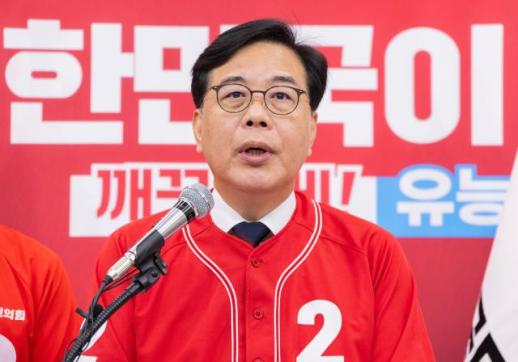 Song Eon-seok Appeals to Young Voters Ahead of Local Elections Song Eon-seok, the floor leader of the People Power Party, urged young voters to participate in the upcoming local elections during a press conference at the National Assembly on June 2, one day before the polls. "Young people have always been the ones to determine the trends of a new society. Your participation can create a new political trend," he stated. He acknowledged that many young people feel there is no party that represents their interests under the current two-party system dominated by the People Power Party and the Democratic Party. "This is entirely due to the shortcomings of the established political sphere, and I humbly reflect on this," he said. Song noted that while the People Power Party has made efforts to protect the interests of youth and future generations, it has fallen short in developing impactful policies, facilitating communication channels for youth in politics, and providing opportunities for political participation. He referenced the 'enemy challenge' posed to candidates, asking them to identify the main adversary of South Korea. "Some in the leftist establishment hastily dismiss this as outdated rhetoric, accusing young people of extremism. The question from the youth is straightforward: Why did I spend a year and a half in military service in my twenties? Answer that clearly," he argued. He criticized those who evade the question by not naming North Korea as the enemy, saying, "This attitude is met with ridicule from the youth." Song expressed his anger over the government's indifference to the recent tragic death of a young soldier during training, stating, "I cannot help but feel furious at the thorough silence from President Lee Jae-myung and the ruling party regarding this matter." He also condemned the hypocrisy of those who advocate for women's rights while being involved in sexual misconduct scandals. He pointed out that while the Lee Jae-myung administration creates laws that benefit elite unions, youth employment continues to decline, and the number of unemployed young people is rising. "Government officials are buying properties in affluent areas while implementing real estate policies that force young people and newlyweds to abandon their dreams of homeownership, pushing them to the outskirts of Seoul and Gyeonggi Province," he said. While acknowledging the People Power Party's shortcomings in protecting youth interests, he assured that the party remains committed to prioritizing the welfare of young people and future generations. "Although we may still lack in fully representing the voices of the youth, we will strive to get closer to their side. I understand that you may feel disillusioned with both the red and blue parties and may want to abstain from voting. However, I urge you not to easily give up your rights," he concluded.* This article has been translated by AI. 2026-06-02 11:03:00
 -
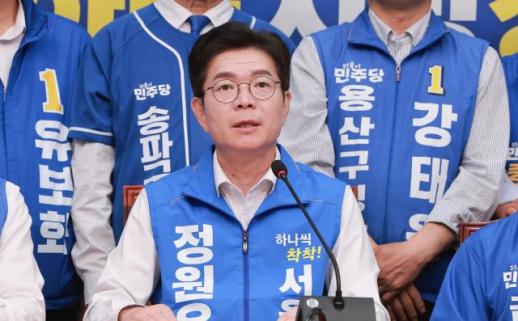 Jung Won-oh Criticizes Oh Se-hoon for Negative Campaigning Ahead of Local Elections Jung Won-oh, the Democratic Party's candidate for Seoul Mayor, criticized Oh Se-hoon, his opponent from the People Power Party, on June 2 for continuing negative campaigning amid allegations of misconduct, including claims of extravagant trips. Jung stated that Oh's tactics reflect a reliance on negativity as the election approaches. During a joint press conference with candidates for 25 district mayors at the National Assembly, Jung remarked, "Rehashing previously answered questions to create new allegations is a typical negative campaign strategy." He emphasized that voters would see through Oh's attempts to turn the unfavorable election landscape in his favor. "I have no need to attack Oh personally; I have stated that if I stop negative campaigning, we can focus on policy discussions," he added. Jung specifically pointed out that while Oh advocates for a policy-focused debate during televised discussions, he has been accused of operating a team that spreads defamatory comments online. "He will not escape legal scrutiny for this," Jung warned. Furthermore, Jung characterized Oh as incompetent, irresponsible, and complacent. "The citizens will not be deceived again. They are aware of his pattern of kneeling and apologizing during elections to regain support," he stated. Jung also framed the upcoming election as a referendum on the success of the Lee Jae-myung administration, asserting that a change in government should lead to improvements in citizens' lives. He called for a united effort between the government and Seoul to ensure that policies benefiting the public reach every neighborhood.* This article has been translated by AI. 2026-06-02 11:03:00
 -
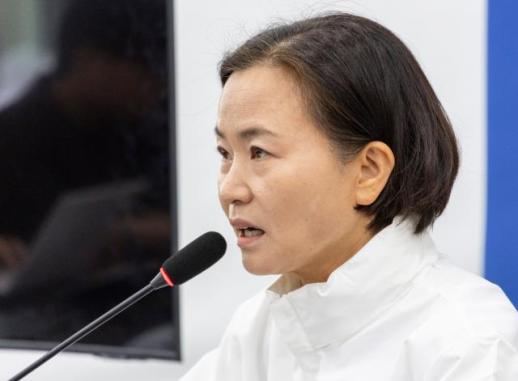 Innovation Party Appeals for Support Ahead of Local Elections The Justice Innovation Party appealed for voter support on June 2, one day before the local elections, urging citizens to vote for its candidates to uphold the efforts and values of the democratic camp. The party also called for a decisive judgment against the conservative People Power Party and others, emphasizing the need to prevent illegal martial law. Lee Hae-min, the party's secretary-general, addressed reporters at the National Assembly, stating, "In just a few hours, the official campaigning for the local elections and the National Assembly by-elections will conclude at midnight. During this critical and urgent time, all of our candidates and party members are igniting their final efforts in a 63-hour blue relay across the nation." On June 1, Lee noted that the party's candidates were earnestly greeting citizens despite heavy rain, urging them to vote for candidate No. 3, the Justice Innovation Party, to protect their efforts and values. He emphasized, "You can mark candidate No. 3 and then vote for the democratic camp candidates." Lee argued that the local elections are an opportunity to hold accountable the People Power Party and other conservative factions that have claimed illegal martial law and fraudulent elections. "There are still forces that trample on democracy by mobilizing the military simply because they do not like the results, spreading extreme conspiracy theories that deny election outcomes," he said, referring to candidates Oh Se-hoon and Yoo Yi-dong from the People Power Party, as well as independent candidate Han Dong-hoon and Hwang Kyo-ahn from the Liberty Korea Party, who he claimed are not free from the failures of the Yoon Suk-yeol administration. He added, "The true judges of these candidates are the citizens. I earnestly request that you decisively judge them through your votes tomorrow, with a heartfelt desire to prevent illegal martial law." Additionally, Lee reiterated his call for support for candidate Justice in the key battleground of Pyeongtaek, which has long been marginalized in the political landscape. "Pyeongtaek has been pushed back in the political interests for a long time and has faced reverse discrimination," he said. "It has potential but has not seen any growth. To develop Pyeongtaek, we need a significant political figure." He concluded, "Justice is a person who can truly change the future of Pyeongtaek. If Justice is elected, Pyeongtaek will grow. He can be the strongest and only bridge to unite the divided democratic camp. I urge everyone to come out to the polls tomorrow and show the power of the people."* This article has been translated by AI. 2026-06-02 11:00:00
 -
 SK Bioscience Secures First Contract with UNICEF to Supply 640,000 Flu Vaccines SK Bioscience announced on June 2 that it has been designated as a supplier of flu vaccines for UNICEF this year, beginning shipments for countries in the Southern Hemisphere. The company plans to start supplying doses for the Northern Hemisphere in September, aiming to deliver approximately 640,000 doses of the flu vaccine in accordance with vaccination schedules in various countries throughout the year. Notably, SK Bioscience has been selected as the sole supplier for the Southern Hemisphere, while also being recognized as a major supplier for the Northern Hemisphere. This contract marks SK Bioscience's first collaboration with UNICEF, establishing a foothold in the global public procurement market following its previous engagement with the Pan American Health Organization (PAHO). The company successfully secured its first contract for chickenpox vaccines with PAHO in 2022, which has since been extended through 2027, reaffirming its competitive edge. The flu vaccine, Skycellflu, has demonstrated excellent immunogenicity and safety through clinical trials and is the first cell-cultured flu vaccine to receive prequalification from the World Health Organization (WHO). The cell culture method is known to reduce the risk of viral mutations during production, resulting in a higher match rate with circulating viruses. In addition to supplying flu vaccines through PAHO, SK Bioscience has been expanding its global health initiatives in collaboration with organizations such as the International Vaccine Institute (IVI) and the Coalition for Epidemic Preparedness Innovations (CEPI). Recently, the company received product approval for its chickenpox vaccine, Skyvaricella, in Vietnam and obtained new flu vaccine approvals in Moldova, Eastern Europe. SK Bioscience plans to broaden its global business base by expanding product approvals in several countries, including Thailand, Malaysia, Mongolia, Pakistan, and Chile. SK Bioscience CEO Ahn Jae-yong stated, "This first contract with UNICEF represents a significant achievement in expanding our entry into the global public procurement market. We will strengthen our collaboration with international organizations to contribute to global infectious disease response and public health improvement."* This article has been translated by AI. 2026-06-02 11:00:00
 -
 Samsung Publishing's $10 Million Stock Buyback Drives Shares to Limit Up Samsung Publishing's announcement of a 10 billion won stock buyback plan sent its shares soaring to the daily limit. After a month of declining stock prices, the company's commitment to enhancing shareholder value has significantly improved investor sentiment. According to the Korea Exchange, as of 10:49 a.m., Samsung Publishing's shares were trading at 7,930 won, up 1,830 won (30.00%) from the previous trading day. The stock opened at 6,250 won but quickly surged to the upper limit as buying interest surged. The company's market capitalization is approximately 79.3 billion won. The sharp increase in stock price appears to be influenced by the company's announcement made after the market closed the previous day regarding the stock buyback decision. Samsung Publishing disclosed that it has entered into a trust agreement for a 10 billion won stock buyback. The contract period runs from June 1 to November 30, and the brokerage firm handling the contract is Daishin Securities. The company stated that the purpose of the buyback is to "stabilize stock prices and enhance shareholder value." The planned number of shares to be acquired is 153,139, based on the previous day's closing price of 6,530 won, although the actual acquisition amount may vary depending on future stock prices. Market analysts suggest that the buyback plan has stimulated expectations for improved supply and demand, especially given the lack of clear stock price momentum in recent times. Indeed, Samsung Publishing's stock had fallen 6.58% the previous day and had been on a downward trend for the last five trading days. The stock price had dropped over 33% from 9,130 won at the end of April to 6,100 won the day before the announcement. In this context, the company's proactive approach to stabilizing its stock price has attracted significant buying interest from investors. The stock buyback trust agreement involves entrusting funds to a securities firm to purchase the company's own shares over a specified period. This is often interpreted as a signal of the company's commitment to reducing market supply and returning value to shareholders. On this day, trading volume exceeded 145,019 shares, with trading value approaching 1.1 billion won, significantly surpassing typical levels.* This article has been translated by AI. 2026-06-02 10:57:00
 -
 Pamtech Shares Surge Following Acquisition of Robotics Firm TIS Pamtech has seen its shares hit the daily limit for the second consecutive trading day following news of its acquisition of TIS, a company specializing in industrial robots. As of 10:40 a.m. on June 2, shares of Pamtech rose by 419 won (29.99%) to 1,816 won. The previous day, shares also closed up by 29.95%, marking two days of limit-up trading. The acquisition of 100% of TIS is seen as a move to enhance Pamtech's semiconductor process automation equipment business, boosting investor sentiment. Pamtech announced on June 1 that it had completed the acquisition of TIS. The company plans to leverage TIS's technology to secure industrial robot expertise and develop wafer transfer robot technology for semiconductor manufacturing and post-processing. Pamtech aims to advance its semiconductor logistics automation equipment business, including wafer transfer modules (EFEM) and sorters, using TIS's technology. EFEMs are pre-processing equipment that automatically supply and retrieve wafers to and from processing equipment, while sorters inspect and classify wafers. With the recent expansion of the artificial intelligence (AI) semiconductor and high-performance computing (HPC) markets, the importance of advanced packaging technology has grown, leading to increased expectations for the glass substrate equipment market. Glass substrates are known to have a higher risk of breakage compared to traditional silicon wafers, making precise transfer and alignment technology essential. Pamtech plans to combine its existing automation equipment design and manufacturing capabilities with TIS's precision robot technology to capture the market for automation equipment for glass substrates. Pamtech develops and manufactures automation equipment for camera modules, semiconductors, smart factories, and mobility sectors. Last year, the company reported consolidated revenues of 38.7 billion won and an operating loss of 4.1 billion won.* This article has been translated by AI. 2026-06-02 10:57:00
 -
 Researchers discover natural substance capable of slowing down cancer cell growth SEOUL, June 02 (AJP) - Scientists from South Korea and the United States have discovered that a natural substance produced when the body breaks down dietary fats can directly block a key protein responsible for cancer cell growth, the Korea Advanced Institute of Science and Technology said Tuesday. The joint study, led by Korea Advanced Institute of Science and Technology (KAIST) Professor Kim Se-yoon and Korea University Professor Byun Young-joo, identified that a fat byproduct called 13-HODE acts as a natural brake on the mTOR protein. The mTOR protein regulates normal cell growth and energy use, but it becomes abnormally hyperactive in cancer cells, driving rapid tumor growth and spread. The human body creates the 13-HODE molecule when an enzyme called ALOX15 processes linoleic acid, an essential fatty acid commonly found in plant oils. Using computer simulations and mass spectrometry, the research team found that 13-HODE physically attaches itself to the active part of the mTOR protein, completely shutting down its ability to function. Researchers noted that 13-HODE levels are severely depleted in breast and colon cancer cells because the tumors suppress the ALOX15 enzyme needed to make it. During laboratory tests, artificially increasing the production of both the enzyme and the fat byproduct successfully lowered mTOR activity and stopped cancer cells from multiplying. "This research is meaningful in that it reveals a fat metabolite produced within the human body can directly inhibit mTOR, a core protein in cancer growth," Professor Kim Se-yoon said. "It could be utilized not only for new anticancer treatment strategies using fat metabolism in the future but also for developing treatments to regulate mTOR overactivity seen in inflammation and aging processes." Professor Byun Young-joo said the research identified the interaction between a protein and a fatty acid metabolite at the molecular level through the convergence of biology and pharmacy. "It will serve as an important foundation for the development of innovative new drugs in the future," Byun said. Professor Jie Chen of the University of Illinois, a leading researcher in the mTOR field, evaluated the findings in a journal preview, describing the work as an exceptional discovery that presents a new breakthrough in controlling cancer cells. The research involved collaboration with scientists from Gachon University College of Medicine and the University of Maryland School of Pharmacy. The study, co-authored by Dr. Park Seung-ju and doctoral student Kim Se-ra of KAIST, was published as a cover paper in the journal Cell Chemical Biology on May 21, 2026. (Reference Information) Journal/Source: Cell Chemical Biology Title: Mechanism by which a linoleic acid metabolite suppresses cancer cell growth by inhibiting mTOR Link/DOI: https://doi.org/10.1016/j.chembiol.2026.04.004 2026-06-02 10:56:34
 -
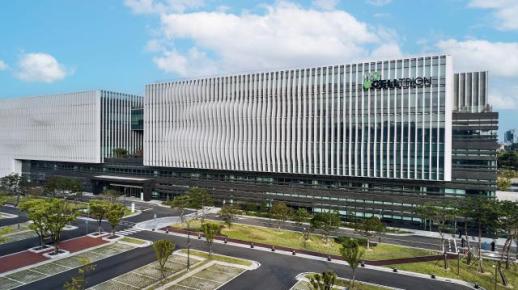 Celltrion Establishes First Labor Union, Calls for Performance Pay and Staffing Discussions Celltrion has established its first labor union, marking a significant milestone 25 years after the company's founding. The union is advocating for transparency in performance pay criteria, improvements to the wage system, and the hiring of regular staff. Union representatives argue that discussions on a compensation system commensurate with the company's expected record performance are necessary. According to the Korean Confederation of Trade Unions' Chemical, Textile, and Food Industry Workers' Union, Celltrion employees launched the 'Unitrion' branch of the union on June 1. This is the first union formed since the company was founded by Chairman Seo Jung-jin in 2002. The union announced its official establishment through a declaration but did not disclose the number of members. In its founding declaration, the union stated, "We demand transparent compensation and respect that reflects our dedication." Key demands include the disclosure of criteria for excess profit-sharing bonuses and the establishment of a wage determination system based on negotiations. The union is also calling for the hiring of regular staff in compliance with Good Manufacturing Practices (GMP), improvements to rotating work schedules, enhanced employee welfare, and the rejection of unilateral work directives. These demands are seen as closely related to the company's recent growth. Celltrion has been experiencing performance growth due to the expansion of biosimilar sales and the establishment of a direct sales system. Additionally, with the launch of its new drug business, the company has set a revenue target of 5.3 trillion won for this year. The union believes that with record performance anticipated, both performance pay and the wage system should be improved accordingly. Labor issues are increasingly spreading across various industries. In the pharmaceutical and biotech sectors, discussions are ongoing. The union at Samsung Biologics conducted a five-day strike last month and continues to engage in lawful protests demanding wage and treatment improvements. In response to the union's formation, Celltrion stated, "The company respects the rights guaranteed by law regarding the establishment of labor unions and plans to respond sincerely in accordance with laws and regulations as related procedures progress." The company added, "We will do our utmost to ensure stable operations and continuous growth through communication with employees and responsible management."* This article has been translated by AI. 2026-06-02 10:54:00
 -
 Korea Expressway Corporation Introduces Fuel Assistance Service for Vulnerable Road Users The Korea Expressway Corporation announced on June 2 that it will implement a "QR Call Fuel Assistance Service" to reduce the inconvenience faced by vulnerable road users, including people with disabilities, the elderly, and pregnant women, at highway gas stations. This service will be available at 218 self-service gas stations across the country. Out of 226 gas stations on the expressways, 218 operate on a self-service basis, accounting for 96%. Previously, vulnerable users had to use assistance devices like call buttons to request help, which required them to exit their vehicles. The new service allows users to request assistance without leaving their cars through a contactless call system. By scanning a QR code attached to the gas pump, the request is sent to the gas station staff. If scanning the QR code is not feasible, users can call the gas station office using the contact number provided below the QR code. Once the request is received, a staff member will come to the vehicle to assist with the entire fueling process. The Korea Expressway Corporation believes this service will enhance both the safety and accessibility for vulnerable road users. Current legislation defines vulnerable road users as individuals who experience mobility difficulties in daily life, including people with disabilities, the elderly, pregnant women, caregivers with infants, and children. A representative from the Korea Expressway Corporation stated, "This service goes beyond simple fuel assistance; it is a public service that guarantees mobility rights. We will continue to improve systems on-site to ensure that all citizens can safely and conveniently use highway services."* This article has been translated by AI. 2026-06-02 10:54:00