
Journalist

Lim Sung-nam
-
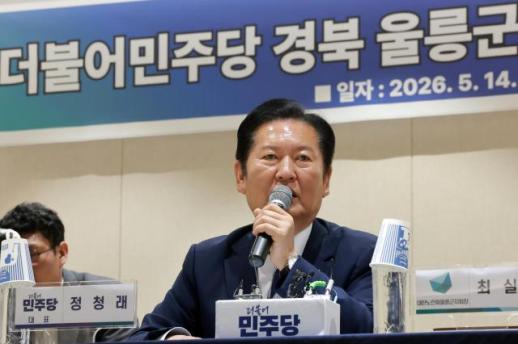 Jung Cheong-rae Criticizes People Power Party's Negative Campaigning Jung Cheong-rae, head of the Democratic Party's Central Election Committee, criticized the People Power Party for its negative campaigning tactics, stating, "It seems they are trying to fill their election campaign with negativity after engaging in the 'Yoon Again' nominations." Speaking at a Central Election Countermeasure Committee meeting in Jeju on May 15, Jung remarked, "The public wants to feel political efficacy through future visions and livelihood pledges, but the People Power Party seems unaware of this." He added, "It is frustrating, but we have nothing to lose." In response to views suggesting that People Power Party leader Jang Dong-hyuk appears to be a strategic asset for the Democratic Party, Jung expressed a desire for the People Power Party to normalize, stating, "The stronger the People Power Party becomes, the more the Democratic Party will feel the need to strengthen itself." Jung also characterized the People Power Party's campaign as a "five-no campaign," lacking in policy, vision, personnel, communication, and conscience. He criticized, "I expect terms like 'burden on the people' and 'enemy of the people' to emerge from within the People Power Party itself." He further stated, "The public perceives the People Power Party as engaging in nominations that support insurrection, endorsing martial law, obstructing people's livelihoods, abolishing constitutional amendments, launching negative offensives, and ignoring the public." Additionally, he remarked, "Even if they claim to cancel charges against insurrectionists, the public will think, 'It seems many fabricated charges were made during the Yoon Suk-yeol administration's prosecutorial dictatorship.' How many fabricated charges must they have issued to want to hide that?"* This article has been translated by AI. 2026-05-15 10:18:27
 -
 KakaoTalk Expands Message Reaction Feature, Supports 114 Types Kakao has significantly enhanced the message reaction feature and revamped user convenience functions through a regular update to KakaoTalk. On May 15, Kakao announced the expansion of its existing reaction feature and the introduction of new functionalities, including improvements to open chat and call features. The core of this update is the enhancement of the reaction feature. Users can now leave up to 30 different reactions on KakaoTalk message bubbles, with the total number of reaction types increasing to 114. Notably, the range of mini emoticons that users can utilize as reactions has been broadened. Users can now tap on reactions left by others, even if they do not own those mini emoticons, allowing for a more natural and diverse expression of emotions during conversations. The emoticon store has also been revamped. The 'Emoticons' menu under the More tab now includes new and popular sections, making it easier for users to explore a variety of emoticon products and the latest trends. Users can save their favorite items using the 'like' feature, and enhanced search functionality allows them to quickly view popular styles and emoticon rankings. Improvements have also been made to the open chat feature. Users can now reply to specific comments, facilitating a more natural flow of conversation. Additionally, a new 'Call' folder has been added at the top of the chat tab, where users can view recent call records for voice and video calls in one place. KakaoTalk's regular updates typically occur on a monthly basis. The new features are available in KakaoTalk version 26.4.0 and above.* This article has been translated by AI. 2026-05-15 10:15:41
 -
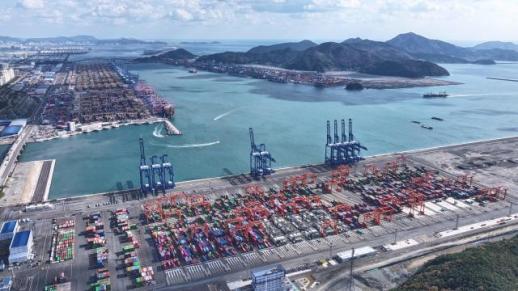 Government Warns of Economic Downside Risks Amid Ongoing Middle East Conflict 정부는 최근 우리 경제가 중동전쟁 장기화에 따른 지정학적 리스크로 경기 하방 위험이 이어지고 있다고 진단했다. 국제유가와 원자재 가격 불안이 지속되면서 물가 상승과 민생 부담 확대 우려도 함께 커지고 있다는 판단이다. The government has assessed that the South Korean economy continues to face downside risks due to geopolitical uncertainties stemming from the prolonged Middle East conflict. Concerns over rising prices and increased burdens on households have also intensified amid ongoing volatility in international oil and commodity prices. In its May report on recent economic trends, the Ministry of Economy and Finance stated, "While domestic consumption and the service sector show signs of recovery, the geopolitical risks associated with the Middle East conflict persist, leading to continued downside risks for the economy." The government reiterated its concerns about external uncertainties, maintaining similar language from its April report, which noted that the escalation of geopolitical risks due to the Middle East conflict has heightened economic downside risks. Notably, this month, the government emphasized the impact of high oil prices on inflation and household burdens. Recent inflation trends have also shown signs of instability. In April, consumer prices rose 2.6% compared to the same month last year, an increase from the previous month's 2.2%. The inflation rate for industrial products climbed to 3.8%, while the cost of living increased by 2.9%. Fluctuations in international oil prices and exchange rates are additional burdens. At the end of April, the won-dollar exchange rate stood at 1,483.3 won, remaining at a high level, and government bond yields also rose due to the impact of the Middle East conflict. However, the government noted improvements in some indicators, such as production and exports. In March, total industrial production increased by 0.3% compared to the previous month, and service sector output rose by 1.4%. The coincident composite index and leading composite index also saw increases of 0.5 points and 0.7 points, respectively. Exports continue to show signs of recovery, particularly in the semiconductor sector. In the first quarter of this year, the current account recorded a surplus of $65.4 billion, and net financial assets also increased. Notably, strong exports in the information and communication technology sector, driven by semiconductors, have propelled overall export growth. In the financial markets, the stock market has shown significant strength. In April, the KOSPI surged 30.6% to reach 6,598.87, influenced by improved earnings from major companies. The proportion of foreign ownership in the market has also expanded. The government has stated that it will maintain an emergency economic response system to minimize the impact of the Middle East conflict, expedite the disbursement of support funds for high oil prices, manage the supply of key items, and ensure stability in prices and livelihoods.* This article has been translated by AI. 2026-05-15 10:13:20
 -
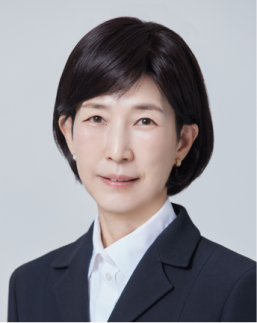 Samyang Foods promotes Buldak architect Kim Jung-soo to chair SEOUL, May 15 (AJP) - Samyang Foods announced that its board has elevated Vice Chair Kim Jung-soo, the executive widely credited with creating its globally popular Buldak instant noodles, to chair effective June 1, as the company tightens its grip on a fast-expanding overseas business. The promotion is Kim's first since she became vice chair in December 2021. Kim joined the noodle maker during the 1998 financial crisis and launched the Hot Chicken Flavor Ramen, or Buldak, brand in 2012, transforming a struggling domestic player into one of South Korea's most-watched export stories. Samyang said the move reflects the need for unified leadership as overseas sales now account for about 80 percent of revenue, with sales subsidiaries and plants taking shape across the United States, China and Europe. A new factory in Jiaxing, China, is under construction, and the company is reviewing additional regional liaison offices. Under Kim's watch, revenue climbed to 2.35 trillion won ($1.56 billion) in 2025 from 642 billion won in 2021, while the operating margin more than doubled to 22 percent from 10 percent. The momentum carried into this year: Samyang on Wednesday reported record first-quarter revenue of 714.4 billion won, up 35 percent on year, driven by a 215 percent surge in European sales. "The promotion of Vice Chair Kim Jung-soo is aimed at reinforcing responsible management for global expansion and corporate value," said a Samyang Foods spokesperson, adding that the company will concentrate group-wide resources on cementing its overseas competitiveness under her leadership from June. 2026-05-15 10:12:05
 -
 Government Expands Use of Seawater Energy in Multi-Family Housing 정부가 상업건물을 중심으로 활용하던 수열에너지를 공동주택으로 확대하는 방안을 논의한다. 기후에너지환경부와 한국수자원공사는 15일 오전 서울비즈센터에서 '수열에너지 발전협의체' 출범식을 진행했다. 수열에너지는 대기온도보다 여름에는 낮고 겨울에는 높은 물의 특성을 활용해 건물의 냉난방에 활용하는 재생에너지다. 실제로 롯데월드타워는 수열에너지를 도입해 32.6%의 에너지를 절감하는 등 기존 냉난방 설비에 비해 에너지 절감 효과가 높다. 또 하천의 물을 정수장까지 보내는 도수관로를 활용해 도심지에 빠르게 공급할 수 있다. 다만 국내 수열에너지 산업은 현재 초기단계로 중대형 상업건물에서 주로 활용되고 있다. 해외에서는 이미 공동주택과 도시 단위의 수열에너지 활용이 활발하다. 특히 러시아·우크라이나 전쟁 이후 에너지 가격이 상승하면서 유럽에서는 히트펌프 기반의 수열에너지 활용이 증가하고 있다. 네덜란드는 호수·운하의 물을 이용한 수열에너지를 주거단지 지역 냉난방에 적용하고 있다. 노르웨이와 스웨덴, 핀란드 등 북유럽 국가들도 수열에너지를 활용하고 있다. 기후부는 이번 발전협의체를 통해 △수열원의 범위 확대 △제품 인증기준 마련 등 제도개선 사항 △핵심설비(열교환기·히트펌프 등) 국산화 △시스템 설계 등 수열산업 전반의 발전방향을 논의한다. 이를 위해 △정책제언 △기술개발 △사업확산 등 3개 분과로 나뉘어 활동한다. 발전협의체 출범에 앞서 '공동주택 수열에너지 보급확대를 위한 간담회'도 열린다. 금한승 기후부 1차관을 주재로 열리는 간담회는 공동주택 세대별 수열에너지 시스템의 최적설계 방안을 중심으로 실제 주거환경에 적용 가능한 설비 구성과 효율성 등을 검토한다. 금한승 기후부 차관은 "수열에너지는 에너지 효율 제고와 온실가스 감축을 동시에 달성할 수 있는 중요한 재생에너지원"이라며 "특히 공동주택 분야로 수열에너지 활용이 확대된다면 탄소중립과 에너지 전환의 성과를 체감할 수 있을 것으로 보인다"고 말했다.* This article has been translated by AI. 2026-05-15 10:08:49
 -
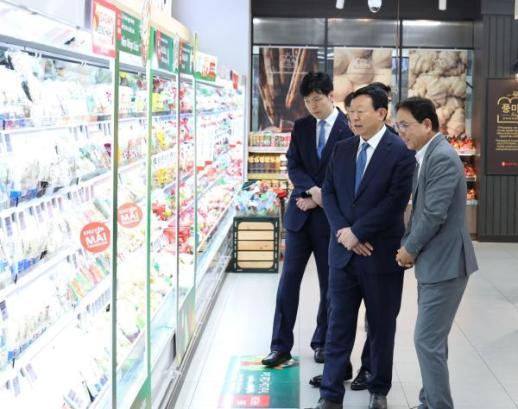 Emart and Lotte Mart Expand Profitability Through AI and International Growth As South Korea's leading discount retailers, Emart and Lotte Mart, report improved profitability for the first quarter, they are pursuing distinct strategies for continued growth this year. Emart is focusing on artificial intelligence (AI) commerce, while Lotte Mart is seeking opportunities in international markets and automation logistics infrastructure. According to the retail industry on May 15, Shinsegae Group's Emart recorded an operating profit of 178.3 billion won for the first quarter, the highest figure for that period since 2012. With improved profitability in its core business, Emart is expected to accelerate investments in future projects. Earlier this year, Shinsegae Group announced a partnership with U.S. AI company Reflection AI to implement AI commerce. Emart is anticipated to lead this transition within the group due to its extensive product offerings and customer interactions. Shinsegae Group is also pursuing a project to build a 250 MW AI data center in South Korea in collaboration with Reflection AI. While specific locations and timelines have yet to be confirmed, both companies are reportedly discussing project directions through regular video conferences. Once the transition to AI commerce is fully underway, Emart is expected to develop a model that connects product search, recommendations, payment, and delivery through conversational AI. This approach will shift from customers searching for products to AI suggesting items based on purchase intent, preferences, and price range. An Emart representative stated, "We will accelerate investments in future new businesses, including the construction of the AI data center, based on the growth of our existing operations." Lotte Mart is looking for growth drivers abroad. The company reported an operating profit of 33.8 billion won for the first quarter, a 20.2% increase from the previous year, with international operations leading the improvement. Sales across all product categories increased steadily, particularly in Vietnam, where overseas operations generated an operating profit of 25 billion won. With an 18% increase in sales from Vietnam driving overall international performance, Lotte Mart plans to continue leveraging its presence in Vietnam this year. Currently, Lotte Mart operates 15 stores in Vietnam and plans to open two new locations in the second half of the year. Shin Dong-bin, Chairman of Lotte Group, is also emphasizing the importance of the Vietnamese market. During a visit to Lotte Mall Westlake Hanoi on April 23, he remarked, "Vietnam is a key country for our global business, and it is encouraging to see growth in our core sectors such as food and retail." Strengthening online grocery competitiveness is another growth avenue. Lotte Mart aims to launch its automated logistics center, the Busan Zeta Smart Center, in August, utilizing the smart platform from the UK’s Ocado. This center will feature AI and robotics to reduce the time from customer orders to product picking and delivery preparation. Following the center's opening, Lotte Mart plans to introduce early morning delivery and two-hour delivery services in the Busan and Gyeongnam regions to continue its performance improvement. Meanwhile, the situation with Homeplus could also impact the profitability of Emart and Lotte Mart. Homeplus, currently undergoing corporate rehabilitation, has temporarily suspended operations at 37 stores until July 3. An industry insider noted, "Even if Homeplus resumes operations, if it cannot quickly recover its product assortment, many customers who switched to Emart and Lotte Mart may remain with them." * This article has been translated by AI. 2026-05-15 10:07:04
 -
 LG Electronics Shares Surge Over 15% Amid Robotics Business Hopes LG Electronics' stock price rose by over 15% in early trading, driven by optimism surrounding its new robotics business. According to the Korea Exchange, as of 9:46 a.m. on May 15, LG Electronics shares were trading at 249,000 won, up 14.75% or 32,000 won from the previous trading day. The company's stock has been on the rise since May 8, following a reassessment of its valuation related to the robotics initiative. With significant capital inflow into LG Electronics, shares of the broader LG Group also experienced gains. LG's stock was trading at 137,300 won, up 17.35% or 20,300 won. Additionally, LG Corp. shares rose by 10.53%, while LG Electronics preferred shares increased by 7.56%. Other LG affiliates, including LG CNS (up 6.74%), LG Innotek (up 7.11%), and LG Display (up 3.06%), also showed strong performance, contributing to a collective rise in LG Group stocks. Analysts expressed optimism about the potential expansion of LG Electronics' robotics business. Hana Financial Investment recently raised its target price for LG Electronics to 230,000 won, an increase from its previous estimate. Kim Min-kyung, an analyst at Hana Financial Investment, stated, "Despite the ongoing unfavorable business environment, LG Electronics is expected to secure profit resilience through company-wide cost structure improvements and efficient marketing spending, while aggressively pursuing growth in its robotics-related new business."* This article has been translated by AI. 2026-05-15 10:03:10
 -
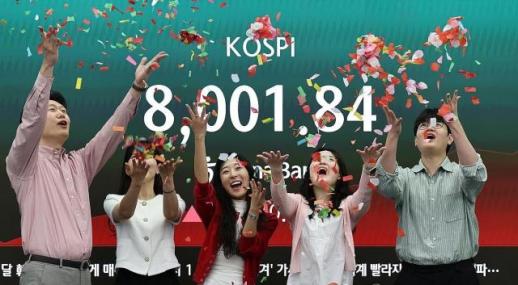 KOSPI Surpasses 8000 Points for the First Time, Marking a New Era The KOSPI index has crossed the 8000-point mark for the first time, signaling an unprecedented bullish phase in the South Korean stock market. Just a week after surpassing 7000 points for the first time, the index has risen by another 1000 points in only seven trading days, ushering in the '8000-point era.' Analysts attribute this rapid increase to a rally in the semiconductor sector, inflows of foreign capital, and expectations surrounding government policies. According to the Korea Exchange, the KOSPI index reached an intraday high of 8046.78 on May 15, setting a new record. This surge comes just seven trading days after it first crossed the 7000-point threshold on May 6, when it recorded an intraday high of 7426.60. The most notable aspect of this rally is its speed. The KOSPI first broke through the 3000-point mark in January 2021, during a liquidity-driven market following the COVID-19 pandemic. It took 13 years and five months to rise from 2000 to 3000 points, a period when increases of 1000 points were considered to take years. However, recent trends have shown a dramatic shift. It took 92 days for the KOSPI to rise from 4000 to 5000 points, and only 25 days to move from 5000 to 6000 points. While the index took 70 days to climb from 6000 to 7000 points, it reached 8000 points in just seven trading days after breaking through 7000. This indicates that the cycles of market growth are becoming increasingly shorter. Market analysts report that the semiconductor sector is driving this bullish trend, with significant foreign investment flowing into major semiconductor stocks like Samsung Electronics and SK Hynix amid growing expectations for artificial intelligence (AI) investments. Additionally, government policies aimed at boosting the stock market and stimulating the capital market are also enhancing investor sentiment. There are projections that the speed of the index's rise could accelerate further. Historically, moving from 2000 to 3000 points required a 50% increase, but reaching from 7000 to 8000 points required only about a 15% increase. A rise to 10,000 points would necessitate approximately 25% more growth from the current level. As the absolute value of the index increases, the percentage increase required for the same point gain decreases. Market sentiment is now shifting from the '8000-point era' to the potential for a '10,000-point era.' However, there are concerns about increased volatility following such rapid gains, highlighting the need for caution among investors. 2026-05-15 10:00:00
 -
 iM Securities Raises Target Price for Samsung Fire & Marine Insurance Amid Market Slowdown iM Securities reported on May 15 that Samsung Fire & Marine Insurance is maintaining stable profit and loss flows despite a slowdown in the market, raising its target price to 630,000 won. The investment recommendation remains a "buy." In a report released that day, analyst Seol Yong-jin noted, "Despite the market downturn, the company has shown stable profits, prompting us to adjust our earnings estimates. This includes the impact of rising book value per share (BVPS) due to the increase in the stock price of Samsung Electronics, which we hold." Samsung Fire & Marine Insurance's standalone net profit for the first quarter of this year rose 4.4% year-on-year to 634.7 billion won, aligning with market consensus. Investment income also increased by 17.5% during the same period, reaching approximately 295.6 billion won. Seol explained, "A key factor contributing to this growth is the increase in dividend income due to a special dividend from Samsung Electronics, which rose significantly to 50 billion won from about 32 billion won in the same period last year. Additionally, stable investment income has been supported by overall improvements in the investment environment." He added, "Similar to Samsung Life Insurance, Samsung Fire & Marine Insurance is expected to see one-time gains related to its equity holdings, including asset disposals and special dividends. Investor interest is growing regarding whether these gains will be included in shareholder returns." Regarding this, he mentioned, "The company has consistently maintained its principle of expanding its dividend payout ratio to 50% by 2028. It plans to separately account for gains from equity disposals and special dividends in its overall dividend resources," predicting a gradual upward trend in the dividend per share (DPS). This year, he forecasts a common stock DPS of 21,500 won, with a dividend yield of 4%. However, he cautioned that investment risks include low return on equity (ROE) due to rising equity values and concerns related to excess capital.* This article has been translated by AI. 2026-05-15 09:57:28
 -
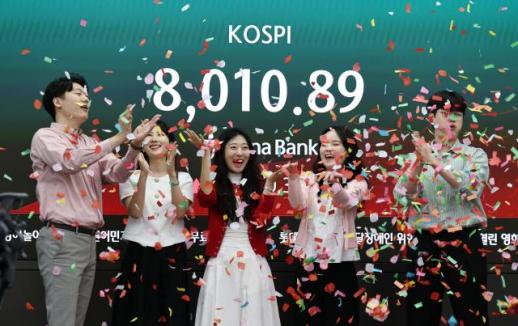 KOSPI hits 8,000-point mark as Trump-Xi summit further fuels AI rally SEOUL, May 15 (AJP) - South Korea's benchmark KOSPI rose above the 8,000-point mark for the first time on Friday, extending a powerful artificial intelligence (AI)-driven rally. Investor sentiment was further lifted by an ongoing summit between U.S. President Donald Trump and Chinese leader Xi Jinping in Beijing, while overnight gains on Wall Street, led by technology stocks, also boosted momentum. As of 9:25 a.m., the KOSPI was trading at 8,032.67, up 0.64 percent, while the junior KOSDAQ slipped 0.40 percent to 1,186.30. It took just a week to climb from the 7,000 level to the 8,000 mark, one of the fastest rallies on record. Samsung Electronics and SK hynix have been at the center of South Korea's AI-driven market rally, increasingly dominating the country's equity market amid explosive global demand for AI chips and memory semiconductors. Both stocks hit fresh intraday record highs in the previous session and remained near those levels in early Friday trading. Samsung Electronics edged down 0.17 percent to 295,500 won, while SK hynix rose 0.96 percent to 1,989,000 won. Among other major stocks, Hyundai Motor Company jumped 5.48 percent to 751,000 won, while Hyundai Mobis gained 4.31 percent to 678,000 won. Kia Corporation also rose 1.63 percent to 181,000 won. In the battery sector, LG Energy Solution climbed 3.51 percent to 457,500 won, while Samsung Electro-Mechanics surged 8.30 percent to 1,109,000 won. Industrial and shipbuilding shares traded mixed, with HD Hyundai Heavy Industries edging up 0.15 percent to 672,000 won, while Doosan Enerbility slipped 0.60 percent to 116,400 won. Defense shares weakened, with Hanwha Aerospace falling 3.45 percent to 1,261,000 won. The South Korean won remained broadly weak, trading at 1,497.50 per dollar compared with the previous close of 1,491.0 won. The momentum in Seoul followed another strong session on Wall Street overnight, where investors continued pouring into AI and semiconductor-related shares. Nvidia rose 4.39 percent after expectations grew that the company could expand sales of its H200 AI chips in China following its CEO Jensen Huang's participation in the Beijing delegation. The Dow Jones Industrial Average rose 0.75 percent to 50,063.46, reclaiming the 50,000 level for the first time since February. The S&P 500 and Nasdaq Composite gained 0.77 percent and 0.88 percent, respectively, both setting new record highs. Overall investor sentiment improved after Trump and Xi signaled that both sides would seek to stabilize relations despite continuing disagreements over Taiwan and Iran. During a state banquet, Xi said China's "great rejuvenation" and Trump's "Make America Great Again" vision could "go hand in hand," while Trump described the meetings as "very positive and productive." Markets interpreted the summit more as a sign that tensions between the world's two largest economies were unlikely to escalate immediately. 2026-05-15 09:54:45