
Journalist

Mark Bennister, Ben Worthy
-
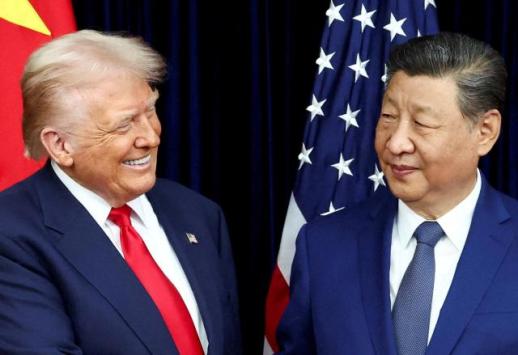 Trump and Xi's Beijing Summit: A Test of New Global Order Amid Conflict The summit between U.S. President Donald Trump and Chinese President Xi Jinping in Beijing transcends typical diplomatic engagement, serving as a critical test for a new international order marked by conflict over war, supply chains, energy, and technological supremacy. Particularly in the context of the prolonged conflict in the Middle East, this meeting underscores the urgent need for both nations to manage potential clashes.While tariffs, investment, semiconductor issues, and Taiwan appear to be the primary agenda items, the real focus of the discussions is likely to center on how to navigate the destabilized global economy and security landscape following the war in Iran. The U.S. is expected to leverage China's position as the largest buyer of Iranian oil to pressure for cooperation. Conversely, China may seek to project itself as a 'stability manager' to prevent soaring international oil prices and a global economic downturn, rather than aligning directly with U.S. pressure on Iran.For President Trump, there are practical considerations at play. As the conflict in the Middle East drags on, international oil prices and inflation are likely to rise, which could ultimately burden American consumers and financial markets. With the midterm elections approaching in November, the Trump administration may find it politically and economically advantageous to maintain a stable relationship with China rather than engage in a full-blown confrontation. Similarly, China is likely to want to avoid exacerbating trade uncertainties with the U.S. amid its own economic slowdown and export challenges. Thus, both countries seem inclined to manage the costs of strategic competition rather than seek to dominate each other.However, this does not imply a fundamental improvement in U.S.-China relations. Instead, the summit is more about recalibrating the rules of competition. The U.S. will likely maintain its stance of containing China in advanced semiconductors, artificial intelligence, and security, while also seeking to expand practical benefits through increased trade in agricultural products, aircraft, and energy. China, on the other hand, may focus on reducing the intensity of U.S. pressure regarding Taiwan and technology sanctions.A key concern is the anxiety felt by allies and neighboring countries during this process. Recent U.S. military asset relocations to the Indo-Pacific region in response to the Middle East conflict and discussions about defense cost-sharing have raised significant alarm among South Korea, Japan, and Taiwan. The New York Times reported that Asian nations are worried about the possibility of the U.S. adjusting its security commitments for economic transactions.For South Korea, the implications are particularly complex. A severe deterioration in U.S.-China relations could directly impact the South Korean economy through exports, exchange rates, and financial markets. Conversely, if the two nations establish a stable management system, it could alleviate market uncertainties in the short term. In fact, recent global financial markets have reacted sensitively to the potential easing of the Middle East conflict and expectations of U.S.-China stability.However, South Korea must be cautious of a new balance of power that could emerge under the guise of 'stability.' As the U.S. expands strategic transactions with China, China's influence in Asia is likely to grow. This is not merely a diplomatic issue; it connects to semiconductor supply chains, advanced technology standards, maritime logistics, and energy security. South Korea, which is economically intertwined with China while relying on the U.S. alliance for security, is one of the countries most directly affected by changes in U.S.-China relations.In this context, what is needed is not emotional partisanship but a realistic and sophisticated strategy centered on national interests. South Korea should maintain the U.S.-South Korea alliance as the cornerstone of its security while enhancing its diplomatic and economic buffer through supply chain diversification and technological independence. At the same time, expanding cooperation with Southeast Asia, India, the Middle East, and Europe to reduce dependence on specific countries will become increasingly important.This Beijing summit is unlikely to change the world order overnight. However, it has the potential to be a significant turning point in how the U.S. and China manage their competition and the positioning of allies and middle powers in that process. South Korea should focus on expanding its strategic space in the evolving international order rather than being swept away by short-term market expectations or partisan narratives.* This article has been translated by AI. 2026-05-11 15:23:34
 -
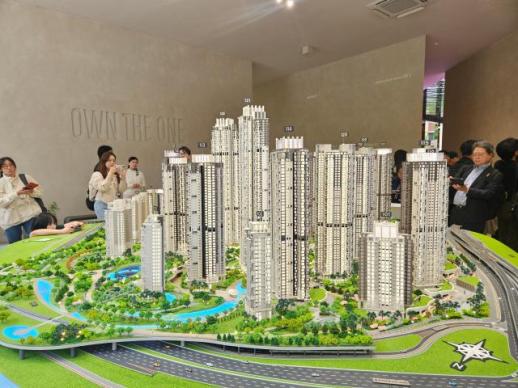 Robots to Handle Parking and Shuttle Services in Apgujeong 3 District Residents can use a demand-responsive transport (DRT) autonomous shuttle through a dedicated app to reach nearby subway stations without walking. After work, they can be dropped off at a hotel-style private drop-off zone, where a valet robot will park their car, while Hyundai's mobility robot, MobED, transports heavy luggage to their doorstep. On May 11, the promotional center for Apgujeong 3 District showcased Hyundai Construction's vision for future living technologies. The DRT autonomous shuttle can be summoned like a personal taxi through the Apgujeong Hyundai Apartments app. It can adjust its route based on passenger requests, providing flexible service. The shuttle will operate within the complex and connect to key external locations such as Cheongdam Elementary and Middle Schools, Apgujeong Rodeo Station, Dosan Park, and Apgujeong Station. The SPOT safety service robot patrols the parking lot and various areas of the complex, detecting anomalies and preventing potential dangers. MobED assists with transporting food, luggage, and even recycling tasks. These advanced robotics technologies from Hyundai will be implemented in the Apgujeong 3 District. The community facility, named 'Club Apgujeong,' spans approximately 45,000 pyeong, four times the size of Gwanghwamun Square. 'The Circle One' is a circular corridor that connects all buildings and community areas, measuring 17 meters wide, 3.5 meters high, and 1.2 kilometers long. Although it is located underground, it will feature air purification and heating and cooling systems to ensure year-round indoor living. Residents can enjoy walking, running, and relaxing regardless of the weather. Inside The Circle One, high-end community facilities will include a spa, swimming pool, sauna, golf practice area, bowling alley, and fitness center. Additionally, private areas such as personal workrooms, private meeting rooms, concierge rooms, and personal healing saunas will be available. This aims to address the limitations of overcrowded community facilities for residents. Furthermore, a health care system will be provided in collaboration with Cha Hospital and The Classic 500. The eight residential buildings along the Han River will feature distinct architectural designs, a result of collaboration with renowned architects RAMSA and Morphosis. The central area will consist of two towers reaching a height of 65 stories, flanked by buildings with fewer than 49 stories. Notably, the top floors of the 65-story towers will include two 'triplex super penthouses' with private gardens. The landscaped area within the complex will cover approximately 35,700 pyeong, featuring 13,000 trees and two themed courtyards. Sculptures by world-class artists will be placed throughout the complex, creating a gallery-like atmosphere. Each of the 30 buildings will have private gardens. The interior design will utilize a 'canvas unit' layout, allowing for flexible configurations except for the outer walls and columns. This design considers the needs of families with more than four members and potential rental income. Hyundai Construction has proposed a construction cost of 10.63 million won per pyeong, which is 570,000 won lower than the bidding standard of 11.2 million won. They also confirmed that the cost for product upgrades will be fully reflected, ensuring no future increases in construction costs. Additionally, they announced that relocation costs will be financed at 100% loan-to-value (LTV) and that member contribution payments can be deferred for up to four years after moving in. Park Seong-ha, head of the Apgujeong Reconstruction Project Team, stated, “By the time residents move in, most future technologies will be commercialized. Currently, valet parking robots are in operation at the Pangyo KT Center, and unmanned transportation systems are already being implemented in areas like Jongno and Anyang.”* This article has been translated by AI. 2026-05-11 15:20:49
 -
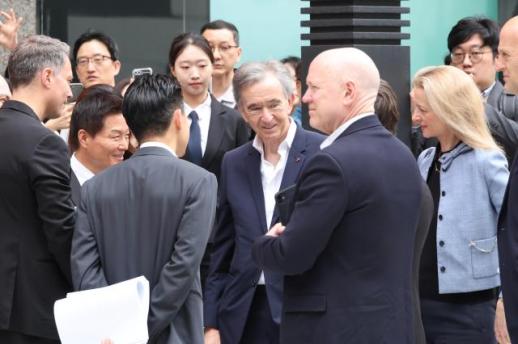 LVMH chair inspects shops in Korea amid weakening sales SEOUL, May 11 (AJP) - Bernard Arnault, chairman and CEO of French luxury titan LVMH, arrived in Seoul on Monday for an intensive inspection of the South Korean market as the world’s largest luxury group faces slowing global momentum and weaker growth in Korea relative to rival luxury houses despite the country’s continued luxury boom. Accompanied by his eldest daughter, Delphine Arnault, CEO of Christian Dior Couture, the LVMH chief’s visit comes at a pivotal moment when the group’s global sales have stagnated amid softening demand in China and the United States. The visit began at Shinsegae Department Store’s flagship store in central Seoul at 12:30 p.m., where Arnault was greeted by Shinsegae CEO Park Joo-hyung. Although the department store was closed for its regular holiday, Arnault spent time closely inspecting the exterior and storefront displays of “Louis Vuitton Visionary Journeys Seoul,” the six-story experiential complex that serves as the brand’s largest retail location globally. Rather than focusing solely on retail traffic or VIP lounges, Arnault’s attention centered on the physical presentation and experiential environment of the flagship, underscoring LVMH’s push toward “destination retail” that blends architecture, exhibitions, dining and brand storytelling. Arnault’s direct oversight of the Seoul flagship highlights the strategic importance LVMH places on South Korea, one of the few luxury markets still posting robust growth despite mounting concerns over a global sector slowdown. While LVMH’s global sales growth slowed to 1 percent last year, Louis Vuitton Korea posted record revenue of 1.85 trillion won ($1.36 billion) in 2025, up 6.1 percent from a year earlier, while operating profit surged 35 percent to 525.6 billion won. Yet LVMH’s Korean growth has increasingly lagged behind some rival luxury houses that continue to post stronger momentum in the country’s polarized luxury market. Chanel Korea surpassed the 2 trillion won revenue mark for the first time last year, with sales rising 9 percent to 2.01 trillion won and operating profit climbing 25 percent to 336 billion won. Hermès Korea also reported standout growth, with revenue increasing 16.7 percent to 1.13 trillion won and operating profit rising 14.6 percent to 305.5 billion won. The contrast has become even more pronounced within LVMH’s own portfolio, particularly at Dior, once grouped among Korea’s so-called “EruSha” trio of Hermès, Louis Vuitton and Chanel. According to regulatory filings, Christian Dior Couture Korea posted revenue of 773.9 billion won last year, down 18.1 percent from a year earlier, while operating profit plunged 43 percent to 129.2 billion won. The brand had already suffered declines in 2024, marking two consecutive years of falling sales and earnings while competitors continued delivering record performances. Arnault plans to make stops at Lotte Department Store, and luxury industry will be closely watching whether Seoul will further shape LVMH’s evolving blueprint for experiential retail in one of the world’s most competitive and polarized luxury markets. 2026-05-11 15:16:56
 -
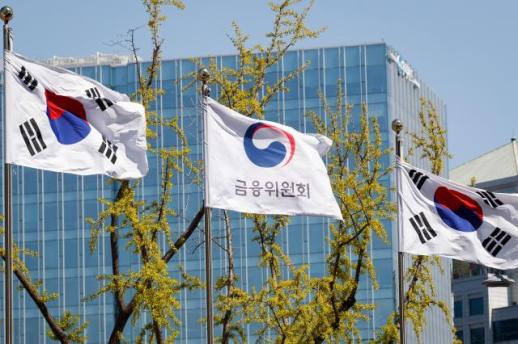 Financial authorities to crack down on misuse of state-supported loans SEOUL, May 11 (AJP) - Financial authorities will step up efforts to prevent some businesses from profiting by lending government-funded money to their subcontractors at excessively high interest rates. The Financial Services Commission (FSC) and the Fair Trade Commission (FTC) said on Monday that they will strengthen monitoring and review processes to crack down on improper business practices and other irregularities. They added that companies found engaging in these practices will be banned from receiving such funds. The move comes after Myeongnyundang, which runs restaurant chain Myeongnyun Jinsa Galbi, allegedly diverted state-supported low-interest funds by lending them to its franchisees at much higher interest rates. According to a joint investigation by the FSC and FTC, Myeongnyundang obtained funds at annual interest rates of 3 to 6 perent from institutions including the state-run Korea Development Bank (KDB), the Industrial Bank of Korea (IBK), and the Korea Credit Guarantee Fund (KODIT). It then lent about 900 billion won (US$613.92 million) to 14 affiliated lenders linked to its major shareholders. These lenders were found to have charged franchisees and prospective small business owners of Myeongnyun Jinsa Galbi annual interest rates of 12 to 18 percent on loans used for expenses such as interior renovations. Authorities also found that some businesses had deliberately split their operations into smaller entities to keep their assets below 10 billion won to avoid regulatory oversight. They also discovered that some franchisees were required to repay loan principal and interest through payments for meat supplies. The FTC has already launched formal procedures against Myeongnyundang for allegedly violating franchise regulations along with a corrective order. Investigators found the restaurant chain pressured franchisees to use certain contractors for interior work and equipment, while omitting or falsely stating key financial details in its documents. It also urged financial institutions including the KDB, IBK, and KODIT to tighten their monitoring and screening of loans made to franchisees and other borrowers. "Desperate small-business owners should never be exploited for someone else's gain," said FSC chairman Lee Eog-weon on social media, vowing to crack down on predatory lending practices targeting franchisees. 2026-05-11 15:16:11
 -
 Iran Demands Sovereignty Over Hormuz Strait and War Reparations in Response to U.S. Proposal Donald Trump, the President of the United States, has stated that he cannot accept Iran's response to the U.S. peace proposal. In that response, Iran reportedly demanded recognition of its sovereignty over the Strait of Hormuz and reparations for war damages. On May 11, CNN cited Iran's state broadcaster IRIB, reporting that Iran's response included demands for recognition of sovereignty over the blocked Strait of Hormuz and compensation for war damages. The response also reportedly called for the unfreezing of assets and the lifting of sanctions against Iran. Reuters, citing Iranian state television, reported that Iran is demanding a ceasefire on all fronts, including Lebanon. However, there has been no mention of Iran's nuclear program in the responses reported by Iranian state media so far. Iran's response was conveyed to the U.S. through Pakistan, the mediating country. Following this, President Trump stated on social media platform Truth Social that he finds Iran's proposal "completely unacceptable." The U.S. has set the prohibition of Iran's nuclear weapons and the lifting of the blockade on the Strait of Hormuz as key conditions. U.S. Ambassador to the United Nations Mike Waltz previously appeared on Fox News Sunday, stating that the latest U.S. proposal contains "very clear red lines." He added, "President Trump has made it clear that they will never be allowed to possess nuclear weapons and cannot hold the global economy hostage."* This article has been translated by AI. 2026-05-11 15:14:35
 -
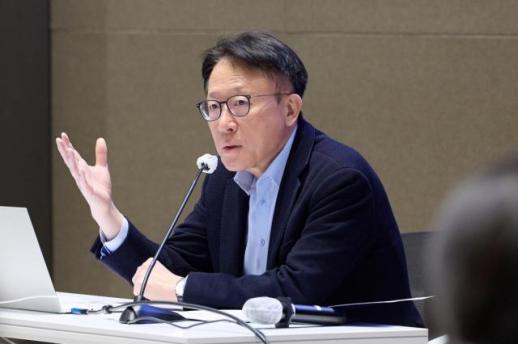 Shin Seong-hwan: Inflation Control Essential Despite Economic Polarization Shin Seong-hwan, a member of the Bank of Korea's Monetary Policy Committee, stated on May 11 that controlling inflation is imperative despite the ongoing economic polarization. He made these remarks during a press conference as he prepares to retire on May 12, highlighting the persistent upward pressure on prices due to the entrenched 'K-shaped growth' and geopolitical tensions in the Middle East. Shin noted, "It has become burdensome to discuss interest rate cuts," acknowledging that while some sectors may face increased difficulties with rate hikes, there are limited alternatives available. He emphasized that the priority must always be inflation, stating, "Our current inflation target is 2%. If we are at risk of exceeding that, even if inflation and growth are at odds, I believe it is appropriate to prioritize inflation." Reflecting on his four-year term, Shin identified polarization as a significant challenge. He remarked, "Monetary policy in a polarized environment has been extremely difficult. Economic growth is a collective achievement, yet now, a sector that accounts for about 10% of the economy can dictate overall outcomes." He elaborated on the implications of polarization, explaining that it creates scenarios where one sector may require a 3% interest rate while another may need only 2%. He noted that in the past, the trickle-down effect would eventually align these rates, but currently, the connection between sectors has weakened. Regarding future interest rate paths, Shin indicated that the price of oil at year-end will be a crucial variable. He initially anticipated oil prices would stabilize around $70 per barrel by the end of the year, but now expects they could rise to about $90. He warned that if prices remain high, the secondary shocks to other prices would be unavoidable, leading to a more intense battle against inflation than previously expected. On the recent rise in government bond yields, Shin attributed it to multiple factors, including the increase in long-term U.S. Treasury yields, which have influenced domestic rates. He noted that concerns about expected inflation are reflected in both U.S. and South Korean bond markets. Concerning the semiconductor industry's concentration, Shin acknowledged that while it is a capital-intensive sector with limited impact on employment, its profitability contributes to tax revenues, which in turn supports the economy. He stated, "While there will naturally be price shocks from this process, I do not view it as a cause for concern."* This article has been translated by AI. 2026-05-11 15:12:48
 -
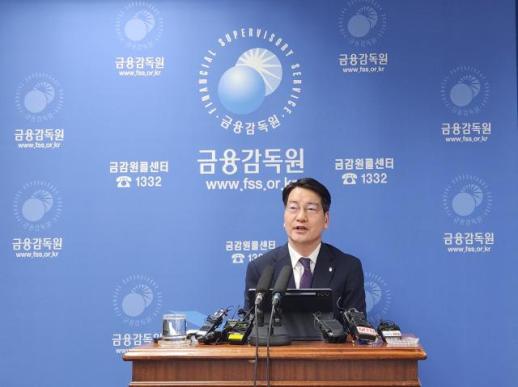 Financial Supervisory Service Addresses Stock Market Risks Amid Surge As the domestic stock market continues its sharp upward trend, the Financial Supervisory Service (FSS) is taking steps to strengthen market risk management in response to short-term overheating and increased leverage investments. The FSS plans to proactively assess liquidity risks stemming from the expansion of comprehensive investment accounts (IMA) and issuance notes by comprehensive financial investment firms, while also significantly shortening the audit cycle and enhancing scrutiny of formal disclosures to restore confidence in the capital markets. Hwang Seon-oh, Deputy Director of the Capital Markets Division at the FSS, stated during a briefing on capital market issues in Yeouido, Seoul, on May 11, "Rather than being overly optimistic about the overall market based solely on index gains, it is necessary to examine the risks that lie behind this rise. We will continue to pursue institutional improvements to foster a culture of long-term investment and enhance market trust." KOSPI Surpasses 7000: Caution Advised on Overheating and Short-Term Trading The KOSPI index has surged 76% over the past year and has gained an additional 74% as of May 7 this year. The amount of idle funds in the market has also increased significantly. As of June 6, investor deposits totaled 130.7 trillion won, and the balance of comprehensive asset management accounts (CMA) reached 112.7 trillion won, bringing the total idle funds in the stock market to approximately 243.4 trillion won. The average daily trading volume of the KOSPI has skyrocketed from 12.4 trillion won last year to 29.6 trillion won from January to April this year. However, the FSS is also paying attention to signs of overheating hidden behind the index's rise. As of April this year, among 948 KOSPI-listed companies, 276 saw their stock prices decline, while 647 out of 1,804 KOSDAQ-listed companies also experienced downward trends. This indicates a growing polarization among stocks despite the overall index increase. The FSS has identified the expansion of short-term trading by individual investors as a major risk factor. Given that individual investors hold a significant share in the domestic market and that mobile trading infrastructure is well-developed, short-term trading is prevalent. Hwang noted, "Short-term trading not only amplifies market volatility but also accumulates transaction costs that can erode investment returns." As of April this year, the average turnover rate was 1.48% for the KOSPI and 2.56% for the KOSDAQ, significantly higher than that of the U.S. S&P 500 and Japan's Nikkei. The turnover rate for ETFs reached a record high of 21.58%, with some inverse ETFs seeing turnover rates soar to around 70%. Regarding the upcoming launch of single-stock leveraged and inverse ETFs expected at the end of this month, the FSS acknowledged the potential for increased volatility. Hwang stated, "We will ensure sufficient investor education before the launch and will continue to monitor trading patterns and trends afterward to devise appropriate responses." Surge in Margin Loans Raises Concerns Over Forced Liquidation Risks Concerns have also been raised regarding the rapid increase in margin loans. As of the end of April this year, the proportion of margin loans relative to market capitalization was 0.58%, the lowest level in the past five years, but the absolute amount is rising quickly. The balance of margin loans increased from 27.3 trillion won at the end of last year to 35.7 trillion won by the end of April, a rise of over 8 trillion won. During the market crash in March due to the Middle East conflict, the amount of forced liquidations surged to 108.4 billion won in a single day, which was 22 times the average daily forced liquidation amount from the previous year. Hwang emphasized, "Margin loans involve borrowed funds for investment, so if stock prices fall, forced liquidations can exacerbate investment losses. Investors need to consider the potential for losses and the risks of forced liquidations and invest within their capacity to absorb losses." The FSS plans to monitor the risk management status of securities firms and the trends in margin loan balances, and will take preemptive measures to ensure market stability if necessary. Issuance Notes and IMA Expansion: Managing Liquidity Risks The FSS also unveiled plans to strengthen risk management in response to the expansion of issuance notes and IMAs by comprehensive financial investment firms. The balance of issuance notes rose from 15.6 trillion won at the end of 2020 to 54.4 trillion won by the end of March this year. The IMA, introduced at the end of last year, has also grown to 2.9 trillion won. The FSS has noted that the short-term funding from issuance notes could lead to maturity mismatch issues if invested in long-term assets like corporate financing. The IMA also has a principal preservation obligation, which could impact the soundness of comprehensive financial investment firms if the underlying assets deteriorate. Hwang explained, "Comprehensive financial investment firms can raise funds through issuance notes or IMAs, but they must invest a significant portion in corporate financing, where fund recovery is not easy, so they cannot overlook liquidity concerns. While the supply of venture capital is necessary, we must ensure that liquidity crises do not arise from maturity mismatches." Currently, the FSS mandates a liquidity ratio of over 100% for both issuance notes and IMAs. They are also guiding firms to conduct crisis situation analyses and establish emergency funding plans. In the future, they plan to adjust capital regulations, such as NCR risk values, to facilitate the movement of funds concentrated in real estate toward productive finance. Hwang stated, "As of the end of March, the liquidity ratio for the seven firms issuing notes was 115%, and the liquidity ratio for the issuance notes themselves was 163%, indicating that there are no significant issues. Please view the current issues as a proactive response to potential challenges." Audit Cycle Shortened to Detect Accounting Fraud In the audit sector, the FSS has identified early exit of insolvent companies and enhancing accounting transparency as core tasks. The FSS plans to establish a long-term roadmap to shorten the audit cycle to 10 years for KOSPI firms and 5 years for KOSDAQ firms within this year. Initially, they will apply the 10-year audit cycle to KOSPI 200 companies. Currently, it takes an average of 20 years to audit all listed companies in South Korea. In contrast, the U.S. audits all listed companies every three years, while the U.K. inspects FTSE 350 companies every five years. The FSS also plans to expand the review targets for companies showing signs of insolvency by over 30% compared to the previous year. They will conduct detailed reviews of companies nearing management designation requirements or facing uncertainties about their continued operations, and will activate a system where the accounting, investigation, and disclosure departments collaborate in response. Hwang mentioned the possibility of increased incentives for accounting fraud following the tightening of delisting criteria. He stated, "Accounting is fundamentally tied to delisting criteria, so I expect there will be significant attempts to inflate sales figures. We are closely monitoring potential attempts to boost market capitalization in relation to failing to meet market cap requirements." Strengthening Disclosure to Protect Shareholder Rights The FSS also announced plans to enhance disclosure reviews and improve the DART electronic disclosure system. They aim to revise disclosure formats and enhance the functionality of the DART system to protect the rights of common shareholders and increase the usability of disclosure information. Although the revised Commercial Act introduced a duty of loyalty to shareholders last year, the FSS believes that some companies are not fully reflecting this intent and are only preparing formal disclosures. In fact, it has been reported that the FSS issued correction orders for disclosures related to organizational restructuring that failed to include specific discussions from special committees or shareholder communication plans. Hwang stated, "We will strengthen guidance on the duty of loyalty disclosures to help companies understand the intent of the revised Commercial Act and prepare related disclosure documents." He explained that a recent correction order regarding Hanwha Solutions' securities registration statement for a capital increase falls within the same context. Hwang emphasized, "Our goal is to ensure that sufficient information is provided for investors to make informed investment decisions, including specific details on liquidity risks, potential funding sources beyond capital increases, and the rationale for performance improvement forecasts."* This article has been translated by AI. 2026-05-11 15:09:00
 -
 Korea's inflation may soar to 3.7% if Gulf oil crisis persists: KDI SEOUL, May 11 (AJP) — South Korea's inflation could run as high as 3.7 percent this year under the worst-case scenario of an energy shock from the Middle East crisis, according to state think tank Korea Development Institute on Monday. The KDI, which is due to announce its revised economic outlook on Wednesday, predicted a bump-up of between 1 and 1.6 percentage points from this year’s estimated inflation rate of 2.1 percent. The forecast, however, excludes policy buffers such as fuel tax cuts and gasoline price caps, said Ma Chang-seok, a fellow at the KDI’s Department of Economic Forecasting. Under its “base scenario,” the KDI assumed Dubai crude prices would rise to $100 per barrel in the second quarter before gradually easing to $90 and $87 in the third and fourth quarters, respectively. Under that scenario, higher oil prices would lift this year’s consumer inflation by 1.2 percentage points and next year’s by 0.9 percentage point. Under a more severe “prolonged high oil price scenario,” where Dubai crude remains at around $105 per barrel from the second through fourth quarters, the inflationary impact would widen to 1.6 percentage points this year and 1.8 percentage points next year, raising the possibility that elevated inflation could persist into next year. Conversely, under an “oil price stabilization scenario,” where Dubai crude falls from $95 in the second quarter to $85 and $80 in the third and fourth quarters, respectively, inflationary pressure would ease significantly starting next year, the KDI said. The think tank specifically noted that oil price hikes caused by transportation uncertainty in energy supply routes tend to have a larger impact on consumer inflation than ordinary supply-demand driven increases. If concerns over shipping disruptions intensify, refiners often expand petroleum inventories, amplifying price hikes even under similar market conditions. Accordingly, the KDI warned that cost-push pressure could spread beyond petroleum products to industrial goods and services. While ordinary increases in Dubai crude historically had limited impact on core inflation, a 10 percentage point oil increase driven by transportation uncertainty was estimated to raise the core inflation rate by approximately 0.10 percentage point. “Policy responses such as the maximum oil price system and fuel tax cuts are factors that reduce the ripple effect of rising international oil prices on consumer inflation,” Ma said. “It is necessary to operate price stabilization policies in preparation for the possibility of prolonged high oil prices and unstable inflation expectations.” As of Monday afternoon, both West Texas Intermediate and Brent Crude futures were trading above $100 per barrel after U.S. President Donald Trump responded “Unacceptable” to Iran’s proposal for ending the war, reigniting fears of prolonged conflict and supply disruptions across the Middle East. 2026-05-11 15:08:54
 -
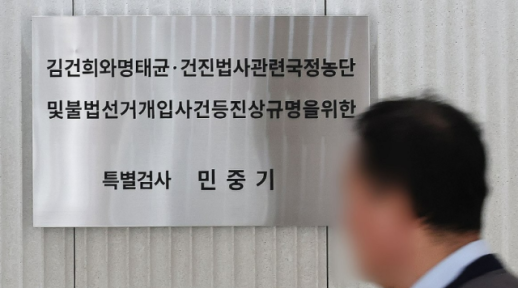 Supreme Court Confirms 3-Year Sentence for Legal Broker Linked to Geonjin Beopsa A legal broker linked to Geonjin Beopsa, Lee Mo, has received a confirmed three-year prison sentence. This marks the first case in which the Supreme Court has finalized a sentence related to the special investigation team (involving insurrection, Kim Geon-hee, and deceased Marines). According to Yonhap News on May 11, the Supreme Court's first division, led by Justice Seo Kyung-hwan, upheld the original ruling that sentenced Lee to three years in prison and imposed a fine of 400 million won for charges of bribery under the Act on the Aggravated Punishment of Specific Crimes. In criminal cases, if the grounds for an appeal are deemed improper, the court may reject the appeal without further deliberation. This applies in cases where no appeal brief is submitted, claims of disproportionate sentencing are made despite a sentence of less than ten years, or when a defendant admits to the crime but disputes the facts. Lee was arrested and indicted in August of last year for allegedly accepting 400 million won in exchange for promises to secure a not guilty verdict in court by leveraging connections with influential figures, including the president and prominent politicians from the People Power Party, as well as high-ranking legal professionals. The Kim Geon-hee special investigation team, led by Special Prosecutor Min Jung-ki, viewed Lee as a broker who facilitated connections between individuals seeking to suppress investigations or influence court proceedings and Geonjin Beopsa. In the first trial, all charges against Lee were found guilty, resulting in a two-year prison sentence and a fine of 400 million won. Both the special investigation team and Lee's side appealed the decision, but the second trial increased the sentence to three years while maintaining the fine amount. The second trial court noted, "If the public suspects that judicial procedures are influenced by external improper pressures or transactions, the mere existence of such suspicion can undermine the rule of law and critically damage the fairness of criminal procedures." The court further stated, "The defendant's actions constitute a serious crime that undermines public trust in the independence of the judiciary and the fairness of trials, which are the last bastions of the rule of law. Therefore, a severe punishment is warranted." Despite repeated appeals from Lee's side, the Supreme Court deemed the grounds for the appeal improper and decided to reject it.* This article has been translated by AI. 2026-05-11 15:01:41
 -
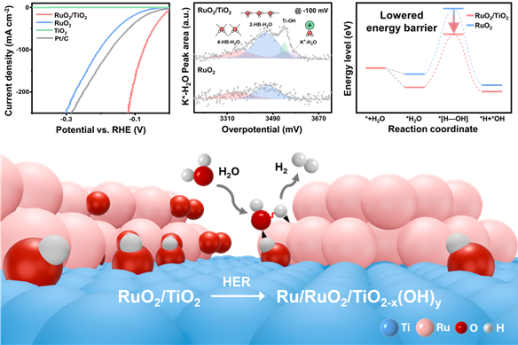 Kookmin University researchers develop high-efficiency catalyst for hydrogen production SEOUL, May 11 (AJP) - A research team at Kookmin University has developed a new heterostructure catalyst that significantly improves the efficiency of hydrogen production in alkaline water electrolysis. The team, led by Professor Lee Chan-woo of the Department of Chemistry, identified the specific mechanism that allows the catalyst to accelerate the water-splitting process, the university said Monday. The research focuses on Anion Exchange Membrane Water Electrolysis (AEMWE), a next-generation technology that operates in alkaline environments to reduce reliance on expensive precious metal catalysts and corrosion-resistant parts. While promising, these systems are often limited by a slow initial step where water molecules must be broken down to create hydrogen intermediates, leading to higher energy consumption and lower efficiency. To address this bottleneck, the team engineered a catalyst by forming ruthenium oxide nanoparticles approximately 2 nanometers in size onto a 25-nanometer titania support. During the electrochemical process, the catalyst surface reconfigures itself into an active interface that attracts water molecules and lowers the energy barrier required to break their chemical bonds. Test results showed that the new catalyst required an overpotential of only 6.6 millivolts to reach a standard current density. This performance significantly outperforms commercial platinum catalysts, which require 43 millivolts, and standalone ruthenium oxide, which requires 79 millivolts. The mass activity of the new material was found to be approximately 6.4 times higher than that of standard platinum-on-carbon catalysts. The study utilized real-time spectroscopy and theoretical calculations to track water molecules and hydrogen intermediates during the actual reaction. This allowed the team to confirm that the titania interface directly facilitates the cutting of oxygen-hydrogen bonds. The researchers found that the ruthenium and titania work together, with the interface handling water activation while the ruthenium handles the formation of hydrogen molecules. "This research is significant because we developed a high-activity catalyst while simultaneously observing how the interface activates water molecules under actual operating conditions," Professor Lee Chan-woo said. "Based on the principle of cooperative hydrogen formation at the ruthenium-titania interface, we can suggest design strategies for high-efficiency catalysts applicable to next-generation electrolysis systems." The study was supported by the Ministry of Science and ICT and was published in the international journal Carbon Energy. (Reference Information) Journal/Source: Carbon Energy Title: Ruthenium-Titania Interface-Mediated Water Activation for High Turnover Frequency in Alkaline Hydrogen Evolution Link/DOI: https://doi.org/10.1002/cey2.518 2026-05-11 14:58:02