

Journalist

Michael Head
-
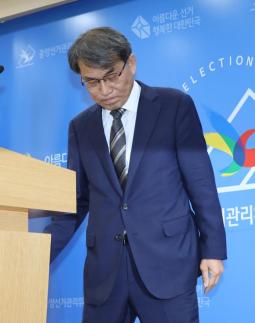 Supreme Court Chief Justice Accepts Resignation of Election Commission Chair Supreme Court Chief Justice Cho Hee-dae has accepted the resignation of Noh Tae-ak, the Chair of the Election Commission, following the ballot shortage incident during the June 3 local elections. According to legal sources on June 8, Chief Justice Cho has revoked Noh's nomination to the Election Commission and notified the commission of this decision. Noh announced his resignation on June 5, just two days after the ballot shortage, stating, "I feel a deep sense of responsibility for the situation." He added, "I will fully cooperate with all procedures to confirm the Election Commission's responsibilities, including a national investigation by the National Assembly, and I will not evade any responsibilities that may arise from the results." The Election Commission consists of nine members: three appointed by the president, three elected by the National Assembly, and three nominated by the Chief Justice. Traditionally, the chair of the commission has been a Supreme Court Justice. Noh was appointed as chair in May 2022 by former Chief Justice Kim Myung-soo. In March of this year, Chief Justice Cho had designated Justice Cheon Dae-yeop as Noh's successor ahead of Noh's retirement from the Supreme Court. However, the confirmation process for the new commissioner was not completed, allowing Noh to continue as chair after his retirement. The term for Election Commission members is six years and is separate from the term of Supreme Court Justices. Meanwhile, President Lee Jae-myung met with National Assembly Speaker Cho Jung-sik, Chief Justice Cho Hee-dae, Constitutional Court Chief Kim Sang-hwan, and Prime Minister Kim Min-seok on the afternoon of June 8 to discuss the ballot shortage incident and to devise reforms for the election management system.* This article has been translated by AI. 2026-06-08 19:24:00
 -
 South Korea Explores Collaboration with NVIDIA on AI Factory and GPU Supply The Ministry of Science and ICT has indicated the potential for further collaboration with NVIDIA beyond the acquisition of 260,000 graphics processing units (GPUs). On June 8, Deputy Prime Minister and Minister of Science and ICT Baek Kyung-hun stated before a private meeting with NVIDIA at the Shilla Hotel in Seoul, "We plan to discuss the establishment of physical AI and AI factory solutions with NVIDIA, and we may explore collaboration options that go beyond the previously announced GPU acquisition plan." He added, "We are continuously engaging with NVIDIA to foster an AI ecosystem, and the government will work to solidify cooperation plans with domestic companies." Baek and NVIDIA CEO Jensen Huang expressed a shared commitment to translating their partnership, established during last year's Asia-Pacific Economic Cooperation (APEC) summit, into tangible outcomes. They discussed the introduction of NVIDIA's next-generation AI platform, the Vera Rubin-based AI factory, and strategies to expand the physical AI ecosystem in South Korea's industry-academia-research sectors. Baek noted, "We are also considering the feasibility of building gigawatt-scale AI data centers with NVIDIA, and we will discuss collaboration on AI infrastructure, including power and network systems, not just GPUs." Additionally, Baek addressed a recent announcement from the Ministry regarding a project worth approximately 2 trillion won aimed at securing, building, and operating advanced GPUs. He mentioned that they are moving forward with plans to import about 7,000 NVIDIA B300 units and approximately 3,000 Vera Rubin-based GPUs, with the goal of starting infrastructure development within this year. Regarding power supply issues, he emphasized, "After continuous discussions with the Ministry of Climate and Energy, we believe there will be no significant problems in meeting the power demand for AI data centers (AIDC) by 2030." He added, "If the demand for gigawatt-scale data centers intensifies in the future, we will collaborate with the Ministry of Climate and Energy to review appropriate power supply and pricing systems."* This article has been translated by AI. 2026-06-08 19:00:00
 -
 Government Restructures Hydrogen Power Bidding Market to Promote Clean Hydrogen The government is set to overhaul the hydrogen power bidding market by discontinuing support for coal and ammonia co-firing power generation, aiming to expand domestic clean hydrogen production. This move is seen as a step towards creating a clean hydrogen ecosystem based on electrolysis and enhancing greenhouse gas reduction efforts. The Ministry of Climate, Energy and Environment announced on June 8 that it will publicly announce a revision to the 'Notice on Annual Purchase Volume Calculation for Hydrogen Power Bidding Market' from June 10 to June 30. The hydrogen power bidding market was first established in 2023 for general hydrogen and in 2024 for clean hydrogen. The market operates by compensating power producers for the difference between the contract price and the market price (SMP) after they are selected through bidding. According to the revised plan, the bidding volume for this year will be set at 500GWh for clean hydrogen power and 930GWh for general hydrogen power. The government plans to finalize the volume for 2027 and beyond through an additional announcement next year, reflecting the ongoing 12th Basic Plan for Power Supply and Demand and hydrogen supply conditions. A significant change in this revision is the exclusion of coal and ammonia co-firing power generation from the support criteria for the clean hydrogen power bidding market. Previously, co-firing was viewed as a transitional measure to reduce greenhouse gases by utilizing existing coal power plants. However, as the government pushes for a coal phase-out policy by 2040, the support direction is shifting towards pure clean hydrogen. The government will also revise the evaluation system for the clean hydrogen power bidding market. It is considering giving higher evaluations to projects that contribute to expanding domestic clean hydrogen production, including electrolysis. This aims to foster the domestic hydrogen industry ecosystem beyond mere power production support. In the general hydrogen power sector, environmental assessment criteria will be strengthened to enhance greenhouse gas reduction effects. This plan aims to more actively reflect the carbon reduction efforts of hydrogen power producers in the bidding evaluations. The government intends to finalize the notice after gathering opinions from the industry and related agencies during the public announcement period, with plans to open the hydrogen power bidding market in the second half of this year. A ministry official stated, "This year's hydrogen power bidding market will be operated to foster the clean hydrogen production ecosystem and enhance greenhouse gas reduction effects. We will thoroughly gather opinions from the industry and related agencies during the public announcement period to establish detailed evaluation criteria."* This article has been translated by AI. 2026-06-08 18:48:00
 -
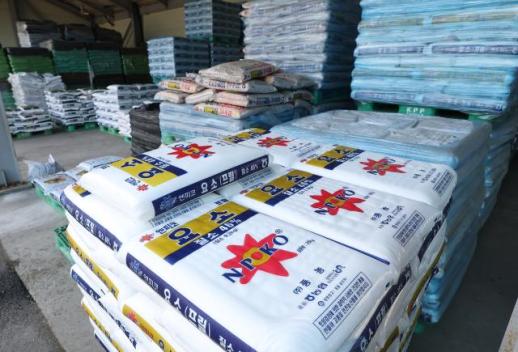 South Korea Allocates 11.5 Billion Won for Fertilizer Price Subsidies As the Middle East conflict continues, fertilizer prices have risen, prompting the South Korean government to announce on June 8 that it will provide 11.5 billion won in price subsidies to alleviate the financial burden on farmers. The supply of mineral fertilizers is predominantly managed through the National Agricultural Cooperative Federation (Nonghyup), which determines prices through bidding and negotiations with producers. Due to the ongoing conflict, the price of urea, a key ingredient in fertilizers, has surged by 37.7% compared to a year ago, increasing anxiety among farmers and stakeholders. Starting today, Nonghyup will raise the selling price of fertilizers by an average of 3,440 won per 20-kilogram bag. However, considering the additional subsidy of 2,560 won provided through this year's supplementary budget, the actual increase in costs for farmers will average around 880 won per bag, according to the Ministry of Agriculture, Food and Rural Affairs. This support will be limited to agricultural management entities that did not utilize the subsidies allocated at the beginning of the year. The ministry plans to link Nonghyup's fertilizer sales system with fertilizer usage information to help reduce farming costs and improve soil health. Additionally, it aims to expand support for utilizing livestock manure as an alternative to mineral fertilizers. Lee Si-hye, director of agricultural innovation policy at the Ministry of Agriculture, Food and Rural Affairs, stated, "We have worked to minimize the financial burden on farmers by securing supplementary budget funds in response to rising fertilizer prices. We will closely monitor the fertilizer supply situation to ensure that it remains stable despite the ongoing crisis in the Middle East."* This article has been translated by AI. 2026-06-08 18:45:00
 -
 Nexspace Hosts 'MapleStory Vibe Camp' to Enable Game Development Without Coding Nexspace, a blockchain subsidiary of Nexon, is hosting the 'MapleStory Vibe Camp' until June 29, allowing anyone to create games. As AI technology lowers the barriers to game development, the initiative aims to blur the lines between players and creators while fostering the Vibe Camp and MSU Space ecosystem. Participants will utilize official resources from the MapleStory universe and AI development tools. The Vibe Camp is conducted in collaboration with Verse8, an AI-based game development platform. It takes place in a dedicated area called the 'MapleStory Universe (MSU) Space.' Verse8 is working with domestic game companies to create an environment where the general public can develop blockchain games. At the Vibe Camp, participants can create and launch games using official assets from the MapleStory universe, including characters, monsters, items, and backgrounds, simply by entering natural language prompts. Nexspace has made it accessible for anyone who enjoys MapleStory, not just developers. This Vibe Camp marks the first official event for 'MSU 2.0,' launched by Nexspace to celebrate the first anniversary of the MapleStory universe service. Nexspace encourages participation by stating on the Vibe Camp website, "Whatever you create, the MapleStory IP is ready in the form of skills, characters, animations, world systems, and sounds. Just bring your ideas, not coding skills." According to Nexspace, the MapleStory universe has recorded over 150 million on-chain transactions to date, generating approximately 49.1 million NXPC (around $31 million) in ecosystem revenue. With MSU 2.0, Nexspace is building a platform ecosystem that organically connects IP-based creation, distribution, and monetization. To achieve this, it is integrating on-chain licensing and settlement infrastructure, AI-based production tools, and community participation structures into a single framework to lower the barriers to IP-based creation. The total prize pool is set at $60,000 (approximately 90 million won). Winners will receive NXPC tokens equivalent to the dollar amount at the time of distribution. NXPC is the native token of the MapleStory universe. Nexspace plans to offer benefits to outstanding projects that participate in the MapleStory universe ecosystem in the future. Hwang Sun-young, CEO of Nexspace, stated, "Over the past year, the MapleStory universe has proven that a large-scale game economy can operate successfully in an on-chain environment. Our next goal is to support more users in participating in the ecosystem-building process." Kevin Lee, CEO of Verse8, remarked, "For a long time, creating using major game IPs was largely restricted to professional studios and official partners. With MSU Space and AI technology, more creators can now easily utilize the MapleStory IP and quickly turn their ideas into reality."* This article has been translated by AI. 2026-06-08 18:42:00
 -
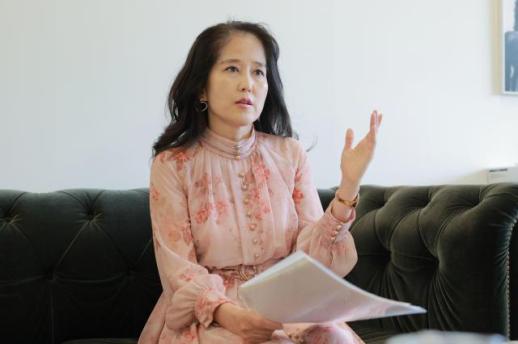 Lee Jong-eun, President of the Korean International Finance Association, Says High Exchange Rate Reflects Declining Economic Appeal Amid rising global long-term interest rates and a soaring won-dollar exchange rate, the Korean economy faces significant uncertainty. Lee Jong-eun, President of the Korean International Finance Association and a professor at Sejong University, stated that the current issues in the Korean economy cannot be resolved through monetary policy alone, emphasizing the need for fiscal reform and recovery of potential growth rates as top priorities. The Korean economy is experiencing high inflation, interest rates, and exchange rates, a phenomenon referred to as the 'three highs.' Despite repeated verbal interventions from foreign exchange authorities, the won has been trading in the mid-1500s against the dollar, indicating severe weakness. While some attribute this to increased private preference for overseas assets and capital outflows, Lee cautioned against oversimplifying the issue as merely a result of capital flight or aging demographics. "Capital outflow is merely a symptom; the fundamental issue is the declining attractiveness of the Korean economy," Lee said. He pointed out that excessive corporate regulations, high tax burdens, and restrictions on real estate transactions are significant factors. He stressed the need to lift burdensome regulations, such as the 'Yellow Envelope Law' and the 'Serious Accident Punishment Act,' and to stop infringing on property rights through taxation to revitalize the Korean economy. Regarding the adequacy of foreign exchange reserves, he noted that while they are sufficient according to International Monetary Fund (IMF) standards, they may not be adequate in the face of structural capital outflow pressures. He expressed support for a Korea-U.S. currency swap agreement, stating that while it could provide immediate relief by lowering the won-dollar exchange rate by 30 to 50 won, it would not address the underlying structural issues. Having experience as an advisor for the Organization for Economic Cooperation and Development (OECD) and domestic policy, Lee called for market-friendly structural reforms based on the values of liberal democracy. He argued that citizens must have access to quality information and opportunities for wealth creation to strengthen democracy, benefiting both the populace and the ruling class in the long run. He diagnosed the current crisis in the Korean economy as a clear 'structural risk signal.' The country is facing pronounced 'K-shaped' polarization. The government has also emphasized the need for structural reforms to enhance potential growth rates. Lee identified tax and fiscal reform as key tasks for recovering potential growth rates. He advocated for reducing and simplifying taxes while also cutting expenditures, suggesting that unnecessary task forces and committees be eliminated and that approximately 80 trillion won in tax credits be converted to cash support for vulnerable groups to maximize the government's role in providing a social safety net and improving fiscal health. He referenced the success of the Earned Income Tax Credit (EITC) in the U.S. and the U.K., which helped lift 4.4 million people out of poverty, as a model worth considering. Additionally, he highlighted the need to legislate fiscal rules to keep national debt below 60% of GDP and fiscal deficits below 3% of GDP. On necessary policies for the Korean economy, he suggested reducing taxes and fiscal spending while gradually lowering the benchmark interest rate. Given the current inflationary pressures, there is an increased likelihood of two interest rate hikes within the year. However, he noted that considering potential growth rates, measures to stimulate the overall economy should also be explored. Lee remarked, "While the current benchmark interest rate of 2.5% can be seen as nominally neutral, it remains a burden for the Korean economy, which has a growth rate of only 1.7%. The cost of financing at past levels is being imposed on a weakened economy. Relying solely on monetary policy without addressing fiscal issues is not a viable solution." In this context, the U.S. Federal Reserve is undergoing a leadership transition. Lee identified the reduction of the Fed's balance sheet as a key change under Kevin Warsh's leadership. He explained that the Fed's assets, including approximately $2 trillion in mortgage-backed securities, will be gradually reduced, and that a runoff approach, where liquidity is absorbed internally rather than reinvested, is the least disruptive method for the market. He anticipates that the trend of a strong dollar and rising Treasury yields will continue for the time being. He noted that the simultaneous rise in Treasury yields in major countries, including Korea, the U.S., and Japan, is influenced by both geopolitical factors and fiscal issues. Lee stated, "While geopolitical factors, such as wars in the Middle East, are indeed stimulating inflation, fiscal issues are also at play. Some suggest that the ratio of inflation factors to Treasury issuance factors in the U.S. is about 4 to 1." He emphasized that countries should not merely blame external factors but should actively work on improving their fiscal situations. In light of the importance of energy security due to the Middle East conflict, Lee offered his perspective on energy security and diplomatic trade strategies. He argued that national security should be viewed as a higher priority than economic policy. Referring to the long-term blockade of the Strait of Hormuz, he suggested that if oil transport from the Middle East becomes difficult, the Arctic route could serve as an alternative. He emphasized that Korea's geographical advantage for utilizing the Arctic route should prompt investment in related infrastructure and proactive negotiations for favorable prices on U.S. crude oil. He added, "Strengthening the Korea-U.S. alliance goes beyond military security and directly relates to economic opportunities and price negotiation power," and noted positively that domestic companies are participating in the construction of natural gas pipelines in the U.S.* This article has been translated by AI. 2026-06-08 18:36:00
 -
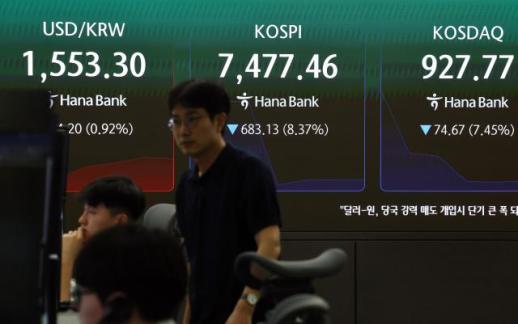 High Exchange Rates Boost Exports but Increase Cost Pressures The won-dollar exchange rate has surged past 1,500 won, creating mixed outcomes across various sectors. Companies with a high export ratio are anticipating improved profitability from the rising exchange rate, while those heavily reliant on imported raw materials and energy are concerned about increasing cost pressures. Consumers are also expected to face higher living expenses due to rising import prices. According to the Bank of Korea, the average won-dollar exchange rate from June 1 to June 5 was recorded at 1,522.4 won. The monthly average exchange rate jumped from 1,448.4 won in February to 1,492.5 won in March, slightly decreased to 1,485.0 won in April, but rose again to 1,491.3 won last month, indicating volatility at high levels. Typically, a rising exchange rate benefits export companies, as they can secure more revenue when converting dollars earned abroad into won. Industries such as semiconductors, automobiles, and shipbuilding, which have high export ratios, are seen as primary beneficiaries. Companies with production facilities concentrated in South Korea tend to experience a more significant improvement in performance due to the rising exchange rate. Conversely, sectors with high dependence on imported raw materials and energy face increased burdens. Since payments for crude oil, natural gas, and grains are made in dollars, a rising exchange rate directly translates to higher cost pressures. The refining, aviation, and food industries are notable examples. Increased import costs are likely to lead to upward pressure on product prices. Recent analyses suggest that the benefits of improved export competitiveness due to high exchange rates are not as significant as in the past. As companies increasingly process imported intermediate goods for export, the positive effects of rising exports may be offset by rising costs. Particularly, materials such as semiconductors, crude oil, and battery components are difficult to substitute, necessitating continued imports even as exchange rates rise. This creates a structure where rising exchange rates lead to increased procurement costs. The impact of high exchange rates also extends to households. A decline in the value of the won raises import prices, affecting costs for fuel, food, and public utilities. The costs of international travel and overseas purchases are also expected to rise. Recently, concerns have emerged that rising international oil prices could further increase cost pressures for companies and inflationary pressures. The Korea Institute for Industrial Economics and Trade (KIET) noted that during the global financial crisis of 2008-2009, a sharp drop in international oil prices significantly alleviated energy import costs, cushioning the shock. However, the current situation is characterized by both high exchange rates and soaring oil prices, leaving no buffer against rising energy costs. Kim Tae-hoon, a senior researcher at KIET, stated, "The rise in exchange rates simultaneously increases import costs and improves export price competitiveness. In an economy like South Korea's, which heavily relies on imported intermediate goods, the benefits of improved export competitiveness due to rising exchange rates can be largely offset by rising cost pressures." He added, "The net effect of exchange rates varies depending on the import structure and dependence on intermediate goods by industry, making it difficult to view high exchange rates solely as a boon for exports."* This article has been translated by AI. 2026-06-08 18:36:00
 -
 Lee Jong-eun, President of the Korean International Finance Association, Calls for Cautious Central Bank Communication Monetary policy is significantly influenced not only by its content but also by how central banks communicate. Recently, there has been a divergence of opinions regarding forward guidance, a method used by central banks to signal future interest rate paths and manage market expectations. Particularly, views on forward guidance, an unconventional monetary policy tool, are mixed. While it aims to reduce uncertainty in the market and enhance the effectiveness of monetary policy, critics argue that it can constrain the central bank's flexibility and lead to excessive market expectations. Kevin Warsh, the new chair of the Federal Reserve, is also expected to scale back forward guidance. In South Korea, attention has turned to changes in central bank communication since Shin Hyun-sung took office as the governor of the Bank of Korea. Before his appointment, Shin stated, "If there is genuine uncertainty about the underlying direction of the economy, it is appropriate not to provide guidance." In a foreign media interview last year, he remarked, "The market gets fixated on headlines." Consequently, there is keen interest in how Shin will communicate with the market following his appointment. As perspectives on central bank communication vary, Lee Jong-eun, president of the Korean International Finance Association, commented, "The ambiguous expressions used under Jerome Powell's Fed have exacerbated market confusion. Honest communication that conveys uncertainty, as Shin does, is preferable and does not harm the real economy." Regarding forward guidance and dot plots, he expressed skepticism, stating, "The dot plot has had many negative effects." Lee graduated from Seoul National University and earned a master's degree in economics from the London School of Economics and a Ph.D. from Queen Mary University of London. He has been a professor in the Department of Economics at Sejong University since 2000 and served as a policy advisor in the Economic Department of the OECD from 2008 to 2009. He has also collaborated with various domestic institutions, including the Ministry of Trade, Industry and Energy, the Ministry of Economy and Finance, the Bank of Korea, the Financial Supervisory Service, and the National Pension Service.* This article has been translated by AI. 2026-06-08 18:36:00
 -
 The Future of Agriculture Transformed by Economic Viability Agriculture can no longer rely solely on experience and tradition. Climate change has increased production uncertainties, and rural areas are aging rapidly. Coupled with labor shortages and rising production costs, the burdens on the agricultural sector are growing. In light of these changes, traditional methods are proving inadequate. Agriculture must now evolve into an industry driven by science, technology, and data. The Rural Development Administration (RDA) has proposed a vision of "vibrant agriculture and rural areas created through science and technology for a better future." This declaration aims to transform the agricultural structure itself and create future value. Since the new government took office, the focus of agriculture has become clear: the technology must provide real benefits to agricultural management entities. The question we pose is simple: "Is this technology truly helpful in the field?" Excellence in technology alone is not enough. Even if a technology is highly regarded in a laboratory, its value is limited if farmers do not adopt it or if it does not lead to increased income. It must increase farm income, reduce labor burdens, and enhance economic sustainability to be meaningful. This criterion marks a new starting point for agricultural R&D. To achieve this, the RDA is establishing a comprehensive economic analysis system that reflects economic viability throughout the entire research and development process, including pre-analysis, post-analysis, dissemination, and tracking. This system continuously assesses economic value from the beginning of research to after its implementation in the field. First, there is the pre-economic analysis. This process evaluates whether a research project is worth pursuing before it begins. It assesses cost-effectiveness, potential contributions to farm income, and applicability in the field. If economic viability is low, adjustments or modifications are made. This choice aims to use limited research budgets more efficiently. By considering economic viability from the outset, we reduce the likelihood of failure and focus research capabilities on technologies desired in the field. Second, post-economic analysis occurs after research is completed, quantifying the results produced by the technology. It examines the added value created by the developed technology and whether it has led to technology transfer and commercialization. Examples include numerous technology transfers and prepayments amounting to millions of won for technologies such as "sensor-based autonomous farming machinery," "hair loss prevention and treatment substances using Astragalus and Angelica," "dietary food using high-amylose rice," and "cognitive function disorder prevention and treatment compositions using dandelion." These cases demonstrate that agricultural R&D can extend beyond papers and reports to achieve industrial outcomes and economic value. Third, dissemination economics represents a stage that shifts the focus from suppliers to consumers. It helps farmers compare and select the technologies they need most. This process goes beyond merely disseminating technology; it provides evidence for determining which technologies yield greater effects in the field. Criteria such as reduced labor hours and ease of operation are included here. Finally, tracking economic analysis verifies how much actual income has increased after the technology is applied in the field. It continuously monitors whether the expected effects materialize and if any unforeseen issues arise during the dissemination process. If the anticipated effects do not occur, immediate corrective measures are sought. The voices from the field become the starting point for the next research. This is not merely post-management; as field data accumulates, the precision of subsequent research increases, and the returns on R&D investments compound like interest. This system is fundamentally changing the direction of agricultural R&D. Now, the important question is not how many technologies have been developed, but whether those technologies are actually chosen, utilized, and lead to results. Comprehensive economic analysis is also a tool for enhancing the efficiency of national research and development budgets. At the same time, it serves as a foundation for increasing the sophistication and reliability of agricultural policies. The virtuous cycle of taxpayer research budgets returning to farmers' incomes is the reason for the existence of public R&D. The future of agriculture will not create itself. While science and technology provide direction, economic viability serves as the criterion for judging whether that direction is correct. Agriculture must now move beyond "good technology" to create "technologies chosen in the field." The standard for that choice is clear: economic viability. 2026-06-08 18:36:00
 -
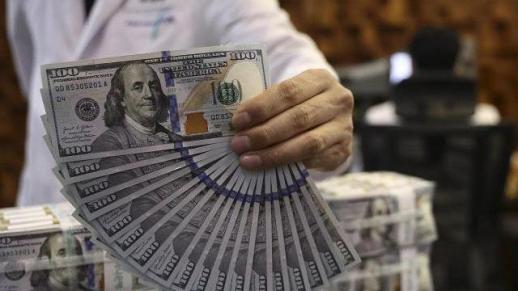 High Dollar Exchange Rate Persists Despite Export Boom and Dollar Shortage The won-dollar exchange rate has surged to levels reminiscent of the global financial crisis, yet the supply of dollars in the foreign exchange market remains limited. Analysts suggest that dollars earned from exports are not entering the market but are instead being held in deposits, which is constraining any potential decline in the exchange rate. According to the Bank of Korea, as of April, domestic companies held $80.04 billion in dollar deposits, a 10.1% increase from the previous month’s $72.71 billion. Corporate dollar deposits have remained high, starting at $81.92 billion at the end of last year, slightly increasing to $81.93 billion in January and then decreasing to $81.62 billion in February. In March, expectations of a rising exchange rate led to increased profit-taking, dropping the total to $72.71 billion, but by April, it had rebounded above $80 billion. The increase in foreign currency deposits is impacting the supply and demand dynamics of the foreign exchange market. When export companies bring dollars earned overseas back to Korea and convert them to won, it increases the supply of dollars in the market. Conversely, if companies choose to hold dollars in foreign currency deposits or use them for overseas investments, the supply of dollars decreases. In a situation where demand for dollars is high and supply is dwindling, it becomes difficult for the exchange rate to fall. Recent analyses indicate that companies have little incentive to convert dollars to won. Ongoing U.S. trade pressures and demands for increased investment in the U.S. have led companies to prefer using dollars earned from exports for expanding U.S. factories, investing in local subsidiaries, and procuring raw materials and components rather than bringing them back to Korea. Moon Da-un, a researcher at Korea Investment & Securities, stated, "Expectations of a rising exchange rate are driving a concentration of dollar purchases, creating a self-fulfilling cycle of supply and demand imbalance that pushes the exchange rate higher. Events such as the potential announcement of additional tariffs, the May Consumer Price Index (CPI), and the hawkish stance expected from the Federal Open Market Committee (FOMC) meeting continue to exert downward pressure on the won." Given that the foreign currency deposit statistics are based on April data, the situation may have worsened recently. Since May, the won-dollar exchange rate has continued to rise due to Middle Eastern risks and foreign capital outflows, recently soaring to around 1,560 won. As the exchange rate increases, companies are more inclined to hold onto their dollars rather than sell them quickly. The government is also aware that companies' dollar holdings can impact the supply and demand in the foreign exchange market. When the won-dollar exchange rate threatened to breach the 1,500 won mark at the end of last year, the presidential office requested major export companies to cooperate in supplying dollars. The rationale was that converting dollars held by export companies into won and supplying them to the market could help alleviate upward pressure on the exchange rate. Foreign exchange authorities are paying close attention to how corporate foreign exchange transactions affect market supply and demand. On July 7, they announced that they would focus on monitoring excessive delays in the collection of export proceeds or premature payments for imports during the rising exchange rate phase. Lee Hyung-ryeol, director of the International Finance Bureau at the Ministry of Finance, and Yoon Kyung-soo, director of the International Department at the Bank of Korea, stated, "We will not tolerate excessive volatility and one-sided trends compared to fundamentals and will respond strongly," indicating a verbal intervention in the market.* This article has been translated by AI. 2026-06-08 18:33:00