
Journalist

Michael Z. Green
-
 Ministry of SMEs Encourages Entrepreneurship on College Campuses The Ministry of SMEs and Startups is promoting entrepreneurship among young people by visiting college campuses as part of the "Everyone's Startup Project." On May 8, Minister Han Seung-sook and First Vice Minister Noh Yong-seok visited university campuses to raise awareness about the project and engage in discussions with students about entrepreneurship. The application deadline for the project is approaching on May 16. During her visit to Chonnam National University, Minister Han listened to students' discussions and exchanged views on the challenges they face in starting businesses. Meanwhile, Vice Minister Noh visited Hanyang University to observe the atmosphere surrounding youth entrepreneurship and to hear firsthand about the difficulties young people encounter in the startup process and the support they need. The "Everyone's Startup Project" allows anyone with a startup idea to apply for support through the startup platform, with applications closing on May 16. The ministry plans to continue its campus tour at major universities across the country until the application deadline, aiming to broaden its engagement with young people. Feedback gathered during these visits will be incorporated into future policy development. Minister Han stated, "Everyone who takes the first step without fear of failure is already a protagonist in the era of national entrepreneurship. The government will support challenges that lead to innovation."* This article has been translated by AI. 2026-05-08 15:39:35
 -
 UAE Responds to Iranian Missile and Drone Threats Following US-Iran Clash The United Arab Emirates (UAE) has begun responding to missile and drone attacks from Iran shortly after a clash between the U.S. and Iran in the Strait of Hormuz. This escalation comes despite U.S. claims that a ceasefire announced a month ago remains in effect, as real-world confrontations continue in the Gulf region. According to the Associated Press on May 8, the UAE Ministry of Defense stated that its air defense systems are actively responding to missile and drone threats. Authorities have advised residents to avoid debris that may fall during interception efforts, and AP reported no immediate significant damage. This announcement followed a U.S.-Iran engagement in the Strait of Hormuz the previous day. U.S. Central Command (CENTCOM) reported that three U.S. Navy destroyers were attacked by Iranian missiles, drones, and small boats while transiting the strait, but no damage was sustained. In retaliation, the U.S. conducted strikes targeting Iranian missile and drone launch sites, as well as command and control facilities. Despite President Donald Trump asserting that the ceasefire remains intact after the clash, the situation on the ground suggests otherwise. The UAE's activation of air raid alerts and air defense responses indicates a reaffirmation that ceasefires and ongoing hostilities are separate issues.* This article has been translated by AI. 2026-05-08 15:37:47
 -
 Lumiere Expands Engine Parts Supply to Hanwha Engine After Exclusive Deal with HD Hyundai Heavy Industries Aerospace company Lumiere is accelerating its expansion into the ship engine parts business. The company is currently supplying solenoids, a key component for ship engines, exclusively to HD Hyundai Heavy Industries while also pursuing supply agreements with Hanwha Engine. The rapid growth of the power demand for artificial intelligence (AI) data centers is emerging as a new growth driver in the power generation engine market. According to investment banking sources on May 8, Lumiere is in discussions with Hanwha Engine to expand its supply of solenoids, which are essential for controlling fuel in ship engines. The company currently has an exclusive supply agreement for these components with HD Hyundai Heavy Industries' medium-speed engine brand, HiMSEN. A Lumiere representative stated, "This is one of several scenarios that may arise during our business expansion process." Solenoids are electronic valve components that actively regulate engine fuel. Lumiere has successfully localized this product by applying precision control technology acquired during the development of actuators for satellite attitude control. The company is known to have obtained international explosion-proof certification, becoming the first in the world to do so for this product, which had previously relied heavily on Japanese manufacturers. Recently, Lumiere has also expanded its overseas supply chain. In February, the company signed a contract with Japanese engine parts manufacturer Niko Precision, and last month, it entered into a supply agreement with Amidas Security Tech, based in the United Arab Emirates. Industry experts believe that Lumiere is entering an initial phase of expanding its customer base beyond HD Hyundai Heavy Industries to other domestic and international engine manufacturers. The market is noting that the surge in power demand from AI data centers is leading to new growth across the shipbuilding and power generation engine sectors. The demand for engine-based power generation facilities is rapidly increasing due to shortages of gas turbines and long lead times. In fact, HD Hyundai Heavy Industries recently signed a supply contract for power generation facilities worth 627.1 billion won with American company Aepirion Energy Group (AEG), marking the largest contract of its kind in the company's history. Hanwha Engine is also in the process of expanding its medium-speed engine business by constructing a new factory. In line with these trends, Lumiere has begun expanding its production capacity. The company decided on April 30 to issue permanent convertible bonds worth approximately 33 billion won. The funds will be used to expand the production line for engine solenoids and for operational expenses. The current operating rate of the related production line is reportedly at full capacity. The company's business focus is also rapidly changing. Internally, Lumiere expects the revenue share from its shipbuilding division to rise from about 23% in 2023 to over 50% this year. Industry analysts predict that if the market for power generation engines for data centers expands, related revenues could nearly double compared to last year. An investment banking source remarked, "Lumiere is a rare case in South Korea of extending aerospace precision control technology into the ship engine sector. The company is attracting market interest as it can reflect both the recovery expectations of the space industry and the growing demand for engines from AI data centers."* This article has been translated by AI. 2026-05-08 15:35:33
 -
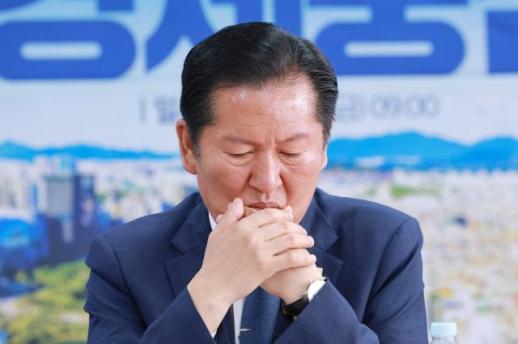 Ruling Party Criticizes Opposition for Rejecting Constitutional Amendment The Democratic Party has warned that the People Power Party will face judgment from the public and history for its refusal to participate in the parliamentary vote on a constitutional amendment on May 7. During a meeting of party lawmakers on May 8, Democratic Party leader Jung Cheong-rae criticized the opposition for labeling the proposed phased constitutional amendment as hasty. He pointed out that the People Power Party was absent during the crucial parliamentary session where the amendment was first discussed. "The People Power Party was not there to fulfill its historical responsibility," he said. Jung added, "The opposition's rejection of the amendment does not align with the expectations of the public or history. The people will not forgive this. History will not forgive such actions either. I believe the People Power Party will be judged in the upcoming local elections." Han Byeong-do, the Democratic Party's floor leader, also criticized the People Power Party for making its decision to abstain from the vote a party line, thus suppressing individual lawmakers' conscience and judgment. "By doing so, they have deprived the public of their opportunity to make a choice," he said, urging the opposition to recognize their shame. He further noted that following the constitutional amendment, the opposition has requested unlimited debate on 51 livelihood-related bills. "While opposing the amendment, they have hindered the future of South Korea and declared a strike against the processing of these bills," Han stated. "There is no sense of responsibility for the nation or the people's livelihoods. We will take all possible measures to address the issues that the People Power Party has neglected."* This article has been translated by AI. 2026-05-08 15:33:40
 -
 Iran Continues Executions of Prisoners Amid War, Families Report Coercion Iran has been executing prisoners almost daily, according to human rights organizations. Reports indicate that families are often informed of the executions only after they occur, and some have faced pressure to remain silent about the events. On May 7, The Guardian reported that the Norway-based Iranian Human Rights NGO (IHRNGO) stated Iran has executed at least 24 individuals since March, with six of those executions occurring within just two days. Human rights groups believe this trend is expanding to include those involved in anti-government protests from January and prisoners accused of espionage amid the ongoing conflict involving the U.S. and Israel. Concerns have also been raised regarding the methods of execution. Families often receive notification only after the executions are carried out, and some have reported being pressured not to speak publicly. Authorities have allegedly withheld the bodies of the executed or conducted executions in undisclosed locations without informing the public. Specific cases have emerged, including the execution of Mehrab Abdollahzadeh, who was arrested during the 2022 'Women, Life, Freedom' protests. Kurdish prisoners Naser Bakherzadeh and Yagub Karimpoor were reportedly executed on charges of espionage for Israel. In Mashhad, three protesters arrested in connection with the January demonstrations were allegedly hanged in secret locations. Allegations of torture have also surfaced. The Guardian reported that some prisoners left letters and voice messages claiming they were subjected to physical and psychological torture to extract forced confessions before their executions. The Kurdistan Human Rights Network (KHRN) claimed that prisoners were moved to separate facilities and solitary confinement before execution, with families unable to retrieve the bodies. The scale of executions is significant. According to data cited by the UN Special Rapporteur on human rights in Iran, at least 1,600 executions were estimated to have taken place in 2025 alone. While most were related to drug offenses or murder, human rights organizations argue that the government is using the chaos of war to expand its crackdown on dissent.* This article has been translated by AI. 2026-05-08 15:26:16
 -
 Lotte Wellfood Reports 118% Increase in Q1 Operating Profit to 35.8 Billion Won Lotte Wellfood has successfully rebounded in its first-quarter earnings this year through enhanced global competitiveness and improved operational efficiency. The growth of its overseas subsidiaries in countries like India and Kazakhstan has been a key driver of this performance, alongside domestic efforts to streamline low-margin products. On May 8, Lotte Wellfood announced that its consolidated revenue for the first quarter reached 1.0273 trillion won, with an operating profit of 35.8 billion won. Revenue increased by 5.4% compared to the previous year, while operating profit surged by 118%, resulting in an operating profit margin of 3.5%. Sales from overseas subsidiaries amounted to 270.5 billion won, marking an 18% increase year-on-year. Including exports of 66 billion won (an 8% increase), the total share of overseas sales rose to 32%. Notably, strong performances in key global markets such as India and Kazakhstan fueled first-quarter growth. In India, the integration of subsidiaries has led to expanded sales channel coverage and strong sales of core products. The Indian market is a critical strategic focus for Lotte Wellfood, with plans to expand its third line of Choco Pie production and construct a large ice cream factory in the Pune region. In Kazakhstan, the company saw positive results from increased domestic sales and exports. The expansion of trading partners in major export markets like the United States and China has also contributed to improved profitability through fixed cost leverage across its international operations. Domestically, Lotte Wellfood has prioritized profitability over mere growth. In response to slowing consumer demand, the company has aggressively streamlined low-efficiency SKUs (stock-keeping units) and sales channels. The company has expanded its premium offerings for mega brands such as "Mont Blanc," "Pepero," and "World Cone," while also introducing new products that reflect market trends, such as the "Dubai ST Choco Pie." Looking ahead, Lotte Wellfood plans to proactively address fluctuations in raw material prices and exchange rate uncertainties due to geopolitical risks, including conflicts in the Middle East. In South Korea, the company aims to strengthen collaborative marketing with the Korea Baseball Organization (KBO) and secure early inventory for ice cream products to maximize sales during peak season. Internationally, Lotte Wellfood intends to enhance the logistics systems of its integrated Indian subsidiary and increase brand recognition in Kazakhstan to solidify its global competitiveness. A Lotte Wellfood representative stated, "We will continue to accelerate the global expansion of our core brands and strengthen seasonal marketing efforts to maintain a solid trend of profitability improvement."* This article has been translated by AI. 2026-05-08 15:23:54
 -
 Life Insurance Industry to Support Young Victims of Jeonse Fraud with 100 Million Won The life insurance industry will provide 100 million won to support young victims of jeonse fraud in repaying their student loans. On May 8, the Life Insurance Social Contribution Committee announced that it has signed a memorandum of understanding with the Korea Student Aid Foundation. This agreement aims to alleviate the financial burden of student loan repayments for young victims of jeonse fraud, supporting their economic recovery and facilitating their smooth transition into society. Eligible recipients include individuals under 30 who have been identified as victims of jeonse fraud and have a remaining balance of over 1 million won on their general repayment student loans. Each eligible person will receive at least 300,000 won, covering both interest and principal of their student loans. Kim Cheol-joo, chairman of the Life Insurance Social Contribution Committee, stated, "The life insurance industry will continue to show ongoing concern and support for socially vulnerable groups and those in difficult situations." Park Chang-dal, chairman of the Korea Student Aid Foundation, also remarked, "We will continue to promote private sector-linked support initiatives to ease the repayment burden on young people facing economic hardships." Meanwhile, the committee was established in 2007 to coordinate joint social contribution activities among life insurance companies. Since then, it has engaged in various social contribution efforts, including support for vulnerable groups, disaster response, and community coexistence. 2026-05-08 15:21:52
 -
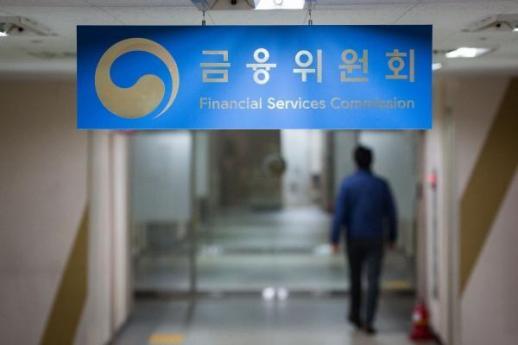 Financial Authorities Launch Inclusive Finance Initiative with $2 Billion Investment As President Lee Jae-myung recently emphasized that "financial institutions are quasi-public entities," South Korea's financial authorities are intensifying their support for social economy organizations. This year, they plan to inject approximately 2 trillion won through public and private financial institutions to promote social economy finance. The Financial Services Commission (FSC) announced on May 8 that it held the first Social Economy Finance Council of 2026 at the Korea Financial Services Agency in Jung-gu, Seoul. Attendees included government officials, policy finance institutions, and representatives from the Mutual Finance Central Association, who reviewed the implementation and achievements of social economy finance initiatives and discussed future plans. President Lee had previously stated during a Cabinet meeting on May 6 that "the notion that financial institutions exist solely to make money is problematic," highlighting the need to enhance the public nature of the financial sector. Shin Jin-chang, Secretary General of the Korea Financial Services Agency, noted in his opening remarks that there is a growing demand for discussions on the public nature of finance and the social responsibilities of financial companies. He emphasized that it is time for fundamental reflection on the uniform practices focused on high credit and collateral. To start, the FSC will increase the annual loan supply from the Korea Financial Services Agency to social economy organizations through the Microfinance program from 6 billion won to 15 billion won. The Korea Credit Guarantee Fund plans to raise the limit for preferential guarantees for social economy organizations from 200 million won and increase the annual guarantee supply from 250 billion won to 350 billion won by 2030. Additionally, mutual finance will expand financial support through the Social Economy Support Fund of the National Credit Union Federation to ensure that cooperative banks fulfill their original functions. The FSC also plans to encourage the establishment of new funds in other mutual finance sectors in consultation with relevant ministries. A revision of the Credit Union Act will be pursued to allow individual credit unions to support investments in other entities. Over the next three years, banks will supply a total of 4.3 trillion won to social economy organizations, marking an 18.3% increase compared to the funding provided from 2023 to 2025. Beyond loans, they will also support 119 billion won through investments, donations, and product purchases over the same period. Furthermore, the evaluation of regional reinvestment by banks and savings banks will place greater weight on the supply of social economy finance, and plans are underway to expand the scale of social investment funds that specifically invest in social economy organizations. In addition, financial institutions will enhance and expand their information infrastructure to comprehensively understand social economy organizations, ensuring efficient and fair supply of social economy finance. The current database maintained by the Korea Credit Information Corporation, which only provides basic information such as corporate registration numbers and names, will be updated to include data on regional contributions and employment rates for vulnerable groups, improving accessibility by posting this information on their website. An FSC official stated, "We will timely implement necessary institutional improvements to ensure that the government's social economy finance activation policies are carried out without any setbacks."* This article has been translated by AI. 2026-05-08 15:19:52
 -
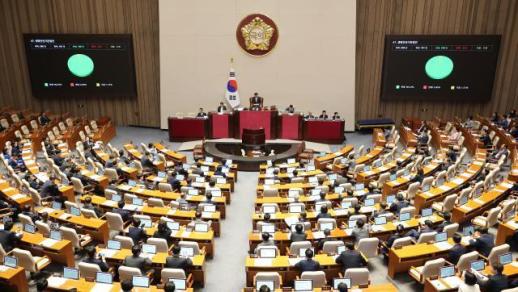 South Korea Passes Special Law to Boost AI Data Center Industry The National Assembly has passed a special law aimed at promoting the artificial intelligence data center industry. While the name is lengthy, its intent is clear: the government is stepping in to ensure South Korea does not fall behind in the competitive landscape of AI infrastructure. This legislation includes provisions for easing facility regulations, establishing special zones, and providing financial support, marking a significant step in redesigning the foundation of the digital economy. Data centers are no longer just collections of servers. In the AI sector, they represent a complex infrastructure that integrates power, semiconductors, networks, and cooling technologies. As AI models grow larger, the demand for computational power and the physical space needed to accommodate this, along with energy requirements, also increase. Ultimately, a nation's AI competitiveness hinges not only on algorithms but also on how quickly and efficiently data centers can be built. The global competition has already begun. The United States is expanding investments in massive data centers led by major tech companies, while Middle Eastern nations are emerging as new hubs by offering cheap electricity. Southeast Asia is also attracting global firms through regulatory easing and tax incentives. Data centers are no longer confined to specific countries; they are moving to regions with favorable power and regulatory conditions. In this context, South Korea faces significant challenges. Electricity costs are high, and regulations on locations in the capital region remain stringent. The environmental permitting process is also complex, making the country less attractive for global investments. The introduction of this special law aims to address these issues by easing regulations and establishing special zones, recognizing that maintaining existing regulatory frameworks would hinder industry growth. The special zone system is particularly significant. Data centers must be concentrated in specific areas due to the simultaneous need for power supply, communication networks, and cooling infrastructure. By easing location regulations and supporting infrastructure development through special zones, it is possible to create clusters centered around certain regions. This could lead to the formation of an industrial ecosystem beyond mere facility expansion. Financial support is also a crucial element. Data centers require substantial initial investments, often amounting to trillions of won, with long payback periods. The structure is such that private capital alone cannot bear the burden. Without the government sharing some of the risks, investments could be delayed. The law's provision for financial support reflects this reality. However, concerns remain. The most pressing issue is electricity. Data centers are known as "power-hungry industries." A single large facility can consume as much electricity as an entire small city. If data centers are expanded without a power supply plan, the burden on the power grid will inevitably increase, potentially leading to higher electricity prices and conflicts over energy policy. Environmental issues cannot be overlooked either. Data centers generate significant heat and consume both water and energy for cooling. Carbon emissions are also a concern. Policies focused solely on industrial promotion could exacerbate environmental burdens in the long run. Conflicts with local residents could further complicate project implementation. Thus, data center policies must not merely focus on regulatory easing but rather on balanced design. It is essential to consider both industrial competitiveness and environmental sustainability. Complementary policies, such as integrating renewable energy, utilizing waste heat, and adopting high-efficiency cooling technologies, must be pursued simultaneously. Otherwise, expanding the industry could lead to new conflicts. Another variable is the reliance on global companies. The data center industry is inherently linked to major global tech firms. Without their investment, the market is unlikely to grow significantly. However, increased dependence on specific companies poses the risk of losing industry leadership. Therefore, strengthening the competitiveness of domestic firms alongside a strategy for technological independence is necessary. The passage of this law alongside the defense semiconductor legislation is also noteworthy. Data centers and semiconductors are not separate industries; AI computations ultimately rely on semiconductors. As the number of data centers increases, so does the demand for high-performance semiconductors. This legislation demonstrates a commitment to simultaneously grow AI infrastructure and core component industries. It is important to note that industrial policies are being designed as interconnected structures rather than isolated sectors. Ultimately, the key to this special law is speed. The global competition has already begun, and falling behind makes it difficult to catch up. However, speed alone is not sufficient. Without clear direction and standards, the industry cannot be sustainable. Four conditions—power, environment, local acceptance, and technological independence—must be met simultaneously. The competition in the AI era will be determined in unseen ways. Algorithms are software, but the physical infrastructure that drives them is crucial. Data centers are at the heart of this. This law is the first step toward building that infrastructure. The challenge begins now. While the law has been enacted, its significance will be lost if implementation does not follow. The success or failure will depend on whether special zones operate effectively, whether power infrastructure is built on time, and how environmental conflicts are managed. Policies do not end with declarations; competitiveness is determined by the details of execution. South Korea possesses capabilities in semiconductors, communications, and IT. If data center infrastructure is integrated, the country can secure significant competitiveness in the AI industry. However, delays in preparation could quickly lead to lost opportunities. This special law opens the door to opportunity. Whether that door can be passed through now depends on the law's completeness.* This article has been translated by AI. 2026-05-08 15:17:32
 -
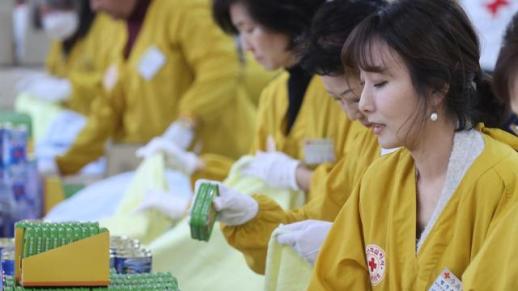 The Role of Spouses in Shaping Election Strategies Similar scenes unfolded in Pyeongtaek and Busan's Buk-gu district. Jeong Kyung-shim, the spouse of candidate Cho Kuk, attended a local event, while Han Dong-hoon, another candidate, visited a senior center with his wife, attorney Jin Eun-jung, to greet residents. These moments symbolize the increasing importance of candidates' spouses in elections. Politics is a personal competition, but voter judgment extends beyond the individual. Factors such as a candidate's lifestyle, relationship-building approach, and family dynamics are all considered. In this context, spouses serve as the closest reflection of a candidate's life, conveying their character more intuitively than official speeches or policies. While political messages are often delivered through words, spouses expand these messages through actions and relationships. In this election, Cho Kuk's campaign strategy is relatively clear. Jeong Kyung-shim's public appearances convey a message of 'shared responsibility in politics.' Her presence at local events following their move to Pyeongtaek emphasizes a commitment to settling as a family rather than just a political maneuver. This approach fosters the perception among local voters that this is a long-term lifestyle choice rather than a short-term political tactic. Notably, the appearance of a well-known figure like Jeong at these events suggests a willingness to confront political challenges head-on. Han Dong-hoon's approach differs somewhat. Jin Eun-jung has not been very active in public political life. Her participation in local events and casual interactions with residents highlights the candidate's image as a relatable individual. This strategy builds trust through everyday contact rather than overt political messaging. It can also be seen as a way for a strong political figure to soften their image through their spouse. Both examples, while differing in approach, illustrate a common trend. Spouses are no longer mere background figures; they play a crucial role in connecting voters and candidates. This role is particularly pronounced in local elections, where establishing familiarity in a short time is essential. The presence of a spouse can effectively reduce distance between candidates and voters. This trend is not unique to South Korea; it has become a standard practice in international politics. In the United States, candidates' spouses are integral to election strategies. During Barack Obama's campaigns, Michelle Obama played a key role in enhancing his public appeal. Her speeches and campaign appearances conveyed independent political messages beyond mere support. Similarly, Hillary Clinton actively participated in Bill Clinton's campaigns, complementing his policy understanding. Her evolution into a political leader illustrates how the role of a spouse can expand. A similar trend is observed in Europe. Brigitte Macron, the spouse of French President Emmanuel Macron, has maintained a public presence that influences political image formation. In Japan, Akie Abe, the wife of former Prime Minister Shinzo Abe, gained attention through her active public engagements. While the systems and cultures differ across countries, the role of spouses in elections and political processes is a common thread. The backdrop of these changes lies in the structural transformation of the political environment. As information dissemination methods diversify and voter evaluation criteria expand, politicians are no longer judged solely on policies. A comprehensive image that includes lifestyle, values, and relationships has become crucial. Spouses serve as the most intuitive window into these elements. As politics increasingly becomes a competition of 'visible lives,' the role of spouses naturally expands. However, this trend carries both positive aspects and clear limitations. Spousal involvement can enhance a candidate's message and broaden voter engagement. Yet, the influence of individuals without public accountability in the political process raises questions. Particularly when a spouse's past or personal controversies become election issues, policy debates may be overshadowed by character-based conflicts. In South Korean politics, the role of spouses is not institutionally defined. There are no official positions or clear accountability structures. Nevertheless, their actual influence is growing. This gap presents a challenge that must be addressed moving forward. Without established social standards for the scope and responsibilities of spouses, unnecessary controversies are likely to recur during elections. Nonetheless, one thing is clear: the presence of spouses is not a temporary phenomenon but part of a structural change. Voters are making decisions based on more information, and politicians must explain themselves through a broader array of factors. In this process, spouses are taking on significant roles. The cases of Cho Kuk and Han Dong-hoon symbolically illustrate this change. While they present their spouses in different ways, both are expanding their candidates' messages. One emphasizes responsibility and unity, while the other highlights everyday life and intimacy. The strategies differ, but the direction is the same: politics is evolving into a more multifaceted competition. Ultimately, the essence of elections remains unchanged. Voters choose based on candidates' abilities and visions. However, the factors influencing that judgment are continually increasing. Spouses are among the most prominent variables in this evolving landscape. Politics is a process of selecting individuals. And individuals exist within relationships. The presence of spouses is one way to showcase those relationships. Whether this has a positive or burdensome effect ultimately depends on voter judgment. The scenes from this election illustrate how the criteria for that judgment are expanding.* This article has been translated by AI. 2026-05-08 15:14:18