
Journalist

Nino Antadze
-
 Trump and Xi Discuss North Korea at US-China Summit: Can Peace Prevail on the Peninsula? In May 2026, the US-China summit held at the Great Hall of the People in Beijing was more than just a diplomatic event between the two nations' leaders. It was a pivotal moment where the world's largest strategic competitors, the United States and China, recalibrated the direction of global order amid a delicate balance of conflict and cooperation. Central to these discussions was the ongoing issue of North Korea. President Donald Trump stated shortly after the meeting that he had discussed the North Korean issue with President Xi Jinping. This brief comment prompted immediate reactions from the international diplomatic community, signaling that North Korea had once again become a key topic in the US-China strategic dialogue. For decades, the North Korean issue has been one of the most dangerous flashpoints in the international order of Northeast Asia. For the United States, it represents a nuclear threat; for China, it is a matter of regime stability and a buffer zone; for South Korea, it is a question of survival amid the specter of war and peace. Japan views it through the lens of security anxiety, while Russia sees it as a geopolitical issue linked to its Far East strategy. Recent visits by Chinese Foreign Minister Wang Yi to Pyongyang underscore this trend. His first visit to the North Korean capital in over six years sent a significant political message. Following the COVID-19 pandemic and the Ukraine war, relations between North Korea and China have been marked by a new level of tension. North Korea has rapidly strengthened its ties with Russia, while China has appeared to distance itself somewhat. Since the Ukraine war, the relationship between North Korea and Russia has evolved into a military alliance. Russian President Vladimir Putin and North Korean leader Kim Jong Un have strengthened strategic cooperation through summit meetings, with Western intelligence suggesting that North Korea has provided munitions and military supplies to Russia. In return, Russia has offered military technology, energy, and food assistance to North Korea, deepening their ties. From North Korea's perspective, Russia has become a strategic ally that alleviates the pressure of international sanctions. Meanwhile, Russia, facing a protracted conflict in Ukraine, has found a military supply chain in North Korea. The interests of both nations have aligned. However, for China, North Korea's excessive alignment with Russia is an unwelcome scenario. North Korea falls within China's traditional sphere of influence, and Beijing does not desire a sudden change in the Korean Peninsula's status quo, nor does it want North Korea to tilt entirely toward Russia. Thus, Wang Yi's visit to North Korea is seen as an effort to restore and reaffirm China's influence in the region. Interestingly, the relationship between President Trump and Kim Jong Un remains significant. Trump has repeatedly emphasized that he maintains a good relationship with Kim. The unprecedented diplomacy displayed during their meetings in Singapore and at the Panmunjom border surprised the world. However, since the collapse of the Hanoi summit, US-North Korea relations have effectively stalled. Kim has grown increasingly distrustful of the United States, while Trump has had to deprioritize the North Korean issue amid domestic political pressures. Nonetheless, Trump still aspires to be remembered as the US president who resolved the North Korean nuclear issue and achieved peace on the Korean Peninsula. The motivation behind this ambition is clear. Resolving the North Korean issue transcends mere diplomatic achievement; it carries the potential for a Nobel Peace Prize-level significance. No US president has fundamentally resolved the North Korean nuclear issue in history. If Trump can achieve tangible progress in freezing North Korea's nuclear program, implementing phased denuclearization, and establishing a peace regime, it could be recorded as one of the greatest diplomatic accomplishments since the Cold War. However, the reality in North Korea is challenging. Recently, North Korea has rapidly advanced its nuclear weapons systems and defense industry. It is moving beyond simple nuclear development to establish a multi-layered nuclear capability, including tactical nuclear systems, solid-fuel intercontinental ballistic missiles (ICBMs), hypersonic missiles, and submarine-launched ballistic missiles (SLBMs). This represents a qualitative shift from the past. North Korea now views nuclear possession not as a bargaining chip but as an absolute condition for regime survival. The Kim regime has elevated nuclear power to a constitutional level of national strategy, while the defense industry has been restructured as a core pillar of the national economy. The expansion of military cooperation with Russia is introducing new variables into North Korea's defense industry modernization. Discussions of military technology exchanges and potential satellite technology cooperation are emerging. North Korea aims to strengthen its asymmetric capabilities to withstand US military pressure. In this context, South Korea's role is becoming increasingly important. President Lee Jae-myung has recently emphasized the need for easing tensions between the two Koreas and establishing a phased peace roadmap. His approach advocates for restoring dialogue through economic cooperation, military tension reduction, and humanitarian exchanges. The Lee administration is particularly inclined to approach the Korean Peninsula issue not merely as an ideological confrontation but as a matter of survival and economics. As the possibility of war increases, the South Korean economy, financial markets, and foreign investment sentiment face direct threats. However, the reality is complex. The United States is strengthening security cooperation with South Korea and Japan to counter China, while Japan is accelerating its defense spending and long-range strike capabilities. Conversely, North Korea, Russia, and to some extent China are strategically aligning, creating a new Cold War atmosphere in Northeast Asia. Some analysts suggest that a de facto 'US-South Korea-Japan versus North Korea-China-Russia' structure is already forming in Northeast Asia. This implies the potential emergence of a collective security framework similar to NATO in Europe. Yet, Northeast Asia is distinct from Europe. Its history, ethnicities, and economies are far more intricately intertwined. China and the United States are each other's largest trading partners, even as they clash, and South Korea's security is deeply connected to the US while its economy is intertwined with China. The North Korean issue is not merely a military concern but is also intertwined with regime stability, history, economics, and ethnicity. The ancient Chinese text, the Dao De Jing, states, "A great nation should remain lowly." This suggests that stronger nations should prioritize humility and order over power. This sentiment resonates deeply in today's US-China relations and the Korean Peninsula issue. Additionally, the Analects of Confucius states, "The noble person seeks harmony but does not seek sameness; the petty person seeks sameness but cannot achieve harmony." This reflects the ancient wisdom of East Asian civilization, advocating for coexistence and harmony despite differing systems and ideologies. The Buddhist Dhammapada also teaches, "Hatred does not cease by hatred, but only by love." This ancient wisdom prompts us to reconsider what the last hope for human civilization is amid nuclear weapons, missiles, military alliances, and hegemonic competition. Ultimately, the path to peace is not easy. However, paradoxically, the higher the tension, the greater the need for dialogue. Nuclear weapons, missiles, military alliances, and strategic competition alone cannot resolve the future of the Korean Peninsula. The discussions between President Trump and President Xi on the North Korean issue may have reaffirmed this reality. Great powers often rediscover the necessity of negotiation just before the brink of conflict. Likewise, the prospect for peace on the Korean Peninsula may gradually advance through a cycle of confrontation and negotiation. Spring does not arrive overnight. Yet, throughout history, humanity has always awaited spring after a long winter. The same applies to peace on the Korean Peninsula. Today, Northeast Asia stands under a vast geopolitical cloud, but within it, the refusal to abandon the possibilities of dialogue, restraint, and mutual coexistence is the true beginning of diplomacy.* This article has been translated by AI. 2026-05-16 11:03:00
 -
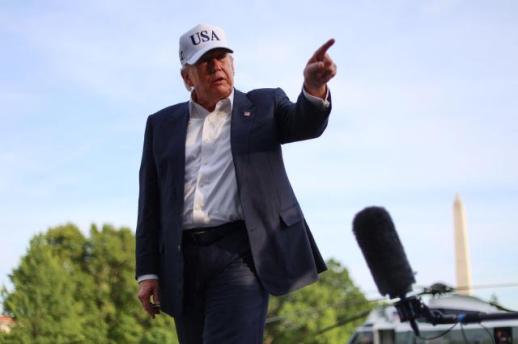 Asia Deep Insight: North Korea mention between Trump and Xi, what next? SEOUL, May 16 (AJP) -The spring of 2026 may well be remembered as a turning point in the strategic history of Northeast Asia. In Beijing’s Great Hall of the People, President Donald Trump and President Xi Jinping sat face to face once again, navigating the uneasy frontier between rivalry and coexistence. Beneath the ceremonial grandeur and diplomatic choreography lay a reality far more consequential: the North Korean question had returned to the center of global geopolitics. After the summit, President Trump publicly confirmed that he and Xi had discussed North Korea. The remark was brief, almost casual in tone, yet within diplomatic circles it carried enormous weight. It signaled that the Korean Peninsula — long overshadowed by the wars in Ukraine and the Middle East, as well as mounting tensions surrounding Taiwan — had once again become one of the defining strategic issues of the 21st century. For decades, North Korea has represented one of the world’s most dangerous geopolitical fault lines. To the United States, it has been a nuclear challenge. To China, it has been a question of regime stability and strategic buffer zones. To South Korea, it has remained an existential matter of war and peace. Japan has viewed it through the lens of regional security anxiety, while Russia has regarded it as part of its broader Far Eastern calculus. Against this backdrop, the recent visit by Chinese Foreign Minister Wang Yi to Pyongyang carried extraordinary symbolic significance. It marked the first visit by a Chinese foreign minister to North Korea in six years and seven months. In diplomacy, timing is often more important than words, and Beijing’s decision to send its top diplomat back to Pyongyang was itself a carefully crafted message. Since the COVID-19 pandemic and the outbreak of the Ukraine war, relations between China and North Korea had shown visible strains beneath the surface. Pyongyang moved increasingly closer to Moscow, while Beijing appeared, at least outwardly, to maintain a degree of strategic distance. The war in Ukraine accelerated that transformation. Relations between President Vladimir Putin and North Korean leader Kim Jong Un deepened rapidly, evolving into what many analysts now describe as a quasi-military alliance. Western intelligence agencies have repeatedly suggested that North Korea supplied artillery shells and military equipment to Russia, while Moscow, in turn, provided Pyongyang with energy assistance, food support, and potentially sensitive military technologies. For North Korea, Russia became a critical geopolitical lifeline amid intensifying international sanctions. For Russia, isolated by the West and burdened by a prolonged war, North Korea emerged as a useful military supplier and strategic partner. Their interests converged naturally. Yet from Beijing’s perspective, an excessively Russia-oriented North Korea was hardly an ideal outcome. North Korea has historically existed within China’s strategic orbit. Beijing has no desire to see instability or sudden collapse on the Korean Peninsula, nor does it wish to lose influence over a neighboring state central to China’s security architecture. Wang Yi’s visit, therefore, was widely interpreted as an effort to restore strategic equilibrium and reaffirm Beijing’s relevance in Pyongyang. Equally intriguing is the still-unfinished relationship between Donald Trump and Kim Jong-un. President Trump continues to emphasize that he maintains “a very good relationship” with Kim. The summits in Singapore and Hanoi, followed by the dramatic encounter at Panmunjom, produced scenes unprecedented in modern diplomacy. For a moment, it appeared as though decades of hostility might yield to an entirely new chapter. Yet the collapse of the Hanoi summit plunged U.S.-North Korea relations back into paralysis. Kim Jong Un’s distrust of Washington deepened, while Trump, consumed by domestic political pressures and the escalating confrontation with China, was forced to shift his strategic priorities. Even so, Trump appears unwilling to abandon the possibility of a historic breakthrough. He still seems to believe that resolving the North Korean nuclear issue — or at least fundamentally reducing the threat — could become the defining diplomatic achievement of his presidency. The reason is not difficult to understand. No American president has ever fully resolved the North Korean nuclear crisis. A meaningful agreement involving nuclear freezes, phased denuclearization, or a formal peace mechanism on the Korean Peninsula would rank among the most consequential diplomatic accomplishments since the end of the Cold War. The challenge, however, lies in the transformed reality of North Korea itself. Pyongyang is no longer merely developing nuclear weapons; it is constructing an integrated nuclear state. Its arsenal now includes tactical nuclear systems, solid-fuel intercontinental ballistic missiles, hypersonic weapons, and submarine-launched ballistic missiles. The sophistication and diversity of these capabilities reflect a strategic doctrine far beyond earlier phases of nuclear brinkmanship. North Korea increasingly treats nuclear weapons not as bargaining chips, but as the ultimate guarantee of regime survival. Kim Jong Un has elevated nuclear power to a constitutional and ideological pillar of the state, while restructuring the country’s defense industry into one of the regime’s central economic engines. Russia’s growing military cooperation with Pyongyang has further accelerated this transformation. Speculation regarding technology transfers — including satellite and missile technologies — has intensified among security analysts. North Korea seeks to build an asymmetric deterrence structure capable of withstanding overwhelming American military pressure. In this environment, South Korea’s role becomes more crucial than ever. President Lee Jae Myung has recently emphasized the necessity of rebuilding a gradual roadmap for inter-Korean peace. His approach prioritizes economic cooperation, military de-escalation, and humanitarian engagement as parallel tracks toward restoring dialogue. Unlike purely ideological frameworks of the past, Lee’s perspective appears grounded in practical national interest. Heightened tensions on the Korean Peninsula directly threaten South Korea’s economy, financial markets, and long-term investment stability. Peace, in this sense, is not simply a moral aspiration; it is an economic imperative. Yet the geopolitical environment surrounding the peninsula grows more complex by the day. The United States is strengthening trilateral security cooperation with South Korea and Japan as part of its broader strategy to counter China. Japan, meanwhile, continues expanding its defense capabilities and long-range strike systems. On the other side, North Korea, Russia, and to a certain extent China are drawing closer strategically, giving rise to what some analysts increasingly describe as a new Cold War configuration in Northeast Asia. Some observers even argue that the region is moving toward a de facto alignment resembling “U.S.-Japan-South Korea versus North Korea-China-Russia.” In such discussions, comparisons to NATO naturally emerge. But Northeast Asia is not Europe. Its history, economies, civilizations, and national identities are far more deeply intertwined. China and the United States remain fierce strategic rivals, yet they are simultaneously bound together by enormous economic interdependence. South Korea relies on the United States for security while depending heavily on China economically. The Korean Peninsula itself is not merely a military issue, but a convergence point of history, ideology, nationalism, economics, and civilization. Ancient wisdom offers an enduring perspective on these dilemmas. In the Tao Te Ching (道德經), there is a profound passage: “A great nation should place itself low, like the waters beneath all streams.” True strength, Laozi suggests, lies not in domination but in restraint and humility. It is a lesson that resonates powerfully in an era of nuclear rivalry and geopolitical competition. The Analects (論語) of Confucius offer another timeless insight: “The noble man seeks harmony without uniformity; the petty man seeks uniformity without harmony.” Civilizations need not become identical in order to coexist peacefully. Diversity and coexistence are not contradictions; they are the foundation of durable order. The Buddhist Dhammapada (法句經) speaks even more directly to the modern world: “Hatred is never ended by hatred, but by compassion alone.” Thousands of years after those words were first written, humanity still struggles to learn their meaning. The path to peace on the Korean Peninsula will not be easy. Yet paradoxically, the greater tensions become, the more necessary dialogue itself becomes. Nuclear weapons, military alliances, and strategic deterrence alone cannot provide a permanent future for Northeast Asia. Perhaps that is the deeper meaning behind Trump and Xi’s discussion of North Korea in Beijing. Great powers often rediscover the necessity of negotiation precisely when confrontation appears most dangerous. Spring never arrives in a single day. It emerges slowly, almost imperceptibly, after a long and unforgiving winter. Today, Northeast Asia stands beneath heavy geopolitical clouds. Yet even amid rivalry, sanctions, missile tests, and military alliances, the possibility of dialogue still survives. And perhaps that fragile possibility — the refusal to abandon coexistence — remains the true beginning of diplomacy itself. 2026-05-16 10:51:24
 -
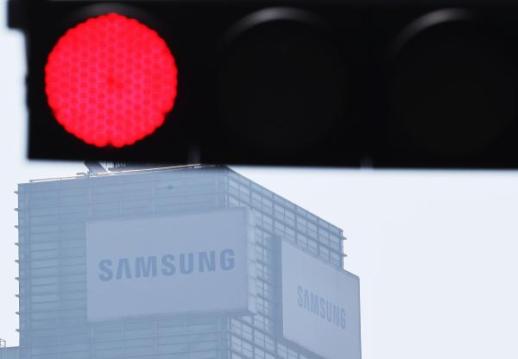 Samsung Warns Against Coercion Ahead of Planned Strike Samsung Electronics is reminding employees that participation in a planned general strike by the union should not be coerced, as tensions rise within the company just days before the strike is set to begin. The company appears to be taking steps to stabilize its organization amid increasing conflicts between business divisions and signs of internal division within the union.According to Yonhap News on May 16, the semiconductor division of Samsung Electronics recently sent an email to department heads stating, "Some employees have reported feeling psychological pressure during discussions about participation in strike activities."The email emphasized that "the decision to participate in strike activities should be made freely by each employee" and requested careful management to prevent any pressure or conflict that could harm employees.The company also cited Article 38, Section 1 of the Labor Union Act, which prohibits the use of violence or intimidation to persuade or solicit participation in strike activities.Additionally, the email urged department heads to inform employees that if they experience difficulties or feel pressured due to repeated requests for participation against their will, unauthorized inquiries about others' attendance, or any other related issues, they should report these concerns to the company or seek assistance through the organizational culture SOS program.Industry analysts suggest that Samsung is proactively managing internal conflicts and divisions ahead of the general strike.The union has announced a general strike from May 21 to June 7, demanding transparency and institutionalization of performance bonuses. If the strike occurs, it is projected to result in losses of up to 100 trillion won.* This article has been translated by AI. 2026-05-16 10:48:54
 -
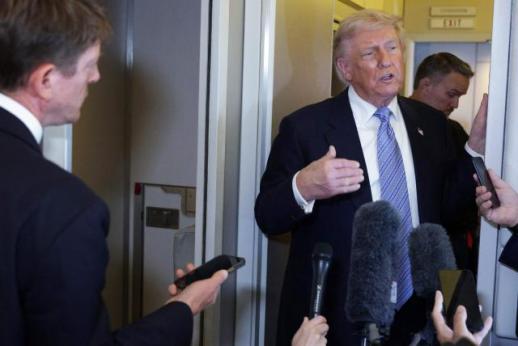 Trump Considers Lifting Sanctions on Chinese Firms Importing Iranian Oil President Donald Trump announced he is considering lifting sanctions on Chinese companies that import Iranian oil. According to Yonhap News, Trump made the remarks on May 15 while speaking to reporters aboard Air Force One after his state visit to China. He stated, "I discussed the issue of sanctions with Chinese President Xi Jinping. A decision will be made in the coming days." When asked whether Xi had committed to pressuring Iran to reopen the Strait of Hormuz, Trump replied, "I do not ask for any favors. If you ask for a favor, you must reciprocate." He added, "I believe Xi is already interested in reopening the Strait of Hormuz, as China derives a significant portion of its oil from the Gulf. In contrast, the U.S. does not need it at all." Earlier, on May 11, the U.S. Treasury Department designated three individuals and nine companies as targets for sanctions for supporting the export of Iranian oil to China. Among the sanctioned companies, four are based in Hong Kong. On May 1, the Treasury also imposed sanctions on Chinese companies and individuals identified as conduits for importing Iranian petroleum, and on May 8, it sanctioned ten entities involved in supporting Iran's weapons and drone production, including companies and individuals from China and Hong Kong.* This article has been translated by AI. 2026-05-16 10:18:48
 -
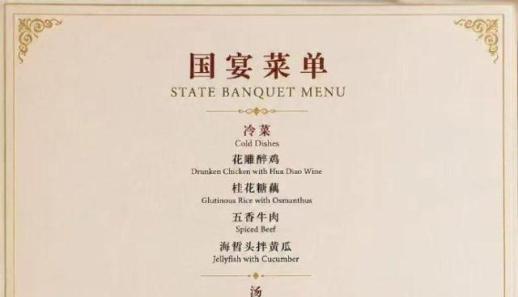 ASIA INSIGHT: Why Xi Jinping's table moves world Lleaders What is the oldest surviving language of international politics? It is not the language of armies. Nor is it the language of money. More often than we admit, it is a bowl of noodles, a slice of roast duck, a cup of tea. China has understood this for centuries. As Confucius taught in The Analects, “In the practice of ritual, harmony is the most precious.” Long before diplomacy became communiqués, sanctions and summit statements, Chinese civilization learned to read the other side across the table. During U.S. President Donald Trump’s latest visit to Beijing, China once again displayed the subtle art of what may be called culinary diplomacy. At the final working luncheon hosted by President Xi Jinping, the signature dish was not an extravagant imperial delicacy. It was gongbao jiding — Kung Pao chicken, the famous Sichuan dish of diced chicken, chili peppers and peanuts. On the surface, it is a familiar popular dish. But in Chinese diplomacy, food is never merely food. It is a code, a gesture, a message. Kung Pao chicken is among the Chinese dishes most deeply rooted in American society. It recalls the long history of Chinese migrants who crossed the Pacific in the 19th century, working on railroads, in mines and on farms, carrying with them the flavors of home. Over time, its spicy yet approachable taste became part of America’s Chinese culinary imagination. China placed that dish once again before Trump. There was also a play on language. Trump’s Chinese name is often rendered as Chuanpu. Sichuan cuisine is known as chuancai. The resonance was unmistakable. The heat of Sichuan cooking and the blunt force of Trump’s political style were joined in a single diplomatic wink. It was diplomacy with humor; symbolism with seasoning. The state banquet held the previous evening at the Great Hall of the People was even more carefully designed. It was not a simple parade of Chinese classics. It preserved the dignity of Chinese cuisine while taking account of Trump’s palate, Western preferences and the habits of American hospitality. The menu included Peking duck, one of the great emblems of Beijing. Roasted whole until the skin is crisp and the meat tender, Peking duck is not only a dish. It is a declaration of capital, court and civilization. Alongside it came Cantonese lobster soup, crispy beef, low-temperature salmon with mustard sauce, Chinese pan-fried dumplings, conch-shaped pastries and, finally, tiramisu. The composition was eloquent. Peking duck represented tradition and imperial memory. Cantonese seafood suggested openness and cosmopolitan refinement. Salmon with mustard sauce offered a Western note. Tiramisu gently extended the table toward Europe. Nothing was forced. East and West were not made to collide; they were arranged to converse. In that banquet lay a miniature portrait of the U.S.-China relationship itself: rivalry, yes; but also interdependence, recognition and the impossibility of total separation. Even the music carried meaning. American and Chinese songs were reportedly mixed in equal measure. Most strikingly, “YMCA,” a song often used at Trump’s campaign rallies, was played. Beijing had studied not only the American president’s office, but also his temperament, theater and personal symbolism. The Art of War teaches that the highest form of victory is to win without fighting. Chinese diplomacy, at its most refined, sometimes designs a banquet table more precisely than a missile system. Nor was this culinary diplomacy reserved for Trump alone. When South Korean President Lee Jae-myung visited China earlier this year, Xi presented him with Beijing-style zhajiangmian. This was not the sweet, dark, Korean-style jajangmyeon familiar to Korean diners, but the saltier, earthier northern Chinese original. Xi reportedly encouraged Lee to taste the difference between the Chinese and Korean versions. That was no casual remark. Jajangmyeon itself is a shared memory between Korea and China. It originated with Chinese migrants from Shandong and later evolved into a distinctly Korean comfort food. China knows this history. By placing the dish on the table, Xi was not merely offering noodles. He was offering a reminder that even amid rivalry and unease, the two countries share a civilizational memory. For Russian President Vladimir Putin, the table changes again. Chinese banquets for Russian leaders tend to lean toward the hearty, the northern and the continental: richer meats, stronger flavors, lamb, duck, seafood prepared with weight and warmth, sometimes paired with Chinese baijiu and the Russian affection for vodka. This, too, is not accidental. It conveys the symbolism of two great continental powers. The menu becomes a geography of Eurasia. It says: we are not maritime strangers; we are neighbors of the landmass. When French President Emmanuel Macron comes to Beijing, the tone shifts once more. France treats cuisine as a pillar of national identity, and China responds accordingly. The table becomes more delicate, more aesthetic, more alert to wine, tea, seafood, dessert and the rituals of cultivated taste. China’s message to France is clear: China is not merely a factory of the world. It is also a civilization. With German chancellors, the mood is different again. German political culture prizes order, restraint, reliability and function. Chinese hospitality in such settings often favors balance over spectacle: clean fish dishes, mushrooms, vegetables, restrained courses and structured pacing. It is a table of trust, stability and industrial seriousness. Thus, in Chinese diplomacy, a meal is never just a meal. It is history, psychology, strategy and civilization arranged in courses. China has long been a civilization of crossroads. Along the Silk Road passed merchants, monks, soldiers, envoys and ideas. At those crossings, China learned that to feed a guest is also to study him; to honor his taste is to measure his mind. The Tao Te Ching says, “A great nation is like the lowland toward which all streams flow.” A truly great power must know how to receive, absorb and accommodate. At its best, China tries to enact that philosophy at the dining table. None of this means that geopolitics has become gentle. The U.S.-China rivalry remains severe. Semiconductors, artificial intelligence, Taiwan, the South China Sea, tariffs and strategic mistrust continue to weigh heavily on the relationship. The world is not softened by duck skin, noodles or tea. And yet, it matters that even adversaries still make room for respect at the table. Trump eats Peking duck. Xi prepares a dish familiar to American Chinese culture. Lee tastes Beijing-style zhajiangmian. Putin is welcomed with the flavors of the northern continent. Macron is met through refinement and wine-like delicacy. German leaders are greeted with order, balance and restraint. In the end, international politics is conducted by human beings. And human beings remember meals. Perhaps the world order does not change only in summit halls, treaty rooms or military command centers. Perhaps it also changes quietly in the banquet rooms behind them — between a plate of Kung Pao chicken and a bowl of zhajiangmian, between Peking duck and a cup of tea, where nations still search, however cautiously, for a language more graceful than conflict. 2026-05-16 09:50:01
 -
 SpaceX Plans IPO, Targeting Nasdaq Listing on June 12 SpaceX, the private space company considered the largest player in this year's global IPO market, is expected to launch its initial public offering as early as next month. According to Yonhap News on May 16, Reuters and CNBC reported that SpaceX has accelerated its IPO schedule, aiming for a Nasdaq listing on June 12. The reports indicate that SpaceX plans to release its investment prospectus soon and conduct a roadshow for investors on June 4. The IPO price is expected to be finalized on June 11, with the listing taking place the following day. Initially, many anticipated that the IPO would occur around June 28, coinciding with the birthday of founder Elon Musk. However, the timeline has been moved up due to the faster-than-expected review process by the U.S. Securities and Exchange Commission (SEC). The SpaceX IPO is a major focus for the global financial market this year. Following its merger with AI company xAI in February, SpaceX's valuation is estimated at approximately $125 billion. The company reportedly aims to raise between $70 billion and $75 billion through this IPO. If SpaceX meets market expectations for fundraising, it would surpass the previous record of $29 billion set by Saudi Arabia's state-owned oil company Aramco in 2019. SpaceX operates satellite-based internet service Starlink and the large spacecraft Starship program. The funds raised from the IPO are intended for the construction of Starship, AI data centers, and lunar base projects.* This article has been translated by AI. 2026-05-16 09:39:56
 -
 Gas Prices Surge for Seventh Consecutive Week, Seoul Gasoline Hits 2050 Won Domestic gasoline and diesel prices at gas stations have risen for the seventh consecutive week. According to the Korea National Oil Corporation's oil price information system, Opinet, the average price of gasoline nationwide for the second week of May (May 10-14) increased by 0.6 won per liter to 2011.8 won. In Seoul, the price rose by 0.8 won to 2051.8 won, maintaining the 2050 won range for the second week in a row, the highest in the country. The lowest price was recorded in Daegu, remaining unchanged at 1995.8 won. Diesel prices also continued to rise, with the average price increasing by 0.8 won to 2006.2 won this week. International oil prices experienced fluctuations following discussions about the potential end of the Middle East conflict during a summit between the U.S. and China. However, as no concrete outcomes emerged, prices began to rise again. As of May 15, Brent crude for July delivery was priced at $109.26 per barrel, a 3.4% increase, while West Texas Intermediate (WTI) for June delivery rose by 4.2% to $105.42 per barrel. Typically, changes in international oil prices are reflected in domestic gas station prices with a delay of 2 to 3 weeks. Consequently, market analysts predict that if the recent surge in international oil prices continues, domestic fuel prices may face increased upward pressure. Meanwhile, the government has frozen the fifth round of maximum oil prices, which took effect on May 8. As a result, gasoline prices remain at 1934 won per liter, diesel at 1923 won, and kerosene at 1530 won.* This article has been translated by AI. 2026-05-16 09:24:52
 -
 KOSPI Plummets After Brief Surge, Signaling Market Reality Check The KOSPI's brief celebration of surpassing the 8,000 mark was short-lived. On May 15, the KOSPI soared to 8,046.78 during trading but closed at 7,493.18, marking a 6.12% drop in just one day. The KOSDAQ also fell by 5.14%. After an impressive 21% surge over eight trading days, the market hit a sudden halt. Despite the correction, the KOSPI remains up 13.55% compared to the end of last month and 77.81% year-over-year. While the decline was significant, the preceding rise was even more abnormal.This sharp drop signifies more than just profit-taking; it indicates that the market is beginning to reassess fundamentals and macroeconomic realities.As of May 14, the KOSPI's 50-day deviation had surged to 131%. Analysts noted, "During the dot-com bubble, the 50-day deviation reached 130%, followed by a short-term correction within 1 to 3 weeks," highlighting the clear signs of overheating. The recent AI and semiconductor boom had overshadowed interest rates, oil prices, and geopolitical risks, making the South Korean stock market one of the most overheated globally. However, financial markets ultimately revert to fundamentals such as earnings, interest rates, inflation, and exchange rates.The core of this correction lies in inflation and the global bond market. The yield on the U.S. 10-year Treasury bond soared to 4.59%, reaching its highest level in nearly a year, while the 30-year yield exceeded 5.12%, the highest since 2007. Japan's 30-year bond yield surpassed 4% for the first time, and the UK's 30-year yield climbed to 5.85%, the highest since 1998.The Wall Street Journal reported, "A sharp sell-off in Japanese and British bonds has spilled over into the U.S. market," marking a rare simultaneous disturbance in the global bond market. On the same day, South Korea's 10-year government bond yield jumped by 13.2 basis points to 4.217%, creating a typical risk-averse environment where stocks, bonds, and exchange rates all fluctuated simultaneously.The turmoil in the bond market is clear. With the prolonged war in Iran pushing international oil prices back above $100 per barrel, the market has begun to recognize the reality of prolonged high interest rates. According to the Financial Supervisory Service, Brent crude has surged by 73.74% and WTI by 76.19% compared to the end of last year.With approximately 20% of the world's oil maritime traffic passing through the Strait of Hormuz, the unresolved risks in the region could lead to rising logistics costs and energy prices, further fueling global inflation pressures. The CME FedWatch indicates that the likelihood of a 0.25 percentage point rate hike in December has jumped from 13.6% to 50% in just a week, reversing expectations for a rate cut by the Federal Reserve.Additionally, a change in the Federal Reserve's leadership adds another variable. May 15 marked the last day of Jerome Powell's term, with Kevin Warsh taking over as the new chair. Société Générale stated, "The instability in the bond market will be the first test for Warsh's administration." The market is closely watching how the new chair manages expectations amid a potential resurgence of inflation.These warning signals from the market have been ignored for too long. The recent U.S.-China summit failed to deliver a substantial breakthrough beyond restoring relations. Geopolitical risks surrounding Taiwan remain unchanged. Nevertheless, global markets have continued their overheated rally, relying solely on optimism surrounding AI.The shock to the South Korean market has been particularly severe. On the same day, Japan's Nikkei fell by 1.99% and Taiwan's market by 1.39%, while the KOSPI plummeted by over 6%. The won-dollar exchange rate surged to 1,500.8 won. Strengthening U.S.-China cooperation has diminished expectations for domestic semiconductor, power equipment, and solar sectors. Major semiconductor stocks that had previously boosted the index, such as Samsung Electronics (-8.61%) and SK Hynix (-7.66%), contributed to the decline.Foreign capital outflows are also concerning. On May 15, foreign investors sold a net 6.3173 trillion won in the stock market, bringing the total net sales for the year to 98.2 trillion won. Foreign selling has continued for seven consecutive trading days. While AI and semiconductors had driven the market up, the resurgence of global interest rates and the dollar prompted foreign funds to exit first.However, this correction should not be immediately interpreted as a collapse. The semiconductor industry and the AI investment cycle remain intact. Customer deposits still exceed 130 trillion won, indicating a favorable liquidity environment, and the KOSPI valuation is considered undervalued compared to major global markets.Yet, the market is now factoring in not just growth stories but also interest rates and liquidity costs. In an environment of rising long-term rates, it becomes challenging to justify high valuations based solely on future expectations.What is needed now is a return to fundamentals. The government and financial authorities should focus on stabilizing exchange rates and the bond market, managing excessive leverage and credit concentration, rather than merely defending short-term indices. Investors must also break free from the crowd mentality of "it will always go up" and critically assess corporate earnings, cash flow, debt, and interest rate sensitivity.This recent Black Friday may not just be a panic reaction but part of the market's return to normalcy. The end of an abnormal hyper-rally has brought inflation and interest rates back to the forefront of market considerations. Ultimately, the market cannot outpace fundamentals. What is needed now is neither fear nor frenzy, but a calm return to basics and common sense. * This article has been translated by AI. 2026-05-16 09:05:15
 -
 AJP Market Watch: Black Friday's reality check as the spread has spoken SEOUL, May 16 (AJP) -There is one number that explains Friday better than any index chart. On May 15, the yield gap between Korea's 10-year government bond and its U.S. equivalent compressed to roughly 27 basis points. That is historically thin. An emerging market sovereign with Korea's energy-import dependence, household debt burden, and geopolitical exposure normally commands a meaningfully larger cushion above U.S. Treasuries. A thinning of that cushion can be a warning that global capital has begun whether the terms of staying in Korea still make sense. On Black Friday, enough of it decided they did not. The Kospi plunged 6.12 percent to wipe all of its weekly gains to close at 7,493.18 after touching 8,046.78 intraday. The won broke through 1,500 per dollar. The 10-year Korea Treasury bond yield spiked 13.2 basis points in a single session to 4.217 percent. Equities, bonds, and the currency moved against Korea at the same time — the textbook anatomy of an emerging-market risk-off episode, not a routine profit-taking day. Japan fell 1.99 percent and Taiwan 1.39 percent on the same session. Korea's far deeper loss was not coincidental. It was the price of having built one of the world's most concentrated single-factor markets — AI and semiconductors — and then pretending that concentration carried no risk. How the spread got this thin The compression did not happen overnight. The Kospi had risen 77.81 percent since year-end 2025, driven almost entirely by semiconductor and AI names. Samsung Electronics and SK hynix surged 9 percent and 19 percent respectively in May alone before Black Friday's reversal. The 50-day dispersion ratio reached 131 percent on May 14 — a level historically associated with sharp near-term corrections and one that, during the dot-com bubble, preceded pullbacks within one to three weeks. Foreign investors piled in throughout, accumulating positions that made them the most exposed constituency the moment sentiment turned. The market had, in effect, willed a world into existence where AI enthusiasm permanently suppressed every other variable: interest rates, energy prices, geopolitical risk, currency. That world ended on Black Friday when global bond markets delivered a coordinated and unambiguous rebuke. The global rout that changed the equation The 10-year U.S. Treasury yield settled at 4.595 percent, its highest closing level since February 2025. The 30-year rose roughly 12 basis points to 5.127 percent, its highest since 2007. Japan's 30-year yield broke above 4 percent for the first time in history, while the 10-year JGB briefly touched 2.72 percent — a 29-year high — after Japan's April corporate goods price index came in at 4.9 precent year-on-year, nearly double the market's 3.0-percent forecast. The U.K.'s 30-year gilt surged 19 basis points to 5.85 percent, its highest since 1998. Market watchers noted the U.S. move was "a direct result of what's happening in non-U.S. yields" — when quality sovereign bonds offer more elsewhere, Treasuries must rise to compete. The thread connecting every market was energy. The Strait of Hormuz remains effectively shut. President Trump's visit to Beijing produced no diplomatic progress on the Iran conflict. U.S. crude rose 4.2 percent to $105.42 a barrel. WTI is now 76.19 eprcent above its year-end 2024 level; Brent is 73.74 percent higher. With roughly 20 percent of the world's seaborne oil transiting the Strait, the market has stopped treating the disruption as temporary. Energy costs are being priced as a structural, multi-quarter inflation input — and interest rates, by extension, as higher for longer than anyone had been willing to admit. The spread of barely 27 basis points between Korean and U.S. sovereign bonds can mean the carry advantage of holding Korean bonds over Treasuries has effectively vanished. For foreign investors running dollar-denominated portfolios, the question becomes brutal in its simplicity: why accept Korean sovereign risk, currency risk, and geopolitical risk for a spread that barely covers transaction costs? On Black Friday, the answer was: they won't. Foreigners net-sold 6.3173 trillion won of Kospi-listed shares in a single session on Friday, pushing their cumulative 2026 net equity selling to 98.2 trillion won across seven consecutive days of outflows. The won's close at 1,500.8 — up 0.66 prercent on the day and 4.29 percent above year-end — was the currency market's verdict on the same calculation. On the same day, the dollar index moved only 0.30 percent. USDJPY was nearly flat. A won above 1,500 raises the won-denominated cost of every barrel of $105 oil directly and immediately. A new member, a new arithmetic It is into this environment — rising yields, a vanishing spread, a won through 1,500, and imported inflation accelerating — that the Bank of Korea's Monetary Policy Board convenes on May 28. Shin Sung-hwan, the BOK's most consistent dovish voice — the author of seven dissenting opinions, five of which called for rate cuts — retired this week. His seat was filled by Kim Jin-ill, a former Korea University professor who held his inauguration ceremony at the BOK on Black Friday afternoon, four days after the Korea Federation of Banks recommended him to succeed Shin. His term began immediately upon Shin's retirement, in accordance with the Bank of Korea Act. Kim is not merely less dovish than his predecessor. He is pointedly hawkish, and has not tried to conceal it. He spent combined years at the Federal Reserve as an invited economist — from 1996 to 1998 and from 2003 to 2010 — and brings that institutional grounding directly to his policy instincts. After his nomination, he said that if he were to place a dot on a hypothetical BOK dot plot, it would sit "half a click" — 0.125 percentage points — above the board's average or median. He framed that not as a temporary lean but as a reflection of his foundational view that price stability is a central bank's non-negotiable core mandate. That view aligns him squarely with BOK Governor Shin Hyun-song, himself a financial-stability hawk who in 2008 advocated preemptive rate hikes. Kim's opening words at his inauguration made the direction unmistakable. He began by pointing out that "inflationary concerns have intensified due to high oil prices caused by the war in the Middle East" and named exchange rate risks from capital outflows as a second front. The board's balance has shifted. Under former Governor Rhee, the benchmark rate was held at 2.5 percent through seven consecutive sessions ending April 10, a freeze justified partly by the need to shield households carrying roughly 2,000 trillion won ($1.36 trillion) in debt. The Fed closes the exit What the BOK's new composition signals domestically, the Fed's transition confirms from the outside. Kevin Warsh — the "hawkish dove" who once argued for simultaneous balance-sheet reduction and rate cuts — now leads the institution. He inherits an inflation problem: U.S. April CPI came in at 3.8 perccent, the highest in roughly three years. CME FedWatch data shows markets pricing a 50 percent probability of a 25-basis-point Fed hike by December, up from 13.6 percent just one week earlier. Fed presidents in Chicago and Boston have already floated rate increases aloud. This external configuration closes the BOK's room to maneuver. If the Fed holds or hikes and U.S. yields continue rising, Korea's 27-basis-point spread compresses further — or inverts at shorter maturities. None of this forecloses the long-term investment case. The semiconductor cycle has not reversed. Samsung's and SK hynix's order books remain strong. Customer deposits above 130 trillion won confirm that domestic liquidity has not fled. The Kospi still trades nearly 80 percent above year-end 2025, which imply considerable optimism about the AI earnings cycle, regardless of Friday's steep retreat. Some of that optimism is warranted. But the government's priority should not be defending the stock index. It should be stabilizing the won and the bond market, managing the systemic exposure embedded in 2,000 trillion won of household debt, and preserving the policy credibility that short-term market appeasement would erode. What the Seoul market witnessed this week was a correction toward a reality that the sovereign spread had been quietly signaling for weeks. On Black Friday, the rest of the market finally caught up. 2026-05-16 08:41:23
 -
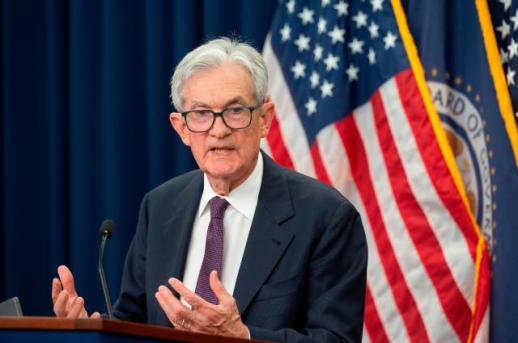 Jerome Powell to Serve as Interim Chair of the Federal Reserve Until Kevin Warsh's Confirmation Jerome Powell will serve as the interim chair of the U.S. Federal Reserve until Kevin Warsh is officially confirmed. According to Yonhap News on May 16, the Federal Reserve announced on May 15 (local time) that it had appointed Powell as interim chair during a board meeting.The Fed explained that this temporary appointment of the current chair aligns with previous practices during chair transitions. Since Warsh has not yet taken the official oath of office, Powell will temporarily retain the chair position to prevent any leadership gap.However, Michelle Bowman, the Vice Chair for Supervision appointed by former President Donald Trump, and board member Stephen Moore expressed their opposition to the decision, stating that the interim chair's term should have a limit.In a joint statement, they supported Powell's interim chair role until Warsh takes the oath but argued that the interim period should be explicitly limited to at least one week to one month, with a provision for re-voting to extend the term if necessary.Powell, who has led the Fed since 2018, will officially conclude his chair term as of today. His term as a board member will continue until January 31, 2028. Powell has indicated that he will remain on the board until the conclusion of the Department of Justice's investigation.Warsh is expected to be sworn in as the new Fed chair soon. The U.S. Senate approved his nomination on May 13. Market observers are keen to see how Warsh will navigate the White House's calls for interest rate cuts amid inflationary pressures. He is set to preside over the Federal Open Market Committee (FOMC) meeting scheduled for June 16-17.* This article has been translated by AI. 2026-05-16 08:40:41