
Journalist

Nodirbek Rasulov
-
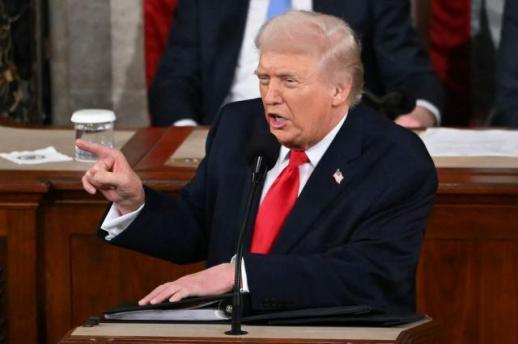 Trump Joins Effort to Defeat Republican Thomas Massie in Costly Primary The primary election for U.S. Representative Thomas Massie's re-election has become the most expensive in House history. This surge in costs is attributed to significant advertising spending by Donald Trump's camp and pro-Israel organizations aimed at defeating Massie. According to Politico, the total advertising expenditure for the Kentucky Republican primary has exceeded $32 million, marking the highest amount ever recorded for a House primary, according to ad tracking firm AdImpact. Pro-Israel groups, including the American Israel Public Affairs Committee (AIPAC), have invested over $9 million in efforts to unseat Massie. Additionally, a super PAC associated with Trump has spent approximately $7 million. Trump's involvement has been a key factor in escalating the stakes of the primary. He has endorsed former Navy SEAL Ed Gallein as Massie's challenger. Politico reported that Trump's intervention has disrupted the stable re-election landscape for Massie, who had held his seat for over a decade, prompting pro-Israel factions to ramp up their spending. Massie is known for his non-interventionist and libertarian views within the Republican Party. He has repeatedly opposed military support for Israel and pro-Israel resolutions, making him a target for pro-Israel groups. Massie has argued that his opposition to foreign aid is not aimed solely at Israel. Pro-Israel organizations are directly targeting Massie. The Republican Jewish Coalition's Victory Fund has aired six attack ads against him, spending over $4 million. AIPAC's super PAC, the United Democracy Project, has also invested around $5 million to highlight Massie's opposition to pro-Israel resolutions. This primary has transcended a simple district contest, emerging as a litmus test for the political costs of criticizing Israel within the GOP. This comes amid a growing trend among younger Republican supporters to adopt a more critical stance toward Israel following conflicts in Gaza and Iran. In response, Massie has pushed back, asserting that he is neither anti-Semitic nor anti-Israel. He emphasized that criticism of the Netanyahu government's policies should not be equated with anti-Semitism. As the election nears, AIPAC has proposed legislation requiring registration under the Foreign Agents Registration Act (FARA). The race is tight. A Quinteros Insights poll shows Gallein leading Massie by 8 percentage points, while a Big Data Poll indicates Massie ahead by 1 percentage point. Trump's support and external funding have elevated Gallein as a formidable challenger in this federal election. However, Massie remains a well-established incumbent with a solid local base. His libertarian leanings align with the political inclinations of Kentucky's 4th district. Whether Trump's backing and the substantial advertising campaign from pro-Israel groups can actually unseat the incumbent is a critical factor in this primary.* This article has been translated by AI. 2026-05-18 07:33:56
 -
 North Korean Women's Soccer Team Visits South Korea, Aims to Improve Relations North Korea's women's soccer team's visit to South Korea carries significance beyond a mere sports schedule. This marks the first time since 2018 that a North Korean team has played in South Korea, and it is the first women's soccer event since the 2014 Incheon Asian Games. This visit, although framed as participation in an international tournament, is noteworthy as it represents a rare instance of 'restoring contact' amid strained inter-Korean relations. The team is in South Korea to compete in the semifinals of the 2025-2026 Asian Football Confederation (AFC) Women's Champions League. The delegation consists of 39 members, including players and staff. Notably, this visit is not the result of political negotiations or intergovernmental agreements, which reduces the associated pressures. This aspect is crucial, as sports have historically served as a low-threshold channel for exchanges when inter-Korean relations are stalled. In fact, inter-Korean sports exchanges have previously acted as catalysts for easing tensions on the Korean Peninsula. During the 2018 PyeongChang Winter Olympics, the formation of a unified Korean team and their joint appearance sent a strong symbolic message to the international community and contributed to a favorable atmosphere leading to subsequent summits. Even in times of political dialogue stagnation, sports have played a role as a 'pathway for contact.' However, it is essential to avoid overinterpreting this visit. Currently, inter-Korean relations are characterized by accumulated military tensions and political distrust, nearing a state of effective severance. In a context marked by severed communication lines, military standoffs, and mutual accusations, it is unrealistic to expect that a single sports exchange will lead to improved relations. Past inter-Korean sports exchanges have often been abruptly halted due to changes in the political environment. The key issue is 'sustainability.' If this visit ends as a one-time event, its significance will be limited. Conversely, if it serves as a foundation for maintaining and expanding minimal channels of exchange, the situation could change. While sports cannot resolve political conflicts, they can undoubtedly play a role in easing tensions and creating opportunities for dialogue. To achieve this, a strategic approach from the government is necessary. It should not merely focus on welcoming ceremonies or event management but should consider a long-term roadmap that expands sports exchanges into cultural and humanitarian exchanges. In particular, regularizing exchanges through international competitions could be a realistic alternative. It is crucial to create a framework for exchanges that can be maintained relatively stably, rather than one that is susceptible to political fluctuations. Another point to note is the potential for a change in North Korea's attitude. Observations of the team's travel routes, schedules, and external exposure suggest a degree of flexibility compared to the past. While this cannot be definitively interpreted as a policy change, it is our responsibility to read and leverage signals of change. Inter-Korean relations can significantly shift based not only on the other side's changes but also on our responses. Ultimately, the essence of inter-Korean relations lies in political and security issues. Sports exchanges alone cannot resolve structural conflicts. However, it is clear that maintaining limited contact is far more manageable than a complete severance of exchanges. This visit serves as a reminder of that 'small link.' The government must not let this opportunity slip away. Inter-Korean relations will not improve through one-off events. Trust is built when small exchanges are repeated and accumulated. The visit of the North Korean soccer team highlights the existence of potential. Whether that potential becomes a reality ultimately depends on our strategy and will.* This article has been translated by AI. 2026-05-18 07:28:08
 -
 Wall Street Bond Expert: Fed Likely to Raise Rates Instead of Cutting This Year ‘Bond King’ Jeffrey Gundlach, CEO of DoubleLine Capital, has predicted that the Federal Reserve will find it nearly impossible to cut interest rates this year. He cited rising oil prices due to ongoing conflicts in the Middle East and tariff pressures as factors pushing inflation higher, suggesting that market expectations for rate cuts are overly optimistic. On May 17, Gundlach appeared on Fox News' 'Sunday Morning Futures,' stating, "Inflation pressures are persisting, making it difficult for the Fed to lower interest rates." He noted that Kevin Warsh, who has been nominated as the next Fed chair, will face a challenging environment, adding, "The Fed's next policy direction may not be a cut but rather an increase." Gundlach expressed particular concern that inflation is not decreasing as quickly as the market anticipates. He pointed out that movements in the two-year U.S. Treasury yield are undermining expectations for rate cuts, stating, "It is hard to justify a rate cut." He also predicted that the next Consumer Price Index (CPI) could rise to around 4%. In a previous interview with CNBC, Gundlach reiterated similar concerns. According to DoubleLine, he warned that if rising oil prices and tariff impacts do not dissipate easily, the CPI, including food and energy, could enter the 4% range in the short term. He emphasized, "In this environment, a rate cut by the Fed is virtually impossible," and added that the likelihood of an increase is higher than a cut by the end of the year. Market expectations are also shifting rapidly. According to Reuters, Bank of America (BofA) has revised its forecast, predicting that the Fed will keep rates steady for the remainder of the year, with the first cut expected in July or September 2027. Goldman Sachs has also pushed back its forecast for the first cut from September 2026 to December 2026. Reuters reported that the prolonged conflict in the Middle East is driving up energy prices, prompting global investment banks to reassess their outlook for U.S. rate cuts. The Fed held interest rates steady during its Federal Open Market Committee (FOMC) meeting on April 29, with a vote of 8 in favor and 4 against, marking the closest decision since 1992. With U.S. inflation still above the Fed's target of 2%, the market reflects a likelihood that the Fed will maintain rates at the current level of 3.50% to 3.75% through the end of the year. Gundlach's comments also serve as a warning regarding the pricing of risk assets. He cautioned that investors buying stocks and other risk assets based on expectations of rate cuts may be making a miscalculation. According to Business Insider, Gundlach stated, "There will be no rate cuts this year," urging an increase in defensive asset allocations such as cash, gold, and commodities.* This article has been translated by AI. 2026-05-18 07:01:15
 -
 Trump Warns Iran to Act Quickly or Face Consequences President Donald Trump has warned Iran that it must act quickly or risk losing everything. As negotiations surrounding Iran's nuclear program and navigation through the Strait of Hormuz remain stalled, U.S. military pressure appears to be escalating. On May 17, Trump posted on his social media platform Truth Social, stating, "There is not much time left regarding the Iran issue. Iran must move quickly; otherwise, there will be nothing left." He emphasized that "time is of the essence." In a phone interview with Axios on the same day, Trump further pressured Iran, saying, "If Iran does not present a better deal, it will face much stronger consequences." He added, "We want a deal, but they are not where we need them to be. They must reach that point." The U.S. has been demanding that Iran reduce its nuclear program and normalize navigation through the Strait of Hormuz. However, Iran has largely resisted these demands, and discussions through mediating countries have yet to yield significant breakthroughs. While Trump did not specify a deadline for negotiations, his comments urging Iran to act quickly suggest a potential for increased military action if Iran does not comply. This warning follows Trump's recent emphasis on the principles of preventing Iranian nuclear weapons and reopening the Strait of Hormuz after announcing the outcomes of a U.S.-China summit. Tensions in the Middle East are rising. According to Axios, Trump discussed the situation in Iran with Israeli Prime Minister Benjamin Netanyahu on May 17. U.S. officials indicated that Trump is scheduled to meet with his national security team in the White House Situation Room on May 19 to discuss military options.* This article has been translated by AI. 2026-05-18 07:00:40
 -
 Gangnam Real Estate Prices Rise After End of Capital Gains Tax Exemption The real estate market is difficult to read. Owning a home is equally challenging. Government policies are no exception. This is where the tough 'real estate' perspective begins. The administration of President Lee Jae-myung has focused on stabilizing housing prices, starting in Gangnam. Since taking office, President Lee has prioritized housing price stabilization, stating, "We will do whatever it takes to control housing prices." He implemented a series of measures, including land transaction permits, total loan management, and the resumption of increased capital gains taxes for multiple homeowners. Gangnam was the target, as it symbolizes Seoul's housing market and serves as a litmus test for regulatory effectiveness. On February 3, he shared a report on social media about an increase in listings in the three Gangnam districts, calling out reports claiming there was no effect or that listings were not emerging as "nonsense." However, after the third week of February, apartment prices in the three Gangnam districts began to decline, with Gangnam experiencing 12 weeks of stagnation or decline. Analysts noted that the cumulative regulations were holding back the Gangnam area, leading to comments that "this government is different," suggesting that the policies were having an impact. However, the market responded differently. On May 9, the exemption for increased capital gains tax for multiple homeowners ended. In the second week of May, apartment prices in Gangnam rose by 0.19%. The belief that the policies were effective began to waver, along with the expectation that taxes would drive listings out and suppress Gangnam prices. Of course, one week of price increase cannot definitively determine the success or failure of a policy. What matters is not just the rate of increase but why Gangnam began to move right after the end of the capital gains tax exemption. This timing itself illustrates the paradox of the policy. The moment taxes lock away listings Taxes present sellers with two choices: sell now and pay taxes or hold off and wait. If the tax rate is manageable, taxes encourage sales, prompting sellers to list properties before the burden of ownership increases. This was the effect the policy aimed to achieve before the end of the capital gains tax exemption. However, when the highest tax rate reaches 82.5%, including local income taxes, the calculations change. When sellers feel they will gain nothing from a sale, taxes become a deterrent rather than a motivator. The heavier the tax burden, the more listings tend to lock up rather than increase, creating a paradox. Properties that were listed before the exemption ended were quickly absorbed. However, homeowners who remained after the exemption ended chose to hold onto their properties. According to the real estate big data platform Asil, over 6,800 apartment listings in Seoul disappeared within a week after the exemption ended. The decline was particularly rapid in non-Gangnam areas such as Guro District (-16.6%), Gangbuk District (-15.2%), and Seongbuk District (-14.1%). As the number of available properties decreased, buyers faced fewer options. In a market where demand remains, a reduction in supply strengthens price support. In real estate, supply does not only refer to new apartment units but also includes existing listings. When taxes fail to motivate sellers and instead lock away listings, market supply diminishes. The government aimed to suppress demand, but in reality, a decrease in supply was the first outcome. When taxes exceed the threshold that pressures sales, they become a mechanism that locks away listings. The recent rebound in Gangnam illustrates where that boundary lies. This paradox is not new. The real estate policies of the Roh Moo-hyun and Moon Jae-in administrations were also subject to this cycle. Regulations aimed at suppressing demand reduced transactions, and the decrease in transactions increased scarcity—a pattern that has repeated itself. As regulations intensified, sellers had greater incentives to hold off. When taxes and loan regulations push demand out of the market, that demand does not disappear but rather lies dormant. The moment a small crack appears, prices return. The recent rebound in Gangnam occurred within that familiar cycle. Gangnam was not a leader but a last bastion More important than the fact that Gangnam prices have risen is that Gangnam was the last to do so. For a long time, Gangnam has been a leading indicator in Seoul's real estate market. Prices in Gangnam would rise first, followed by Mapo, Yongsan, and Seongdong, and then the warmth would spread to the outskirts of Seoul and the metropolitan area. However, this time the order was different. Seoul moved first, and Gangnam joined last. According to the Korea Real Estate Agency, the average increase in the 11 districts of Gangnam was 0.24%, while the average for the 14 districts in Gangbuk was 0.32%. Seongbuk District saw a 0.54% increase, and Jongno District recorded a 0.36% increase, marking the highest weekly rates since 2012. While Gangnam's 0.19% rise is notable, the speed of increases in Gangbuk and non-Gangnam areas is more significant. While Gangnam remained stagnant for 12 weeks, districts like Gangseo, Seongbuk, and Gwanak in non-Gangnam areas built momentum that exceeded the average for Seoul. While Gangnam was restrained, the upward pressure across Seoul remained uncontained. This does not mean Gangnam has collapsed. On the contrary, it indicates that in this phase, Gangnam is not the starting point of the rise but rather the last line of defense. The fact that Gangnam has begun to move again suggests that the symbolic price level, which the government had been holding onto, is now shaking. The rental market had already begun to signal this shift. According to Asil, the number of rental listings in Seongbuk District dropped to 174 on May 14, down from 1,027 a year ago, representing just one-sixth of the previous level. As rental listings decrease, tenants face fewer choices. They may have to accept higher rents, switch to monthly rentals, or return to purchasing homes. This pressure has also affected the sales market. In Seongbuk District, the Gileum New Town 9 complex's 84㎡ units have repeatedly set new price records this year, indicating that buying interest in non-Gangnam areas has already begun to heat up. By the second week of May, apartment rental prices in Seoul had risen by 2.89%, continuing a 66-week streak of increases. This is not just a sales issue but a broader cost of living concern. While headlines have recently focused on Gangnam's price rise, the market had already been moving under the pressures of rental shortages and rising prices in non-Gangnam areas. Demand for Gangnam cannot be explained solely by investment interest. It is a structural demand driven by factors such as school districts, proximity to workplaces, and expectations of redevelopment. Such demand does not disappear under tax pressures. When it remains outside of transactions, it can return to the market once price cracks appear. When regulations aimed at Gangnam reduce the number of properties available for sale, the scarcity of Gangnam increases. The number of buyers remains while the number of sellers decreases, creating a structural imbalance. Concerns about supply also compound the situation. According to Real Estate R114, the number of new apartment units in Seoul is expected to drop from around 17,000 this year to about 8,000 by 2028. If tax changes were the direct trigger for Gangnam's rebound, the rental crisis and supply shortages have already been structural pressures pushing the market upward. The warning left by Gangnam's May rebound The May rebound in Gangnam is not just a simple price change over a week. It signals how taxes operate within the market. The government aimed to draw listings through taxation, but instead, the market saw a reduction in listings after the exemption ended. When taxes fail to change seller behavior, regulations tend to lock away supply rather than suppress demand. The next variable is the tax reform in July. Strengthening property taxes for non-resident homeowners and reducing long-term holding tax exemptions are being discussed. However, the lesson from the current capital gains tax situation is clear. More important than imposing heavier taxes is ensuring that actual listings emerge. If sellers tilt their calculations back toward 'holding rather than selling,' the market is likely to respond in kind. Taxes can be a tool to suppress housing prices. However, once they lock away listings, they become a mechanism that supports prices. The warning left by Gangnam's May rebound lies here: the critical factor is not the intensity of the tax but whether it draws sellers into the market or keeps them locked out. 2026-05-18 06:56:11
 -
 Trump and Xi Confirm Joint Goal of North Korean Denuclearization Donald Trump, the President of the United States, and Xi Jinping, the President of China, have confirmed their joint goal of denuclearizing North Korea. This comes amid speculation that the Trump administration may effectively recognize North Korea as a nuclear state, as the White House officially included "North Korean denuclearization" in its documents. On May 17, the White House released a fact sheet from the US-China summit, stating that Trump and Xi "confirmed their joint goal of denuclearizing North Korea." The White House noted that this summit marked the first visit by a U.S. president to China since 2017, emphasizing that the two leaders reached consensus on various issues to enhance stability and trust for global businesses and consumers. However, no specific roadmap regarding North Korean denuclearization was disclosed. Details on negotiation methods, China's pressure tactics on North Korea, and the timeline for resuming U.S.-North Korea dialogue were not included in the fact sheet. While the statement is largely declarative, the confirmation of denuclearization as a joint goal by the two leaders in an official document could serve as a reference point for future discussions on North Korea. The White House also outlined the fundamental direction of the bilateral relationship. The fact sheet indicated that the U.S. and China agreed to build a "constructive strategic stability relationship" based on fairness and reciprocity. Xi is expected to visit Washington this fall, and both countries agreed to support each other as hosts of the upcoming G20 and APEC summits. Middle Eastern issues were also addressed. Both leaders agreed that Iran should not possess nuclear weapons. They called for the reopening of the Strait of Hormuz and expressed that no country or organization should impose tolls on passage through it. The issues of North Korean denuclearization, Iran's nuclear situation, and the Hormuz transit were presented as security concerns. In the economic sector, the establishment of a U.S.-China trade and investment committee was highlighted as a key achievement. The two nations agreed to create a trade committee and an investment committee. The trade committee will manage trade between the two countries, focusing on non-sensitive items, while the investment committee will serve as a forum for discussing investment-related issues between governments. The White House emphasized China's commitment to purchasing more U.S. products and expanding market access. China agreed to address U.S. concerns regarding disruptions in the supply chain of rare earths and critical minerals. Additionally, it was decided that China would approve an initial purchase of 200 Boeing aircraft for its airlines. China also committed to buying at least $17 billion worth of U.S. agricultural products annually from 2026 to 2028 and to renewing registrations for over 400 U.S. beef facilities and resuming poultry imports. The situation on the Korean Peninsula was also discussed in a call between Trump and South Korean President Lee Jae-myung. According to Reuters, Trump explained the outcomes of the US-China summit during their conversation. The two sides discussed U.S.-China relations, economic and trade agreements, the Korean Peninsula situation, and the Middle East. Trump expressed his intention to work closely with South Korea to contribute to peace and stability on the Korean Peninsula.* This article has been translated by AI. 2026-05-18 06:53:05
 -
 Messi Aims for World Cup Goal Record as Ronaldo Targets Scoring Streak Lionel Messi of Argentina and Cristiano Ronaldo of Portugal, two giants of world soccer for over two decades, are set to challenge for records in their sixth FIFA World Cup. The 2026 North America World Cup, co-hosted by the United States, Mexico, and Canada, will kick off on June 12 with a match between Mexico and South Africa, running through July 20. This tournament is expected to be a significant milestone, as it may mark the last World Cup appearance for both Messi and Ronaldo. Born in 1987, Messi made his World Cup debut in 2006 in Germany and has since participated in four tournaments. He is now aiming to become the first player to appear in six consecutive World Cups. Messi is also pursuing the record for the most goals scored in World Cup history. He has netted 13 goals in 26 matches across five World Cups, placing him tied for fourth all-time with Just Fontaine of France. Above him are Gerd Müller of Germany with 14 goals, Ronaldo of Brazil with 15, and Miroslav Klose of Germany with 16. If Messi scores three more goals in the North America tournament, he will tie for first place; four goals will make him the sole record holder. The possibility is strong, as Messi, who plays for Inter Miami in Major League Soccer (MLS), has demonstrated his enduring talent by winning the league's Most Valuable Player (MVP) award for two consecutive years. Last season, he led the MLS with 35 goals and 21 assists, and he currently ranks second in scoring this season with 11 goals and four assists. Additionally, the expansion of the tournament from 32 to 48 teams may provide more opportunities for Messi to break records. Born in 1985, Ronaldo is also pursuing a new milestone by aiming to score in his sixth consecutive World Cup. Like Messi, he made his World Cup debut in 2006 and has played in five tournaments, scoring eight goals in 22 matches. Ronaldo is the only player in World Cup history to have scored in five consecutive tournaments. Ronaldo is also focused on achieving a World Cup victory, a feat he has yet to accomplish. He won the UEFA European Championship in 2016 but his best World Cup finish remains fourth place, achieved in the 2006 tournament in Germany.* This article has been translated by AI. 2026-05-18 06:49:06
 -
 Marina Abramović's 'Transforming Energy' Exhibition Opens at Venice's Accademia Gallery On May 7, the Accademia Gallery in Venice opened a solo exhibition titled 'Transforming Energy' by Serbian performance artist Marina Abramović, 80. This exhibition marks Abramović as the first living female artist to showcase work at the gallery, which has a history spanning over 200 years. 'Transforming Energy' resembles a mineral spa. Visitors, wearing large earplugs, set aside their smartphones to meditate or take a nap. They leaned against mineral objects installed on the walls for relaxation or lay on wooden beds to absorb the energy emanating from the minerals. Objects reminiscent of Abramović's long black hair gently swayed, brushing against the heads and backs of attendees. Many found themselves drifting off to sleep. Upon leaving the exhibition, visitors felt refreshed, as if they had just emerged from a spa after a good rest. Abramović's works are strategically placed throughout the gallery, harmonizing with Renaissance masterpieces. Notably, her piece 'Pieta' (1983/2002) is positioned directly across from Titian's renowned 'Pieta' (1575-1576), which depicts the Virgin Mary holding the deceased Jesus Christ. Abramović's 'Pieta' is a photographic documentation of a 12-minute performance she presented with her partner Ulay in 1983. The juxtaposition of these two works evokes universal human emotions such as sacrifice and love that transcend time. The exhibition runs until October 18. * This article has been translated by AI. 2026-05-18 06:15:00
 -
 Brazilian Artist Paulo Nazareth's 'Algebra' Exhibition Explores Violence and Memory On May 5, at the Punta della Dogana in Venice, a 344-year-old building that once served as a customs house, Brazilian artist Paulo Nazareth's solo exhibition 'Algebra' was underway. The exhibition created a unique harmony as the venue, space, and artworks interacted with each other in a tense yet compelling manner. Transformed into a museum as part of the Pino Collection by architect Tadao Ando, the floor of the venue featured large circular outlines drawn in white salt by Nazareth, representing the contours of the slave ship 'tumbeiro.' As visitors walked over the salt, it scattered, bringing to light the painful history and scars hidden beneath Venice's glamorous landscape. Salt carries dual meanings. It was a trade commodity that supported colonial economies, preserving food for slave ships while adding bitterness to wounds. Yet, it also symbolizes healing and purification, warding off decay and misfortune. For some, the salt that fueled the greed of merchants represents the bitter pain or tears of mourning. Venice was once a hub for the salt trade. Visitors to Nazareth's salt slave ship on this artificially constructed island awaken from forgetfulness to witness a history of violence and exploitation. At the Korean Pavilion in the Giardini during the Venice Biennale, salt also serves as a medium of mourning. Nobel laureate Han Kang's sculpture 'The Funeral' features a blackened, dried branch stuck into a mound of salt. The piece evokes the Jeju 4·3 incident, which nearly faded away with the tide. It stands out in an otherwise subdued Korean Pavilion, prompting reflections on a past that cannot be forgotten or should not be forgotten. Standing on Floating Tombs In the past, salt was stored at Punta della Dogana. The Venetian Republic dominated Mediterranean trade based on its salt monopoly. Salt was a valuable commodity, representing wealth and power. Nazareth drew the outline of the 'tumbeiro,' a slave ship, with salt in this very location. The tumbeiro was a collective grave for Africans forcibly transported to Brazil. Sailors filled the ship with salted food for long voyages, but countless kidnapped Africans perished on the slave ship due to disease, starvation, and violence. Visitors unknowingly step over the lines of salt on the floor, boarding a ship of death excluded from history, calling forth forgotten deaths and mourning the era of domination and violence. Efforts to restore identities destroyed by colonial rule and genocide are also prominent. Shoes collected by the artist from border areas are arranged facing outward, symbolizing the restoration of identities shattered by colonialism. In the past, Africans had to erase their identities while circling the 'Tree of Oblivion' before being taken as slaves. The left shoes in the exhibition seem to serve as a mourning ritual, recalling the names and memories that were erased from those who were lumped together as 'slaves.' Set against the backdrop of Venice's canals, a childlike drawing of a refugee boat reminds us that struggles for survival continue somewhere at sea. Fragile boats made from dirty sandals contrast sharply with the water taxis gliding past the exhibition windows. This juxtaposes leisure tourism with desperate escapes, highlighting two very different forms of movement. Raising the Tombs I wondered. Are these trees all tombstones? I walked among the blackened trees, with snowflake-like salt crystals resting on their cut surfaces, and the mounds behind them. (Han Kang, We Do Not Say Goodbye (Munhakdongne), p. 9) Han Kang's sculpture 'The Funeral' features a stark tree set on a mound of salt. It represents countless men, women, and thin children huddled against the cold, facing the snow. The piece serves as a mourning for those who have faded away. The blackened trees resemble the countless wooden piles supporting the foundations of Venice, built on mud and sea. The violence and scars buried beneath the beautiful landscapes of the artificial island of Venice and the natural island of Jeju overlap. Both exhibitions will run until November 22. 2026-05-18 06:12:00
 -
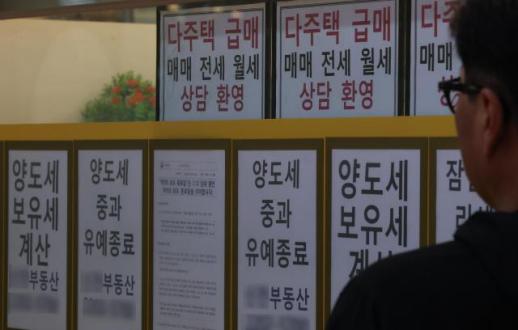 Government Plans Major Overhaul of Real Estate Tax System The South Korean government is expected to announce a significant reform of the real estate tax system in July, moving beyond merely reducing special exemptions to a phase of normalization. The policy focus is shifting toward a resident-centered approach and addressing market distortions, which is likely to result in a general reduction of various tax benefits. According to the Ministry of Economy and Finance on May 17, the long-term holding special deduction (장특공) for capital gains tax is among the first items under review in this reform. Currently, homeowners with one property can receive a deduction of up to 80% based on the length of ownership (40% per year) and the duration of residence (40% per year). Deputy Prime Minister and Minister of Economy and Finance Ku Yun-cheol stated on May 8 that the real estate market is transitioning from a previous overheating phase to one focused on actual residency, indicating a commitment to policy reform. As a result, the government is reportedly considering increasing the weight of residency duration in calculating the long-term holding deduction. Previously, long-term ownership alone qualified for tax benefits, but the new approach would adjust the deduction based on actual residency. This means that the duration of actual residence will become a key factor in taxation, rather than merely the period of property ownership. Additionally, tax benefits for housing rental businesses, introduced to stabilize the rental market, are also likely to be revised. In particular, the exemption from increased capital gains tax for landlords in designated adjustment areas is a major target for reform. Critics have long argued that the rental business system has allowed multiple property owners to reduce their tax burden while expanding their assets. Consequently, the government is reportedly considering reducing existing benefits or allowing them to expire. Property taxes, including comprehensive real estate taxes, remain a sensitive issue. While the current trend maintains a focus on reducing tax burdens, ongoing criticism highlights a lack of equity in asset taxation. Raising property taxes could encourage multiple property owners to list their properties for sale, but there are concerns that this could also increase the housing cost burden on low-income residents through rent hikes. Maintaining the current tax structure could stabilize the market and reduce tax resistance, but it may also exacerbate asset polarization and weaken the tax base, potentially leading to ongoing debates about so-called "tax cuts for the wealthy." On the other hand, strengthening tax burdens could enhance equity in taxation and encourage an increase in property supply, but it also carries the risk of driving up rental prices. However, some experts argue that tax reforms alone may not be sufficient to stabilize real estate prices. Yoon Ji-hae, head of the Real Estate R114 Research Lab, noted, "It has not been sufficiently proven that taxes directly control real estate prices," suggesting that lowering transaction taxes might be a more effective approach to stimulate market activity. She added, "Realistically, the likelihood of a homeowner returning to being a non-owner is low," and indicated that those eligible for the long-term holding deduction are likely to purchase another property in a different area even if they sell their current one.* This article has been translated by AI. 2026-05-18 06:09:59