


Latest by
-
 World Cup Boosts Delivery App Discounts Amid Morning Matches The 2026 FIFA North and Central America World Cup has led to an unexpected surge in the delivery industry as matches involving the South Korean national soccer team are scheduled in the morning. The usual evening demand for food deliveries has shifted to the morning, fueled by heightened viewer interest, resulting in a significant increase in orders for popular snacks like chicken and pizza. Delivery platforms are now engaged in a discount competition aimed at both home viewers and office workers to capitalize on this trend following the team's first match victory. According to Nielsen Korea, the viewership rating for South Korea's opening match against the Czech Republic on June 12 at the Estadio Guadalajara reached 8.5% on KBS 2TV and 5.7% on JTBC. Online support was also strong, with up to 4.82 million people simultaneously streaming the match on Naver's platform, Chijijik. Delivery consumption patterns have changed as well. According to Woowa Brothers, the operator of Baedal Minjok, the number of orders placed between 9 a.m. and noon on June 12 increased by 36.6% compared to the same day last month, and by 51.5% compared to the previous week. Orders surged by 90.6% during the hour leading up to the match, from 10 a.m. to 11 a.m. Notably, chicken orders saw a remarkable increase. Typically low during morning hours, chicken orders skyrocketed by 875.8% compared to the previous week, nearly a tenfold rise. Group orders from office workers also contributed to the increased demand. In major business districts such as Jongno, Gwanghwamun, Euljiro, Yeouido, and Gangnam, order volumes rose by 46.4% compared to the previous week, with Gwanghwamun seeing a 115% increase. A representative from Woowa Brothers stated, "It is unusual to see such a spike in orders during the morning hours. The World Cup has created a new delivery culture." Yogiyo also benefited from the World Cup surge, with a significant increase in orders on June 12 compared to the previous week. The peak ordering times also differed from the norm. Typically, weekday orders peak between 10 a.m. and 11 a.m. on Fridays, but on this day, demand surged between 9 a.m. and 10 a.m. due to the match viewing. The delivery industry is leveraging the heightened excitement of the World Cup as an opportunity to expand sales and enhance related marketing efforts. With increased interest in the national team following their first match victory, the strategy is to capture the home and office viewing demand to maintain the morning surge. The South Korean team is set to face Mexico on June 19 and South Africa on June 25, both at 10 a.m. Coupang Eats is running a chicken discount event until June 30 to capture the demand for chicken. They are hosting a prediction event for expected scores before the matches, offering a 10,000 won discount coupon through a lottery, and providing up to 6,000 won in thank-you coupons based on actual match scores. Baedal Minjok is launching the "Baemin Eating Festival," featuring over 100 popular brands, including chicken, until July 19, offering customers discounts of up to 10,000 won. Yogiyo is competing by emphasizing reward benefits. They are hosting a "Mega Reward Festival" until July 5, offering up to 10,000 points for customers who place four or more orders, with a maximum of 50,000 points during the event period. They are also providing discounts of up to 13,000 won on popular brands like chicken, pizza, and snacks that are frequently ordered during World Cup viewings. A Yogiyo representative stated, "Despite the unusual timing of weekday morning matches, interest and excitement for the World Cup are high. We will provide a variety of food options and generous discounts to enhance the viewing experience for our customers." 2026-06-15 15:03:00
 -
 Shinhan Bank Launches Special Sale of Senior-Focused 'SOL Mate Time Deposit' Offering Up to 3.2% Shinhan Bank is accelerating its efforts to target the senior market.According to the financial sector on June 15, Shinhan Bank has begun the third special sale of its senior-focused deposit product, the 'Shinhan SOL Mate Time Deposit.'The Shinhan SOL Mate Time Deposit is a 12-month fixed deposit product designed for customers aged 50 and older. The first and second sales each saw a limit of 500 billion won fully subscribed within ten days. The third sale will also have a limit of 500 billion won.Eligible customers are those aged 50 and above, with a minimum deposit of 500,000 won and a maximum of 300 million won per individual. Customers who participated in the first and second sales can also make additional deposits within the 300 million won limit. The base interest rate is 3.0% per annum, with an additional preferential rate of 0.2 percentage points, bringing the total to a maximum of 3.2%.The preferential rate can be obtained if one of two conditions is met during the deposit period: either receiving public pension payments for more than three months or depositing over 200,000 won monthly into a private pension account opened at Shinhan Bank for more than three months. Public pensions include the basic pension.A Shinhan Bank representative stated, "In response to the high interest and support from our customers, we have prepared the third sale to allow senior customers to manage their assets under more favorable conditions. We will continue to introduce tailored products that support the financial stability and asset formation of senior customers."* This article has been translated by AI. 2026-06-15 15:00:00
 -
 U.S.-Iran war nears formal end with June 19 signing SEOUL, June 15 (AJP) - The United States and Iran reached an agreement on Sunday to sign a peace deal on Friday aimed at ending a monthslong war that has killed thousands and rattled the global economy. "The Deal with the Islamic Republic of Iran is now complete," President Donald Trump said in a social media post. Iran's Supreme National Security Council also confirmed in a statement that Tehran had finalized a memorandum of understanding with Washington. Below is a timeline of key developments, from the outbreak of the conflict to the breakthrough agreement. 2026-06-15 14:59:53
 -
 Korea to Supply 790 Trillion Won in Climate Finance by 2035 Financial Services Commission Chairman Lee Ok-keun met with Dame Susan Langley, the Lord Mayor of the City of London, to discuss expanding financial cooperation, including climate finance, between Korea and the UK. The Financial Services Commission announced that the meeting took place on June 15 at the Government Complex in Seoul. Langley noted that since the conclusion of the Korea-UK Free Trade Agreement negotiations in December, opportunities for collaboration in capital markets and fintech have increased. She expressed interest in the green transition (GX) support policies announced by the Financial Services Commission in February and proposed expanding financial cooperation for sustainable growth. This visit marks Langley's first trip to Korea in seven years, having last visited in 2019. She will be in Korea for two days starting June 15. Chairman Lee explained that the Korean government has set a national greenhouse gas reduction target (NDC) for 2035 to achieve carbon neutrality and is promoting a Korean-style green transition (K-GX). To support these efforts, the Financial Services Commission is working to institutionalize environmental, social, and governance (ESG) disclosure. Five policy financial institutions, including the Korea Development Bank, Export-Import Bank of Korea, Industrial Bank of Korea, Korea Credit Guarantee Fund, and Korea Technology Finance Corporation, plan to supply a total of 790 trillion won in climate finance from this year until 2035. Lee emphasized that "climate change occurs across borders, so effective responses require harmonious international cooperation among countries." Both sides agreed to continue supporting mutual entry for financial companies and to strengthen cooperation for financial system stability and innovation in the financial industry.* This article has been translated by AI. 2026-06-15 14:51:00
 -
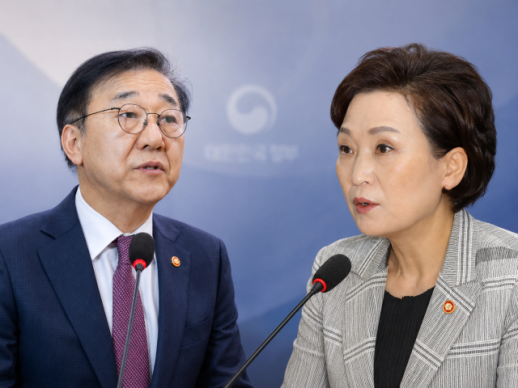 What Hyun-mi Kim Left Behind and What Yoon-deok Kim Must Prove The real estate market is difficult to navigate, and homeownership is challenging. In June 2017, the Moon Jae-in administration launched efforts to control housing prices. The government designated all of Seoul as a speculative zone under the 8·2 measures, imposed higher capital gains taxes on multiple homeowners, and announced plans for a reconstruction excess profit recovery system. It also significantly reduced loan limits to curb leverage, with the official rationale being to protect genuine demand and suppress short-term speculative demand. However, just four months later, the government offered incentives for multiple homeowners to register rental properties. This created a conflicting situation where homeowners were pressured to sell but were simultaneously given a legal avenue to avoid doing so. The design of the incentives was contradictory. Subsequent measures became more detailed under the label of “targeted prescriptions.” The 9·13 measures increased comprehensive real estate taxes, tightened loans for multiple homeowners, and imposed regulations on loans for rental businesses. The 12·16 measures prohibited mortgage loans for apartments priced over 150 million won and further lowered the loan-to-value ratio for amounts exceeding 90 million won. The regulatory landscape continued to expand, encompassing taxes, loans, subscriptions, reconstruction, resale, and rental business management. Despite these efforts, the median sale price of apartments in Seoul surged from 606 million won to 920 million won within three years of the Moon administration's inception. The cumulative increase in the actual transaction price index exceeded 45% over the same period. Throughout this time, the Minister of Land, Infrastructure and Transport remained unchanged, with Kim Hyun-mi serving as the longest-serving minister in the department's history. These records did not signify success but rather a chain of failures. The long tenure of Kim Hyun-mi as Minister of Land, Infrastructure and Transport. The reason for revisiting Kim Hyun-mi’s name is not to judge the past but to reflect on the failures of her administration as the new government embarks on a path of stringent real estate regulations. Is Kim Yoon-deok, the current Minister of Land, Infrastructure and Transport, free from the pitfalls that ensnared Kim Hyun-mi? Can he fulfill the tasks at hand until the end? The issue with Kim Hyun-mi’s administration was not a lack of measures; rather, there was an abundance of them. The problem lay in the inability to correct the diagnosis. The Ministry of Land, Infrastructure and Transport's assessment was relatively clear: chronic housing shortages had been largely resolved, housing supply rates had increased, and the number of housing units entering the market in Seoul and the metropolitan area was not below historical averages. They attributed rising housing prices to speculative demand, multiple homeownership, gap investments, liquidity, and expectations of capital gains rather than supply shortages. Based on this assessment, the policy direction became entrenched in regulation. The approach involved tightening taxes, restricting loans, raising barriers for reconstruction, and limiting transactions. While there were supply measures, such as plans for 300,000 units in the metropolitan area, new towns, utilizing idle land in Seoul, and repurposing public facilities, these were more about partial supply in outer public housing areas rather than large-scale urban supply to meet core demand in Seoul. Market signals indicated otherwise. Demand for core areas in Seoul did not diminish, and the scarcity of new apartments in preferred locations increased. As regulations increased, listings became scarce, and demand shifted toward safer assets. Nevertheless, the government did not acknowledge the supply shortage for some time. In July 2020, Kim Hyun-mi stated she did not believe there was a housing supply shortage, explaining that the issue was not the quantity itself but the system for properly supplying it to genuine demand. It was only in November of the same year that she made comments acknowledging a decrease in apartment supply. There had already been several opportunities for a change in leadership. Despite numerous measures, prices continued to rise, listings became scarce, and the debate over supply shortages gained prominence. Opportunities arose when her successor was nominated in 2019 but failed to take office, after the ruling party's landslide victory in the 2020 general elections, and when discussions about a supply shift emerged in the summer of 2020. However, Kim Hyun-mi remained in her position. Her retention was not a decision but a default; in a structure where doing nothing resulted in retention, changing leadership required justifications, candidates, and timing, all of which came with costs. If the diagnosis is incorrect, it must be corrected. However, to correct the diagnosis, one must first acknowledge that it is wrong. Acknowledgment implies dismissal, and dismissal signifies the formal recognition of failure. As long as this equation holds, a change in ministers becomes a means of policy modification rather than a declaration of governmental failure. The Moon administration became a prisoner of this equation. Ultimately, a change occurred only at the end of December 2020, with just over a year left in the administration's term. The new Minister, Byun Chang-heum, introduced a supply plan for 836,000 units just five weeks after taking office. While the numbers were significant, the timing was late. However, LH, the key executing agency for the supply plan, soon became embroiled in pre-speculation allegations regarding the Gwangmyeong and Siheung new towns. The administration lacked both time to recover and political capital. The delayed transition faltered not due to directional issues but due to timing. One cannot attribute Kim Hyun-mi’s failures to Byun Chang-heum. The Byun administration was more a result of the delayed transition. The Kim Hyun-mi administration should have recognized the diagnosis of supply shortages earlier and adjusted the regulatory framework more swiftly. A change in leadership could have been a method for that adjustment. However, the change was perceived as an acknowledgment of failure, and thus it was postponed. In the meantime, the market had moved further away. The new government's approach to real estate regulation and its implications. Five years have passed since then, and the Yoon Suk-yeol administration has begun. The starting point is eerily similar. The guiding principle is “eradication of real estate windfall profits and transition to a productive economic structure.” The 10·15 measures have designated all of Seoul and 12 areas in Gyeonggi Province as regulated zones and land transaction permission areas, and in May of this year, the government resumed higher capital gains taxes. This design aims to tighten the exit routes for multiple homeowners. However, the market is moving in unexpected directions. In a climate of reduced transactions, a few listings are being sold at high prices, a paradox that has become familiar since the introduction of regulations. In the year following the Yoon administration's launch, apartment prices in Seoul recorded double-digit increases according to real estate data, surpassing the initial year’s rise during the Moon administration. The rental market is also showing signs of strain. Regulations on multiple homeowners are reducing rental supply, leading to rental instability, which in turn drives demand for purchases. This chain of events is not unfamiliar, having been witnessed after the implementation of the two rental laws in 2020. The years 2026 and 2027 are expected to see a further decrease in housing supply due to a construction cliff. Pressure in the rental market is likely to continue building for the foreseeable future. Recently, speculation about a cabinet reshuffle has emerged. Following the defeat in the Seoul mayoral election, discussions about a comprehensive revision of real estate policy have coincided with rumors of a change in the Minister of Land, Infrastructure and Transport. Kim Yoon-deok has been in office for less than a year, which is typically considered too early for a change. However, it is difficult to avoid accountability regarding the scarcity of listings, overheating, and rental supply instability in the Seoul real estate market. President Yoon Suk-yeol did not rule out the possibility of a cabinet reshuffle during his press conference marking his first year in office. However, he did not specify which departments would be reviewed in detail. While he did not directly mention Kim Yoon-deok's retention, his comments did not strongly support immediate replacement either. Kim Yoon-deok appears to be aware of this accountability. On the night of June 4, the day after the local elections, he announced on Facebook that he had discussed housing supply plans with the Korea Housing Association, stating, “The government’s commitment to housing supply is resolute and firm.” He emphasized the importance of communicating with supply sites until the goals of the 9·7 housing supply measures are achieved, promising to address any obstacles swiftly. In a context where real estate is cited as a contributing factor to the defeat in the Seoul mayoral election, the Minister of Land, Infrastructure and Transport has reaffirmed his commitment to supply. The minister is inevitably accountable for housing and rental prices. Yoon-deok Kim's other test: balanced development. Moreover, the significance of Kim Yoon-deok as a minister extends beyond managing the real estate market. As the first Minister of Land, Infrastructure and Transport from Jeollabuk-do, he views balanced development and the reorganization of land use as issues of greater importance than mere departmental concerns. The second phase of the relocation of public institutions and the fifth national railway network construction plan are prime examples. Easing the concentration in the metropolitan area and reestablishing regional hubs are central to the new government's land policy. These tasks have already entered the national agenda, transcending personal interests. The importance of balanced development and the relocation of public institutions was publicly addressed in presidential briefings, and the Ministry of Land, Infrastructure and Transport has prioritized the second phase of public institution relocation as a key issue for balanced growth. Kim Yoon-deok has also indicated that he will outline a timeline by September, making it clear that these issues can no longer be postponed as long-term projects. Relocating public institutions is a matter where regional interests clash directly. It carries significant implications if proposed just before a general election, and delaying it too long makes subsequent procedures difficult. With the general election scheduled for April 2028, it is essential to establish a framework within this year. The fifth national railway network construction plan has also been delayed due to complaints from across the country. The moment one line is included or excluded, local political circles and local governments will react simultaneously. Here, the decisive differences between Kim Hyun-mi and Kim Yoon-deok become evident. Kim Hyun-mi was bound to the singular task of real estate. As that task failed, changing ministers became increasingly difficult. Changing the minister would mean acknowledging failure, while not changing would result in the accumulation of failures. In a structure where errors could not be corrected, transitions could not be executed, and failures could not be acknowledged, the more measures there were, the greater the failures became. Kim Yoon-deok, however, is in a different position. This does not mean his task is easier. His responsibilities are twofold. One is to manage the instability of housing and rental prices. If the tightening of regulations leads to increased rental instability and scarcity of listings, Kim Yoon-deok will also face accountability. The other is to transform balanced development and statutory plans into tangible outcomes. This task will inevitably be evaluated as a measure of Kim Yoon-deok’s success. Ultimately, the case of Kim Hyun-mi illustrates one key point: a minister's evaluation hinges not on how long they endure but on whether they fulfill their assigned responsibilities in a timely manner. Managing real estate instability while closing the timeline for balanced development is the challenge that Kim Yoon-deok must prove he can meet.* This article has been translated by AI. 2026-06-15 14:51:00
 -
 Retirement Pension Fees Can Significantly Impact Your Returns When selecting retirement pension products, subscribers typically focus on returns, but another crucial factor is fees. Even with similar returns, the fees can differ significantly, sometimes by dozens of times, making it essential to consider costs as well. An analysis of the Financial Supervisory Service's disclosure data on retirement pension providers revealed substantial disparities in fee burdens, even among similar types of plans. The fee burden refers to the costs incurred by subscribers for management and asset handling, which are deducted from assets annually and can significantly affect compounding over the long term. For instance, as of the fourth quarter of last year, Shin Young Securities reported a total fee burden rate of 0.126% for its defined benefit (DB) plans, while Mirae Asset Securities had a rate of 0.399% and iM Securities reported 0.386%. This indicates that even within the same sector, the fees borne by subscribers can vary by more than three times. The fee burden rate is calculated by adding management and asset handling fees, which are often lower for non-face-to-face products or promotional offerings. This month, Kiwoom Securities, a new entrant in the retirement pension market, announced a zero percent fee for the first year. However, a higher fee does not always correlate with higher returns. For example, based on a 10-year non-guaranteed principal and interest return, KB Insurance achieved a return of 4.56%, while DB Insurance reported 4.62%, with a performance difference of just 0.1 percentage points. The differences become more pronounced across different sectors. For instance, Woori Bank's Individual Retirement Pension (IRP) had a three-year return of 13.24%, while Fubon Hyundai Life Insurance reported 12.32%. However, the fees were drastically different, with Woori Bank at 0.007% and Fubon Hyundai Life at 0.347%. These figures reflect the cost levels at the time of disclosure, and individual returns may vary based on the specific products and asset allocations chosen by subscribers. Nevertheless, relying solely on return rankings when selecting a provider can obscure a complete assessment of actual investment performance. A financial industry official noted, "Given that retirement pensions are long-term assets managed over 20 to 30 years, even small differences in fees can accumulate over time." This means that even a 0.1 to 0.2 percentage point increase in annual fees can significantly impact the final payout when compounded over the long term.* This article has been translated by AI. 2026-06-15 14:51:00
 -
 Mirae Asset faces investor fury and probe after SpaceX IPO allocation failure SEOUL, June 15 (AJP) — South Korea's second-largest brokerage house Mirae Asset Securities is under fire after failing to secure any shares in the blockbuster initial public offering of SpaceX, leaving Korean investors empty-handed in one of the world's most coveted listings. "Pathetic," one investor wrote on Mirae Asset's online forum. "Run before you get burned," another wrote Monday, referring to Mirae Asset Securities' own share price, which fell about 2 percent despite a 5.5 percent rally in the benchmark KOSPI. The backlash has quickly widened into a regulatory issue. The Financial Supervisory Service has launched an inspection into why Mirae Asset failed to receive shares that had been expected for Korean investors and whether the brokerage properly warned clients that final allocations could be reduced or canceled. According to investment banking sources, SpaceX had initially been expected to allocate 2,314,815 Class A common shares to Mirae Asset out of 555,555,555 shares sold in the offering. But Goldman Sachs, the lead underwriter, reportedly excluded Mirae Asset and some other syndicate members from the final distribution. The failure stunned Korean investors, who have become among the world's most aggressive retail buyers of U.S. stocks and had viewed SpaceX as a rare chance to enter a global AI, defense and space infrastructure play at the IPO stage. As of June 11, South Koreans owned $190.2 billion in U.S. equities, of which Tesla shares make up $24.1 billion worth. Mirae Asset has refunded subscription deposits in full, but investors may still have suffered losses from currency conversion, overseas remittance and refund procedures. Some deposits were converted into dollars when the won-dollar rate was around 1,530, while refunds were returned when the rate had moved closer to 1,510, raising the possibility of foreign-exchange losses. The FSS is also examining whether Mirae Asset sufficiently disclosed allocation risks, whether there was exaggerated marketing, and whether the brokerage had understood in advance that it might fail to receive any shares. A key issue is regulatory approval. Industry officials said Mirae Asset's failure to obtain clearance from Korean financial authorities may have made global underwriters reluctant to allocate shares to the brokerage. Korea requires securities registration documents to be submitted at least 15 business days before a public offering to general investors, but SpaceX followed U.S. IPO rules and filed roughly a week before listing. Mirae Asset later shifted the subscription from a public offering for general investors to a private placement for professional investors, but industry officials said the change may not have been fully coordinated with global advisers. In contrast, Mizuho Securities, which secured approval from Japanese regulators, reportedly received about $2.2 billion worth of SpaceX shares, or roughly 3 percent of the offering. The controversy has also spread to exchange-traded funds. Some asset managers had promoted plans to include SpaceX IPO shares secured through Mirae Asset in their ETFs. When the allocation failed, at least one fund reportedly bought SpaceX shares in the market on listing day, potentially at prices well above the $135 IPO price. Regulators are expected to examine whether ETF investors were disadvantaged as a result. The FSS is also expected to review possible conflict-of-interest issues after reports that Mirae Asset Group affiliates participated separately with proprietary capital and received SpaceX shares through a U.S.-based institutional channel. Those shares were separate from the failed client subscription, but the situation has raised questions over whether group interests and client interests were properly managed. Mirae Asset apologized to clients for failing to meet expectations. "We apologize for the inconvenience and for failing to meet the expectations of customers who waited a long time for the subscription results," the company said in a notice. The case is drawing heightened attention because it comes before a possible wave of U.S. mega-listings involving artificial intelligence companies such as Anthropic and OpenAI. Financial authorities see the SpaceX failure as a test case for how Korean brokerages should handle overseas IPO access for local investors. An FSS official said the regulator needs to thoroughly examine what happened because investor protection will become increasingly important as more Korean capital seeks access to global IPOs. 2026-06-15 14:49:58
 -
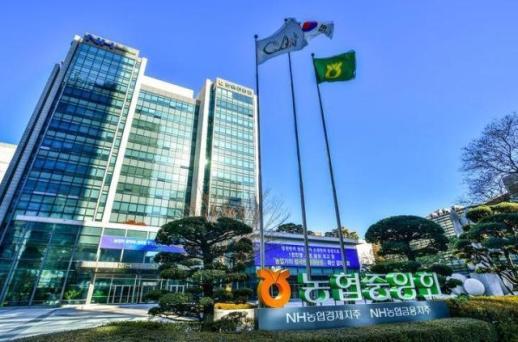 NongHyup to Forgive 887.6 Billion Won in Delinquent Loans, Support 90,000 Vulnerable Individuals NongHyup will forgive 887.6 billion won in delinquent loans to support vulnerable populations. Additionally, the organization plans to provide over 15 trillion won in inclusive finance over the next five years to expand financial support for low-income individuals and farmers.On June 15, the NongHyup Central Association announced that it will forgive and write off a total of 887.6 billion won in long-term delinquent loans this year, aligning with the government's inclusive finance policy. This initiative aims to assist approximately 90,000 vulnerable individuals in their recovery.NongHyup plans to write off 687 billion won in long-term delinquent loans this year, relieving 64,000 individuals from collection burdens and supporting credit recovery. The breakdown by subsidiary includes 287 billion won from NongHyup Bank, 150 billion won from agricultural and livestock cooperatives, and 250 billion won from NongHyup Asset Management. As of last month, 178.5 billion won in long-term delinquent loans had already been written off, with an additional 508.5 billion won planned for the end of the year.Furthermore, NongHyup will reduce the principal and interest on loans that have been delinquent for over three years, targeting socially vulnerable groups such as the elderly and basic livelihood recipients, amounting to 200.6 billion won. The principal will be reduced by up to 90%, and all unpaid interest will be waived to encourage diligent repayment and improve credit ratings for delinquent borrowers.Currently, NongHyup has established a plan to provide 15.3 trillion won in inclusive finance over the next five years. This support will focus on loans for small businesses and self-employed individuals totaling 8.5 trillion won, as well as 6.8 trillion won for low-income and vulnerable groups.NongHyup Central Association Chairman Kang Ho-dong stated, "The write-off and forgiveness of long-term delinquent loans is part of our commitment to inclusive finance, bringing hope for recovery to those who have faced economic hardship for a long time. We will continue to expand inclusive finance across NongHyup to strengthen our public interest role and fulfill our social responsibilities."* This article has been translated by AI. 2026-06-15 14:48:00
 -
 Foreign Investors Increase Short Selling and Stock Borrowing in KOSPI Market Foreign investors have sold more than 22 trillion won in net terms in the KOSPI market this month, while the scale of short selling and stock borrowing has also rapidly increased. Analysts suggest that the simultaneous expansion of cash sales and short selling is amplifying the influence of foreign investors in the domestic stock market. According to the Korea Exchange on June 15, foreign investors net sold over 22 trillion won in the KOSPI market from the beginning of this month until June 12. Although they returned to net buying on June 12, they had previously engaged in net selling for 23 consecutive trading days, increasing the supply-demand burden on the domestic market. During this period, short selling transactions also surged significantly. The average daily short selling amount by foreign investors was approximately 2.6 trillion won, marking a 43% increase from last month's 1.8 trillion won. Compared to 1.1 trillion won two months ago in April, this represents an increase of over 130%. The proportion of foreign investors in total short selling transactions has also grown. This month, foreign investors accounted for 75.7% of short selling, up 7.5 percentage points from last month's 68.2%. Compared to 66.0% two months ago, the increase is even more pronounced. Given that foreign short selling transactions were around 8.6 trillion won at the beginning of the year, the recent upward trend is notable. In the stock borrowing market, the presence of foreign investors is also increasing. Stock borrowing involves transactions where investors borrow and lend shares, often serving as a precursor to short selling. The borrowing balance for foreign investors has risen from approximately 45.9 trillion won in January to about 76.5 trillion won this month, a 66% increase in just five months. While the increase in balance value is partly due to rising stock prices, the proportion of foreign investors in the total borrowing balance has also grown from 47.4% to 53.1% during the same period, indicating expanded participation in the stock borrowing market. Although it cannot be definitively concluded that the increase in borrowing balance directly leads to expanded short selling, there are observations that the surge in short selling transactions is linked to heightened demand for downward bets by foreign investors. Short selling has been particularly concentrated among large-cap stocks in sectors such as semiconductors, IT, and automobiles. The stock with the highest short selling this month was SK Hynix, exceeding 5 trillion won. Following that, Samsung Electronics saw about 3.5 trillion won in short selling, while Hyundai Motor, Samsung Electro-Mechanics, SK Square, and LG Electronics also experienced over 1 trillion won in short selling. 2026-06-15 14:48:00
 -
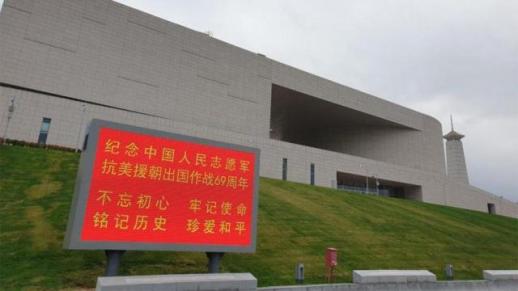 Defense Ministry Calls Report on Teachers Visiting Chinese War Memorial a Serious Error The Defense Ministry stated it is investigating reports that the War Memorial Foundation considered including a visit to the Chinese "Anti-American Aid Memorial" in a training program for teachers. During a regular briefing on the 15th, Defense Ministry spokesperson Jeong Bit-na said that an audit is currently underway regarding the program and added, "Regardless of the reasons, the decision to review related schedules is considered a serious error by the Defense Ministry." She continued, "We will thoroughly clarify the facts through the audit and take strict action. There should be no actions that undermine the sacrifices and dedication of those who fought for the country." The War Memorial Foundation, which operates the Yongsan War Memorial under the Defense Ministry, reportedly included the Anti-American Aid Memorial in Dandong in its overseas training schedule for elementary, middle, and high school teachers this year but later removed it. Recently, the War Memorial Foundation faced criticism for promoting an educational program for the month of national defense and veterans, which presented the Korean War as the "Anti-American Aid War" alongside South Korea's perspective on the conflict. The term "Anti-American Aid" is a propaganda phrase used by China to justify its intervention in the Korean War, claiming to assist North Korea against American aggression. Spokesperson Jeong stated that an audit is currently underway regarding the promotional materials, as directed by the Defense Minister, and emphasized that if any violations are confirmed, strict actions will be taken in accordance with relevant regulations and procedures.* This article has been translated by AI. 2026-06-15 14:39:00