

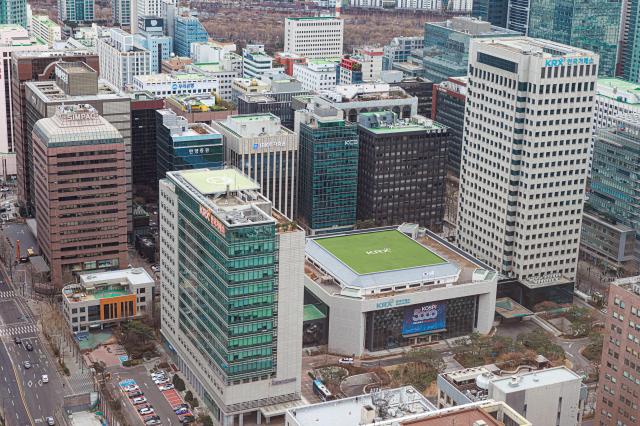
Foreign investors have sold more than 22 trillion won in net terms in the KOSPI market this month, while the scale of short selling and stock borrowing has also rapidly increased. Analysts suggest that the simultaneous expansion of cash sales and short selling is amplifying the influence of foreign investors in the domestic stock market.
According to the Korea Exchange on June 15, foreign investors net sold over 22 trillion won in the KOSPI market from the beginning of this month until June 12. Although they returned to net buying on June 12, they had previously engaged in net selling for 23 consecutive trading days, increasing the supply-demand burden on the domestic market.
During this period, short selling transactions also surged significantly. The average daily short selling amount by foreign investors was approximately 2.6 trillion won, marking a 43% increase from last month's 1.8 trillion won. Compared to 1.1 trillion won two months ago in April, this represents an increase of over 130%.
The proportion of foreign investors in total short selling transactions has also grown. This month, foreign investors accounted for 75.7% of short selling, up 7.5 percentage points from last month's 68.2%. Compared to 66.0% two months ago, the increase is even more pronounced. Given that foreign short selling transactions were around 8.6 trillion won at the beginning of the year, the recent upward trend is notable.
In the stock borrowing market, the presence of foreign investors is also increasing. Stock borrowing involves transactions where investors borrow and lend shares, often serving as a precursor to short selling.
The borrowing balance for foreign investors has risen from approximately 45.9 trillion won in January to about 76.5 trillion won this month, a 66% increase in just five months. While the increase in balance value is partly due to rising stock prices, the proportion of foreign investors in the total borrowing balance has also grown from 47.4% to 53.1% during the same period, indicating expanded participation in the stock borrowing market. Although it cannot be definitively concluded that the increase in borrowing balance directly leads to expanded short selling, there are observations that the surge in short selling transactions is linked to heightened demand for downward bets by foreign investors.
Short selling has been particularly concentrated among large-cap stocks in sectors such as semiconductors, IT, and automobiles. The stock with the highest short selling this month was SK Hynix, exceeding 5 trillion won. Following that, Samsung Electronics saw about 3.5 trillion won in short selling, while Hyundai Motor, Samsung Electro-Mechanics, SK Square, and LG Electronics also experienced over 1 trillion won in short selling.
* This article has been translated by AI.
Copyright ⓒ Aju Press All rights reserved.