

Journalist

Park Sae-jin
-
 Kim Joo-hyung Finishes Tied for 54th at PGA Charles Schwab Challenge Kim Joo-hyung finished tied for 54th at the PGA Tour Charles Schwab Challenge, which featured a total prize pool of $9.9 million. On June 1, local time, at Colonial Country Club in Fort Worth, Texas, Kim recorded a final round of 4-over par 74, with four bogeys and no birdies. With a total score of even-par 280, Kim concluded the tournament in a tie for 54th place. After starting strong with a 6-under par 64 to tie for first in the opening round, Kim struggled in the subsequent rounds, posting a 2-over par 72 in the second round and an even-par 70 in the third round. He aimed for a comeback in the final round but ultimately dropped further in the standings, leaving him disappointed. Russell Henley of the United States claimed the victory. Henley made consecutive birdies on holes 16 through 18 to tie with Eric Cole, also from the U.S. In the first playoff hole on the 18th, Henley secured a birdie, while Cole made par, allowing Henley to lift the winner's trophy. This victory marks Henley's first win of the season and his sixth career title, with a winner's prize of $1,782,000 (approximately 26.8 billion won). Defending champion Ben Griffin finished tied for third with a total score of 11-under par 269.* This article has been translated by AI. 2026-06-01 09:24:00
 -
 KOSPI Surpasses 8,500 for the First Time Amid Strong Performance from Major Stocks The KOSPI index broke through the 8,500 mark for the first time in history during early trading, setting a new all-time high. The index was buoyed by strong performances from major stocks, including Samsung Electronics and Hyundai Motor. According to the Korea Exchange, as of 9:10 a.m., the KOSPI was trading at 8,588.11, up 111.96 points (1.32%) from the previous trading day. The index opened at 8,485.67, up 9.52 points (0.11%), and then continued to rise, surpassing the 8,500 mark during trading. Individual investors purchased a net 620 billion won worth of stocks, while institutional investors bought 241.6 billion won. In contrast, foreign investors sold a net 855.2 billion won worth of stocks. Most of the top market capitalization stocks showed strong performance. Samsung Electronics rose by 2.52%, Hyundai Motor by 4.15%, Samsung Life by 1.93%, Samsung C&T by 5.32%, Doosan Enerbility by 5.68%, and LG Energy Solution by 0.22%. However, SK Hynix fell by 0.47%, SK Square by 1.38%, Samsung Electro-Mechanics by 5.03%, and HD Hyundai Heavy Industries by 1.44%. At the same time, the KOSDAQ index was trading at 1,055.14, down 19.66 points (1.83%) from the previous trading day. The index opened at 1,072.77, down 2.03 points (0.19%), and continued to decline. In the KOSDAQ market, foreign investors purchased a net 78.6 billion won worth of stocks, while institutional investors bought 4 billion won. Conversely, individual investors sold a net 78.9 billion won worth of stocks. The top market capitalization stocks in the KOSDAQ showed mixed results. Rainbow Robotics rose by 12.82%, Alteogen by 0.41%, Rino Industry by 0.92%, and HLB by 0.79%. On the other hand, EcoPro BM fell by 4.61%, EcoPro by 4.03%, Juseong Engineering by 7.50%, Kolon TissueGene by 5.86%, Samchundang Pharmaceutical by 6.19%, and Pepton by 3.65%.* This article has been translated by AI. 2026-06-01 09:18:00
 -
 Hyundai Motor Securities Upgrades Hanol BioPharma's Target Price on IMVT-1402 Reassessment Hyundai Motor Securities maintained its "buy" rating for Hanol BioPharma on June 1 and raised its target price from 85,000 won to 93,000 won. This adjustment is based on a reassessment of the pipeline's value following the clinical performance of the FcRn therapeutic IMVT-1402. Research analyst Kim Hyun-seok stated, "Considering the limited competition in the market and the efficacy of the clinical data, the company is significantly undervalued." Hyundai Motor Securities analyzed that the key indications for IMVT-1402, including thyroid eye disease (TED) and treatment-resistant rheumatoid arthritis (D2T RA), target patient groups that do not respond to existing therapies, highlighting a substantial unmet medical need. Kim noted, "In particular, the D2T RA registration trial achieved impressive efficacy rates of 72.7% for ACR20, 54.5% for ACR50, and 35.8% for ACR70 among patients who failed two or more advanced treatments. This is comparable to the existing first-line TNF-α inhibitors and even exceeds the results of JAK inhibitors used as second-line treatments." Consequently, there is potential for FcRn inhibitors to replace existing therapies for certain patient groups. Kim added, "The gap in corporate value compared to competitors is excessive. When compared to the market capitalization of global FcRn therapeutic competitor Azenex, Hanol BioPharma is currently undervalued."* This article has been translated by AI. 2026-06-01 09:18:00
 -
 ASIA DEEP INSIGHT: Is declaration of second national founding necessary Now? From AI Semiconductors to Physical AI, South Korea's 100-Year Strategy Physical AI and Manufacturing AX: South Korea's Second Industrial Revolution As explored in Part 1, the AI revolution begins with the semiconductor. Yet, history-altering technologies have never remained confined to specific components or devices. The 18th-century steam engine was not a mere power source; it built railways and factories, igniting the Industrial Revolution. Nineteenth-century electricity was not simply energy; it illuminated cities and birthed mass production. The 20th-century internet, too, was more than a communication tool; it spawned e-commerce and the platform economy, linking the globe into a single network. The same holds true for AI. While the world today fixates on generative AI and semiconductors, historians a decade from now will likely record the late 2020s as the starting point of the Physical AI revolution. Until now, AI has largely resided behind screens. We have conversed with it, asked it to draft documents, and watched it generate images. But this is only the beginning. Moving forward, AI will step out into the real world, transforming into robots, automobiles, factories, and entire cities. AI is evolving from a technology that simply answers questions into one that physically moves, judges, and acts. This is Physical AI. The moment AI transcends digital boundaries to command physical space, humanity will cross the threshold of another industrial revolution. The recent maneuvers of global technology giants clearly illustrate this trajectory. Moving beyond the race for large language models, major U.S. AI companies are pouring astronomical investments into robotics, autonomous driving, and industrial automation. AI semiconductor firms are developing robot operating systems and simulation platforms, while automakers are turning their vehicles into massive AI platforms. Tesla is cultivating its humanoid robot, Optimus, as a future growth engine, and leading American tech firms are accelerating the development of industrial robots and automated logistics. If the smartphone was the definitive terminal of the internet era twenty years ago, robots and autonomous vehicles will undoubtedly be the core terminals of the AI era. Here, South Korea stands in a highly unique position. The United States boasts dominance in software and platforms, while China wields a colossal domestic market and state-driven investment power. However, nations possessing both a robust manufacturing base and cutting-edge technological capabilities are surprisingly rare. South Korea is home to world-class shipbuilding, automotive, battery, semiconductor, and electronics industries. A country that simultaneously commands top-tier shipbuilding technology, the world’s leading memory semiconductors, formidable global auto production capacity, and premier battery enterprises is a rarity. In the era of Physical AI, this convergence of physical and high-tech manufacturing becomes a tremendous strategic asset. Consider the shipbuilding industry. While Korean shipyards currently hold world-class technological prowess, many processes still rely heavily on skilled human labor. When AI and robotics enter the equation, the landscape changes entirely. In the design phase, AI can analyze hundreds of thousands of blueprints to propose the optimal structure; on the production floor, robots will execute welding, painting, and inspection. By leveraging digital twin technology, engineers can verify a vessel’s safety and performance in a virtual environment long before laying the keel. Even after a ship sets sail, AI will monitor engine health and fuel efficiency in real time to ensure optimal routing. Shipbuilding will evolve from a traditional manufacturing sector into a data-driven, ultra-precision industry. The automotive industry faces a similar metamorphosis. Historically, a car’s competitiveness was defined by engine performance and fuel efficiency. In the vehicles of tomorrow, software and AI will dictate market dominance. A single electric vehicle contains thousands of semiconductors, with AI orchestrating its every movement. As autonomous driving technology matures, the automotive sector will transition from a mechanical industry to a software industry. Soon, how intelligently a vehicle can make decisions and pilot itself will matter far more than traditional manufacturing metrics. If South Korea’s auto industry successfully navigates this AI transition, it will leap from being a mere exporter of finished cars to a vanguard nation of future mobility platforms. The battery sector is yet another linchpin of the Physical AI era. AI can optimize battery production lines, forecast lifespans with precision, and maximize energy efficiency. The fusion of AI and advanced batteries will spawn entirely new industrial ecosystems that extend far beyond electric vehicles, encompassing Energy Storage Systems (ESS), smart grids, and next-generation power networks. The global battery market is already swelling into the hundreds of billions of dollars, and demand will only accelerate alongside the proliferation of EVs and AI data centers. Because South Korea already harbors the world’s premier battery corporations, the synergistic potential of integrating AI is bound to be explosive. Logistics and maritime ports will experience an equal upheaval. Busan Port is a world-class transshipment hub, and Incheon Port serves as a critical Northeast Asian logistics artery. When AI-driven logistics systems are fully deployed, the movement and storage of containers, customs procedures, and route optimization will be entirely automated. Pairing autonomous cargo vessels with AI logistics platforms will slash costs and drive efficiency to its absolute peak. Positioned at the crossroads of global trade, South Korea is perfectly situated to be one of the first nations to implement and master these transformative changes. Even agriculture is no exception. AI will analyze soil conditions and shifting climate patterns to prescribe optimal farming methods, while drones and autonomous agricultural machinery will step in to resolve acute labor shortages. Given the severe aging and demographic decline currently confronting rural Korea, AI-driven agriculture is not a luxury but an existential necessity. Farming, too, is pivoting from a labor-intensive tradition to a data-intensive science. The unifying concept behind all these shifts is AX—AI Transformation. If the era of digital transformation was defined by collecting and utilizing data, the era of AI transformation is defined by data independently judging and executing tasks. Factories will operate themselves, equipment will self-diagnose, and logistics will self-optimize. We are shifting from an epoch where humans made every decision to one where AI serves as a co-decision maker. Much of the management and control functions that humans have performed over the centuries since the dawn of the Industrial Revolution will gradually transfer to artificial intelligence. The world is already locked in a fierce AX race. Germany is pushing smart manufacturing innovation through its Industry 4.0 initiative, while the United States is accelerating industrial transformation via cloud computing and AI. China is funneling immense capital into AI-based factory modernization under its Made in China 2025 strategy. Global consulting firms project that AI-driven manufacturing innovation will trigger tens of trillions of dollars in productivity gains. This is not merely a technological upgrade; it is a fundamental realignment of national competitiveness. The path South Korea must chart is unequivocal. We must not settle for remaining a semiconductor powerhouse; we must become the world’s preeminent AI manufacturing nation. Semiconductors are the starting line, but manufacturing AX is the grand expansion. South Korea must transcend being a country that merely manufactures AI chips to become a country that reinvents its entire industrial base through AI. To achieve this, a comprehensive national strategy is imperative. We cannot passively rely on the isolated successes of a few corporate champions. Education, research and development, industrial policy, power infrastructure, and regulatory reform must advance in absolute lockstep. We need robust power grids to feed AI data centers, universities and research institutes to cultivate world-class AI talent, and a dynamic investment ecosystem that nurtures innovative startups. Semiconductors and batteries, robotics and software, data centers and the power grid must all be interwoven into a single, cohesive national agenda. The electricity grid, in particular, is the critical bottleneck of the Physical AI era. AI data centers consume staggering volumes of energy; a single facility housing thousands of cutting-edge AI servers can demand as much power as an entire mid-sized city. The International Energy Agency already forecasts a drastic surge in global electricity demand driven by AI proliferation. Consequently, an AI superpower must simultaneously be an energy superpower. Without a holistic infrastructure encompassing nuclear power, renewable energy, next-generation transmission and distribution systems, and utility-scale energy storage, sustaining AI competitiveness will be impossible. Ultimately, competition in the Physical AI era transcends a mere technological arms race; it is a clash of national systems. Semiconductors, data centers, power grids, manufacturing, education, research, and financial ecosystems must operate seamlessly as a unified platform. South Korea already stands at this starting line. The only question is how swiftly we can move. If the AI semiconductor was our first window of opportunity, Physical AI and manufacturing AX represent the second. The nation that successfully seizes this second chance will undoubtedly anchor the global industrial order of the mid-21st century. If 20th-century South Korea forged the "Miracle on the Han River" through rapid industrialization, 21st-century South Korea can engineer a second miracle through Physical AI and manufacturing AX. This is not merely a matter of economic growth; it is a profound turning point that will dictate the nature of the South Korean state for the next hundred years. The contours of that answer are already emerging. If AI semiconductors inaugurated South Korea’s new industrial age, Physical AI will be the instrument with which we design our future civilization. The next hurdle is no longer technological—it is visionary. And that vision is precisely what we will explore in Part 3: 'Great Korea' and the Declaration of a Second National Founding in the AI Era. 2026-06-01 09:14:20
 -
 Blue Origin's New Glenn Rocket Explosion Raises Concerns for NASA's Artemis Program Blue Origin's next-generation rocket, New Glenn, experienced a significant explosion during an engine test. This incident is expected to disrupt the timeline of NASA's crewed lunar exploration program, Artemis. According to reports from Reuters and other outlets, the explosion occurred on May 28 during an engine static fire test at Launch Complex 36 at Cape Canaveral Space Force Station in Florida, just ahead of a planned launch next week. Blue Origin announced on social media platform X (formerly Twitter) that "an anomaly occurred during the static fire test" and stated, "We will provide updates as more information becomes available." The company confirmed that there were no reported injuries. Founder Jeff Bezos also addressed the incident on X shortly after it occurred. He noted that it is too early to determine the root cause but confirmed that an investigation is underway. He emphasized, "We will restore everything that needs to be rebuilt and resume flights." New Glenn is a large reusable launch vehicle under development by Blue Origin. Industry experts have viewed it as a potential competitor to SpaceX's Falcon 9 and Starship. The explosion raises concerns about potential delays in NASA's Artemis project. Reuters reported that delays in Blue Origin's development schedule could impact the overall lunar exploration plans. NASA plans to use lunar landers developed by Blue Origin and SpaceX for the Artemis 4 mission, scheduled for 2028. Recently, NASA signed a contract with Blue Origin worth approximately $280 million to transport exploration equipment to the lunar surface using the uncrewed lunar lander Mark 1 as part of the Artemis program. The repercussions of this explosion may also affect Amazon's low Earth orbit satellite internet project, Project Kuiper. Industry sources indicate that Amazon is obligated to place more than half of its planned constellation of 3,200 satellites into orbit by July. Antoine Grunier, a partner at the consulting firm Analysis Mason, noted that SpaceX's Starship took about a year to recover from a launch pad explosion. He predicted that while Blue Origin will eventually recover, it will likely take several months. He added, "Many other launch service providers have also exhausted their spare capacity, which could lead to increased demand for SpaceX's services, resulting in time and financial pressures."* This article has been translated by AI. 2026-06-01 09:09:00
 -
 LG Uplus Launches Combined YouTube Premium and Google AI Pro Subscription LG Uplus is set to launch a combined subscription package that includes YouTube Premium and Google AI Pro. This move comes as domestic telecom companies increasingly utilize AI subscription services as key tools for customer retention and differentiation, targeting users who seek both content consumption and AI capabilities. Starting June 2, LG Uplus will offer the "YouTube Premium + Google AI Pro" package through its subscription platform, Yudok. The monthly fee for the package is 29,000 won, approximately 34% cheaper than subscribing to the two services separately. VIP members and above can apply an additional discount coupon of 4,000 won, bringing the monthly cost down to 25,000 won. YouTube Premium provides ad-free video viewing, background playback, offline storage, and access to YouTube Music. Google AI Pro, based on Google's generative AI service, features the latest Gemini 3.1 Pro engine for text and image generation, a "Deep Research" function that analyzes vast information to create comprehensive reports, and integration with Gmail and Google Docs. The package also includes 5TB of Google One cloud storage, shareable among up to five family members. LG Uplus explained that this product is aimed at creators and highly engaged users who consume content on YouTube while extracting insights or generating images using AI. Previously, Yudok offered a Google AI Pro package linked to everyday coupons from brands like Domino's Pizza, Olive Young, and Mega Coffee, but this new offering focuses on digital productivity. "Through the synergy of these two powerful services, customers will experience seamless innovation from content viewing to AI-based tasks," said Jo Yong-seong, head of partnership business at LG Uplus. He added, "We will continue to introduce customized products that precisely analyze diverse customer usage patterns, establishing LG Uplus Yudok as the top choice for AI subscriptions." The trend of integrating generative AI subscriptions into telecom plans and platforms is already evident in the industry. SK Telecom offers OpenAI's ChatGPT Plus subscription as a benefit linked to its AI service, A.Dot. Meanwhile, KT has opted to connect its Copilot-based AI service to corporate clients through a partnership with Microsoft.* This article has been translated by AI. 2026-06-01 09:03:00
 -
 Naver Invests in Drone Company UbiFly to Target Public and Smart City Markets Naver has invested in UbiFly, a company specializing in autonomous drone platforms, and established a strategic partnership. The collaboration aims to expand physical AI business by integrating artificial intelligence (AI), cloud, and digital twin technologies with autonomous drones, targeting the public and smart city markets. On June 1, Naver announced its investment in UbiFly and the formation of a cooperative framework. The two companies plan to explore new service models that combine autonomous drones with AI and work together to develop a next-generation unmanned systems ecosystem. UbiFly develops drone swarm flight technology and autonomous flight platforms. Since its inception, the company has focused on international markets and recently became the first domestic drone company to receive the "$10 Million Export Tower" award. Additionally, it is the only domestic company participating in the Dronecode Foundation's board, which leads the development of the global drone operating system PX4. Through this collaboration, Naver intends to combine its technological capabilities in AI, cloud, and digital twin with UbiFly's drone hardware and operational expertise. As physical AI, which extends AI's capabilities beyond software to control real-world objects and machines, emerges as a significant industry trend, drones are expected to be utilized in various fields, including public safety, facility management, and urban operations. UbiFly is also expected to accelerate its efforts in the public drone market based on Naver's AI technology. The companies plan to integrate AI and digital twin technology into autonomous drones to establish a more sophisticated unmanned operational system and expand business opportunities, particularly in smart cities and public sectors. Choi Soo-yeon, CEO of Naver, stated, "As the potential for physical AI, autonomous driving, and robotics continues to grow, drones are also becoming an important area of future technology. The combination of Naver's physical AI capabilities and UbiFly's drone technology can create new possibilities across various industries." Lim Hyun, CEO of UbiFly, remarked, "With this investment, we will enhance our swarm drone technology and implement physical AI solutions across various industrial sectors, including public and smart cities."* This article has been translated by AI. 2026-06-01 09:00:00
 -
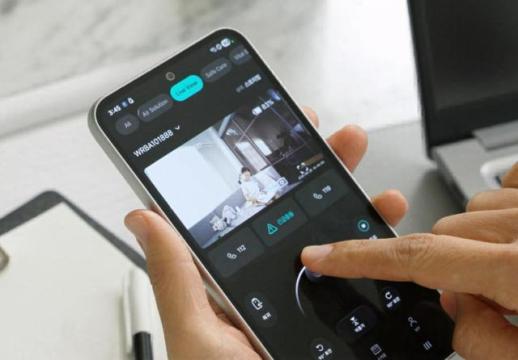 Namux Launches 24-Hour Mobile Security Alongside Air Purification SK Intellix announced on June 1 the launch of its wellness robot platform Namux, featuring intelligent security services called Safe Care and Live View. These services are designed to address the blind spots of fixed CCTV systems through a mobile security solution. According to SK Intellix, Safe Care utilizes artificial intelligence (AI) to identify intruders and detect potential threats. Users can customize security modes through the dedicated app, Hainamoo, allowing for focused monitoring of specific areas or overall patrols. In the event of unusual activity, users receive real-time alerts. Notably, during emergencies, users can request 24-hour rapid response from the security company S1, enhancing the effectiveness of the security measures. Through the Hainamoo app, users can manage everything from service subscriptions to robot control, including emergency notifications to 112 and 119. The newly launched Live View service is a real-time streaming feature offered free to customers who purchase Namux. Users can remotely control the robot via the app to check live video feeds from various locations in their homes. This allows for monitoring of children, elderly parents, or pets while away, and it also includes two-way communication capabilities. To celebrate the official launch, SK Intellix will provide both the Basic and Plus versions of Safe Care for free for two months following the release. Meanwhile, Namux is a wellness robot device equipped with AI autonomous driving technology that detects and purifies contaminated air. Since its launch last year, it has surpassed cumulative sales of 50,000 units, demonstrating steady growth in the domestic wellness robot market.* This article has been translated by AI. 2026-06-01 09:00:00
 -
 KB Securities Maintains Target Price for SK Telecom Amid AI Ecosystem Development KB Securities has stated that SK Telecom is establishing itself as a leading player in the K-AI project and is building an artificial intelligence (AI) model ecosystem, maintaining its target price at 130,000 won and a 'buy' rating. In a report released on June 1, analyst Kim Jun-seop noted that interest in the AI data center operated by SK Broadband, a subsidiary of SK Telecom, is increasing. Kim stated, "The AI data centers in Ulsan and Guro are expected to begin operations in the second half of 2027," and projected that once both data centers are fully operational by 2031, they will contribute over 1.1 trillion won to consolidated operating profit. He further explained, "Bundling AI services with pricing plans will contribute to revenue in two ways, as AI features will help reduce subscriber churn and attract new customers." Additionally, he mentioned that AI value-added services, such as the monetization of AIDOT Note, along with upgrades to higher pricing plans, will increase average revenue per user (ARPU). He noted, "Telecommunications is a capital-intensive industry, so a significant portion of the increase in subscribers or ARPU will directly translate into operating profit." Kim emphasized that operating models developed during the K-AI project will create structural advantages when run in their own AI data centers. He added that applying these models to internal operations, such as AI contact centers and automation of internal tasks, would also lead to savings in labor and operational costs. He concluded, "In the B2B AI transformation (AIX) business, AX could become a direct source of revenue. If SK Telecom is selected among the top two in the K-AI project, it will gain priority participation in public AX projects, further expanding its revenue base."* This article has been translated by AI. 2026-06-01 08:57:00
 -
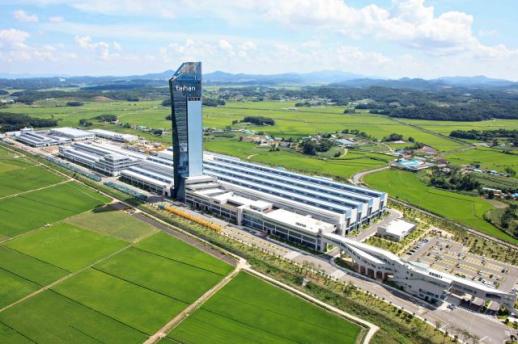 Daehan Electric Wins $50 Million Contract for Haenam Solar Power Grid Daehan Electric has secured a project to build an ultra-high voltage power grid linked to a solar power plant in Haenam, South Jeolla Province. As the demand for grid connection projects linking power plants and substations grows alongside the expansion of renewable energy, the company is strengthening its position in the domestic power grid market. According to industry sources, Daehan Electric has won a contract worth approximately 50 billion won to construct a 154kV ultra-high voltage power grid that will transmit electricity generated at the Haenam solar power plant to the Haenam substation. For this project, Daehan Electric will employ a full turnkey approach, managing the entire process from design to cable production, installation, connection, and testing. This method requires comprehensive capabilities in manufacturing, on-site construction, quality control, and testing technology. Recently, Daehan Electric has been actively winning contracts in the domestic renewable energy grid market. In April, the company secured a project to connect electricity generated from the solar power plants in Bigeum, Sinan, and Dogo floating solar power plants to the Anjwa substation via a 154kV ultra-high voltage submarine cable. The power industry is increasingly recognizing that as solar and wind power generation rises, delays in grid connections and insufficient transmission networks are becoming bottlenecks for projects, leading to a growing demand for ultra-high voltage cables and submarine cables. The government's push to expand renewable energy centered on solar and wind power, along with the enhancement of power infrastructure, is also seen as an opportunity for power grid companies. Even as renewable energy plants increase, a lack of grid capacity can hinder actual power supply. Daehan Electric is not only expanding its contracts in South Korea but also pursuing opportunities in international power grid markets, including the United States, Europe, and the Middle East. In the first quarter of this year, the company reported consolidated sales of 1.0834 trillion won and an operating profit of 60.4 billion won, marking increases of 26.6% and 122.9%, respectively, compared to the same period last year. A Daehan Electric official stated, "We are participating in the stable supply of power grids amid the growing trend of renewable energy generation in South Korea. We will strengthen our competitiveness in the domestic and international power grid markets based on our accumulated project experience and engineering capabilities."* This article has been translated by AI. 2026-06-01 08:54:00