
Journalist

Park Yong-jun
-
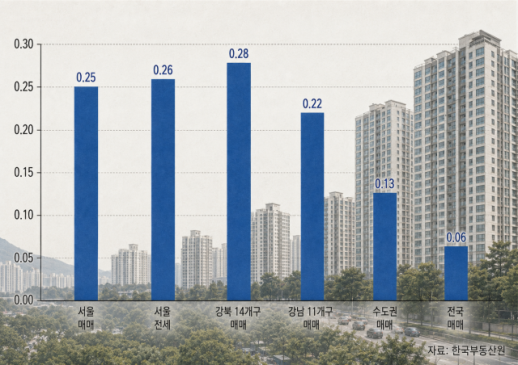 Seoul Apartment Prices Rise Slower, But Demand Expands to Outer Areas Seoul's apartment prices have seen a slight decrease in the rate of increase over the past week, but the upward trend is spreading beyond the Gangnam area to large complexes in the northern and southwestern outskirts. Initially, high-priced complexes near the Han River and those undergoing redevelopment drove the market up, but recently, demand has shifted to mid- to low-priced complexes and those near subway stations, supporting prices across Seoul. According to the Korea Real Estate Agency's report on weekly apartment price trends for the fourth week of May, as of May 25, the average sale price of apartments in Seoul rose by 0.25% compared to the previous week. While this is a slowdown from the previous week's increase of 0.31%, it significantly exceeds the national average of 0.06% and the metropolitan area’s increase of 0.13%. The agency noted that while localized price increases occurred in redevelopment areas and large complexes, some regions experienced a slowdown in transactions as sellers and buyers adopted a wait-and-see approach. Notably, the price increase is not confined to the Gangnam area. The 14 districts in Gangbuk saw a rise of 0.28%, surpassing the 0.22% increase in the 11 districts of Gangnam. In particular, the Buk-gu district rose by 0.42%, driven by major complexes in Mia and Beon-dong, while Jung-gu increased by 0.41%, primarily in the Sindang and Hwanghak-dong areas. Gwangjin and Seongbuk districts also saw increases of 0.37% and 0.34%, respectively. In Gangnam, not only traditional high-priced areas are seeing increases. Gangseo and Guro districts rose by 0.32%, while Songpa increased by 0.28%, and Yeongdeungpo and Gwanak districts both saw increases of 0.27%. The buying trend is also spreading to relatively affordable areas such as Gayang and Hwagok-dong, as well as Gaebong and Gocheok-dong, in addition to Jamsil and Bangi-dong. The jeonse market is also influencing sale prices. During the same period, the average jeonse price for apartments in Seoul rose by 0.26%. Although this is a decrease from the previous week's increase of 0.29%, it remains at a high level. As inquiries from tenants continue to rise, demand is accumulating in preferred complexes and areas near subway stations, leading to price increases for well-maintained listings. The rise in jeonse prices could stimulate demand for purchasing in the Gangbuk and outer areas. In Seongbuk, jeonse prices increased by 0.44%, primarily in large complexes in Gileum and Donam-dong, while Seongdong (0.42%), Dobong (0.41%), and Gwangjin (0.40%) also showed high increases. As the burden of jeonse prices grows, there is a greater likelihood that buyers will move to more affordable outer complexes or large developments. A similar trend is observed in the Gyeonggi region. Sale prices increased by 0.09%, a slowdown from the previous week, but areas like Dongtan in Hwaseong rose by 0.49%, Jungwon in Seongnam by 0.41%, and Gwangmyeong by 0.30%. While there remains buying interest in areas with good access to Seoul or demand for large complexes and smaller units, cities like Icheon and Pyeongtaek saw declines of 0.22% and 0.14%, respectively. Industry experts view the Seoul apartment market as undergoing a reallocation of buying interest across different price ranges rather than entering a phase of overheating. High-priced complexes are experiencing selective transactions due to price burdens and regulatory impacts, while mid-priced complexes in the 1 billion to 1.5 billion won range and those near subway stations are supported by genuine demand. A real estate industry official stated, "While the rate of increase in Seoul's housing prices has slowed, it does not mean that buying interest has diminished. The high-priced areas in Gangnam are taking a breather, while genuine buyers feeling the pressure of jeonse prices are shifting towards large complexes and developments in Gangbuk and the southwestern areas, gradually changing the market's balance." He added, "As long as jeonse prices continue to rise, it will be difficult for sale prices to decline significantly."* This article has been translated by AI. 2026-05-28 14:02:00
 -
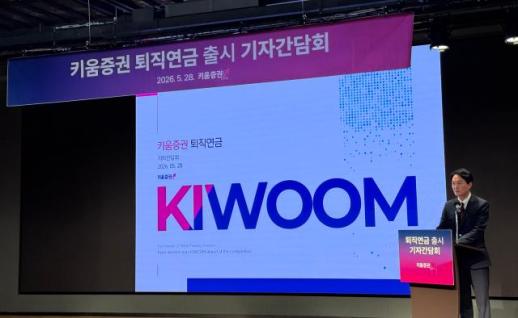 Kiwoom Securities Enters Retirement Pension Market with Innovative Fee Structure Kiwoom Securities, recognized as a retail powerhouse, holds approximately 25% market share in the retail sector, maintaining its position as the top player in South Korea for 21 consecutive years. However, its focus on retail has been seen as a weakness due to a lack of diversity in its revenue portfolio. Now, Kiwoom is venturing into a new area. As the 47th retirement pension provider in South Korea, it plans to enter the 500 trillion won retirement pension market starting in June. The company aims to leverage its retail strengths to compete in the online retirement pension platform market, with a goal of achieving a 10% market share in the retirement pension sector within the next decade. The industry is closely watching to see if Kiwoom's entry will disrupt the market. On May 28, Kiwoom Securities held a press conference at TP Tower in Yeouido, Seoul, to unveil its roadmap for entering the retirement pension market. CEO Eom Joo-sung stated, "We will enhance our customers' long-term asset returns through bold fee innovations, reflecting our philosophy that Kiwoom can only grow if our customers grow." Kiwoom will officially launch its retirement pension business on June 1. The company plans to establish its own performance benchmarks for retirement pension returns and will not charge management fees if these benchmarks are not met. The target return rate is currently being considered to be slightly above deposit interest rates. Additionally, Kiwoom will waive management and asset management fees for the first year across all retirement pension schemes, including defined benefit (DB) and defined contribution (DC) plans, in line with the government's policy to reduce fee burdens and to accelerate the acquisition of initial subscribers. The company is also focusing on expanding its product lineup. Song Soo-yeol, head of the pension consulting team, noted, "We have secured a higher number of principal-protected products compared to other providers and have registered retirement pension funds and performance-based products based on our existing fund lineup. We have also registered most ETFs available from other providers." This strategy targets the retirement pension asset transfer system implemented last year. The transfer process can be cumbersome if the products in existing retirement accounts are not available with the new provider, requiring liquidation and cash conversion. Kiwoom aims to minimize these inconveniences to enhance its competitiveness in attracting new clients transferring their savings from banks and insurance companies to securities firms. For the first time, Kiwoom will offer foreign RP products to all retirement pension clients, including individuals and corporations. The company plans to gradually introduce a variety of products, starting with foreign RP, followed by bonds and ELS based on asset sizes, leveraging the regulatory allowance for foreign investments in retirement pensions. Kiwoom has worked to ensure that the platform environment enjoyed by existing stock trading clients is extended to retirement pensions. The system allows for real-time trading of retirement pension ETFs within the same framework as stock trading, addressing previous inconveniences such as needing to transfer funds to a separate account or difficulties in checking real-time transaction balances. The company has also strengthened its non-face-to-face processing system. A dedicated web system has been established to allow corporate clients to handle everything from enrollment to deposits and benefit payments online without the need for complex paperwork or seals. Kiwoom Securities believes that changes in the retirement pension market will favor online platform providers. Historically, corporate sales relied heavily on branch networks, but with the market expanding and the proportion of individual investors increasing, the influence of online platforms is growing. Byun Young-dae, head of the pension platform division, stated, "The retirement pension market has surpassed 500 trillion won in accumulated funds and is transitioning from a phase of quantitative growth to qualitative competition. As trends in pension investments spread and the asset transfer system is implemented, the capabilities of online investment platforms will become increasingly important." Kiwoom Securities has set a goal of achieving a 10% market share in the retirement pension sector within the securities industry by 2035 and aims to rank among the top five based on accumulated funds. As of the end of the first quarter of this year, Mirae Asset Securities led the market with 42.44 trillion won, followed by Samsung Securities (23.27 trillion won), Korea Investment & Securities (22.59 trillion won), Hyundai Motor Securities (18.86 trillion won), NH Investment & Securities (10.75 trillion won), and KB Securities (8.90 trillion won). Byun added, "The retirement pension market is expected to grow to 1,200 trillion won by 2035. In our first year of entry, we will focus on stabilizing the business while leveraging Kiwoom's retail strengths to achieve our long-term goals."* This article has been translated by AI. 2026-05-28 14:02:00
 -
 AJP Focus: The perils of chip boom SEOUL, May 28 (AJP) -The world is at the threshold of the artificial-intelligence revolution, and at the heart of that revolution sits the semiconductor — with Korea at the heart of the semiconductor. Only a few years ago memory prices had collapsed, inventories had swollen, and Samsung Electronics and SK hynix were enduring a brutal downturn alongside the rest of the slowing global economy. Then the AI era rewrote the board almost overnight. The generative-AI surge that followed ChatGPT sent data-center and AI-server investment soaring, and machines built to think like humans demanded a different order of memory altogether — faster, denser, and unlike anything ordinary DRAM could deliver. That demand has a name: high-bandwidth memory, or HBM. The AI industry today orbits Nvidia, yet inside Nvidia's beating heart sits Korean memory. If America supplies the platforms and the software of the age, Korea supplies its memory. Small wonder the market now speaks of a semiconductor supercycle unlike any in four decades. And yet this is precisely the moment for cold clarity, because prosperity has always clouded human judgment. Korea has a habit of treating whichever industry happens to be surging as if it were the country's permanent destiny — heavy and chemical industries in the 1970s, shipbuilding and steel in the 1980s, IT and chips in the 1990s, real estate and construction in the 2000s, and more recently the fevers around platforms and batteries. Each time, a single sector was mistaken for the fate of the whole nation. But the history of industry has always been a history of cycles. Booms breed overinvestment; overinvestment breeds oversupply; oversupply ends in collapsing prices and painful restructuring. That is the cold, repeating logic of industrial capitalism, and semiconductors are no exception. In the 1980s, Japanese chipmakers nearly owned the memory market, and the world declared the future Japanese. Then bubbles burst, structures shifted, and American pressure bore down, and Japan's lead unraveled. Korea inherited that crown — Samsung rising to dominance, SK Hynix to world rank — but never on a smooth road. The industry survived countless slumps, price crashes, and financial crises. That survival is exactly why this moment matters most: the boom is the dangerous hour. The dispute now roiling Korean society looks like a quarrel over wages, but it runs far deeper. Labor, management, politicians, and the financial markets are colliding over how to divide record profits. Workers say the record was built on their devotion; shareholders insist the earnings of a listed company belong, first, to its owners; politicians invoke a third logic entirely — that chips are a national strategic asset. The trouble is that all three claims have begun to collide, because the semiconductor has quietly stopped being a mere industry. It is at once an export engine, a security asset, the gravitational center of the stock market, and the vessel of the country's youthful ambition. At some point it began to be treated as if it were the nation itself. That is where the danger I would call the "semiconductor disease" begins. Economists speak of the Dutch Disease — the way one overpowering sector can warp an entire economy out of balance, named for how a natural-gas boom hollowed out Dutch manufacturing. Korea now faces its own variant. The Korean stock market has, in effect, become the semiconductor market: when Samsung and SK hynix rise, the whole index rises; when chips wobble, the whole economy shakes. Over the long run that is not a healthy structure. Once a nation leans this heavily on a single sector, that sector's cycle becomes the nation's fate. Why hardware is not enough The deeper issue is the nature of the AI era itself. People speak as if AI will grow forever, but technology has never moved that way. The dot-com bubble, the LCD industry, solar power, batteries — each rode its own vast cycle. AI, too, will meet oversupply, price wars, shifting standards, geopolitical risk, and China's pursuit. The China variable is decisive. Even under American sanctions, Beijing is pouring national resources into building a self-sufficient chip ecosystem. A technology gap still exists — but the surest way to lose an industrial war is to underestimate how fast a rival is closing it. Japan chased America; Korea chased Japan; China now chases Korea. This battlefield has no permanent victor. Nor will the contest stay confined to memory. The competition ahead will be an ecosystem war binding chips to energy, software to cloud, data centers to robotics, AI platforms to defense and quantum computing. Korea holds the world's finest memory technology, but memory alone cannot guarantee the future. The real winner of the AI age will not be whoever makes the best chip; it will be whoever commands the whole ecosystem. America's strength is not Nvidia alone but OpenAI and Microsoft, Google and Amazon, Meta and Tesla — platform, cloud, data center, and software woven into one fabric. Korea remains far too hardware-centric. So the question Korea must truly wrestle with is not how to split this year's profits. It is how to prepare next-generation AI architecture, breakthroughs in power efficiency, AI software and data sovereignty, talent, a place in the reordered global supply chain, industrial diversification, and an energy strategy. Power, above all, is decisive: AI data centers devour electricity, which is why America's tech giants now scramble for nuclear, LNG, and renewables. Chip competitiveness will increasingly mean energy competitiveness. Three great transitions are moving at once — the AI revolution, the U.S.–China contest for supremacy, and the remaking of energy and supply chains — and the semiconductor sits where all three axes meet. America sees chips as a matter of security, China as a matter of survival, Europe as a cause worth vast subsidy. The semiconductor has become a strategic asset of modern civilization. Which is all the more reason to stay cold-eyed. The crisis begins the moment one grows drunk on the boom. 居安思危 — in times of peace, think of danger. Korea's chip industry sits at the very summit of the world; paradoxically, that may be its most perilous moment. History has never long tolerated the arrogant victor. The industries that survive are never the ones intoxicated by today's boom, but the ones that prepared for tomorrow's crisis. What is needed now is not applause but a clear strategy. Labor must think in terms of long-term competitiveness; companies must build the future ecosystem rather than chase quarterly results; government must weigh the whole structure of national industry above political popularity. Above all, balance. The semiconductor is Korea's core strategic industry — but it must not become a "semiconductor disease" that swallows the nation whole. The AI era has only just begun, and Korea stands in the middle of a vast historical turn. The countries that endure are not those drunk on present success but those preparing for future crisis. Let the chip be a source of national pride — and let Korea, at the same time, prepare for a future that reaches beyond it. That is the true national strategy, and the condition of survival in the age of AI. 2026-05-28 14:00:29
 -
 Be aware of hazardous substances in children's products sold online SEOUL, May 28 (AJP) - A slew of children's products purchased online from overseas websites have been found to pose safety concerns, according to a recent inspection. The Seoul Metropolitan Government inspected some 32 children's products including umbrellas, raincoats, clothing, and toys purchased from overseas online platforms such as AliExpress, Temu, and Shein, and found that 10 of them failed to meet safety guidelines set by the Ministry of Trade, Industry and Resources. Many were found to contain hazardous substances including lead, phthalate plasticizers, and nonylphenol, with some exceeding permitted limits by as much as 5.8 times. Safety hazards such as sharp edges and loosely attached umbrella ribs were also identified, prompting the city government to request that the platforms suspend sales of the affected products. The city government plans to conduct another round of inspections next month, along with follow-up measures. 2026-05-28 14:00:03
 -
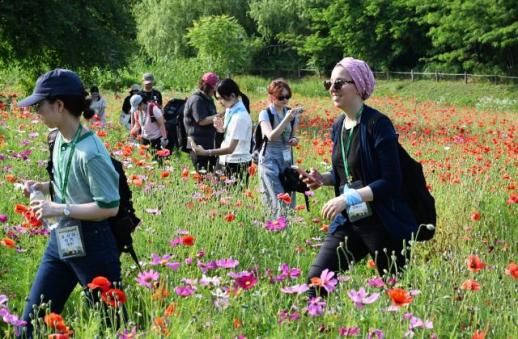 156.5 km Trail Transforms Seoul into a Walking City Young parents pushing strollers up gentle inclines, foreign tourists capturing photos against the backdrop of Seoul's urban landscape, and elderly couples resting on benches to enjoy the midday calm are all part of the changing scenery at Namsan in the heart of Seoul. Once a destination for strenuous hikes, the mountain is now transforming into a space for leisurely walks and relaxation. Recently, visitors to the Namsan Sky Forest Trail found a wooden deck winding through the trees, where parents with children and citizens with strollers walked comfortably together. Instead of steep hiking paths, gentle slopes and resting areas were available, with some sections accessible for wheelchairs. At the viewpoint with the best view of Namsan Tower, foreign tourists frequently took out their smartphones to capture the moment. Such a space where one can enjoy both forest and city views in the middle of a bustling metropolis is rare worldwide. The Seoul city government views this trail not merely as a walking path but as a key infrastructure in its 'walking city' strategy. The Seoul Trail spans a total of 156.5 kilometers, connecting 85 kilometers of forest paths, 40 kilometers of village roads, and 32 kilometers of riverside trails, creating a circular walking network that links the outer mountain ranges of Bukhansan, Dobongsan, Suraksan, Bulamsan, Yongmasan, Gwanaksan, and Umyeonsan. It essentially forms a city forest path that allows one to walk around Seoul. Seoul's shift from a car-centric urban development model to a people-centered city began in the late 2000s during the first term of Mayor Oh Se-hoon. The idea for the trail emerged from the recognition that urban nature should transition from a 'viewing space' to a 'participatory space.' At that time, the city government determined that the existing hiking culture, which focused on mountain trails, limited accessibility for citizens. The need for accessible green paths that families with young children, the elderly, and people with disabilities could enjoy together became apparent. This led to the concept of 'lifestyle trekking,' where one can walk slowly along the mountain's foothills and enjoy nature without needing to reach the summit. An interesting backstory surrounds the inception of the Seoul Trail. Last October, Mayor Oh Se-hoon explained the background of the trail's concept during a visit to the Namsan Sky Forest Trail, stating, "Around 2007, I walked the Jeju Olle Trail with my family as it gained popularity, and I thought it would be great to create a path in Seoul where anyone could walk comfortably along the foothills of the mountains." He added, "At that time, I was inspired by the culture in the United States, where people preferred to walk comfortably along the mountain base rather than hike to the summit. There was also a pressing need to protect forests that were being damaged due to the increasing number of hikers," emphasizing the necessity of connecting existing mountain paths with deck paths and barrier-free forest trails. Indeed, Seoul's mountains once faced issues of overcrowding among hikers. Following the abolition of entrance fees to national parks, visitor numbers surged, leading to exposed tree roots and severe soil erosion. To reduce damage and enhance accessibility, the city began developing circular forest paths using wooden decks. The wooden structures installed throughout the Namsan Sky Forest Trail were designed to minimize environmental impact. The Seoul Trail was established as a representative walking infrastructure for the city when all eight courses were completed in 2014. However, the existing courses, averaging around 20 kilometers in length, were often seen as burdensome for the general public. In response, the city is set to launch 'Seoul Trail 2.0' in 2024, significantly revamping the courses. The average length will be reduced to about 8 kilometers, and the trail will be divided into 21 sections. The average completion time will also be shortened from eight hours to around three hours, making it more accessible for evening strolls after work or half-day weekend hikes. Safety and accessibility have also been enhanced. Signage in Korean, English, Chinese, and Japanese has been installed at the starting and ending points, along with improved information on subway stations and bus stops connected to the trail. Key sections will feature intelligent CCTV and a QR code-based emergency reporting system. The trail has now expanded beyond a simple walking space to become a 'walking welfare' experiment. Recently, the city has begun operating the 'Seoul Trail Garden Prescription' program, which allows participants to walk the forest paths with forest healing guides while experiencing breathing, meditation, and aroma therapy programs. As the benefits for alleviating depression and stress and restoring emotional well-being have been proven, participation has been increasing among isolated and reclusive youth as well as the general public. In pilot programs, participants reported a reduction in depression by up to 36% and loneliness by up to 13% after engaging in the program. Surveys conducted during the International Garden Expo also indicated that cortisol levels, a stress hormone, decreased by an average of 14% after walking in the forest and gardens. Above all, the Seoul Trail's competitive edge lies in its 'urban nature.' While major cities worldwide have large parks and green spaces, few have successfully connected outer forest areas into a circular walking network like Seoul. While New York features a hub-based green space centered around Central Park and London has a walking axis along the Thames River and a green belt structure, Seoul offers a more intricate walking city model that interweaves mountains, rivers, and village paths. The city is now also focusing on developing the trail as a tourism asset beyond just a space for relaxation. The views of Namsan Tower, the ridges of Bukhansan, and the riverside paths along Ui-cheon and the Han River have already gained a reputation among foreign tourists as 'hidden gems in Seoul.' The era when urban competitiveness was solely determined by the number of skyscrapers is fading. The new standard is how walkable a city is and how well it cares for its citizens' well-being. The 156.5 km Seoul Trail is now answering that question. 2026-05-28 14:00:00
 -
 Plans for New Airport and Underground Rail Highlight Major Infrastructure Promises As the June 3 local elections approach, promises surrounding major social overhead capital (SOC) projects, including the underground Gyeongbu Line and new airport construction, have become a focal point. Candidates for key metropolitan mayoral positions in Busan, Gyeonggi, and Daegu are unveiling ambitious development plans that integrate airport facilities, rail systems, and industrial complexes as part of their regional growth strategies. However, concerns have been raised regarding the funding structure and feasibility of these long-term projects, particularly as the underground rail relies on profits from above-ground development and the new airport is contingent on the development of residual land after relocation. According to the construction and real estate sectors on May 28, Busan is the fastest among the regions proposing the underground Gyeongbu Line as a common pledge. The city was included in the Ministry of Land, Infrastructure and Transport's first pilot project for integrated underground rail development last year, marking its entry into national project status. The basic planning phase has begun for the section between Gaya and Busanjin, with a target construction start date set for 2030. Discussions are also underway regarding the development of the above-ground rail land to finance the project, which has led to a relatively optimistic assessment of its feasibility. In addition, Jeon Jae-soo, the Democratic Party's candidate for Busan mayor, has proposed creating a green pedestrian corridor connecting a public park on the above-ground site to the North Port. The People Power Party's candidates, including Park Hyung-jun for Busan mayor and Park Min-sik for the Busan Buk-gap National Assembly by-election, have pledged to include the 8.7 km section of the Gyeongbu Line from Gupo to Gaya in the underground rail project. In Incheon, Democratic Party candidate Park Chan-dae has suggested the undergrounding of the Gyeongin Line connecting Incheon and Guro in Seoul, but is currently awaiting inclusion in the national comprehensive plan. People Power Party candidate Yoo Jeong-bok has emphasized expanding Incheon’s subway lines 1, 2, and 3, as well as linking the metropolitan express train (GTX) and KTX services from Incheon, stating, "We will make all of Incheon a transit-oriented development area." Seoul has presented its own underground rail plan, but it is also waiting for inclusion in the national comprehensive plan. The proposal aims to finance the project through development profits estimated at 25.6 trillion won, generated from above-ground developments around Seoul Station and Yongsan Station. However, these profits may fluctuate based on real estate market conditions and the extent of high-density development permitted. The section from Cheonan Station to Dujeong is not included in the first pilot project, leading to a low likelihood of short-term progress. The new airport promises have emerged as key issues in various regions. In Busan, the focus is on the Gadeokdo New Airport, which is central to the vision of an "aeronautical logistics hub." Candidate Jeon Jae-soo has proposed accelerating the airport's opening and establishing an integrated logistics hub connecting the North Port and Busan Port, along with relocating maritime institutions and establishing a maritime court, to form an economic zone in the southern region. Candidate Park Hyung-jun has emphasized the goal of early airport opening by 2032, proposing the creation of an "Air City" as a complex city behind the airport, along with relocating the Industrial Bank and enacting special laws to consolidate aviation, industry, and tourism functions. In Daegu, the Daegu-Gyeongbuk Integrated New Airport is the top priority, with total project costs estimated at 15 trillion won. While there are differences in funding methods, the overarching goal remains to establish a new economic zone centered around the airport. Democratic Party candidate Kim Boo-kyum has stated that alongside the early promotion of the new airport, he aims to develop a "Digital Transformation Valley" that combines advanced industries, knowledge services, and youth entrepreneurship on the land remaining after the airport's relocation. People Power Party candidate Choo Kyung-ho has stressed the need to promote the airport construction as a national project and has proposed simultaneous development of an Air City in the Gunwi and Uiseong areas and a global complex city on the residual land. The challenge remains that most of these pledges require substantial funding and long-term financial planning. While the underground Gyeongbu Line is proposed to be financed through above-ground development profits, its profitability may be affected by fluctuations in the real estate market. Similarly, the new airport project must navigate complex procedures, including national plan inclusion, preliminary feasibility studies, and private investment eligibility assessments, making it difficult to expect visible results in the short term. The Busan Economic Justice Coalition has also criticized the pledges from both parties, stating, "The financial planning lacks specificity and the funding structure is weak." They pointed out that all candidates exhibit instability in financial planning, a lack of quantitative performance targets, dependence on the central government, and insufficient mechanisms for resident participation, raising significant concerns about the feasibility of fulfilling these promises. An industry insider noted, "While the underground rail and new airport can serve as long-term growth strategies for the region, when presented as election pledges, it is essential to consider the funding methods, construction timelines, and the basis for estimating development profits. Although they appear to be transportation promises, they are fundamentally real estate development projects contingent on above-ground and residual land development." 2026-05-28 14:00:00
 -
 S. Korean researchers resolve clogging in water electrolysis to improve green hydrogen production SEOUL, May 28 (AJP) - A team of researchers in South Korea has developed a new structural design for water electrolysis systems that prevents gas bubbles from obstructing energy flow, the Korea Advanced Institute of Science and Technology said Thursday. The research team, which includes scientists from Korea Advanced Institute of Science and Technology (KAIST), the Korea Research Institute of Chemical Technology (KRICT), and Konkuk University, redesigned the internal pathways of the catalyst layer. Using two-dimensional mesoporous carbon nanosheets, they created straight channels that allow water and gases to pass through rapidly. This prevents the traditional problem of bubbles accumulating inside the device and obstructing the chemical reaction. The researchers attached ultrafine ruthenium nanoclusters to the carbon surface to accelerate the hydrogen generation rate and protect the catalyst from damage over time. Testing showed the system reached a current density of 17.1 amperes per square centimeter at 80 degrees Celsius, exceeding the 2026 targets established by the United States Department of Energy. The device maintained stable operation for more than 1,000 hours using 0.09 milligrams of ruthenium per square centimeter, demonstrating high performance with a significantly reduced amount of the expensive noble metal. Water electrolysis is widely considered an essential technology for the transition to carbon neutrality, but high production costs and system inefficiencies have slowed its commercial adoption. By modifying how materials flow through the system rather than just changing the active catalyst material, the new design offers a method to make large-scale green hydrogen production more economically viable. The study, led by first authors Byun Jae-ho and Ban Min-kyung, was published online in the journal Joule on May 22, 2026. "This research is a technology that increases water electrolysis efficiency by designing not only the catalyst itself but also the path through which energy flows," Professor Lee Jin-woo of KAIST said. "We expect it to advance the commercialization of eco-friendly hydrogen production in the future as high-efficiency green hydrogen production is possible with only a small amount of noble metals." (Reference Information) Journal/Source: Joule Title: Outperforming water electrolysis through catalyst layer structuring with defective 2D mesoporous carbon Link/DOI: 10.1016/j.joule.2026.102478 2026-05-28 13:56:05
 -
 May Heatwave Causes Fatalities in Europe and South Asia May's heatwave is leading to fatalities in Europe and South Asia. Before the official start of summer, deaths have been reported in France, India, and Pakistan, while the UK has recorded its highest temperatures for May. There are growing concerns that existing heatwave response systems, designed for July and August, may not be sufficient to mitigate the impact. According to reports from Reuters on May 28, at least seven people have died in France due to heat-related incidents. Among them, five drowned in lakes, rivers, and beaches, while two lost their lives during sporting events. The French government has issued warnings about the risks of heatstroke, dehydration, and accidents during outdoor activities. The UK is also experiencing unusual heat. Temperatures at Kew Gardens in London reached 34.8 degrees Celsius, setting a new record for May. The UK Health Security Agency has issued an amber heat health alert for London and parts of southeastern and eastern England, indicating a significant health risk. In South Asia, the situation is similarly dire. The World Weather Attribution (WWA) reported that at least 37 heat-related deaths have been recorded in India as of mid-May. In Karachi, Pakistan, 10 fatalities have been reported. In Andhra Pradesh, India, there have been 325 suspected cases of heatstroke from early March to mid-May. A significant issue is that the impact of high temperatures is often underreported in official statistics. In addition to heatstroke, there is an increase in cardiovascular issues, dehydration, drowning incidents, and accidents among outdoor workers due to the heat. Analysts suggest that this heatwave should not be viewed as a one-time anomaly. The World Meteorological Organization (WMO) has projected a high likelihood that the global average temperature will exceed 1.5 degrees Celsius above pre-industrial levels within the next five years. This raises alarms that the May heatwave may not be a temporary phenomenon. The heat is also straining infrastructure beyond health services. In India, a surge in demand for cooling has led to record electricity consumption, resulting in nighttime blackouts in some areas. Consequently, experts are calling for an earlier response to heatwaves. They recommend activating heat health alerts in spring and implementing restrictions on outdoor work and support for vulnerable populations sooner.* This article has been translated by AI. 2026-05-28 13:56:00
 -
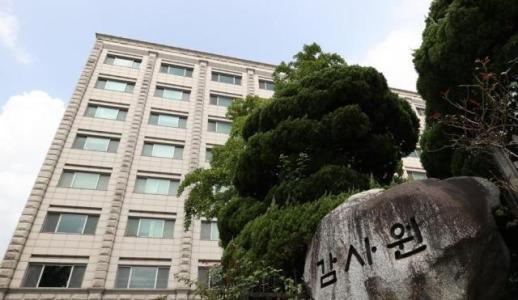 Audit Agency Supports Domestic Pesticide Development, Aiming to Replace $4.5 Million in Imports On May 28, the Audit Agency announced that it has selected the case of supporting the development of domestic pesticides for fire blight as an "Outstanding Pre-Consulting Case for May."Fire blight is a bacterial disease that causes the flowers and leaves of apple and pear trees to turn black, ultimately leading to the death of the entire tree. Since its first occurrence in South Korea in 2015, it has spread nationwide, causing significant damage to farmers. In the past six years, compensation payments for losses have totaled approximately 180 billion won (about $135 million).Until now, the key ingredient for fire blight pesticides, bacteriophage, has been entirely reliant on imports due to difficulties in domestic production.In December 2024, the National Institute of Agricultural Sciences successfully developed a domestic pesticide that selectively eliminates the fire blight bacteria.Currently, to enable the mass cultivation of bacteriophage, which is essential for the practical use of the pesticide, the pesticide manufacturing companies involved in the joint research need to be provided with the fire blight bacteria. However, under the Plant Protection Act, fire blight bacteria are designated as quarantine (prohibited) targets, and measures such as disposal and elimination are mandated, complicating the commercialization process.In response, the Audit Agency suggested that the National Institute of Agricultural Sciences could provide fire blight bacteria to the pesticide manufacturing companies involved in the joint research, provided that they establish procedures and control measures to prevent leakage.The Audit Agency determined that the development and distribution of fire blight pesticides fall under the government's fundamental responsibility to reduce damage to farmers.It also considered that a legal amendment is underway to allow the use of plant pests for testing and research purposes.Additionally, the Plant Protection Act includes provisions that permit the import of pests for testing and research purposes if the necessary expertise and facilities are in place.The Audit Agency noted that there have been instances where pathogens, such as those causing COVID-19, were provided to private companies for vaccine and treatment development under the Infectious Disease Control Act.The Audit Agency stated, "This is expected to result in an annual import substitution effect of about 5 billion won ($4.5 million) for the core pesticide ingredients, significantly enhancing the competitiveness of the domestic fruit industry through the expansion of eco-friendly fruit production and improved productivity." 2026-05-28 13:54:00
 -
 South Korea Unveils Real-Time Stalker Tracking App The Ministry of Justice has successfully developed a mobile app that tracks the movements of stalking offenders in real time, marking its first demonstration. On May 27, the ministry held a media event at the central monitoring center, unveiling the app that allows victims to directly monitor the location and movements of their stalkers. Named the "Stalker Location Notification" app, it is set to officially launch on June 24. During the demonstration, the app displayed a clear map on the victim's smartphone showing the real-time movement of a stalking offender wearing an electronic monitoring device as they approached within a certain distance. At the same time, the app enabled the probation officer to inform the victim of the situation, while police on-site could swiftly apprehend the offender. The key feature of this service is that it shares the location information of offenders, previously only accessible to the monitoring center, directly with victims in real time. Previously, victims were notified via phone through the monitoring center when an offender approached. Now, victims can visually confirm the offender's location through the app on their smartphones. Actor Yoon Park, an honorary probation officer who participated in the event, shared his experience with the app, stating, "While the immediate response from government agencies is reassuring, being able to see where the offender is coming from transforms a vague sense of anxiety into a manageable situation." The attending journalists discussed the app's user-friendliness and information security, while also experiencing the process of electronic monitoring and alert handling to assess the effectiveness of the electronic supervision system. The Ministry of Justice plans to conduct final checks on system stability before the launch and will begin utilizing the app to protect stalking victims at the end of next month. Justice Minister Jeong Seong-ho emphasized, "Since the government's inception, we have worked to create a society where citizens feel safe through the expansion of one-on-one electronic monitoring and the introduction of location notification services. We will actively incorporate the feedback from today's demonstration to establish a comprehensive system for crime prevention and victim protection."* This article has been translated by AI. 2026-05-28 13:52:00