
Journalist

Pei Guangjiang
-
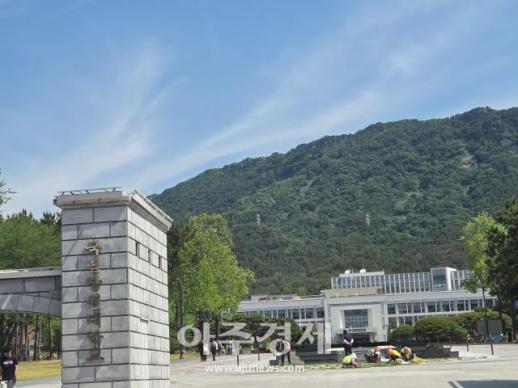 Voter Apathy Prevails in Gyeongnam Amid Kim Kyung-soo and Park Wan-soo Rivalry "The election atmosphere is still lukewarm." "There seems to be a sense of political aversion." Ajou Economic Daily visited Gyeongnam on May 19, just 15 days before the June 3 local elections, where the rivalry between incumbent Democratic Party candidate Kim Kyung-soo and People Power Party candidate Park Wan-soo has drawn significant attention. Despite the intense exchanges over issues like the 'insurrection judgment theory' and the 'Dru King responsibility theory,' public reactions have been largely cold. A taxi driver met at Changwon Central Station remarked, "The election atmosphere is still lukewarm. It seems like it will only heat up once the official campaign kicks off on the 21st." He added, "In this area, I think many will support Park, who is from Changwon." At Sangnam Market, there was little enthusiasm for the election. Most vendors expressed indifference, saying things like, "I’m not really interested in the election," and "I don’t have a candidate I support." Among them, a male vendor in his 60s stated, "It would be beneficial for us if the ruling party candidate wins," indicating his support for Kim. Another male vendor in his 60s expressed ambivalence, saying, "Park is doing well right now, so I’m conflicted." A female vendor in her 60s also mentioned, "We need to elect someone who does their job well. I haven’t decided who to choose yet." To gauge the opinions of younger voters, the team headed to Changwon-daero, but the lukewarm attitude toward the election was consistent across age groups. Many expressed a lack of interest, with some not even knowing who the candidates were. A male university student in his 20s said, "I haven’t fully decided yet, but I prefer Park a bit more." In contrast, a female student in her 20s stated, "I think I’ll vote for the Democratic Party candidate." A male doctor in his 30s, who has long supported the People Power Party, expressed disappointment, saying, "I can’t support them anymore after the legislative crisis." A female small business owner in her 30s also shared her lack of interest, stating, "I don’t have a candidate I support, and I’m not very interested in this election." On the way from Changwon University to Jinyeong Station, a taxi driver lamented, "It seems many citizens feel a sense of political aversion." He noted that Park has received praise for being frugal and predicted that the living support funds he implemented would influence voter sentiment. Since April 30, Gyeongnam has been providing 100,000 won in living support to each resident to stimulate the economy amid high inflation and interest rates. Concerns have been raised that government support for high fuel prices could sway voter sentiment, but Park's living support funds may mitigate some of that impact. Most residents near Jinyeong Station also avoided discussing the election, with one 70-year-old vendor stating, "What do I know about the election?" However, another vendor in his 70s expressed his support for Park, saying, "Personally, I lean conservative, so I support Park. The current administration should continue. Kim has the Dru King issue to contend with." Conversely, a 50-year-old woman expressed her intention to vote for Kim, saying, "I will choose Kim, who has been active in Gimhae. Isn’t President Lee Jae-myung doing well?" She also mentioned, "The People Power Party seems to be asking voters to choose based on the person, not the party." A 60-year-old man met at Jinyeong Station also expressed support for Kim, citing his freshness as a reason. Meanwhile, Kim and Park are in a tight race according to various polls, with many voters expressing low interest in the local elections and uncertainty in their candidate choices. This suggests that capturing the moderate voter base could determine the outcome of the election.* This article has been translated by AI. 2026-05-19 16:48:38
 -
 LF Mall Introduces AI to Enhance Review Process and Customer Engagement LF Mall, operated by lifestyle company LF, is leveraging artificial intelligence (AI) to enhance its review capabilities. On May 19, LF Mall announced the launch of a review task force, recognizing that both the quantity and quality of reviews are crucial for platform competitiveness. The initiative aims to reduce the burden on customers when writing reviews, thereby gathering high-quality review data to improve shopping information. A key feature of this update is the 'AI Review Draft' function. Customers can select satisfaction criteria such as star ratings, size, and color, and the AI will analyze this information to automatically generate a review draft. Customers can either use the suggested text as is or modify it before submitting their reviews. The AI-generated review drafts are based on the star ratings and satisfaction information entered by the customers. Final edits and submissions are also handled by the customers themselves. LF Mall aims to maintain the credibility of reviews while enhancing the ease of writing them. Personalization features have also been improved. Customers with previous review histories will receive drafts that reflect their past writing styles and expressions. New customers will be offered suggestions based on age and gender preferences to create more natural sentences. Additionally, the product information provided through reviews will be more detailed. The number of satisfaction criteria displayed will increase from two to a maximum of four, allowing customers to easily view aspects such as size, color, weight, and finish quality. The user interface (UI) and user experience (UX) of the review submission page have also been revamped to streamline the writing process. An LF Mall representative stated, "We plan to create a review environment that is easy and convenient for customers to participate in, and based on this, we aim to enhance the overall shopping experience." Previously, LF had also implemented an AI automation system in the product description area of LF Mall. This system assists product planners (MDs) in writing descriptions, increasing the speed of product description creation by approximately tenfold.* This article has been translated by AI. 2026-05-19 16:45:23
 -
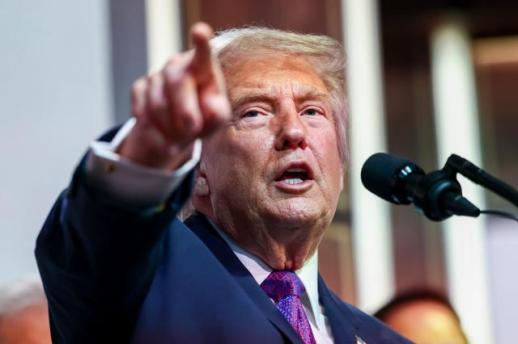 Trump Delays Iran Strike at Allies' Request, Leaves Military Option Open President Donald Trump has postponed plans for a military strike against Iran at the request of Middle Eastern allies. While the U.S. has kept the option of large-scale military action open in case negotiations fail, Iran has acknowledged the possibility of dialogue but insists it will not compromise on its legal rights. On May 18, Trump announced on social media platform Truth Social that he received requests from Qatar's Emir Tamim bin Hamad Al Thani, Saudi Crown Prince Mohammed bin Salman, and UAE President Mohammed bin Zayed Al Nahyan to hold off on the military action against Iran. He added that he instructed Defense Secretary Pete Hegseth and Chairman of the Joint Chiefs of Staff Dan Cain not to proceed with the planned attack on Iran scheduled for May 19. Trump stated, "These Middle Eastern leaders believe serious negotiations are underway, and they think an agreement will be reached that will be very acceptable to the U.S., the Middle East, and all other countries. This agreement will include, above all, a prohibition on Iran's possession of nuclear weapons." However, he also indicated that if a satisfactory agreement is not reached, he has directed military readiness for an immediate and large-scale attack on Iran. According to the Associated Press, Trump expressed optimism about the negotiations during an event at the White House focused on lowering drug prices. He remarked, "They seem to have a very good chance of reaching a deal. If we can do this without launching a major attack, I would be very happy." He noted that while a significant attack was planned, it has been postponed "for a while, hopefully, maybe forever," explaining that U.S. allies in the Gulf requested a few days to see if they could reach an agreement with Iran. Iran has not dismissed the possibility of dialogue but has made it clear that it will not engage in negotiations that imply capitulation to U.S. pressure. Iranian President Ebrahim Raisi stated on social media platform X (formerly Twitter), "Dialogue does not mean surrender. The Islamic Republic engages in dialogue based on dignity, authority, and the preservation of the rights of the people," adding that it will not back down from its legal rights under any circumstances. Ongoing Differences in Positions While the U.S. and Iran continue negotiations to end hostilities, significant differences remain between the two sides. Trump is using military options as leverage to pressure Iran into presenting a compromise that includes a substantial abandonment of its nuclear program. According to Axios, Iran recently submitted a revised proposal with 14 points to the U.S. through a mediator, Pakistan. The proposal reaffirms Iran's stance of having no intention to develop nuclear weapons while leaving the door open for a long-term suspension of its nuclear program. It reportedly includes plans to transfer some enriched uranium to Russia and gradually reopen the strategically important Strait of Hormuz. Iran's semi-official Tasnim news agency reported that the U.S. has agreed to suspend some sanctions on Iranian oil exports during the negotiation period. However, a senior U.S. official told Axios that Iran's new proposal contains only formal improvements compared to previous offers and does not represent meaningful progress. The U.S. views the suspension of uranium enrichment and the issue of existing enriched uranium as key demands, but noted that Iran's latest proposal lacks specific commitments on these points. The official warned, "Substantial and detailed discussions on the nuclear program are necessary; otherwise, we will end up talking through bombs," indicating the potential for military action. Iran remains resolute against the U.S.'s hardline demands accompanied by military threats. The Islamic Revolutionary Guard Corps (IRGC) has recently indicated it may introduce a permit system for internet cables passing through the Strait of Hormuz, attempting to create new leverage in negotiations.* This article has been translated by AI. 2026-05-19 16:43:09
 -
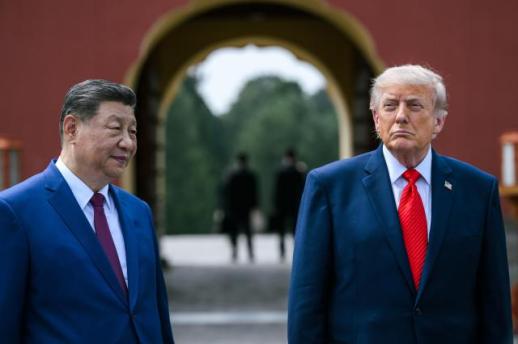 Trump's Taiwan remarks expose diverging security pressures on Seoul and Taipei SEOUL, May 19 (AJP) - U.S. President Donald Trump's ambiguous remarks on arms sales to Taiwan after his summit with Xi Jinping have raised fresh questions about Washington's security commitments in Asia — with different implications for each partner. For Taiwan, the concern is immediate and existential: whether Washington will sustain both political support and arms transfers in the face of Beijing's sovereignty claim. For South Korea, the dilemma is less direct but consequential: whether the peninsula could be drawn into a broader U.S. strategy in a Taiwan contingency, pulling Seoul beyond its traditional role of deterring North Korea. Taiwan loomed over Trump's three-day Beijing summit despite the ceremony. Xi warned that mishandling the issue — Beijing's "top concern" — could "spiral into conflict." Trump told reporters the U.S. was not seeking to promote Taiwan's independence and confirmed he had discussed arms sales with Xi, but declined to say whether a pending weapons package would proceed, saying only he would decide "very quickly." Washington has no formal diplomatic relations or mutual defense treaty with Taipei. Its security commitment rests on the 1979 Taiwan Relations Act, which requires making available defense articles sufficient for Taiwan's self-defense and designates any non-peaceful attempt to determine Taiwan's future as a matter of "grave concern." "The security environment in East Asia is likely to become more militarized," said Jeong Kyung-woon of the Korea Military Affairs Association. South Korea's position is structurally different. A formal U.S. treaty ally hosting roughly 28,500 American troops, Seoul's alliance has long centered on deterring North Korea. But U.S. Forces Korea is increasingly discussed within Washington's broader Indo-Pacific posture. The 2026 National Defense Strategy envisions South Korea taking primary responsibility for deterring the North with more limited U.S. support. "The Korean Peninsula is no longer simply a space of inter-Korean confrontation," said Jeong. "Senior U.S. military officials refer to the peninsula as a key axis within the first island chain. South Korea could face growing pressure to support U.S. operations in a Taiwan contingency." Experts note that North Korea is unlikely to align itself entirely with Beijing despite the deepening partnership. Pyongyang has historically been wary of dependency on China and may keep open the possibility of direct engagement with Washington as a bargaining card — even as it deepens ties with both Beijing and Moscow. Seoul is also preparing for the transfer of wartime operational control, possible as early as the first quarter of 2029, contingent on meeting three conditions including demonstrated capability to respond to North Korean threats. 2026-05-19 16:43:00
 -
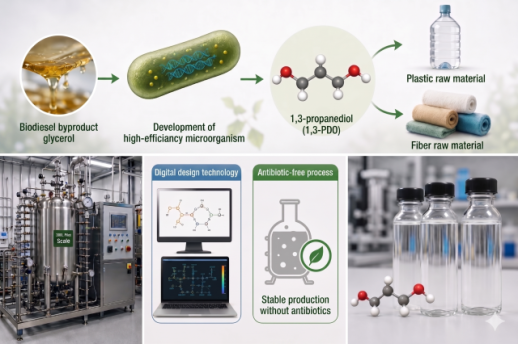 KAIST and Hanwha Solutions develop bio-platform to replace naphtha with waste glycerol SEOUL, May 19 (AJP) - Researchers from Korea Advanced Institute of Science and Technology (KAIST) in South Korea and Hanwha Solutions have developed a bio-platform capable of mass-producing sustainable raw materials for plastics and textiles using waste resources. The newly secured technology aims to replace petroleum-derived naphtha, KAIST said Tuesday. The technology uses waste glycerol, a byproduct of biodiesel production, as a primary raw material. The joint research team engineered a microorganism to efficiently produce 1,3-propanediol (1,3-PDO), a core material used in plastics and cosmetics, while optimizing the overall fermentation process. The researchers maintained high productivity in a 300-liter pilot plant, demonstrating that laboratory-scale results can be replicated in large industrial settings. The team also implemented an antibiotic-free process and utilized computer simulations to design the metabolic pathway of the microorganism, lowering production costs and mitigating environmental regulatory risks. The development comes amid rising prices and supply instability for naphtha, an essential component in the petrochemical industry. It is the result of a decade-long collaboration between the university and the chemical company aimed at securing supply chain stability. The findings were published on May 12, 2026, in the journal Nature Chemical Engineering and will be featured as the cover article. "This research is significant in that it confirmed the possibility of replacing existing petrochemical processes by utilizing bio-based raw materials," Kim Jung-dae, head of Hanwha Solutions Future Technology Research Center, said. "We expect it to serve as an important foundation for sustainable chemical material production and industrial application in the future." "This research is a case showing that microorganism-based chemical production can be sufficiently expanded beyond the laboratory to an actual industrial scale," Lee Sang-yup, distinguished professor of chemical and biomolecular engineering at KAIST, said. "It will contribute to producing various chemical materials in a more environmentally friendly manner in the future." (Reference Information) Journal/Source: Nature Chemical Engineering Title: High-titer, antibiotic-free, pilot-scale production of 1,3-propanediol by engineered Corynebacterium Link/DOI: https://bit.ly/4nI5kYu 2026-05-19 16:40:53
 -
 T'way Holdings Hits Upper Limit Following Name Change to Trinity Airlines T'way Holdings recorded a surge in stock prices following the announcement of T'way Airlines' name change. Market analysts interpret this as a sign that the restructuring of the airline business under the Daemyung Sonogroup (now Sonotrinity Group) is gaining momentum. According to the Korea Exchange, as of 2:40 PM on May 19, T'way Holdings shares rose by 71 won (29.96%) to 308 won. The stock hit the upper limit and continued to attract buying interest. The upper limit is seen as a result of expectations surrounding the name change and the group's restructuring efforts, which have alleviated financial concerns. Until recently, T'way Holdings was viewed as a company in need of significant financial restructuring. On May 12, the stock fell to 230 won, marking a 52-week low. T'way Airlines announced the previous day that it had received a license from the Ministry of Land, Infrastructure and Transport to change its name to 'Trinity Airlines.' The approval process was completed about two months after the name change proposal was passed at the regular shareholders' meeting in March. The Ministry reportedly required measures to prevent consumer confusion, maintain safety operations, and complete approvals from foreign aviation authorities during the approval process. Consequently, the actual launch under the new name will occur sequentially after obtaining approvals from foreign authorities. Until then, the airline will continue to operate under the T'way Airlines name, airline code (TW), and flight numbers. The market perceives this name change not merely as a rebranding but as a significant step in the restructuring of the Sonotrinity Group's airline business. Currently, the largest shareholder of T'way Holdings is Sonointernational, which holds a 46.26% stake. Trinity Airlines (formerly T'way Airlines) is also primarily owned by Sonointernational, which holds 41.95% of its shares. T'way Holdings is the second-largest shareholder of Trinity Airlines, with a 17.29% stake. Sonotrinity Group acquired a 26.77% stake in T'way Airlines from JKL Partners for approximately 176 billion won in the second half of 2024, becoming the second-largest shareholder. In February of last year, it successfully secured management rights of T'way Airlines by purchasing a 46.26% stake in T'way Holdings from Yerimdang for about 250 billion won. Industry experts view this as a significant move by the Sonogroup to enter the aviation sector, which has long been a goal. The strategy aims to maximize synergies between its existing hotel and resort businesses and airline routes through travel packages and membership services. The speed of expansion for Sonotrinity Group's airline business will likely depend on future fleet expansion, route strategies, and service restructuring. Notably, if the strategy of combining airlines, hotels, and resorts into a comprehensive travel platform materializes, it could create a differentiated business structure compared to existing domestic leisure companies. The name change to 'Trinity Airlines' is also seen as an extension of this strategy, aiming to move away from the low-cost carrier image and strengthen the group's identity while establishing a new global brand presence. Meanwhile, T'way Holdings decided on April 22 to consolidate its common shares at an 80% ratio, merging five shares into one, as part of its financial restructuring efforts to cover losses. Following the consolidation, the number of issued shares will decrease from 113.16 million to 22.63 million, and its capital will reduce from 56.5 billion won to 11.3 billion won.* This article has been translated by AI. 2026-05-19 16:40:02
 -
 KB Financial Group Partners with Agriculture Ministry to Support Lunch Costs for SMEs KB Financial Group is joining an initiative aimed at reducing the lunch cost burden for employees of small and medium-sized enterprises (SMEs). The program is designed to enhance employee welfare while also stimulating the local economy.On May 19, KB Financial announced its participation in the "Substantial Lunch for Workers" initiative, in collaboration with the Ministry of Agriculture, Food and Rural Affairs and local governments.The Substantial Lunch for Workers program aims to alleviate the meal expenses of SME employees and support small food service businesses. This initiative is a partnership between the Agriculture Ministry, local governments, and KB Financial, which has prioritized inclusive finance this year by expanding its community-focused financial support programs.Local governments will select eligible companies within their regions, while KB Financial will act as a private sponsor, covering a portion of the lunch dining costs.Eligible participants include employees of SMEs as defined by the Small and Medium Enterprises Basic Act, who receive lunch subsidies from their companies. Selected employees can receive a 20% discount when dining at participating restaurants, cafes, and bakeries during weekdays between 11 a.m. and 3 p.m. The maximum support per person is 40,000 won per month.SMEs interested in participating can refer to the program guidelines on the website and apply through their local government. Employees of selected companies can access the discount benefits through card companies or digital meal voucher platforms.A KB Financial representative stated, "This initiative is significant as it creates a win-win model that enhances employee welfare while boosting sales for small businesses. We will continue to expand our community-focused financial support that can be directly felt in the field."* This article has been translated by AI. 2026-05-19 16:37:41
 -
 After School's Nana Faces Home Invasion Case as Prosecutors Seek 10-Year Sentence A 34-year-old man has been sentenced to 10 years in prison for breaking into the home of actress Nana, formerly of the girl group After School, and attempting to rob her. On May 19, the Namyangju branch of the Uijeongbu District Prosecutors' Office requested the court impose a 10-year sentence for the defendant, identified as Kim. The prosecution stated, "The defendant unlawfully entered the residence with a weapon, threatening female victims, which necessitates a severe punishment. He has denied the charges and shown no remorse, while the victims continue to suffer psychologically." Kim was charged with breaking into Nana's home in Achun-dong, Guri, at around 6 a.m. on November 15, 2025, and threatening Nana and her mother with a weapon in an attempt to steal money. During the incident, Nana and her mother managed to subdue Kim after a struggle and called the police. The key issues in the case are whether Kim possessed a weapon and whether the charges of robbery causing injury are valid. Kim's defense attorney argued, "He entered the home at night with the intent to steal, but there was no intention to commit robbery. There is no evidence that he carried a weapon during the break-in." Kim himself acknowledged the unlawful entry and attempted theft but maintained that he did not engage in robbery. In contrast, Nana and her mother testified in previous hearings that Kim had entered with a weapon. During a court session on April 21, Nana stated, "I heard a commotion and came into the living room to find the defendant choking my fallen mother, and a weapon was nearby." Nana's mother also claimed that Kim had a weapon when he entered through the balcony. Following the incident, Kim filed a counterclaim against Nana, alleging attempted murder and aggravated assault, claiming he was injured while being subdued. However, police determined that Nana and her mother's actions constituted self-defense and did not file charges against them. Subsequently, Nana's side filed a counterclaim against Kim for false accusations. Nana expressed in previous witness statements that she has been suffering from trauma since the incident. In court, she remarked, "My home no longer feels like a safe space," and expressed concern that the prolonged trial is causing her further emotional distress. The sentencing hearing for Kim is scheduled for June 9 in the same court.* This article has been translated by AI. 2026-05-19 16:36:00
 -
 Drivers Can Get Toll Refunds for Wrong Highway Exits if They Re-enter Within 15 Minutes Starting in October, drivers who mistakenly exit a highway can receive a refund of the base toll if they re-enter the same toll plaza within 15 minutes. The Ministry of Land, Infrastructure and Transport announced on May 19 that it plans to implement a 'highway wrong exit toll reduction' policy, which will waive the base toll for drivers who mistakenly exit and then re-enter the same toll plaza within 15 minutes. Each vehicle will be eligible for this refund up to three times per year. This initiative follows recommendations made during last year's parliamentary audit, which highlighted the need for improvements (including consultations with the Anti-Corruption and Civil Rights Commission). During the audit, Representative Son Myung-soo of the Democratic Party noted, "When driving on the highway, if you mistakenly exit, you can quickly re-enter, but you are still charged the base toll again. There are situations where drivers need to exit urgently due to the long distances between rest areas, especially when running low on fuel." He added, "Looking at Japan's example, they use Hi-Pass technology to waive tolls for drivers who exit near distant rest areas." The new policy will apply to closed sections of national highways managed by the Ministry of Land, Infrastructure and Transport and the Korea Expressway Corporation. It will be available to vehicles using electronic payment methods that mistakenly exit and re-enter the same toll plaza within 15 minutes. Previously, drivers who exited incorrectly had to pay the base toll again, even for short distances. The Ministry and the Korea Expressway Corporation will begin developing the necessary systems for this policy starting in May. The Ministry estimates that approximately 90.2% of re-entering vehicles are cases of mistaken exits occurring within three attempts per year. Once implemented, this policy is expected to result in an annual toll reduction of about 7.5 million cases and a total of 6.8 billion won based on 2025 figures.* This article has been translated by AI. 2026-05-19 16:33:21
 -
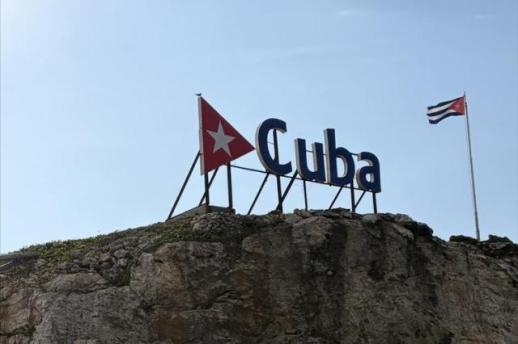 U.S. Intensifies Pressure on Cuba Amid Sanctions and Legal Actions The U.S. is ramping up its pressure on Cuba through sanctions, legal actions, and security measures. As tensions continue in the Middle East, Cuba has emerged as another target for the Trump administration. On May 18, the U.S. Department of the Treasury's Office of Foreign Assets Control (OFAC) announced the addition of the Cuban Intelligence Directorate (DI) and nine high-ranking Cuban officials to its Specially Designated Nationals (SDN) list. This group includes ministers from the communications, energy, and justice departments, as well as military and intelligence personnel. Those sanctioned will have their U.S. assets frozen and will be prohibited from engaging in transactions with U.S. individuals and businesses. This action follows an executive order signed by President Donald Trump on May 1, which allows for sanctions against foreign financial institutions and companies that engage with key Cuban state-owned enterprises, effectively putting third-country businesses at risk of sanctions as well. Legal pressure is also on the horizon. The U.S. Department of Justice is reportedly preparing to indict Raúl Castro, the former President of the National Assembly, in connection with the 1996 shootdown of a civilian aircraft belonging to the humanitarian group Brothers to the Rescue. Raúl, the brother of Fidel Castro and a symbolic figure of the current regime, is at the center of this legal scrutiny. In the security realm, concerns about Cuba's military capabilities are being highlighted. Axios reported that Cuba has acquired over 300 military drones from Russia and Iran since 2023. There are indications that Cuban military authorities have discussed drone tactics targeting U.S. military bases in Guantanamo Bay and naval vessels, as well as Key West, Florida. U.S. intelligence agencies do not believe an attack from Cuba is imminent or that any plans for an actual attack are in the execution phase. However, the U.S. is framing Cuba's drone capabilities and its ties to Russia and Iran as a security threat in the Western Hemisphere, using this rationale to support sanctions and legal actions. The U.S. strategy aims to pressure Cuba's external financial networks, reinforce the narrative of security threats, and target the regime's historical significance. This pressure coincides with Cuba's internal energy crisis, exacerbating the situation. The country is facing significant power shortages due to fuel shortages and aging power plants. The Cuban Electric Union (UNE) has projected a power deficit of 2,080 megawatts, which accounts for 65% of the total power needed. Cuba has responded strongly. President Miguel Díaz-Canel stated on X (formerly Twitter) that "Cuba poses no threat to any country." He warned that if a military attack from the U.S. materializes, it would lead to "bloodshed" and incalculable consequences for regional peace. Carlos Fernández de Cossío, Cuba's Deputy Foreign Minister, also criticized the U.S., claiming that the anti-Cuba campaign in the U.S. is making baseless accusations to justify military action.* This article has been translated by AI. 2026-05-19 16:30:46