

Journalist

RYU SO HYUN
-
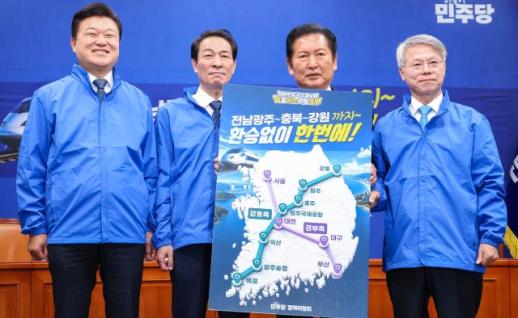 37 of 52 Candidates for Local Elections Present Development Promises Without Budget Plans In the upcoming local elections, 37 out of 52 candidates for 16 metropolitan governments have proposed 92 development promises, but 78 of these (85%) lack budget allocations. The Citizen's Coalition for Economic Justice reported on June 1 that 37 candidates submitted at least one development promise to the National Election Commission.By party, 15 out of 16 candidates from the ruling Democratic Party, excluding Wi Seong-gon (Jeju), presented development promises, representing 94%. In the People Power Party, 13 out of 16 candidates, excluding Kim Jin-tae (Gangwon), Park Wan-soo (Gyeongnam), and Moon Seong-yu (Jeju), made promises, accounting for 81%. Among the Reform Party candidates, 3 out of 7 (43%) proposed development promises, while 2 out of 3 (67%) from the Progressive Party and 1 out of 2 (50%) from the Justice Party did the same. Additionally, 3 out of 5 independent candidates (60%) presented development promises.However, the analysis revealed a lack of specific budget or funding plans. Of the 92 promises made by these candidates, 78 did not specify a budget, and 66 (72%) shifted budget responsibility to private sector projects.Democratic Party candidates proposed a total of 42 development promises, with 37 (88%) lacking budget details, and 30 (71%) categorized as private sector projects. In the People Power Party, 26 out of 35 development promises (74%) did not specify a budget, with 27 (77%) being private sector projects.Candidates from the Reform Party, Progressive Party, Justice Party, and independents did not provide budget details for their development promises. Among them, 4 out of 5 (80%) from the Reform Party, 1 out of 3 (33%) from the Progressive Party, and 4 out of 5 (80%) from independents were categorized as private sector projects. The Justice Party proposed 2 development promises and was the only party not to mention private investment.The development promises include large-scale construction projects and industry and tourism initiatives. Specifically, they encompass the establishment of industrial complexes, new airports, ports, railways, urban rail systems (trams), new and extended roads, underground roads, new stations, and new government buildings, while excluding housing, welfare, healthcare, culture, and sports projects due to their public nature.The most frequently proposed development promise was the establishment of industrial complexes, mentioned 58 times, primarily aimed at regional economic development and job creation under various names such as promotion zones, business districts, specialized zones, mixed-use complexes, clusters, and special zones. Following this, railway and urban railway construction proposals totaled 25, with 14 for airports and ports, 13 for roads and bridges, 8 for transfer centers, stations, and government buildings, and 5 for underground roads.The Citizen's Coalition for Economic Justice stated, "As seen in past elections, development projects lacking specific details, plans, feasibility assessments, and budget and funding strategies are nothing more than empty promises. The indiscriminate proliferation of development promises leads to significant budget waste and social conflict, with the resulting harm falling on the citizens and local residents."They further suggested that "large-scale national projects should only be decided by a permanent expert body" and emphasized the need for in-depth discussions on establishing a permanent independent and neutral national project decision-making body, tentatively named the 'National Project Committee.'* This article has been translated by AI. 2026-06-01 18:12:00
 -
 Self-Taught Roblox Developer Kim Tae-hoon Aims to Start His Own Game Company "I thought, if I make a game I like, maybe I can earn money from it. That simple idea is where it all began," said game developer Kim Tae-hoon, known as Lunar_Dev. Kim's journey into game development started out of curiosity. While enjoying Roblox games in fifth grade, he decided to dive into creating his own games. Over the past seven years, he has developed more than 70 games and is now a partner developer at the game company Burstwork. Meeting at the KPR office in central Seoul, Kim described himself not as a prodigy but as a developer who has steadily gained experience through his passion. He has always had a tendency to pursue his goals relentlessly. Even while playing games, he was determined to achieve objectives, a mindset that naturally transitioned into game development. However, his self-taught journey was not without challenges. With no one around to seek advice from, he often struggled to identify the causes of errors and felt lost about what to study. "Even when error codes appeared, I didn't know why the issues occurred," he recalled. "I learned coding by posting questions in developer communities and searching for resources online all night." The joy of creating games fueled his desire to improve, leading him to strive for better quality in his projects. His experiences of trial and error while developing dozens of games have shaped his current skills. "I don't think I had exceptional talent from the start. I just found game development fun, and as I kept creating, my skills improved significantly over time." This perseverance paid off with the success of his flagship title, the 'Untitled RPG Game,' which achieved a record peak of 18,000 concurrent users, placing it among the top 100 global games on the Roblox platform. It was the first game to surpass 10,000 concurrent users solely from Korean players, drawing industry attention. Regarding the game's success, Kim stated, "Ultimately, the fundamental fun of the game is the priority." While many developers begin with extensive planning, he prefers an agile approach, first creating the core gameplay structure and testing it himself. Once the fun is confirmed, he adds content and systems to enhance the game's quality. This development philosophy also influenced his marketing strategy. Rather than aggressively targeting the global market from the outset, he meticulously designed the game to cater to the preferences of Korean players, whom he understands best. By considering the unique growth structures and reward systems favored by Korean gamers, he generated community buzz. This approach not only resonated with local players but also attracted international users, with about 40% of the game's total players now coming from abroad. Kim's growth story aligns with the next-generation creator ecosystem established by Roblox. The platform significantly lowers entry barriers for aspiring developers by providing comprehensive tools like Roblox Studio, development documentation, data analytics, and a global community, enabling anyone with an idea to create and monetize games. Recently, support for development using artificial intelligence (AI) has also strengthened. The AI assistant within Roblox Studio helps with code generation and modification, automates repetitive tasks, and assists in asset creation. Future advancements are expected to include agent-based AI technology that can independently handle complex coding and various stages of development from planning to testing. AI is revolutionizing the ecosystem for individual creators. Tasks like 3D modeling and animation, which previously required significant time and manpower, are now being streamlined by AI, maximizing productivity for solo developers. Kim emphasized that game development is on a similar path of innovation. "In the past, large-scale infrastructure was essential for game development, but AI is breaking down technical barriers, allowing individual developers to take on blockbuster-level projects in the future," he said. Having already established himself as a professional developer, Kim plans to start his own company instead of pursuing a university education. He intends to launch a game company that reflects his unique vision after completing his military service. He also offered advice to those learning game development independently: execution is key. "Rather than worrying about the results and hesitating, you need to start coding and create something to discover your true potential and hidden abilities," he said. "I faced many difficulties and failures from a young age, but to turn those trials into experience, taking action is the most important thing."* This article has been translated by AI. 2026-06-01 18:06:00
 -
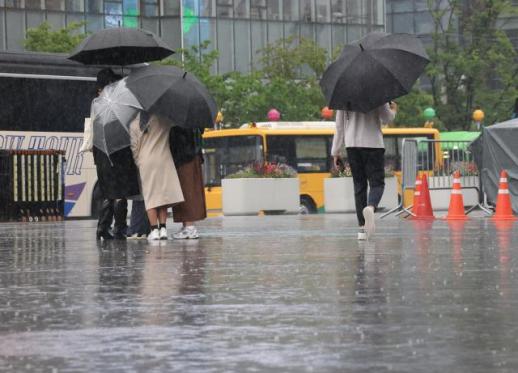 Weather Forecast: Rain in Southern Regions, Heat Continues in the North On Tuesday, June 2, rain is expected primarily in the southern regions, bringing a respite from the heat. In contrast, the central regions will continue to experience temperatures exceeding 30 degrees Celsius. In Jeju and the southern coasts of Jeollanam-do and Gyeongsangnam-do, rain that began the previous day will taper off by the afternoon. Other areas in Jeollanam-do and Gyeongsangnam-do will see rain starting early in the morning, which will expand to Daegu and Gyeongsangbuk-do by mid-morning. The forecast predicts rainfall amounts of 30 to 80 millimeters in Jeju, with some areas receiving over 120 millimeters and mountainous regions expecting more than 150 millimeters. The southern coasts of Jeollanam-do and Gyeongsangnam-do, as well as Busan and Ulsan, are expected to receive 20 to 60 millimeters, with some areas exceeding 80 millimeters. In the inland areas of Gwangju and Jeollanam-do, as well as Gyeongsangnam-do, rainfall of 5 to 30 millimeters is anticipated, while southern Jeollabuk-do and southeastern Daegu and Gyeongsangbuk-do may see 5 to 10 millimeters. Temperatures in the southern regions will drop significantly compared to the previous day, with highs expected to reach 29 degrees in Gwangju, 28 degrees in Daegu, and 24 degrees in both Changwon and Busan. Conversely, the central regions will continue to experience heat, with highs around 33 degrees in Seoul, 32 degrees in Incheon and Suwon, and 32 degrees in Chuncheon. Nationwide, morning lows are forecasted to be between 16 and 20 degrees, while daytime highs will range from 24 to 33 degrees. Wave heights in the seas will be between 0.5 and 2.0 meters in the East and South Seas, and between 0.5 and 1.0 meters in the West Sea. Offshore wave heights are expected to reach 0.5 to 3.5 meters in the East Sea, 0.5 to 2.5 meters in the West Sea, and 1.0 to 4.0 meters in the South Sea. Morning low temperatures in major regions are expected to be: Seoul 19 degrees, Incheon 17 degrees, Suwon 18 degrees, Chuncheon 16 degrees, Gangneung 19 degrees, Cheongju 20 degrees, Daejeon 19 degrees, Sejong 18 degrees, Jeonju 20 degrees, Gwangju 20 degrees, Daegu 20 degrees, Busan 20 degrees, Ulsan 19 degrees, Changwon 20 degrees, and Jeju 20 degrees. Daytime high temperatures are forecasted to be: Seoul 33 degrees, Incheon 32 degrees, Suwon 32 degrees, Chuncheon 32 degrees, Gangneung 29 degrees, Cheongju 31 degrees, Daejeon 31 degrees, Sejong 30 degrees, Jeonju 30 degrees, Gwangju 29 degrees, Daegu 28 degrees, Busan 24 degrees, Ulsan 25 degrees, Changwon 24 degrees, and Jeju 24 degrees.* This article has been translated by AI. 2026-06-01 18:06:00
 -
 BTS-Backed Food and Beverage Brand 'ARIH' Launches in South Korea The food and beverage brand 'ARIH,' co-developed by BTS and Paldo&hy, is officially entering the South Korean market. Following its successful launch in the U.S., the brand aims to appeal to both the fandom and health-conscious consumers in South Korea. According to industry sources, Paldo and hy began selling 'ARIH' products on June 1. ARIH is characterized as a 'modern balance food' brand that seeks to harmonize taste, health, and lifestyle, with BTS involved in the product concept, design, and brand direction from the planning stage. The brand made its debut at Walmart in the U.S. on May 24, quickly gaining traction. Within three days, it earned a 'Best Seller' badge on Walmart's online store, and some physical locations experienced stock shortages. Each product has received over 500 reviews, with some achieving a perfect five-star rating. Industry analysts attribute this success to the combined effect of BTS's fanbase and the products' inherent competitiveness. In South Korea, ARIH will launch a total of 28 products, including 'Modern Noodles,' 'Postbiotic Energy Drink,' and 'Dual Biotic Soda.' Initially available through hy's online store 'Predit' and Naver Smart Store, the brand plans to expand distribution to convenience stores and large supermarkets. The flagship product, Modern Noodles, combines the best features of ramen and pasta. It features fettuccine-style noodles that are about 5mm wider than regular ramen, allowing for better sauce absorption, and includes menu items reflecting global culinary trends, such as clam, spicy seaweed stir-fried noodles, and gochujang butter. The beverage line emphasizes health and functionality. The Postbiotic Energy Drink is designed to be zero sugar and zero calories, containing natural caffeine, taurine, and B vitamins. The Dual Biotic Soda offers a low-sugar, low-calorie concept enhanced with dietary fiber and a proprietary postbiotic developed by hy. Alongside the product launch, Paldo and hy are expanding consumer engagement. Limited edition sets and merchandise giveaways are being offered on hy Predit and Naver Smart Store. Notably, during BTS's concert 'BTS World Tour Arirang in Busan' starting June 12, experiential booths, food trucks, and dedicated vending machines will be available. A representative from Paldo and hy stated, "ARIH is more than just K-food; it is a new food and beverage brand that encompasses taste, health, and lifestyle. After establishing a foothold in the domestic market, we plan to expand sales to Japan, Mexico, and Canada, developing it into a global brand."* This article has been translated by AI. 2026-06-01 18:06:00
 -
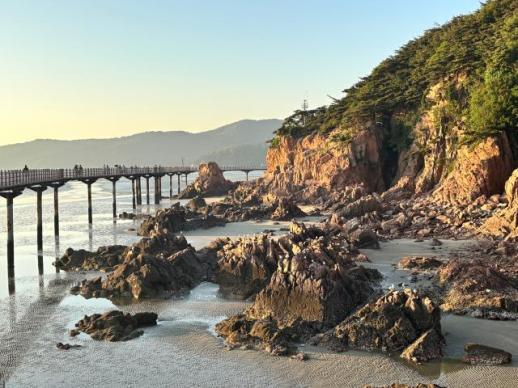 Incheon's Hanagae Beach opens for summer season SEOUL, June 1 (AJP) - At the far end of Muuido Island, a beach appears framed by rock formations. Where the tide has pulled back, vast tidal flats stretch out and barefoot visitors walk slowly across them. The official opening is June 20 — but Hanagae Beach has already ushered in summer. This summer's heat arrived earlier than usual. Incheon plans to open three beaches — Eurwangni, Wangsan, and Hanagae — simultaneously on June 20. Yet on June 1, Hanagae was already full, with families, couples, and solo travelers wading in. Some stood ankle-deep; others soaked their clothes to beat the heat. West Sea beaches are nothing like the East Coast. Here, the tidal flats come before the waves. The cool, yielding sensation underfoot is entirely different from the sandy shores of Gangwon. Children hunt for crabs; adults simply walk. The West Sea flats rank among the five greatest tidal systems in the world, and at Hanagae, that scale is felt through the feet. Visitors walk along boardwalk at Hanagae Beach in Incheon on June 1, 2026. AJP Han Jun-gu Running alongside the beach is a 550-meter marine boardwalk. On one side, rock formations including the Lion Rock; on the other, the open Yellow Sea. At high tide, waves crash against the cliffs; at low tide, rocks emerge from the mudflat. The landscape composes itself. Hanagae officially opens June 20. From Seoul Station: ninety minutes by car, two hours by transit. It will fill up fast. A little planning goes a long way. The sea is already here. It is only the opening date that is waiting. 2026-06-01 18:05:08
 -
 AI Ecosystem Shift: TSMC's Supply Chain Limitations Exposed as South Korea Emerges Samsung Electronics and SK Hynix, along with other South Korean companies strong in autonomous driving and physical AI, are increasingly joining NVIDIA's AI supply chain. This raises concerns about potential cracks in the existing TSMC-centered AI supply chain.On June 1, NVIDIA CEO Jensen Huang began a series of meetings with major South Korean companies during his keynote speech at the 'GTC Taipei 2026' event. The inaugural 'Korea Partner Night' featured representatives from Samsung Electronics, SK Hynix, Hyundai Motor Group, LG Electronics, Doosan, and Naver.NVIDIA's expansion of collaboration with South Korean firms is driven by their advanced manufacturing capabilities. The core competitiveness of AI accelerators is shifting from single GPU performance to include memory bandwidth, power efficiency, advanced packaging, data center operations, and physical AI implementation. To ensure a stable supply of next-generation AI accelerators, NVIDIA needs partners not only for memory supply but also in robotics and mobility sectors. Relying solely on a foundry-based value chain like TSMC's is no longer feasible.The surge in AI chip production has exacerbated supply bottlenecks related to TSMC's proprietary packaging technology, CoWoS (Chip on Wafer on Substrate). While TSMC's foundry capabilities remain dominant, it has become increasingly difficult to manage the entire supply chain independently in the AI era. Analysts predict a multipolar system where NVIDIA handles GPU design, Taiwan focuses on advanced manufacturing, and South Korea takes charge of memory, packaging, and post-processing.Samsung and SK Hynix, which have secured leadership in HBM supply, are expected to gain further prominence. Samsung recently began shipping samples of its seventh-generation HBM4E, accelerating its response to NVIDIA's next-generation roadmap. HBM4E is set to be integrated into NVIDIA's upcoming AI accelerator, Rubin Ultra, scheduled for release in 2027.SK Group Chairman Chey Tae-won and CEO Jensen Huang have met three times over the past seven months in South Korea and the U.S., and they met again during the GTC event in Taiwan. There is growing interest in the potential for collaboration on next-generation HBM supply and AI memory roadmaps.NVIDIA is also strengthening its collaboration with Hyundai Motor Group on autonomous driving. At the GTC conference held in the U.S. in March, NVIDIA announced plans to work with Hyundai on developing Level 4 autonomous driving. Hyundai is building an integrated system that can expand from Level 2 to Level 4 autonomy using NVIDIA's Drive platform, Hyperion.With LG Group, NVIDIA is accelerating its collaboration in physical AI across various sectors. Collaborations are anticipated with LG AI Research, which is developing a large language model (LLM) called Exaone, LG Innotek, which specializes in robotic sensing technology, and LG Uplus, which has cloud infrastructure including data centers. Earlier this year, LG Electronics unveiled the intelligent home robot 'LG Cloid,' based on NVIDIA's high-performance chipset, Jetson Thor.An industry insider noted, "The AI semiconductor supply chain is evolving from being centered around NVIDIA and TSMC to a 'physical AI manufacturing ecosystem' that includes memory, packaging, and robotics. South Korean companies are emerging as key players in the AI ecosystem due to their core capabilities in physical AI."* This article has been translated by AI. 2026-06-01 18:03:00
 -
 NVIDIA's Jensen Huang Announces Production of Vera Rubin with Samsung and SK Hynix Memory "Vera Rubin has finally entered production. It is equipped with HBM4 from Samsung Electronics and SK Hynix." Jensen Huang, CEO of NVIDIA, made this announcement during his keynote speech at the GTC Taipei 2026 technology exhibition on June 1, further solidifying the company's memory alliance with South Korea. In a speech lasting nearly two hours, Huang officially confirmed the mass production of the next-generation AI accelerator, Vera Rubin. He specifically named Samsung Electronics and SK Hynix as key suppliers of the essential sixth-generation high-bandwidth memory (HBM4). Huang also praised Taiwan's semiconductor ecosystem, referring to it as the "epicenter of the AI revolution," stating that "core manufacturing, including NVIDIA chip production and packaging, all takes place here." NVIDIA recently broke ground on a new headquarters in Taiwan, aiming for operations to begin by 2030, with plans to expand local investments to $150 billion annually. However, Huang emphasized that "NVIDIA's AI systems require not only Taiwan's advanced processes but also the high-speed, high-capacity memory technologies from Samsung and SK Hynix." This highlights his intention to strengthen cooperation with Korean memory companies while maintaining a supply chain centered around TSMC. Huang is also focusing on the manufacturing capabilities in the physical AI sector in South Korea. After concluding his schedule in Taiwan, he is expected to visit Korea on June 5 to discuss various collaboration opportunities with major domestic manufacturers. He is likely to hold an official meeting with Koo Kwang-mo, chairman of LG Group, to accelerate the integration of NVIDIA's AI chips with LG's manufacturing platforms across future advanced industries, including home appliances, automotive, and robotics. Earlier, Huang's daughter, Madison Huang, NVIDIA's Senior Director of Omniverse and Robotics Marketing, visited Korea in April and met with Ryu Jae-cheol, president of LG Electronics. During that meeting, they discussed collaboration in physical AI, infrastructure, and robotics, laying the groundwork for their alliance. Huang is also scheduled to meet with other business leaders, including Chung Eui-sun, chairman of Hyundai Motor Group, and Park Jung-won, chairman of Doosan Group. Notably, discussions with Doosan are expected to focus on integrating NVIDIA's physical AI technology into Doosan Robotics and utilizing specialized data to secure customized foundation models.* This article has been translated by AI. 2026-06-01 18:03:00
 -
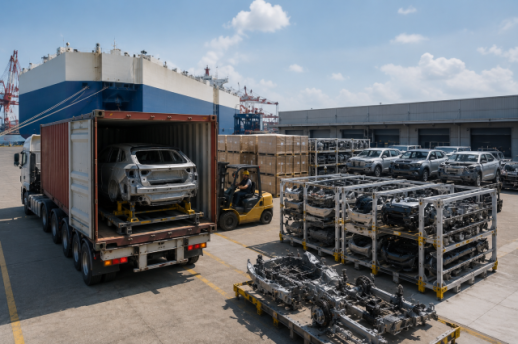 Hyundai Begins Electric Vehicle Production at Thailand CKD Plant, Accelerating Emerging Market Strategy 현대자동차그룹이 반조립제품(CKD) 생산 거점을 확대하고 있다. 완성차 수출 대신 현지 조립 생산을 통한 신흥시장 공략에 속도를 내는 모습이다. On June 1, industry sources reported that Hyundai Motor's Thailand subsidiary (HMTH) completed the establishment of its CKD facility in Samut Prakan Province last month and has officially begun mass production. The plant will primarily produce electric models, including the Ioniq series, with an annual production capacity of 5,000 units and a sales target of 3,000 units for this year. Thailand, a major automotive production hub in Southeast Asia, has an annual vehicle production volume of approximately 1.4 to 1.5 million units. The local government is promoting the transition to electric vehicles through subsidies and tax incentives, intensifying competition among global automakers to establish production bases in the region. Hyundai established its CKD production system two years after receiving approval from the Thailand Board of Investment (BOI) for an investment of about 1 billion baht (approximately $40 million) in 2024. CKD, or Completely Knocked Down, involves sending key components to local facilities for assembly instead of exporting finished vehicles. This approach reduces initial investment burdens and fosters positive relations with local governments, serving as a 'foothold' for entering emerging markets. Previously, Hyundai entered the Vietnamese market in 2011 through a partnership with the Thanh Cong Group using the CKD method, later establishing Hyundai Thanh Cong Manufacturing Vietnam (HTMV) in 2017 to increase its local market share. By the end of the year, a CKD facility will also be completed in Saudi Arabia, the largest market in the Middle East. Additionally, Hyundai operates CKD plants in over 15 countries, including Kazakhstan, Egypt, Pakistan, and Malaysia, enhancing its influence in Asia and the Middle East. A Hyundai official stated, "The Southeast Asian market is heavily influenced by Japanese brands, and recently, Chinese companies have intensified their presence, increasing the need for local joint CKD operations." Other domestic automakers are also focusing on expanding their CKD operations. Kia held a ceremony last year to inaugurate a CKD joint plant in Kostanay, Kazakhstan, and began production of the Sorento. KG Mobility plans to establish new CKD plants in Vietnam and Saudi Arabia this year. The expansion of CKD production is also contributing to growth in logistics. Hyundai Glovis reported a 10.3% increase in its distribution revenue for the first quarter of this year, totaling 3.87 trillion won compared to the same period last year. Industry analysts believe that the increased demand for parts transportation due to the expansion of CKD production by domestic automakers has contributed to this improvement. Moon Hak-hoon, a professor at Osan University’s Department of Future Automotive Engineering, noted, "CKD allows companies to avoid tariff burdens while expanding their market through local production, indicating a growing demand for CKD plants in emerging automotive markets."* This article has been translated by AI. 2026-06-01 18:03:00
 -
 Taiwan Dominates AI Chip Ecosystem as South Korea Seeks Collaboration The competition between South Korea and Taiwan for dominance in the global artificial intelligence (AI) ecosystem is intensifying. Taiwan boasts a strong value chain in foundry, packaging, and fabless sectors, bolstered by its early partnership with NVIDIA. Meanwhile, South Korea aims to leverage its leading memory capabilities and top-tier physical AI expertise to emerge as a key player in the ecosystem. During the keynote address at the GTC 2026 event in Taipei on June 1, NVIDIA CEO Jensen Huang unveiled strategies for next-generation AI semiconductors and AI chips for PCs. Following this event, Computex 2026 will further establish Taiwan as a central hub for global AI business. Taiwan's competitive edge lies in its dense supply chain. NVIDIA's core AI accelerators are produced through TSMC's advanced processes and packaging. Companies like Foxconn provide AI servers and power infrastructure, while fabless firms such as MediaTek and Alchip handle custom semiconductor designs for major tech companies. NVIDIA's plans to build a large new headquarters and research center in Taiwan are aimed at maintaining this supply chain density in the long term. While Samsung Electronics and SK Hynix dominate the high-bandwidth memory (HBM) and next-generation DRAM markets, they appear more as key component suppliers compared to Taiwan's integrated value chain that encompasses chip design, manufacturing, packaging, server assembly, and power and cooling components. However, there are opportunities for South Korea. The next wave of AI competition is shifting towards the integration of semiconductors, robotics, automotive technology, factory automation, and data center infrastructure. Notably, the physical AI sector, emphasized by NVIDIA, is seeing renewed interest in the capabilities of South Korean manufacturing giants. If sectors like automotive, robotics, shipbuilding, batteries, and smart factories can integrate with NVIDIA's platform, South Korea could establish a distinct AI ecosystem compared to Taiwan. The challenge will be to expand collaboration beyond individual companies to a national strategy that integrates semiconductors, manufacturing, software, and infrastructure. After his visit to Taiwan, Jensen Huang is scheduled to travel to South Korea, where he will meet with prominent business leaders, including Naver founder Lee Hae-jin, LG Group Chairman Koo Kwang-mo, Hyundai Motor Group Chairman Chung Eui-sun, and Doosan Group Chairman Park Jung-won, starting June 5. There are also discussions about a potential visit to Naver's 1784 headquarters on June 8. There are calls for Huang's visit to go beyond ceremonial meetings. It is essential for South Korean conglomerates to find various opportunities to integrate into the global AI ecosystem led by NVIDIA. Kim Yong-seok, a distinguished professor at Gachon University’s Semiconductor College, stated, "Jensen Huang's visit aims to connect NVIDIA's chips and software solutions with South Korea's manufacturing sites and products. The key challenge will be to closely integrate South Korea's strengths in memory with NVIDIA's physical AI solutions."* This article has been translated by AI. 2026-06-01 18:03:00
 -
 Taipei Emerges as Global AI Industry Hub with Major Players Gathering Taipei has emerged as a gathering place for key players in the global artificial intelligence (AI) industry. Events such as 'GTC Taipei 2026' and 'Computex 2026' are drawing major figures from global AI companies, including NVIDIA, AMD, TSMC, Foxconn, Qualcomm, and Arm, to the city. On June 1, Jensen Huang, CEO of NVIDIA, delivered a keynote speech at GTC 2026. This event serves as a precursor to Computex, which opens on June 2 and reveals NVIDIA's technology strategy. Once primarily a PC and component exhibition, Computex has evolved into one of Asia's largest showcases for AI industry trends, coinciding with GTC Taipei, where NVIDIA's next-generation business vision will be unveiled. The significance of this event stems from the strong cohesion within Taiwan's semiconductor ecosystem. TSMC is a key production partner for NVIDIA's AI accelerators, while Foxconn is increasingly important in AI server manufacturing. Companies like MediaTek and Delta Electronics are also expanding their connections with NVIDIA's ecosystem in areas such as AI PCs, servers, power management, and custom semiconductors. Jensen Huang, who has Taiwanese roots, along with Lisa Su, CEO of AMD and a distant relative, are among the notable attendees expected during Computex. Other industry leaders, including Cristiano Amon, CEO of Qualcomm, Pat Gelsinger, CEO of Intel, Matt Murphy, CEO of Marvell, and Rene Haas, CEO of Arm, are also set to visit Taipei, marking a significant convergence of AI semiconductor, server, communication, and design asset companies. Locally, executives from TSMC and Foxconn are anticipated to meet with CEO Jensen Huang. While NVIDIA holds a strong position in AI chip design and software ecosystems, Taiwan possesses a critical foundation for production, packaging, and server manufacturing, aligning the interests of both parties. Korean companies are also making their presence felt at the event. Choi Tae-won, chairman of SK Group, is scheduled to hold a press conference on June 2, while Song Jae-hyuk, Chief Technology Officer and President of Samsung Electronics, Park Min-woo, President of Hyundai Motor Group, and Kim Yoo-won, CEO of Naver Cloud, are expected to showcase their companies' technological competitiveness.* This article has been translated by AI. 2026-06-01 18:03:00