

Journalist

RYU SO HYUN
-
 Daesang Participates in Thailand Food Expo, Aiming for 1 Trillion Won in Southeast Asia Sales Daesang has launched an integrated brand booth at THAIFEX-Anuga 2026, Asia's largest food trade fair, held in Bangkok, Thailand, to expand its presence in the Southeast Asian market.From May 26 to 30, Daesang showcased its Kimchi brand Jongga, global food brand Ofood, and Indonesian local brand Mama Suka at the event.THAIFEX-Anuga is the largest food trade fair in Asia, featuring over 3,300 companies from 60 countries this year.At the fair, Daesang operated a unified brand booth for Jongga, Ofood, and Mama Suka. More than 13,000 visitors attended Daesang's booth, where the company engaged in export consultations with global buyers, exploring opportunities to expand its local distribution network.The company noted that major Southeast Asian buyers, including CP Extra's Macro and Lotus, as well as Big C and Tops, visited the booth to discuss entry and distribution strategies.Daesang also conducted tasting programs reflecting local food culture. The company presented a 'Seafood Salad with Jongga Flavored Kimchi' produced at its factory in Vietnam. Additionally, it introduced 'Hot Lava Chicken Stir-fry' using 'Ofood Cup Tteokbokki,' which is popular among the MZ generation in Southeast Asia, and 'Mama Suka Hot Lava Sauce,' certified halal in Indonesia.Building on the network established at the fair, Daesang plans to expand its business in Southeast Asia. The company aims for a combined revenue of 1 trillion won from its Southeast Asian subsidiaries by 2030.Im Jeong-bae, CEO of Daesang, stated, "We will lead the way in enhancing the status of K-food by presenting products that harmonize with global food culture based on Daesang's localization strategy."In the first quarter of this year, Daesang reported an operating profit of 57 billion won, a 0.4% increase from the same period last year, while sales fell by 1.8% to 1.11 trillion won.* This article has been translated by AI. 2026-06-01 17:18:00
 -
 AI dominates day one as annual World News Media Congress opens in Marseille SEOUL, June 1 (AJP) - The annual gathering of the World Association of Newspapers and News Publishers (WAN-IFRA) opened at the Palais du Pharo in Marseille, southern France, with artificial intelligence (AI) shaping every major session on the first day of the three-day event. About 1,000 publishers, editors and chief executives from more than 60 countries packed the venue at the global news media association's 77th congress on Monday. The program moved through pre-Congress Deep Dives, partner showcases, a press freedom prize ceremony and the formal Congress opening, capped by an evening welcome reception. The day's most urgent strand was the disruption of search. A Deep Dive titled "Discovery: How to Rethink Search in the AI Era" examined the impact of Google's AI Overviews, AI Mode and chatbot-driven discovery on publisher traffic and audience behavior. Recent announcements from Google I/O 2026 were also dissected. Speakers said publisher business models built on search were now in structural transition, not merely facing another search-engine optimization tweak. The crisis is backed by hard numbers. A Pew Research Center study tracked 68,879 searches by 900 US adults. When an AI Overview appeared, the click-through rate on regular search results dropped to 8 percent, half the 15 percent recorded without one. Clicks on the source links inside the AI summary itself ran at just 1 percent. Chartbeat data covering more than 2,500 global news sites also showed Google search referrals down 33 percent last year. In September, US media group Penske Media filed an antitrust lawsuit against Google, arguing that AI Search has broken the reciprocal relationship between publishers and the search engine. Equally pressing is the wave of disinformation generated by AI itself. According to a European Parliamentary Research Service briefing, deepfake videos shared online surged from about 500,000 in 2023 to about 8 million in 2025 — a 16-fold rise. Europol estimates that up to 90 percent of online content could be synthetically generated by 2026. Running in parallel was a session on the emerging market for licensing news content to AI companies. "What Publishers Must Do to Take Advantage of the AI Content Market" walked publishers through bot management, content enhancement and monetization, drawing on WAN-IFRA's own market guidance. The association brought together vendors active in each area, framing the AI content market as both threat and opportunity for newsrooms trying to protect content and capture new revenue at the same time. The newsroom's own response took center stage in "AI: What the Latest Developments Mean for Publishers and Newsrooms", a 90-minute session that worked through technical developments, accelerator lessons, governance and practical tools. Florent Daudens, co-founder of Mizal AI and a former press lead at Hugging Face, opened the slot alongside OK Lab founder Christophe Israël with a survey of the latest AI technical developments. The session closed with a demonstration of Sourcebase.ai, the US AI investigations and reporting platform led by CEO Ron Suskind, a Pulitzer Prize-winning journalist. Three back-to-back Partner Showcase sessions translated those themes into concrete tools. DeeperDive opened the slot, demonstrating a generative AI answer engine for the open web designed to convert trusted publisher content into personalized conversations and lift user retention. A subsequent session showcased how French newsrooms are deploying AI-driven semantic analysis combined with dynamic templates and auto-layout tools, with concrete return-on-investment data on both productivity and subscriber retention. Google closed the slot with a session on NotebookLM, led by Google News Initiative trainer Luisa Fernau. The tone then shifted with the Reporters Without Borders Press Freedom Prize ceremony, held in English. Awarded annually since 1992, the prize this year recognized 24 journalists and outlets across five categories. These were the Courage, Impact and Independence prizes, alongside the Mohamed Maïga Prize for African Investigative Journalism and the Lucas Dolega-SAIF Photo Prize. The international jury included Washington Post columnist Rana Ayyub, Pakistani editor-in-chief Hamid Mir and Syrian Center for Media and Freedom of Expression president Mazen Darwish, among others. Closing remarks came from Henna Virkkunen, the European Commission's Executive Vice-President for Tech Sovereignty, Security and Democracy. Virkkunen oversees the bloc's AI policy and the enforcement of the Digital Services Act and Digital Markets Act. Her appearance pulled the morning's threads — search disruption, content licensing and platform power — onto regulatory ground. The Congress formally opened with welcome remarks from Ros Atkins, BBC News Analysis Editor and Presenter; Catherine Pégard, France's Minister of Culture; and Ladina Heimgartner, President of WAN-IFRA. The opening leaned into the symbolism of France's first WNMC host turn in about three decades, since Paris in 1995. The first Congress Keynote was titled "AI, Journalism and the Uncertain Future of the Public Square." It was delivered by The New York Times Chairman and Publisher A.G. Sulzberger. The substance of his remarks will be covered in a separate article. The "Plenary: In Conversation" that followed was hosted by Atkins and revisited the day's main threads in interview format. The Golden Pen of Freedom Awarding Ceremony then took the stage, preceded by a keynote from Mariya Gabriel, UNESCO Assistant Director-General. Established in 1961, the Golden Pen has on several occasions been credited with securing the release of imprisoned journalists, and remains WAN-IFRA's highest press freedom honor. The formal day-one program closed with a Welcome Reception at R2:Reverso, a venue overlooking Marseille's Old Port. The setting framed the first evening of informal networking against the Mediterranean. 2026-06-01 17:16:06
 -
 Next-Generation Platform Technology TPD Gains Attention as Korean Pharmaceutical Investments Expand Investment and research and development (R&D) in the domestic pharmaceutical and biotech industry surrounding targeted protein degraders (TPD), recognized as next-generation drug technology, are gaining momentum. Rather than relying solely on individual candidate substances, the focus has shifted to securing platform technologies that can continuously discover follow-up pipelines, emerging as a new competitive advantage. According to market research firm Fortune Business Insights, the global TPD market is expected to grow from $5.88 billion this year to $12.44 billion by 2034. Last month, the TPD treatment 'Vepdegestrant,' co-developed by U.S. biotech company Arvinas and Pfizer, received approval from the U.S. Food and Drug Administration (FDA). This approval has drawn significant attention from the industry, as it demonstrates the commercial viability of TPD, which has been discussed as a next-generation technology for several years. Unlike traditional therapies that inhibit the function of disease-causing proteins, TPD utilizes the cell's protein degradation system to eliminate the proteins themselves. This approach is noted for its potential to reduce toxicity associated with high drug concentrations. It is also evaluated as a next-generation platform capable of targeting proteins that have been difficult to approach with conventional synthetic drugs. Market expectations are growing. Although most developments are still in preclinical and early stages, investments are expanding domestically as well. SK Biopharm, which has established a stable cash-generating structure through its epilepsy treatment 'Cenobamate' (marketed in the U.S. as Xcopri), has identified TPD as a future growth pillar. In 2023, the company invested approximately 62 billion won to acquire U.S. TPD specialist Proteovant. Following the acquisition, the organization was restructured into SK Life Science Labs to enhance its research capabilities. The TPD drug currently under development, 'SKT-18416,' is a p300-targeted degrader. It selectively degrades p300 while minimizing effects on the similar protein CBP, ensuring safety. The drug has also shown tumor growth inhibition effects in models of prostate cancer, multiple myeloma, and CBP-mutated cancers. The company aims to submit an Investigational New Drug (IND) application in the first half of 2027. An SK Biopharm official stated, "Based on the stable profits from Cenobamate, we are expanding our growth pillars to include next-generation modalities and platform technologies. TPD is being developed as a technology that can repeatedly discover new pipelines through SK Life Science Labs' MOPED platform." Yuhan Corporation is also focusing on securing next-generation platforms. Following the non-small cell lung cancer drug 'Lazertinib,' the company has prioritized establishing a research organization for next-generation modalities. In January, it established a 'New Modality' division within its central research institute and recruited Jo Hak-ryeol, a former executive from U.S. TPD biotech Chimera Therapeutics, to lead the department. Hanmi Pharmaceutical is also developing an anti-cancer drug utilizing TPD platform technology. The 'EP300' selective degrader being developed by Hanmi targets cancer cells dependent on the EP300 protein and selectively kills cancer cells with CBP gene mutations. While TPD is still in its early market stages, some view it as premature to discuss it as a medium- to long-term strategy. However, it is increasingly recognized as a new treatment alternative in areas where existing targeted therapies have shown limitations, leading to growing market expectations. An industry insider remarked, "Next-generation platform technologies are likely to become targets for strategic partnerships. The ability to stably discover follow-up pipelines, rather than relying on a single candidate substance, will be the benchmark for assessing global competitiveness."* This article has been translated by AI. 2026-06-01 17:12:00
 -
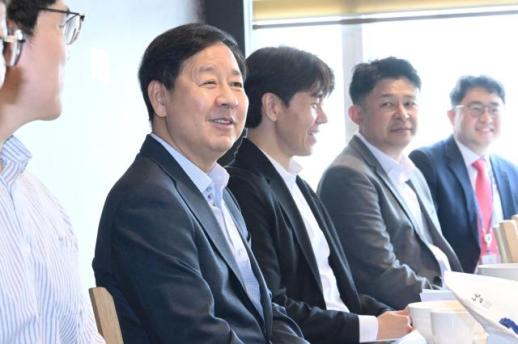 Ministry of Economy Launches AX Jiphyeonjeon 2.0 to Integrate AI into Operations The Ministry of Economy and Finance is enhancing its operations by integrating artificial intelligence (AI) across various functions, from establishing an AI learning club to training senior officials and appointing private expert advisors. On June 1, the ministry launched "AX Jiphyeonjeon 2.0" to create a learning organization within government departments in response to the AI transformation era. This club aims not only to study AI theory but also to explore ways to apply AI in policymaking. Members of the club will engage in tasks such as identifying automation projects, developing tools, researching data utilization within the ministry, visiting leading AI companies, and supporting government innovation competitions. During a meeting held that day, Deputy Prime Minister Koo emphasized, "The Ministry of Economy and Finance is recognized as a leader in AI innovation among government departments," and pledged to provide active support to ensure the smooth operation of the initial phase of the club. AI training for senior officials is also underway. Koo noted the need for high-level officials' interest to strengthen the ministry's capabilities and introduced demonstrations of training outcomes during three expanded executive meetings. At the morning meeting, three major projects from employees who completed the second AI intensive training program were showcased. One project demonstrated how to automatically generate revised tax law provisions and related documents in a Word file by inputting key changes. To incorporate external perspectives, the ministry plans to appoint and operate an AI advisory group consisting of six private experts. The advisors will serve a one-year term and will be responsible for providing AI training programs, mentoring and judging hackathon competitions, and accompanying visits to innovative companies by the learning club. Additionally, the ministry is pursuing initiatives like the "Korean-style AI package project" to integrate AI into policies such as official development assistance (ODA).* This article has been translated by AI. 2026-06-01 17:12:00
 -
 Netmarble Launches 'Monster Taming: Star Dive' AMD Edition Graphics Card Netmarble announced on June 1 that it has officially launched the 'PowerColor Radeon RX9060 Monster Taming: Star Dive Edition Gaming Graphics Card' in collaboration with AMD for its monster-taming action RPG, 'Monster Taming: Star Dive.' This product is based on AMD's latest architecture, 'RDNA 4,' and supports machine learning-based upscaling technology 'FSR' (Graphics Quality and Game Frame Enhancement Software) along with an easy performance setting feature called 'HYPR-RX.' Additionally, a recent driver update officially supports 'Monster Taming: Star Dive,' providing a more optimized gaming experience. The PowerColor Radeon RX9060 Monster Taming: Star Dive Edition Gaming Graphics Card will be available starting June 2 at over 30 major PC retailers in South Korea, as well as in online marketplaces and physical stores. Netmarble anticipates that the availability of the card through both online and offline channels will not only attract fans of 'Monster Taming: Star Dive' but also generate interest among general consumers considering a graphics card purchase. Meanwhile, Netmarble has previously prepared collaborations with NVIDIA's 'DLSS' and AMD's 'FSR' ahead of the launch of 'Monster Taming: Star Dive.' The company has been testing support for AMD's FSR functionality since the development phase of the game. AMD is also collaborating with various domestic games, including Pearl Abyss's 'Crimson Desert.'* This article has been translated by AI. 2026-06-01 17:09:00
 -
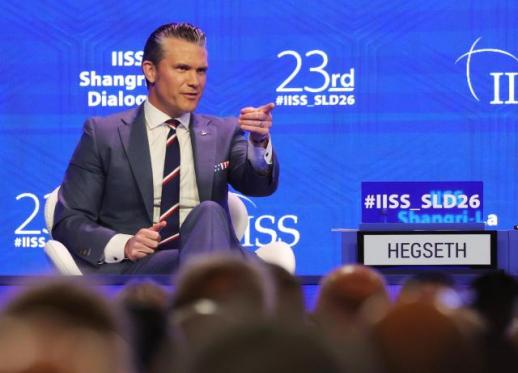 ASIA DEEP INSIGHT: US Defense Chief speech in Singapore brings tough choices for Seoul The world is changing fast, and the recent defense meeting in Singapore proved it. United States Defense Secretary Pete Hegseth spoke at the Shangri-La Dialogue, and his words carry a heavy message. For South Korea, sitting right between major global powers, his speech is a loud wake up call. The days of relying on a system where America promises to protect everyone without asking for much in return are officially over. Washington wants friends to pay more and do much more on their own. This new demand forces South Korea to look closely at how it protects itself, spends its money, and deals with China. Hegseth made it very clear that the United States is shifting its focus. The focus is no longer on keeping peace purely out of goodness. The focus is on finding partners who will share the heavy lifting and the heavy costs. This means every country that relies on the United States must completely change how it thinks about the future. To understand what this means for citizens in Seoul, we need to look at what Hegseth said about China. He pointed out that Beijing is building up its military forces at a historic speed. He warned that this rapid growth could change the balance of power in the Pacific Ocean forever. If one country becomes too strong and takes over the neighborhood, it could threaten the safety and wealth of everyone else. Hegseth said clearly that the United States and its friends cannot let this happen. He asked allied nations to increase defense spending immediately to match this growing challenge. But he also noted relations between Washington and Beijing are somewhat better right now, following a meeting between President Donald Trump and President Xi Jinping. That important meeting in Beijing did not change the big picture, but it did change the temperature. The two leaders agreed to keep their militaries talking, which helps prevent accidental wars. However, the deep competition between the two giant nations remains exactly the same. They still view each other as main rivals. For South Korea, this ongoing situation is incredibly difficult to manage. On one hand, the United States is South Korea's most important friend and protector. The two countries have shared a military alliance for decades. On the other hand, China is South Korea's biggest trading partner. South Korean businesses sell millions of products to China every single year, supporting countless jobs back home. If South Korea follows Hegseth's strict advice and spends massive amounts of money to specifically push back against China, Beijing might get very angry. We have seen this happen before. When South Korea allowed the United States to place a missile defense system on its land to watch North Korea, China punished South Korean businesses severely. Popular stores closed overnight, and tourism stopped completely. Therefore, South Korea must be very careful. It wants to keep its strong bond with Washington, but it simply cannot afford to destroy its economic relationship with Beijing. It is like walking on a thin tightrope high in the air with no safety net below to catch you if you fall. Another massive problem Hegseth brought up is the serious issue of weapons and supplies. Right now, the United States is involved in a severe conflict with Iran in the Middle East. This war started in late February and has used up a shocking amount of American military supplies. This fighting has rattled global markets and caused energy prices to jump, which hurts countries like South Korea that need to buy fuel overseas. But the biggest worry is weapons. The most important supplies are advanced missiles used to shoot down enemy attacks. These systems are complicated to build and cost about twelve million dollars for every single shot fired. Because they are being used so fast in the Middle East, the United States is running out of them at an alarming rate. Experts say it will take two or three years just to replace the weapons that have already been fired. This creates a very dangerous gap in global security that affects everyone. This news is truly terrifying for South Korea. South Korea lives right next door to North Korea, a country with many missiles and a long history of making sudden threats. For a long time, South Korea felt safe because it knew the United States had enough weapons stored up to protect it. But if American factories cannot build missiles fast enough to fight a war in the Middle East and keep Asia safe at the exact same time, South Korea finds itself in great danger. This empty weapon storage problem shows a cold and difficult reality. The United States is still the strongest country in the world, but its resources are stretched thin across the globe. It simply cannot fight everywhere all at once anymore. If North Korea decides to cause trouble right now, taking advantage of the distraction, will the United States have enough weapons left over to help? The answer is no longer a guaranteed yes, and that uncertainty is frightening. Hegseth basically admitted this hard truth when he said America needs partners, not protectorates. A protectorate is a weaker country that relies entirely on a stronger country for safety and does not contribute much. A partner is someone who pulls their own weight and helps out. Hegseth stated very clearly in Singapore that the era of the United States paying for the defense of rich nations is completely over. He said there can be no more free riding on American money. For South Korea, a wealthy and successful modern nation, this means Washington expects a much bigger check very soon. The United States currently keeps thousands of soldiers in South Korea to help keep the peace. Every few years, Seoul and Washington sit down to argue about how much money South Korea should pay to help keep those soldiers there. Hegseth's speech tells us that the next argument over money will be the hardest and most painful one yet. The current American government looks at alliances almost like business deals. If the deal does not make strict financial sense to them, they might just walk away. They want to see a solid return on their investment. We already see this unpredictable behavior happening in Europe. The American government has confused its European friends by saying it will move troops around, take some away from Germany, and maybe send some to Poland, based on who is paying enough money and following the rules. South Korea cannot assume that the American soldiers currently stationed on its soil will stay there forever no matter what happens. If Seoul does not agree to pay more, or if Washington decides those troops are needed somewhere else, South Korea could quickly find itself completely alone. This is exactly why the country must start thinking differently about its own survival right now. It cannot just write a bigger check every year and hope everything stays exactly the same. Then there is the very sensitive issue of Taiwan, which Hegseth also talked about at length. Taiwan is an island near China, and China firmly believes Taiwan belongs to it. Taiwan operates like its own country with its own government, and it wants to stay that way. This intense disagreement is probably the most dangerous flashpoint in the entire world today. President Xi Jinping recently warned President Trump face to face that if the Taiwan situation is handled badly, it could lead to devastating fighting. Trump seems to understand this great danger. He recently told Taiwan not to officially declare independence, trying hard to keep things calm and quiet for now. Hegseth told the crowd in Singapore that the United States still supports Taiwan, but he added a very interesting twist. He said President Trump himself will make the final decision on whether to sell a huge fourteen billion dollar package of weapons to Taiwan. This statement means Washington is currently using weapons sales as a bargaining chip in its big game with China. For South Korea, the extreme tension around Taiwan is a matter of life and death, even if South Korea is never directly involved in the fight itself. The oceans sitting right around Taiwan are some of the busiest and most important shipping lanes on the planet. Almost all of the oil and gas that South Korea desperately needs to keep its factories running comes on huge ships that sail right past Taiwan. Furthermore, many of the valuable products South Korea sells to the rest of the world leave on container ships that travel through those exact same waters. If a war breaks out over Taiwan, those shipping lanes will close immediately and completely. The South Korean economy would crash in a matter of days because it relies heavily on trade. Even worse, if the United States military gets pulled into a fierce fight over Taiwan, the American forces based in South Korea might be sent away to help fight the battle. Because the overall risks are so incredibly high, South Korea has to do everything in its power to make sure peace continues in the Taiwan Strait for as long as possible. But as Hegseth's speech clearly shows, South Korea cannot simply trust Washington to handle the problem smoothly all the time. The current American government's approach is highly unpredictable. Sometimes it acts very tough and loud, and sometimes it pulls back quietly to make a sudden deal behind closed doors. South Korea desperately needs a long term strategy that protects its own national interests, no matter what mood Washington is in on any given day. So, what exactly should South Korea do right now to prepare for this changing world? First and foremost, the country must speed up the process of building its own advanced weapons. The terrible news about the severe shortage of American missiles should act as a massive warning sign for the defense department. South Korea already has very smart engineers and incredibly strong manufacturing companies. It already builds excellent tanks, fast ships, and modern airplanes. Now, it must focus heavily on building its own missile defense systems as fast as possible. If the United States runs out of interceptor missiles, South Korea must have its own ready to fire into the sky. True self reliance is an absolute necessity for survival today. Secondly, South Korea must quickly learn how to negotiate in this harsh new business like environment. When Washington demands more money for its troops next time, Seoul should not just say yes or complain and say no. It needs to offer different kinds of value to make the partnership stronger. For example, South Korean factories could offer to help build the exact weapons that the United States is currently running out of. By helping to fix the giant American supply chain problem, South Korea becomes a truly valuable partner to Washington, not just a customer paying a high bill. Thirdly, South Korea has to manage its delicate relationship with China very carefully and quietly. Even though the United States is loudly pushing for a united front against Beijing, South Korea cannot simply join a block that seeks to isolate China completely. It must keep talking directly to Chinese leaders. It must explain clearly that South Korea's military moves are only meant to defend against North Korea, not to threaten China in any way. By keeping the lines of communication wide open, South Korea can try to prevent dangerous misunderstandings and protect its vital trade relationship. This difficult task requires skillful diplomats who know exactly how to speak softly while building military strength quietly in the background. Furthermore, South Korea should reach out to other friendly countries in the region that are feeling the exact same pressures right now. Countries like Japan and Australia are watching the wild changes in Washington and the rapid rise of China with deep concern. If these middle powers work together, they can share the heavy burden of keeping the region safe. The old way of doing things in global politics was simple to understand. The big powers made the rules, and smaller powers followed them in exchange for safety. What Hegseth said at the Shangri La Dialogue proves this old world is gone. The United States is tired of carrying the whole load. It wants to look after its own interests first. South Korea has spent decades building a truly powerful society. It is no longer a weak nation. The simple truth remains perfectly clear. No one else is going to guarantee South Korea's future. The country must forge its own path forward in a messy world where old friends expect a lot more and old rivals are growing bolder. 2026-06-01 17:08:16
 -
 New ad solution to connects mobile navigation with digital billboards in South Korea SEOUL, June 1 (AJP) - Innocean has launched what it describes as South Korea's first advertising solution linking mobile navigation services with large digital billboards, it said on Monday. Innocean is a Seoul-based advertising agency affiliated with Hyundai Motor Group. The solution links TMAP, one of South Korea's most widely used navigation apps, with Innocean's digital out-of-home, or DOOH, media network in major commercial districts. The service aims to reach consumers on the move, connecting mobile and outdoor ads within a single campaign. The service will initially use large digital billboards in key commercial areas, including The Monte near Gangnam Station and the K-Finance Building in Myeong-dong, central Seoul. Campaign packages can be arranged by day, week or month, depending on the advertiser's goals and campaign period. Lotte Entertainment will be the first partner to use the solution to promote its film "Wild Thing," scheduled for release on June 3. TMAP users moving through the Gangnam Station area will see promotional messages for the film through both the navigation app and connected outdoor screens. "By combining TMAP's mobility insights with DOOH, this solution opens a new way for brands to become part of consumers' everyday travel routes," an Innocean spokesman said. 2026-06-01 17:06:53
 -
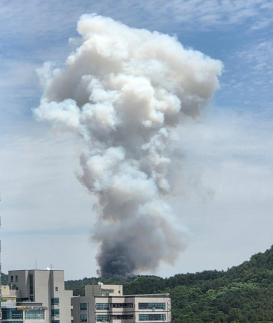 Explosion at Hanwha Aerospace in Daejeon Leaves 7 Dead or Injured An explosion occurred at Hanwha Aerospace's Daejeon facility, marking the third such incident in seven years. The explosion resulted in a total of seven casualties, prompting Hanwha Group and Hanwha Aerospace to commit to thorough recovery efforts. In an official statement, the company expressed condolences and vowed to investigate the cause to prevent future incidents.According to fire authorities, the explosion took place at 10:59 a.m. on June 1, resulting in five fatalities and two injuries.The Daejeon facility is a key research and development site for Hanwha Aerospace, focusing on large propulsion systems, propellant mixing and charging, and tactical ground-to-ground weapon systems.The incident reportedly occurred during a cleaning operation involving explosive residue on propellant equipment in the facility's cleaning area.Hanwha Aerospace has experienced two previous explosions: one in 2018 that killed two workers and injured three others, who later died from their injuries, and another in 2019 that resulted in the deaths of three employees in a different section of the facility.The recurrence of such incidents has raised concerns about safety inspections and management practices at the defense contractor's facilities.In response to the explosion, Hanwha Group and Hanwha Aerospace pledged to prioritize recovery efforts. A crisis meeting was held immediately at the company's headquarters in Seoul, and CEO Son Jae-il traveled to the site shortly after. A command center has been established at the scene, where the company is collaborating with fire and police authorities to manage the situation. Key executives from the group also rushed to the site to assess the situation.In their statement, Hanwha Group and Hanwha Aerospace expressed deep sorrow over the loss of five valued employees, offering heartfelt condolences to the families of the deceased. They also apologized to the public, promising to thoroughly investigate the cause of the explosion to prevent such tragic incidents from happening again.* This article has been translated by AI. 2026-06-01 17:03:00
 -
 Hyungji I&C Targets Japanese B2C Market with Carisnote Brand Hyungji I&C is set to launch its global expansion, starting with the Japanese market. The company plans to apply its omnichannel strategy, which combines online and offline sales, to enhance its business-to-consumer (B2C) operations abroad.On June 1, Hyungji I&C announced that it will introduce its women's clothing brand Carisnote as the leading brand for its entry into Japan. This decision comes in response to the growing demand for business attire in Japan and the expanding K-fashion consumer base shifting from young fashion to adult women's clothing.In the offline sector, the company is collaborating with Tokyo-based fashion sales agent KUNI to secure placements in major local retail channels, including Mitsukoshi Department Store and Onward Kashiyama. In the second half of the year, Hyungji I&C plans to participate in the fall/winter (F/W) season order fairs organized by major Japanese trading companies, including Itochu Corporation.For the online segment, Hyungji I&C intends to leverage a K-fashion online platform set to launch in August by Itochu and fashion distribution company CNB Network. The company aims to establish this platform as a B2C sales hub in Japan and develop a local direct shipping system to broaden its sales base.Once Carisnote establishes itself in the Japanese market, Hyungji I&C plans to expand its local lineup with the men's clothing brand Yejak and the Bon brand. The company is also reportedly considering entering the home shopping platform Shop Channel, which caters to premium brand customers in Japan.A representative from Hyungji I&C stated, "We will build a distribution network in the Japanese market that includes online, offline, and home shopping, and we aim to capture the local premium market with high-quality materials and differentiated designs."In March, ahead of Carisnote's entry into Japan, Hyungji I&C underwent a brand renewal to reduce the heavy image of its existing women's clothing line and to strengthen a younger, more modern concept.* This article has been translated by AI. 2026-06-01 17:00:00
 -
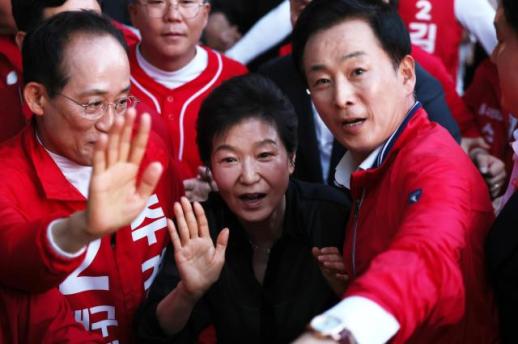 Ex-presidents return to campaign trail to rally conservatives ahead of local elections SEOUL, June 1 (AJP) - Former Presidents Lee Myung-bak and Park Geun-hye on Sunday intensified their support for conservative candidates ahead of the upcoming June 3 local elections, making high-profile campaign appearances in the traditional conservative strongholds of the southeastern cities of Busan and Daegu in a bid to rally voters amid dim prospects. The two former disgraced presidents, both of whom previously received prison sentences in separate corruption scandals before later being pardoned, have collectively joined campaign events 10 times in May alone as the main opposition People Power Party (PPP) seeks to prevent what many within the party fear could be a sweeping defeat by the ruling Democratic Party. Lee, who served from 2008 to 2013, appeared with the PPP's Busan mayoral candidate Park Heong-joon and local lawmakers in Busan. His trip marked Lee's first campaign stop outside the Seoul metropolitan area during this election season. Lee previously met Seoul mayoral candidate Oh Se-hoon in central Seoul on May 15 and separately met Gyeonggi gubernatorial candidate Yang Hyang-ja and Seoul education superintendent candidate Cho Jeon-hyuk later in the month. Park, South Korea's first female president who served from 2013 to 2017, campaigned in Daegu's famous Seomun Market alongside the PPP's Daegu mayoral candidate Choo Kyung-ho and local lawmakers. Park has been campaigning extensively across the southeastern region in recent weeks. She previously visited Seomun Market with Choo on May 23 and later traveled to multiple cities including Okcheon, Daejeon, Gongju, Jinju, Yangsan, Ulsan, Busan, Wonju and Hoengseong. PPP lawmakers defended the involvement of the two former presidents as necessary to consolidate conservative support amid concerns over declining party unity after impeached former President Yoon Suk Yeol's martial law debacle in 2024. Rep. Yoo Sang-bum of the PPP said Park was motivated by fears that conservatives could collapse politically in Daegu, long considered the "heart of conservatism." "I think former President Park Geun-hye decided to support the campaign because she felt an urgent sense that conservatism should not completely collapse while seeing a Democratic Party wave even in Daegu," Yoo said. "Various candidates who felt a sense of crisis that conservatives could collapse in this local election requested support from Park." Yoo added that conservative voters were now regrouping around Park. "There had not been a central axis for conservatives, but Park's visits to places like Daegu are helping conservative forces unite around her," he said. "Unlike a month ago, when many expected the Democratic Party to win overwhelmingly, recent local election polls show several competitive races. I believe the two former presidents played a major role in consolidating conservatives." Rep. Park Sung-min of the People Power Party also defended the strategy. "The presidency belongs to the DP, the National Assembly belongs to the DP, and the judiciary belongs to the DP," Park said. "One-party dominance inevitably becomes corrupt, so the PPP is trying to prevent one-party rule by utilizing every possible resource." Still, some ruling party lawmakers privately questioned the electoral impact of the appearances. An anonymous four-term PPP lawmaker said the former presidents' support "may help somewhat, but it is unreasonable to expect a decisive change in the election." DP candidate Kim Sang-wook, who is running for mayor of Ulsan, dismissed the campaign appearances as ineffective. "Campaigning by former presidents from the People Power Party side is increasing, but citizens are close to indifferent," Kim said. "It appears the PPP is trying to wage this election not through policies but through political camp mobilization." 2026-06-01 16:57:16