

Journalist

RYU SO HYUN
-
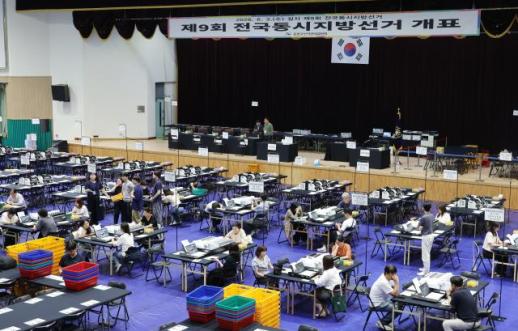 Voters to Decide Local Governance in June 3 Elections On June 3, approximately 44.65 million voters will participate in local elections and National Assembly by-elections. This election, held one year after the inauguration of the Lee government, serves as a significant midterm evaluation. The results are expected to either bolster or diminish the government's momentum. Additionally, the elections are closely tied to the restructuring of the ruling Democratic Party and the opposition People Power Party. According to the National Election Commission, voting will take place simultaneously at 14,288 polling stations across the country from 6 a.m. to 6 p.m. A total of 4,241 positions will be filled, including 16 regional heads (mayors and governors) and 14 National Assembly members. Voters will receive up to eight ballots in two rounds, depending on their region, including for positions such as regional heads, education superintendents, district heads, local assembly members, and National Assembly representatives. Some ballots may not be distributed if there are no by-elections or if candidates are elected unopposed. Voters must use the tools provided at the polling station and can only mark one candidate on each ballot. Taking photos inside the polling station or of the ballots is prohibited, and those who intentionally damage ballots or take pictures of marked ballots may face penalties. During the early voting period from May 29 to 30, 10,498,411 out of 44,649,908 registered voters participated, resulting in a record early voting turnout of 23.51%. If this trend continues, the final voter turnout may exceed the 50.9% recorded four years ago. Key results for regional heads and National Assembly members are expected to emerge by midnight. However, in populous and competitive regions, counting may continue until 3 or 4 a.m. Political analysts suggest that the election will significantly impact the future governance of the Lee administration, as it will be viewed as a midterm assessment of its first year. During the campaign, the ruling Democratic Party urged voters to "support the Lee government through your votes," while the opposition People Power Party called for an end to the "arrogance of the ruling party." Noh Tae-ak, chairman of the National Election Commission, stated, "We will ensure that every precious vote is accurately reflected in the results, and we urge everyone to participate in this election, which can serve as a cornerstone for strengthening grassroots democracy." 2026-06-02 15:36:00
 -
 President Lee Jae-myung Advocates for Bankruptcy Protections President Lee Jae-myung stated on June 2 that measures must be taken to prevent individuals from feeling that they could die due to debt. Speaking at a Cabinet meeting and emergency economic assessment session at the Blue House, he remarked, "It is unacceptable to hear of families committing suicide over unpaid debts; what kind of primitive society is that?"He questioned, "Why not apply to the court for debt relief? Isn’t bankruptcy and discharge an option?"President Lee criticized the stigma surrounding bankruptcy, calling it a "very immoral and bad act" that leads individuals to suffer in silence until it is too late. He emphasized the need for a system that allows those unable to repay their debts to seek adjustments. "If someone feels overwhelmed by debt, they should be able to report it, and I hope we can create an organization to help resolve these issues," he said.He described the situation as a significant social problem, noting that while financial institutions manage long-term delinquent loans systematically, personal debts also require structured management.The President urged all government departments to pay closer attention to the issue of debt-related deaths and to respond accordingly.* This article has been translated by AI. 2026-06-02 15:27:00
 -
 Venture Capital Investment Shifts to Robotics and Physical AI Venture capital funding, which previously flowed into generative artificial intelligence (AI) and graphics processing unit (GPU) infrastructure, is now rapidly shifting towards robotics and physical AI. As physical AI, which enables AI to perceive and interact with the real world, emerges as a next-generation growth industry, domestic venture capital (VC) funds are increasingly directed towards related companies. According to The VC, a venture capital analysis platform, investment in the robotics sector for domestic unlisted startups and small businesses reached 346.4 billion won from January to date. This marks a 552.4% increase compared to 53.1 billion won during the same period last year. However, the number of investment deals decreased from 27 to 23. Despite fewer companies receiving funding, large investment rounds suggest that capital is concentrating on a select few promising firms. During the same period, total startup investment surged from 2.0713 trillion won to 6.655 trillion won, a 221.3% increase. The growth rate in robotics investment significantly outpaces the overall market expansion, indicating heightened interest from investors. The trend of focusing on AI and robotics is also evident in the early investment market. According to The VC's investment statistics for May, 41% of seed-stage investments last month were concentrated in AI and robotics. Cumulatively, from January to May, 43% of the 148 seed investments were directed towards AI and robotics companies. Since the generative AI boom began in earnest in 2023, investments have primarily focused on applications and software. Starting last year, infrastructure companies like GPUs and data centers gained attention, but interest is now shifting towards physical AI. Monthly investment examples further illustrate the enthusiasm for physical AI. In February, autonomous driving and vehicle AI semiconductor design firm Boss Semiconductor raised 87 billion won in a Series A funding round, an unusually large amount for early-stage investment. In April, humanoid robot startup Holiday Robotics secured 150 billion won in a Series A round. Industry experts interpret these cases as a reflection of growing investment expectations in the physical AI and robotics sectors. Physical AI refers to AI technology that recognizes physical environments through sensors, makes autonomous decisions, and interacts directly with the real world via robots, autonomous vehicles, and industrial equipment. Unlike generative AI, which focuses on information generation, physical AI is distinguished by its ability to perform actions in real-world spaces. Industry insiders believe that the movements of global tech companies are also influencing investment sentiment. Notably, Jensen Huang, CEO of NVIDIA, who is visiting South Korea on June 4, has emphasized robotics and physical AI as next-generation growth drivers, further increasing interest in these industries. Jung Hyun-jun, a researcher at the Korea Information Society Development Institute (KISDI), stated, "While investment in AI infrastructure remains active, there is now a growing focus on practical usability and commercialization potential. As interest shifts towards the value AI can create in the real world, robotics and physical AI are gaining attention." He added, "As services addressing real-world issues, such as household assistance and manufacturing automation, increase, the spread of related technologies is expected to accelerate." However, there are concerns that the intensifying concentration of investments may make it more challenging for early-stage startups outside the AI and robotics sectors to secure funding. 2026-06-02 15:27:00
 -
 Increase in Foreign Tourists Boosts South Korea's Labor Market Last year, South Korea welcomed a record 19.84 million foreign tourists, significantly impacting the expansion of the domestic service sector. Notably, this growth is primarily seen in stable regular employment rather than temporary or part-time jobs. According to relevant authorities, of the total foreign visitors, approximately 15.82 million came for tourism, accounting for 83.5% of all arrivals. Since 2012, the number of foreign tourists has consistently exceeded 10 million annually, peaking at 14.43 million in 2019. After a sharp decline to around 800,000 in 2021 due to the COVID-19 pandemic, the numbers rebounded to pre-pandemic levels last year. Foreign tourists' spending in South Korea is also on the rise. Based on credit card data, foreign tourist spending increased from 7.9 trillion won in 2019 to 17.4 trillion won in 2025, a 2.2-fold increase. In comparison, domestic tourism spending grew from 160.5 trillion won to 180.3 trillion won, a 12% increase during the same period, indicating a much faster recovery for foreign spending. The spending by foreign tourists is concentrated in shopping and accommodation sectors. Last year, foreign tourist spending reached approximately 14.9 trillion won in real terms, with shopping accounting for 37.4%, accommodation for 21.2%, wellness and medical services for 15.2%, and food and beverage for 13.8%. Compared to 2019, the share of spending in the food and beverage sector increased by 4.4 percentage points, and transportation by 2.1 percentage points. Notably, shopping at duty-free stores and large shopping malls, as well as accommodation in hotels and leisure services like casinos, dominated the spending landscape, highlighting a trend toward larger retail channels. The increase in foreign spending is also affecting the domestic job market. The Korea Labor Institute's report on the impact of rising foreign tourists on service sector employment indicates that the influx of foreign visitors is contributing to an increase in wage-earning jobs in the service sector. While the employment response was not immediately evident in the first three months following the increase in foreign visitors, a gradual rise in employment began to show around four months later. Specifically, a 10% increase in foreign tourists in a given month is estimated to result in an additional 6,000 wage-earning jobs six months later, compared to industries with no exposure to tourism. This includes an estimated 3,500 jobs in retail, 2,100 in accommodation and food services, 330 in transportation and warehousing, and 80 in arts, sports, and leisure. Moreover, as foreign spending is concentrated in large businesses such as duty-free shops, large malls, and casinos, there has been a notable increase in stable regular employment. Regular employment began to rise significantly about five months after the increase in foreign tourists, peaking around nine months later. In contrast, temporary and part-time employment did not show statistically significant changes. The Labor Institute noted, "In the first quarter of this year, foreign tourist arrivals reached 3.91 million, with tourism expenditures totaling 4.2 trillion won, marking increases of 27.3% and 23.9%, respectively, compared to the same period last year. Considering the positive impact on regular employment in the service sector, we expect continued growth in stable regular jobs beyond just the overall expansion of service sector employment." 2026-06-02 15:27:00
 -
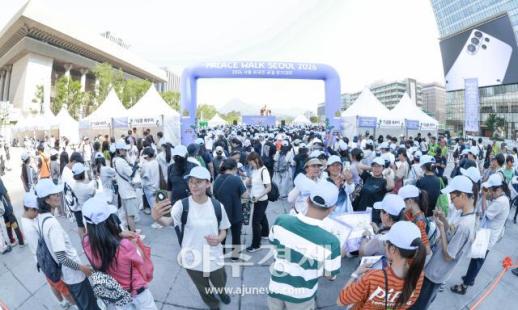
 Thousands enjoy Seoul in early summer vibe through palace walking event SEOUL, June 01 (AJP) - Foreign residents, international students and tourists explored Seoul's historic palaces and cultural landmarks during the 2026 Seoul Foreign Palace Walking Event held in central Seoul on Sunday. Hosted by Aju Economic Daily, the event brought together participants from various countries, including China, Japan, the United States, France, India, Vietnam and Mexico, as well as Korean citizens. Participants followed a roughly 7-kilometer route starting from Gwanghwamun Square and passing through Gyeongbokgung Palace, Bukchon, Changdeokgung Palace, Changgyeonggung Palace and Jogyesa Temple, offering a unique opportunity to experience Korea's history and traditional culture in the heart of the capital. Many foreign participants stopped to take photographs and admire the scenery around the historic palaces and Bukchon Hanok Village, experiencing firsthand the blend of traditional heritage and modern urban life that characterizes Seoul. The event was held as part of the Cheong Wa Dae-Seoul Five Grand Palaces Trekking Festival, the nation's only palace-themed walking festival. Organizers expanded the program to twice a year, in spring and autumn, beginning last year. In addition to the walking course, visitors enjoyed cultural performances and K-culture photo zones featuring royal costumes, royal physicians and palace guards. Participants dressed in traditional attire and posed for commemorative photos throughout the venue. The opening ceremony was attended by Lim Kwu-jin, president of Aju Economic Daily; Gil Gi-yeon, chief executive officer of the Seoul Tourism Organization; Cho Tae-sook, chairperson of the Seoul Tourism Association; Jacques Flies, the Ambassador of Luxembourg to South Korea; and Wray Mulendema Hamweene, minister counsellor at the Embassy of Zambia to South Korea. The event provided foreign visitors with an opportunity to experience Seoul's cultural heritage while promoting the city's historic palaces and traditional attractions to an international audience. 2026-06-02 15:26:00
 -
 Budget Mobile Providers Lose Subscribers Amid 5G Transition The budget mobile provider (MVNO) market has recorded subscriber losses for two consecutive months. After maintaining a growth trend through the first quarter of this year, MVNOs shifted to a decline in April, which worsened in May. According to data from the Korea Telecommunications Operators Association (KTOA) released on June 2, the net loss of MVNO subscribers in May was 11,211. This marks an increase of 3,858 from the 7,353 subscribers lost in April. This marks the first time MVNOs have experienced two consecutive months of subscriber losses since the SK Telecom (SKT) SIM card hacking incident in August and September of last year. However, analysts note that this decline is occurring amid intensified competition among the three major telecom companies (SKT, KT, and LG Uplus) to attract subscribers. Following the repeal of the Mobile Device Distribution Improvement Act (the Device Subsidy Act), competition for subsidies among telecom companies has intensified. In May, significant funding was allocated for the Galaxy S26 series and distribution incentives, accelerating the departure of MVNO users. The trend of subscriber losses in the MVNO market is expected to worsen. LG Uplus has introduced an integrated pricing plan that includes 5G plans priced in the 20,000 won range, and SKT and KT are set to launch mid-range pricing plans on July 1. This raises concerns that the appeal of low-cost plans, which have been a key competitive advantage for MVNOs, may diminish. The mobile telecommunications market is rapidly shifting from LTE to 5G. According to the Ministry of Science and ICT, as of March 21, the number of LTE subscribers decreased from 19,329,763 in August of last year to 18,323,894 in March, a drop of 1,005,869. In contrast, the number of 5G subscribers increased from 37,506,623 to 38,927,406 during the same period, an increase of 1,426,783. The issue is that the MVNO market remains predominantly LTE-based. As of March, LTE subscribers accounted for 93% of all MVNO subscribers, totaling 9,713,009, while 5G subscribers numbered only 584,315, representing just 5.6% of the total. Industry experts express concern that if the three major telecom companies expand integrated pricing plans that combine 5G services with LTE pricing, the demand for low-cost LTE plans—MVNOs' core competitive advantage—could diminish. The ongoing subscriber losses for MVNOs are seen as closely related to these market changes. Some analysts argue that the government's telecommunications cost reduction policy may conflict with efforts to support MVNOs. While the government has historically supported MVNOs to enhance competition in the telecom market, the recent push for mid-range 5G pricing plans from mobile carriers may inadvertently weaken the price competitiveness of MVNOs. One industry expert stated, "In a market where MVNOs exist, directly lowering the prices of telecom companies can ultimately narrow the space for MVNO operators. If the goal is to alleviate the burden of telecommunications costs, it would be more effective to lower the wholesale prices for MVNOs rather than adjusting the retail prices of mobile carriers."* This article has been translated by AI. 2026-06-02 15:24:00
 -
 K-Content Industry Faces Challenges Despite Record $14.9 Billion Exports As K-Culture emerges as a new growth engine for the national economy, some experts warn that the K-content industry may be entering a decline phase, a theory referred to as the 'peak theory.' This concern stems from an increasing reliance on foreign OTT platforms, which complicates the acquisition of key intellectual property (IP), alongside the rapid expansion of Chinese short drama platforms into global markets, including Southeast Asia. According to the Ministry of Culture, Sports and Tourism, K-content exports reached a record $14.9 billion (approximately 22.566 trillion won) last year. The influx of foreign tourists to South Korea also hit an all-time high of 18.94 million, driven by the spread of K-Culture. The government is expanding support to enhance the competitiveness of the content industry. In 2026, it plans to establish the largest-ever cultural and film fund, totaling 731.8 billion won, and is preparing a global league fund based on foreign capital worth 150 billion won. In January of this year, a tax credit for webtoon production costs was introduced, and the expiration date for the tax credit on video content production costs has been extended to 2028. The growth of K-content is positively impacting various sectors, including tourism, beauty, and food. The interest in South Korea generated through content is believed to enhance the country's brand value, creating a virtuous cycle that boosts demand for consumer goods and tourism. In fact, the Ministry of Culture estimates that when including beauty and food exports, the total K-Culture export scale reached approximately $71.8 billion last year, making it the third-largest export industry in the country, following semiconductors ($173.4 billion) and automobiles ($72 billion). However, the mood in the industry is not entirely optimistic. The profitability of the content sector is declining due to intensified competition with global OTT platforms, rising production costs, and the proliferation of illegal distribution. Minister of Culture, Sports and Tourism Choi Hwi-young noted at a press conference on May 28 that during a previous briefing, he had mentioned, "K-Culture may have reached its peak," emphasizing the need for both the private sector and the government to seize current opportunities and collaborate. The most pressing issue is the growing dependence on foreign OTT platforms. While the global status of K-content has improved, challenges such as reduced funding for the broadcasting industry, skyrocketing production costs, and limitations of advertising-based revenue models are hindering the competitiveness of domestic platforms. Notably, global OTT providers are adhering to a 'production investment model' that grants them exclusive rights to content IP, making it difficult for domestic producers to secure licensing revenue or secondary business rights, even if their works achieve global success. Industry insiders express concern that the K-content sector could devolve into a 'subcontracting base for global platforms.' One industry source remarked, "Recently, we have seen a surge of Japanese and Chinese dramas on Netflix. These countries have lower production costs compared to Korea," adding that the success of the Chinese drama 'The Legend of the Jade Sword' is indicative of this trend. Changes in content consumption patterns also present new variables. The short drama market from China is rapidly growing, particularly in Southeast Asia, putting pressure on the existing long-form streaming ecosystem. Chinese short drama platforms like RealShot and DramaBox have begun to aggressively target overseas markets in response to saturation in their domestic markets, resulting in a cumulative global download count exceeding 370 million as of the first quarter of last year. Cultural critic Jeong Deok-hyun stated, "While interest and demand for K-content in overseas markets remain high, the internal foundation of the industry is not solid. Even if content is produced, securing sales and attracting investment is challenging." He further noted, "Just because some indicators have reached record highs does not mean the entire industry is thriving. The situation is difficult, as rising production costs and a market restructured around OTT platforms have made investors more cautious about risk management, leading to a reduction in production by traditional media outlets and a general contraction in content investment." 2026-06-02 15:24:00
 -
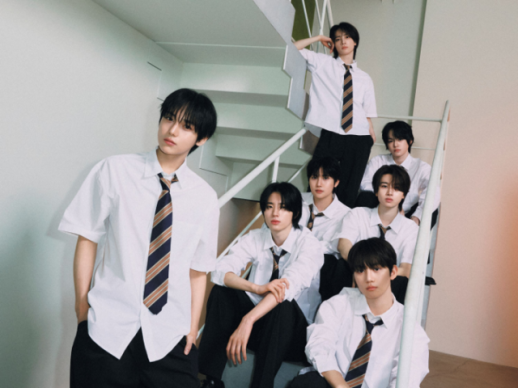 New boy band to hold debut showcase in Tokyo later this month SEOUL, June 2 (AJP) - A new boy band will make a debut, Starship Entertainment said on Tuesday. In partnership with Japanese entertainment agency Amuse, the seven-member rookie band, dubbed AEN, will consist of four Korean and three Japanese members: Bomin, Haru, Haruto, Jiyong, Junseo, Kaira, and Kyuhyun. Their name stands for "a new era of now" and also carries the meaning of "eternity" in Japanese. Six members excluding Haruto, previously appeared on Starship Entertainment's audition project "Debut's Plan," which aired last year. AEN will hold their first showcase in Tokyo on June 27, with about 3,000 fans to be invited to the event through a lottery. Fans can sign up for the showcase until June 8, with details available on AEN's Japanese website. 2026-06-02 15:12:48
 -
 President Lee Urges Accountability from Prosecutors, Cautions Against Errors President Lee Jae-myung stated on June 2 that "any organization should apologize and retract if it makes a mistake." During a Cabinet meeting and emergency economic assessment session at the Blue House, President Lee made these comments after receiving a report from Acting Prosecutor General Koo Ja-hyun on the government's achievements in its first year. He cautioned, "We must not fall into the trap of believing we are infallible." He emphasized, "It applies to any organization that if they make a mistake, they should apologize and retract their actions." President Lee described the prosecution as a "quasi-public, quasi-judicial organization with public duties," asserting that it wields significant power and must bear corresponding responsibilities. However, he did not specify any particular instances where an apology or retraction would be necessary. His remarks were interpreted as a reference to the Democratic Party's push for the dismissal of prosecutions. Ahead of the June 3 local elections, the party has proposed a bill to establish a special prosecutor to grant authority to cancel related prosecutions. President Lee expressed gratitude for the prosecution's efforts over the past year, saying, "I know the prosecution has been under a lot of pressure lately, but I appreciate the results they have achieved despite that." In response, Han Dong-hoon, an independent candidate running in the Busan North Gap by-election, criticized the president's comments on Facebook, asking, "What are you suggesting should be canceled?" He claimed the remarks were a prelude to pushing for the dismissal of his own case after the election. Han urged voters to support him, stating, "Tomorrow, on the day of the local elections, I will enter the National Assembly, so please vote for Han Dong-hoon, number 6 on the ballot." Additionally, President Lee called for the courts to consider making lower court rulings public. He noted that currently, most published rulings are limited to cases that have been finalized by the Supreme Court, suggesting that expanding this scope would enhance transparency in the judicial process. He pointed out, "If lower court rulings are not made public, how can the public understand the standards by which the courts make their judgments?" Regarding concerns about personal information exposure, he suggested that names in the rulings could be anonymized, stating, "We should legislate on this matter soon." 2026-06-02 15:12:00
 -
 Samsung Heavy wins $2.8 billion FLNG order in North America SEOUL, June 02 (AJP) - Samsung Heavy Industries announced it has won an order to build one floating liquefied natural gas (FLNG) production unit for a North American client, in a deal worth 4.33 trillion won ($2.85 billion). The South Korean shipbuilder said Tuesday through regulatory filings that construction will begin once the client issues a notice to proceed, with delivery scheduled for July 2030. It did not name the buyer. FLNG units are vast offshore vessels that extract, chill and store natural gas at sea, freeing producers from the cost and delay of building pipelines and onshore export terminals to reach remote gas fields. Demand has firmed as buyers in Asia and Europe hunt for supply to bridge the shift away from coal. Samsung Heavy is a dominant player in the niche, having built Royal Dutch Shell's Prelude, the world's largest FLNG facility. The company said it has secured seven of the 11 FLNG units ordered worldwide to date, giving it a 64 percent share of the global market. The contract lifts Samsung Heavy's order tally this year to 28 vessels worth $8.3 billion, or about 60 percent of its $13.9 billion annual target, the company said. Its commercial vessel arm has booked $5.0 billion, 88 percent of target, on the back of 13 LNG carriers, two very large ethane carriers, four very large gas carriers, two container ships and six crude tankers. The offshore division, including the latest FLNG award, has won $3.3 billion in orders, or 40 percent of its $8.2 billion goal for the year. Shares of Samsung Heavy Industries traded at 27,800 per stock at 3:08 p.m., 0.91 percent higher than the day before. 2026-06-02 15:11:06