

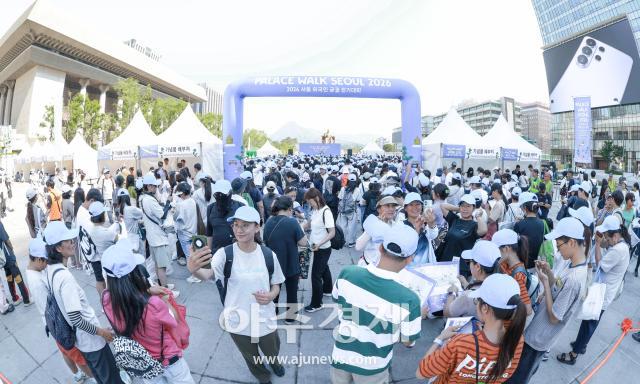
According to relevant authorities, approximately 19.84 million foreign visitors traveled to South Korea last year, the highest number recorded. Among them, 15.82 million came for tourism, accounting for 83.5% of the total.
Since 2012, the number of foreign tourists has consistently exceeded 10 million annually, peaking at 14.43 million in 2019. Following a sharp decline to about 200,000 in 2020 due to the COVID-19 pandemic, the numbers rebounded to pre-pandemic levels last year.
Foreign tourists' spending in South Korea is also on the rise. Based on credit card data, foreign tourist spending increased from 7.9 trillion won in 2019 to 17.4 trillion won in 2025, a 2.2-fold increase. In comparison, domestic tourist spending rose from 160.5 trillion won to 180.3 trillion won, a more modest increase of about 12%.
Foreign tourist spending is primarily concentrated in shopping and accommodation sectors. Last year, foreign tourist spending reached approximately 14.9 trillion won in real terms. The breakdown by sector showed that shopping accounted for 37.4%, accommodation for 21.2%, medical and wellness services for 15.2%, and food and beverage for 13.8%.
Compared to 2019, the shares of food and beverage (up 4.4 percentage points) and transportation (up 2.1 percentage points) have increased. Notably, shopping expenditures were significantly driven by duty-free shops and large shopping malls, while hotels and casinos dominated the accommodation and leisure services sectors, respectively. This indicates a consumption structure centered around major channels.
The increase in foreign spending is also influencing the domestic labor market. The Korea Labor Institute's report titled "Impact of Increased Foreign Tourists on Service Sector Employment" indicates that the rise in foreign tourists is contributing to an increase in wage employment in the service sector. Although the employment response was not significant in the first three months following the increase in foreign visitors, the effects began to gradually appear after about four months.
Specifically, it is estimated that a 10% increase in foreign tourists in a given month leads to an additional 6,000 wage workers being employed six months later, compared to industries with no exposure to tourism. This includes an estimated 3,500 jobs in retail, 2,100 in accommodation and food services, 330 in transportation and warehousing, and 80 in arts, sports, and leisure sectors.
Moreover, as foreign spending is concentrated in large businesses like duty-free shops, large shopping malls, and casinos, there has been a noticeable increase in stable permanent jobs. The number of permanent positions began to rise significantly about five months after the increase in foreign tourists, peaking around nine months later. In contrast, no statistically significant response was observed for temporary or daily jobs.
The Korea Labor Institute noted, "In the first quarter of this year, foreign tourist numbers reached 3.91 million, and tourism expenditure was 4.2 trillion won, marking increases of 27.3% and 23.9%, respectively, compared to the same period last year. Considering the significant impact on permanent employment in the service sector, we anticipate that this trend will contribute to a broader expansion of stable job opportunities in the service industry."
* This article has been translated by AI.

Copyright ⓒ Aju Press All rights reserved.