

Journalist

Salih Murat Tamer
-
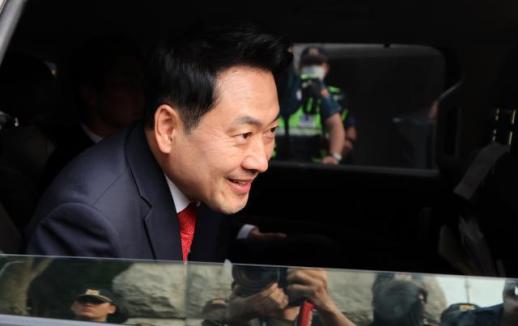 Calls for Leadership Change in People Power Party After Local Election Loss Calls for the resignation of Jang Dong-hyuk's leadership in the People Power Party are growing among lawmakers aligned with the Pro-Han Dong-hoon faction following the party's defeat in the June 3 local elections.Ahn Sang-hoon, a member of the faction, stated on Facebook on June 4, "Jang Dong-hyuk's leadership has absurdly expelled former leader Han Dong-hoon, while Oh Se-hoon, who distanced himself from Jang's leadership, managed to retain Seoul. This is a signal for the rational reconstruction of conservatism. Public sentiment reflects the will of the people, and the party leadership must quickly determine their future."Park Jeong-hoon also held a press conference at the National Assembly with fellow lawmakers, including Bae Hyun-jin, stating, "The leadership will reflect on their decisions, but for our party to be reborn as a beloved entity, the local elections must serve as a turning point. I believe the opinions of the lawmakers are aligned. I expect a consensus to be reached in the party meeting." Kim So-hee, a lawmaker with less factional affiliation, also posted on Facebook, urging, "The leadership of the People Power Party must resign in response to the public's reprimand."Jin Jong-o remarked on Han's victory in the Busan North District by-election, saying, "This is the last warning and opportunity from the public for the People Power Party to change. It is a mandate to rebuild conservatism through unification. We must not dismiss or ignore the voices calling for reform any longer."However, Jang appears set to ignore the calls for resignation and continue in his role. After leaving the Central Party's counting room in Yeouido on the morning of June 4, he did not appear in public and skipped the afternoon party meeting due to health reasons. Instead, he posted on Facebook, stating, "Despite the difficulties faced in this election, we have maintained the spark of hope. I will not shy away from the heavy responsibility placed upon me and will work with party members to find a new path forward."* This article has been translated by AI. 2026-06-04 16:24:00
 -
 Toss Bank Enhances 'Easy Employment Contract' Service Toss Bank has added document issuance capabilities to its 'Easy Employment Contract' service, allowing users to handle everything from contract signing to document preparation in one go. On June 4, Toss Bank announced that it has integrated the ability to issue health examination certificates, resident registration documents, and bank account copies into its 'Easy Employment Contract' service. This initiative aims to facilitate the contract signing process for both employees and employers. Previously, workers had to visit multiple agencies to obtain necessary documents for payroll or hygiene-related administrative procedures after signing an employment contract. With this new feature, both employees and employers can now instantly issue various required documents directly through the app after signing the contract. The available documents include health examination certificates, resident registration documents, and Toss Bank account copies. Notably, for those working in food-related industries, the health examination certificate, which is mandatory, previously required a return visit to the health center to collect results. Now, users can check and save the results in PDF format directly through the Toss Bank app. The service has also been enhanced for individual business owners. Toss Bank has integrated the 'Easy Employment Contract' service into its 'Mini Home' feature for individual business account holders. This allows business owners to manage various tasks related to business operations, including financial management, hiring, contract signing, and document preparation, all within the app. A Toss Bank representative stated, "The 'Easy Employment Contract' service began with the goal of finding ways to protect the rights of both workers and employers more conveniently and securely. We will continue to identify and address the practical challenges faced by all workers in the field using financial technology."* This article has been translated by AI. 2026-06-04 16:21:00
 -
 Independent Lawmaker Kang Sun-woo Requests Bail Amid Corruption Charges Independent lawmaker Kang Sun-woo, who has been charged with receiving 100 million won in campaign contributions, has recently filed a request for bail in court. According to legal sources on June 4, Kang submitted his bail request to Judge Lee Chun-geun of the Seoul Central District Court on June 2. Bail is a legal procedure that allows for the release of a defendant from custody under certain conditions, such as the payment of a security deposit. Once a bail request is filed, the court will hold a separate hearing to hear arguments from both the defendant and the prosecution before making a decision. A hearing date for Kang's request has not yet been scheduled. Kang was arrested in March on charges of violating political funding laws, including accepting 100 million won from former Seoul city council member Kim Kyung as a bribe for campaign favors ahead of the January 2022 local elections. At that time, Kim, who was affiliated with the Democratic Party, was nominated as the sole candidate for the Democratic Party's city council seat in Kang's constituency of Gangseo-gu, Seoul, and subsequently won the election. The prosecution has also charged Kang's former aide, Nam Mo, who facilitated the meeting between Kang and Kim, along with Kim. While Kim and Nam have acknowledged the charges in court, Kang has denied all allegations.* This article has been translated by AI. 2026-06-04 16:21:00
 -
 Kakao Games Nominates Kim Tae-hwan and Lee Si-woo for Board Positions Ahead of Shareholder Meeting Kakao Games is set to hold an extraordinary shareholders' meeting to nominate Kim Tae-hwan, Vice President of Line Games, and Lee Si-woo, Chief Business Officer of Kakao Games, for board positions. Kim is expected to assume the role of new CEO following the meeting. The company announced on June 4 that the extraordinary shareholders' meeting will take place on the 22nd at the Kakao AI Campus in Yongin, Gyeonggi Province. The agenda includes the election of two internal directors, one external director, and one non-executive director. Kim holds a degree in Political Science and International Relations from Yonsei University and has previously served as Vice President at Nexon Korea, Chief Business Development Officer at Nexon Japan, and Vice President at Nexon America. He is recognized for his extensive experience in both domestic and international gaming operations and global business development. Joining Kim as a candidate for internal director is Lee Si-woo, who has held various roles at NHN and Wemade, and previously served as the head of the mobile business division at Kakao Games. The external director candidate is Seo Seok-ho, Managing Director at Petrico Partners. Seo graduated from Washington University in St. Louis with a degree in Business and completed his MBA at Dartmouth College's Tuck School of Business. Industry analysts believe that this extraordinary shareholders' meeting will pave the way for Kakao Games to establish a new management structure and refine its growth strategies, including new game releases and global expansion. The company stated, "The introduction of a co-CEO system is currently under review, and specific details will be announced once the appointments are confirmed through the board and extraordinary shareholders' meeting procedures later this month." 2026-06-04 16:18:00
 -
 Starbucks Korea card spending drops after 'Tank Day' backlash SEOUL, June 04 (AJP) - Estimated credit and debit card spending at Starbucks Korea fell by more than 10 billion won ($6.53 million) last month from April, data showed, as a marketing controversy weighed on the coffee chain. Estimated card spending at Starbucks reached 121.19 billion won in May, down about 13.1 billion won from 134.32 billion won in April, according to Mobile Index on Thursday. The decline deepened in the latter half of the month. Weekly spending slipped from 32.16 billion won during May 11 to 17 to 23.69 billion won during May 18 to 24, when the "Tank Day" controversy erupted, before falling again to 21.46 billion won during May 25-31, the second consecutive weekly drop. The figures cover only estimated domestic card payments and exclude corporate bank transfers, cash, gift certificates, simple payments and in-app transactions, the company said. Demand still held firmer on other channels. As of 4 p.m. on Thursday, Starbucks vouchers ranked first and second in the cafe category on the KakaoTalk Gift platform, led by a 50,000-won e-card voucher. Starbucks Korea triggered the backlash on May 18, the anniversary of the Gwangju Democratic Uprising, by using the term "Tank Day" to promote a tumbler discount event. As criticism spread online, Shinsegae Group dismissed Starbucks Korea's chief executive and issued a public apology. 2026-06-04 16:15:29
 -
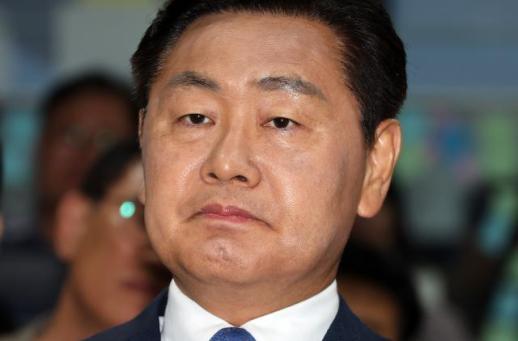 Kim Kwan-young: The Democratic Party is Not Jeong Cheong-rae's Property In the recent local elections, Kim Kwan-young, who ran as an independent after opposing the internal primary process for the Jeonbuk governor candidacy, lost to Lee Won-taek of the Democratic Party. Kim stated that "the Democratic Party is not Jeong Cheong-rae's property" and called for a judgment of Jeong's leadership at the party convention in August. On June 4, Kim expressed on his Facebook page, "I humbly accept the results of this election," but added, "I am not here to report my defeat today. I stand here to discuss the true significance of this election." He reiterated, "I still believe this election was a contest between the people of Jeonbuk and Jeong Cheong-rae's leadership," and emphasized that the judgment of Jeong's faction is not over. "If I had won, Jeong Cheong-rae's leadership should have resigned immediately," he explained. Kim particularly stressed the need to judge Jeong's faction at the upcoming Democratic Party convention in August. He stated, "We must act based on our unwavering resolve. The August convention will be the first stage for that," adding, "The Democratic Party is not Jeong Cheong-rae's property. We must hold Jeong's faction accountable for their unfair nominations." He urged the 42% of Jeonbuk residents who supported him to work together to oust Jeong's faction at the convention, asserting, "We need to change the Democratic Party, support the success of the Lee Jae-myung government, and steer South Korean politics in a better direction."* This article has been translated by AI. 2026-06-04 16:15:00
 -
 Minister Kim Sung-hwan: No Immediate Plans for Electricity Rate Increase Minister Kim Sung-hwan of the Climate Energy Environment Ministry stated on June 4 that the government is not currently considering an increase in electricity rates despite the recent rise in liquefied natural gas (LNG) prices.During a briefing with reporters at the Government Complex in Seoul, Kim explained that the threshold for Korea Electric Power Corporation (KEPCO) to turn to losses is an average wholesale electricity price (SMP) of 146 won, while the current SMP remains in the 120 won range.He added, "KEPCO recorded a profit of 13 trillion won last year and a profit of 3 trillion won in the first quarter of this year, so there are currently no significant factors necessitating an increase in electricity rates."However, he indicated that measures would be put in place to prepare for a prolonged surge in LNG prices. Kim emphasized the need to prevent a situation similar to the one during the Russia-Ukraine war, where some businesses profited excessively from rising gas prices, which ultimately burdened KEPCO with losses. He mentioned that various options, including price caps and settlement systems, are under internal review.While ruling out an immediate rate increase, Kim noted that the restructuring of the electricity system would proceed swiftly. The ministry plans to initiate discussions on introducing regional electricity pricing in the second half of this year to promote balanced national development and decentralized power networks.Kim pointed out that industrial electricity rates in South Korea are higher than those in countries like China and the United States, stating, "There is a need to stabilize industrial electricity rates in conjunction with national balanced development."He also mentioned that the ministry is considering lowering rates for areas farther from the capital region through regional pricing. This plan will be shared with the public following consultations with relevant departments and a national forum.Discussions on restructuring the five major power companies are also set to intensify. Kim noted that determining how to reorganize these companies in line with the goal of phasing out coal by 2040 is one of the key issues in the 12th Basic Plan for Electricity Supply and Demand. He revealed that a study on the potential integration of the five companies is underway, with preliminary results expected to be released this month.He explained that the plan will include a roadmap for phasing out coal power plants, handling remaining facilities, transitioning to a bidirectional power grid, and expanding flexible power sources.Regarding the direction of the energy mix, Kim stated, "We aim to phase out coal by 2040 while expanding renewable energy to 100 GW and maintaining nuclear power." He added that the adjustment of roles among renewable energy, nuclear, and gas will be a central topic in the 12th Basic Plan.Kim expressed a commitment to establishing a new power system that utilizes both renewable energy and nuclear power while using gas as an emergency and flexible power source. He indicated that these issues would be discussed with the public in open forums.Reflecting on the first anniversary of the ministry's establishment, Kim highlighted the synergy gained from the integration of departments. He noted that the consolidation of policy oversight and execution functions has accelerated the implementation of key policies, such as the expansion of renewable energy and the promotion of electric vehicles.He acknowledged that while the public may not yet feel the impact, they will soon experience more tangible results from policies like community solar income starting in the second half of the year.* This article has been translated by AI. 2026-06-04 16:06:00
 -
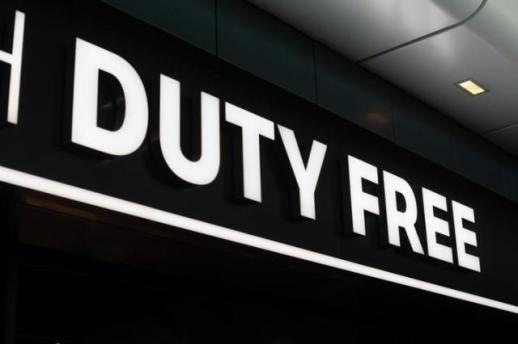 Finance Ministry Meets with Duty-Free Industry to Discuss Support Measures As the domestic duty-free industry shows signs of recovery this year, risks such as competition with local retail channels and high exchange rates remain prevalent. In response, the Ministry of Finance has convened a meeting with industry representatives to address their concerns. On June 4, the Ministry of Finance held a meeting at Incheon Airport with the Korea Duty-Free Shops Association to assess the current market situation and explore revitalization strategies. The ministry listened to feedback from stakeholders in the industry. Attendees included major duty-free operators such as Lotte, Shilla, Shinsegae, and Gyeongbokgung, along with representatives from the Korea Duty-Free Shops Association. According to the association, total sales at domestic duty-free shops reached 1.08 trillion won in March, a 12.5% increase from the previous month, driven by a rise in foreign tourist numbers. Both the number of foreign buyers and sales figures rose by approximately 20% compared to the previous month. While major duty-free shops have returned to profitability, challenges persist due to ongoing high exchange rates and intensified competition with local retail channels. Industry representatives have called for support measures, including a reduction in duty-free license fees, an increase in tax-free purchase limits for travelers, and a relaxation of regulations governing duty-free operations. They also emphasized the need for tailored marketing strategies targeting foreign tourists and the introduction of experiential products utilizing K-content. A Ministry of Finance official stated, "We will actively review the issues raised during today’s meeting and will continue to maintain communication with the duty-free industry."* This article has been translated by AI. 2026-06-04 16:06:00
 -
 SK Group's Chey Tae-won Establishes AI Partnership with Foxconn Chey Tae-won, chairman of SK Group, is accelerating efforts to dominate the global artificial intelligence (AI) ecosystem by solidifying partnerships with Foxconn, following a similar agreement with TSMC. On June 3, local time, Chey met with Foxconn Chairman Liu Yangwei in Taipei to discuss collaboration aimed at enhancing next-generation AI infrastructure competitiveness. As the leadership in the AI industry expands beyond semiconductors to encompass servers and data centers, the partnership with key global AI ecosystem players is intended to secure a foothold in future markets. Foxconn is the world's largest electronics contract manufacturer and is currently supplying AI servers to major global tech companies in response to the growing demand for AI data centers. This meeting is significant as it highlights Chey's direct involvement in strengthening infrastructure competitiveness through collaborations with global firms. SK plans to solidify its technological competitiveness in the global market based on innovations in next-generation AI memory technology. Additionally, both companies exchanged views on robotics, energy management, and battery technology. They agreed to explore future collaboration opportunities by combining SK Group's energy technology foundation with Foxconn's strengths in global manufacturing, system integration, and AI applications.* This article has been translated by AI. 2026-06-04 16:06:00
 -
 China Trade Surplus in Sight, but Structural Deficits Persist South Korea is on the verge of achieving a trade surplus with China for the first time in four years, but experts caution that this should not be viewed as a structural recovery. While rising semiconductor prices have contributed to the improvement in the trade balance, the structural vulnerabilities related to China's self-sufficiency in intermediate goods and dependence on core minerals remain significant.According to the Ministry of Trade, Industry and Energy and the Customs Service, the cumulative trade balance with China from January to May this year recorded a surplus of $9.9 billion, indicating a strong possibility of breaking free from the trade deficit that has persisted since 2023.The shift in trade dynamics with China this year is largely attributed to a surge in semiconductor prices. Last month, semiconductor exports to China reached $9.87 billion, a staggering 243.2% increase compared to the same period last year, accounting for more than half of total exports to China. In contrast, traditional key items such as petroleum products (-18.2%), petrochemicals (-10.4%), and general machinery (-2.1%) continued to struggle.With the semiconductor sector expected to remain robust this year, the likelihood of a trade surplus with China for the first time in four years is increasing. However, experts believe it is premature to consider this a structural recovery.Kim Tae-hwang, a professor at Myongji University’s Department of International Trade, stated, "The current improvement in the trade balance with China should be seen as a temporary phenomenon resulting from the semiconductor cycle. If it weren't for the semiconductor boom this year, it is highly likely that we would have recorded a deficit."In reality, South Korea's trade structure with China has undergone rapid changes in recent years. In the past, South Korea exported intermediate goods such as semiconductors and displays to China, which would then process them for sale in the U.S. and Europe. This structure allowed South Korea to achieve a trade surplus of $62.8 billion with China in 2013.However, as China's manufacturing competitiveness has rapidly increased, the situation has changed. Chinese companies have begun to produce the intermediate goods that South Korea used to supply, weakening South Korea's export competitiveness in key sectors such as electronics, chemicals, and machinery.The Korea Institute for International Economic Policy (KIEP) also noted in a report that "China's export structure centered on intermediate goods is strengthening, while its import structure is weakening." According to KIEP, during the period of significant trade deficits with China in 2023, the intermediate goods sector, excluding semiconductors, recorded a deficit of $7.5 billion. The surplus in the electronics and chemical sectors, which had previously driven the trade surplus, has also significantly diminished.KIEP identified not only the global ICT downturn but also China's self-sufficiency in intermediate goods and the weakening competitiveness of South Korean products as factors contributing to the trade deficit.Supply chain risks remain a concern. South Korea relies heavily on China for a significant portion of core minerals essential for high-tech industries, such as rare earth elements and graphite. As China tightens its strategic management and export controls on these minerals, supply chain risks are likely to increase.Experts emphasize the need for a dual strategy: reducing dependence on China through long-term supply chain diversification while maintaining a stable procurement system in the short term. The United States, which also has a high dependence on Chinese core minerals, should expand cooperation with major mineral-producing countries while implementing realistic supply chain strategies.Additionally, there are calls to explore new avenues for trade with China beyond semiconductors to enhance the sustainability of trade relations. It is particularly important to secure new export drivers not only in goods trade but also in the service sector.Professor Kim stated, "Rather than general-purpose products that China is rapidly catching up on, we should increase investments in areas like HBM, advanced semiconductors, and OLEDs, where China finds it difficult to follow. Ultimately, maintaining a technological edge is the key to preserving our trade competitiveness with China." He added, "While China is quickly catching up in goods trade, South Korea still holds a competitive advantage in service sectors such as finance, healthcare, law, and education. It is essential to secure new export drivers through the expansion of the service sector in the Korea-China FTA."* This article has been translated by AI. 2026-06-04 16:03:00