
Journalist

Samuel Garrett
-
 Hyundai Bioscience Wins South Korea Approval for Prostate Cancer Trial Change; Other Pharma-Bio Updates Hyundai Bioscience wins MFDS approval for prostate cancer trial change Hyundai Bioscience said April 20 that South Korea’s Ministry of Food and Drug Safety has given final approval to a revised investigational new drug plan for a combination-therapy clinical trial in prostate cancer using its broad-based “environment normalization” agent, Penetrium. The company said it will submit related documents on April 21 to the Institutional Review Board at Seoul National University Hospital, then hold a site initiation visit in mid-May before starting patient enrollment and dosing. The trial is examining whether reduced drug response can stem not only from cancer-cell mutations but also from a physical barrier in the tumor microenvironment that can create what it calls “pseudo-resistance,” in which drugs fail to reach the tumor and the lack of response is mistaken for tumor evolution. The newly approved change adds an AR-V7 genetic-variant test at the patient screening stage. Patients with “true resistance” (AR-V7 positive), in which the receptor itself is altered and the drug does not work, will be excluded. The study will instead select patients with “pseudo-resistance” (AR-V7 negative) and treat them with a combination of enzalutamide and Penetrium. The company said that if the trial produces successful interim results, prostate cancer patients could potentially continue benefiting from existing targeted therapies without moving to chemotherapy that can involve severe side effects. Huons Group joins Gyeonggi Community Chest of Korea’s major-donor program Huons Group said April 20 it held a donation ceremony after joining the Gyeonggi branch of the Community Chest of Korea’s “Sharing Prestigious Company” program. Attendees included Song Soo-young, CEO of Huons Global and Huons; Kang Min-jong, CEO of Humedix; and Kwon In-wook, chairman of the Gyeonggi Community Chest of Korea, the company said. The program is a network of corporate donors that have contributed at least 100 million won. Huons Group said three of its companies decided to join together to continue donations, following ongoing community support, medical volunteer work and scholarship programs. The donations will be used through the Gyeonggi Community Chest of Korea to support living and medical expenses for low-income households and to improve educational environments, the company said. GC Green Cross MS wins EU CE-IVDR certification for GGP-100 glucose meter GC Green Cross MS said April 20 that its new blood glucose monitoring system, the GC Fit (model GGP-100), has received certification under the European Union’s In Vitro Diagnostic Medical Devices Regulation, known as CE-IVDR. CE-IVDR tightens performance and safety requirements compared with the previous CE-IVDD framework and is required for entry into the EU market, the company said. GC Green Cross MS said the GGP-100 met the strengthened standards despite being classified as a high-risk Class C product, demonstrating safety and performance. The company said the certification also secures EU-level performance and safety coverage for its full lineup of blood glucose meters, including existing products. The company said the approval enables EU market entry about two months earlier than planned. It also said it plans to expand exports by obtaining CE-IVDR certification for an optical hemoglobin measurement product. Jaseng Korean Medicine Hospital backs Bucheon FC 1995 youth teams with training gear Jaseng Medical Foundation said April 20 it held a handover ceremony to provide soccer equipment for Bucheon FC 1995 youth teams. The foundation said the support is intended to help create a stable training environment for young players aspiring to become national team members. About 100 players will receive uniforms, soccer cleats and balls, among other items, worth about 5 million won. Jaseng Healthcare also sponsored health functional foods, it said. The foundation said it plans to continue support under the aim of encouraging the youth teams’ efforts, while monitoring training conditions and considering additional measures such as medical support. Bucheon Jaseng Korean Medicine Hospital has provided medical support to Bucheon FC 1995 under a partnership spanning 17 years, and has participated as the club’s main sponsor since last year.* This article has been translated by AI. 2026-04-20 17:45:00
 -
 Asian stocks close higher amid cautious optimism over possible fresh US-Iran talks SEOUL, April 20 (AJP) - Asian stock markets closed higher on Monday as investors bet on optimism ahead of another round of ceasefire negotiations between the U.S. and Iran, lifting overall market sentiment despite lingering tensions in the Middle East. Despite conflicting reports of impending talks in Islamabad, Pakistan, with Iran denying any plans to negotiate, the benchmark KOSPI in Seoul gained 0.44 percent to close at 6,219.09, while the tech-heavy KOSDAQ rose 0.41 percent to finish at 1,174.85. Samsung Electronics fell 0.69 percent to close at 214,500 won, while SK Hynix jumped 3.37 percent to 1,166,000 won. LG Energy Solution climbed 2.63 percent to 429,000 won, and Doosan Enerbility rose 2.30 percent to 111,000 won. HD Hyundai Heavy Industries added 1.95 percent to 524,000 won. Samsung SDI surged 4.87 percent to 538,000 won after signing a multi-year agreement with Mercedes-Benz to supply batteries for next-generation electric vehicles. But auto-related shares declined, with Hyundai Motor falling 2.04 percent to 527,000 won and Kia dropping 1.13 percent to 157,400 won. Entertainment stocks all moved lower. HYBE fell 2.86 percent to 255,000 won, JYP Entertainment declined 1.42 percent to 62,300 won, SM Entertainment slipped 1.80 percent to 93,000 won, and YG Entertainment dropped 2.68 percent to 54,400 won. In Tokyo, the Nikkei 225 rose 0.60 percent to close at 58,824.89, while China's Shanghai Composite gained 0.76 percent to end at 4,082.13. 2026-04-20 17:26:34
 -
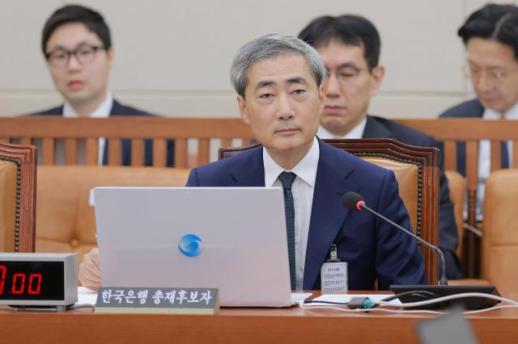 BOK's new chief to start work Tues after last-minute confirmation SEOUL, April 20 (AJP) — South Korea’s incoming central bank chief Shin Hyun-song is set to begin his term Tuesday under a cloud of unresolved personal controversies, after the National Assembly approved his confirmation report Monday following two earlier rejections. Shin marks the first nominee for the Bank of Korea governorship to fail to secure initial approval from the parliamentary Strategy and Finance Committee since confirmation hearings became mandatory in 2014. The former economist at the Bank for International Settlements faced intense scrutiny during his April 15 hearing over a range of personal matters, including family wealth, overseas asset holdings and alleged irregularities involving his children. Lawmakers raised concerns about his family’s substantial foreign-currency assets, an allegedly irregular transfer to Korea University, and questions surrounding his daughter’s failure to report her loss of Korean nationality, along with allegations of maintaining a so-called “paper residence.” “Approximately 93 percent of the nominee’s 4.6 billion won ($3.1 million) in financial assets are held in foreign currencies,” Rep. Park Dae-chul of the opposition People Power Party said, linking the issue to broader pressure on the Korean won from rising overseas investment. Rep. Chun Ha-ram of the Reform Party also pressed Shin over allegations that his daughter applied for residency using a canceled resident registration number after renouncing her Korean nationality. The committee had twice rejected Shin’s confirmation report on April 15 and April 17, citing delays in the submission of supporting documents. While the president can appoint a central bank governor without parliamentary consent, securing the committee’s endorsement is widely seen as critical to establishing political legitimacy at the outset of the term. By contrast, former Governor Lee Ju-yeol — the first to undergo the confirmation process — faced little resistance, with his reappointment smoothly approved in 2018. Shin’s immediate predecessor, Rhee Chang-yong, encountered some criticism over what was described as a “midnight appointment” and his long tenure abroad, but his confirmation proceeded without major controversy. President Lee Jae Myung is expected to electronically sign off Shin’s appointment during his state visit to India during the day to avoid a leadership vacuum at the central bank, as Rhee’s term ends Monday. 2026-04-20 17:09:28
 -
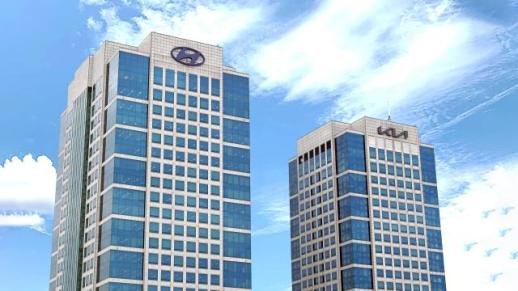 Hyundai Motor protests to USTR Section 301 probe for potential double taxing SEOUL, April 20 (AJP) - South Korea's Hyundai Motor Group has lodged a complaint with U.S. trade authorities over potential double taxing, claiming additional duties under Section 301 could duplicate existing restrictions under other regulations. In its submission to U.S. Trade Representative Jamieson Greer, the automaker — which plans to invest $26 billion in the United States through 2028 — stressed its role in strengthening American supply-chain resilience as it “respectfully submits comments” on the Section 301 investigation into excess capacity and manufacturing sectors. Section 301 of the U.S. Trade Act of 1974 allows Washington to impose tariffs or other restrictions on imports from countries deemed to engage in unfair trade practices. The so-called “Super 301” provision — historically used to identify and respond to priority foreign trade barriers — has been associated with broader and more aggressive enforcement measures. In its filing, Hyundai said industries such as automobiles and steel, already subject to import curbs under Section 232 of the Trade Expansion Act of 1962, should not face additional tariffs under Section 301, citing the risk of redundant regulatory burdens. The company argued that imposing further duties on inputs and components already covered by existing measures would increase production costs at U.S.-based facilities without materially improving domestic manufacturing capacity, employment, or supply chain resilience. The submission is seen as reflecting broader group-level concerns, given Hyundai’s extensive U.S. exposure across automobiles, parts, steel, and construction. In a separate filing, the Korea Automobile & Mobility Association (KAMA) highlighted the long-term economic contributions of Korean automakers in the United States. The association said Hyundai Motor Group has invested more than $20 billion in the U.S. over the past four decades, supporting roughly 570,000 jobs. It added that the company plans to invest an additional $26 billion between 2025 and 2028, a move expected to create about 25,000 new jobs. KAMA also noted that South Korea’s annual auto production has remained in the range of 3.5 million to 4.2 million units over the past decade despite rising global demand, contributing to a decline in the country’s global production ranking from fifth in 2020 to seventh in 2024. 2026-04-20 17:09:04
 -
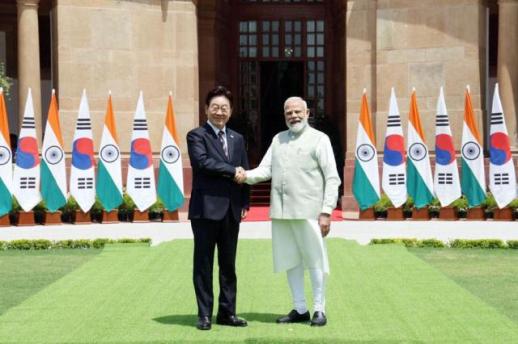 Lee set to deliver speech at business forum in India SEOUL, April 20 (AJP) - President Lee Jae Myung, who is on a state visit to India for a summit with Indian Prime Minister Narendra Modi on Monday, is set to attend a business forum later in the day to promote investment and cooperation between companies in the two countries. Lee is scheduled to deliver opening remarks at the forum, co-hosted by the two countries, where he is expected to emphasize stronger supply-chain cooperation. The forum, being held for the first time in eight years, is seen as a restart of bilateral economic cooperation. About 250 business leaders from South Korean conglomerates are attending including Samsung Electronics chairman Lee Jae-yong, Hyundai Motor Group chairman Chung Eui-sun, LG Group chairman Koo Kwang-mo, and HD Hyundai vice chairman Chung Ki-sun. About 350 participants from India including executives from the Sanmar Group and Essar Group, are also taking part, with discussions expected to accelerate cooperation between companies from the two countries. About two dozen memorandums of understanding (MOUs) in areas including shipbuilding, digital technology, and energy are expected to be signed. These include agreements between the Federation of Korean Industries and the Indian Chamber of Commerce as well as GS E&C's wind repowering project in India and cooperation on Naver's map services. One-on-one meetings in advanced industries, gaming, entertainment, and other areas are also planned to strengthen practical cooperation. 2026-04-20 16:57:52
 -
 S. Korea hits the accelerator on nuclear pivot after Hormuz lesson SEOUL, April 20 (AJP) - Nuclear energy has become hot. It already was due to the exponential demand for electricity to power hyperscalers to train and deploy artificial intelligence. But it has got even hotter due to the Gulf war crisis. South Korea is the world’s fifth-largest energy importer by value and one of the four largest importers of LNG globally, regularly purchasing around 40 million tonnes per year. With virtually no domestic fossil fuel reserves, the country imports nearly 95% of its primary energy needs — a structural vulnerability that has driven decades of debate about energy security. Electricity demand has grown relentlessly to around 600 terawatt-hours annually, powered by energy-intensive industries from semiconductors to shipbuilding, making decarbonization both urgent and structurally difficult. Fuel self-sufficiency has become national priority after the Gulf war that disrupted the core waterway along the Iran coast responsible for one fifth of the world's oil and gas shipments, accelerating U-turn in states that chose phase-out over safety issue since the Fukushima meltdown from Germany to South Korea and Japan. For South Korea, heavily exposed to Gulf supply routes and entirely dependent on energy imports, the takeaway has been immediate: energy security cannot be left to geography. Under President Lee Jae Myung, that realization is translating into policy. The administration is moving toward renewed nuclear expansion as the phase-out trajectory of the Moon Jae-in era is effectively being overruled by necessity. “Nuclear, SMRs, and next-generation technologies must be accelerated alongside energy diversification and industrial transformation,” Lee said in an April 7 senior secretariat meeting, signaling that nuclear is no longer a transitional option but a core pillar of future growth. Nuclear currently supplies roughly one-third of South Korea’s electricity, anchoring an economy built on semiconductors, petrochemicals and advanced manufacturing, while demand is accelerating beyond legacy assumptions, powered by AI infrastructure and electrification. Renewables, contributing just over 10 percent, remain constrained by intermittency and land use, while LNG — accounting for roughly a quarter of supply — is increasingly vulnerable to shipping disruptions. In that equation, nuclear stands out as the only large-scale, low-carbon baseload energy source that can be generated domestically. In March 2026, Korea Hydro & Nuclear Power confirmed that four local governments — Ulju, Yeongdeok, Gyeongju and Gijang — submitted bids to host new nuclear facilities, including both large-scale reactors and the country’s first small modular reactor (SMR), with timelines extending into the late 2030s. A global reversal, not a local exception South Korea’s pivot is part of a broader, if understated, global reversal. In the aftermath of Fukushima, countries across Europe and Asia embraced nuclear phase-out policies. Today, many are retracing their steps. In Germany, debate has reopened over restarting recently shuttered reactors as energy costs rise. Italy is preparing for reintroduction after decades without nuclear power, while Switzerland has moved to lift restrictions on new construction. In Asia, Taiwan—once committed to a nuclear-free future—has begun steps toward restarting reactors to support its semiconductor-driven economy. Even the European Commission has acknowledged that sidelining nuclear may have been a strategic miscalculation, reflecting a broader recognition that decarbonization without baseload stability is incomplete. The driver is no longer just climate policy. It is geopolitics. The Gulf crisis has underscored how concentrated global energy risk has become. A handful of chokepoints — led by the Strait of Hormuz — can disrupt supply chains on which entire economies depend. Nuclear power offers insulation from that volatility. Once fueled, reactors can operate for extended periods without continuous imports. But that insulation comes with a paradox. South Korea imports 100 percent of its uranium and remains constrained under its nuclear cooperation framework with the United States, limiting enrichment and reprocessing. This creates a new layer of dependency—less visible than oil tankers, but equally strategic. As next-generation reactors such as SMRs move toward commercialization, that constraint is becoming more binding. Advanced designs increasingly rely on fuels such as high-assay low-enriched uranium (HALEU), requiring more complex enrichment capabilities and tighter supply chains. Seoul is now pushing to expand its role within that fuel cycle, with Washington signaling conditional openness under the existing bilateral framework, often referred to as the “123 Agreement.” What is emerging is not just a reactor buildout, but a negotiation over nuclear sovereignty. A key feature of South Korea’s strategy is its emphasis on SMRs. Smaller, modular and faster to deploy, they offer flexibility in siting and scalability for a grid increasingly shaped by decentralized, high-density demand such as data centers. More importantly, they represent an industrial opportunity. The United States, the United Kingdom, Canada and Japan are all investing heavily in next-generation reactors. South Korea, with its established reactor fleet and export track record, is positioning itself not only to deploy but to compete. Nuclear, in this sense, is becoming industrial policy. 2026-04-20 16:48:06
 -
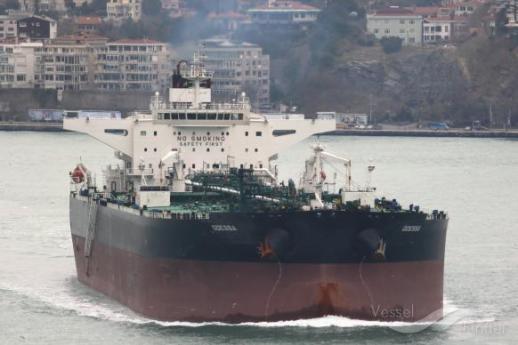 Oil tanker passing through Strait of Hormuz 'heading to discharge its cargo' in South Korea SEOUL, April 20 (AJP) - An oil tanker that passed through the Strait of Hormuz is expected to arrive in South Korean waters as early as next month, Reuters reported on Monday. The Malta-flagged Odessa is "heading to discharge its cargo at South Korean refiner Hyudai Oilbank after passing through the Strait of Hormuz," it said. "The Suezmax tanker, which can carry 1 million barrels of oil, had its AIS tracker switched off and re-appeared on April 17 near the United Arab Emirates' Fujairah port," it added, quoting data from maritime tracking provider Kpler and the London Stock Exchange (LSEG). Another tracking service, VesselFinder, also estimated that the Odessa, which was off the coast of India on Monday morning, is scheduled to arrive at a port in Daesan, South Chungcheong Province on May 8. The vessel, capable of carrying about 1 million barrels of oil, accounts for roughly half of South Korea's daily oil consumption, but it remains unknown what the tanker is carrying. Meanwhile, a South Korean oil tanker that passed through the Red Sea last week after receiving crude at Saudi Arabia's Yanbu port is continuing its voyage. That marked the first instance of transporting approximately 2 million barrels of oil through the Red Sea as an alternative route since the blockade of the strait, prompting the government to consider utilizing the Red Sea route as an alternative for oil shipments. According to industry sources, around five contracts have been signed so far between Saudi Arabia's state-owned oil company Aramco and South Korean refineries, with each tanker expected to carry roughly 2 million barrels of oil. But challenges remain, as a member of the Houthi militia recently mentioned the possibility of blocking the Bab al-Mandab Strait, a critical chokepoint connecting the Red Sea and the Gulf of Aden. 2026-04-20 16:31:13
 -
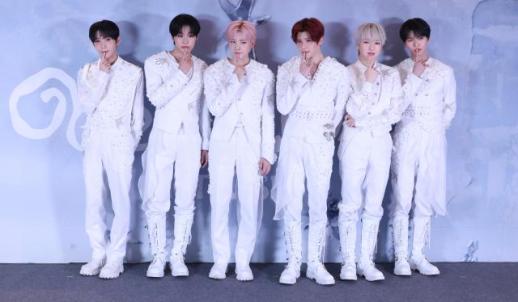 NCT WISH drops its first studio album SEOUL, April 20 (AJP) - K-pop boy group NCT WISH has dropped its first full-length album on Sunday after successfully wrapping up an encore concert in Seoul. According to SM Entertainment, NCT WISH releases its first studio album, Ode to Love, at 6 p.m. The 10-track album, featuring the lead single of the same name, brings together the group’s signature “fresh and neo” sound that it has built since debut. Ahead of the release, the group held its first solo concert encore show, NCT WISH 1st CONCERT TOUR INTO THE WISH : Our WISH ENCORE IN SEOUL, from April 17 to 19 at KSPO DOME. The concerts sold out all seats and drew enthusiastic responses from fans after premiering performances of the title track Ode to Love and B-side song Sticky. Having shown steady growth with each release since debut, NCT WISH is expected to showcase expanded capabilities in music, performance and teamwork through the new album. The group will also open a large-scale pop-up store at The Hyundai Seoul from April 21 to May 3 following the album launch. 2026-04-20 16:22:41
 -
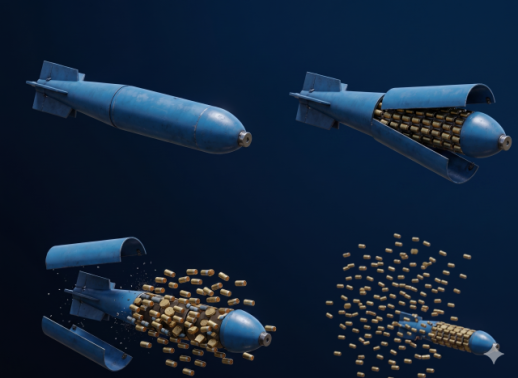 Pyongyang tests banned cluster missiles as Kim Jong-un asserts saturation capability SEOUL, April 20 (AJP) - In a bid to assert its ground-to-ground wide-area suppression capability, Pyongyang test-fired tactical ballistic missiles carrying cluster warheads on Sunday. The drill, reported by the Korean Central News Agency on Monday, involved weaponry banned by most of the international community due to its indiscriminate nature and lasting humanitarian risk. According to Pyongyang's state media, the Missile Administration of the Democratic People's Republic of Korea (DPRK) conducted the test to evaluate the lethality of the Hwasongpho-11 Ra, a surface-to-surface projectile designed to saturate targets with submunitions rather than a single explosion. North Korean leader Kim Jong-un oversaw the launches alongside senior officials. During the exercise, five missiles were fired toward an island target 136 kilometers (84.5 miles) away. The projectiles struck an area measuring between 12.5 to 13 hectares with high density, a footprint roughly equivalent to 18 soccer fields. The focus on cluster munitions follows recent developments in the Middle East, where Iranian cluster ballistic missiles successfully penetrated Israel's layered air defense network. According to reports from human rights groups and defense analysts, these missiles challenge even sophisticated systems like the Arrow-3 by releasing their payloads at altitudes between 7 and 10 kilometers. The timing of this disclosure suggests a deliberate effort to demonstrate tactical parity with modern battlefield trends. This transparency likely reflects a growing confidence in the weapon's ability to bypass regional defenses, mirroring recent tactical successes seen in the Middle East. By publicizing the results of a five-year development cycle, Pyongyang could be notifying South Korea that its existing interceptor systems may no longer guarantee protection against a saturated missile volley. This development marks a shift toward operational, battlefield-ready tactics, signaling that the regime has moved beyond strategic posturing to focus on high-density suppression of specific target areas. These munitions have been largely outlawed by international consensus because they disperse hundreds of small bomblets over vast areas, frequently failing to detonate upon impact. These unexploded submunitions effectively become landmines that kill and maim civilians, even decades after a conflict has concluded. This persistent threat led a majority of the world's nations to renounce their use under an international treaty established in 2007, though several major military powers such as the United States, Russia, China, South Korea, and North Korea remain outside the agreement. Despite the international outcry over such weaponry, the Korean Peninsula remains one of the world's primary hubs for cluster munition production and storage. South Korea is a major manufacturer of these weapons and maintains a stockpile that ranks among the largest in the world, trailing only the U.S., China, and Russia, according to data from the Landmine and Cluster Munition Monitor. South Korea has consistently declined to join international bans, maintaining that the munitions are a critical defensive necessity to counter the massive conventional forces and artillery that the North has concentrated along the border. A cluster bomb functions as a parent munition that opens in mid-air to scatter dozens or hundreds of smaller submunitions over a target zone. This mechanism is designed to destroy multiple targets simultaneously, such as infantry formations, unarmored vehicle convoys, or aircraft on a runway. Chang Do-young, the spokesperson for the South Korean Joint Chiefs of Staff, stated during a briefing that "related content was being closely monitored and detailed specifications are being analyzed in depth" and added that "North Korea's ballistic missile launch is a clear violation of UN Security Council resolutions, and it must immediately stop the continuous missile provocation acts that heighten tensions on the Korean Peninsula and actively participate in our government's efforts to establish peace." 2026-04-20 16:15:53
 -
 South Korean names missing from Forbes' AI 50 list SEOUL, April 20 (AJP) - No South Korean company made Forbes' list of the world's "most promising privately held" companies in the field of artificial intelligence (AI). According to the magazine's "AI 50" list, released last week, U.S. startups dominated the list, with only two from Sweden and one each from Canada and the U.K. No Asian companies were included with none from South Korea. The annual list of top AI companies, now in its eighth year, was compiled following an initial review of thousands of eligible startups. A panel of experts, scholars, and researchers evaluated each firm based on its "technical rigor, technical potential, and market competitiveness." "Juggernauts like OpenAI and Anthropic continue to be the largest companies on the list, attracting unprecedented sums of cash from marquee Silicon Valley venture capitalists and tech behemoths alike as they reportedly head towards blockbuster IPOs," the magazine said. "The two AI giants have accumulated a combined $242.6 billion in venture funding, about 80 percent of the total $305.6 billion that the companies on this year's AI 50 list have raised," it added. A long road lies ahead for South Korea, as the country remains absent from the list, despite the government's goal of becoming one of the world's top three AI powerhouses through a project to develop an independent AI foundation model. Industry insiders argue that South Korean startups must develop revenue models that extend beyond the domestic market and secure overseas investment to compete on the global stage, as the AI 50 list prioritizes business performance and fundraising as key indicators. 2026-04-20 15:29:08