
Journalist

Seán Canney
-
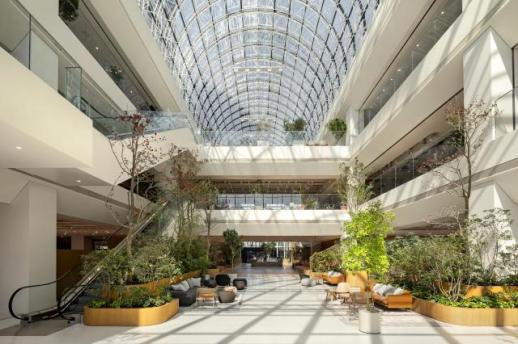 Hyundai Motor's Yangjae Headquarters Reopens as a Hub for Human-Robot Collaboration "Let’s collaborate more, lower barriers, and work in an open manner." Chung Eui-sun, Chairman of Hyundai Motor Group, made these remarks on May 14 during the 'Lobby Story Town Hall' event at the Yangjae headquarters. He noted that the lobby renovation stemmed from a desire to build on the experiences, achievements, and ideas accumulated at the Yangjae headquarters. "This initiative began with a goal to change our work environment to foster innovation, and I believe we have achieved a satisfactory result," he said. ◆ Renovated after nearly two years: An open plaza for employee communication Hyundai Motor Group's Yangjae headquarters has served as the group's control tower since 2000, symbolizing the foundation of its growth. The renovation, which began in May 2024 and took about two years to complete, centers on the philosophy of 'communication.' The lobby has been redesigned into an open plaza for employees, covering approximately 36,000 square meters, equivalent to the size of five soccer fields, spanning from the basement to the fourth floor. The event took place in the newly created tiered lounge, 'Agora,' where Chung and other key executives, including Vice Chairman Jang Jae-hoon and Presidents Seo Kang-hyun, Choi Jun-young, Sung Kim, and Park Min-woo, gathered with those involved in the lobby's design. Chung emphasized that "short conversations can lead to new ideas, and sharing information can facilitate better outcomes. I hope this project will change our working environment and, consequently, our working methods." Chung pointed out that 'Yangjae' means 'land where virtuous talents gather,' expressing hope that the talented individuals at the headquarters will naturally interact in the lobby and various spaces, leading to greater achievements. He added, "To better understand our customers, we need to be more flexible. Let’s collaborate more, lower barriers, and work in an open manner." ◆ Creating a people-centered plaza: Chung emphasizes the power of reflection The lobby renovation was undertaken by Studios Architecture, a global architecture and interior design firm. The core concept of the renovation is a 'plaza for freely exchanging ideas.' Hyundai Motor Group has restructured the space while preserving the essence and framework of the Yangjae headquarters, focusing on the values of connection and collaboration. The first-floor lobby features a tiered lounge called Agora, inspired by ancient Greek plazas, designed to encourage employees to gather naturally. Surrounding Agora are the 'Connect Lounge' for meetings and relaxation, an 'Open Stage' for exhibitions, and a café with an outdoor garden, all interconnected with seating and tables for communication. To create a bright and inviting atmosphere, the lobby utilizes a vertically open atrium from the first to the third floor, filled with plants and trees. Notably, the design includes harmonious indoor landscaping in collaboration with Professor Jung Young-sun, a pioneer in Korean landscape architecture, providing employees with a space to pause and reflect. In line with Hyundai Motor Group's goal to become a leader in human-centered physical AI, a robot station has been installed on the first floor, creating a high-tech lobby environment where employees and robots coexist. Robots such as the 'DAL-e Gardener' for landscaping, 'DAL-e Delivery' for deliveries, and 'SPOT' for protocol and security have been introduced. Alexandra Villegas Sanne, design director at Studios Architecture, explained, "Most companies ask for impressive lobbies that serve as brand showrooms, but Hyundai Motor Group wanted a space centered on people from the start. They desired a living plaza where people actually gather, meet, and share ideas, and we focused on that in our design." Chung concluded, "Brilliant ideas that enable innovation and change rarely emerge when confined to one place. Innovation often arises from brief conversations, chance encounters, or quiet moments of reflection. I hope this lobby renovation will facilitate more active collaboration on-site."* This article has been translated by AI. 2026-05-14 13:57:23
 -
 Shifting Public Sentiment in Seoul: Oh Se-hoon's Comeback and Jung Won-oh's Uncertainty The atmosphere in Seoul is changing, similar to the shifts seen in the Yeongnam region. Currently, candidate Jung Won-oh is still leading within the margin of error. Experts explain that within this margin, the results can be considered statistically equivalent. However, those experienced in elections understand that it is not just the current numbers that matter, but the trends. Recent polls show Oh Se-hoon has halved the gap in just a few weeks. The so-called "golden cross" is beginning to emerge in political discussions. Seoul has always been a city that wavers until the end. While it may appear to lean left in national elections, local elections prompt voters to reconsider who can effectively manage the city. Many voters prioritize practical governance over ideology. This makes elections in Seoul particularly challenging and unpredictable. This election is no different. Observations indicate that the Democratic Party's organizational strength is robust. Even in traditionally conservative areas like Seocho and Gangnam, Democratic candidates are actively campaigning, engaging with residents and canvassing neighborhoods. In contrast, the People Power Party appears relatively subdued, making it seem that the Democratic Party has the upper hand. However, there is a peculiar scene: the expressions of the voters. Despite the Democratic candidates' vigorous efforts, the public's response is surprisingly lukewarm, bordering on indifferent. This suggests a sense of detachment, as if voters are saying, "We will wait and see." This sentiment may be linked to the various confusions that have arisen since the inauguration of the Lee Jae-myung administration, including turmoil over real estate policies, controversies surrounding the cancellation of indictments, and excessive political arrogance. The government, less than a year in office, may already be showing signs of fatigue. Nevertheless, the Democratic Party should not be underestimated. The real contest is just beginning. The progressive camp has historically demonstrated remarkable unity when feeling threatened. This has been evident in past elections, particularly in Seoul, where higher voter turnout tends to favor the Democratic Party. The enthusiasm among Democratic supporters on the ground is also significant. Therefore, the biggest risk for Oh Se-hoon’s campaign is complacency. Entering the margin of error signals not victory, but the true battle has begun. However, Oh Se-hoon does have an advantage: his established credibility. Jung Won-oh has yet to be sufficiently vetted by the entire electorate in Seoul. As the election approaches, it remains uncertain what new controversies or variables, referred to as "hidden traps," may emerge. While Jung has administrative experience in Seongdong-gu, questions remain about his readiness to manage a vast city like Seoul. Critics point out that instead of providing clear answers to recent controversies and policy confusions, he often responds evasively during public scrutiny. Voter concerns include issues like the response to heavy snowfall, the Cancun trip controversy, the feasibility of redevelopment and transportation pledges, and budget issues related to smart shelters in Seongdong-gu. Despite these pressing questions, Jung has been criticized for occasionally deflecting with vague responses or political attacks. The Seoul mayoral election is a stage for "verification," not just "image." Voters will closely observe the candidates' attitudes and communication skills until the very end. In contrast, Oh Se-hoon has already served as mayor four times and has experience as a member of the National Assembly, along with two electoral defeats. Politically, he is a well-analyzed figure, with both supporters and detractors already familiar with him. There seems to be little new to uncover. In politics, verification can be a double-edged sword. It can leave scars but also provide stability. In a vast city like Seoul, "familiar competence" can be a surprisingly strong asset. Citizens often prefer to vote for managers rather than revolutionaries. Thus, this Seoul mayoral election is not merely a battle of ideologies. It is a contest of "unity" versus "stability." The Democratic Party will push forward with its organization and enthusiasm, while Oh Se-hoon will counter with his experience and urban management skills. Given the current momentum, the possibility of a golden cross certainly exists. However, the final week of elections in Seoul has historically defied predictions. Therefore, Oh Se-hoon’s campaign must remain vigilant until the end, as Seoul is a city that often changes its mind at the last moment.* This article has been translated by AI. 2026-05-14 13:53:56
 -
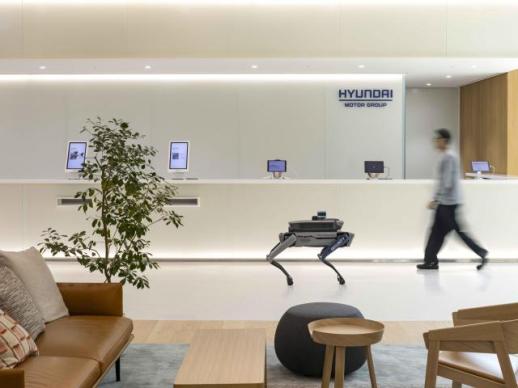 Hyundai Motor's Yangjae Office Transformed into Robot-Friendly Building The lobby, designed with a glass ceiling, resembles a vast "indoor garden." The vertical space from the first to the third floor is filled with large trees and plants, making it hard to distinguish whether it is an office or a park. This perfect landscaping is maintained by the watering robot "DAL-e." DAL-e travels throughout the expansive lobby, watering plants and automatically recharging in a designated rest area at scheduled times. When afternoon meetings begin, a delivery robot brings dozens of coffee cups to summoned employees. Meanwhile, Spot patrols the premises, monitoring for fire and security risks. This harmonious coexistence of humans and robots is part of Hyundai Motor Group's newly remodeled Yangjae office. Hyundai Motor and Kia announced on May 14 that they have redesigned their Yangjae office in Seoul into a robot-friendly building, launching three types of services: a watering robot, a delivery robot, and a security robot. The newly introduced robots include the watering robot "DAL-e Gardener," the delivery robot "DAL-e Delivery," and the security robot "Spot." The initiative reflects the companies' commitment to creating an environment where employees can coexist with robots while performing their daily tasks, advancing their goal of becoming a leader in physical AI. DAL-e Gardener assists in maintaining the landscaping by supplying water to various plants throughout the office. It uses multiple sensors to gather information and recognizes the space in three dimensions, distinguishing between plants, soil, and flower beds. The robot arm can move up and down and rotate in six axes to spray water accurately. If the water stored in the robot runs low, it communicates with the building's water supply system to automatically refill, while also draining any remaining water to maintain cleanliness, minimizing the need for human intervention. DAL-e Delivery also began operations, delivering beverages from the first-floor café to designated pickup zones on each floor. Employees can order drinks via a mobile app, and DAL-e retrieves the beverages and delivers them to the requested location. It can carry up to 16 drinks simultaneously and features a facial recognition system for accurate delivery. The robot autonomously navigates complex spaces, avoiding obstacles as it moves. The security robot Spot, developed by Boston Dynamics, has been equipped with an autonomous driving module created by Hyundai and Kia's Robotics Lab. This module allows Spot to recognize its surroundings and navigate autonomously, patrolling the building and performing security duties. The Yangjae office features a robot-friendly environment with dedicated waiting areas and elevators for robots. The three types of robots automatically recharge at a designated robot station on the first floor when their battery levels are low, and they can perform tasks independently while using the dedicated elevators to move between floors. In addition to the robots, Hyundai and Kia have implemented a facial recognition system called "Facey" throughout the building to streamline access security procedures. The delivery robot DAL-e Delivery is integrated with Facey to identify the orderer without requiring separate authentication. An integrated control system called "NARCHON" manages the various robots. Robot managers can access NARCHON via a web app from anywhere, allowing them to monitor the location, status, and charging information of registered robots in real time. They can also easily adjust robot schedules and control their locations, enabling efficient operation of multiple robots. Through these efforts, the Yangjae office has received technical verification from UL Solutions, a global safety certification organization, confirming its suitability as a robot-friendly building. Chung Euisun, chairman of Hyundai Motor Group, stated, "As a company that plans and produces various robots, we have deployed actual robots so that employees can naturally encounter them in their workspaces. I expect this will create a positive feedback loop that allows us to directly experience the changing world and enhance our group's robotic technology competitiveness, leading to better product development." He added, "In the future, the Yangjae office will serve as a testbed for improving the performance of more robots developed by Hyundai Motor Group, and I hope employees will gain inspiration for innovative ideas."* This article has been translated by AI. 2026-05-14 13:50:59
 -
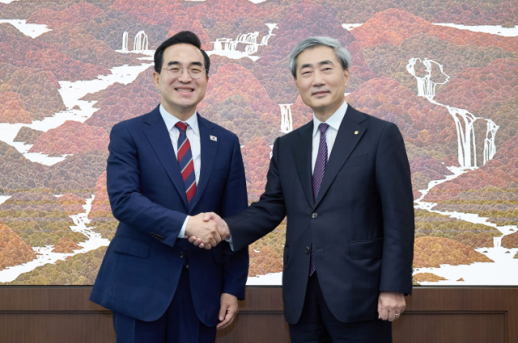 Finance Ministry and Bank of Korea Leaders Meet to Enhance Policy Cooperation Finance Minister Park Hong-keun and Bank of Korea Governor Shin Hyun-song held their first official meeting on May 14, agreeing to strengthen cooperation on fiscal and monetary policy to address complex crises. This marks the first official meeting between the heads of the two institutions in history. They pledged to work closely together to tackle challenges posed by the Middle East conflict, low growth, and demographic changes. During the meeting at the Bank of Korea headquarters in Seoul, Park stated, "The Ministry of Economy and Finance and the Bank of Korea must harmonize fiscal and monetary policies to enhance future growth potential and actively work to overcome structural crises." This meeting is the first since the revival of the Ministry of Economy and Finance after 18 years. Previously, Governor Shin met with Deputy Prime Minister and Minister of Economy and Finance Koo Yun-cheol just two days after his appointment on April 23. Park noted, "In response to the unexpected crisis of the Middle East conflict, we organized a supplementary budget of 26 trillion won in the shortest time in history. We are also working swiftly to ensure that citizens can feel the results more quickly." He added, "I visited the Bank of Korea to open a new path for cooperation and hope to maintain close and constructive communication on important policy tasks based on mutual respect for independence." He emphasized the need to address structural issues facing the South Korean economy and changes in the external environment. "As our economy continues to face structural problems amid fundamentally changing external conditions, the collaboration between the Ministry, which designs the country's medium- to long-term future strategy linked to fiscal policy, and the Bank, which prioritizes macroeconomic stability, is crucial at this time," he said. Park also highlighted the significant transformations in industrial structure and artificial intelligence, as well as the demographic changes. He stated, "We are witnessing structural challenges such as local decline, polarization, and the climate crisis, which can be effectively overcome through organic policy cooperation among various policy variables." He expressed hope that the meeting would enhance communication between the two institutions, allowing them to find solutions to economic challenges facing South Korea while sharing insights and collaborating closely. On this occasion, Park presented Governor Shin with a bonsai pine tree, explaining, "Just as roots and branches depend on each other, our two institutions should continuously cooperate for the nation and its people." In response, Governor Shin congratulated the Minister on the revival of the Ministry and his appointment, stating, "The bonsai pine embodies the values that our two institutions should strive for." He added, "Just as the pine tree's roots and trunk support each other to maintain its greenery over time, our institutions will work together to ensure that our economy remains stable amid domestic and external challenges." Shin further noted, "The Bank of Korea will operate policies aimed at price stability and financial stability while also deeply considering issues related to growth potential. Since complex economic issues cannot be resolved by the efforts of a single institution, we will continue to share insights and collaborate with the government."* This article has been translated by AI. 2026-05-14 13:48:10
 -
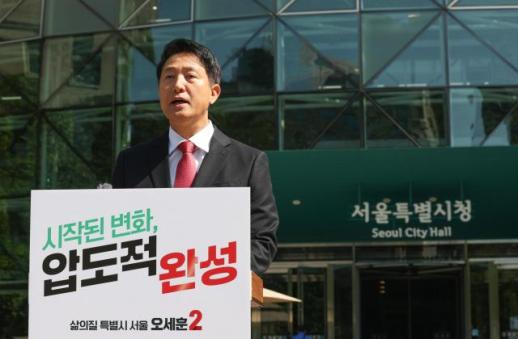 Oh Se-hoon Appeals for Support, Criticizes Opponent as 'Puppet Mayor' Oh Se-hoon, the People Power Party candidate for Seoul mayor, called for public support on May 14 to halt the Democratic Party's arrogant dominance. He emphasized that his opponent, Jung Won-oh, would become a "puppet mayor" beholden to President Lee Jae-myung, highlighting his own experience in city governance. Former lawmaker Yoo Seung-min, who met with Oh, remarked that the current administration's real estate policies are severely problematic and expressed confidence that Oh could address these issues. During the press conference in front of Seoul City Hall, Oh stated, "This mayoral election is a critical turning point that will determine the direction of Seoul and South Korea. I hope you will prove through your valuable votes what path Seoul should take." Oh raised concerns about the need to check the power of President Lee and the Democratic Party, stating, "Using a special prosecutor appointed by the president to absolve the president of wrongdoing is an outrageous arrogance. We must send a strong warning against the arrogant dominance of great power." He added, "After the 10 years of darkness under former Mayor Park Won-soon, I have restored the city to its rightful place. Seoul's competitiveness is on the rise in evaluations of major global cities, and the reality of becoming one of the world's top three cities is within reach. I urge you to vote for Seoul's leap forward." Oh criticized Jung's handling of real estate issues, saying, "The Democratic Party's fundamental DNA does not change. After the election, they will block reconstruction and redevelopment with regulations, crushing the dream of homeownership. How can we entrust the lives of Seoul's citizens to a puppet mayor who only looks to President Lee?" In a subsequent Q&A session with reporters, Oh accused Jung of copying the real estate policies pursued by the Seoul city government over the past five years without giving credit. He called for policy verification through both multi-party and one-on-one debates. Regarding the narrowing gap in approval ratings with Jung, Oh commented, "Jung's immorality has been exposed, and his failure to clearly express his stance on issues has likely been reflected in his declining competitiveness. His overinflated image has been stripped away." After the press conference, Oh met with Yoo Seung-min, stating, "Yoo expressed his willingness to support me during this challenging time for the party. I feel like I have gained a great ally." Yoo noted, "I have been watching Oh's various actions for change and innovation amid the party's overall difficulties, and I believe he must succeed for the future of Seoul, its citizens, our party, and conservatism. I will do everything I can to help him win. I plan to start my support from the official campaign launch on the 21st." Yoo also commented on the serious real estate issues under the Lee administration, stating, "The flawed real estate policies, including loan regulations, are leading us in the wrong direction. Oh, with his supply-centered approach, can play a significant role in solving real estate and housing problems." * This article has been translated by AI. 2026-05-14 13:39:32
 -
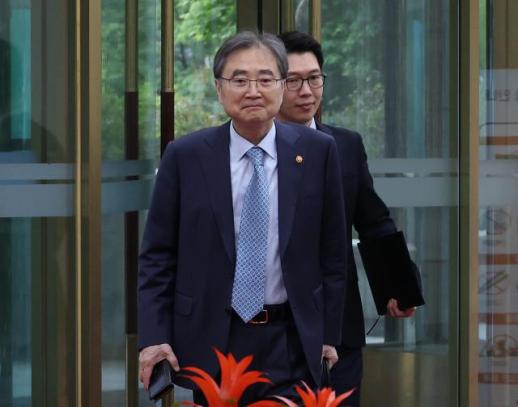 South Korea's Foreign Minister Calls for Action Following Attack on HMM Cargo Ship South Korea's Foreign Minister Cho Hyun emphasized on May 14 that attacks on civilian vessels, including the HMM cargo ship Namoo, cannot be justified under any circumstances. He stated that the government will continue to consult with relevant countries regarding the incident.During a press briefing at the Ministry of Foreign Affairs in Jongno, Seoul, Cho announced that the government will conduct a further investigation into the attack on the Namoo and take necessary response measures.A senior official from the ministry noted that the wreckage was initially at the consulate in Dubai and has now been moved to the UAE embassy in Abu Dhabi, with plans to return it to Korea as soon as possible. "Once we have the wreckage, I believe our specialized investigation agency at the Ministry of National Defense will conduct a thorough examination to uncover various details," the official said.Regarding the CCTV footage that reportedly captured the incident, the official mentioned, "The shipowner has stated they will not release it for various reasons, so I have not seen it yet. While there are currently differing opinions, we hope to persuade them to make the footage public, and it may become part of the investigation process."Cho also stated that the ministry will closely monitor the developments of the ongoing conflict in the Middle East and the changes in international order following the war, ensuring that the impact on South Korean citizens and national interests is thoroughly addressed. He pledged to transform various crises into opportunities through proactive and multifaceted efforts.He added that the Ministry of Foreign Affairs is maintaining close cooperation and communication with major countries to secure the safety of South Korean sailors and uphold the principles of international maritime law and freedom of navigation.Reflecting on the achievements of the Lee Jae-myung administration in its first year, Cho noted that the government began with participation in the G7 summit, followed by visits to 15 countries and over 45 summits, as well as participation in the UN General Assembly, ASEAN summit, and G20 summit, culminating in the successful hosting of the APEC summit in Gyeongju. "Our diplomacy has been racing to establish a foundation for practical diplomacy centered on national interests, beyond just the successful return of democratic South Korea to the international community," he remarked.Regarding South Korea-U.S. relations, Cho highlighted the announcement of a tariff agreement and a joint fact sheet on strategic cooperation, which turned economic challenges into opportunities. He also mentioned progress in acquiring nuclear submarines and capabilities for peaceful enrichment and reprocessing.On relations with China and Japan, he noted the successful state visit of the Chinese president after 11 years and the South Korean president's state visit to China earlier this year, which facilitated mutual state visits in the shortest time possible, fully restoring South Korea-China relations. He also mentioned the rapid restoration of shuttle diplomacy with Japan, resulting in six active summits to establish a future-oriented cooperative relationship addressing common social issues, advanced technology, and supply chain collaboration.* This article has been translated by AI. 2026-05-14 13:37:26
 -
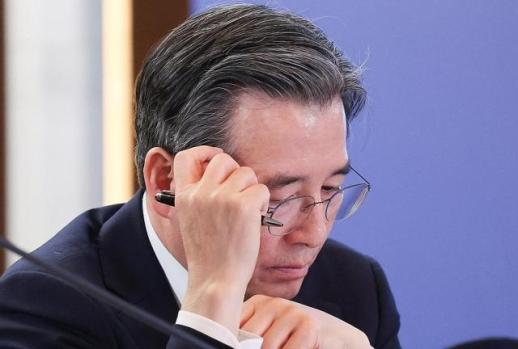 Ruling Party Criticizes Opposition Leader's Response to AI Dividend Proposal The Democratic Party has criticized Jang Dong-hyuk, leader of the People Power Party, for his response to Kim Yong-beom's proposal for an "AI national dividend," accusing him of engaging in what they termed "political attacks without questioning or verification." Despite the Blue House clarifying that Kim's comments were personal opinions, the Democratic Party claims they are being misrepresented as official policy. In a written briefing on May 14, spokesperson Kang Jun-hyun stated, "Jang has unleashed crude remarks like 'gangster mentality,' 'money distribution,' and 'vote-buying.'" He emphasized that it is the responsibility of a political party to verify facts before criticizing them. Kang further criticized the People Power Party, saying, "They lack the ability to engage in policy debates and only know how to frame issues and instill fear. When someone proposes an idea, they immediately label it as 'tax theft,' 'populism,' or 'national bankruptcy,' merely to provoke public sentiment for political gain." He also pointed out the significant tax cuts for the wealthy and revenue shortfalls during the Yoon Suk-yeol administration, urging the People Power Party to reconsider their qualifications to discuss fiscal issues. Kang concluded, "The public is no longer deceived. The essence of the People Power Party is to remain silent on matters requiring accountability, while rushing to label anything as populism." Meanwhile, Kim Yong-beom posted on Facebook on May 12, stating, "If our strategic position in the AI infrastructure supply chain creates a structural boom leading to unprecedented additional tax revenue, how we use that money is not just a choice but a necessary consideration. A portion of the gains should structurally be returned to the public." In response, Jang criticized President Lee Jae-myung, saying, "He only has a desire for revenue. Kim Yong-beom's 'national dividend' reflects Lee's true intentions." He added, "Whether it’s excess profits or surplus tax revenue, it’s not money earned by Lee Jae-myung. The Democratic Party has no right to claim any share. The People Power Party has been pushing the 'K-Chips Act' to revive the semiconductor industry, but the Democratic Party opposed it, calling it 'corporate favoritism.'"* This article has been translated by AI. 2026-05-14 13:35:29
 -
 Trump and Xi Meet in Beijing to Discuss Future of U.S.-China Relations "Can we create a bright future for our two countries together?" "I can say that U.S.-China relations are the best they have ever been." On May 14, Donald Trump, President of the United States, met with Xi Jinping, President of China, for a summit at the Great Hall of the People in Beijing, marking the second day of Trump's visit to China. The two leaders began their opening remarks in a cordial atmosphere, exchanging pleasantries. According to China's state broadcaster CCTV, Xi Jinping posed three questions during his opening statement: "Can the U.S. and China overcome the 'Thucydides Trap' and establish a new paradigm for great power relations? Can we cooperate to address global challenges and bring greater stability to the world? Can we focus on the welfare of our peoples and the future of humanity to create a bright future for our two countries together?" The term 'Thucydides Trap' refers to the potential conflict between a rising power and an established one, emphasizing the need for the U.S. and China to avoid a clash over hegemony. Xi emphasized that the common interests of the U.S. and China outweigh their differences, stating, "The success of both countries presents opportunities for each other, and a stable U.S.-China relationship benefits the world." He urged that the two nations should maintain a partnership rather than view each other as rivals, achieving mutual success and shared prosperity while paving the right path for great power relations in the new era. He expressed hope that he and Trump could exchange views on major issues affecting both countries and the world, aiming to make 2026 a historic and groundbreaking year for U.S.-China relations. In response, Trump praised Xi as a "great leader," noting their long-standing personal relationship, which he claimed is the longest of any leaders in U.S.-China history. He expressed his honor in being able to meet again and become friends. "Our relationship is very good. Even when problems arise, we can quickly find solutions through phone calls," Trump said, adding, "We have a beautiful future ahead of us. I can say that U.S.-China relations are the best they have ever been." Trump also emphasized the importance of the summit, stating, "This U.S.-China summit is the most significant." He mentioned that his delegation consists of some of the world's greatest entrepreneurs, all of whom respect China and Xi, and he hopes for continued business cooperation. During the summit, Xi was accompanied by key officials, including Wang Yi, a member of the Central Political Bureau and Foreign Minister, and He Lifeng, Vice Premier of the State Council. On the U.S. side, Trump was flanked by Secretary of State Marco Rubio and U.S. Ambassador to China David Perdue, among others. At 10 a.m. local time, Xi and Trump reviewed the honor guard at the East Gate Square of the Great Hall of the People, before proceeding to the meeting venue, where they were greeted by children waving flowers and flags. CCTV footage captured the summit table adorned with blooming pink and white azaleas. The Singaporean newspaper Lianhe Zaobao noted that the blooming azaleas symbolize luck, happiness, prosperity, resilience, and optimism, interpreting the red and white flowers as a wish for the two countries to create a bright future together in perfect harmony.* This article has been translated by AI. 2026-05-14 13:33:19
 -
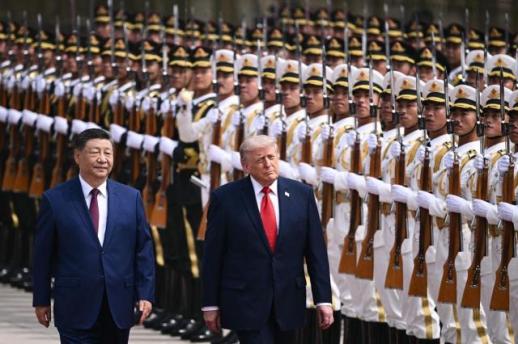 Trump Optimistic About US-China Relations, Calls Xi a Great Leader U.S. President Donald Trump expressed optimism about the future of U.S.-China relations during a summit with Chinese President Xi Jinping in Beijing on May 14, 2026. According to Yonhap News, Trump stated at the opening remarks of the meeting at the Great Hall of the People, "The relationship between the United States and China will be better than ever before." He emphasized his long-standing relationship with Xi, saying, "We have known each other for a long time. This is the longest relationship between any two presidents of our countries. It is an honor for me." Trump noted that despite conflicts, the two nations have maintained close communication, adding, "We have managed well even during difficult times, and we resolved those issues." He further remarked, "When I call Xi and when he calls me, we have quickly resolved issues whenever they arise. Together, we will create a fantastic future." Trump also highlighted the presence of top executives from major U.S. companies accompanying him on this trip, stating, "They (U.S. businesses) are looking forward to trade and business with China. The U.S. will fully adhere to reciprocity." The summit began on a positive note, with Trump praising Xi as a "great leader," suggesting that if China treats U.S. companies favorably, the U.S. would reciprocate.* This article has been translated by AI. 2026-05-14 13:31:16
 -
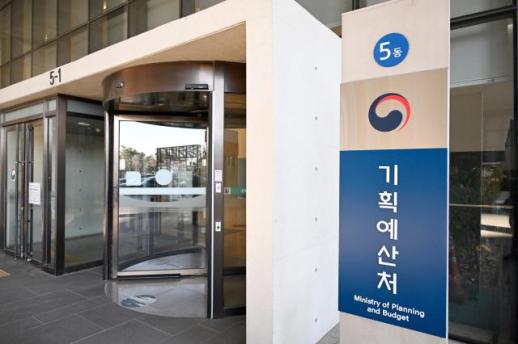 Fiscal deficit narrows on stronger tax revenue, debt burden persists SEOUL, May 14 (AJP) — South Korea’s fiscal balance improved significantly in the first quarter of this year as tax revenues continued to recover, feeding the government rationale for more aggressive policy to counter import inflationary risks amid protracted Middle East conflicts. According to the Ministry of Planning and Budget on Thursday, total revenue from January to March reached 188.8 trillion ($128.5 billion) won, an increase of 28.9 trillion won from a year earlier. The surge in tax revenue is attributed to the recovery of the semiconductor industry and active stock market trading. Analysts evaluate that the stock market rally centered on AI semiconductors and improved corporate earnings led to increased tax revenue from securities transactions and corporate taxes. Despite the market plunge in March caused by the war involving the United States and Iran, the benchmark KOSPI rose 20 percent during the first quarter. During the same period, Samsung Electronics and SK hynix recorded a combined operating profit of 94 trillion won, once again hitting record highs. National tax revenue rose by 15.5 trillion won to 108.8 trillion won, while total expenditure stood at 211.6 trillion won - up only 1.7 trillion won from a year ago. Consequently, the managed fiscal balance—a key gauge of fiscal health that excludes social security funds—recorded a deficit of 39.6 trillion won. The deficit narrowed by 21.7 trillion won compared to the same period last year. The government evaluated the fiscal conditions as gradually stabilizing, noting that the managed fiscal deficit as of March is at its lowest level since 2020. However, some in the market remain cautious about whether this improvement will lead to a structural recovery of fiscal soundness. A major burden is the central government debt, which remained at a high level in the 1,300 trillion won range. Concerns are also being raised that the growth of national debt could accelerate again, given the potential for additional fiscal spending to counter an economic slowdown, mitigate high oil price shocks, and support youth employment. The budget ministry explained that "the March results are based on figures before the passage of the supplementary budget." President Lee Jae Myung supported an expansionary stance during a Cabinet meeting on Tuesday, stating that "more money needs to be released." The government closed the first round of applications for high oil price damage relief funds from April 27 to May 8 and plans to begin the second round of applications next Monday. Total spending for the relief is expected to exceed 6 trillion won. 2026-05-14 13:30:44