

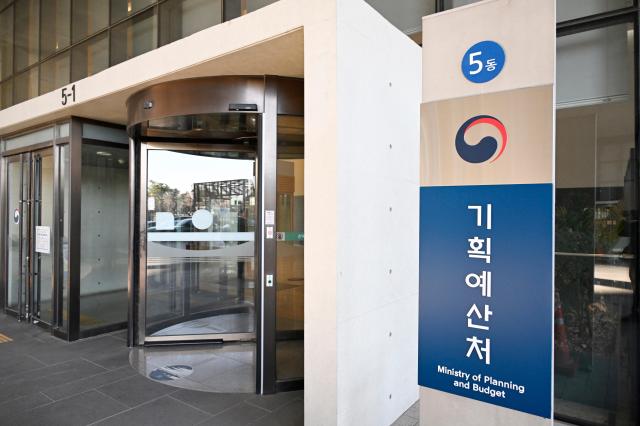
SEOUL, May 14 (AJP) — South Korea’s fiscal balance improved significantly in the first quarter of this year as tax revenues continued to recover, feeding the government rationale for more aggressive policy to counter import inflationary risks amid protracted Middle East conflicts.
According to the Ministry of Planning and Budget on Thursday, total revenue from January to March reached 188.8 trillion ($128.5 billion) won, an increase of 28.9 trillion won from a year earlier.
The surge in tax revenue is attributed to the recovery of the semiconductor industry and active stock market trading. Analysts evaluate that the stock market rally centered on AI semiconductors and improved corporate earnings led to increased tax revenue from securities transactions and corporate taxes.
Despite the market plunge in March caused by the war involving the United States and Iran, the benchmark KOSPI rose 20 percent during the first quarter. During the same period, Samsung Electronics and SK hynix recorded a combined operating profit of 94 trillion won, once again hitting record highs.
National tax revenue rose by 15.5 trillion won to 108.8 trillion won, while total expenditure stood at 211.6 trillion won - up only 1.7 trillion won from a year ago. Consequently, the managed fiscal balance—a key gauge of fiscal health that excludes social security funds—recorded a deficit of 39.6 trillion won. The deficit narrowed by 21.7 trillion won compared to the same period last year.
The government evaluated the fiscal conditions as gradually stabilizing, noting that the managed fiscal deficit as of March is at its lowest level since 2020.
However, some in the market remain cautious about whether this improvement will lead to a structural recovery of fiscal soundness. A major burden is the central government debt, which remained at a high level in the 1,300 trillion won range.
Concerns are also being raised that the growth of national debt could accelerate again, given the potential for additional fiscal spending to counter an economic slowdown, mitigate high oil price shocks, and support youth employment.
The budget ministry explained that "the March results are based on figures before the passage of the supplementary budget."
President Lee Jae Myung supported an expansionary stance during a Cabinet meeting on Tuesday, stating that "more money needs to be released."
The government closed the first round of applications for high oil price damage relief funds from April 27 to May 8 and plans to begin the second round of applications next Monday. Total spending for the relief is expected to exceed 6 trillion won.
Copyright ⓒ Aju Press All rights reserved.
