
Journalist

Seán Canney
-
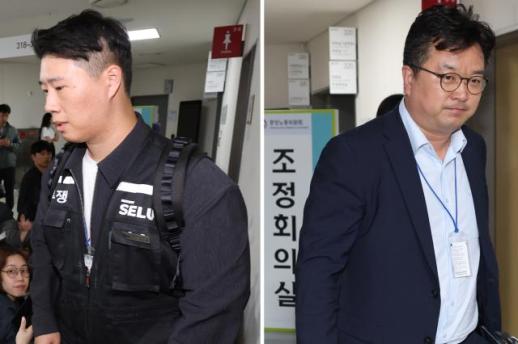 Labor Commission Requests Resumption of Samsung Negotiations Ahead of Strike Samsung Electronics' labor union is preparing for a general strike in seven days, as the Central Labor Commission has requested a resumption of mediation talks. On May 14, the commission stated, "We have requested that the labor and management of Samsung Electronics resume mediation talks on May 16, encouraging both sides to engage in sincere dialogue and substantial negotiations to resolve their differences autonomously." Previously, labor and management engaged in mediation procedures facilitated by the commission on May 11 and 12. The commission continued the mediation process until 2:50 a.m. on May 13, but the union declared the talks had failed, effectively halting dialogue between the two sides. Choi Seung-ho, chairman of the Samsung Electronics branch of the Korean Metal Workers' Union, stated on May 12, "We requested a mediation proposal due to the unresolved differences between labor and management. After waiting for nearly 12 hours, the proposal actually regressed." He emphasized that the union is demanding the elimination of the performance bonus cap and its institutionalization and transparency, which were not addressed. The union plans to initiate a general strike from May 21 to June 7 if negotiations fail. However, with the commission's request to resume mediation, there is hope for renewed dialogue. Mediation can begin if the commission recognizes its necessity and both parties agree. The union is demanding a distribution of performance bonuses equivalent to 15% of operating profit and the elimination of the performance bonus cap, which is currently set at 50% of annual salary, along with the institutionalization of these demands. Choi stated, "If institutionalization and transparency are not achieved, there is no reason to engage in dialogue." On the other hand, management views the institutionalization as potentially reducing future investment capacity, widening compensation disparities among business units, and causing adverse effects on other companies. With both sides holding differing views, discussions have effectively stalled. 2026-05-14 13:29:26
 -
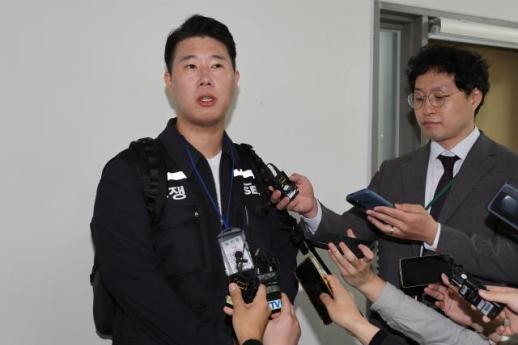 Samsung Electronics Proposes Additional Talks with Union Amid Strike Threat Samsung Electronics has officially proposed additional talks with its union following a breakdown in negotiations, raising the possibility of a general strike. With both the government and the company urging a resumption of dialogue, the union's response could be pivotal in determining the strike's trajectory. According to industry sources on May 14, the Central Labor Commission (CLC) requested that Samsung and the union resume mediation talks on May 16. The CLC emphasized the need for sincere dialogue and substantial negotiations to peacefully resolve the differences between the two parties. Mediation is a process where the labor commission intervenes to help resolve disputes even after labor conflict negotiations have concluded. It can be initiated if both parties request it, if one party requests it and the other agrees, or if the commission chair recognizes the need for mediation and suggests it to the parties, who then consent. On the same day, Samsung sent an official document titled "Proposal for Additional Talks Between Labor and Management" to the National Samsung Electronics Labor Union and the Samsung Group's inter-company labor union. In the document, Samsung stated, "We hope for a mutually beneficial labor-management relationship," noting that while both sides communicated their positions during the recent CLC mediation, they did not reach an agreement. The company continued, "Therefore, we propose that labor and management engage in direct discussions," and requested a positive review and response from the union. The document was dated May 14, 2026, and was issued under the name of Samsung Electronics Co., Ltd. This proposal comes shortly after the union announced its intention to proceed with a strike following the breakdown of mediation. With the CLC urging a return to the negotiation table and the company proposing direct talks, the door for dialogue has reopened before a potential strike. However, the actual resumption of negotiations depends on the union's decision. If the union accepts the CLC's request for mediation and the company's proposal for direct talks, there may be an opportunity for additional negotiations before a general strike. Conversely, if the union rejects these offers, the likelihood of the first general strike in Samsung's history could increase significantly.* This article has been translated by AI. 2026-05-14 13:27:39
 -
 Korea's Fair Trade Commission Fines Egg Association $5.9 Million for Price Collusion The Korea Fair Trade Commission (KFTC) has determined that the Korea Egg Producers Association's establishment of standard prices for eggs constitutes collusion. On May 14, the KFTC announced it would impose a corrective order and a fine of 594 million won (approximately $5.9 million) on the association for its actions. From January 2023 to January 2026, the Egg Producers Association set standard prices for various egg sizes (large, extra-large, medium, and small) through regional committees, which were communicated to its member producers. This was intended to prevent egg farmers from being at a disadvantage in negotiations with distributors. However, the KFTC found that these standard prices effectively influenced actual transaction prices. An investigation revealed that from 2023 to June 2025, the actual prices of eggs closely mirrored the association's established standard prices. The KFTC concluded that the association's price announcements restricted price competition among its members and led to increased transaction prices. Notably, the association's members accounted for 56.4% of the total number of laying hens in the country, giving them significant market influence. The KFTC also identified that the association raised its standard prices by 9.4% from 2023 to 2025. As a result, the gap between the standard price and production costs widened from 781 won in 2023 to 1,440 won in 2025, leading to higher consumer prices and increased profits for farmers. The KFTC classified the association's price-setting activities as illegal and decided to impose a total fine of 594 million won, along with a prohibition order, notification of violations to member businesses, and mandatory training for executives and staff. Moon Jae-ho, head of the KFTC's Cartel Investigation Bureau, stated, "The fine was determined based on the association's budget of approximately 800 million won approved at this year's general meeting. This clearly establishes that the price-setting practices led by producer organizations are illegal." Moving forward, the government will take over the role of setting egg standard prices. The Ministry of Agriculture, Food and Rural Affairs announced in March that it would provide information on farm-gate egg prices through the Korea Rural Economic Institute (KREI). Additionally, a 'Egg Price Verification Committee' composed of farmers, traders, and experts will be established to ensure the appropriateness of egg prices.* This article has been translated by AI. 2026-05-14 13:12:00
 -
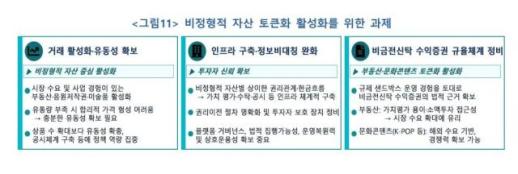 To Establish Token Securities Early, Liquidity and Trust Must Be Increased A recent analysis indicates that securing liquidity is essential for the early establishment of the domestic asset tokenization market in South Korea. According to the "BOK Issue Note: Current Status and Future Policy Tasks of Domestic and International Asset Tokenization" published by the Bank of Korea on May 14, the cumulative size of fractional investments in South Korea reached approximately 640 billion won as of January. The global asset tokenization market was valued at $50.37 billion (about 75 trillion won) as of the end of March. The annual growth rate of the global tokenization market is projected to be 65% in 2023, 93% in 2024, and 169% in 2025, indicating rapid expansion. Tokenization enhances the efficiency, flexibility, accessibility, and transparency of asset issuance, distribution, and payment methods. It integrates the entire transaction process through distributed ledgers, shortening settlement cycles and reducing intermediary and management costs. The domestic market is in the early stages of integrating distributed ledger technology with fractional investments in non-traditional assets such as real estate and music copyrights through regulatory sandboxes. In February 2026, a regulatory framework was established for the issuance and distribution of token securities. Regionally, the United States accounted for 65.2% of the market as of the end of March, making it the largest player. Europe followed with 14.5%, and regulatory havens accounted for 14.4%. In Asia, Hong Kong (2.3%) and Singapore (0.8%) are working to promote the asset tokenization market through regulatory improvements and infrastructure development. Despite the global tokenization market's growth, its size remains modest compared to traditional financial markets, and asset tokenization is not yet fully underway in South Korea, resulting in a low impact on financial stability at this time. However, the accumulation of vulnerabilities in the existing financial system or the emergence of new systemic risks could occur. The Bank of Korea noted, "Tokenization can accumulate systemic vulnerabilities through increased leverage and interconnectivity," adding that "rapidly expanding leverage through re-collateralization could lead to a chain reaction of deleveraging during price declines." Furthermore, it stated, "Operational, technical, and legal vulnerabilities could lead to a decline in market trust and transaction disruptions, potentially amplifying risks across the financial system." It also warned that if tokenized assets are issued and distributed across different blockchain networks rather than a single standard or common infrastructure, there is a risk of market fragmentation. To ensure the early establishment of the domestic tokenization market, the Bank of Korea recommended securing liquidity, particularly for non-traditional assets such as real estate, music copyrights, and artworks, where market demand has been confirmed and business experience has been accumulated. It emphasized that without sufficient liquidity in the early stages of the tokenization market, rational price formation would be difficult, leading to weakened investor confidence due to inadequate trading. Thus, it is crucial to focus policy efforts on creating a market where actual transactions occur through the formation of abundant liquidity and standardized disclosure systems, rather than merely increasing the number of products. Additionally, the Bank of Korea stressed the need to systematically establish core infrastructure for valuation, custody, disclosure, and investor protection to secure investor trust. It also highlighted the necessity of creating conditions for issuing token securities based on trust income certificates for real estate or music copyrights by establishing a legal basis for non-monetary trust income securities based on tangible and intangible assets.* This article has been translated by AI. 2026-05-14 13:11:09
 -
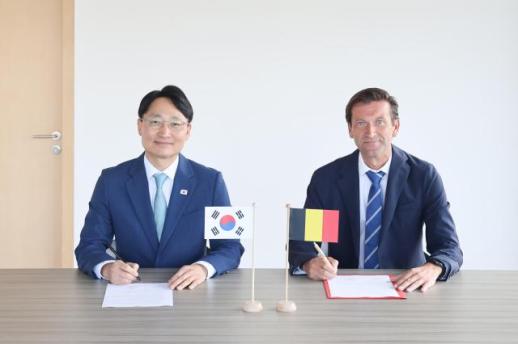 South Korea to Conduct Simultaneous Tax Investigations with European Countries The National Tax Service (NTS) of South Korea is set to conduct simultaneous tax investigations with local tax authorities in Europe targeting high-value tax delinquents who have hidden assets abroad. This initiative marks a significant step in international cooperation aimed at recovering unpaid taxes through tracking overseas hidden assets. On May 14, the NTS announced that Im Kwang-hyun, the head of the agency, visited Hungary, Belgium, and the United Kingdom to sign memorandums of understanding (MOUs) for tax collection cooperation and discuss plans for simultaneous tax investigations of high-value delinquents. The discussions focused on expanding the tax collection cooperation network to Europe to facilitate the recovery of tax debts from individuals with overseas assets. The NTS plans to request cooperation from foreign tax authorities to conduct simultaneous tax investigations when they identify hidden assets abroad. Simultaneous tax investigations involve tax authorities from two countries conducting concurrent investigations on individuals suspected of tax evasion who have economic ties in both nations. The process allows for the exchange of tax information obtained during the investigations, enabling the identification of hidden assets abroad. The NTS emphasized the need for such cooperation by sharing examples of tax delinquents who have relocated their activities to Europe. For instance, foreign professional athletes who have failed to pay taxes while playing in South Korea have been targeted by foreign tax authorities for asset seizure in their respective countries. Another case involves a domestic habitual tax delinquent who has been operating businesses under false names in various countries to evade taxes. Additionally, instances of receiving technology fees through accounts held by overseas corporations without reporting taxes in any country have also been uncovered. The NTS plans to request rapid exchange of tax information with foreign counterparts regarding these cases and, if necessary, conduct simultaneous tax investigations to uncover hidden assets and recover unpaid taxes through cooperative efforts. During meetings with tax officials from various countries, Im stated, "Swift tax collection cooperation based on legitimate enforcement authority is essential," urging active collaboration. The NTS expects that this agreement will accelerate efforts to recover overseas assets. With a system in place for simultaneous responses to cross-border tax evasion and delinquency, the effectiveness of overseas tax collection, which has been criticized for its limitations, is anticipated to improve. As global asset mobility increases, leading to a rise in tax evasion by high-value delinquents fleeing abroad, this simultaneous tax investigation framework is expected to serve as a means to extend international enforcement of tax collection. 2026-05-14 13:10:42
 -
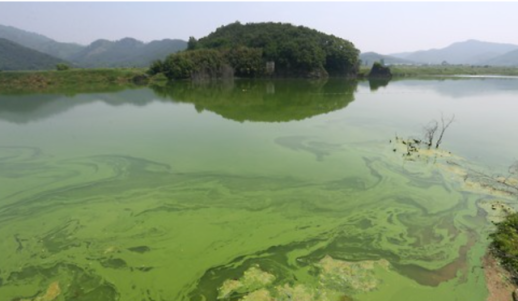 South Korea Launches First Seasonal Management System for Algal Blooms The South Korean government is implementing its first seasonal management system for algal blooms, treating the issue as a seasonal disaster. This initiative aims to shift from reactive measures to proactive management of pollution sources and water flow before algal blooms occur. The Ministry of Climate, Energy and Environment announced on May 14 that the "First Seasonal Management System for Algal Blooms" will be in effect from May 15 to October 15, spanning five months. Algal blooms have been occurring earlier and lasting longer due to climate change. Last year, the country recorded a total of 961 days with algal bloom alerts, the longest on record. The ministry noted that this year, higher temperatures and the possibility of heavy rainfall raise concerns about the influx of phosphorus, a substance that triggers algal blooms. The core of this new strategy is to manage pollution sources intensively before algal blooms develop. The government plans to expand the number of algal bloom prediction sites from nine to thirteen, with a goal of increasing this to 28 sites by 2030, covering all water sources under algal bloom alerts. Additionally, the system for issuing bloom alerts on the day of sampling will be expanded from four locations on the Nakdong River to seven locations, including the Han, Geum, and Seomjin Rivers. Kim Eun-kyung, the ministry's water environment policy director, stated in a briefing, "Starting this year, we will take action before algal blooms occur. We are transitioning from a reactive approach to a system that manages both pollution sources and water flow together." Management in the agricultural and livestock sectors will also be strengthened. The government will implement measures to block nutrients from farmland before the rainy season and will expand the inspection period and frequency of compost piles from spring to both spring and fall. A mobile management system will be used to track and inspect the installation of covers and collection status of compost piles. Furthermore, projects to convert livestock manure into solid fuel and biogas will be expanded. The government will also manage pollution sources from households. It will conduct specialized management of 322 small wastewater treatment facilities and significantly increase support for cleaning small septic tanks from 2,100 households last year to 10,500 this year. Environmental infrastructure, such as public livestock manure treatment facilities, will operate under stricter total phosphorus standards than legally required. In the event of severe algal blooms, the government will implement emergency management measures by sequentially opening eight dams on the Nakdong River. This will be the first time the government has opened all eight dams to reduce algal blooms. The opening period will last 2 to 3 days, with water levels potentially lowered by up to 2.2 meters. However, the decision to open the dams will be based on a comprehensive assessment of algal bloom alert levels, weather forecasts, and the trend of algal bloom spread. The ministry plans to monitor groundwater impacts in real-time during the dam openings and will consider providing alternative wells if issues arise. A ministry official explained, "This is not a full opening; we plan to operate it gradually, considering both agricultural water use and improvements in water flow." Safety management for drinking water and recreational activities will also be enhanced. The government will strengthen water purification management through the installation of barriers around intake areas and treatments with activated carbon and ozone, and will monitor algal blooms at major recreational facilities at least once a week. If algal blooms worsen, restrictions on swimming and water sports will be implemented. Minister of Climate, Energy and Environment Kim Seong-hwan stated, "We will minimize the possibility of algal blooms this summer by blocking phosphorus discharge, which serves as nutrients for algal blooms, and by improving water flow in consultation with local communities."* This article has been translated by AI. 2026-05-14 13:10:14
 -
 Tax Corrections for Year-End Settlement Due by June 1 Taxpayers who made errors in applying deductions during the year-end settlement can correct these mistakes without incurring penalties by filing their comprehensive income tax returns by June 1. The National Tax Service announced on May 14 that individuals can amend any missed or incorrectly applied deductions during the comprehensive income tax filing period, which runs from May 1 to June 1. If a taxpayer omitted deductions during the year-end settlement, they can still claim these deductions on their comprehensive income tax return. Refunds will be issued to the taxpayer's account within 30 days after the filing deadline. Local income tax refunds will be processed separately within four weeks. If a taxpayer has over-applied deductions and paid less tax as a result, they can also correct this without penalties during the same period. However, failing to make corrections during the filing period may lead to additional penalties for underreporting (10%, or 40% in cases of fraud) and late payment. Starting this year, the National Tax Service will provide individual notifications regarding errors in dependent family member deductions for the first time. This includes cases of duplicate claims for the same dependent or including deceased individuals or non-eligible family members. Notifications will be sent via KakaoTalk or Naver alerts, and detailed information can be checked on the Home Tax website. Taxpayers should also note that if there are errors in dependent deductions, related deductions such as insurance premiums, medical expenses, educational costs, donations, and credit card usage must also be excluded. Additionally, individuals with multiple sources of income are required to file comprehensive income tax returns. This includes those with business income, other income, or interest and dividend income exceeding 20 million won. Employees receiving salaries from two or more companies due to job changes are also required to report their income collectively. The National Tax Service plans to expand pre-notifications regarding errors in dependent deductions and various other deductions to minimize taxpayers' burdens.* This article has been translated by AI. 2026-05-14 13:10:03
 -
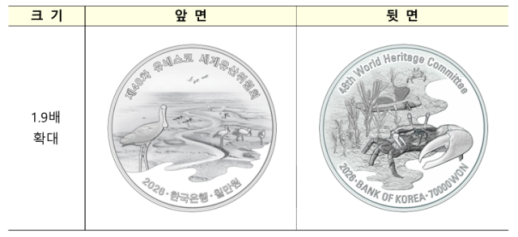 New Commemorative Coins Featuring Korea's Tidal Flats and Bangudae Petroglyphs Available for Pre-Order in June The Bank of Korea will issue two commemorative coins to celebrate the 48th session of the UNESCO World Heritage Committee being held domestically. On May 14, the bank announced it will release one silver coin and one nickel-brass coin to enhance Korea's international standing and increase interest in its natural and cultural heritage. The silver coin has a face value of 70,000 won, with a diameter of 32.0 mm and a weight of 14 grams, made of 99.9% pure silver. The nickel-brass coin has a face value of 30,000 won, with a diameter of 40.0 mm and a weight of 26 grams, composed of 75% copper and 25% nickel. The silver coin features Korea's tidal flats, a UNESCO World Natural Heritage site. The front depicts birds, including the black-faced spoonbill, set against a tidal flat background, highlighting the ecological characteristics and habitat value of Korea's tidal flats. The reverse side realistically portrays the white-legged crab and mudskipper, along with the salt marsh plant, highlighting the vibrancy and biodiversity of the tidal flat ecosystem. The nickel-brass coin is themed around the Bangudae petroglyphs, a registered World Heritage site. The front realistically depicts the actual rock surface and surrounding river and natural scenery, emphasizing some of the petroglyph patterns to enhance the sense of place. The reverse side rearranges images of animals and figures, including whales and deer, along with hunting scenes, to illustrate the relationship between prehistoric humans and nature, as well as their way of life at the time. A total of 14,000 coins will be issued, with 7,000 of each type. Individual coins will be limited to 2,000 each, while a set of both types will consist of 5,000 sets (10,000 coins total). Ninety percent of the total issuance will be available domestically, with the Korea Mint Corporation accepting pre-orders through NongHyup Bank and its online shopping mall. If domestic applications exceed the allocated amount, winners will be selected by random draw. The remaining 10% will be available for international orders through the Korea Mint Corporation's overseas sales network. Any unsold coins will be included in the domestic supply. Pre-orders will be accepted from June 1 to June 23 at Korea Mint Corporation and NongHyup Bank branches and online.* This article has been translated by AI. 2026-05-14 13:09:30
 -
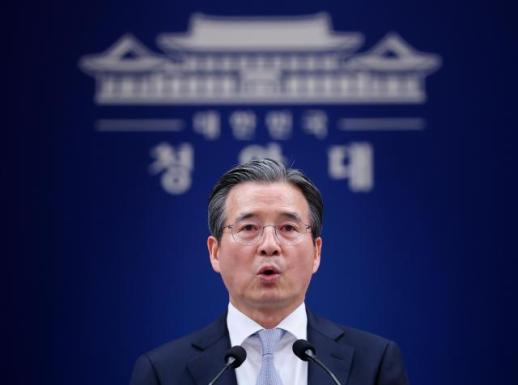 Ruling Party: AI National Dividend Proposal Not Ready for Discussion The Democratic Party of Korea stated that the proposal for an AI national dividend, mentioned by Kim Yong-beom, head of the Blue House policy office, on May 12, is "not ready for discussion." After a meeting of the party's floor leadership, spokesperson Lee Joo-hee told reporters at the National Assembly, "We will provide our position once it is organized." Earlier, Kim posted on Facebook, stating, "The key question of the AI era is not merely about growth rates, but how to socially recognize excess profits." He emphasized that "a portion of the fruits should be structurally returned to all citizens," suggesting the name 'national dividend' for this principle. Kim argued that if a strategic position in the AI infrastructure supply chain creates a structural boom, leading to excess tax revenue, the question of how to utilize that money should be seen as a design issue rather than a matter of choice. On May 8, Kim had also projected that if the semiconductor boom continues until 2027, tax revenues could reach historic levels between 2026 and 2027. Following Kim's comments, the KOSPI index experienced a sharp decline as it approached the 8,000 mark. Bloomberg reported that Kim's mention of the AI national dividend impacted investor sentiment.* This article has been translated by AI. 2026-05-14 13:07:48
 -
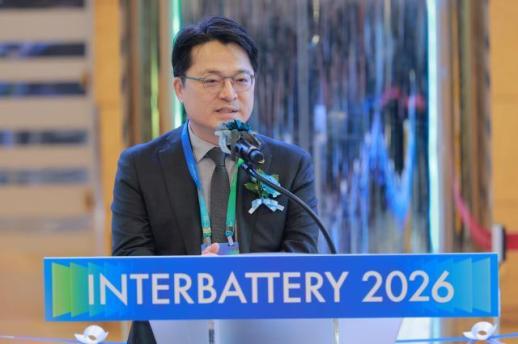 Deputy Minister Emphasizes Need for Future Vehicle Parts Ecosystem On May 14, Deputy Minister Moon Shin-hak of the Ministry of Trade, Industry and Energy stated, "To maintain the competitiveness of our automotive industry in the era of future vehicles, establishing a robust parts ecosystem is essential." He added that a comprehensive support plan for the transition to future vehicle ecosystems will be prepared within the first half of the year to actively support the parts industry. During a joint public-private meeting on future vehicle transition hosted by the Ministry of Industry and the Financial Services Commission, the launch ceremony for the Future Vehicle Parts Industry Council was held. This meeting aimed to establish a comprehensive support system to facilitate the transition of the domestic automotive industry to future vehicle ecosystems amid accelerating changes. According to the Korea Automotive Research Institute's 2025 survey on the automotive parts industry, there are approximately 21,000 businesses in the domestic automotive parts sector, employing 456,000 people, with sales reaching 207.6 trillion won and investments totaling 7.1 trillion won. Among these, 4,142 companies focus on internal combustion engine parts, while only 578 specialize in future vehicle parts. Only 6.1% of companies are currently pursuing or planning to diversify their operations. However, among those without diversification plans, 23.2% recognize the need for business transition and diversification. Parts manufacturers cited challenges such as funding, lack of technological competitiveness, and workforce acquisition as barriers to transitioning and diversifying their businesses. In response, the government plans to identify the challenges faced by the parts industry across all sectors, including business restructuring, finance, research and development (R&D), exports, and workforce issues, through the joint public-private Future Vehicle Parts Industry Council. Additionally, the government will focus on supporting the transition to future vehicle ecosystems. Furthermore, the Financial Services Commission announced plans to concentrate a total of 15 trillion won in funding for the mobility sector over the next five years through the National Growth Fund. This year, 9.7 trillion won will be allocated for improving the automotive parts industry, and 8.3 trillion won will be directed toward fostering the future vehicle and autonomous vehicle industries. Deputy Minister Moon noted, "Despite the recent surge in the domestic and global electric vehicle markets due to high oil prices, the proportion of companies specializing in future vehicle parts remains at just 2.7%. While the automotive industry is undergoing restructuring, unlike the steel and petrochemical sectors, proactive and specific structural transitions are necessary." He also urged local governments, regional institutions, and related support agencies to actively identify on-site challenges faced by the parts industry and propose effective policy measures, expressing hope for vibrant discussions on various ideas and policy initiatives for the transition to future vehicles. Financial Services Commission Vice Chairman Kwon Dae-young remarked, "The automotive industry is evolving into a complex advanced industry that integrates artificial intelligence (AI), semiconductors, software, and data into parts, representing a national effort. The Financial Services Commission will provide comprehensive support to ensure that R&D, infrastructure investment, and financial assistance are interconnected in collaboration with relevant ministries."* This article has been translated by AI. 2026-05-14 13:05:48