
Journalist

Seo Hye Seung
-
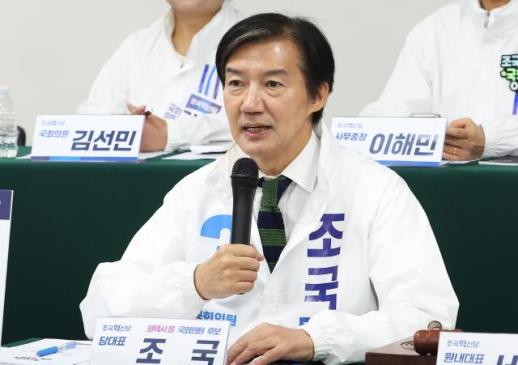 Jokuk Proposes Amendments to Pyeongtaek Support Special Law Jokuk, leader of the Jokuk Innovation Party, stated on May 10 that Pyeongtaek needs responsible support from the government and the National Assembly to take a significant leap forward. He announced the adoption of the "Pyeongtaek Support Special Law Amendment" as the party's official stance. During a field meeting with 11 members of the Jokuk Innovation Party at the Godeok STV Knowledge Industry Center in Pyeongtaek, Jokuk emphasized the importance of the amendment. "Pyeongtaek is home to the world's largest single semiconductor factory, the Samsung Electronics campus, and the largest U.S. military base, Camp Humphreys," he said. "We aim to elevate Pyeongtaek, a strong leader and beneficiary in artificial intelligence and a symbol of the Korea-U.S. alliance." He argued that the Pyeongtaek Support Special Law needs revision. While acknowledging that many projects have been carried out under the law enacted in 2005, he pointed out that it is insufficient to support national security and industrial strategy, highlighting its many gaps. Jokuk noted that despite four extensions of the deadline, including the passage of a bill on May 7, the sunset clause has left Pyeongtaek city and project stakeholders in a state of uncertainty. "To ensure stable business operations and a consistent development strategy, the sunset clause must be eliminated," he stressed. On this day, the members of the Jokuk Innovation Party confirmed the amendment to the Pyeongtaek Support Special Law as the party's official position. The proposed amendments include: 1) establishing and implementing measures to improve transportation for local residents, 2) legalizing national subsidies outlined in the enforcement decree, and 3) abolishing the sunset clause. After the adoption of the amendment as the party's official stance, Jokuk stated, "The amendment supported by the Jokuk Innovation Party will serve as a strong backing for me and a source of hope for the residents of Pyeongtaek. The Jokuk Innovation Party will demonstrate to the residents of Pyeongtaek that we act, not just speak."* This article has been translated by AI. 2026-05-10 11:48:18
 -
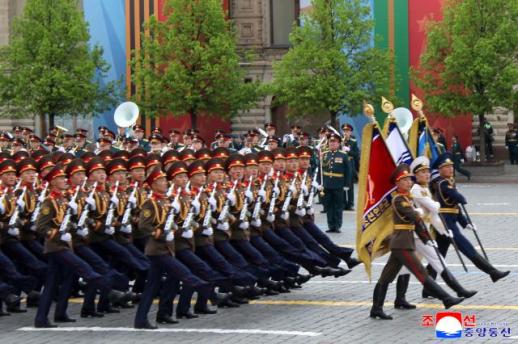 North Korean Troops Participate in Russia's Victory Day Parade North Korean state media reported that the country's military took part in Russia's Victory Day military parade commemorating the end of World War II. The Korean Central News Agency (KCNA) stated on May 10 that the "81st anniversary celebration of the Great Patriotic War victory" took place in Moscow's Red Square the previous day, with the "Korean People's Army combined forces participating at the invitation of Russia." Army Colonel Choi Young-hoon led the troops in the march, and Russian President Vladimir Putin expressed his gratitude to the commanders after the parade concluded. The Workers' Party's official newspaper, Rodong Sinmun, also covered the event extensively with photographs, detailing the atmosphere on-site. The newspaper reported, "As the song 'The Struggle for Justice' was played, the Russian flag and the victory banner appeared in the square," and included excerpts from President Putin's speech. It added, "The troops of the Democratic People's Republic of Korea, who displayed immortal feats in battles to liberate Kursk, marched alongside the Russian military units." Additionally, the newspaper noted that President Putin met with veterans, participants of the special military operation, and commanders of the People's Army who took part in the parade. The report also highlighted that President Putin issued a congratulatory letter on May 6 in honor of Victory Day, including parts of its content, emphasizing the significance of the event. On the same day in Pyongyang, members of the Russian embassy in North Korea visited the Liberation Tower to lay flowers in commemoration of Victory Day. The Liberation Tower symbolizes the Soviet soldiers who died fighting to expel Japanese forces from the Korean Peninsula in 1945. During the ceremony, held with North Korean honor guards present, participants observed a moment of silence while the national anthems of Russia and North Korea were played in tribute to the Soviet heroes.* This article has been translated by AI. 2026-05-10 11:39:19
 -
 South Korea and U.S. Initiate High-Level Talks on $350 Billion Investment Project The South Korean and U.S. governments have officially begun high-level discussions on a strategic investment project worth $350 billion. The two countries are focusing on joint investments and research and development (R&D) in the shipbuilding and energy sectors, including nuclear power and liquefied natural gas (LNG), to enhance cooperation. According to the Ministry of Trade, Industry and Energy, Minister Kim Jeong-gwan visited Washington, D.C., from May 6 to 9 to discuss the strategic investment project and ways to strengthen industrial and trade cooperation with key U.S. officials. Following the passage of the Special Investment Act, discussions on subsequent legislation and implementation frameworks are gaining momentum. During his visit, Minister Kim met with U.S. Secretary of Commerce Howard Rutnik to explain the South Korean government's progress on subsequent legislation and implementation frameworks following the Special Investment Act's passage. The two sides discussed more concrete directions for advancing the strategic investment project based on previous discussions focused on shipbuilding and energy. As a result of this meeting, the Ministry of Trade, Industry and Energy and the U.S. Department of Commerce signed a memorandum of understanding (MOU) for the Korea-U.S. Shipbuilding Partnership Initiative. Under this agreement, the two countries plan to establish a Korea-U.S. Shipbuilding Cooperation Center in Washington, D.C., by the end of the year to support collaboration among governments, industries, and research institutions. Specific activities will include promoting foreign direct investment in the U.S. maritime industry, workforce development initiatives, shipyard productivity enhancement projects, and technology exchanges. The detailed areas of cooperation will be further defined through subsequent discussions between the two governments. The U.S. Department of Commerce will facilitate exchanges among U.S. shipbuilders, suppliers, universities, and research institutions while serving as a contact point for the center at the government level. The Ministry of Trade, Industry and Energy will coordinate cooperation among South Korean stakeholders in the shipbuilding sector and provide the necessary personnel and funding for the center's operations. Minister Kim also met with Russell Vought, Director of the Office of Management and Budget at the White House, to request U.S. government support for the Make American Shipbuilding Great Again (MASGA) project that South Korea is pursuing. Additionally, he discussed energy cooperation issues, including nuclear power, with U.S. Secretary of Energy Chris Wright, exploring ways to strengthen future collaboration. Minister Kim held a virtual meeting with Senator Bill Hagerty of Tennessee, a prominent supporter of South Korea, to discuss nuclear cooperation and digital issues, continuing outreach efforts to the U.S. Previously, during last year's Korea-U.S. summit, the two countries agreed to pursue the MASGA project, committing to $150 billion in investments in the U.S. shipbuilding sector. This investment is part of the broader $350 billion strategic investment commitment, which includes reductions in tariffs on South Korean products and automobile tariffs in exchange. The Ministry of Trade, Industry and Energy plans to maintain close communication with the U.S. regarding the strategic investment project while actively managing industrial and energy cooperation and trade issues. After concluding his visit to the U.S., Minister Kim is scheduled to return to South Korea via Incheon International Airport on the afternoon of May 10.* This article has been translated by AI. 2026-05-10 11:36:22
 -
 Shinhan Financial Group's CEO Jin Ok-dong Promotes Investment in North America Jin Ok-dong, the CEO of Shinhan Financial Group, is visiting the United States, Mexico, and Canada to hold investor relations (IR) meetings with overseas institutional investors. According to Shinhan Financial Group, Jin will meet with major global asset management firms and pension fund investors in North America over the next two weeks, starting from May 10 until May 22. During his visit, Jin will explain the stability and fundamentals of the South Korean financial market and will also visit local subsidiaries and branches to review the status of global operations and regional growth strategies. Jin plans to outline the group's enhanced corporate value improvement plans, which include a shareholder return system linked to return on equity (ROE) and growth rates, a capital policy that increases predictability and sustainability, and a strategy for diversifying revenue based on global business. He will also share Shinhan Financial's response to the prolonged conflict between the U.S. and Iran. "Transparent and consistent communication with investors is a crucial foundation for enhancing corporate value," Jin stated. "Shinhan Financial will thoroughly explain our sustainable system for expanding both group growth and shareholder returns to global investors, and we will continue to enhance corporate value based on market trust." Shinhan Financial has announced a new value enhancement policy this year, strengthening shareholder returns. The company has introduced a formula for calculating shareholder return rates linked to an elevated ROE target of over 10%. This new system eliminates the previous 50% cap on returns, establishing a predictable return framework calculated as '1 - (growth rate / target ROE)'. The dividend policy will also be strengthened, with plans to initiate tax-exempt dividends for three years starting from the 2026 fiscal year, aiming for a yearly increase of over 10% in the dividend per share (DPS). 2026-05-10 11:34:27
 -
 First Day of Increased Capital Gains Tax for Multiple Homeowners: Minister Kim Yoon-deok Addresses Concerns On the first day of the reimplementation of the increased capital gains tax for multiple homeowners, Minister of Land, Infrastructure and Transport Kim Yoon-deok dismissed concerns about a potential housing market freeze, stating, "The people's sovereignty government is different." In a post on X (formerly Twitter) on May 10, Kim noted, "Such forecasts are largely based on experiences from past administrations. Should we expect history to repeat itself this time? In the long run, I believe the people's sovereignty government will be different and must be different." This statement comes amid worries that multiple homeowners might withdraw their properties from the market due to the increased tax burden, leading to a housing market freeze. Kim emphasized that the people's sovereignty government has a different perspective and approach to real estate issues. He pointed out that previous administrations pursued stability policies for the real estate market while maintaining the basic framework of macroeconomic management, including monetary and financial policies. He added, "The Lee Jae-myung government is not merely focused on stabilizing the real estate market; we recognize that without addressing barriers to social mobility across income classes and regions, we cannot secure the future and unity of South Korea. We are pursuing fundamental institutional reforms to transform the economy from one reliant on real estate windfalls to a productive economic structure by completely redesigning the economic incentive structures in finance, taxation, and supply." Kim also highlighted the government's exceptional capacity for collaboration and execution. He stated, "As the public has witnessed with the achievement of a KOSPI of 7,000 and our response to the Middle East conflict, our housing supply policies are also different. Within just three months of taking office, we announced a plan to supply 1.35 million homes in the metropolitan area, followed by a plan for 60,000 homes in prime locations on January 29." He continued, "Most importantly, to legally and institutionally support these initiatives, eight legislative bills have been completed, and 14 are awaiting discussion in the National Assembly. We aim to finalize legislation before the end of the first half of the National Assembly session while breaking down barriers between departments to accelerate housing supply in areas like Gwacheon and Taereung more swiftly than ever." * This article has been translated by AI. 2026-05-10 11:33:07
 -
 70% of Homebuyers Selling Cryptocurrency Are in Their 30s A recent report reveals that 70% of individuals who sold cryptocurrency to fund their home purchases are in their 30s. This trend follows the government's introduction of a separate category for cryptocurrency sales in housing financing plans, confirming the influx of virtual asset profits into the real estate market among this age group. According to data submitted by the Ministry of Land, Infrastructure and Transport to Kim Jong-yang, a member of the National Assembly's Land, Infrastructure and Transport Committee, a total of 324 individuals reported using cryptocurrency sales to finance their home purchases between February 10 and March 31 of this year. Among them, 229 were in their 30s, accounting for 70.7% of the total. The amount of cryptocurrency sold by those in their 30s for home purchases reached 10.31 billion won, the highest among all age groups. Following them, individuals in their 40s reported 5.495 billion won. The amount sold by those in their 30s is approximately 1.9 times that of those in their 40s. Individuals in their 20s sold 1.185 billion won, while those in their 50s sold 1.072 billion won, and those aged 60 and above sold 510 million won. The housing financing plan is a document that details the source of funds when purchasing a home. It must be submitted to the relevant local government within 30 days of the contract date for all housing transactions in regulated areas and for properties valued over 600 million won in non-regulated areas. Since February 10 of this year, the revised real estate transaction reporting rules have required that cryptocurrency sales be reported as a separate item in the financing plan. Buyers must provide documentation of the transaction, the timing of the sale, and currency exchange records. This statistic is significant as it marks the first instance of cryptocurrency sales, previously classified under 'other funds,' being included in formal reporting. Notably, individuals in their 30s are considered to have a relatively high participation rate in risky asset investments such as stocks and cryptocurrencies. This trend confirms that they are realizing investment profits to fund home purchases. However, the proportion of cryptocurrency sales in the overall home purchase financing remains small. In the case of individuals in their 30s, cryptocurrency sales accounted for only 0.1% of their home acquisition funds. Among their own funds, proceeds from property sales made up the largest share at 18.7%, followed by bank deposits at 14.6%, gifts and inheritances at 6.9%, and proceeds from stock and bond sales at 4.3%. Market analysts are paying attention to the potential for cryptocurrency and stock investment profits to flow into the real estate market, particularly among the 2030 generation. With ongoing loan regulations and housing price pressures, it is anticipated that younger individuals will increasingly utilize financial investment profits, in addition to existing savings or parental support, to fund home purchases. A real estate industry insider stated, "The inclusion of cryptocurrency sales as a separate item in the financing plan has begun to clarify how younger generations are sourcing their funds. While the scale is still limited, the trend of investment profits from the 2030 generation flowing into the housing market is likely to continue."* This article has been translated by AI. 2026-05-10 11:31:42
 -
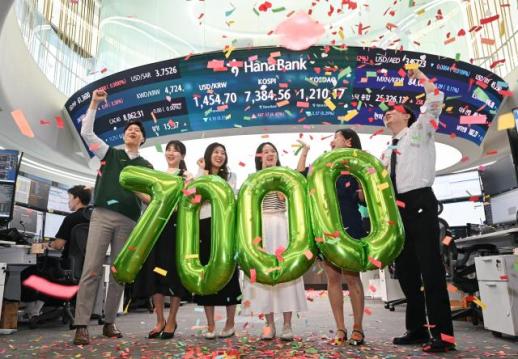 KOSPI Surpasses 7000 Mark, Sparking Surge in Investment Literature Sales As the stock market heats up, the first place to feel the surge is not the trading floors of brokerages, but rather bookstores.Following the KOSPI's unprecedented rise above the 7000 mark, sales of stock-related books in South Korea have surged by 305% compared to last year, according to recent research. While these numbers may suggest a simple investment frenzy, they reveal deeper trends in the direction of South Korean society.Past stock booms were often linked to a 'get-rich-quick' mentality, characterized by chasing rapidly rising stocks and seeking short-term profits. However, the current market trend appears to be different. The books flying off the shelves now include not only trading techniques but also topics such as pension investment, asset allocation, economic structures, and long-term investment strategies.This shift indicates a changing perception of investment. Stocks are no longer seen merely as speculative assets for a select few; they have become a survival strategy. In a reality where it is increasingly difficult to bridge the wealth gap with just a salary, people are beginning to study finance. They have come to realize that relying solely on savings accounts is insufficient for future planning.Interestingly, the current movement contrasts sharply with the 'blind investment' mentality that has characterized past market upswings. People are not just reading books to make money; they seek to understand why markets move, how industries evolve, and the connections between interest rates, artificial intelligence, semiconductors, and geopolitics. Investment itself has become an entry point for economic education.This trend is also linked to broader changes in South Korean society. As the real estate-centered asset structure wavers and the influence of global capital markets grows, financial literacy is becoming a fundamental skill rather than an optional one. Once, the perception was that 'stocks are risky,' but now the sentiment is shifting to 'not knowing is riskier.'Of course, caution against overheating is necessary. As the market rises, optimism can quickly escalate. Phrases like 'the KOSPI 7000 era' can foster excessive confidence while raising expectations. Markets do not always rise, and as enthusiasm grows, maintaining a level-headed approach becomes increasingly important.However, this phenomenon should not be dismissed as merely a sign of a bubble. What is crucial is that people are choosing to study before investing. Heading to bookstores signifies at least an effort to understand the market. This is a departure from the past, where impulsive buying was the norm.Ultimately, the current scene in bookstores reflects both the anxieties of South Korean society and the direction of change. People no longer take a stable future for granted; instead, they recognize that in order to survive, they must educate themselves and manage their assets. 2026-05-10 11:29:52
 -
 Rural Basic Income Pilot Program Sees High Demand with 8.8 to 1 Competition Ratio Interest in the rural basic income pilot program is heating up, with 44 counties applying for five additional slots, resulting in a competition ratio exceeding 8 to 1. The government plans to finalize the selection of additional regions next month.On May 10, the Ministry of Agriculture, Food and Rural Affairs announced that 44 counties had applied for the expanded pilot program aimed at providing basic income in rural areas.The rural basic income pilot program aims to combat the crisis of rural depopulation by providing monthly payments of 150,000 won in local love gift certificates to stimulate local consumption.To mitigate the impact of high inflation due to geopolitical risks in the Middle East and to strengthen support for vulnerable rural areas, the ministry secured additional budget funding last month. As a result, a call for applications was made to select five more counties from 59 designated areas experiencing population decline. The response was robust, with 44 counties expressing interest, leading to a competition ratio of 8.8 to 1.Specifically, the applicants include one county from Gyeonggi, eight from Gangwon, four from Chungbuk, four from Chungnam, five from Jeonbuk, eleven from Jeonnam, five from Gyeongbuk, and six from Gyeongnam, totaling 44 counties.The ministry will form an evaluation committee composed of private experts in rural policy, basic income, balanced development, and local finance, and plans to announce the selection of the five additional counties next month.Kang Dong-yoon, director of the Rural Income and Energy Policy Division at the Ministry of Agriculture, Food and Rural Affairs, stated, "We will actively support the rural basic income pilot program to ensure it takes root in the selected areas and leads to tangible results."* This article has been translated by AI. 2026-05-10 11:28:57
 -
 Qatar Mediates U.S.-Iran Negotiations as Iran Approves LNG Passage to Pakistan Amid final negotiations for a ceasefire between the United States and Iran, Qatar is accelerating its role as a mediator. Iran has reportedly approved the passage of a Qatari liquefied natural gas (LNG) vessel through the Strait of Hormuz, signaling a move to build trust with the mediating country. On May 9, Axios reported that U.S. Secretary of State Marco Rubio and White House Special Envoy Steve Witkoff met with Qatari Prime Minister Mohammed bin Abdulrahman Al Thani in Miami. The meeting was convened to discuss ways to draft a memorandum of understanding (MOU) aimed at ending the war in Iran. Prime Minister Al Thani was initially scheduled to return to Doha after a meeting with U.S. Vice President JD Vance in Washington but altered his plans to head to Miami instead. While in Miami, he also spoke with the Saudi foreign minister to discuss mediation strategies. The U.S. and Iran are currently negotiating a one-page document to officially end the war and establish a framework for future discussions on sensitive issues, including Iran's nuclear program. Reports indicate that U.S. officials were awaiting Iran's latest response by the afternoon of May 10. Since the outbreak of the war, Pakistan has served as the official mediator between the U.S. and Iran, but Qatar has also been involved in behind-the-scenes negotiations. U.S. officials have stated that the White House views Qatar as an effective mediator in talks with Iran. A source revealed that Qatar, Pakistan, Egypt, Turkey, and Saudi Arabia are collaborating to reach an agreement, urging both sides to de-escalate tensions and focus on a resolution. Iran Approves Passage of Qatari LNG Vessel Through Strait of Hormuz In related developments, a Qatari LNG vessel has received approval from Iran to navigate toward the Strait of Hormuz. According to Reuters, citing shipping data from the London Stock Exchange Group (LSEG), the LNG carrier "Al Karaitiyat" departed from Qatar's Ras Laffan port and is en route to Pakistan's Qasim port. Sources indicate that the shipment was sold under a government contract between Pakistan and Qatar, and Iran granted this passage as part of building trust with Pakistan, which has played a mediating role in ceasefire negotiations with the U.S. If successful, this voyage will mark the first instance of a Qatari LNG vessel passing through the Strait of Hormuz since the war began in late February. Facing a severe gas shortage, Pakistan has been requesting Iran to allow LNG vessels to transit, even on a limited basis. The "Al Karaitiyat," registered in the Marshall Islands, is a large vessel capable of carrying approximately 212,000 cubic meters of LNG and is managed by a Qatari shipping company. Previously, on April 6, Iran's Islamic Revolutionary Guard Corps (IRGC) halted two Qatari LNG carriers heading toward the Strait of Hormuz without explanation. Qatar is the world's second-largest LNG exporter, primarily supplying gas to Asian markets. However, it has been reported that 17% of Qatar's total LNG export capacity was impacted by Iranian attacks early in the war. It is expected to take 3 to 5 years to restore production facilities with an annual capacity of 12.8 million tons.* This article has been translated by AI. 2026-05-10 11:27:25
 -
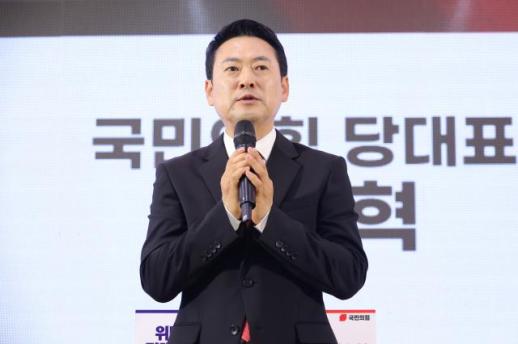 Jang Dong-hyuk: Capital Gains Tax Hike Will Drive Up Seoul Housing Prices Jang Dong-hyuk, leader of the People Power Party, criticized the reintroduction of the capital gains tax for multiple homeowners on May 10, stating, "Except for Gangnam, housing prices in Seoul have risen again. Is this Lee Jae-myung's version of a 'surgical strike'?" In a post on his Facebook account, Jang remarked, "Gangnam, which he despises, has dropped, so is Lee Jae-myung smiling?" He warned that with the capital gains tax on real estate starting today, prices will continue to rise, noting, "Everyone is pulling their properties off the market." He added, "The rental market has already reached its limit. Jeonse (long-term lease) options are drying up, and monthly rents have increased by tens of thousands of won compared to last year." He predicted that once the elections are over, property taxes will increase, and the long-term holding tax exemption will be abolished, stating, "A true hell awaits us." Jang also criticized Lee Jae-myung's insistence on 'normalizing the real estate market,' saying, "The mindset that believes this is normal is abnormal." He questioned whether the apartment owned by President Lee in Bundang would ever be sold, asking, "Is it just going to be advertised without actually selling?" Choi Bo-yoon, the party's chief spokesperson, also commented, stating, "The feared housing supply lockdown is becoming a reality," and noted that the temporary increase in urgent sales before the tax deadline was not a result of policy effectiveness but rather an attempt to avoid a tax burden. Choi emphasized, "The consequences of the tax-centric policies of the Lee Jae-myung administration are clear. Citizens who own homes are burdened by punitive taxes, while those without homes are pushed out by skyrocketing rents. Sellers face tax barriers, and young people and newlyweds looking to buy homes are frustrated by loan regulations." She further criticized the government for considering reducing long-term holding tax exemptions and stripping benefits from rental property owners, stating, "The government is shaking the market with taxes, and when the market doesn't respond as they wish, they intend to suppress it with even harsher taxes." Choi concluded by asserting that what is needed now is the repeal of punitive taxes that block exit routes and decisive action to eliminate regulations on reconstruction and redevelopment to allow quality housing to be supplied where the market demands. She urged the Lee Jae-myung administration to recognize the failures of past governments that tried to control the market through taxation.* This article has been translated by AI. 2026-05-10 11:25:47