
Journalist

Seo Hye Seung
-
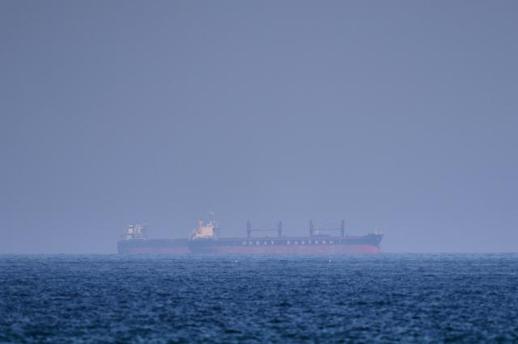 South Korea Diversifies Energy Imports as Hormuz Closure Risk Grows The prolonged war in the Middle East has heightened fears of a possible closure of the Strait of Hormuz, accelerating a reshaping of South Korea’s energy supply chain. Reliance on Middle Eastern crude is falling, while imports of U.S. crude and naphtha are surging as companies diversify supply sources. According to Korea International Trade Association data released Saturday, South Korea’s crude oil import bill totaled $5.95 billion last month, down 5.3% from a year earlier. Even as overall imports declined, sourcing shifted. Imports of non-Middle Eastern crude rose 30.1% to $2.2047 billion. U.S. crude jumped 75.8% to $1.37804 billion, the highest in 20 months. The article said U.S. crude, a light grade, is easier for domestic refiners to blend with the heavy Middle Eastern crude they commonly process, making it a practical substitute. Crude imports from Australia and Malaysia also increased, up 44.7% and 140.5%, respectively. By contrast, imports from major Middle Eastern suppliers fell: Saudi Arabia was down 13.4%, the United Arab Emirates 7.7%, Iraq 19.0% and Kuwait 46.4%. As a result, the Middle East share of South Korea’s crude imports dropped to 62.9% in March from 73% a year earlier, a decline of about 10 percentage points. Changes were also seen in naphtha, a key feedstock for petrochemicals. South Korea’s naphtha import bill fell 23.8% to $1.99 billion last month. Naphtha imports from the UAE dropped 57.5% and from Kuwait 48.1%. U.S. naphtha imports, however, surged 57-fold over the same period, emerging as an alternative to Middle Eastern supply. Companies have also moved quickly to adjust sourcing to places outside the Strait of Hormuz risk zone, including Oman, Greece and the United States, with import values rising 28.5%, 193.5% and 5,652.8%, respectively. Supply concerns extend beyond energy. Helium used by the semiconductor and display industries has also become less stable. South Korea’s helium import bill fell 23.5% from a year earlier to $12.98 million last month. Imports from Qatar, South Korea’s largest supplier, declined 30.1%. The article said Iran’s drone attack halted operations at Qatar’s largest helium industrial complex, and global helium prices have already jumped by nearly 50%. South Korea depends on Qatar for 64% of its helium imports, raising concerns that prolonged Middle East risks could lead to supply disruptions. The government said domestic supply remains stable for now. A Ministry of Trade, Industry and Energy official said there have been no disruptions so far in supplies of crude oil, major petrochemical feedstocks or helium, adding that authorities will move quickly to secure alternative import sources if supply chains show signs of strain.* This article has been translated by AI. 2026-04-26 14:59:38
 -
 Democratic Party’s Seo Young-kyo Says She Won’t Run for Floor Leader, Will Focus on Committee Roles Seo Young-kyo, a lawmaker from the Democratic Party, said April 26 that she will not run in the party’s upcoming election for floor leader, saying she will focus on her duties as chair of a parliamentary investigation panel and as head of the National Assembly’s Legislation and Judiciary Committee. In a Facebook post, Seo noted that the party has begun formal procedures for the floor leader race, including forming an election management committee. She said she had considered running as someone who sought the post in 2025. “But this time, I will concentrate and do my best” in her current roles, she wrote, referring to her chairmanship of a special parliamentary committee investigating allegations involving what the panel calls politically motivated, fabricated indictments by prosecutors under the Yoon Suk Yeol administration, and her post as chair of the Legislation and Judiciary Committee. Seo said her work has focused on uncovering what she described as the reality behind alleged fabrication by the Yoon administration, while also pursuing prosecutorial reform and legislation related to people’s livelihoods. “As chair of the parliamentary investigation, many of the wrongdoings committed by the Yoon Suk Yeol administration to eliminate political opponents, including President Lee Jae-myung, have come to light,” Seo wrote. She added that as judiciary committee chair she is carrying out “important tasks” including prosecutorial and judicial reform and legislation on livelihoods and the economy. Seo ran in the Democratic Party’s 2025 floor leader election, competing against Rep. Kim Byung-kee, but lost. With Seo opting out of the next race, Reps. Park Jeong and Baek Hye-ryeon are expected to compete for the post against Rep. Han Byung-do, who has already declared his candidacy.* This article has been translated by AI. 2026-04-26 14:58:52
 -
 South Korea’s Top 5 Financial Groups Post Record Q1 Profit as Brokerage Units Drive Results South Korea’s five major financial holding groups — KB, Shinhan, Hana, Woori and NH NongHyup — posted more than 6 trillion won ($) in combined first-quarter net profit, with results increasingly determined by fee income and nonbank units, especially brokerages, amid a strong stock market. According to the financial industry on Saturday, the five groups reported combined first-quarter net profit of 6.1976 trillion won, up 9.8% from 5.6430 trillion won a year earlier. It was the first time their combined first-quarter profit topped 6 trillion won. By group, KB Financial logged 1.8924 trillion won in net profit, up 11.5% from a year earlier, keeping its position as the top earner. Shinhan Financial followed with a record 1.6226 trillion won. Hana Financial posted 1.2100 trillion won, its best result since the 2015 merger of Hana Bank and Korea Exchange Bank. NH NongHyup Financial reported 868.8 billion won, up 21.7%. Woori Financial was the only one to post a decline, with net profit of 603.8 billion won, down 2.1%. The group cited costs tied to voluntary retirement, provisions for overseas business and a reduction in loan assets to manage its common equity tier 1 ratio. The biggest swing factor was nonbank performance, led by securities units. With trading value surging in a buoyant stock market, brokerages emerged as a key profit engine and widened gaps among groups. KB Securities posted first-quarter net profit of 347.8 billion won, up 93.3%, as stock-trading commissions and proprietary trading both grew. Shinhan Investment Corp. reported 288.4 billion won, up 167.4%. NH Investment & Securities recorded 475.7 billion won in net profit, up 128.5%. The securities business accounted for 29.9% of NH NongHyup Financial’s group net profit, outpacing insurance and other nonbank units. Hana Securities reported 103.3 billion won, up 37.1%, but lagged the leading groups. The company said a one-time loss in its bond business followed a sharp rise in interest rates at the end of March. Woori Investment & Securities posted a 1,300% jump in profit, but the amount was only 14.0 billion won, limiting its impact on group results. Outside brokerages, nonbank results were weaker. Ten insurance companies under the five groups posted combined first-quarter net profit of 495.9 billion won, down 2,188 billion won, or 30.6%, from 714.7 billion won a year earlier. Card companies largely held profits at last year’s level as they faced pressure to cut merchant fees, higher funding costs and rising delinquency concerns. Despite the record first-quarter performance, it remains unclear whether the momentum will continue. The industry cited Middle East-related risks as a potential drag on exchange rates, interest rates and capital ratios. Rising corporate-loan delinquencies, linked to an expansion of so-called productive finance, are also adding to concerns about asset quality. “Earnings improved thanks to stronger noninterest income, but burdens from expanding productive finance and capital regulation remain,” a financial industry official said. “A key task this year will be balancing bigger shareholder returns with sound capital management.” 2026-04-26 14:58:00
 -
 South Korea Sweeps Neighbors Cup Golf Titles for Third Straight Year South Korea’s national golf team swept the men’s and women’s individual and team titles for a third straight year at the 23rd Neighbors Cup tri-nation friendly with Japan and Taiwan. The 2026 tournament ended April 24 at Taichung International Country Club (par 72) in Taichung, Taiwan, with South Korea taking all four trophies. South Korea also won the 21st and 22nd editions, becoming the first country in the event’s 23-tournament history to claim men’s and women’s individual and team titles three consecutive years. In the men’s individual event, South Korean players swept the top three spots. An Hae-cheon of Korea National Sport University won at 16-under 200. Kim Min-su of Howon High School-affiliated distance learning program was second at 13-under 203, and Yoo Min-hyeok of Sogang High School placed third at 9-under 207. Son Jae-i of Dongnae High School-affiliated distance learning program finished seventh at 5-under 211. In the men’s team standings, which total the top three scores from each country in each round, South Korea finished at 42-under 606, beating Japan by 19 strokes. Japan was second at 23-under 625. The women’s competition was also led by South Korea. Park Seo-jin of Seomun Girls’ High School won the individual title at 12-under 204, four shots ahead of runner-up Kim Gyu-bin of Haksan Girls’ High School at 8-under 208. Koo Min-ji of Korea National Sport University and Yoon Gyu-ri of Haksan Girls’ High School tied for fourth at 5-under 211. South Korea also won the women’s team title at 33-under 615, ahead of Japan at 14-under 634. An and Park, the men’s and women’s individual champions, extended their strong form after winning together last month at the Taiwan Amateur Championship in Kaohsiung, Taiwan. “It’s an honor to represent my country at the Neighbors Cup,” An said. “I’m happy to be part of a major record with three straight titles. I feel I grew again through this tournament.” Park said she started the final day one shot back. “I felt a lot of pressure to defend the title, but I’m glad I overcame it and won,” she said. “Staying focused to the end helped a lot, even in difficult conditions such as worsening weather.” The Neighbors Cup began in 1996 as a national team exchange between the Korea Golf Association and the Japan Golf Association. It became a three-nation friendly in 2001 when the Chinese Taipei Golf Association joined. South Korea will try for a fourth straight sweep at the 24th tournament, to be held in South Korea in 2027.* This article has been translated by AI. 2026-04-26 14:51:14
 -
 South Korea to Start High Fuel Price Relief Payments for Vulnerable Residents With inflation pressures worsening amid the fallout from a war in the Middle East, the government will begin paying “high fuel price relief” this week to ease the burden on vulnerable residents. The Ministry of the Interior and Safety said it will start accepting first-round applications at 9 a.m. on April 27 for basic livelihood recipients and other eligible groups. The first round targets those needing urgent social protection, including basic livelihood recipients, near-poverty households and single-parent families. Payments are calculated per person, not per household. Basic livelihood recipients will receive 550,000 won per person, while near-poverty households and single-parent families will receive 450,000 won. Residents in non-capital areas or population-decline regions will receive an additional 50,000 won per person to support local economies, bringing the maximum to 600,000 won for those who qualify. Applications will be accepted from April 27 through May 8. To reduce congestion and system overload, the government will use a day-of-week schedule during the first week (April 27-30) based on the last digit of an applicant’s birth year: Monday for 1 and 6, Tuesday for 2 and 7, and Wednesday for 3 and 8. On Thursday, April 30, applicants with last digits 4 and 9 and those with 5 and 0 may apply together, taking into account the May 1 Labor Day holiday. Applications are available online and in person. Those who want the money credited to a credit or debit card can apply 24 hours a day through the websites, apps or call centers of nine card companies, or by visiting bank branches linked to those card companies. Those who want local gift certificates or prepaid cards can apply at their local eup, myeon or dong administrative welfare center. Payment methods may vary by local government, so applicants should check in advance. For mobile or card-type local gift certificates, applicants can apply online through their local government’s local gift certificate app or website. Those seeking paper gift certificates or prepaid cards can apply and receive them at their local administrative welfare center, community service center, or eup or myeon office. The support must be used by Aug. 31. To protect small businesses, spending is limited to affiliated merchants with annual sales of 3 billion won or less. It cannot be used at department stores, large discount chains, or adult entertainment and gambling-related businesses. Exceptions apply in rural eup and myeon areas with limited shopping options, including Hanaro Mart stores and local food direct-sale outlets, regardless of sales. The ministry said it plans to provide detailed information on eligible merchants through private map apps starting late this month. Those who dispute eligibility or payment amounts may file objections from May 18 to July 17 through the government petition portal or administrative welfare centers. Eligible residents who miss the first-round window can apply during a second-round application period starting May 18. Inquiries can be made through the government civil service call center (110) or a dedicated call center. Interior and Safety Minister Yoon Ho-jung said he hopes the relief payments will provide “a solid support” for people struggling with high fuel prices, a weak currency and rising prices triggered by the Middle East war. 2026-04-26 14:48:58
 -
 LG Uplus Turns Simple Lab Customer Ideas Into Brand Video Series LG Uplus has released two brand videos built around real customer ideas submitted through its customer-participation service, Simple Lab: “Your Story Arrived at U+” and the follow-up, “A Daughter’s Unfamiliar Voice.” The company rolled out the videos sequentially on April 26 through its official YouTube channel and social media platforms, including its newsroom. Simple Lab allows customers to submit inconveniences they experience while using telecom services, as well as suggestions for improvement. The feature was added to the integrated app “U+one” in November last year, and about 10,000 ideas have been received so far. The videos highlight everyday requests drawn from customer stories, including: an office worker asking for automatic summaries of call content; a child seeking to protect parents from voice-phishing scams; a parent wanting easier tools to manage a child’s first smartphone; and customers asking to understand complex rate plans at a glance. Customers can submit ideas under two tracks: a monthly theme and an open topic. LG Uplus said it reviews ideas that receive strong support first, then shares with customers whether they will be reflected in services and how work is progressing. The company said it plans to expand a people-centered brand narrative through a “Voice Series,” starting with this content. Jang Jun-young, executive director and head of LG Uplus’ marketing group, said Simple Lab is a communication channel for putting the company’s customer-focused philosophy, “Simply. U+,” into practice. He said the company will continue to deliver changes customers can feel, from telecom basics to innovative customer experiences. * This article has been translated by AI. 2026-04-26 14:48:15
 -
 Strike could deal heavy blow to Samsung, academic warns SEOUL, April 26 (AJP) - A looming large-scale strike by unionized Samsung Electronics workers, amid an ongoing compensation dispute, could lead to significant economic losses, disrupting global supply chains if it goes ahead next month, according to an academic analysis. The chip giant's labor union has threatened to stage a three-week strike from May 21 to June 7 if negotiations fail. Speaking at a forum in southern Seoul last week hosted by think tank Ahnmin Institute for Public Policy, Song Heon-jae, a professor at the University of Seoul, warned that a possible walkout at Samsung Electronics' semiconductor operations could "disrupt production on a massive scale." Song estimated that even a brief halt in chip production could result in losses of billions per minute, rising to roughly 1 trillion won (about US$676 million) per day. He also warned that if the strike becomes prolonged, operating profit in the semiconductor division alone could fall by as much as 10 trillion won. "Not to mention immediate financial losses, the even bigger risk would be long-term damage to business relationships," Song also pointed out, adding that global tech giants such as Nvidia and AMD could turn to alternative suppliers like TSMC to ensure supply stability. "Once customers shift their supply chains, it could take years and significant costs to win them back," Song said, cautioning that the strike could undermine trust, weaken competitiveness in the fast-growing artificial intelligence-driven semiconductor market, and lead to a loss of momentum. The potential fallout could also spread across South Korea's broader industrial ecosystem, as Samsung Electronics has some 1,760 subcontractors and equipment suppliers, and any production halt could affect their operations. Many experts say resolving the dispute will require greater transparency in how performance bonuses are calculated, along with clearer guidelines for compensation, warning that prolonged internal conflict could deal a heavy blow to Samsung Electronics at a critical moment when global competition in advanced semiconductors intensifies. The warning comes as tensions rise between Samsung Electronics and its labor union over bonus structures. The union has threatened a large-scale strike, demanding that 15 percent of operating profit be distributed as performance bonuses. With Samsung's annual operating profit projected to reach as much as 300 trillion won, payouts could climb to around 45 trillion won or hundreds of millions of won per chip division employee if the demand is met. The dispute follows a recent agreement at rival SK hynix, which shifted to allocating 10 percent of operating profit to employees after removing a cap on bonuses. The move has raised expectations among workers across the semiconductor industry. 2026-04-26 14:44:34
 -
 KB: Seoul Apartment Price Gains Slow; Gangnam Falls for Second Month Seoul apartment prices rose at a slower pace this month, while Gangnam-gu posted a second straight monthly decline, according to a KB Kookmin Bank survey. KB Real Estate said in its April nationwide housing price report released Saturday that, as of a survey conducted April 13, Seoul apartment sale prices rose 1.00% this month, easing from a 1.43% gain in March. Outer districts led the increase. Dongdaemun-gu recorded the biggest rise at 1.99%, followed by Gangseo-gu at 1.88%, Gangbuk-gu at 1.75% and Seongbuk-gu at 1.69%. Gangnam-gu, however, fell 0.29%, extending its drop from -0.16% in March and marking its second consecutive monthly decline. The "KB Leading Apartment 50" index slipped to 99.3 this month from 99.8 in March, staying below the baseline for a second month. KB calculates the index by tracking changes in the market capitalization of the top 50 apartment complexes, based on the number of households multiplied by price. KB Real Estate said the shift reflected transactions centered on bargain listings in areas with large clusters of high-priced complexes as the May 9 end date nears for a temporary suspension of heavier capital gains taxes on multi-homeowners. A polarization gauge known as the "quintile ratio" fell for a second month, to 6.7 this month from 6.8 in March and 6.9 in February. The ratio compares the average price of the top 20% of homes with the bottom 20%; a higher figure indicates wider disparity. Outside Seoul, apartment prices in the greater Seoul area rose 0.43% in Gyeonggi province and 0.04% in Incheon. In Gyeonggi, Yongin’s Suji district jumped 2.08%, the highest increase, followed by Seongnam’s Jungwon district at 1.89%, Gwangmyeong at 1.87%, Guri at 1.70%, Anyang’s Dongan district at 1.56%, Hanam at 1.53% and Seongnam’s Sujeong district at 1.23%. Across the capital region, apartment prices rose 0.55%. The five major metropolitan cities — Gwangju, Daejeon, Daegu, Ulsan and Busan — rose 0.04%, while other regions gained 0.14%. Nationwide, apartment prices increased 0.32%. Jeonse deposit prices for apartments rose 0.44% nationwide, including 0.65% in the capital region, 0.31% in the five major cities and 0.17% in other regions. In the capital region, jeonse prices rose 0.86% in Seoul, 0.60% in Gyeonggi and 0.37% in Incheon. In Seoul, Gangbuk-gu’s jeonse prices surged 3.86%, setting a record-high increase, KB said. Seongbuk-gu rose 1.86%, Seongdong-gu 1.32%, Gwanak-gu 1.31%, Dobong-gu 1.15%, Gangseo-gu 1.12% and Dongdaemun-gu 1.00%. Seoul’s median apartment jeonse deposit reached 600 million won this month, topping 600 million won for the first time in 3 years and 7 months since September 2022, when it stood at 600.658 million won. Including apartments as well as detached homes and multi-family and row houses, nationwide home sale prices rose 0.22% this month and jeonse prices increased 0.31%. This month’s nationwide outlook indexes rose from the previous month, with the home sale price outlook index at 102.0, up 2.1 points, and the jeonse price outlook index at 117.5, up 1.6 points. In Seoul, the sale price outlook index climbed 11.2 points to 112.0 and the jeonse outlook index rose 7.0 points to 132.4. Both remained above the 100 baseline, indicating more respondents expect prices to rise.* This article has been translated by AI. 2026-04-26 14:33:16
 -
 Anthropic’s Claude Mythos preview accessed without authorization on launch day Anthropic’s newest AI cybersecurity model, released under tight controls, was accessed without authorization the same day it was made available to a select group, according to the IT industry. Industry officials said April 26 that Anthropic has opened an investigation after detecting unauthorized access to a preview of its latest model, “Claude Mythos,” through a third-party vendor environment. The access is believed to have occurred on the 7th, when Anthropic announced “Project Glasswing” and began providing the Mythos preview to selected companies. Mythos is described as capable of finding software vulnerabilities on its own and autonomously generating attack code based on them. Anthropic has said the model can detect and exploit vulnerabilities “to a degree that could surpass top-tier human hackers.” Citing dual-use risks — it could be used for attacks as well as defense — the company chose an invitation-only, limited research release rather than a broad public launch. The suspected route was a classic insider-risk scenario. A partner-company employee used their authorized access to enter the Mythos environment and, using information about Anthropic’s file system exposed in a hack of the AI evaluation startup Mercer, inferred where the model was hosted online. The employee then shared access with a small Discord group. The group reportedly avoided cybersecurity-related prompts to evade detection, using the model only for simple tasks such as building websites. The group also claimed it accessed other unreleased models, but that claim has not been confirmed. Anthropic said there is “no evidence the intrusion spread beyond the vendor environment,” and no damage to Anthropic systems has been confirmed. Still, security experts said the incident highlights broader structural weaknesses. Gabriel Hempel, a security operations strategist at security firm Exabeam, said the preview was intentionally limited because of dual-use risks, yet it “leaked almost immediately through a partner environment.” Some analysts said Project Glasswing’s design carries an inherent contradiction. Anthropic limited the Mythos preview to companies including Amazon, Apple, Google, Microsoft, Nvidia, Cisco, CrowdStrike and JPMorgan Chase. U.S. Treasury Secretary Scott Bessent recently convened the heads of major investment banks — including Goldman Sachs, Citigroup, Bank of America and Morgan Stanley — to discuss ways to use Mythos, the report said. The strategy was framed as a nationally designed “controlled release,” but as more institutions participate, the number of people with access inevitably grows, exposing the weakest link. The incident also underscored limits of even advanced code-focused defenses: a model may detect vulnerabilities in software, but it cannot by itself prevent weaknesses in unvetted third-party tools or social-engineering attacks. The use of Mercer breach information to enable access to Mythos was cited as a real-world example of “AI supply chain chain risk,” in which one breach fuels another. The case is also raising questions about whether “only a few get access” remains a workable control strategy in the AI era. Unlike export-control models used in semiconductors and defense, the access itself can become the leak path. South Korea is also watching the debate. Ryu Je-myeong, second vice minister of science and ICT, told reporters at the World IT Show on the 22nd that the government is exploring official participation in security discussions involving Anthropic’s Glasswing and OpenAI, adding that direct information-sharing is needed “in some form.” The Ministry of Science and ICT has been holding a series of emergency issue-review meetings with domestic IT and security industry officials, including SK Telecom, KT, LG Uplus, Naver and Kakao, to assess cybersecurity readiness as AI capabilities advance. 2026-04-26 14:19:48
 -
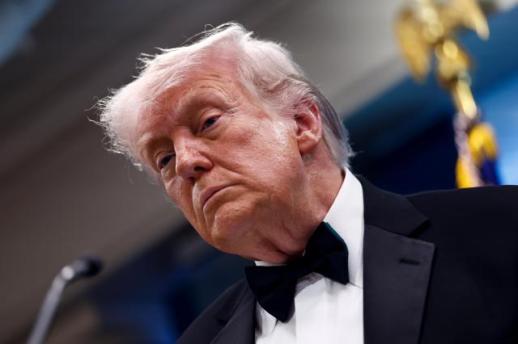 White House Correspondents’ Dinner Shooting Highlights U.S. Democratic Strains A symbolic Washington gathering was again shaken by gunfire. At the White House Correspondents’ Association dinner attended by U.S. President Donald Trump, an armed suspect carrying a shotgun opened fire on April 25 (local time) while trying to breach a security screening area, prompting an emergency evacuation of Trump and other key guests. The suspect was arrested at the scene, and the president and attendees were not hurt. The episode, however, cannot be dismissed as a routine security lapse. The correspondents’ dinner has long been a high-profile venue where U.S. politics and the press share the same room, a public display of the relationship between an administration that wields power and journalists tasked with scrutinizing it. A shooting at such an event underscores how social division and violence have reached even the country’s institutional and symbolic center, putting a democratic stage under physical threat. Investigators must determine whether Trump was targeted, whether the suspect acted alone, and whether there was a political motive. Whatever the motive, the effect is the same: when guns enter political space, debate gives way to fear. A society that shifts conflicts meant for elections, legislatures, the press and public assembly into the realm of weapons has moved into dangerous territory. The United States has repeatedly argued over gun regulation for years. After major tragedies, calls to tighten rules have grown, but political leaders have repeatedly failed to reach conclusions amid partisan confrontation. Constitutional debates and arguments over individual liberty deserve respect, but they cannot justify neglecting the state’s basic duty to protect public safety. If even a top-tier, heavily secured event with the president present is not fully safe, ordinary citizens’ anxiety is likely to be greater. Another concern is the normalization of political hostility. U.S. politics has grown accustomed to language that treats opponents not as rivals but as targets to be eliminated. Conspiracy theories, hatred and inflammatory rhetoric have spread between online spaces and real life. In such an atmosphere, violence by an extremist is less an accident than a foreseeable outcome. The incident is not only an American problem. Democracies broadly face shared challenges, including political polarization, disinformation, hate-driven agitation and leader worship. Cracks can begin when people assume institutions are unshakable. South Korea is not necessarily an exception; as political distrust and factional confrontation deepen, society can overheat quickly. The arrest of one gunman does not end the matter. The central task is to answer why such incidents keep recurring. Democracy is protected not by bullets, but by words, and the United States now faces that basic principle again. * This article has been translated by AI. 2026-04-26 14:15:16