
Journalist

Seo Hye Seung
-
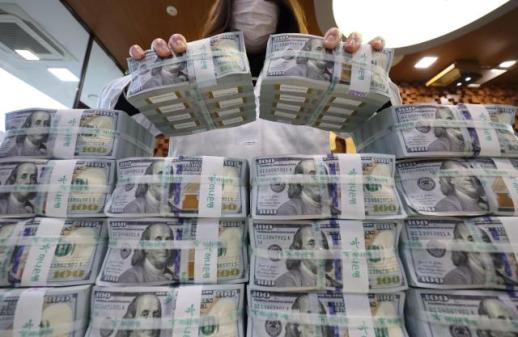 South Korea’s Foreign Reserves Rise $4.22 Billion in April on Weaker Dollar South Korea’s foreign exchange reserves rose by more than $4 billion in April, helped by a weaker U.S. dollar, the Bank of Korea said Wednesday. In its report on foreign reserves as of end-April 2026, the central bank said reserves stood at $427.88 billion at the end of last month, up $4.22 billion from the end of March. By asset type, securities totaled $384.07 billion, an increase of $6.37 billion from a month earlier. Special drawing rights rose by $240 million. Deposits fell by $2.29 billion, and the International Monetary Fund position declined by $90 million. The U.S. dollar depreciated 1.5% in April, based on the U.S. Dollar Index, lifting the dollar value of foreign-currency assets held in other currencies. The Bank of Korea said the increase reflected higher dollar-converted values of non-dollar assets and investment returns, despite market-stabilization measures including foreign exchange swaps with the National Pension Service. South Korea’s reserves ranked 12th in the world as of the end of March, when they stood at $423.7 billion. China ranked first with $3,342.1 billion, followed by Japan ($1,374.7 billion), Switzerland ($1,069.8 billion), Russia ($749.0 billion), India ($691.1 billion), Taiwan ($596.9 billion), Germany ($594.1 billion), Saudi Arabia ($496.3 billion), Italy ($452.5 billion), France ($445.0 billion) and Hong Kong ($430.8 billion).* This article has been translated by AI. 2026-05-07 06:03:14
 -
 Trump Says Iran Deal Could Be Reached Before His China Trip U.S. President Donald Trump said Tuesday that an agreement with Iran could be reached before his planned trip to China next week, scheduled for 14-15. In an interview with PBS News cited by Yonhap News Agency, Trump was asked whether a deal with Iran was imminent. “I think so. I think there’s a very good chance we’ll reach an agreement,” he said. Asked whether it could be wrapped up before he leaves for China, Trump replied, “It’s possible,” adding that he has felt close to a deal in past talks with Iran and “we’ll have to see what happens.” If no agreement is reached, he said, “we’ll have to bomb them again.” Trump also disclosed parts of the proposal under negotiation. Asked whether the deal could include removing Iran’s stockpile of highly enriched uranium, possibly to the United States, he said it was not a “maybe.” “It will be sent to the United States,” he said. He said “yes” when asked whether the deal could include Iran not operating underground nuclear facilities. But he rejected the idea that, after a period of halting enrichment, Iran would be allowed to resume low-level enrichment at 3.67%. Trump said Iran would carry out nuclear-related steps for a long time to build trust and that if an agreement is reached, the United States would ease sanctions on Iran.* This article has been translated by AI. 2026-05-07 05:57:16
 -
 Korea, Japan Collaborate at Venice Biennale, Crossing a Hedge Between Pavilions “I’ve long hoped that someday we could do something together.” Mizuki Takahashi, a co-curator of the Japan Pavilion, said that through tears after a joint performance by the Korea and Japan pavilions on May 6 (local time) at the Venice Biennale. Takahashi recalled that about 10 years ago, a candidate for Japan Pavilion curator suggested working together. She said she proposed a plan to build an exhibition with the Korea Pavilion, but it was not selected. “Still, I kept thinking that someday it would be good if we could do something together,” she said. In the Giardini, where the Biennale’s permanent national pavilions stand, the Korea and Japan pavilions sit side by side. Between them is a long hedge that functions like a border. It is unclear when it was planted. The Japan Pavilion does not want it, but it cannot be removed. Choi Bitna, the Korea Pavilion’s artistic director, said organizers tried to relocate the trees but Biennale park authorities refused. Instead of removing the boundary, the two sides chose to cross it. During the Korea Pavilion’s official opening event, the joint performance showed how easily the hedge could be crossed. Japan Pavilion co-curators Lisa Horikawa and Takahashi, along with participating artist Ei Arakawa Nash, stepped over the hedge into the Korea Pavilion. The Korea Pavilion director and participating artists welcomed them with open arms. Officials raised glasses and shouted “Kanpai,” then exchanged “Omedeto” and “Congratulations” and embraced. The artworks also crossed the hedge. Choi Go-eun’s Korea Pavilion work, “Merdiang,” ran through the hedge and reached the Japan Pavilion. The piece is a joint Korea-Japan project, with financial support from the Japan Pavilion. The Japan Pavilion’s baby dolls were also invited into the Korea Pavilion. The dolls, described as born on March 1 and May 18, hold their arms high in a celebratory gesture. Choi Bitna said the collaboration aimed to show a forward-looking relationship. “In 1995, Japan issued its first official apology (over its past),” she said. “I’m not saying it denies that, but it can seem as if it is trying to forget. Still, the Japan Pavilion team acknowledged that past and commemorated specific days in Korea, and I think that shows how solidarity can be built.” Japan Pavilion staff also promoted the Korea Pavilion. A Korea Pavilion poster was placed at the Japan Pavilion exit. The Japan Pavilion temporarily closed from 2 p.m. to 4:15 p.m., and staff told visitors, “Go see the Korea Pavilion,” and said a joint performance would begin at 4:30 p.m. Lee Beom-heon, chair of the Arts Council Korea, said he would work to keep the cooperation going. “This performance is truly meaningful,” Lee said, adding that the council agreed to maintain “progressive collaboration” with the Japan Foundation, the Japan Pavilion’s commissioner. He said the two sides promised to expand cooperation like this performance, including Seoul and Tokyo inviting each other. 2026-05-07 05:09:19
 -
 South Korea Braces for Delayed Oil-Price Shock as War-Driven Crude Surge Filters In As the war sparked by a surprise U.S.-Israeli strike on Iran enters its third month, South Korean industry is bracing for a delayed surge in energy costs that has so far been held back by inventories and price controls. With companies already facing supply-chain uncertainty, the coming pass-through could add a major new burden. According to industry officials on Tuesday, the Bank of Korea’s data show Dubai crude averaged $61.97 a barrel in January, then more than doubled to $128.52 in March after the war began on Feb. 28. In early May, it has been hovering in the $104 range. Much of the petroleum products now being sold were imported 2 to 4 months ago at an average in the mid-$60s, and electricity rates have not fully reflected the spike because of a cap in the fuel-cost adjustment mechanism. Dubai crude typically feeds into the system marginal price (SMP) for wholesale power with a 4- to 5-month lag, meaning March’s surge is likely to affect power bills directly or indirectly in July and August, when cooling demand peaks. An analysis by the Korea Institute for Industrial Economics and Trade found that a 10% rise in oil prices increases average manufacturing production costs by 0.71%. The biggest hits fall on petroleum products (6.30%), chemical products (1.59%) and rubber and plastics (0.46%). With Dubai crude jumping 87.9% in March alone, the on-the-ground impact could be larger than the headline figures suggest. The path out remains unclear. With U.S.-Iran talks dragging on, the United States has also moved to block all vessels traveling to and from Iran, in what the article described as a “reverse blockade.” Even if the Strait of Hormuz reopens depending on negotiations, it would take six weeks to restore 80% of Gulf oilfield output to normal. Factoring in additional lags from shipping, refining and inventory drawdowns, the cost pressure from high oil prices is likely to persist through the third quarter. Major global investment banks have raised their alerts. Citigroup said Brent could rise above $150 a barrel if supply disruptions continue through June. With Dubai crude already well above $84 a barrel — the refining industry’s break-even level — domestic refiners are expected to enter loss territory starting about two months from now as low-cost inventories run out. Experts warned that today’s surface-level price stability could amplify the shock later. Kim Kwang-seok, head of economic research at the Korea Economic and Industrial Research Institute, said that while energy prices typically rise first at the start of a war, increases later spread to naphtha, ethylene, fertilizer and urea, as well as consumer goods, food and services. If the Middle East war does not end within this month and becomes prolonged, he said, inflation is likely to shift from a concern to a reality. 2026-05-07 05:05:09
 -
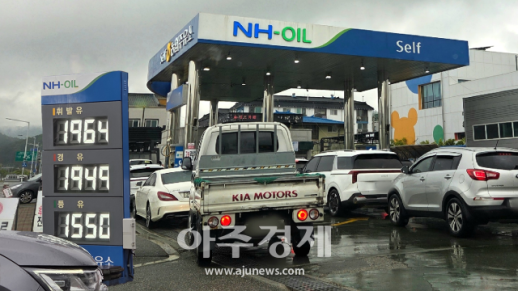 South Korea’s Fuel Price Cap Faces Strain as Refiners, Gas Stations Near Breaking Point As the war in the Middle East drags on and global crude inventories shrink, pressure is building on international oil prices, raising doubts that the government’s cap on petroleum product prices can be maintained. Industry officials said Tuesday that since the cap took effect, refiners’ losses and gas stations’ weakening profitability have mounted. If oil prices rise further, the government’s fiscal burden and industry pushback are expected to intensify. According to the industry on Tuesday, both gas stations and refiners are struggling to secure supply and set prices under the current system. With supply prices and settlement rules unstable, uncertainty in the market is growing. Gas stations say volatile supply prices and thinner margins are making it harder to lock in volumes. A gas station industry official said, “With no way to know how the next price-cap bracket will be set, it feels like a gamble, so it’s hard to either increase or cut volumes.” Refiners also say the burden is rising because the government has set a ceiling on supply prices without clearly defining how losses will be compensated or what standards will apply. The industry estimates that since the cap began, losses at the country’s four major refiners have run to about 500 billion won a week and may have exceeded 3 trillion won in total, as price increases have not been fully reflected. The government and the industry remain far apart on how to calculate compensation. Refiners argue that because petroleum products are produced jointly from crude oil, it is effectively impossible to calculate costs for each product, and losses should be assessed based on actual market prices. The government, however, is sticking to settlements based on verified costs, citing concerns about excessive compensation, fiscal strain and market distortions. The industry also points to repeated gaps between market signals and policy decisions. In the second adjustment, factors pointed to increases of 260 won for gasoline and 480 won for diesel, but the actual increase was limited to 210 won. In the third price notice, gasoline was frozen despite upward pressure, while diesel rose 300 won. In the fourth, downward factors emerged but prices were again frozen. As a result, the suppressed increase factors have reached 125 won for gasoline and 628 won for diesel. Industry officials say that apart from any short-term inflation relief, prolonged controls could shrink supply and raise the risk of a sharp price jump later. They also warn that if international oil prices climb further, refiners’ losses and the government’s fiscal burden would rise together, making the cap difficult to sustain. Song Heon-jae, a professor of economics at the University of Seoul, said the cap “had some effect in the short term, but it will not be easy to keep it in place.” He added, “If enough crude does not come in, gas stations will not be able to get gasoline properly, and in extreme cases it would be hard to rule out sales only during certain hours or cars concentrating at some stations.”* This article has been translated by AI. 2026-05-07 05:04:36
 -
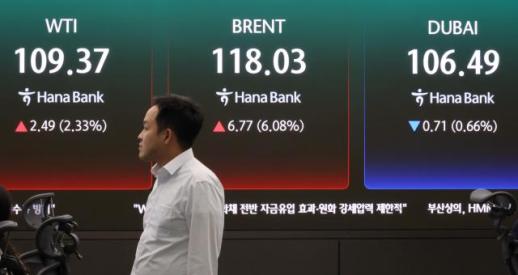 Korean Industries Brace for Prolonged High Oil Prices as $150-a-Barrel Fears Grow The prospect of an extended Middle East war pushing global crude prices to around $150 a barrel is heightening anxiety across South Korean industry, with executives warning that an era of ultra-high oil prices could be difficult for government, public institutions and companies to withstand. While government policy has so far helped restrain some energy price increases, including electricity rates, analysts say preparations are needed in case the oil rally becomes unmanageable and damages domestic industry and exports. Industry officials said Tuesday that global crude inventories released to limit price spikes after the war began are increasingly being depleted, fueling concerns that international oil prices could surge above $150 a barrel as early as late this month. Energy-intensive sectors such as semiconductors, autos and petrochemicals would face sharply higher costs. Semiconductor manufacturing requires massive electricity to run 24-hour clean rooms and lithography equipment. Industry officials said annual power costs to operate a single chip plant run into the trillions of won. With multiple plants operating at once, even a modest rise in electricity rates can directly hit earnings. Airlines are on high alert as fuel bills climb, leaving carriers in a position where more flying can mean bigger losses. Fuel accounts for more than 30% of total airline spending. Korean Air said a $1 increase in oil prices adds $30.5 million (about 45 billion won) in annual costs. Domestic fuel surcharges on air tickets moved in May to the highest level, stage 33, for the first time since the current system was introduced in 2016. Korean Air said the one-way fuel surcharge on its Incheon-to-New York route jumped to 564,000 won in May from 76,500 won in February, rising more than sevenfold in three months and nearly doubling from the previous month. Asiana Airlines is also charging fuel surcharges of up to 476,200 won per one-way international ticket. Automakers and defense-related manufacturers are also watching closely as higher energy costs threaten to raise production costs. While the impact has not been as immediate as in aviation, an ultra-high oil environment would likely increase industrial electricity rates and logistics costs. Automakers, already facing higher oil prices and weaker consumer sentiment, have complained that "there’s nothing left even if we sell." Petrochemical companies are also bracing for the risk that the high-price trend worsens. After the war began, firms struggled to secure key inputs such as crude and naphtha, but they managed to defend results with expanded government support and improved margins. If oil prices surge again, those buffers could prove ineffective. With global oversupply, companies may find it difficult to pass a sudden rise in feedstock costs on to product prices, raising the risk of another profitability slump. Calls are growing for the government and companies to step up efforts to stabilize energy supply chains. Some argue that until postwar supply shortages ease, authorities should use every available measure — including maintaining fuel tax cuts and releasing strategic stockpiles — to reduce corporate cost burdens. Cho Hong-jong, a professor of economics at Dankook University, said high oil prices are likely to persist for a considerable period even if the war ends, citing geopolitical risks around the Strait of Hormuz. He urged securing crude supplies in advance by mobilizing global supply networks and, if necessary, seeking cooperation with countries such as Russia to help stabilize energy prices. * This article has been translated by AI. 2026-05-07 05:03:59
 -
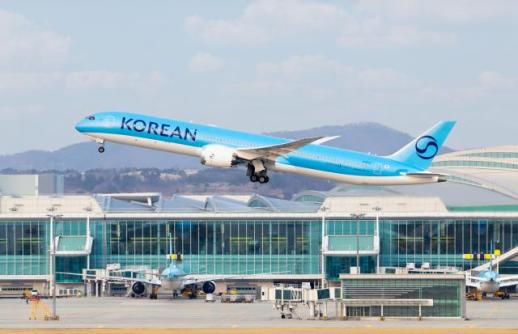 Korean Air Weighs Cutting Captain Promotions by About 17% Amid First Officer Shortage Korean Air is moving to reduce the number of first officers promoted to captain, a step the airline says is aimed at smoother crew operations but one that has drawn growing pushback from pilots who are nearing eligibility. Some in the industry also see it as an effort to adjust cockpit staffing ahead of the planned year-end integration with Asiana Airlines. According to industry officials on Tuesday, Korean Air is reviewing a plan to cut annual captain promotions to 120 from 144, a reduction of about 17%. Under the current system, 12 first officers can be promoted each month; the plan would lower that to 10. The move is tied to a shortage of first officers, according to people familiar with the matter. Airlines typically schedule captains and first officers in equal numbers for flights, and as more first officers move up, gaps in the first-officer pool widen. The airline’s difficulty in securing new first officers has also influenced the decision, the officials said. One key variable has been a decline in the number of military pilots able to move to civilian airlines. For fixed-wing pilot officers who did not graduate from the Air Force Academy — including ROTC and officer-candidate programs — the mandatory service period for those commissioned after July 1, 2015, was extended to 13 years from 10. Starting in the second half of last year, their discharge dates began shifting to the second half of 2028 or later. Airlines say that has tightened the supply of military-experienced pilots this year. An industry official said, “I understand the number of first officers coming in with military experience this year has fallen to about one-third of the usual level.” With a major pipeline for new first officers constrained, Korean Air’s staffing burden has increased. Korean Air pilots have strongly objected to the plan. They say that even if they meet the requirements for promotion, fewer slots would keep them in first-officer roles longer and could worsen a promotion backlog. Asiana has not discussed cutting captain promotions, but adjustments are expected as an integrated airline takes shape. Some observers argue Korean Air is moving early to reorganize cockpit staffing ahead of the integration. They say aircraft and personnel redeployments will be unavoidable before the year-end launch of the combined carrier, and that managing the scale of captain promotions is intended to reduce operational strain after integration. Korean Air has recently been holding job-specific briefings on post-merger human resources integration. For pilots, a central issue is how seniority will be combined and whether that could delay captain upgrades. “Even as more pilots continue to meet the time requirements for captain promotion, the time spent as a first officer can only get longer,” an industry official said. “Combined with the seniority issue ahead of integration, internal dissatisfaction could grow further.”* This article has been translated by AI. 2026-05-07 05:03:00
 -
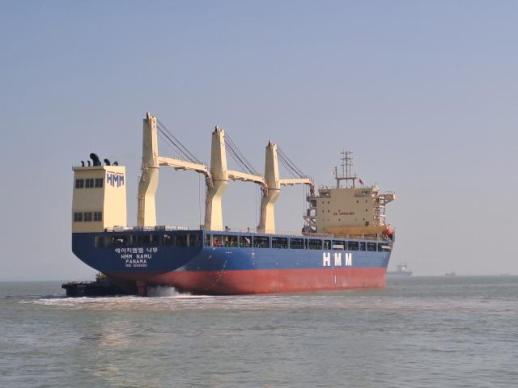 HMM Begins Towing Fire-Damaged Bulk Carrier Namu; Dubai Arrival Possible as Early as May 7 HMM has begun towing operations for the bulk carrier Namu, which caught fire while anchored in the Strait of Hormuz. HMM said a tugboat left Dubai port in the United Arab Emirates at about 8:30 p.m. on May 6 to assist the vessel. Once the tug reaches the area, it will secure the Namu and begin towing it to Dubai port, where a repair shipyard is located. Based on the distance, the ship is expected to arrive as early as the night of May 7 or early May 8. HMM said it will conduct a detailed inspection after the vessel arrives safely at the shipyard, then move to determine the cause of the fire and begin full repairs. The fire broke out after an explosion at about 8:40 p.m. on May 4 (Korea time) on the port side of the engine room while the Namu was anchored inside the Strait of Hormuz, north of Sharjah in the UAE. The Panama-flagged ship is operated by HMM, South Korea’s largest shipping company. It has 24 crew members on board: six South Koreans and 18 foreign nationals. No injuries were reported. HMM currently has five vessels stuck inside the Persian Gulf: two crude oil and petroleum product carriers, two bulk carriers and one container ship. The Namu is a bulk carrier.* This article has been translated by AI. 2026-05-06 23:24:15
 -
 KOSPI Closes Above 7,300 as Chip Stocks Lead Rally; Government, Elections and Fund Updates Semiconductor exports jump 139% while non-chip exports rise 11% South Korea posted its largest-ever first-quarter exports, helped by an artificial intelligence boom and a recovery in the semiconductor cycle. But the surge also deepened concerns about overreliance on a narrow set of items, especially memory chips, raising questions about the stability of the export structure. The Ministry of Trade, Industry and Energy said Tuesday that first-quarter exports rose 37.8% from a year earlier to $219.9 billion, the highest for the period. The ministry cited expanded investment in AI servers and strong semiconductor conditions as factors boosting competitiveness. The concentration risk remains, officials said. First-quarter semiconductor exports rose 139% from a year earlier to $78.5 billion.* This article has been translated by AI. 2026-05-06 21:54:20
 -
 CMA CGM Ship Hit While Transiting Strait of Hormuz; Iran Suspected France’s CMA CGM, the world’s third-largest shipping company, said one of its vessels was attacked while transiting the Strait of Hormuz. According to Yonhap News Agency and Reuters, CMA CGM said in a statement Tuesday that its ship San Antonio was hit, injuring crew members and damaging the vessel. The company said the injured crew were evacuated and are receiving medical care. “We are closely monitoring the situation and are doing everything possible in response alongside our crew,” CMA CGM said. The attacker was not identified, but the ship was reported to have come under an Iranian missile strike. A day earlier, the naval command of Iran’s Revolutionary Guard warned on X that any vessel seeking to pass through the Strait of Hormuz must use routes designated by Iran, and said those that do not would face a military response. Separately, at about 8:40 p.m. on May 4 (Korea time), a fire broke out after an explosion on the port side of the engine room of the HMM Namu while it was anchored north of Sharjah in the United Arab Emirates, inside the Strait of Hormuz. * This article has been translated by AI. 2026-05-06 21:51:15