

Journalist

Seo Hye-seung
-
 WNMC 26: Publishers bet on loyalty as Google reign fades MARSEILLE, June 02 (AJP) - If there was one subject dominating side-stage conversations at the World News Media Congress, it was the future of discovery. Across sessions on search, advertising, content management and audience development, publishers and technology providers wrestled with the same question: what happens if Google can no longer deliver the traffic publishers have relied on for two decades? The answer, according to many speakers, is not simply to replace SEO with the latest acronym. AEO (Answer Engine Optimization) and GEO (Generative Engine Optimization) are rapidly becoming part of publishers' vocabulary, but industry leaders repeatedly warned that AI-driven discovery remains too small to compensate for declining search traffic. Instead, the industry's most urgent priority may be far simpler: build direct relationships with audiences before platform-driven traffic becomes even less reliable. The Great Search Transition During the session "Discovery: How to Rethink Search in the AI Era," media consultants Clara Soteras, Barry Adams and David Buttle outlined how search is evolving from a link-based ecosystem into an answer-based one. Google's AI Overviews and AI Mode, alongside ChatGPT Search and other AI assistants, are changing how people discover information. Rather than directing users to websites, these systems increasingly synthesize information directly into answers. The shift is forcing publishers to rethink long-established audience acquisition strategies. Publishers are experimenting with GEO and AEO techniques to improve visibility inside AI-generated responses. Yet speakers acknowledged that referrals from large language models remain tiny compared with traditional search traffic. Even publishers actively optimizing for ChatGPT visibility reported that LLM-driven traffic still accounts for less than one percent of overall audience acquisition. That reality creates a difficult transition period. Google's influence appears to be weakening, but AI platforms have not yet become meaningful traffic generators. As Barry Adams observed, the entire industry is effectively playing catch-up while the landscape continues to evolve. Loyalty Matters More Than Traffic The strongest consensus across multiple sessions was that traffic itself is becoming a less useful measure of success. Barry Adams argued that publishers should focus less on traffic acquisition and more on audience loyalty. Building habits, encouraging repeat visits and strengthening direct relationships are becoming more valuable than maximizing pageviews. The message resonated beyond the search session. At a panel hosted by Sparteo titled "The Augmented Publisher: How AI Is Redrawing Programmatic," speakers from Le Parisien and Reworld Media echoed similar concerns. Sophie Cassam Chenaï of Le Parisien noted that publishers can no longer depend on external platforms in the same way they once did. Search traffic is under pressure. Social referrals are declining. The only audience publishers can truly control is their direct audience. For publishers, this means investing in subscriptions, newsletters, apps, podcasts and products that encourage users to return voluntarily. The Web Is Under Pressure The panel highlighted a growing sense that the open web itself is facing structural challenges. Publishers are confronting declining audiences, unpredictable algorithms and increasing competition for attention. Several speakers stressed that traffic has become fluid and unreliable. Instead of chasing every platform shift, publishers increasingly want to capture users inside their own ecosystems. This explains why engagement has become a central metric. Success is no longer measured solely by reach. Increasingly, it is measured by frequency, loyalty and depth of interaction. One example discussed during the conference was Argentine publisher El Cronista's educational board game designed to teach families about personal finance. While far removed from traditional SEO, the project reflected a broader shift toward creating products and experiences that strengthen audience relationships. As one participant suggested, publishers must move from creating content merely to rank toward creating content and products that connect. AI Inside the Newsroom While AI is disrupting discovery, it is also helping publishers improve their own operations. Content management platform Melody showcased how publishers are integrating AI into editorial workflows while maintaining control over their content and data. One case study demonstrated how AI-powered content management can automatically classify articles, extract key information and suggest related content. Journalists remain responsible for editorial decisions, but repetitive tasks become significantly faster. Features include AI-generated headline suggestions, standfirst recommendations, automated tagging and content organization. Perhaps most interesting was the use of conversational search built directly into publisher archives. Rather than relying on traditional site navigation, readers can ask questions and explore years of content through a natural-language interface. The system is designed to avoid hallucinations by acknowledging when information cannot be found within the archive. According to the case study presented, improved navigation and content discovery helped increase pageviews significantly by surfacing more relevant content to readers. AI Will Not Save Weak Audience Strategies The conference's broader lesson was that AI alone will not solve publishers' business challenges. Whether discussing advertising, subscriptions, search or editorial operations, speakers repeatedly returned to fundamentals: good contents, strong brands, and audience relationship. AI may improve workflows, enhance discoverability and create new opportunities for engagement. But publishers that remain dependent on external platforms face the same strategic vulnerability they faced before generative AI arrived. The future may belong to GEO and AI-assisted discovery. But for now, the publishers making the most progress are focusing on something far less fashionable: earning loyalty. Because regardless of whether audiences arrive through Google, ChatGPT, social media or a newsletter, sustainable publishing businesses depend on readers choosing to come back. 2026-06-02 09:45:05
 -
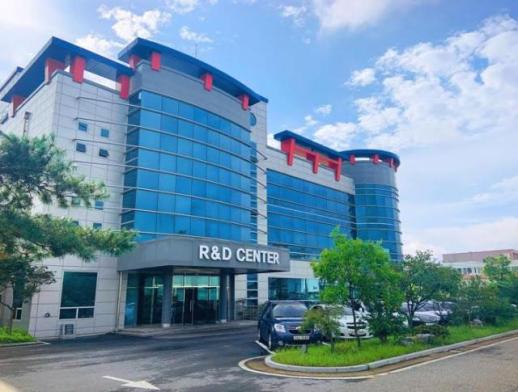 Namsun Aluminum Named GM's Supplier of the Year for 15th Consecutive Year SM Group's manufacturing subsidiary, Namsun Aluminum, has once again been named Supplier of the Year (SOY) by General Motors (GM), marking the 15th consecutive year it has received this honor. According to industry sources, Namsun Aluminum's automotive division was recognized at GM's 34th annual Supplier of the Year awards ceremony held recently in Austin, Texas. Jeong Soon-won, CEO of Namsun Aluminum's automotive division, attended the event to accept the award. The SOY award is given annually by GM to approximately 6,000 global partners based on a comprehensive evaluation of technology, innovation, supply stability, and sustainability. This year, a total of 103 companies, including 20 from South Korea, received the award. Namsun Aluminum's automotive division was commended for its key bumper systems and large injection molds supplied to GM Korea. A representative from SM Group stated, "In particular, there have been no issues with the Supplier Parts Quality System (SPPS) in the past year, and we achieved the highest rating of 'BIQS Level 5' in GM's quality evaluation system, which significantly contributed to our assessment." SPPS serves as a communication tool for suppliers and customers to resolve product quality issues. Jeong Soon-won remarked, "Being named SOY for 15 consecutive years is a testament to our consistent efforts in enhancing quality, developing new technologies, and ensuring stable supply. Our entire team has demonstrated that we are at the global top level in quality management." He added, "We will not rest on our laurels but will maximize our expertise and business know-how to become a more trusted partner in the global automotive parts market." Meanwhile, Namsun Aluminum, a core subsidiary of SM Group, focuses on manufacturing aluminum products such as windows and curtain walls, as well as supplying bumpers to GM Korea and others. Recently, it has expanded into eco-friendly and high-value markets, including solar structures and high-performance window systems.* This article has been translated by AI. 2026-06-02 09:45:00
 -
 U.S. Navy Considers Building Warships in South Korea and Japan The United States is considering the option of constructing naval vessels at shipyards in South Korea and Japan. This move comes as delays in domestic shipbuilding have prompted the U.S. to explore the capabilities of its allied nations. The $1.85 billion requested for research and development may also be utilized for actual ship procurement from South Korean and Japanese shipyards. On June 1, local time, Breaking Defense reported that the U.S. Department of Defense has requested Congress to include $1.85 billion in naval research and development funding in the 2027 budget adjustment bill. This funding is ostensibly aimed at assessing whether allied shipyards in South Korea and Japan can produce combat vessels for the U.S. Navy. However, the Office of Management and Budget (OMB) clarified that this funding is not merely for research. An OMB official told Breaking Defense, "No one uses the $1.85 billion solely for research; this money is actually for procuring ships." Depending on the manufacturer, this amount could cover the cost of an entire frigate, and considering the costs of destroyers built in South Korea or Japan, it could also serve as initial funding for procuring destroyers and cruisers. The proposed approach involves constructing key components of the vessels in South Korea or Japan, with U.S. defense contractors integrating the combat systems. Subsequently, the shipyards would either build new facilities in the U.S. or modernize existing ones to produce follow-on orders domestically. This strategy aims to leverage foreign shipyards in the short term while expanding U.S. shipbuilding capabilities. Companies under consideration include South Korea's Hanwha, HD Hyundai, and Samsung Heavy Industries, as well as Japan's Mitsubishi Heavy Industries, Kawasaki Heavy Industries, and Japan Marine United (JMU). The OMB noted that South Korean and Japanese shipyards are capable of constructing advanced surface combatants more quickly and at lower costs than U.S. facilities, thanks to automation, robotics, and production modernization. The U.S. decision to explore allied shipyards is rooted in structural delays within its domestic shipbuilding industry. The U.S. Navy and Coast Guard rely on eight domestic shipbuilders for surface combatants and auxiliary vessels. However, labor shortages, supply chain vulnerabilities, outdated facilities, and production capacity constraints have delayed major ship projects. An OMB official stated, "Major ship projects in the U.S. are already delayed by one to four years, and simply allocating more budget to existing shipyards will not solve the problem." There is significant pushback from Congress. Lawmakers are concerned that utilizing foreign shipyards could harm U.S. shipbuilders and their supply chains. The budget adjustment bill is also controversial because it allows for less detailed congressional oversight compared to the general defense budget. Some lawmakers are pushing for amendments to the National Defense Authorization Act to prevent the use of funds for producing U.S. warships or key components overseas. Legal barriers remain as well. U.S. defense budgets typically include provisions prohibiting the construction of naval vessels at foreign shipyards. However, it has been suggested that funds allocated through the adjustment bill could be utilized if the president approves exceptions based on national security needs. The U.S. Navy also acknowledges the necessity of expanding production capacity. Admiral Daryl Caudle, Chief of Naval Operations, stated, "We need ships, we need them now, and we need production capacity." However, introducing foreign designs would require a reevaluation of operational, maintenance, and training systems, potentially complicating the integration of new classes into the U.S. Navy's fleet.* This article has been translated by AI. 2026-06-02 09:45:00
 -
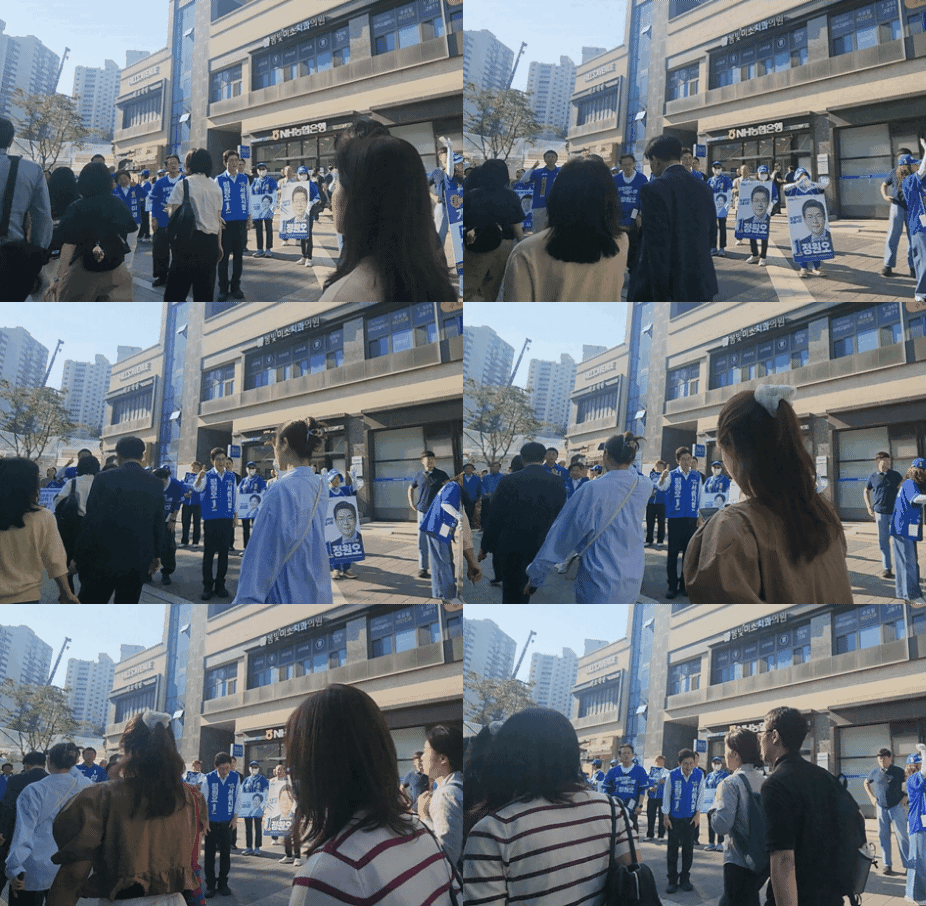 Jung Won-oh Campaigns Across Seoul Ahead of Local Elections Jung Won-oh, the Democratic Party candidate for Seoul mayor, is intensifying his campaign across the city on June 2, just one day before the local elections.According to the Democratic Party's Seoul mayoral election campaign committee, Jung began his final day of campaigning at 6:30 a.m. with a visit to the Gangseo public bus depot. He then encouraged bus and subway workers at the Gimpo Vehicle Depot of Seoul Metro Line 9.His last morning greeting took place at Eunpyeong-gu's Nokbeon Station, where he urged citizens to participate in the upcoming vote. Afterward, he moved to Yonsei University's student union in Seodaemun-gu to have breakfast with students and engage in a walking campaign on campus. Jung held a joint press conference with Democratic Party candidates for district mayors in Seoul, urging last-minute voter participation. He also plans to meet with small business owners and artists in Munrae-dong, Yeongdeungpo-gu, where he announced his candidacy. Following that, he will visit various locations including Yeouido, Gyeongdong Market, Dongmyo Flea Market, Yaksu Market, Yongsan Yongmun Market, the cafe street in Hapjeong-dong, and Gyeongui Line Forest Park to rally support and encourage voting.A major rally will take place at Cheonggye Plaza at 7 p.m., featuring Democratic Party leader Jeong Cheong-rae and key figures from the campaign committee, aiming to consolidate support in the final hours.After the rally at Cheonggye Plaza, Jung will continue campaigning late into the night, visiting the food alley in Nonhyeon-dong, Cheonho Rodeo Street in Gangdong-gu, and Songpa Public Bus Depot to ask citizens for their support and gather feedback.The official campaign's final event will occur at 11:40 p.m. at the Bokjeong Station transfer center in Songpa-gu. At this event, Jung is expected to reflect on his campaign efforts and express his commitment to creating "a completely new Seoul." He will conclude his 13-day official campaign by taking the late-night bus 'N37' to Suseo Station.* This article has been translated by AI. 2026-06-02 09:42:00
 -
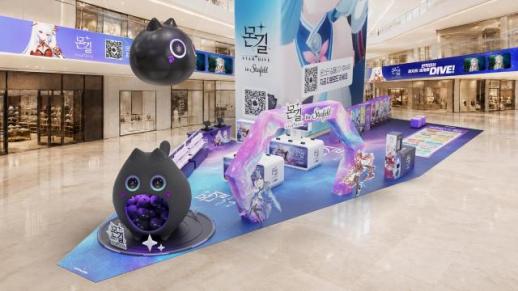 Netmarble to Open First Popup Store for 'Monster Taming: Stardive' at Starfield Hanam Netmarble announced on June 2 that it will host the first popup store for its monster-taming action RPG, "Monster Taming: Stardive," at Starfield Hanam. The popup store will operate from June 3 to June 7 in the Central Atrium on the first floor of Starfield Hanam. Visitors can participate in various interactive experiences, including "Monster Touch! Catch!", "Today's Monster", and a popularity vote for the game. Coins earned through these activities can be exchanged for various prizes. The store will also sell official merchandise for "Monster Taming: Stardive." Among the items debuting at the popup store are the "SD Acrylic Diorama" and "LD Acrylic Stand," along with the popular "Meow Cushion" that received positive feedback at gaming events like G-Star and Tokyo Game Show. A demonstration zone will allow visitors to play the game directly. Attendees can experience the action combat of "Monster Taming: Stardive" using portable gaming PCs (UMPCs). "Monster Taming: Stardive" is a sequel to the 2013 release "Monster Taming." It features high-quality graphics and storytelling based on Unreal Engine 5, along with real-time tag play in three-person parties. A Netmarble representative stated, "As this is the first popup store since the launch of 'Monster Taming: Stardive,' we have prepared a variety of engaging content and official merchandise for users to enjoy. We hope many users will visit and create special memories at the event." More information about the popup store and the game can be found on the official "Monster Taming: Stardive" website and forum.* This article has been translated by AI. 2026-06-02 09:42:00
 -
 Shindongah Construction Wins First Urban Housing Project of the Year in Anyang Shindongah Construction, which recently completed its rehabilitation process, has secured its first urban housing redevelopment project of the year in Anyang, Gyeonggi Province. On June 2, Shindongah Construction announced that it has been selected as the contractor for the Bisan-dong urban housing redevelopment project. The project will involve the construction of two apartment buildings with a total of 124 units, along with 12 officetel units and community facilities, covering an area in Bisan-dong, specifically at 557-7. The total project cost is estimated at 50.4 billion won. The company plans to enhance the project's appeal by applying specialized designs from its apartment brand, 'Familie.' Kim Se-jun, president of Shindongah Construction, stated, "We will focus our bidding capabilities on relatively larger small-scale redevelopment projects and private participation in public housing projects to achieve sustainable growth." Shindongah Construction applied for court rehabilitation proceedings in January of last year due to liquidity issues stemming from a downturn in the construction market. However, it successfully concluded the rehabilitation process in October of the same year, finishing court management in about nine months. Recently, the company received an A- rating from NICE D&B, a corporate credit rating agency, and a BBB- rating from the Korea Housing and Urban Guarantee Corporation, indicating improved conditions for public project bidding and guarantee issuance. Founded in 1977, Shindongah Construction is a mid-sized construction firm known for its apartment brand 'Familie.' The company has participated in the construction of notable buildings such as the 63 Building in Yeouido and the LG Gwanghwamun Building, focusing on housing, architecture, and civil engineering projects. As of last year, it ranked 58th in construction capability evaluations. Additionally, mid-sized construction firms are increasingly focusing on smaller projects, such as urban housing redevelopment and private participation in public housing, to recover their performance, rather than pursuing large-scale reconstruction and redevelopment projects.* This article has been translated by AI. 2026-06-02 09:39:00
 -
 Park Min-ji Achieves 20th KLPGA Victory, Jumps 57 Spots in World Ranking Park Min-ji has reached a significant milestone in her career by securing her 20th victory on the KLPGA Tour, resulting in a jump of 57 spots in the world rankings. As of June 2, Park is ranked 104th in the latest women's golf world rankings, a notable rise from the previous week. She achieved this milestone by winning the Shinhyup Bank MBN Women's Open on May 31 at The Star Hill Golf & Resort in Yangpyeong, South Korea. This victory places her alongside the late Gu Ok-hee and Shin Ji-ae as one of only three players in KLPGA history to reach 20 wins. It marks the first time since Shin Ji-ae in 2010 that a player has achieved this feat in 16 years. Park's last win on the KLPGA Tour was nearly two years ago at the Celltrion Queens Masters in June 2024. Since beginning her professional career in 2017, Park reached a career-high world ranking of 12th in 2022. In related news, Joo Soo-bin, who tied for 4th place at the ShopRite LPGA, moved up 42 spots to rank 210th. The top three positions in the world rankings remain unchanged, with Nelly Korda of the United States at number one, followed by Atthaya Thitikul of Thailand in second, and Kim Hyo-joo in third.* This article has been translated by AI. 2026-06-02 09:39:00
 -
 KOSPI retreats after record close as foreign investors sell SEOUL, June 2 (AJP) - South Korea's benchmark KOSPI slipped in morning trade on Tuesday, retreating from the previous day's record close as investors took profits in major stocks. The index dropped to around 8,700 after closing at an all-time high of 8,788.38 the previous session. Shares of LG affiliates, which had led the previous session's rally, came under selling pressure, while a surprise US$80 billion equity raise by Google parent Alphabet prompted investors to reassess the outlook for semiconductor demand. The decline was largely confined to a handful of stocks. LG Corporation fell 16.6 percent to 138,300 won ($91.3), LG CNS dropped 11.1 percent to 127,800 won, and Naver gave back 7.7 percent to 250,500 won, a sharp reversal in the precise names that had surged on Monday's physical AI rerating. Samsung Electronics, by contrast, rose 1.4 percent to 354,000 won, the market continuing to distinguish between the confirmed HBM4E shipment milestone that drove its Monday surge and the more speculative physical AI trade unwinding around it. The divergence between the two leaders, Samsung firm on a product catalyst while the LG complex retreated on an unconfirmed partnership, defined the early session. The new external variable came from Alphabet, which announced after Monday's U.S. session $80 billion in equity offerings to fund AI compute infrastructure, including a $10 billion private placement from Berkshire Hathaway. The scale of the raise, roughly 120 trillion won, reinforces the structural demand underpinning Korean memory makers, since Alphabet's capital expenditure flows toward the high-bandwidth memory and advanced packaging that Samsung Electronics and SK hynix supply. Yet the decision to fund it through share issuance rather than cash flow, which sent Alphabet stock lower in after-hours trading on dilution concerns, signals how capital-intensive the AI buildout has become and introduces a note of caution into a chip rally that has priced in uninterrupted hyperscaler spending. The unwind in the LG names suggests Monday's group-wide move, built on expectations of a formal Nvidia partnership around chief executive Jensen Huang's Seoul visit, had run ahead of confirmed substance. Doosan Robotics bucked the broader weakness, rising 8.5 percent to 150,200 won, with Robostar up 19.6 percent to 146,200 won, a sign the robotics theme retains a momentum separate from the LG complex even as those names correct. Foreign investors extended their selling streak into a seventeenth consecutive session, net sellers of 1.38 trillion won in early trade, while institutions bought a net 458 billion won and retail investors added 931.2 billion won, the same domestic-absorption pattern that has underpinned the market through May's foreign exodus. The junior KOSDAQ fell 2.2 percent to 1,026.90, underperforming the main board for a second session as the junior bourse's growth names bore the brunt of the risk reduction. Across the region, Japan's Nikkei 225 fell 0.7 percent to 66,475.32 as SoftBank Group gave back part of Monday's surge, while China's Shanghai Composite opened little changed near Monday's 4,055 close, with mainland investors still awaiting direction ahead of the July Politburo meeting. For South Korea, investors are assessing whether the retreat is a temporary pause or the beginning of a broader market decline. The selective nature of the selling, punishing the unconfirmed physical AI trade while sparing Samsung's confirmed memory catalyst, points to the former. But with foreign capital now selling for a seventeenth straight session, the market's dependence on domestic institutional and retail buying to absorb the outflow remains the structural fragility beneath every record this rally has set. 2026-06-02 09:38:07
 -
 Sejong Law Firm to Host Seminar on Labor Legislation Trends Post-Local Elections Sejong Law Firm, led by Managing Partner Oh Jong-han, announced on June 2 that it will hold a hybrid seminar titled "Labor Legislation Trends After the Local Elections" on June 8 at 2 p.m. in the seminar room on the 24th floor of Sejong Grand Seoul. Following the local elections, discussions are expected to intensify regarding the implementation of labor pledges by the Lee Jae-myung administration, including the worker presumption system, the Basic Law for Workers, retirement age extension, and the abolition of the comprehensive wage system along with reduced working hours. The Sejong Labor Group aims to provide insights into the legislative trends and progress related to these key labor issues, as well as to identify potential legal challenges that may arise if new laws are enacted. The seminar will also offer practical strategies for companies to proactively respond to these changes. The seminar will begin with opening remarks from Kim Min-seok, a senior advisor who previously served as the Vice Minister of Employment and Labor. The first session will feature Cho Chan-young, an attorney who joined Sejong early last year after working as a judge in the Labor Division of the Seoul High Court, discussing the worker presumption system and the Basic Law for Workers. Next, attorney Yoon Hye-young, who has extensive experience with cases related to wage peak systems, will address retirement age extension and age discrimination. Finally, Kim Jong-soo, head of the Sejong Labor Group, will outline key issues surrounding the abolition of the comprehensive wage system and working hour measurement. Managing Partner Oh Jong-han remarked, "The worker presumption system and retirement age extension are critical issues that could significantly impact the labor and industrial sectors, similar to the Yellow Envelope Law. I hope this seminar will help assess labor legislation trends in light of changes in the political and policy environment, enabling companies to respond more strategically to future regulatory changes." Participation in the seminar is available both in-person and online, with inquiries for registration directed to the Sejong Planning Office at seminar@shinkim.com. Additionally, the Sejong Labor Group, led by Kim Jong-soo, consists of approximately 50 attorneys and experts, and has been strengthening its capabilities, including the recent recruitment of Lee Seung-jae, an attorney from Kim & Chang. The group is proactively responding to significant changes in labor policies and legislative environments, providing comprehensive legal services that encompass collective labor relations, industrial safety, and serious accidents.* This article has been translated by AI. 2026-06-02 09:33:00
 -
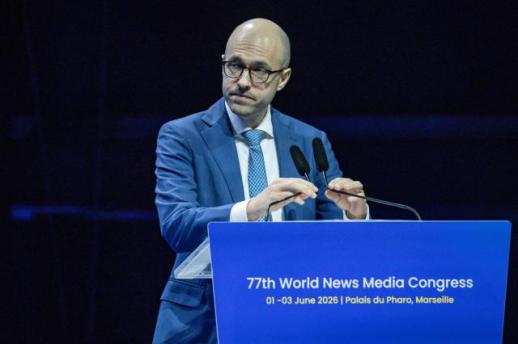 WNMC 26: NYT chair delivers a rallying cry for journalism in the AI age MARSEILLE, June 02 (AJP) - For 40 minutes, A.G. Sulzberger stood before an audience of more than 1,300 editors, publishers and journalists from around the world and delivered what many attendees would later describe as one of the defining speeches of the World News Media Congress. The New York Times chairman and publisher did not simply warn about artificial intelligence. He mounted a sweeping defense of journalism itself — arguing that AI companies are building trillion-dollar businesses on the back of original reporting while simultaneously threatening the economic foundations that make that reporting possible. After Sulzberger concluded his keynote, the audience responded with sustained applause. Moments later, BBC journalist and conference moderator Ros Atkins offered his own assessment. "One of the most impressive addresses I've heard on journalism in the age of AI," Atkins told the audience. The reaction reflected the mood in the room. While many discussions at WNMC 2026 focused on how publishers can adapt to AI, Sulzberger focused on a more fundamental question: what happens if the institutions that produce reliable information are weakened in the process? 'Original reporting is how you know what you know' Speaking on the theme "AI Journalism and the Uncertain Future of the Public Square," Sulzberger made clear he was not arguing against artificial intelligence itself. "The New York Times has a long record of embracing technology to advance the mission of independent journalism," he said. "We had a history of respectful partnerships with tech companies." He noted that Times journalists are already using AI tools "responsibly, ethically and with humans making the decisions," adding that "holding a powerful new technology at arm's length is a recipe for failure." Yet the speech repeatedly returned to a central argument: AI systems ultimately depend on journalism. "AI models are made of four basic ingredients," Sulzberger said. "Talent, compute, energy and data." The first three, he noted, are paid for. "In contrast, AI companies take data without consent or compensation." What technology companies call "data," he argued, often means something far more specific: journalism, books, music, films and other copyrighted creative works. "What might more accurately be called copyrighted content." The heart of the speech came when Sulzberger described the unique role of journalists in creating information that does not previously exist. "Reporters are the ones enriching the public record with previously unknown information," he said. "That surprising fact, that telling detail, that quote from an eyewitness, that secret document." Then came a line that many attendees later cited as the keynote's defining message. "Original reporting is very often how you know what you know." The value behind the headlines To illustrate the scale of that work, Sulzberger pointed to The New York Times' own investment in journalism. Last year alone, he said, the Times produced nearly half a million pieces of journalism — articles, photographs, videos and podcasts — at a cost of more than $2 billion. The organization deployed journalists across all 50 U.S. states and in 155 countries. In Ukraine alone, more than 70 journalists and support staff worked on the ground during 2025. "This original work is valuable," Sulzberger said, "because it's been carefully written and edited, independently verified, held to the highest standards of fairness and accuracy." Yet, he argued, many AI companies have treated that work as a free resource. "OpenAI confessed that it would be impossible to train today's leading AI models without using copyrighted materials," he said. And while AI companies pay engineers, purchase chips and build massive data centers, "AI companies take data without consent or compensation." 'We cannot sit by' The most forceful portion of the address came when Sulzberger called on publishers to stop being passive. "Our profession has been too quiet, too passive and too fragmented in the face of abuses by the companies leading the AI revolution," he said. "We cannot allow AI cheerleaders to dominate the public conversation." Nor, he said, can publishers remain silent while their content is used to create products that compete directly with them. "We cannot sit by as this work is used to build replacement products that undermine our ability to earn the audience and revenue necessary to continue reporting the news." The audience responded with one of the keynote's strongest rounds of applause. A threat beyond journalism Sulzberger argued that the stakes extend far beyond the news industry. Creative industries worldwide employ millions of people and generate trillions of dollars in economic value annually. The erosion of intellectual property protections, he warned, would weaken not only journalism but books, film, music and research. But his deepest concern centered on public trust. As AI-generated content proliferates online, distinguishing truth from fiction becomes increasingly difficult. "It is becoming harder and harder to know where things came from and whether they are true," he said. This dynamic, he warned, risks producing a culture in which people no longer trust anything. "The effect isn't just that people believe untrue things." "It's that they no longer believe true things." According to Sulzberger, that loss of trust is already encouraging many people to disengage from public life altogether. Four calls to action Rather than ending with a warning, Sulzberger closed with a challenge to the industry. His first message was blunt. "Stand up for your rights." "Intellectual property rights must hold if our profession is to have a path forward." Second, he urged publishers to negotiate carefully with AI companies. Third, he called on news organizations to push lawmakers to strengthen protections for journalism and intellectual property. And fourth, he encouraged publishers to work together. "The news industry's only path to counteracting that influence is by working together." At the same time, he argued that newsrooms must embrace AI responsibly rather than reject it. "Use AI the right way." And perhaps most importantly, he urged publishers to build direct relationships with audiences rather than relying on platforms. "Be a destination first." 'Information is valuable. Journalism is valuable.' As the address drew to a close, Sulzberger returned to a phrase that echoed throughout the hall. Decades ago, Silicon Valley popularized the idea that "information wants to be free." But, he said, many people forgot the second half of Stewart Brand's famous observation. "Information wants to be expensive because it's so valuable." Then came the line that served as both a warning and a defense of journalism's future. "Information is valuable. Journalism is valuable." In a digital environment increasingly crowded by bots, synthetic content and misinformation, Sulzberger argued that trusted journalism may become more important, not less. "News organizations should stand up as the reliable alternative to this mess." As delegates rose from their seats and applauded, the message appeared to resonate. For many in Marseille, the speech was not simply about AI. It was about whether journalism can preserve the economic and civic foundations necessary to continue producing the original reporting on which both democracy — and increasingly AI itself — depend. 2026-06-02 09:27:34