

Journalist

Seo Hye-seung
-
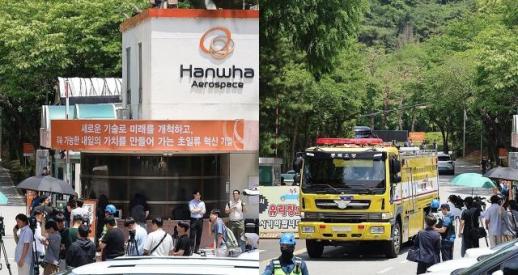 Hanwha Aerospace Explosion Increases Death Toll to Five An explosion at the Hanwha Aerospace factory in Daejeon has resulted in five fatalities and two injuries. According to Yonhap News, the explosion occurred at 10:59 a.m. on June 1, prompting over 30 emergency calls reporting loud noises and heavy smoke. As of 1:30 p.m., officials confirmed that five people had died and two others sustained serious injuries. The fire department issued a first-level response at 11:17 a.m. and completed initial firefighting efforts within 50 minutes of the incident. Authorities are investigating the cause of the explosion, which occurred on the first floor of the factory, and will assess the extent of the casualties once the fire is fully extinguished. One online commenter expressed sorrow, stating, "It’s heartbreaking to think of the families of those who went to work today, only to lose their lives in an accident. As a fellow worker, I feel deeply saddened. My condolences to the deceased." Other commenters echoed similar sentiments, with remarks such as, "Why do these terrible accidents keep happening?" and "This is such a sad article. I hope there are no more casualties. My condolences to the victims." This explosion marks the third incident at the Hanwha Aerospace Daejeon factory. In May 2018, two workers died in a similar explosion, and in February 2019, three workers lost their lives in a fire that broke out during an explosion in the factory's propulsion facility. 2026-06-01 13:30:00
 -
 Fire and toxic gas leak at SK hynix plant force 3,600 workers to evacuate SEOUL, June 01 (AJP) - A fire and subsequent toxic gas leak at an SK Hynix factory in Cheongju, South Korea, prompted the evacuation of 3,600 employees on Monday morning. Seven workers were transported to an affiliated hospital after exposure to the chemicals, though the company reported no disruption to overall production, firefighters said. The incident began at 10:32 a.m. (0132 GMT) in a sixth-floor gas room connecting the M15 and M15X facilities at the company's Cheongju 4 Campus. Sprinklers immediately extinguished the fire, but toxic hydrogen fluoride spread inside the enclosed room, reaching a concentration of 5 ppm. Ten people were working at the scene when the incident occurred. Five workers complained of stinging eyes, and two others who showed no specific symptoms were also sent to the hospital for precautionary medical checkups due to their proximity to the leak. According to the rescuers, fires were put out immediately after the gas was detected. SK Hynix evacuated all personnel from the M15 and M15X buildings as a preventative safety measure. 2026-06-01 13:27:28
 -
 Pamtech Shares Surge Following Acquisition of Robotics Firm TIS Pamtech's stock has reached its daily limit increase during trading hours. According to the Korea Exchange, as of 12:56 PM on June 1, Pamtech shares rose by 322 won (29.95%) to 1,397 won compared to the previous trading day. The surge in buying interest is attributed to Pamtech's announcement that it has acquired 100% of the shares in TIS, a company specializing in industrial robotics, as part of its strategy to expand its semiconductor process automation equipment business. Through this acquisition, Pamtech has gained access to TIS's wafer transfer robot technology and its skilled workforce. The company plans to enhance its semiconductor logistics automation equipment business, including Equipment Front End Modules (EFEM) and sorters, utilizing this technology. Market analysts are noting the significance of this move as demand for artificial intelligence (AI) semiconductors and high-bandwidth memory (HBM) increases, highlighting the growing importance of advanced packaging processes. Pamtech is positioning itself to enter the next-generation glass substrate automation equipment market. Glass substrates, which vary in size and thickness compared to traditional silicon wafers, pose a higher risk of breakage, necessitating precise transfer and alignment technologies. Consequently, the growth potential for related automation equipment markets is viewed positively. Pamtech aims to combine its existing automation equipment design and manufacturing capabilities with TIS's precision robotics technology to secure a leading position in the glass substrate automation equipment market. A Pamtech spokesperson stated, "By internalizing TIS's technology, we will lead the next-generation packaging and glass substrate automation equipment market while simultaneously pursuing growth and improving profitability."* This article has been translated by AI. 2026-06-01 13:27:00
 -
 GS Caltex Launches Family-Inclusive Online Exhibition 'Energy Gallery' GS Caltex unveiled its online exhibition "Energy Gallery" on June 1, featuring works from its family-inclusive cultural program, "GS Caltex Art Festa." The "Energy Gallery" is a special exhibition planned by GS Caltex to celebrate May, known as Family Month in South Korea. It showcases artworks created by employees' children, who reflected on the meaning of energy alongside their parents. The company noted that AI technology was utilized in the creation of the artworks. The exhibited pieces revolve around the theme "Stories of Energy that Move Our Daily Lives." Participating children chose one of three themes to express through their drawings: 1) Energy Creating a Peaceful Daily Life, 2) Energy Guardians Illuminating the World, and 3) A New World of Future Energy. Each artwork incorporates the children's imagination and conversations with their families. GS Caltex hopes this exhibition will serve as a platform for parents and children to share their insights on the significance of energy and work with the broader community. A GS Caltex representative stated, "The energy we create is invisible, yet it brightens someone's day, drives family life, and supports society in many ways. We hope 'Energy Gallery' conveys the essential value of energy through the pure perspectives of children, making it more relatable to many people." The "Energy Gallery" reflects GS Caltex's cultural and artistic philosophy of connecting people, society, and the value of energy through art. The exhibition is freely accessible to everyone via the Energy Gallery on GS Caltex's official blog, Media Hub. Additionally, GS Caltex is collaborating with the Korea Energy Foundation on the "2026 GS Caltex Energy Efficiency Improvement Public-Private Joint Project (Year 4)," focusing on enhancing living conditions and energy welfare for vulnerable communities.* This article has been translated by AI. 2026-06-01 13:24:00
 -
 Fire Breaks Out at SK Hynix Cheongju Campus, No Injuries Reported A fire broke out at approximately 10:32 a.m. on June 1 at the semiconductor facility of SK Hynix's Cheongju Campus in the Heungdeok District of Cheongju, North Chungcheong Province. The fire was quickly extinguished by the factory's sprinkler system. Seven employees on-site were isolated as a precaution to check for any symptoms. An SK Hynix representative stated, "As of now, no employees have been reported injured due to the incident," adding that those who went to the company’s internal hospital were in a preventive state. Reports suggesting that employees were transported to external hospitals were inaccurate. There have been no indications of further spread around the affected equipment, and the company is currently assessing any impact on production lines. Police and fire authorities are investigating the exact cause of the fire and the extent of the damage. SK Hynix noted, "The fire was quickly extinguished, and all personnel evacuated immediately," and added, "We will confirm the cause in conjunction with the relevant authorities while reporting to them as required." The company also stated, "There are no issues with equipment operation, and there will be no production delays. Employees are expected to return once safety checks are completed." 2026-06-01 13:15:00
 -
 A-Ritz, South Korea's First REIT, Faces Delisting Amid Two-Day Plunge South Korea's first real estate investment trust (REIT), A-Ritz, is experiencing a significant decline as it approaches delisting, with its stock plummeting for two consecutive trading days during special trading sessions.As of 1 p.m. on June 1, A-Ritz shares were trading at 805 won, down 293 won (26.68%) from the previous trading day. The stock had already dropped 64.92% to close at 1,098 won on the first day of special trading on May 29, and it continued to show a decline of over 20% on the following day. Compared to the last trading day before the special trading resumed on May 28, when the stock closed at 3,130 won, A-Ritz's share price has fallen by more than 74% in just two days.A-Ritz has been undergoing delisting procedures due to failing to meet listing requirements, specifically reporting revenues of less than 5 billion won. The Korea Exchange decided to delist the company after a review by the Securities Listing Committee in August of last year.Following the delisting decision, the company filed for a suspension of the delisting's effectiveness, temporarily halting the special trading. However, on May 21, the court dismissed this request, allowing the delisting process to resume.Despite the ongoing delisting process, A-Ritz is pursuing a senior residence development project in Daegu. The company announced last month that it would extend the maturity of a bridge loan worth 28.56 billion won for the senior residence development project in Dongin-dong, Jung-gu, Daegu, by 24 months. Industry insiders suggest that the development project, initiated in a region with significant unsold inventory, has faced setbacks, contributing to A-Ritz's poor performance and serving as one of the reasons for its impending delisting.Special trading sessions provide investors in stocks slated for delisting with a final opportunity to trade. Typically, there are no price limits during these sessions, leading to increased volatility in stock prices.* This article has been translated by AI. 2026-06-01 13:12:00
 -
 SBS Unveils New Dramas 'Kim Manager' and 'There is a Chance' for 2026-2027 SBS has announced its upcoming dramas, 'Kim Manager' and 'There is a Chance,' building on its success as the top network for viewers aged 2049 for six consecutive years. The spotlight is on So Ji-sub's return to SBS after 13 years and the acting transformation of Lee Je-hoon, raising questions about whether these dramas can continue the network's winning streak. On June 1, a media day event titled 'SBS Drama: Next Episode' was held at Hotel Naru in Mapo-gu, Seoul. Attendees included So Ji-sub and director Lee Seung-young from the new Friday-Saturday drama 'Kim Manager,' as well as Lee Je-hoon, Ha-young, and director Kwon Da-som from the upcoming 2027 series 'There is a Chance.' 'Kim Manager,' set to premiere on June 26, is adapted from a popular Naver webtoon. The drama follows an ordinary father who becomes the most dangerous man in the world to reclaim his only daughter, blending elements of revenge and action. The script is penned by Nam Dae-jung, known for works like 'Great Wish' and '30 Days,' while Lee Seung-young, along with rookie director Lee So-eun, directs the series. In the drama, So Ji-sub plays Kim, an ordinary employee at a small savings bank, who is actually a former agent with a history of special operations. He expressed his excitement about returning to SBS, stating, "SBS feels like home. It's been 13 years since I last acted in a drama, and although it's been a while, I'm happy and warmly engaged in filming." So Ji-sub chose 'Kim Manager' for its combination of action and emotional depth. He noted, "After filming 'The Square,' I felt a desire to explore noir action again. When I received the script for 'Kim Manager,' I was drawn to the action elements." He also related to the character's journey of raising a daughter alone, as he plays a father with a high school daughter, saying, "I was curious about how I would portray this role, and I believe viewers will see a new side of me despite my years of experience." He elaborated on the action scenes, stating, "While there are necessary action sequences, the core of the action is rooted in the emotions of Kim and his friends. There will be hand-to-hand combat, knife fights, gunplay, car chases, and explosions. I believe these various actions will provide a satisfying experience for viewers." Director Lee Seung-young emphasized that 'Kim Manager' is not just a heavy revenge tale. He remarked, "While a father losing his daughter is inherently serious, the presence of actors like Choi Dae-hoon and Yoon Kyung-ho brings a lighter tone. Although it could feel heavy, 'Kim Manager' is fast-paced, lively, and intense." Regarding the adaptation from the original webtoon, the director explained, "Typically, adaptations aim for novelty, but we have a clear concept. We are preserving the strengths of the original while deepening the narrative during the live-action process. The exhilarating action is a significant strength, and we have worked hard to give it a realistic feel." The possibility of a sequel was also discussed. So Ji-sub cautiously noted, "Since we are at the beginning of the drama, it's a delicate topic, but I believe the characters and narrative have the potential for expansion. A sequel seems feasible, but first, we need to gain the audience's love." Director Lee also touched on the use of artificial intelligence (AI) in production. He stated, "We experimented with AI to replace certain sequences in 'Kim Manager.' The results have shown both possibilities and limitations. Over the past five months, I've noticed the rapid advancement of AI technology. In the near future, it may help directors tackle challenges in filming complex scenes. However, there are still limitations in achieving the authentic feel of a live set, and we must be cautious in selecting where to use it." The 2027 drama 'There is a Chance' was also previewed at the event. This series features Kwon Baek, a former lawyer and current office manager, leading a ragtag legal team to turn seemingly hopeless cases into victories through unconventional methods. Directed by Kwon Da-som, who co-directed 'Connection' and 'My Demon,' the script is written by Jeong Jin-young and Kim Ui-chan, known for 'Soonpoong Obstetrics and Gynecology' and 'You Can't Stop Them.' Lee Je-hoon plays Kwon Baek, a former star lawyer who lost his license due to a bribery scandal and has since gone into hiding. He returns to lead a disorganized law office. Ha-young portrays Yeo Shim-hee, a rookie lawyer with no connections but a strong work ethic. Lee Je-hoon aims to showcase a different side from his character Kim Do-gi in 'Taxi Driver.' He shared, "Kim Do-gi received a lot of love, so I pondered how to present myself in my next project. The two characters have opposing methods of delivering justice." He explained, "While Kim Do-gi fought quietly outside the law as a dark hero, Kwon Baek navigates the legal space with flair. Kwon Baek is seasoned and witty, wielding a sword against those who cross the line." Lee Je-hoon also expressed optimism about the potential for a sequel to 'There is a Chance.' He said, "I feel that the chemistry on set and the potential for episode expansion are limitless. I would love to continue with this team for the next season. I believe 'There is a Chance' could become SBS's new franchise series." Ha-young conveyed her trust in director Kwon Da-som, stating, "I've heard a lot about Kwon Da-som's capabilities. The strong bond among the SBS production team is evident. I had high expectations before the project, and I am currently witnessing their exceptional skills, which feel beyond a debut work due to the preparation and effort involved." Lee Je-hoon acknowledged the pressure and expectations of launching a new project amid SBS's continuous success. He remarked, "There is so much content available now, and ultimately, we need to be chosen by viewers. It feels like both the cast and crew, as well as external factors, are strategically moving to ensure we select and produce quality content for broadcast." He added, "When I read the script for 'There is a Chance,' I thought viewers might be exhausted and stressed, but I believe this enjoyable and uplifting drama will bring excitement and joy to their week. I hope it becomes a beloved series." So Ji-sub commented, "They say the summer heat will be intense, so I hope viewers can cool off by watching our drama." Director Lee Seung-young expressed, "While filming 'Kim Manager,' I felt that my life character might change. I am working hard to create a memorable character for the audience." As 'Kim Manager' and 'There is a Chance' are positioned as key upcoming projects for SBS in 2026 and 2027, attention is on whether the network's successful formula for genre dramas and its strategy for sequels will continue through these new offerings.* This article has been translated by AI. 2026-06-01 12:57:00
 -
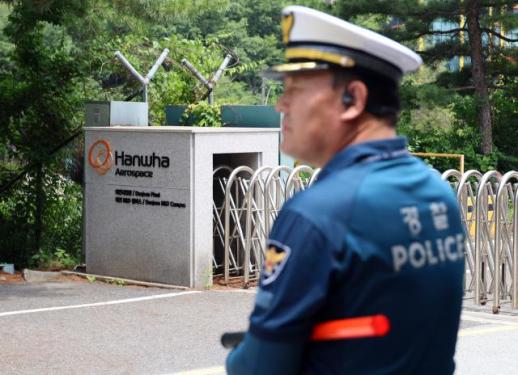 Update: Five killed in South Korea's Hanwha Aerospace factory explosion SEOUL, June 01 (AJP) - An explosion at a Hanwha Aerospace factory in South Korea killed at least five people and injured two on Monday morning, according to police and rescuers. The blast prompted an emergency response as rescue workers continue to search for three unaccounted individuals. The incident occurred at 10:59 a.m. (0159 GMT) at the company's plant in Oesam, located in Daejeon's Yuseong District. Emergency dispatchers received about 30 simultaneous calls from people in the area who reported they "heard an explosion" and that "a lot of smoke is coming out" from the site. Fire authorities issued a Level 1 emergency response at 11:17 a.m. and are currently working to extinguish the resulting fire. Initial statements from the police reported four dead and two injured, but official on-site confirmations currently stand at five fatalities and two injured, with possibilities of more unfound victims at the site. Authorities suspect the blast originated on the first floor of the factory, though the exact trigger remains unknown. Police and fire officials will launch a joint investigation to determine the cause of the incident and confirm the final casualty toll as soon as the flames are fully suppressed. Hanwha Group and Hanwha Aerospace issued a joint statement later in the day, expressing condolences over the deaths and apologizing to the public. “We are deeply saddened and devastated by the deaths of five precious employees in the accident that occurred this morning at Hanwha Aerospace’s Daejeon plant,” the companies said. “Hanwha Group and Hanwha Aerospace express our deepest condolences.” They also said they would provide full support for the treatment of injured workers and cooperate with fire and police authorities in handling the aftermath. A Hanwha Aerospace official said the statement was issued jointly at the group level, rather than only by Hanwha Aerospace, given the gravity of the accident. Hanwha Aerospace said CEO Son Jae-il convened an emergency meeting at the company’s Seoul headquarters immediately after the accident and headed to the site afterward. The company has also set up an emergency response headquarters at the scene to work with relevant authorities. Ga Jae-woong, head of Hanwha Aerospace’s Daejeon plant, told reporters at the site in Yuseong District that the fire occurred during a process to clean propellant used for launch vehicles. “The fire broke out during a process to clean launch vehicle propellant,” Ga said. “Various tools are used in the process of cleaning explosive materials, and the accident appears to have occurred while those tools were being cleaned.” He said the cleaning process was not considered particularly dangerous because explosive materials are generally thought to lose their risk when they come into contact with water. “We need to determine exactly what caused it,” Ga said. “At this point, it is difficult to estimate the exact cause of the explosion, and we will know only after examining the site.” The Daejeon plant is considered one of Hanwha Aerospace’s key facilities for aerospace, defense and space-related equipment. The site handles work related to large propulsion systems, propellant mixing and filling, and tactical surface-to-surface weapons systems. The plant has faced scrutiny in the past over safety management. After a 2018 explosion that left nine people dead or injured, a special labor inspection found hundreds of legal violations. 2026-06-01 12:25:32
 -
 Nvidia Expands Influence in PC Market, Signaling New Era for AI Revolution Nvidia, the dominant force in the artificial intelligence (AI) era, is expanding its influence in the personal computer (PC) market. According to U.S. media reports, Nvidia and Microsoft are set to unveil new Windows PCs that use Nvidia chips as the primary processor during events such as Computex in Taiwan. Major PC manufacturers, including Dell, are reportedly preparing to launch related products.At first glance, this may seem like just another product announcement. However, the implications are far more significant. It signals that the stage for the AI revolution is shifting from data centers to personal desktops.For the past two years, the AI industry has been centered around data centers. Generative AIs like ChatGPT, Gemini, and Claude have operated on massive servers. Users accessed these AIs via the internet, with responses generated in data centers connected to thousands of GPUs. Nvidia's rise to become the world's most valuable company is largely due to its near-monopoly in this market.However, the next phase of the AI revolution is different.AI is no longer confined to the cloud; it is beginning to enter personal PCs and smartphones. This marks the dawn of the so-called 'on-device AI' era. In this new age, AI will handle tasks such as schedule management, document creation, email organization, translation, video production, and investment analysis in real-time, making speed and security paramount. Relying solely on external servers for processing has its limitations. Ultimately, AI must operate directly on users' devices.This is why Nvidia is venturing into the PC market.Until now, Nvidia has been the king of AI data centers, dominating the AI training and inference market through its GPUs. Now, it aims to extend its influence into the market for end-user devices where AI is actually utilized. This is not merely about selling another chip; it is a strategy to draw the entire AI ecosystem into its platform.In fact, Nvidia is also entering the CPU market beyond GPUs. Historically, Intel and AMD have led the CPU market while Nvidia focused on graphics cards. However, in the AI era, the lines between CPU and GPU are blurring. The efficiency of AI computations will determine competitive advantage.Nvidia CEO Jensen Huang has a clear vision: to connect AI chips, software, data centers, cloud services, AI models, and personal devices into a single ecosystem. In simple terms, the strategy is to create a structure where “wherever AI operates, Nvidia is present.”This is reminiscent of how Microsoft dominated the PC era with Windows, but this time the focus is on AI computing platforms rather than operating systems.The AI revolution is now entering its second act.If the first act was a competition among data centers, the second act will be a competition among personal AIs. In the future, people will use AI not just as a search tool but as a digital assistant. AI is likely to evolve into an 'AI agent' that understands users' schedules, emails, documents, financial assets, and health information, autonomously managing tasks.The challenge lies in South Korea.South Korea is a global leader in memory semiconductors. SK Hynix leads the market for high-bandwidth memory (HBM), a key component for AI semiconductors, while Samsung Electronics is also working to secure next-generation AI semiconductor competitiveness. However, in the critical areas of GPUs, AI platforms, operating systems, and large-scale AI models, U.S. companies still hold the reins.If the current structure persists, South Korea risks remaining a parts supplier rather than a core technology provider in the AI era.There is, however, hope. Domestic companies, including Naver, are venturing into sovereign AI development, and there is ample potential to create world-class AI applications in industries where South Korea excels, such as manufacturing, finance, healthcare, and education.Now, the key is to choose and focus.While the U.S. is developing AI models and China is expanding AI services based on its vast market, South Korea should concentrate on industry-specific AIs such as manufacturing AI, financial AI, healthcare AI, and defense AI. If it is a country known for making excellent automobiles, it should develop automotive AI; if it excels in shipbuilding, it should create shipbuilding AI; and if it is strong in finance, it should produce financial AI.In the AI era, all industries will be restructured as AI industries. The time when merely producing semiconductors guarantees competitiveness is fading. National competitiveness will only be realized when semiconductors, data, AI models, platforms, and services are interconnected into a single ecosystem.Nvidia's entry into the PC market is not just another product announcement; it marks the beginning of an era where AI transcends data centers and enters personal lives. This signifies that the competition for leadership in the AI industry has entered a new phase.The question we now face is this: Will South Korea remain a semiconductor supplier in the AI era, or will it leap forward as a nation designing the AI ecosystem?* This article has been translated by AI. 2026-06-01 12:18:00
 -
 Naver Enters Defense AI Market, Challenging South Korea's Security Landscape Naver Cloud has established a dedicated organization for its defense artificial intelligence (AI) business. CEO Kim Yoo-won will lead the Defense AX (AI Transformation) task force, overseeing the project aimed at developing AI models, business development, and integrating field engineering teams to make a significant entry into the defense-focused AI market. At first glance, this appears to be an expansion of a civilian IT company's business. However, the implications are much larger, signaling that South Korea's AI industry is moving beyond search, advertising, and e-commerce into the realm of national security. For a long time, we have understood defense in terms of tanks, fighter jets, and missiles. However, the wars in Ukraine and conflicts in the Middle East reveal a different reality. The outcome of modern warfare is determined not by the quantity of weapons but by the ability to gather more data, analyze it faster, and make more accurate decisions. In this context, AI is no longer just a supplementary tool; it has become the eyes and brain of the battlefield. The American AI company Palantir exemplifies this transformation. Palantir does not produce tanks or fighter jets; instead, it analyzes vast amounts of data to assist military and intelligence agencies in making strategic decisions. Today, Palantir has established itself as a key partner for the U.S. Department of Defense and intelligence agencies, recognized as a leading example of an AI security company. The market and industry are paying close attention to Naver's recent move for this reason. There is growing anticipation about the emergence of AI-based security platform companies in South Korea. Particularly in the defense sector, the nature of military information and national security data poses significant risks when there is high external dependency. In the era of generative AI, data equates to sovereignty. More critical than which AI model is used is who owns, controls, and trains the data. In this regard, Naver's initiative to advance its defense AI business based on its proprietary super-large AI model, HyperCLOVA X, along with its cloud infrastructure and data centers, is significant. The concept of 'Sovereign AI' that many countries are emphasizing aligns with this notion, advocating for nations to secure AI capabilities that they can control rather than merely importing technology. While national competitiveness during the industrial revolution was determined by steel, shipbuilding, and automobile production capabilities, in the AI era, it will be defined by semiconductors, data, and algorithms. There is a pressing need for nations to possess AI that interprets the battlefield, even if they do not manufacture weapons directly. AI is no longer merely an industrial policy issue; it is a matter of security policy and national strategy. However, Naver's challenge does not guarantee immediate success. Defense AI requires a level of reliability, security, and field applicability that far exceeds that of typical commercial services. Developing solutions tailored to actual military environments and accumulating long-term operational experience is essential. Palantir, too, did not emerge overnight; it grew through extensive collaboration with government, military, and industry over many years. Moreover, defense AI cannot be realized through the efforts of a single company alone. A vast ecosystem involving semiconductors, cloud computing, telecommunications, robotics, drones, satellites, and cybersecurity must be interconnected. For Naver's challenge to succeed, long-term cooperation among government, military, and private industry is crucial. Nonetheless, the significance of this attempt is clear. South Korea's AI industry is now expanding beyond search engines into the realm of security. This transformation is not merely a new business venture; it may represent a new pillar of national competitiveness. We are entering an era where AI will not only change the economy and industries but also become a core infrastructure of national security. Naver's foray into defense AI symbolizes this change. The question we need to ask now is not whether Naver will engage in defense business. It is a more fundamental question. In the 21st century, will the victor in war be the nation with more weapons or the one with superior AI?* This article has been translated by AI. 2026-06-01 12:18:00