

Journalist

Sohn Jie-ae
-
 LG Electronics Donates 440 'Tiuun Mini' Units to Elementary Schools in Gyeongbuk for Smart Farm Education LG Electronics is supporting smart farm education for elementary students by utilizing its plant cultivation appliance, the Tiuun Mini. The initiative aims to allow students to grow plants in the classroom while experiencing the integration of agriculture and IT technology. According to industry sources, LG Electronics held a launch ceremony for the elementary school smart farm experience program, "Green Button Supporters," in collaboration with the Gyeongbuk Agricultural Cooperative at its local headquarters. This program will be implemented in 23 elementary schools across the Gyeongbuk region. As part of the initiative, LG Electronics provided 440 Tiuun Mini units. Training on product usage and plant cultivation guidelines was also conducted for the attending educators. The Tiuun Mini is a compact plant cultivation appliance that allows users to grow plants indoors using seed kits, water, and nutrients, along with LED lighting. It is less affected by seasonal changes or weather, enabling cultivation experiences even during summer and winter months. The Gyeongbuk Agricultural Cooperative has previously supported plant cultivation education through school gardens. This time, the focus is on introducing a stable indoor growing environment to expand educational opportunities. With growing concerns about climate change and food security, there is an increasing demand for integrated education that combines agriculture, environmental awareness, and digital technology starting from elementary levels. LG Electronics anticipates that this support will help enhance students' ecological sensitivity and emotional stability. Observing the growth process of plants will teach them the value of nature and provide everyday experiences in plant care indoors. Additionally, LG Electronics continues its social contribution activities using the Tiuun Mini, including product donations for emotional support to hospital patients and child sponsorship programs. Yoon Seong-woon, head of the HS/ES Advanced Business Development Office at LG Electronics, stated, "We will continue to develop various activities to make plant cultivation accessible to everyone through the Tiuun Mini."* This article has been translated by AI. 2026-06-02 10:03:00
 -
 LG Display Achieves ASPICE Level 2 Certification for Automotive Software LG Display has strengthened its competitiveness in the automotive display business by obtaining international certification for automotive software development. The company aims to enhance its hardware-centric automotive displays into software-based electronic components to target the global automotive market. On June 2, LG Display announced that it has received ASPICE (Automotive SPICE) Level 2 certification from the certification body C&BIS. ASPICE is an international standard established by the global automotive industry to evaluate the software development capabilities and quality management systems of electronic component suppliers. It comprehensively assesses whether a systematic process is in place throughout the planning, development, and verification of automotive software. As the share of electronic control units (ECUs) and software in vehicles rapidly increases, the stability and reliability of related components have become key competitive factors. A single software error can lead to vehicle defects or large-scale recalls, prompting automakers to strengthen verification across their supply chains. LG Display applied its self-developed diagnostic and control functions to displays for automotive dashboards and center consoles to achieve this certification. The company has demonstrated its capabilities in both hardware quality and software control in the automotive display sector. In December of last year, LG Display became the first in the display industry to obtain the international standard for automotive cybersecurity engineering, ISO/SAE 21434, and has now secured ASPICE certification. By establishing key certification systems for functional safety, security, and software quality in automotive displays, the company is enhancing its competitiveness in the electronic components sector. With this certification, LG Display plans to expand its new orders in the global automotive market, including North America. As the transition to software-defined vehicles (SDVs) accelerates, the company aims to strengthen strategic collaborations with its clients. Kwon Geuk-sang, head of LG Display's automotive business group, stated, "The ASPICE certification recognizes that our automotive displays possess not only hardware completeness but also high-quality software technology capabilities. We will strengthen our leadership in the automotive display market based on differentiated technological competitiveness."* This article has been translated by AI. 2026-06-02 10:03:00
 -
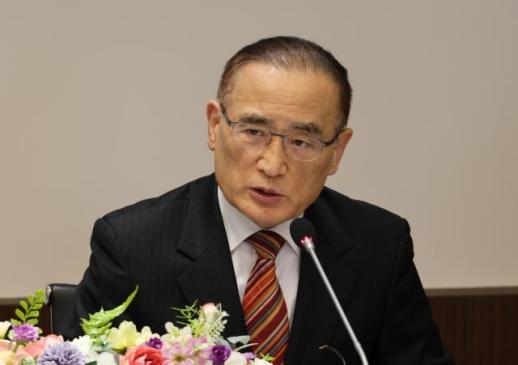 South Korea's National Security Chief to Meet with U.S. Deputy Secretary of State Wi Sung-lak, South Korea's National Security Chief, is set to meet with U.S. Deputy Secretary of State Alison Hooker on June 2 during her visit to South Korea.The discussions, taking place at the Blue House, are expected to cover a range of issues, including South Korea's construction of nuclear-powered submarines, uranium enrichment, and the authority for reprocessing spent nuclear fuel. The ongoing discussions regarding the transfer of wartime operational control may also be addressed.Hooker arrived in South Korea on June 1, leading a U.S. delegation that includes representatives from the National Security Council, State Department, Department of Energy, and Department of Defense.This visit aims to initiate formal negotiations to implement security agreements made during the summit between President Yoon Suk Yeol and President Donald Trump in October 2025.Official meetings between the South Korean and U.S. delegations began on the morning of June 2 at the Ministry of Foreign Affairs and will continue until June 3.First Vice Minister of Foreign Affairs Park Yoon-joo and Deputy Secretary Hooker will co-chair the meetings, followed by detailed discussions led by both countries' national security offices.Delays in initiating these discussions have been attributed to issues such as the pace of South Korean investments in the U.S., the war in Iran, and matters related to Coupang.During their stay, the U.S. delegation is also coordinating meetings with senior South Korean officials, including Foreign Minister Park Jin and Jeong Yeon-du, head of the Foreign Affairs and Security Strategy Bureau.* This article has been translated by AI. 2026-06-02 10:00:00
 -
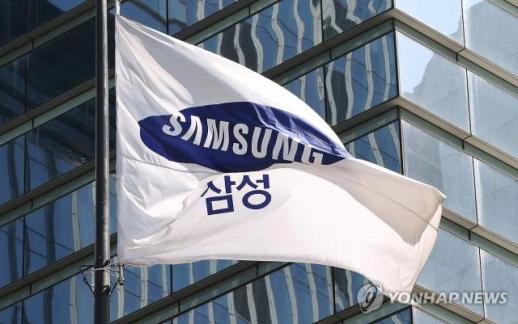 Samsung Electronics Surpasses Meta and Tesla in Market Value, Rises to 9th Globally On June 2, Samsung Electronics' market capitalization surged past that of major U.S. tech companies Meta and Tesla, elevating it to the 9th largest company in the world. According to the global market capitalization comparison site CompaniesMarketCap, Samsung's market value reached $1.581 trillion (approximately 239 trillion won) as of 9:53 AM, reflecting a 4.29% increase from the previous day. This rise allowed Samsung to surpass Meta, which was valued at $1.524 trillion, and Tesla, valued at $1.561 trillion, during trading on June 1 (local time). However, Samsung's stock initially jumped nearly 6% to 370,000 won before the gains moderated, indicating that the market capitalization rankings could shift again depending on the closing prices. Despite this, Samsung's stock price increase has positioned it within striking distance of the 8th largest company, Saudi Arabia's state-owned Aramco, which has a market cap of $1.763 trillion. The top seven companies by market capitalization are currently Nvidia, Alphabet (Google), Apple, Microsoft, Amazon, TSMC, and Broadcom. Samsung's recent stock performance has been bolstered by a surge in demand for memory semiconductors driven by the artificial intelligence (AI) boom. The momentum was further fueled by news this week that Nvidia CEO Jensen Huang announced the next-generation AI chip, Vera Rubin, will feature HBM4 memory from Samsung and SK Hynix. In contrast, Meta has invested heavily in AI development but has yet to achieve significant results, leading to a 5.04% drop in its stock price on June 1 (local time). Tesla also faced challenges, with CEO Sam Altman of OpenAI announcing an accelerated push for talent in robotics, raising concerns about competition in that sector and resulting in a 4.57% decline in its stock price. 2026-06-02 10:00:00
 -
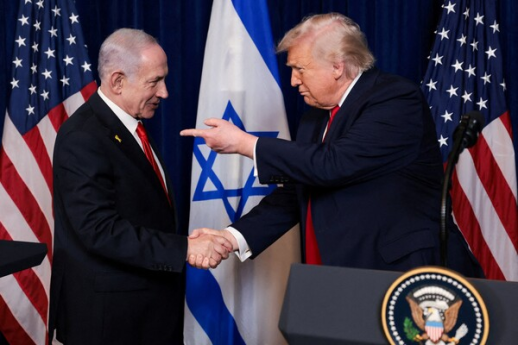 Trump Urges Netanyahu to Halt Escalation in Lebanon Donald Trump, the President of the United States, has reportedly urged Israeli Prime Minister Benjamin Netanyahu to strongly reconsider any plans to escalate military operations in Lebanon. This call comes as the possibility of Israeli strikes on Beirut threatens to disrupt ongoing negotiations between the U.S. and Iran. On June 1, Axios reported, citing two U.S. officials and a source familiar with the conversation, that during a call with Netanyahu, Trump expressed serious concerns about Israel's military actions in Lebanon. He warned that "if Israel proceeds with an attack on Beirut, it will become more isolated in the international community." The context of the call revolves around Israel's expanding military operations in southern Lebanon, justified as a response to attacks from Hezbollah. Israel has indicated it may target Hezbollah positions within Beirut. In response, Iran has warned that it could halt negotiations with the U.S. if Israel continues its offensive in Lebanon. While Trump acknowledged Israel's right to defend itself, he reportedly viewed the recent military response as excessive. According to Axios, Trump expressed concern over civilian casualties in Lebanon, particularly regarding the destruction of buildings to eliminate a Hezbollah commander. During the call, Trump also referenced Netanyahu's ongoing corruption trial, reportedly stating, "You'd be in prison without me," applying pressure on the Israeli leader. This comment is interpreted as a nod to the support Trump has provided to Netanyahu during the trial. Following the conversation, Israel is said to have put its plans to strike Beirut on hold. An Israeli official informed Axios that Israel is no longer planning attacks on Hezbollah targets within Beirut. However, Netanyahu publicly maintained his stance, stating in a release after the call that he communicated to Trump that if Hezbollah does not cease its attacks on Israel, he would target positions in Beirut. He also affirmed that operations in southern Lebanon would continue. U.S. officials provided a different perspective, with one stating that Trump exerted significant pressure on Netanyahu, who appeared to acquiesce to some extent. Axios characterized this call as one of the most contentious exchanges between Trump and Netanyahu since Trump's return to office. This conversation highlights the direct connection between the Lebanon front and U.S. negotiations with Iran. Axios reported that the memorandum being discussed between the U.S. and Iran includes provisions for halting combat in Lebanon. Trump's strong pressure on Netanyahu is seen as an effort to prevent the escalation in Lebanon from undermining the negotiations with Iran.* This article has been translated by AI. 2026-06-02 09:57:00
 -
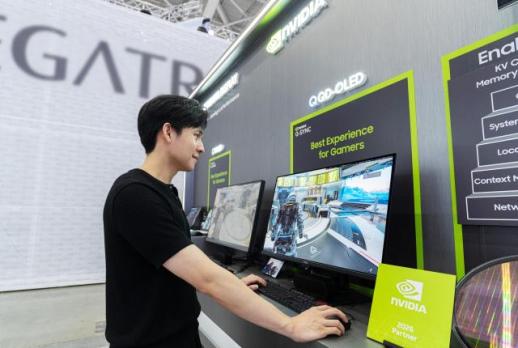 NVIDIA, Samsung Display team up to showcase GeForce RTX 50 performance on OLEDs SEOUL, June 02 (AJP) - Samsung Display has partnered with global AI computing leader NVIDIA to showcase a premium OLED gaming experience at COMPUTEX 2026, Asia's largest IT exhibition, which opened today at the Taipei Nangang Exhibition Center. The collaboration features a visual experience zone where visitors can experience vivid game graphics on Samsung OLED and QD-OLED displays optimized for the latest NVIDIA GeForce RTX 50 Series GPUs. The demonstration utilizes PCs equipped with the NVIDIA GeForce RTX™ 5080, including ASUS' latest ROG Zephyrus G16 laptop and MSI's MPG 322UR QD-OLED X24 monitor, both featuring Samsung Display panels. The experience highlights Capcom's sci-fi action-adventure game PRAGMATA™. The experience is centered on the visual capabilities of the GeForce RTX 50 Series. These GPUs bring realistic graphics to life through path tracing, which calculates light movement in scenes precisely, and NVIDIA DLSS 4.5, an AI-based performance and image enhancement technology. These features are crucial for rendering demanding visuals like light reflecting off metallic surfaces and the deep darkness of outer space, which are characteristics of PRAGMATA™. Youngseok Kim, Vice President and Head of Samsung Display IT Sales, said that differences in display performance become more apparent as real-time light reflection, shadow rendering, and HDR effects become more sophisticated in the latest GPU-powered environments. “Samsung OLED and QD-OLED are displays that best translate advanced GPU performance into the viewing experience,” Kim said. Samsung Display emphasized that its self-emissive OLED and QD-OLED panels are optimized to fully express these high-performance graphics. These displays offer clear picture quality, even in dark scenes, through a high contrast ratio of 1,000,000:1 and perfect black expression. Furthermore, OLED panels offer faster response times than conventional LCDs, allowing them to clearly render hundreds of frames per second with reduced motion blur. The zone allows visitors to compare the same game running on OLED and LCD displays to see which technology most faithfully reproduces the performance of the GeForce RTX 50 Series. 2026-06-02 09:53:37
 -
 President Lee Urges Drug Offenders to Seek Treatment Instead of Prison President Lee Jae-myung stated on June 2 that drug offenders should understand that purchasing drugs through the mail will inevitably lead to detection and punishment. He urged them to avoid spending money on drugs and instead seek treatment promptly.President Lee made these remarks while sharing a report on the government's achievements in drug prevention on his social media platform, X (formerly Twitter).He emphasized, "To combat the social evil of drug abuse, we have deployed drug enforcement personnel to all domestic postal centers." He also mentioned the installation of drug detection equipment, including sniffer dogs and artificial noses.On June 1, relevant government agencies, including the Office for Government Policy Coordination, announced key achievements in the government's response to drug-related crimes. Various agencies, such as the Supreme Prosecutors' Office, National Police Agency, Korea Customs Service, Korea Coast Guard, and the Ministry of Food and Drug Safety, reported that they apprehended 23,403 drug offenders last year through joint special enforcement operations leveraging their respective expertise.* This article has been translated by AI. 2026-06-02 09:51:00
 -
 KOSPI Shows Mixed Trends Amid Nvidia Surge and Profit-Taking The KOSPI opened higher on June 2, buoyed by a surge in Nvidia and strong performance in U.S. tech stocks. However, early profit-taking led to mixed results. Investor caution is growing as focus remains on major semiconductor and artificial intelligence (AI) stocks. According to the Korea Exchange, as of 9:36 a.m., the KOSPI was up 15.40 points (0.18%) at 8,803.78. The index started at 8,883.19, up 94.81 points (1.08%), but briefly turned negative before rebounding due to buying from individual investors. The market experienced significant volatility early on. At around 9:09 a.m., the KOSPI dropped to 8,503.48, down 284.90 points (3.24%) from the previous day. However, it quickly recovered losses and has been fluctuating around the 8,800 mark. In the previous session, U.S. markets saw the Dow Jones Industrial Average rise by 0.09%, the S&P 500 by 0.26%, and the Nasdaq by 0.42%, with all three indices reaching record highs. Nvidia announced its entry into the AI PC market at the GTC event in Taiwan, resulting in a 6.26% jump in its stock price. Additionally, server company HPE saw a surge in after-hours trading following a strong earnings report, fueling expectations for AI infrastructure investments. At this time, individuals and institutions in the securities market are net buying 27.195 billion won and 892 million won, respectively, while foreign investors are net selling 26.796 billion won. Among the top market capitalization stocks, Samsung Electronics (up 3.44%), LG Energy Solution (up 4.95%), Samsung Life Insurance (up 3.78%), and Samsung C&T (up 0.22%) are gaining. Conversely, SK Hynix (down 1.02%), SK Square (down 2.15%), Hyundai Motor (down 4.00%), Samsung Electro-Mechanics (down 12.57%), and HD Hyundai Heavy Industries (down 4.09%) are declining. At the same time, the KOSDAQ index is down 21.34 points (2.03%) at 1,028.69. The index started at 1,044.89, down 5.14 points (0.49%), and has been widening its losses. In the KOSDAQ market, foreign and institutional investors are net buying 177.1 billion won and 88.4 billion won, while individuals are net selling 261.9 billion won. Among the top KOSDAQ stocks, Alteogen (down 0.82%), Rainbow Robotics (down 1.77%), Rino Industry (down 1.85%), Samchundang Pharmaceutical (down 5.51%), HLB (down 5.59%), and Peptron (down 3.23%) are falling. In contrast, EcoPro BM (up 0.97%), EcoPro (up 3.60%), JUSUNG Engineering (up 5.44%), and Kolon TissueGene (up 1.71%) are rising. Han Ji-young, a researcher at Kiwoom Securities, stated, "Nvidia's announcement of its entry into the AI PC market and positive U.S. manufacturing indicators are stimulating investment sentiment in semiconductors. However, given the recent concentration of funds in semiconductor and AI hardware sectors, we must also consider the potential for short-term profit-taking pressure and increased volatility." He added, "Currently, the market is driven more by AI narratives than by earnings. While expanding the share of leading semiconductor and IT hardware stocks remains a valid strategy, it may also be worth considering a barbell strategy that includes previously overlooked earnings stocks in sectors like securities, power equipment, and shipbuilding."* This article has been translated by AI. 2026-06-02 09:48:00
 -
 SK Telecom Hits 52-Week High Following Jensen Huang's Remarks on Physical AI SK Telecom reached a 52-week high during trading after being highlighted as a key partner in the field of physical artificial intelligence (AI) by Jensen Huang, CEO of NVIDIA, during his keynote address. According to the Korea Exchange, as of 9:32 a.m., SK Telecom shares were trading at 122,800 won, up 10,600 won (9.45%) from the previous trading day. The stock opened at 126,000 won and briefly surged to 140,300 won, setting a new 52-week high. The stock's rise is attributed to Huang's mention of SK Telecom as a major partner in physical AI during NVIDIA's 'GTC Taipei 2026' event held the previous day in Taiwan. Industry sources noted that Huang's keynote address included a presentation of SK Telecom's digital twin technology utilizing NVIDIA's Omniverse. This technology is recognized as a core component of physical AI, allowing for the virtual representation of actual factories and equipment to pre-validate the impacts of process changes. This marks the second time SK Telecom has been featured in Huang's keynote, following an event in the United States in March. Additionally, the investment sentiment was likely boosted by a meeting between Chey Tae-won, chairman of SK Group, and Huang in Taipei the previous day. Huang is expected to visit South Korea later this week after completing his schedule at GTC Taipei 2026, marking his first trip to Korea in about seven months since the Asia-Pacific Economic Cooperation (APEC) CEO Summit held in Gyeongju last October.* This article has been translated by AI. 2026-06-02 09:48:00
 -
 WNMC 26: Publishers bet on loyalty as Google reign fades MARSEILLE, June 02 (AJP) - If there was one subject dominating side-stage conversations at the World News Media Congress, it was the future of discovery. Across sessions on search, advertising, content management and audience development, publishers and technology providers wrestled with the same question: what happens if Google can no longer deliver the traffic publishers have relied on for two decades? The answer, according to many speakers, is not simply to replace SEO with the latest acronym. AEO (Answer Engine Optimization) and GEO (Generative Engine Optimization) are rapidly becoming part of publishers' vocabulary, but industry leaders repeatedly warned that AI-driven discovery remains too small to compensate for declining search traffic. Instead, the industry's most urgent priority may be far simpler: build direct relationships with audiences before platform-driven traffic becomes even less reliable. The Great Search Transition During the session "Discovery: How to Rethink Search in the AI Era," media consultants Clara Soteras, Barry Adams and David Buttle outlined how search is evolving from a link-based ecosystem into an answer-based one. Google's AI Overviews and AI Mode, alongside ChatGPT Search and other AI assistants, are changing how people discover information. Rather than directing users to websites, these systems increasingly synthesize information directly into answers. The shift is forcing publishers to rethink long-established audience acquisition strategies. Publishers are experimenting with GEO and AEO techniques to improve visibility inside AI-generated responses. Yet speakers acknowledged that referrals from large language models remain tiny compared with traditional search traffic. Even publishers actively optimizing for ChatGPT visibility reported that LLM-driven traffic still accounts for less than one percent of overall audience acquisition. That reality creates a difficult transition period. Google's influence appears to be weakening, but AI platforms have not yet become meaningful traffic generators. As Barry Adams observed, the entire industry is effectively playing catch-up while the landscape continues to evolve. Loyalty Matters More Than Traffic The strongest consensus across multiple sessions was that traffic itself is becoming a less useful measure of success. Barry Adams argued that publishers should focus less on traffic acquisition and more on audience loyalty. Building habits, encouraging repeat visits and strengthening direct relationships are becoming more valuable than maximizing pageviews. The message resonated beyond the search session. At a panel hosted by Sparteo titled "The Augmented Publisher: How AI Is Redrawing Programmatic," speakers from Le Parisien and Reworld Media echoed similar concerns. Sophie Cassam Chenaï of Le Parisien noted that publishers can no longer depend on external platforms in the same way they once did. Search traffic is under pressure. Social referrals are declining. The only audience publishers can truly control is their direct audience. For publishers, this means investing in subscriptions, newsletters, apps, podcasts and products that encourage users to return voluntarily. The Web Is Under Pressure The panel highlighted a growing sense that the open web itself is facing structural challenges. Publishers are confronting declining audiences, unpredictable algorithms and increasing competition for attention. Several speakers stressed that traffic has become fluid and unreliable. Instead of chasing every platform shift, publishers increasingly want to capture users inside their own ecosystems. This explains why engagement has become a central metric. Success is no longer measured solely by reach. Increasingly, it is measured by frequency, loyalty and depth of interaction. One example discussed during the conference was Argentine publisher El Cronista's educational board game designed to teach families about personal finance. While far removed from traditional SEO, the project reflected a broader shift toward creating products and experiences that strengthen audience relationships. As one participant suggested, publishers must move from creating content merely to rank toward creating content and products that connect. AI Inside the Newsroom While AI is disrupting discovery, it is also helping publishers improve their own operations. Content management platform Melody showcased how publishers are integrating AI into editorial workflows while maintaining control over their content and data. One case study demonstrated how AI-powered content management can automatically classify articles, extract key information and suggest related content. Journalists remain responsible for editorial decisions, but repetitive tasks become significantly faster. Features include AI-generated headline suggestions, standfirst recommendations, automated tagging and content organization. Perhaps most interesting was the use of conversational search built directly into publisher archives. Rather than relying on traditional site navigation, readers can ask questions and explore years of content through a natural-language interface. The system is designed to avoid hallucinations by acknowledging when information cannot be found within the archive. According to the case study presented, improved navigation and content discovery helped increase pageviews significantly by surfacing more relevant content to readers. AI Will Not Save Weak Audience Strategies The conference's broader lesson was that AI alone will not solve publishers' business challenges. Whether discussing advertising, subscriptions, search or editorial operations, speakers repeatedly returned to fundamentals: good contents, strong brands, and audience relationship. AI may improve workflows, enhance discoverability and create new opportunities for engagement. But publishers that remain dependent on external platforms face the same strategic vulnerability they faced before generative AI arrived. The future may belong to GEO and AI-assisted discovery. But for now, the publishers making the most progress are focusing on something far less fashionable: earning loyalty. Because regardless of whether audiences arrive through Google, ChatGPT, social media or a newsletter, sustainable publishing businesses depend on readers choosing to come back. 2026-06-02 09:45:05