

Journalist

Stefan Wolff, Tetyana Malyarenko
-
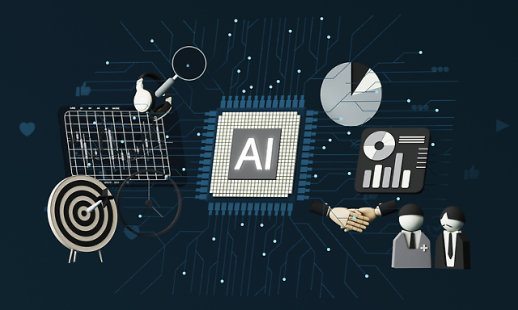 S&P 500 Hits Record High, But Only 20 Stocks Reach New Peaks Amid AI Rally The U.S. stock market reached an all-time high, but the gains were largely concentrated in a few artificial intelligence (AI) stocks. The number of stocks in the S&P 500 hitting new highs was only 20, a level reminiscent of the dot-com bubble peak in 2000, raising concerns about market overheating. On June 1, CNBC reported that the S&P 500 closed at a record high on the last trading day of May. However, only 20 of the S&P 500 constituents recorded individual new highs, with just seven of those not directly related to AI. Michael Hartnett, a strategist at Bank of America (BofA), noted in a client memo last week that there were also 20 stocks hitting new highs at the peak of the internet bubble in March 2000. He suggested that while speculative price movements are not over, this trend signals that the market may be approaching the later stages of a bubble. The rally in May was led by semiconductor stocks, with AMD rising 46% and Micron soaring 88%. Samsung Electronics increased by 44%, while SK Hynix jumped 81%. The tech-heavy Nasdaq Composite Index also surged 25% over the two months of April and May, marking its largest two-month gain in over 20 years. However, the limited number of stocks supporting the index's rise is concerning. The breadth of advancing versus declining stocks, known as the advance-decline line, peaked at the end of March but has been declining since mid-April. According to BCA Research, as of May 20, only about 55% of S&P 500 constituents were above their 200-day moving average. BCA strategists stated, "While U.S. and emerging market indices have reached new highs, the rally is very narrow," adding that a weak market breadth often indicates underlying vulnerabilities within the stock market. Despite the index hitting record levels, the concentration of gains in a few stocks raises questions about the sustainability of the bull market. Hartnett advised investors to consider shifting to defensive positions soon. He explained that historically, after bubble collapses since 1929, long-term bonds and defensive stocks, or sectors that were significantly overlooked in the late stages of a bubble, tended to perform relatively well.* This article has been translated by AI. 2026-06-02 15:57:00
 -
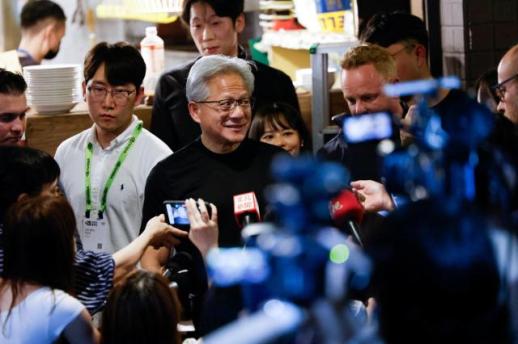 NVIDIA CEO Jensen Huang's Visit Sparks Excitement in South Korea Jensen Huang, CEO of NVIDIA, is generating excitement in South Korea with his visit this week. News of his arrival or even a ceremonial first pitch at a baseball game has led to a surge in stock prices for companies associated with him over the past two days. Huang's previous visit to South Korea last year demonstrated his significant influence. Following what was dubbed the "gangbu meeting," shares of companies like Samsung Electronics and Hyundai Motor soared. Notably, Samsung Electronics saw a more than 3% increase on June 2, even amid a broader market decline, ultimately surpassing Meta to become the 10th largest company globally by market capitalization. This achievement underscores the competitive strength of South Korean firms within the global AI supply chain and highlights Huang's impact as a leading figure in the graphics processing unit (GPU) market. This situation emphasizes that talent remains the most critical factor in the ongoing AI industrial revolution. A fierce global competition for AI talent is underway, with major U.S. tech companies offering substantial financial incentives to attract top researchers. Meanwhile, China is preparing to implement restrictions on outbound personnel and foreign investments to prevent the loss of key talent and technology. As the era of AI reshapes national competitiveness, securing talent has become a matter of survival for countries, not just corporations. The ability to acquire semiconductor and AI technologies will determine the industrial landscape and survival prospects for decades to come. However, the reality in South Korea suggests that the rising stock market is not the only indicator of success. While the government is promoting policies to attract foreign talent, such as expanding the "top-tier visa" program, it still lags behind other advanced AI nations. According to a February report from the Software Policy Research Institute, South Korea ranks between 30th and 40th globally in terms of attractiveness for talent acquisition. Additionally, the Stanford AI Index report from last year indicated that South Korea ranks 35th among OECD countries for net outflow of AI talent, with 0.36 individuals leaving per 10,000 people. In this context, recent developments following the resolution of wage negotiations at Samsung Electronics are significant. After the agreement, applications to semiconductor-related programs surged, and reports suggest that Samsung employees are now as desirable in the marriage market as professionals like lawyers. While salary alone does not drive talent decisions, competitive compensation is essential for attracting skilled individuals. Huang also addressed questions about Samsung's bonuses, stating, "Employees should receive as much compensation as possible." His perspective is informed by his own experiences in Silicon Valley, where he built NVIDIA into a leading company after graduating from engineering school. Last week, the South Korean team achieved a record performance at the Asia Physics Olympiad, winning eight gold medals. This success highlights the presence of exceptional scientific talent in the country. However, it has been noted that many students who excel in math and science competitions often choose to pursue medical degrees for economic reasons. If South Korea fails to connect its top scientific talent to the domestic AI and semiconductor industries, it could result in a national loss. Of course, from a corporate perspective, increasing wages and bonuses can be burdensome and may negatively impact short-term profitability. However, in the long run, securing top talent is more of an investment than a cost, as the competitiveness of the AI era ultimately hinges on people. To attract AI talent, it is crucial to foster an environment conducive to talent development. Therefore, the resolution of Samsung's wage negotiations should serve as a catalyst for the emergence of South Korea's own "Jensen Huang" and potentially the world's leading company by market capitalization. The government must also work on improving the overall system to support this goal. 2026-06-02 15:57:00
 -
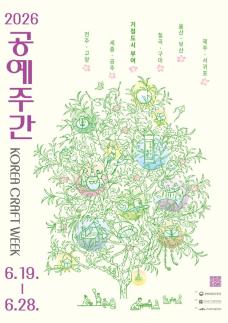 2026 Craft Week to Kick Off on June 19 in South Korea The largest craft festival in South Korea, "2026 Craft Week," will take place nationwide from June 19 to 28, the Korea Craft and Design Promotion Agency announced on June 2. Craft Week focuses on discovering and planning unique craft cultural content through collaboration with local craft institutions. This year's central city for "2026 Craft Week" is Buyeo, selected for its theme "Buyeo, Where Crafts Stay," proposed by the Baekje Cultural Foundation. The event will kick off with an opening ceremony on June 19 at the 123 Sabi Craft Village operated by Buyeo County. The festival will feature exhibitions, markets, educational programs, and immersive tourism experiences centered around local craft artists' studios, combining craft village elements with experiential, slow-life activities. A highlight of the program is "Seasonal Crafts, the Taste of Gyuham," which connects local spaces with craft sensibilities, allowing visitors to enjoy exhibitions, stroll through the village, and engage with the unique craft worlds of local artisans, enhancing the enjoyment of Craft Week. Buyeo and the 123 Sabi Craft Village aim to present a sustainable craft village model by utilizing the region's historical and cultural assets. Additionally, ten cities, including Sejong-Gongju, Busan-Ulsan, Jeonju-Gochang, Jeju-Seogwipo, and Chilgok-Gumi, will host region-specific programs. Each program will feature exhibitions, markets, artist workshops, tours, and experiences at attractive local landmarks, particularly encouraging tourism content that allows visitors to deeply understand and enjoy the region through crafts. In the Sejong-Gongju area, a family-friendly program will offer an ecological craft exhibition and experience using native plants from the Geum River at the Sejong Arboretum starting June 19. This initiative provides families with an opportunity to engage with natural materials and experience crafts hands-on. Moreover, the "Pachi Market," operated by the Jeju Special Self-Governing Province Craft Workshop Association, will be held at the Jeju Citrus Museum, allowing visitors to experience the charm of local crafts up close. The Craft Promotion Agency also supports seven craft creation support centers across the country (Gyeonggi, Jeonnam, Cheongju, Jinju, Gimhae), offering 23 programs and open studios (Wanju, Changwon) that families can enjoy together. Kim Kyung-bae, head of the Craft Promotion Agency, stated, "2026 Craft Week is designed to combine unique local craft resources and diversity, creating an opportunity for everyone to enjoy crafts and spread joyful daily life nationwide. I hope that through Craft Week, the public can discover and enjoy the unique daily culture of various regions up close." Details about the programs and schedules for "2026 Craft Week" can be found on the official website and Instagram.* This article has been translated by AI. 2026-06-02 15:48:00
 -
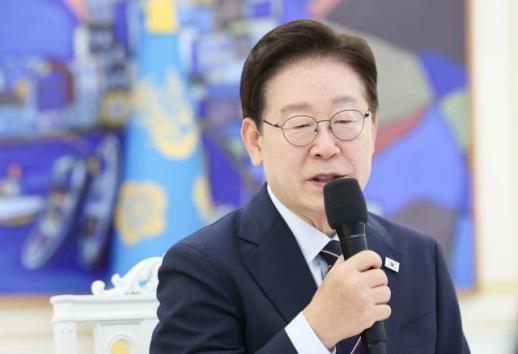 President Lee Calls for Expansion of Voting Rights for Overseas Koreans President Lee Jae-myung emphasized on June 2 that discussions in the National Assembly regarding the expansion of voting rights for overseas Koreans should not be neglected, even in challenging circumstances. During a Cabinet meeting and emergency economic assessment session at the Blue House, President Lee addressed Kim Kyung-hyup, the head of the Overseas Koreans Agency, stating that this issue is the most significant grievance for overseas Koreans and a fundamental right as citizens, not merely a service. He proposed that adding more polling stations abroad is a necessary first step, followed by the introduction of mail-in voting. He also suggested that electronic voting should be considered. Regarding the lack of progress in the National Assembly, President Lee remarked, "Given the current attitude, there seem to be those who are opposed to overseas Koreans voting. There are various excuses, and reaching an agreement is not easy." He criticized the notion of requiring consensus for all decisions, stating, "In a democratic country, we should respect minority opinions but ultimately follow the majority when necessary. If everything is to be resolved by consensus, why hold elections and work hard to elect representatives?" * This article has been translated by AI. 2026-06-02 15:48:00
 -
 MHS Unveils AI Semiconductor Cooling Solutions at Computex 2026 As competition intensifies in the performance of artificial intelligence (AI) semiconductors, heat management has emerged as a critical issue for next-generation AI infrastructure. High-performance semiconductors consume more power and generate more heat, making cooling technology a key factor in the performance, stability, and energy efficiency of servers and data centers. On June 2, MHS, a semiconductor cooling solution company, showcased its proprietary water cooling technology for next-generation AI semiconductors at Computex 2026 in Taipei. MHS is a startup focused on developing cooling solutions for semiconductors, power devices, and high-heat components used in servers. The centerpiece of MHS's exhibition is the Micro Aqua Cooling System (MACS), which utilizes ultra-thin microchannel structures to manage heat generated by high-heat semiconductors. Given that cooling performance is crucial for the overall efficiency of AI servers and high-performance computing (HPC) environments, MHS is advancing this technology as a next-generation cooling platform for AI semiconductors. The flagship product is the Renaissance series, a water cooling solution that integrates cold plates, radiators, and pumps, designed specifically for AI semiconductors and HPC environments. It targets products equivalent to the NVIDIA RTX 5090 and has been performance-validated for environments exceeding 600W. The Renaissance series includes a passive model for data centers and AI servers, as well as an active model for high-performance PCs and workstations. Both models are developed as hybrid water cooling solutions that can be applied to existing air-cooled servers, focusing on achieving high cooling performance and ease of installation to reduce the burden of transitioning existing infrastructure. Through the development of the Renaissance series, MHS has secured a complete lineup of high-performance cold plates and radiator products based on microchannel technology. The company is also collaborating with global manufacturers to commercialize cold plates and radiators for electric vehicle inverters and data centers. MHS also unveiled its air-cooled product line, introducing the Monaco cooler, which supports CPUs up to 300W. The Monaco is designed for high-performance workstations and server environments, featuring enhanced cooling performance and system compatibility based on MHS's patented technology. Industry observers note the significance of a domestic startup participating directly in Computex to showcase AI semiconductor cooling solutions. As competition in AI infrastructure expands beyond semiconductor chip performance to include power, cooling, packaging, and server design, a South Korean company is making its mark in the global cooling solutions market. "The key to competitiveness in AI infrastructure ultimately lies in heat control technology," said MHS CEO Lim Jong-soo. "MHS has been developing cooling solutions optimized for next-generation AI semiconductors based on our proprietary MACS technology, and we plan to showcase our differentiated technological capabilities and mass production capabilities to global customers at this Computex."* This article has been translated by AI. 2026-06-02 15:48:00
 -
 Trump Warns Netanyahu Amid Tensions Over Lebanon Front in Iran Deal Talks Donald Trump, the President of the United States, stated that a peace agreement with Iran could be reached within a week. Discussions are ongoing regarding a memorandum of understanding (MOU) that would extend the current ceasefire by 60 days and allow for the resumption of civilian shipping in the Strait of Hormuz. However, Israel's offensive in Lebanon has emerged as a last-minute variable, with Iran labeling it a violation of the ceasefire, causing negotiations to falter. On June 1, local time, Trump responded to a question about the timeline for the Iran peace MOU, saying, "I will be able to talk about that issue within the next week." He acknowledged that "there are still some issues to resolve" but added, "We are getting the things we need." The MOU's main points reportedly include extending the current ceasefire by 60 days and fully permitting civilian shipping in the Strait of Hormuz. The focus is on restoring maritime transport, which has been diminished since the war, and alleviating instability in the energy market. A key issue in the agreement is Iran's nuclear program. Trump demands that Iran refrain from acquiring nuclear weapons and that the U.S. lead efforts to excavate and remove highly enriched uranium (HEU) buried in Iran. This condition is difficult for Iran to concede, as it directly relates to the future of its nuclear program. Iran Pushes Back Against Lebanon Offensive... Trump Cautions Netanyahu The variable arose outside the negotiation table. Iran has pressured the U.S. by raising the issue of ceasefire violations in light of Israel's expanded operations in southern Lebanon. The Iranian Foreign Ministry stated, "Violating the ceasefire on a single front means violating it on all fronts," asserting that the U.S. bears direct responsibility. Iranian media reported that Iran has halted message exchanges with the U.S. regarding the peace agreement due to this issue. In response, Trump took immediate action. He communicated with Israeli Prime Minister Benjamin Netanyahu via Truth Social and also reached out to top representatives from Hezbollah. Trump stated, "Israel will not attack Hezbollah, and Hezbollah will not attack Israel." During this process, he reportedly issued a strong warning to Netanyahu. Axios reported that Trump used "strong language" during the call to express his dissatisfaction with the escalation of the Lebanon offensive. The outlet noted that Trump aimed to prevent Netanyahu's plans for an attack on Beirut to maintain progress in negotiations with Iran. Israeli media outlet Ynet reported that following Trump's announcement, the Israeli military postponed airstrikes on Beirut at the request of the U.S. Subsequently, the Lebanese embassy in Washington stated that Hezbollah agreed to a mutual cessation of attacks mediated by the U.S. The initial measures involve Israel halting airstrikes on southern Beirut while Hezbollah ceases attacks on Israel. Lebanon Ceasefire Remains Partial... Nuclear Issue Persists However, not all fronts have come to a halt. Reuters reported that "this action is closer to a partial ceasefire, and clashes and Israeli military operations continue in southern Lebanon." Netanyahu also stated during his call with Trump that if Hezbollah does not stop its attacks on Israeli cities and citizens, he would target terrorist sites in Beirut. He added that Israeli military operations in southern Lebanon would proceed as planned. The attack on U.S. military bases in Kuwait has also increased the pressure on negotiations. The U.S. Central Command reported that two Iranian ballistic missiles were intercepted, targeting U.S. forces stationed in Kuwait. While there were no U.S. casualties, it confirmed that U.S. facilities could be targeted even during a ceasefire. Trump has drawn a line regarding the expansion of military responses. In an NBC interview, he stated, "Even if talks with Iran break down, it doesn't mean we start dropping bombs there," adding, "A peace agreement with Iran could be better than a military victory." Trump emphasized that discussions with Iran are progressing rapidly. However, should the Lebanon front destabilize again, it could impact the ongoing discussions regarding the peace MOU. While the possibility of an agreement within a week remains open, the nuclear issue and management of the Lebanon front are critical factors that will determine the outcome.* This article has been translated by AI. 2026-06-02 15:45:00
 -
 Rising Demand for Cooling Sleep Products Amid Early Heat Waves As early heat waves and tropical nights grip the region, sales of cooling sleep products designed to enhance comfort during sleep are surging. According to industry reports, Simmons' 'All-Season Cooling Set' saw a staggering 175% increase in sales from May 11 to 15 compared to the previous week. The product features a combination of twill cooling material and 80-count bio-washed cotton, allowing for dual-sided use depending on the season or indoor temperature. Similarly, Ace Bed reported a 161.1% rise in sales of its cooling products during the same period. Utilizing Kolon’s high-performance cooling yarn 'FORPE,' these products effectively lower surface temperature by approximately 6.3 degrees upon contact. Notably, the demand for super single (SS) sizes has surged, accounting for 44.4% of sales, driven by trends in single-person households and individual room cooling. Boiler manufacturer Kyungdong Navien is also entering the market with its new 'Four Seasons Sleep Mat.' Both models, 'Air' and 'Pro,' feature a 'Cool Mode' that lowers the internal temperature of the mat during summer. The 'Four Seasons Sleep Mat Air' utilizes a fan from Sleep Hub to draw in and cool indoor air from air conditioning, circulating it to lower the water temperature. The higher-end 'Four Seasons Sleep Mat Pro' employs advanced semiconductor cooling technology known as the 'Peltier method,' which cools the water passing through the Sleep Hub without the need for air conditioning, circulating it throughout the mat. Industry experts anticipate that competition in cooling materials among bedding and textile companies will intensify, especially in light of the early heat and rising electricity costs. A bedding industry representative stated, "As consumer trends increasingly prioritize sleep quality, interest in cooling bedding during the summer continues to grow. We aim to provide products that help consumers quickly dissipate body heat and offer a refreshing feel." * This article has been translated by AI. 2026-06-02 15:42:00
 -
 KakaoBank Expands Personal Business Loans Through Naver Pay KakaoBank announced on June 2 that it will collaborate with Naver Pay to expand support for personal business loans.As part of this partnership, KakaoBank's 'Personal Business Real Estate Loan' product will now be available for comparison on the 'Naver Pay Loan Comparison' service. This marks the first time KakaoBank's loan products have been featured on Naver Pay's loan comparison platform.The personal business real estate loan product allows users to conveniently access up to 1 billion won for various purposes, including operational funds and purchasing business premises, all through a non-face-to-face process.Initially, the Naver Pay loan comparison service will focus on loans for multi-family housing and officetels, with plans to expand the collateral options to include commercial complexes in the future.A representative from KakaoBank stated, "With this entry, more small business owners will have access to the personal business real estate loan product. We will continue to provide innovative financial services to help reduce the financial burden on our personal business customers and assist them in securing funds."Meanwhile, KakaoBank has been expanding its range of services for personal business owners, with related loan balances surpassing 3 trillion won in the first quarter of this year. 2026-06-02 15:42:00
 -
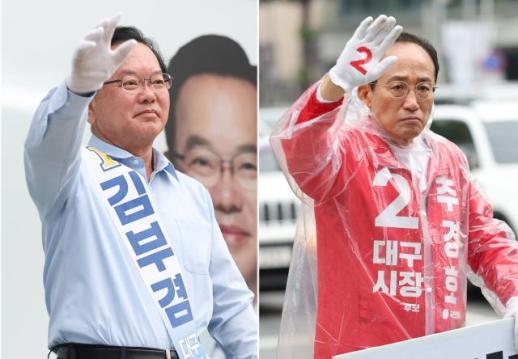 Candidates Make Final Appeals Ahead of Local Elections As the June 3 local elections and National Assembly by-elections approach, candidates in key districts such as Gyeonggi, Daegu, and Busan, as well as Pyeongtaek and Busan Buk-gu, are making final appeals for support. They emphasized the importance of voter participation, stating, "We will win and bring about tangible change." In Daegu, a significant battleground for the Democratic Party, candidates Kim Boo-kyum and Choo Kyung-ho urged voters to cast their ballots on election day, highlighting the need for change in the city. Kim stated, "It is time for change. Please give us just one chance. We will revitalize the Daegu economy." Choo, who visited Dongdaegu Station and Kyungpook National University, also called for voter participation, saying, "I ask you to vote on June 3." In Gyeonggi Province, where the first female provincial governor is anticipated, candidates Choo Mi-ae and Yang Hyang-ja are campaigning vigorously, promising to bring change to the region alongside the Lee Jae-myung administration. Choo stated, "I will work with the Lee Jae-myung government to create change in Gyeonggi Province," while Yang emphasized, "I will deliver visible change rather than mere promises." In Busan, where the Democratic Party aims to reclaim the mayoral seat and the People Power Party seeks to retain it, candidates Jeon Jae-soo and Park Hyung-jun are requesting support, claiming to be the only candidates capable of transforming the city. Jeon asserted, "I will prove Busan's change through action, not political strife," while Park emphasized the need to protect Busan, stating, "We must defend Busan, the last bastion on the Nakdong River front, and check the unilateral rule of the Lee Jae-myung administration." Candidates in the closely contested by-elections for Gyeonggi Pyeongtaek and Busan Buk-gu are also encouraging voters and expressing their determination to win. Democratic candidate Kim Yong-nam in Pyeongtaek stated, "If I am elected, you will prove that the Lee Jae-myung government will succeed with your support." In response, candidates Yoo Yi-dong and Jo Guk also urged voters, saying, "If you empower us, we will repay you with a decisive victory," and "Please give overwhelming support so that the voices from the field can translate into policy." Additionally, candidates in the fiercely competitive Busan Buk-gu by-election are focusing on securing public sentiment. Candidates Ha Jung-woo, Park Min-sik, and Han Dong-hoon stated, "We will provide politics like an umbrella that shields you from the storm. We will work even harder," "Vote for the true Busan resident Park Min-sik to ensure victory," and "We will block the cancellation of President Lee Jae-myung's indictment in the National Assembly," urging their supporters to rally behind them.* This article has been translated by AI. 2026-06-02 15:39:00
 -
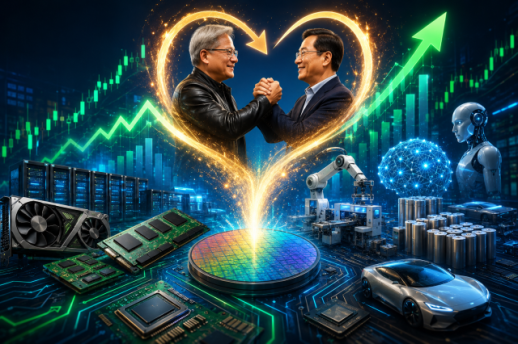 NVIDIA CEO Jensen Huang's Visit Sparks Surge in AI-Related Stocks The South Korean stock market is experiencing a surge across the AI value chain following the visit of NVIDIA CEO Jensen Huang. The buying momentum has spread beyond semiconductors to include robotics, cloud services, platforms, and power infrastructure, reflecting growing expectations for an 'AI alliance.' This optimism suggests that South Korea could emerge as a key hub in NVIDIA's global AI supply chain. On June 1, the Korea Exchange reported a significant rise in stocks related to AI, robotics, and cloud services. Doosan Robotics, identified as a major beneficiary of physical AI, saw its shares soar by 29.95%, closing at 138,400 won. LG Electronics also experienced a substantial increase, climbing 29.86% to finish at 380,500 won, driven by optimism surrounding its robotics, smart home, and automotive businesses. Other LG Group companies, including LG (up 13.10%) and LG HelloVision (up 30.00%), also saw strong gains. Stocks related to AI data centers, cloud services, and software also surged. LG CNS rose by 26.27% to close at 143,700 won, while Samsung SDS increased by 21.07% to finish at 362,000 won. NAVER's shares climbed 16.03% to close at 271,500 won, reflecting expectations for collaboration with Sovereign AI and AI data centers. Semiconductor and AI infrastructure stocks also performed well. Samsung Electronics' shares rose by 10.09%, closing at 349,000 won. Consequently, the company's market capitalization increased from 1,853 trillion won to 2,040 trillion won, gaining nearly 200 trillion won in a single day. Market analysts attribute the buying spree to Huang's upcoming visit and the potential for meetings with major South Korean business leaders. Huang is expected to meet with Naver Chairman Lee Hae-jin on June 5, with discussions about possible meetings with LG Group Chairman Koo Kwang-mo, Hyundai Motor Group Chairman Chung Eui-sun, and Doosan Group Chairman Park Jung-won also being mentioned. Analysts are particularly focused on the shift in NVIDIA's collaboration from a memory-centric approach to the realm of physical AI. As generative AI expands beyond data centers into real-world industries such as robotics, automotive, manufacturing, and logistics, the strategic value of South Korea's manufacturing base is increasing. KB Securities analyst Kim Dong-won noted, "NVIDIA's return to Korea after seven months indicates a growing reliance on the country. This is significant not only for securing memory but also for ensuring stability in the supply chain for robotics, mobility, and key AI infrastructure components." During a presentation at the GTC Taipei event, Huang mentioned that the next-generation AI accelerator, the 'Vera Rubin' system, will feature memory from Samsung Electronics, SK Hynix, and Micron. The market is paying close attention to the potential for increased reliance on Samsung and SK Hynix starting from the HBM4 generation. Memory semiconductors remain a critical bottleneck in the AI investment cycle, as the competition for GPU performance intensifies, leading to a surge in demand for high-bandwidth memory (HBM) and high-capacity DRAM. Han Dong-won, an analyst at Hana Securities, stated, "The leading stocks in the AI era will emerge not from GPUs but from the bottlenecks surrounding them. Ultimately, the most strategically valuable assets will be in memory." However, the current market trend is not limited to semiconductors. Recent surges in stock prices indicate a rapid expansion of investment themes across the entire AI infrastructure ecosystem. Meritz Securities analyst Hwang Soo-wook remarked, "The market's reaction is not merely about a robotics theme but reflects expectations about the role South Korea will play in NVIDIA's global AI infrastructure strategy. GPU clusters, AI data centers, power, cooling, cloud, manufacturing, and robotics are all becoming interconnected within a single value chain."* This article has been translated by AI. 2026-06-02 15:39:00