
Journalist

Tae Yeon Eom
-
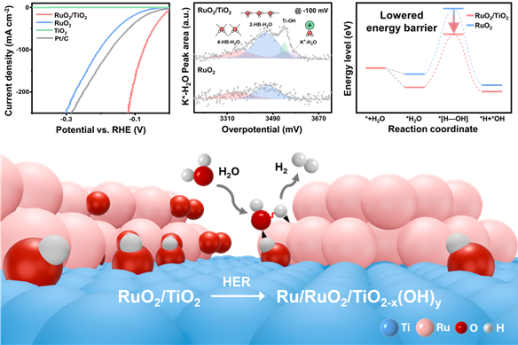 Kookmin University researchers develop high-efficiency catalyst for hydrogen production SEOUL, May 11 (AJP) - A research team at Kookmin University has developed a new heterostructure catalyst that significantly improves the efficiency of hydrogen production in alkaline water electrolysis. The team, led by Professor Lee Chan-woo of the Department of Chemistry, identified the specific mechanism that allows the catalyst to accelerate the water-splitting process, the university said Monday. The research focuses on Anion Exchange Membrane Water Electrolysis (AEMWE), a next-generation technology that operates in alkaline environments to reduce reliance on expensive precious metal catalysts and corrosion-resistant parts. While promising, these systems are often limited by a slow initial step where water molecules must be broken down to create hydrogen intermediates, leading to higher energy consumption and lower efficiency. To address this bottleneck, the team engineered a catalyst by forming ruthenium oxide nanoparticles approximately 2 nanometers in size onto a 25-nanometer titania support. During the electrochemical process, the catalyst surface reconfigures itself into an active interface that attracts water molecules and lowers the energy barrier required to break their chemical bonds. Test results showed that the new catalyst required an overpotential of only 6.6 millivolts to reach a standard current density. This performance significantly outperforms commercial platinum catalysts, which require 43 millivolts, and standalone ruthenium oxide, which requires 79 millivolts. The mass activity of the new material was found to be approximately 6.4 times higher than that of standard platinum-on-carbon catalysts. The study utilized real-time spectroscopy and theoretical calculations to track water molecules and hydrogen intermediates during the actual reaction. This allowed the team to confirm that the titania interface directly facilitates the cutting of oxygen-hydrogen bonds. The researchers found that the ruthenium and titania work together, with the interface handling water activation while the ruthenium handles the formation of hydrogen molecules. "This research is significant because we developed a high-activity catalyst while simultaneously observing how the interface activates water molecules under actual operating conditions," Professor Lee Chan-woo said. "Based on the principle of cooperative hydrogen formation at the ruthenium-titania interface, we can suggest design strategies for high-efficiency catalysts applicable to next-generation electrolysis systems." The study was supported by the Ministry of Science and ICT and was published in the international journal Carbon Energy. (Reference Information) Journal/Source: Carbon Energy Title: Ruthenium-Titania Interface-Mediated Water Activation for High Turnover Frequency in Alkaline Hydrogen Evolution Link/DOI: https://doi.org/10.1002/cey2.518 2026-05-11 14:58:02
 -
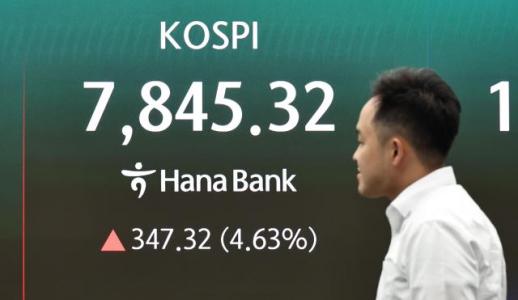 JPMorgan Predicts KOSPI Could Reach 10,000 Amid AI Momentum Global investment bank JPMorgan has expressed optimism about the South Korean stock market, citing the expansion of artificial intelligence (AI) investments and a strong memory chip market. The bank raised its KOSPI target, suggesting the possibility of a "10,000-point era" for the index. On May 11, JPMorgan released its "Korea Equity Strategy" report, adjusting its target scenarios for the KOSPI to 9,000, 10,000, and 6,000 points for basic, bullish, and bearish scenarios, respectively, all higher than previous forecasts. The report noted, "In the past two to three months, signals have emerged that alleviate concerns about AI monetization," adding that advancements in model performance, increased consumption of agentic tokens, a stabilization in token prices, and new funding have significantly boosted the growth trajectory of AI capital expenditures. JPMorgan also highlighted that prices for AI-related hardware continue to rise, stating, "The South Korean stock market is highly exposed to themes of AI, security, and resilience." The bank specifically pointed to the memory chip sector, suggesting a prolonged supercycle. It explained that memory stocks currently account for about 50% of the KOSPI's market capitalization and have driven approximately 70% of the index's gains since the beginning of the year. "AI demand continues to outstrip supply, and inventory levels remain tight," the report stated, noting that high-bandwidth memory (HBM) supply is tied to multi-quarter price and volume contracts, indicating a significant risk of supply shortages. It also mentioned that clients are preemptively advancing demand projections to 2027 due to concerns over supply shortages. JPMorgan anticipates that the memory market's upward cycle will likely continue into 2027-2028. The report emphasized that the rise in the domestic stock market is not limited to semiconductors. "The KOSPI's performance, excluding Samsung Electronics and SK Hynix, has significantly outperformed regional benchmarks," it stated, noting that earnings forecasts are also improving for sectors related to industrial materials. Regarding bank stocks, JPMorgan observed positive earnings momentum based on recovering net interest margins, increased fee income, and stable loan loss provisions. Corporate governance improvements were also identified as a key factor in the reevaluation of the South Korean stock market. JPMorgan stated, "The trend of improving corporate governance is an important foundation for attracting foreign and domestic investor capital, particularly as it will provide significant momentum for the reevaluation of holding companies." However, the bank raised concerns about potential short-term cooling due to overheating pressures. It noted, "The market breadth is narrowing, and technical pressures are increasing, as indicated by rising relative strength index (RSI) spreads and volatility indices (VKOSPI)." Nevertheless, it advised that any corrections should be viewed as buying opportunities. JPMorgan also expressed optimism about the potential for additional capital inflows from emerging market and Asian investors. The report stated, "In the second quarter, hedge funds have aggressively increased their exposure to South Korea," while noting that active long-only investors have slowed their selling after significant sell-offs in the first quarter, although large capital inflows into the spot market have yet to be confirmed. It added that emerging market and Asian investors are estimated to be in a state of overbuying Samsung Electronics and SK Hynix by about 70 basis points, but considering the expected earnings improvements, this remains a light position. The report estimates that the earnings per share (EPS) for Samsung Electronics and SK Hynix could be four to five times higher than last year. JPMorgan identified promising investment opportunities in AI-themed memory sectors, holding companies and insurance stocks benefiting from governance improvements, banks, automotive, and telecommunications stocks that could benefit from tax reforms, and securities firms expected to gain from increased trading volumes. Long-term industrial themes include defense, power equipment, robotics, nuclear power, space, and shipbuilding. Top KOSPI picks include Samsung Electronics, SK Hynix, Hyundai Motor, Samsung C&T, Samsung Electro-Mechanics, Hanwha Aerospace, Samsung Life Insurance, HD Hyundai Electric, Shinhan Financial Group, SK, HD Korea Shipbuilding & Offshore Engineering, LG Chem, APR, and Isu Petasys. Conversely, POSCO Future M, Hyundai Marine & Fire Insurance, and Kakao were mentioned as less favored stocks.* This article has been translated by AI. 2026-05-11 14:52:36
 -
 Samsung C&T Shares Surge Over 7% on Rising Value of Samsung Electronics Stake Samsung C&T shares experienced a significant increase of over 7% during trading on expectations of rising value from its stake in Samsung Electronics and potential contracts in the nuclear power sector. According to the Korea Exchange, as of 2:04 PM, Samsung C&T shares were trading at 454,500 won, up 32,000 won (7.57%) from the previous trading day. Earlier, analysts adjusted their target prices for Samsung C&T, citing the increased value of its Samsung Electronics stake, along with improved prospects in nuclear and solar energy projects and investments in affiliates. Hana Securities maintained a 'Buy' rating on Samsung C&T and raised its target price from 400,000 won to 600,000 won. Kim Seung-jun, a researcher at Hana Securities, stated, "Although the stock price has risen significantly over the past week, Samsung C&T's valuation remains attractive. Currently, the price-to-book ratio (PBR) is around 0.7 times when reflecting Samsung Electronics' stock price." He emphasized, "Considering the premiums for nuclear power, solar energy, and affiliate investments, we recommend buying Samsung C&T shares." Kim added, "A PBR of 0.7 is significantly lower compared to other holding companies (SK at 1.3, SK Square at 3.1, Doosan at 17.3, CJ at 1.4) and is also lower than construction firms with market capitalizations over 10 trillion won (Hyundai Engineering & Construction at 2.1, Samsung E&A at 2.4, Daewoo Engineering & Construction at 3.6)." He further noted, "There is a strong narrative supporting valuation premiums due to expected quarterly profit increases, accelerating semiconductor investments and related revenue growth, efforts to secure nuclear contracts, growth in Raemian orders, and initiatives in the U.S. solar operations (IPP business)."* This article has been translated by AI. 2026-05-11 14:50:39
 -
 BBQ Opens First Store in Almaty, Kazakhstan, Expanding into Central Asia Genesis BBQ has opened its first store in Almaty, Kazakhstan, marking its entry into the Central Asian market. This is the first time BBQ has expanded into this region. On May 11, BBQ announced the opening of its Mega Almaty location in the southern part of Almaty, the largest city in Kazakhstan, within the MEGA Alma-Ata shopping mall. The store covers approximately 78 square meters and is located on the second floor food court of the mall. It offers a variety of menu items, including Golden Fried Chicken, the seasoned "Secret Sauce Chicken," chicken burgers, tteokbokki, and set menus. The menu also features "UFO Chicken," which includes chicken served with cheddar cheese fondue, targeting local consumers. Almaty is recognized as Kazakhstan's largest city and a key economic hub in Central Asia. The city has a well-developed dining, franchise, and retail industry, making it a prime location for global brands entering Kazakhstan. With a concentration of finance, trade, and tourism industries, the demand for dining out in the evenings is high, and the presence of major universities contributes to a strong market of young people and international students. The Mega Alma-Ata shopping mall, where BBQ has opened, is one of the largest shopping centers in Central Asia, with a total area of about 180,000 square meters. It attracts around 10 million visitors annually and is considered a central business district that draws university students, professionals, and tourists. BBQ plans to accelerate its expansion across Kazakhstan, starting with Almaty. The company aims to open an additional 20 stores in key commercial areas by the end of the first half of the year and intends to enter the capital city of Astana in the third quarter. Based on this strategy, BBQ aims to have 100 local stores open by the end of the year. A BBQ representative stated, "This entry into Kazakhstan is a result of public-private collaboration achieved through cooperation with the Korea Trade-Investment Promotion Agency (KOTRA). We plan to strengthen our presence in the Central Asian market by expanding our business to major cities like Astana, starting from Almaty."* This article has been translated by AI. 2026-05-11 14:48:32
 -
 Bibigo Booth Draws Attention at KCON Japan 2026 with Dumplings and Photo Ops CJ CheilJedang announced on May 11 that it participated in KCON JAPAN 2026, held from May 8 to 10 at Makuhari Messe in Chiba, Japan, showcasing an interactive booth featuring its global K-food brand, Bibigo. The booth was themed around "Happy Bibigo Day" in collaboration with the K-pop group Zero Base One. It combined the group's signature blue color with the Bibigo brand image and featured a large cake installation that created a festive birthday party atmosphere, attracting the attention of attendees. At the Bibigo food truck zone, visitors could enjoy a set menu featuring the popular Japanese products, dumplings and Micho. Long lines formed in front of the food truck, with approximately 20,000 products sold during the event. CJ CheilJedang views Japan as a key strategic market for the global expansion of K-food and is intensifying its local efforts. In September of last year, the company invested about 100 billion won to complete a dumpling production facility in Kisarazu, Chiba. This marked the first time a domestic food company established a production facility in Japan. The new product, "Bibigo Dumpling Gyoza," produced at the Chiba factory, generated approximately 700 million won in sales in its first month of March and quickly entered over 6,000 major retail channels in the region. As a result, Bibigo dumplings surpassed a 10% market share in Japan's dumpling market for the first time as of March this year. Currently, CJ CheilJedang products, including Bibigo dumplings, are sold through about 40,000 retail channels and online platforms in Japan, including Aeon, Don Quijote, and Costco. A CJ CheilJedang representative stated, "We felt a strong interest in Bibigo and K-food at this KCON event. We will continue to strengthen our position as a global representative K-food brand through various marketing activities."* This article has been translated by AI. 2026-05-11 14:45:32
 -
 Trump Suggests Possible Military Action Against Iran Amid Stalled Peace Talks As U.S.-Iran peace negotiations face renewed challenges, President Donald Trump has hinted at the possibility of further military operations in Iran. In an interview with the U.S. news program "Full Measure" aired on May 10, Trump stated, "We can go in for another two weeks and attack all the targets in Iran." He noted that while about 70% of the specific targets they aimed for have been addressed, there are still other targets available for attack. He added, "Even if we don’t do that, it’s just cleanup work, and it will take them years to rebuild." Trump's comments came in response to a question about whether combat operations could be considered over. He clarified, "No, I didn’t say that. I said they were defeated, but that doesn’t mean it’s over." Following Trump's dissatisfaction with Iran's response to U.S. proposals for peace, assessments suggest that negotiations have effectively returned to square one. His interview, which left the door open for renewed military action, has heightened uncertainty surrounding the conflict. Earlier, Trump expressed his discontent on social media platform Truth Social, stating, "I just read the response from Iran's so-called 'representatives.' I don’t like it. It’s completely unacceptable." Additionally, Trump reaffirmed that securing Iran's enriched uranium remains a key objective. He remarked, "We will get it at some point," and emphasized, "We are monitoring it." He also mentioned the establishment of the Space Force, stating, "They are watching it. As you know, I created the Space Force, and they are monitoring it." Regarding the monitoring capabilities, he warned, "If someone approaches, we will know their name, address, and badge number. We will know if someone gets close, and we will blow it up." Israel Also Targets Iran's Uranium Israeli Prime Minister Benjamin Netanyahu echoed similar sentiments, pressuring Iran further. In an interview with CBS's "60 Minutes," he stated, "I believe this war has achieved many results, but it is not over yet," citing the remaining nuclear materials and enriched uranium that need to be removed from Iran. Netanyahu indicated that while it is possible to go in and extract the enriched uranium, he refrained from discussing specific military measures, including the potential deployment of Israeli or U.S. special forces. He noted, "What President Trump told me was, 'I want to go in there.' I believe it is physically possible. If there is an agreement and we can go in and extract it, why not? That would be the best way." However, when asked whether military force could be used to remove uranium if negotiations fail, Netanyahu avoided a direct answer, stating, "I will not discuss military possibilities or plans." He also declined to provide a specific timeline for resolving the issue of Iran's uranium, emphasizing, "This is a very important mission."* This article has been translated by AI. 2026-05-11 14:36:14
 -
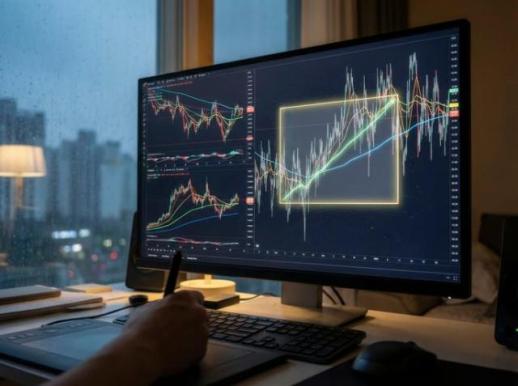 Eight out of 10 Korean retail investors pocket over $6,000 from Q1 stock cashouts SEOUL, May 11 (AJP) - Eight out of 10 South Korean retail investors who cashed out stocks in the first quarter walked away with profits, earning an average of 8.48 million won ($6,100), nearly double the 4.96 million won average loss suffered by the remaining investors, according to data released by Shinhan Securities on Monday. According to the brokerage’s analysis, Samsung Electronics provided both the joy and misery for retail investors during the first quarter. Among investors who sold Samsung Electronics shares, profitable investors recorded an average gain of 7.14 million won, while loss-making investors posted an average loss of 1.73 million won. After Samsung Electronics, the stocks that generated the largest average profits for retail investors were SK hynix with 5.94 million won, Hyundai Motor with 3.41 million won, Hanmi Semiconductor with 2.54 million won and Doosan Enerbility with 2.06 million won. Investors in their 70s and older posted the largest average gains at 18.73 million won, followed by those in their 60s with 10.11 million won. Investors in their 20s recorded the smallest gains at 1.43 million won. Male investors posted higher average gains than women, at 7.39 million won compared with 3.86 million won. The data suggests older investors were more active in taking profits during the first-quarter rally, particularly in large-cap semiconductor, nuclear-energy and defense shares that spearheaded gains in the benchmark market. South Korea’s benchmark KOSPI gained 20 percent in the first quarter. It has extended gains by another 56 percent as of Monday from the end of March amid a retail-driven frenzy led by chip and artificial intelligence-related shares. On Monday, Samsung Electronics shares rose 6.52 percent to 286,000 won, while SK hynix surged 13.23 percent to 1.909 million won, extending gains that have fueled this year’s rally. Hyundai Motor also climbed 6.04 percent to 650,000 won, while Doosan Enerbility slipped 1.62 percent to 127,500 won as of 1:53 p.m. On the tech-heavy KOSDAQ market, retail investors posted the biggest gains from stocks including Woori Technology, EcoPro, Hurim Robot and Alteogen. 2026-05-11 14:33:46
 -
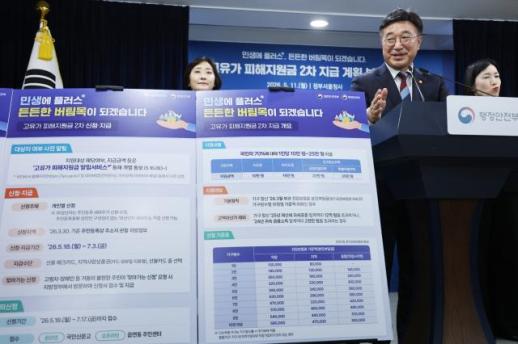 Government to Disburse Second Round of Support Payments Amid High Fuel Prices The government is set to provide a second round of support payments to alleviate the financial burden caused by high fuel prices. Approximately 36 million people in the bottom 70% income bracket will receive varying amounts of up to 250,000 won, depending on their region. On May 11, the government held a joint briefing at the Government Seoul Building to announce the details. Applications will be accepted from May 18 to July 3. The support payments will differ by region: 100,000 won for the metropolitan area, 150,000 won for non-metropolitan areas, 200,000 won for designated areas experiencing population decline, and 250,000 won for special support regions. High Asset Individuals Excluded...70% Income Threshold Based on Health Insurance Premiums While the payments target the bottom 70% of income earners, individuals with significant assets will be excluded. Households with a total property tax assessment exceeding 1.2 billion won or financial income exceeding 20 million won in 2024 will not qualify for support. The household criteria will be based on the resident registration as of March 30, 2026, but spouses and children who are dependents under health insurance will be considered part of the same household, even if they reside at different addresses. Generally, dual-income couples will be treated as separate households, but they may opt for the same household classification if it is more beneficial for insurance premium calculations. The selection criteria will be based on the health insurance premiums paid as of March 2026. The bottom 70% will be identified using standards based on the number of household members and insurance type. For instance, a single-income worker in a one-person household must have a monthly income of 1.3 million won or less, while a two-person household must have a monthly income of 1.4 million won or less. For regional subscribers, the thresholds are 800,000 won for a one-person household and 1.2 million won for a two-person household. However, to avoid disadvantaging multi-income households, the criteria will be adjusted to include one additional household member compared to single-income standards. Payments via Cards and Local Currency...Must Be Used by End of August Recipients can choose to receive the payments through credit or debit cards, local love gift certificates, or prepaid cards. If applying via card, funds will be loaded the next day and will be deducted before regular card transactions when making purchases. Mobile or card-based local love gift certificates can be applied for through local government apps or websites, while paper gift certificates and prepaid cards can be collected at administrative welfare centers in towns and villages. During the first week of applications, a designated day system will be implemented based on the last digit of applicants' birth years for both online and offline submissions. The usage area will be limited to the local government jurisdiction of the recipient's address, and the funds must be used by August 31. Spending will be restricted to stores with annual sales of 3 billion won or less, although gas stations will be exempt from this sales limit. Conversely, online shopping malls and entertainment or gambling establishments will not be eligible for use. The government will accept appeals through the National Complaint Center and administrative welfare centers. The application period for appeals will be open until July 17, and a 'visiting application service' will be available for elderly individuals or those with mobility issues, where officials will visit them directly. Yoon Ho-joong, Minister of the Ministry of Interior and Safety, stated, "This second round of support payments for high fuel prices will help alleviate the burdens faced by citizens due to high fuel costs, inflation, and exchange rates, and will serve as an opportunity to revive consumer spending. We will ensure that the application and usage processes are smooth and convenient for everyone." 2026-05-11 14:29:50
 -
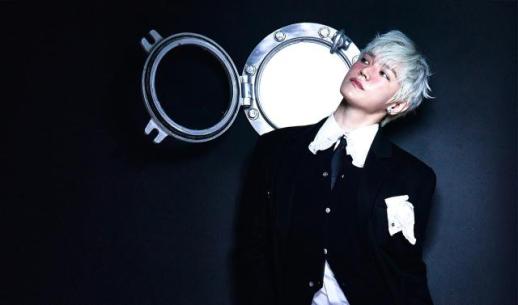 NCT's Taeyong to release first full-length solo album 'WYLD' SEOUL, May 11 (AJP) -Lee Tae-yong, the leader of NCT, will release his first full-length solo album titled WYLD on May 18, SM Entertainment said Monday. The 10-track project marks a significant milestone for the 30-year-old performer who has been a central figure in South Korea's global music expansion since his debut in 2016. The release underscores the artist's creative evolution as a producer and songwriter for both his individual projects and the wider NCT collective. Since beginning his career, Lee Tae-yong has been instrumental in shaping the experimental sound associated with SM Entertainment’s global expansion strategy. The upcoming album features the hip-hop title track WYLD alongside B-side recordings such as the alternative R&B song Mermaid. It also includes 404 Euphoria, a track that continues an ongoing musical concept series that first began with 404 File Not Found in 2023. This song drew significant interest from fans after it was previewed via a video segment during a recent concert tour. Ahead of the launch, a commemorative exhibition for the album will be held from May 16 to 18 at the Hyundai Card Music Library in the Yongsan District of Seoul. Listening sessions are also scheduled to take place at the Hyundai Card Understage on May 16 and 17. 2026-05-11 14:22:37
 -
 Shift in Japan's Stock Market Leadership: Semiconductors and Banks Rise Japan's stock market is witnessing a shift in leadership. Once dominated by automotive and telecommunications companies, the market is now being led by semiconductors, banks benefiting from rising interest rates, and general trading companies with resource interests, all of which are capitalizing on the growing demand for artificial intelligence (AI). On May 11, the Nikkei 225 index closed down 226.81 points (0.36%) at 62,486.84. The index opened at 63,203.44 and briefly rose to 63,385.04 during the day, but profit-taking led to a decline to 62,437.20, erasing earlier gains. This followed a record high closing on May 7, which contributed to the pressure at these elevated levels. According to the Nihon Keizai Shimbun (Nikkei), the number of companies with market capitalizations exceeding 10 trillion yen (approximately $93.9 billion) rose to 27 as of May 8, an increase of four from the end of last year. At one point in mid-April, this number reached 30. As the base of Japan's large-cap stocks broadens, the focus has shifted from automobiles to semiconductors, banks, and trading companies. The most notable change is in the semiconductor sector. Kioxia Holdings' market capitalization reached 24.2 trillion yen as of May 8, soaring more than 30 times from its initial public offering price of 784.3 billion yen in December 2024. Its ranking in market cap jumped from 43rd at the end of last year to 5th, surpassing major manufacturers like Hitachi and Keyence. The surge in NAND flash prices driven by AI demand has led to sharply revised profit forecasts for the fiscal year 2026 (April 2026 to March 2027). Companies related to AI and semiconductors, such as SoftBank Group, which invested in OpenAI, and semiconductor equipment firms like Tokyo Electron and Advantest, now occupy four of the top ten spots. The revival of bank stocks is also noteworthy. The three major megabanks, including Mitsubishi UFJ Financial Group, have all surpassed a market cap of 10 trillion yen for the first time in nearly 20 years. Rising interest rates, which were once a burden during deflationary periods, are now seen as a catalyst for improved profitability, changing market perceptions. General trading companies like Mitsubishi Corporation are also gaining prominence amid inflation and fluctuating resource prices, boosting their market cap rankings. From Deflation to Inflation The Nikkei highlights that rising prices are a key factor behind these changes. Tetsuro Ii, president of Commons Asset Management, stated, "The shift in Japan's economic trend from deflation to inflation is significant." As the long-standing deflationary period ends, companies find it easier to pass on rising costs and increased demand to prices, which in turn boosts expectations for revenue and profit growth, driving up stock prices. The semiconductor sector, with its soaring sales prices and rapidly expanding earnings due to strong AI investment, exemplifies this inflationary trend. In contrast, the automotive sector, once a cornerstone of the Japanese stock market, is losing its prominence. Toyota Motor Corporation retains its top position with a market cap of 46 trillion yen, but the gap with second-place companies like SoftBank and Mitsubishi UFJ is narrowing. Following Toyota's forecast of a third consecutive year of declining net income for the fiscal year 2026, the market reacted with disappointment, pushing its stock price to a year-to-date low on May 8. All three major Japanese automakers—Toyota, Honda, and Nissan—now have price-to-book ratios (PBR) below 1. The automotive sector's share of the Tokyo Stock Exchange's TOPIX index has also fallen to 5.3%, a decline of 2 percentage points over the past year, marking its lowest level since 2000. However, the Nikkei cautions that this shift in market capitalization does not necessarily indicate a restoration of Japan's stock market status. Over the past year, the growth rate of market capitalization in dollar terms has been 30.9% in the U.S. and 30.8% globally, compared to just 26.0% in Japan. Only three Japanese companies—Toyota, SoftBank Group, and Mitsubishi UFJ Financial Group—are included in the global top 100 by market cap, down from four a decade ago. As of the end of April, Japan's share of the MSCI All Country World Index (ACWI) stood at 5%, down from 7.7% ten years ago. 2026-05-11 14:18:57