
Journalist

Topher L. McDougal
-
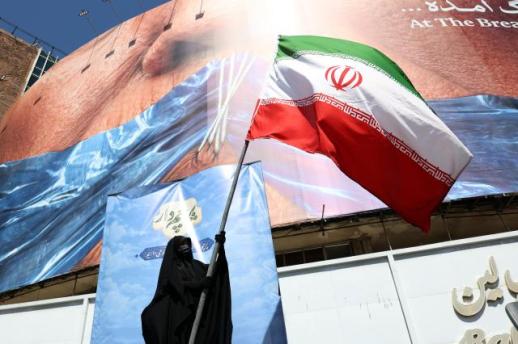 Iran Issues Warning to UAE and Kuwait Over Military Ties with U.S. Ayatollah Ali Khamenei's senior advisor has issued a strong warning regarding Gulf nations' military cooperation with the United States. On May 17, Mohammad Mohaver, the chief advisor to the Supreme Leader, criticized Gulf states on X (formerly Twitter), stating, "Iran has regarded them (Gulf nations) as friends and brothers for years, but they have compromised their independence, effectively handing over their territory and homeland to the enemies of Palestine and Iran." He added, "Iran has not fully responded to the U.S. Central Command's leased forward bases in recent conflicts, but this restraint will not last forever." The term "leased forward bases" refers to U.S. military installations in the Gulf region. Iran claims these bases have been used for military activities by the U.S. and Israel that threaten its security. Mohaver also included hashtags for Kuwait and the United Arab Emirates (UAE) in his post. The Ali Al-Salem base in Kuwait and the Al-Dhafra base in the UAE are frequently mentioned by Iran as key U.S. military facilities. Tensions have escalated recently after Kuwaiti authorities announced the arrest of four members of Iran's Islamic Revolutionary Guard Corps near Kuwait's Bubiyan Island. Additionally, the UAE's military cooperation with Israel and reports of visits by Israeli Prime Minister Benjamin Netanyahu to the UAE have further strained relations with Iran. Iran's state-run Press TV commented on Mohaver's statements, stating, "Persian Gulf nations, particularly the UAE, have become primary targets of Iranian attacks amid U.S.-Israeli aggression, and these countries are pressuring Iran through diplomatic channels."* This article has been translated by AI. 2026-05-17 19:45:00
 -
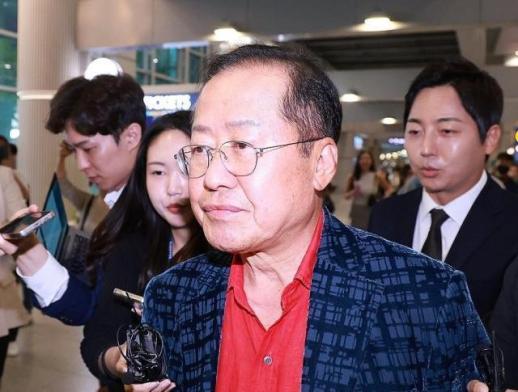 Hong Jun-pyo: People Power Party Has Become a Burden on the Public Hong Jun-pyo, the former mayor of Daegu, stated that the current People Power Party has become a burden on the public, asserting that a new form of traditional conservatism must emerge. According to Yonhap News on May 17, Hong made these remarks during a communication channel with supporters called "Dream of Youth," where he urged the formation of a new conservative party. He criticized the People Power Party, saying, "A group that has already lost its conservative identity must now disappear. The current People Power Party is a group for private interests, not national interests." In a video posted on his YouTube channel, Hong also predicted a high likelihood of victory for Democratic Party candidate Ha Jung-woo in the upcoming by-election for the Busan North District congressional seat, stating, "The top three candidates are as clear as day." After losing in the People Power Party's presidential primary last year, Hong left the party and declared his support for Kim Boo-kyum, the Democratic Party's candidate for mayor of Daegu, last month. In response, People Power Party lawmaker Kim Jang-gyeom commented on Facebook, targeting Hong. He said, "Seeing him go this far, it seems that no matter how much he spits on the conservative camp, things aren't going as he wishes." Kim referenced an article about Hong's comments and suggested that with Hong supporting Kim Boo-kyum and candidate Jeong Won-oh, it appears that candidates Choo Kyung-ho and Oh Se-hoon will likely win. He further criticized, "Isn't the term 'pseudo-conservatives' referring to those who sing 'let conservatism fail' when things don't go their way?"* This article has been translated by AI. 2026-05-17 19:24:48
 -
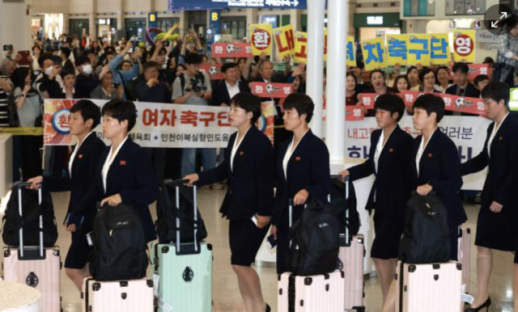 North Korean Women's Soccer Team 'Naegohyang' Arrives in South Korea After 8 Years The Naegohyang Women's Soccer Team from North Korea arrived in South Korea on May 17, 2026, for the semifinals of the 2025-2026 Asian Football Confederation (AFC) Women's Champions League (AWCL), marking their first visit in eight years. According to Yonhap News, the team landed at Incheon International Airport around 2:20 PM via a China International Airlines flight. The delegation consists of 23 players and 12 staff members, totaling 35 people. Initially, 39 individuals had received approval to visit South Korea, but four reserve players did not enter the country. The team underwent entry inspections in accordance with the Inter-Korean Exchange and Cooperation Act, with North Korean residents verifying their identities using a 'South Korea Visit Certificate' instead of a passport. The North Korean passports presented by the team were used for reference only. At the airport, groups including the Incheon North Korean Refugee Assistance Association and the Incheon Hamgyeong Province Association gathered to welcome the team, holding banners that read, "Welcome, Naegohyang Women's Soccer Team." Approximately 100 journalists and supporters were present, and around 50 security personnel were deployed to maintain order. However, the Naegohyang players and staff, dressed in dark blue suits, did not respond to greetings or questions from the media, maintaining serious expressions as they quickly moved through the airport. They exited the terminal in just over a minute, ignoring the welcoming crowd, and boarded their waiting vehicles. The bus carrying the team arrived at their hotel in Suwon, Gyeonggi Province, at 4:06 PM, escorted by police. The windows of the vehicle were heavily tinted, preventing visibility inside, and access to the hotel area was strictly controlled with police lines set up. Outside the hotel, some civic groups held banners supporting the Naegohyang team, but the players did not acknowledge them and proceeded directly to their rooms through the lobby. The check-in process was conducted separately, following a controlled route. Afterward, the team moved to a nearby outdoor training facility for a closed practice session. A privacy screen approximately 2.5 meters high was erected to block outside views, and police patrolled the area to ensure security. Some players appeared to relax slightly during training. Naegohyang is set to compete in the AWCL semifinals on May 20 at Suwon Sports Complex. On the same day, Melbourne City FC (Australia) will face Tokyo Verdy (Japan), followed by a match between Suwon FC Women and Naegohyang at 7 PM. The final will take place at the same venue on May 23. The championship prize is $1 million (approximately 14.7 billion won), while the runner-up will receive $500,000. Naegohyang is considered one of the strong contenders for the title.* This article has been translated by AI. 2026-05-17 19:16:07
 -
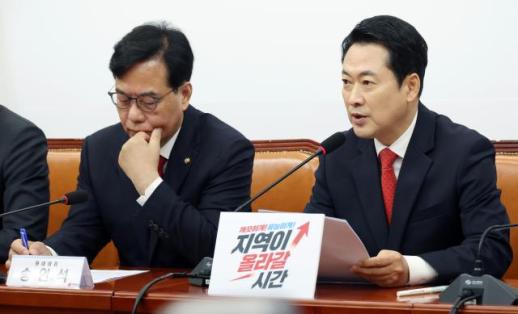 Jang Dong-hyuk Highlights 26-Year-Old 'New Millennium NHK' Incident Ahead of May 18 Commemoration On May 17, one day before the 46th anniversary of the May 18 Democratic Uprising, the People Power Party targeted the Democratic Party's 'May 18 Risk.' Jang Dong-hyuk, the party leader, referenced the 2000 New Millennium NHK incident in a Facebook post, stating, "26 years ago tonight, an incident occurred at a karaoke bar in Gwangju on the eve of May 18." The New Millennium NHK incident, revealed by former lawmaker Lim Soo-kyung, involved politicians attending a pre-May 18 event in Gwangju who were criticized for holding a drinking party at an entertainment venue. Jang noted, "I will quote Lim's revelations directly," mentioning Democratic Party candidates Song Young-gil, Woo Sang-ho, and Kim Min-seok, who were present at the gathering. He expressed concern, saying, "These individuals still occupy positions in the Democratic Party while discussing the spirit of May 18. It is disheartening," and added, "Jung Won-oh (the Democratic Party's Seoul mayoral candidate) assaulted citizens and police at a bar with hostesses. He could not answer whether there was coercion to stay overnight, and his only defense is 'May 18.'" Song Eon-seok, the party's floor leader, also mentioned the New Millennium NHK incident on his Facebook, criticizing, "The activist group gathered in Gwangju, partying with hostesses while ignoring the spirits of May. They continue to enjoy privileges while discussing 'democracy' and 'judgment' in relation to May 18." He specifically targeted Jung, stating, "The person who assaulted innocent police officers and citizens at the entertainment venue 'Ga-ae' claims he will be the mayor of Seoul while hiding behind May 18 as a righteous assailant. Today, the activist forces may still be holding drinking parties, determined to maintain their privileges." Park Chung-kwon, head of the People Power Party's central election campaign committee, condemned Jung's claim that his past assault charges were due to differing views on May 18, labeling it 'shameless.' He stated, "Hiding his crimes behind 'May Gwangju' and packaging violence as struggle is an affront to the noble sacrifices made during that time."* This article has been translated by AI. 2026-05-17 19:09:56
 -
 South Korean Foreign Minister Discusses Ship Safety with Iranian Counterpart On May 17, South Korean Foreign Minister Cho Hyun held a phone conversation with Iranian Foreign Minister Seyyed Abbas Araghchi to discuss the recent situation in the Middle East, bilateral relations between South Korea and Iran, and the safety of South Korean vessels in the Strait of Hormuz. According to the Foreign Ministry, Minister Cho explained that the South Korean government is currently conducting further investigations into the recent attack on the HMM Namoo vessel. He requested Iran's position on the facts surrounding the incident and emphasized the importance of safety and freedom of navigation for all vessels, including those from South Korea, in the Strait of Hormuz. Minister Araghchi shared Iran's perspective on the current Middle Eastern situation and expressed agreement on the need to restore safe passage in the Strait of Hormuz, stating that the standoff in the area should be resolved promptly, the ministry reported. Both ministers agreed to maintain ongoing communication to ensure the safety of South Korean vessels and crew in the Strait of Hormuz. On May 4, an explosion and fire occurred on the South Korean vessel HMM Namoo while it was in the Strait of Hormuz. Investigations revealed that the incident was caused by two unidentified projectiles. The government is currently conducting an investigation. Debris from the projectiles that struck the South Korean vessel was transported to South Korea on May 15, packed in a diplomatic pouch aboard a commercial flight from Abu Dhabi to Incheon. Separately, the government has dispatched a technical analysis team from the Ministry of National Defense, consisting of experts from ADD, to Dubai, where the HMM Namoo is being towed, to conduct a detailed examination of the hull damage. On May 13, Suh Wook, head of the National Security Office, stated during a meeting with the Editors' Association that regarding the projectiles that collided with the Namoo in the Strait of Hormuz, "We need to consider the results of the investigation so far and conduct further inquiries. It could be a drone or a missile; various possibilities are open at this stage." In response to concerns about why Iran has not been specifically identified as responsible, he explained, "Just because there are circumstances or suspicions does not mean we can blame another country. We need to conduct more investigations and avoid making assumptions. It is customary not to speculate."* This article has been translated by AI. 2026-05-17 18:22:52
 -
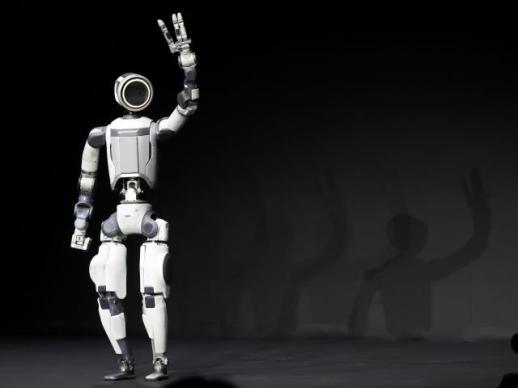 Korea Leverages Manufacturing Strengths in Physical AI Development As the United States and China advance in physical artificial intelligence (AI), experts agree that South Korea must actively leverage its existing industrial assets to develop physical AI technologies and utilize competitive manufacturing test beds to lead in validation and commercialization. According to industry sources on May 17, both the U.S. and China are focusing on the potential of physical AI to counteract declining manufacturing competitiveness due to high labor costs and low birth rates, consolidating national resources for technology development and commercialization. Reports from Japan's Nikkei Business and the U.S. Nexis Lexis estimate that South Korea ranks third in physical AI competitiveness, significantly behind the U.S. and China. While it possesses independent humanoid robot technology that is commercially viable and maintains strong competitiveness in industrial robotics, it lacks the extensive physical AI platforms of the U.S. and China and faces fierce competition from Japan, which has overwhelming industrial robot capabilities. The U.S. leads the market with major tech companies like NVIDIA, Tesla, Figure AI, and Amazon, while firms like Google and Microsoft, which previously focused on language model-based AI, have accelerated their research and development in physical AI and robotics since last year. In China, companies such as Baidu, Huawei, and Tencent ranked first to third in global physical AI patent applications last year, while startups like Unitree, Agibot, and Ubitech are commercializing various forms of robots, including humanoids, supporting the industrial ecosystem. In South Korea, companies like Boston Dynamics (Hyundai Motor), Rainbow Robotics (Samsung Electronics), LG Electronics (LG AI Research), HD Hyundai Robotics, Hanwha Robotics, and Doosan Robotics are investing heavily in physical AI development to enhance global competitiveness. The Software Policy Research Institute (SPRi) classifies physical AI into four categories: humanoids, autonomous vehicles, drones, and AGVs & AMRs (collaborative and mobile robots). Among these, humanoids have the advantage of being able to work alongside humans or replace them directly in labor settings, unlike other physical AI that requires dedicated robotic spaces. Morgan Stanley predicts that humanoids based on physical AI will expand beyond manufacturing and logistics into services and homes, forecasting that the related market will grow at an annual rate of 63%, reaching $38 billion (approximately 57 trillion won) by 2035. SPRi and the Korea Intelligent Information Society Agency view South Korea as having the potential to stand shoulder to shoulder with leading countries like the U.S. and China in the physical AI industry. The country boasts world-class manufacturing facilities in sectors like semiconductors, automotive, and shipbuilding, enabling the real-time collection and refinement of vast and precise data for robotic learning. Hyundai and Kia are accelerating the commercialization of unmanned factories utilizing Boston Dynamics' humanoid Atlas, a level of advancement achieved only by Hyundai and Tesla. Unlike generative AI, which requires high intelligence for white-collar job replacement, physical AI relies on cognitive AI technologies to accurately assess and respond to on-site conditions. Advanced sensor technology is crucial for this purpose. The LG Group is consolidating its capabilities in sensor technology for physical AI through collaboration among LG Electronics, LG Innotek, and LG CNS. The focus is on equipping robots with cameras and LiDAR sensors to analyze data, enabling AI to make optimal decisions. To achieve precise movements similar to humans, humanoids require a large number of servo motors. Servo motors are ultra-precise motors capable of controlling position, speed, and acceleration according to AI commands. While this field is primarily led by Japanese materials, components, and equipment manufacturers, many South Korean companies, led by LS Electronics, are also accelerating their efforts to secure competitiveness in this area.* This article has been translated by AI. 2026-05-17 18:16:55
 -
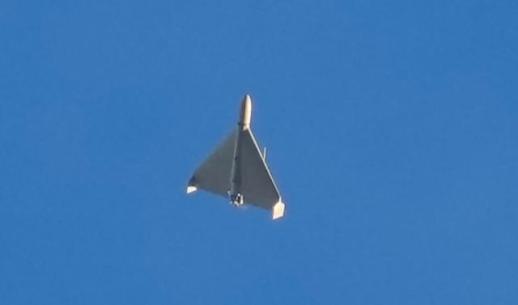 South Korea's Defense Industry Struggles in Attack Drone Market The presence of the Iranian Shahed-136 kamikaze drone is increasingly felt on the global battlefield. Recent reports suggest that this low-cost drone may have been used in a recent attack, highlighting the renewed threat posed by such drones. As drones emerge as a key element in modern warfare, South Korea's defense industry is still in the early stages of responding to the attack drone market. According to the defense industry on May 17, major companies and startups in South Korea, including Korea Aerospace Industries (KAI), are developing small attack drones. At the Drone Show Korea 2026 earlier this year, KAI unveiled its I-type small kamikaze drone designed for armored targets and II-type small kamikaze drone for personnel. LIG Defense and Aerospace showcased an AI-based swarm drone under development in collaboration with the Defense Science Research Institute. These drones represent a step forward from existing interception and anti-drone systems to more offensive capabilities. However, industry insiders cite a significant limitation in the development of attack drones: a lack of market viability and profitability. This year, the Ministry of National Defense allocated approximately 148.4 billion won ($112 million) for drone projects out of a total defense budget of 19.9653 trillion won ($15 billion). A substantial portion of this budget is earmarked for reconnaissance and surveillance, leaving limited investment for attack and expendable drones. The role of attack drones in defense projects remains minimal. One industry official stated, "We are focusing on developing unmanned systems that can be used in manned-unmanned hybrid systems, but we still face limitations in terms of mass production and price competitiveness." Smaller startups are facing similar challenges. Nears Lab, a maker of swarm AI drones, reported a revenue of 6.6 billion won ($5 million) and an operating loss of 16.6 billion won ($12.5 million) last year. The company recently secured a $10 million contract in the Middle East, seeking a turnaround, but profitability remains elusive. Another startup, Pablo Aviation, recorded a revenue of 10.9 billion won ($8 million) and an operating loss of 14.5 billion won ($11 million) last year. Moreover, South Korea's drone industry still relies heavily on Chinese components. Currently, many parts used in domestic drones, including batteries, motors, controllers, GPS, and cameras, are sourced from China, except for flight controllers. If these components were to be localized, they might lose price competitiveness compared to Chinese products. The government has secured a budget of 33 billion won ($25 million) this year to train 500,000 drone operators. The Ministry of National Defense plans to purchase 11,265 commercial small drones for training, distributing at least one to each squad in major army field units and training institutions. However, industry experts point out that the actual operational systems and regulations for battlefield use are still in their infancy. Kim Seung-yeon, president of the Korea Drone Utilization Association, remarked, "The domestic drone industry is realistically expanding primarily in the fields of information verification and surveying. For drones to be effectively utilized in combat, there needs to be an expansion of business scale and the establishment of conditions for soldiers to obtain drone operation certifications."* This article has been translated by AI. 2026-05-17 18:15:00
 -
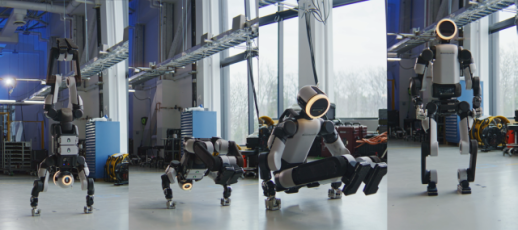 Boston Dynamics Accelerates Industrial Robot Market with Atlas Hyundai Motor Group's robotics subsidiary, Boston Dynamics (BD), is ramping up its efforts to penetrate the industrial robot market with its humanoid robot, Atlas. The company has already established a strong foothold in the industry with its quadrupedal robot Spot and logistics robot Stretch, leveraging decades of operational experience and a vast testing ground within the group. However, building a production system for Atlas and improving profitability remain significant challenges.According to industry sources, BD is focusing on advancing the technology needed to deploy the prototype of the bipedal robot Atlas, which garnered attention at CES 2026 in January, into manufacturing settings.The foundation of BD's commercialization strategy lies in the robot hardware and motion control technologies it has developed over decades, along with operational experience gained in industrial environments. While Chinese startups excel in cost and production speed, and U.S. AI companies have strengths in software capabilities, BD's competitive edge is its ability to commercialize various technologies and demonstrate their effectiveness in real production processes. Notably, Spot and Stretch have already been supplied to several companies, proving their utility in the field.Another advantage is BD's high accessibility to manufacturing sites. The company plans to utilize major production hubs, such as Hyundai Motor Group's Meta Plant America in Georgia in 2028 and the Kia plant in Georgia in the second half of 2029, as initial testing grounds for Atlas. This could establish a trust base for expanding its external client base.However, there are considerable hurdles to overcome before Atlas can be commercialized. BD aims to establish a production system capable of manufacturing 30,000 units annually by 2028, but it has yet to create a stable profit structure. Last year, BD's revenue reached 150.1 billion won, a 30% increase from the previous year, but it recorded a net loss of 528.4 billion won, widening the loss by about 20% compared to 2024 (440.5 billion won).Additionally, the possibility of an initial public offering (IPO) next month has increased management uncertainty. The plan is to secure investment funds for establishing the Atlas production system through the IPO, but if the company fails to enter a profit-making phase post-listing, its corporate value could plummet.When Hyundai Motor Group acquired BD from SoftBank in June 2021, a put option clause was established. If BD does not go public within four or five years after the acquisition, Hyundai Motor Group is obligated to buy back the 20% stake held by SoftBank at a pre-agreed price. The deadline for this option is next month, and if exercised, it could increase Hyundai Motor Group's burden of additional share purchases.Ultimately, for BD to dominate the humanoid market, it must translate its strong brand recognition and technological prowess into actual profits. Securing external clients quickly will also be crucial for successfully integrating Atlas into manufacturing environments. An industry insider stated, "Stably deploying Atlas in the field and converting that into recurring revenue is essential. The results from testing at Hyundai Motor Group's production sites will be a turning point for securing external clients." 2026-05-17 18:13:15
 -
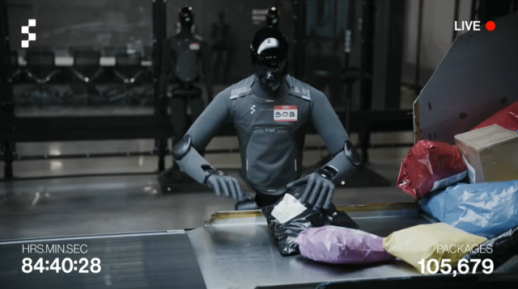 K-Physical AI: Concerns Grow Over South Korea's Position in US-China Tech Race Global attention is focused on an experiment by a prominent physical artificial intelligence (AI) startup, which aims to demonstrate that humanoid robots can replace human labor in manufacturing and logistics. As competition in physical AI technology intensifies among major countries, experts warn that South Korea has limited time to secure a leading position. According to industry sources, FigureAI, recognized as one of the top three humanoid robot companies alongside Tesla and Boston Dynamics (a Hyundai Motor Group subsidiary), has been conducting an experiment since May 13, 2026, to perform logistics sorting tasks solely with robots, without human intervention. The humanoids at FigureAI have worked continuously for 24 hours, sorting over 100,000 packages in 82 hours. Three robots, named Gary, Bob, and Rose, operated in shifts, working for 8 to 20 hours before undergoing charging and maintenance before returning to work. The duration of the experiment remains uncertain. Brett Adcock, CEO of FigureAI, stated on social media platform X, "We plan to run them until they break down. Watch the robots work autonomously 24/7." Adcock also mentioned plans for a future project comparing efficiency between humans and robots in the same tasks. However, some shortcomings have been noted. The robots achieved only half the efficiency of skilled human workers and occasionally dropped items during sorting. Nevertheless, experts have expressed astonishment at the level of physical AI technology in the U.S., noting that the robots performed naturally in a real working environment, not just in a lab setting. They do not take breaks for meals or smoking, and notably, they do not strike. The implications of this experiment are expected to be significant, comparable to the historic Go match between Lee Sedol and AlphaGo. It confirms the potential for physical AI and humanoid robot technology to replace blue-collar jobs. As the U.S. and China lead the physical AI competition, the need for the South Korean government and businesses to unite in enhancing technological competitiveness and accelerating commercialization has become increasingly urgent.* This article has been translated by AI. 2026-05-17 18:12:31
 -
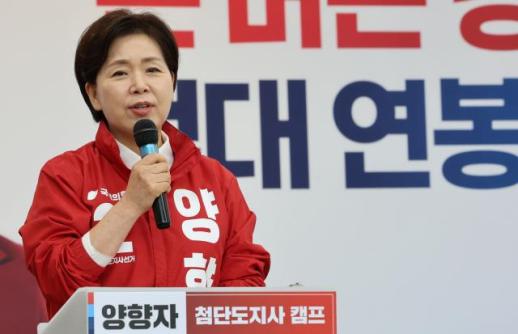 Semiconductors Become a Hot Topic in Local Elections Semiconductors have emerged as a critical issue in the upcoming local elections. With stocks of semiconductor companies like Samsung Electronics and SK Hynix soaring, public interest has surged around topics such as national dividends, union strikes, and the implementation of a special semiconductor law. On May 17, candidates for Gyeonggi Province’s local and district offices from the People Power Party held a press conference at the party's headquarters in Suwon. They voiced strong criticism regarding the government's proposed implementation guidelines for the special semiconductor law, which reportedly includes a requirement that semiconductor clusters be located outside the Greater Seoul area. This has sparked complaints of "discrimination against the Greater Seoul area" from candidates representing southern Gyeonggi cities such as Icheon, Yongin, Suwon, Hwaseong, Pyeongtaek, and Ansung. The southern Gyeonggi region is a key hub for the domestic semiconductor industry, housing significant manufacturing, materials, components, equipment, research and development (R&D), specialized personnel, and infrastructure. Yang Hyang-ja, the People Power Party candidate for Gyeonggi Governor, stated, "Semiconductors are not just an industry; they are the future of South Korea and a core national security industry. We need to achieve balanced development by enhancing existing industrial bases while also nurturing new ones." Yang, who began her career as a research assistant in Samsung's semiconductor memory design department in 1985 and rose to an executive position in 2014, warned that excluding the Greater Seoul area from the semiconductor cluster could disrupt the supply chain concentrated there. She noted, "Countries like the U.S., Taiwan, and Japan are consolidating national resources around existing semiconductor hubs. If we exclude Gyeonggi Province, we cannot maintain our global competitiveness." Participants at the press conference issued a joint statement calling for the removal of the clause excluding the Greater Seoul area from the semiconductor cluster, the realistic establishment of criteria for semiconductor cluster designation, the application of regulatory exceptions for national strategic industries to existing semiconductor production bases, and a dual strategy of enhancing existing semiconductor production bases while developing new ones. Political analysts suggest that semiconductor issues are heating up the local elections. The significant profits generated for shareholders by semiconductor companies like Samsung Electronics and SK Hynix, which have driven growth in the domestic stock market, are seen as a key factor. Many individual investors hold shares in these companies, making any factors affecting their stock prices a nationwide concern. Given the economic impact of semiconductor factories on Gyeonggi Province, the proposed guidelines could significantly influence public sentiment in the region. The demands from candidates like Yang for clear positions from Democratic Party candidates are closely related to this context. Additionally, political disputes over accountability for recent setbacks in the semiconductor industry have been recurring. On May 12, Kim Yong-beom, head of the Presidential Policy Office, suggested returning excess corporate tax revenue from the semiconductor boom to the public in the form of national dividends, which drew criticism from conservative factions. Park Chung-kwon, spokesperson for the People Power Party's central election committee, condemned the proposal as a "state-led declaration of plunder," arguing that it undermines the foundations of a market economy and threatens to regress South Korea into a communist-style distribution system. The ongoing tensions between Samsung Electronics and its union, which has announced a strike, could also impact voter sentiment in the local elections. Given the nature of the semiconductor industry, the losses from a strike could be substantial. Concerns are rising in the industry that a disruption in supply stability could lead to diminished customer trust and weakened global competitiveness. If this results in a drop in stock prices, it could lead to a loss of shareholder confidence nationwide. A political insider remarked, "Given the recent stock market trends, a decline in Samsung Electronics and SK Hynix stock prices could directly affect public sentiment. If these events lead to a significant drop in stock prices, it could shift the focus from political disputes to fundamental economic issues, influencing voter behavior."* This article has been translated by AI. 2026-05-17 18:11:21