
Journalist

Topher L. McDougal
-
 Lotte Energy Materials Sells 90% Stake in Lotte EcoWill to Relson Private Equity 롯데에너지머티리얼즈가 릴슨프라이빗에쿼티와 주식매매계약을 체결하고 롯데에코월 지분 90%를 매각한다고 22일 밝혔다. Lotte Energy Materials announced on May 22 that it has signed a stock purchase agreement with Relson Private Equity to sell a 90% stake in Lotte EcoWill. The company specializes in curtain wall construction, which involves creating a separate glass exterior wall outside concrete walls. Last year, Lotte EcoWill reported approximately 130 billion won in sales and an operating profit of about 12 billion won, with an EBITDA exceeding 10%, indicating strong cash generation capability. Lotte Energy Materials stated, "We decided to proceed with this sale to adjust our business portfolio toward future materials." The company plans to concentrate more on securing the future competitiveness of its core copper foil business. The funds raised from this sale will be utilized for investments in four high-value-added product portfolios: AI circuit foils for data centers, ultra-thin foils for semiconductors, battery foils for energy storage systems (ESS), and battery foils for existing electric vehicle batteries. At its Iksan plant in South Korea, Lotte Energy Materials aims to expand its production capacity for AI circuit foils from the current 3,700 tons to a total of 16,000 tons by 2027. The Malaysian plant will also focus on increasing production of battery foils for ESS, laying the groundwork for a structural turnaround this year. Lotte's chemical division is undergoing a business restructuring to strengthen its core competitiveness. The company is continuing to reorganize its domestic basic materials business and divest unrelated operations while focusing on expanding functional materials and high-value businesses, striving to transition to a business model centered on advanced technology materials. Additionally, Lotte Energy Materials announced last month that it would invest approximately 50 billion won in its Iksan plant, the only domestic production base for circuit foils, to complete the material industry value chain. Despite challenging market conditions due to the electric vehicle sector, the company is making bold investments to secure future competitiveness and restructure its business.* This article has been translated by AI. 2026-05-23 19:09:58
 -
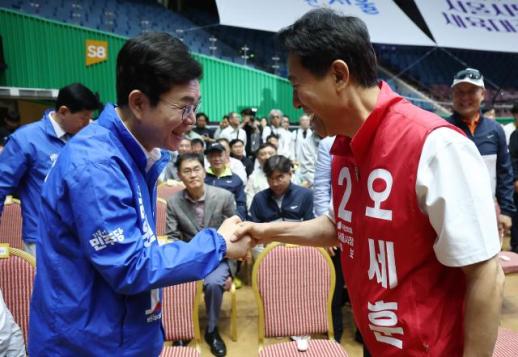 Oh Se-hoon Leads Jung Won-o in Tight Seoul Mayor Race As the local elections approach in 12 days, the race for Seoul mayor is becoming increasingly competitive. Recent polling indicates that Oh Se-hoon, the candidate from the People Power Party, is narrowly leading Jung Won-o of the Democratic Party within the margin of error, making him a key player in the final stretch of the campaign. According to a poll released on May 22, Oh garnered 44.8% support, while Jung received 42.0%. The gap between the two candidates stands at 2.8 percentage points, which falls within the margin of error of ±3.1 percentage points. The survey, conducted by ResearchWell on behalf of New Daily from May 20 to 21, included responses from 977 residents of Seoul aged 18 and older. In this poll, Kim Sung-cheol from the Reform Party received 2.1%, while other candidates collectively garnered 2.6%. Additionally, 6.1% of respondents indicated they did not support any candidate, and 2.4% were unsure. Support for the candidates varied by gender, with Oh performing better among male voters and Jung receiving more support from females. Oh led with 50.5% among men, compared to Jung's 38.7%. Conversely, Jung had 45.0% support among women, while Oh received 39.6%. Age demographics also showed distinct patterns. Jung was favored among voters in their 40s and 50s, while Oh had strong support among those in their 20s, 30s, and seniors over 70. Notably, Oh achieved over 50% support in the 30s (57.1%) and among seniors (51.2%). Jung, on the other hand, received 58.5% support from voters in their 40s and 57.7% from those in their 50s. Regionally, Oh's advantage was particularly pronounced in the southeastern districts, a traditional conservative stronghold. In the four districts of Seocho, Gangnam, Songpa, and Gangdong, Oh received 52.0% support, leading Jung by 13.6 percentage points (38.4%). In contrast, in the first district, which includes Jongno, Jung received 43.0%, slightly ahead of Oh's 40.1%. When asked about their reasons for supporting the candidates, both groups exhibited significant 'negative preference' dynamics. Among Jung's supporters, 28.8% cited dislike for the People Power Party, while 27.3% supported him because they liked President Lee Jae-myung, and 22.4% liked Jung himself. For Oh's supporters, 29.7% indicated they were motivated by dislike for President Lee, 27.8% liked Oh, and 17.1% disliked the Democratic Party. Regarding past allegations of violence against Jung, 43.6% of Seoul residents felt that further clarification was necessary. Only 17.8% believed the issue had been sufficiently addressed, while 18.9% thought it did not require clarification as it was a political attack. Meanwhile, 54.1% of Seoul residents rated President Lee's governance positively, while 39.5% expressed disapproval. Party support showed the Democratic Party at 41.0% and the People Power Party at 36.8%. The survey utilized automated response technology (ARS) with wireless virtual numbers provided by three telecommunications companies, achieving a response rate of 5.9%. The margin of error is ±3.1 percentage points at a 95% confidence level. More details can be found on the Central Election Polling Review Committee's website.* This article has been translated by AI. 2026-05-23 19:06:00
 -
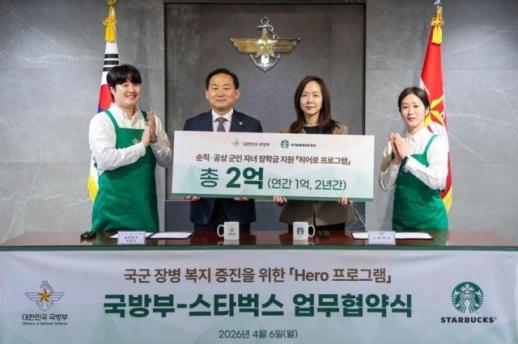 Defense Ministry Suspends Collaboration with Starbucks on Soldier Welfare Program The Defense Ministry has temporarily suspended its collaboration with Starbucks Korea on a soldier welfare program following criticism that the company trivialized the May 18 Democratic Uprising by hosting a 'Tank Day' event. A Defense Ministry official stated on May 22, "We have decided to temporarily suspend and postpone the beverage support project for remote military units in collaboration with Starbucks Korea." The official added, "We will carefully determine the direction of this matter, considering public sentiment and Starbucks Korea's social responsibility." Last month, the Defense Ministry entered into a memorandum of understanding with Starbucks Korea for the 'Hero Program,' which aimed to provide beverage support for remote military units, scholarships for children of deceased or injured soldiers, and employment support programs for soldiers about to be discharged. Starbucks Korea faced backlash for using phrases like 'Tank Day' and 'Desk Tapping' during a tumbler promotion in May, which were seen as mocking the May 18 Democratic Uprising and the torture and death of activist Park Jong-cheol. The company subsequently canceled the promotion. As a result of the controversy surrounding Starbucks Korea's 'Tank Day' marketing, a boycott movement has emerged across society, including among government officials. On the previous day, Minister of the Interior and Safety Yoon Ho-jung posted on X (formerly Twitter), stating, "In light of this situation, the Ministry will not provide products from companies that trivialize or commercialize the history and values of democracy." Earlier on the same day, Minister of Veterans Affairs Kwon Oh-eul expressed his deep regret regarding Starbucks Korea's marketing related to the May 18 Democratic Uprising. Following the controversy, the Veterans Affairs Ministry reportedly issued internal guidelines to refrain from using Starbucks gift cards and other products in its events for the next two to three years.* This article has been translated by AI. 2026-05-23 19:03:26
 -
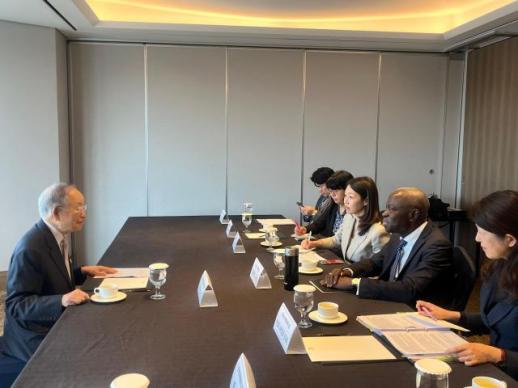 Korean Business Leader Warns of Samsung Electronics Bonus Controversy Sohn Kyung-sik, Chairman of the Korea Employers Federation, raised concerns on May 22 about the potential escalation of labor disputes stemming from the ongoing bonus controversy at Samsung Electronics. During a meeting in Seoul's Lotte Hotel with Gilbert Houngbo, Director-General of the International Labour Organization (ILO), Sohn discussed the Samsung bonus issue and ongoing domestic matters, including artificial intelligence (AI) collaboration initiatives. This year, Samsung Electronics is projected to achieve an operating profit of approximately 300 trillion won, prompting labor unions to demand a share of the company's profits. Sohn expressed that "the semiconductor industry requires substantial upfront investments" and warned that widespread demands for profit sharing could introduce uncertainties for corporate management and the national economy. He added, "Even after agreements, internal conflicts regarding equity among divisions continue," noting that such movements could exacerbate tensions not only between companies and industries but also within Samsung itself. The meeting between Sohn and Houngbo was part of a collaborative effort for a 'Global AI Hub' that the South Korean government is pursuing. A joint statement regarding the establishment of this hub, involving nine international organizations including the ILO, was released on May 21. Sohn remarked, "It is significant for Korea, a leader in AI technology, to play a pivotal role in global AI collaboration," emphasizing that the federation is actively participating in social dialogue with labor and government to effectively respond to the AI transition. He also mentioned plans to attend the ILO conference in Geneva next month, expressing hope that discussions would balance the perspectives of various countries and stakeholders.* This article has been translated by AI. 2026-05-23 19:00:53
 -
 Justice Ministry Orders Review of Starbucks 'Tank Day' Controversy The Justice Ministry has instructed the Supreme Prosecutors' Office to review the status of events related to Starbucks' 'Tank Day' promotion amid ongoing controversy. On May 22, the ministry announced in a press release that it had directed the Supreme Prosecutors' Office to assess the status of surveys, contests, and events utilizing the promotional items. However, in response to reports from multiple media outlets suggesting potential disciplinary actions against purchasers of the promotional items, the ministry stated, "This is completely untrue." A ministry official added, "We have never conducted an event using Starbucks products before, so disciplinary actions are out of the question." Earlier, several media outlets, including TV Chosun, reported that the Justice Ministry had instructed the Supreme Prosecutors' Office to report on the purchase records of Starbucks products. The reports indicated that the ministry requested details specifically for items such as Starbucks tumblers, gift cards, and e-gift certificates, excluding simple coffee purchases. The controversy surrounding Starbucks' 'Tank Day' promotion erupted on May 18, prompting strong criticism from government officials, including President Lee Jae-myung, Justice Minister Jeong Sung-ho, and Minister of the Interior and Safety Yoon Ho-jung. This has led to a widespread boycott of Starbucks within government circles. Minister Yoon declared a de facto boycott of Starbucks on social media the day before, stating, "We will not provide products from companies that trivialize the history and values of democracy or exploit them for commercial purposes." Minister Jeong also expressed on social media on May 20, "If the ruling and opposition parties had agreed to include the spirit of May 18 in the constitutional preamble just 13 days ago, and if it had passed through the National Assembly, such an outrageous act as Starbucks' 'Tank Day' would not have even been conceivable. The path to restoring justice and common sense is long and arduous, but the Justice Ministry will fulfill its responsibilities."* This article has been translated by AI. 2026-05-23 18:58:11
 -
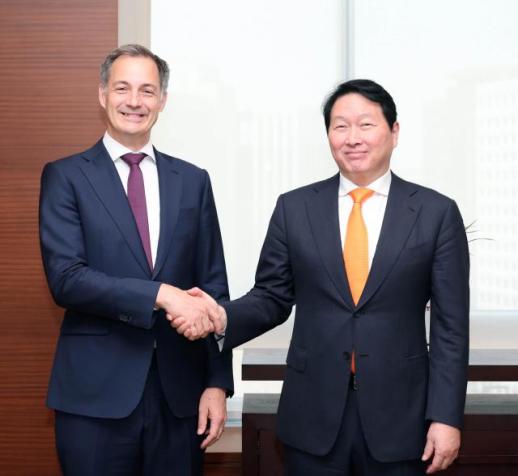 SK Group Chairman Choi Tae-won Meets UNDP President De Croo to Discuss Private Sector Role in Global Development Choi Tae-won, Chairman of the Korea Chamber of Commerce and Industry (KCCI), met with Alexander De Croo, the newly appointed President of the United Nations Development Programme (UNDP), on May 22 at the KCCI headquarters in Seoul. They discussed expanding the role of the private sector in global development cooperation and ways to create social value. The UNDP is a UN agency responsible for planning and managing projects aimed at economic and social development in developing countries. De Croo, who took office in December 2022, previously served as the Prime Minister of Belgium. The meeting included Choi, along with Lee Hyung-hee, Vice Chairman of the Seoul Chamber of Commerce and Industry and SK Group, and De Croo, accompanied by Anne Jupe, Director of the Seoul Policy Center. Choi stated, "The complex global challenges we face today, such as regional extinction, polarization, and climate crises, cannot be solved by governments or international organizations alone. I hope that the KCCI's execution capabilities combined with the UNDP's global network will lead to tangible changes based on a common language of social value." Choi specifically requested UNDP's participation and interest in the upcoming '3rd Korea Social Value Festa' scheduled for September. The Social Value Festa is an event where businesses, governments, international organizations, and civil society come together to seek solutions to social issues and sustainable growth. He suggested, "Let’s co-plan a global session linked to the UNDP strategy to spread awareness." De Croo introduced the UNDP's strategic plan, emphasizing the necessity of collaboration with private enterprises in key areas such as artificial intelligence, digital transformation, climate response, governance, and sustainable finance. He urged Korean companies, including SK, to take a more active interest in the UNDP's various public-private cooperation activities. Choi has consistently discussed ways to link social value with economic growth. In March, he participated in the '2026 Value and Growth Forum,' where he emphasized, "A new growth model is possible only if businesses, governments, and civil society work together."* This article has been translated by AI. 2026-05-23 18:55:33
 -
 Internet Banks Exceed 30% Loan Share for Low-Credit Borrowers in Q1 최근 '체리피킹' 지적을 받은 인터넷전문은행 3사가 올해 1분기 중저신용자 대출 비중 목표치를 일제히 웃돈 것으로 나타났다. 비금융 데이터를 활용한 대안신용평가모형을 앞세워 금융취약계층에 대출 공급을 확대하는 등 포용금융 강화에 속도를 내는 모습이다. 22일 금융권에 따르면 카카오뱅크는 올해 1분기 중저신용자(개인 및 개인사업자)에게 4500억원 규모의 신용대출을 공급했다. 2017년 7월 출범 이후 카카오뱅크가 취급한 중·저신용 대출은 누적 16조원에 달한다. 1분기 중·저신용자 대출 잔액 비중은 32.3%, 신규 취급 비중은 45.6%로 각각 목표치인 30%, 32%를 상회했다. 케이뱅크도 1분기 중저신용자 신용대출 평균잔액 비중 31.9%, 신규 취급액 기준 비중은 33.6%를 기록했다. 1분기 민간중금리대출 공급액은 2450억원으로 인터넷은행 가운데 가장 많았다. 출범 이후 누적 중저신용자 신용대출 공급액은 8조6600억원이다. 토스뱅크의 중저신용자 대출 비중은 34.7%, 신규 취급액 비중은 34.4%다. 출범 이후 누적 중저신용자 고객 수는 35만8484명이다. 인터넷은행들은 비금융·대안정보를 활용한 자체 신용평가모형(CSS) 고도화를 통해 중저신용자 대출 공급을 확대하고 있다. 금융당국의 가계대출 관리 기조가 이어지고 있는 가운데 최근 김용범 청와대 정책실장이 인터넷은행을 향해 '체리피킹'이라고 저격한 만큼 포용금융 역할을 강화한다는 방침이다. 중저신용자의 신용 개선 효과도 이어지고 있다. 카카오뱅크는 중신용대출 이용 고객의 52%가 대출 실행 후 1개월 내 신용점수가 상승했다고 설명했다. 평균 상승 폭은 49점이었다. 케이뱅크도 중저신용자 대상 상품인 '신용대출 플러스' 이용 고객 가운데 48.4%의 신용점수가 평균 46점 상승했다. 토스뱅크에서 대출을 받은 중저신용자 중 46%는 평균 43점 올랐다.* This article has been translated by AI. 2026-05-23 18:54:00
 -
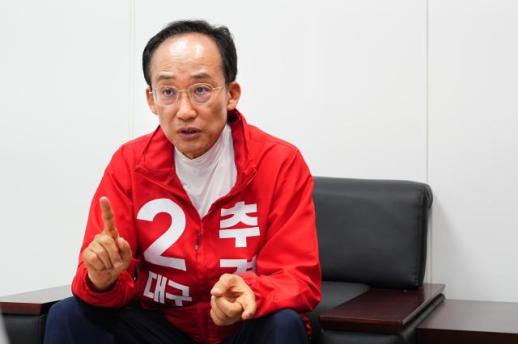 Choo Kyung-ho: Revitalizing Daegu's Economy with AI, Robotics, and Semiconductors "The Daegu mayoral election ultimately comes down to who can revive the Daegu economy. From day one, I will be a 'professional economic mayor' who works efficiently," said Choo Kyung-ho, the candidate for mayor from the People Power Party, during an interview with Aju Economy at his campaign office in Daegu's Suseong District. Choo emphasized that "Daegu cannot simply improve slightly," stating that a "complete overhaul of the Daegu economy" is necessary. He aims to create a city that attracts money and talent, proposing AI, robotics, future mobility, biotechnology, and semiconductors as the five key future industries for Daegu. Choo, a former economic bureaucrat, has held positions including First Vice Minister of the Ministry of Economy and Finance, Director of the Office for Government Policy Coordination, and Minister of Economy and Finance. He has also served as a member of the National Assembly representing Daegu's Dalseong District. The current state of Daegu's economy is challenging. According to the first quarterly real Gross Regional Domestic Product (GRDP) statistics released by the National Data Agency, Daegu's economy shrank by 3.9% in the first quarter of this year compared to the same period last year, the largest decline among all cities and provinces in the country. In the second quarter, Daegu's GRDP also fell by 3.2% year-on-year, contrasting with the 1.9% growth recorded in Gyeongbuk, which ranked third in national growth rates. This highlights the dual challenges of low growth and delayed industrial restructuring facing Daegu's economy. Choo attributed these issues to a failure to adequately respond to changes in industrial structure. He noted, "In the past, Daegu was a city that led South Korea's industrialization centered on textiles and manufacturing. However, as the industrial paradigm shifts toward AI, semiconductors, and digital technologies, we have not secured sufficient new growth engines." He added that the structure in which businesses, talent, and capital are drawn to the capital region has also stifled Daegu's economy. Choo outlined four key initiatives: Industrial Structure Innovation: He plans to foster advanced industries such as AI, robotics, future mobility, biotechnology, and semiconductors while enhancing the competitiveness of existing industries like machinery and textiles through smart technology and value addition. He also aims to focus on service industries favored by young people, including healthcare, culture, tourism, gaming, and content. Creating a Startup City: Choo intends to establish a "three major deep-tech startup belt" connecting Suseong Alpha City, Shinseo Innovation City, and Technopolis. He also plans to create a 1 trillion won startup fund to nurture unicorn companies. Attracting Large Corporations for Quality Job Creation: Choo stated, "I will promote Daegu as the second semiconductor industrial cluster following Yongin," aiming to attract companies like Samsung, SK Hynix, Hyundai Motor, and data centers to create a structure that prevents youth from leaving the city. He emphasized that the lack of good jobs is a common concern among Daegu citizens, stating, "To tell young people to come back, we must first create jobs worth returning to." Building a Super-Regional Economic Zone Centered on the New TK Airport: Choo plans to promote the new airport as a national industry and integrate the regional transportation network and administrative systems of Daegu and Gyeongbuk to develop them into a single economic zone. He remarked, "The airport is not just a transportation facility; it is an economic infrastructure that transforms logistics, industry, tourism, and housing," adding that to overcome the limitations of being an inland city, Daegu must redraw its industrial map centered around the new airport. Regarding his differences with rival candidate Kim Boo-kyum, Choo stated, "Anyone can make promises. What matters is whether they can actually execute them." He highlighted his experience in emergency economic meetings, drafting supplementary budgets for people's livelihoods, attracting investments, and establishing structures like the AX Committee and Daegu-style contract departments as evidence of his leadership and execution capabilities. The upcoming Daegu mayoral election is being viewed as a competitive race, contrasting with the city's traditional conservative stronghold. Choo acknowledged, "I take seriously that citizens are disappointed and worried about the political arena." He noted, "The era when a specific party automatically receives votes is over. Citizens are now looking more critically at 'who can save Daegu' and 'who can deliver results.'" When asked about his relationship with the Lee Jae-myung government and ruling party, Choo stated, "I do not intend to be a mayor who confronts the central government simply because we belong to different parties." He emphasized that the mayor of Daegu is an administrator responsible for the lives of citizens, stating, "We cannot abandon Daegu's projects just because the administration is different, nor can we simply ask for favors without a solid plan." Choo highlighted his 35 years of bureaucratic experience and his role as a former Deputy Prime Minister as his strengths. He stated, "Budgets do not come simply by asking for them. They require precise project design, feasibility, and budget strategy." He added, "I know what needs to be prepared in which department and where bottlenecks occur," and expressed his intention to leverage his central government experience and network to enhance Daegu's negotiating power. Choo also mentioned his proposal for a "joint council for the development of Daegu's economy" to Kim. He stated, "Issues like the TK New Airport and the administrative integration of Daegu and Gyeongbuk should be pursued beyond party lines," asserting that party affiliation is less important than the interests of Daegu. He pledged to cooperate where possible and to demand what is necessary firmly. Finally, when asked what message he would like to convey to citizens who have not yet decided on a candidate, Choo said, "I deeply understand the urgency and frustration of citizens regarding Daegu's economic difficulties." He emphasized, "However, despair alone will not change anything. The most important thing now is to regain confidence that we can succeed." Choo concluded, "I, Choo Kyung-ho, who truly understands the economy, will definitely revive Daegu's economy. The achievements I made in attracting businesses and creating jobs in Dalseong will now be expanded throughout Daegu." He assured, "I will restore Daegu's pride and confidence." * This article has been translated by AI. 2026-05-23 18:51:41
 -
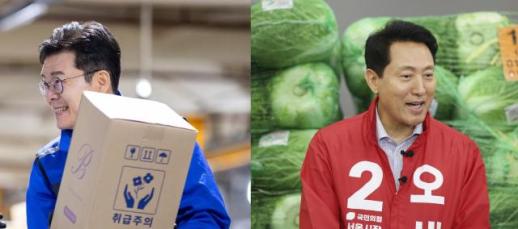 Seoul Mayoral Candidates Focus on Development and Safety Ahead of Local Elections On the second day of the official campaign for the June 3 local elections, Oh Se-hoon, the People's Power candidate for Seoul mayor, visited the Han River Belt area to appeal to voters concerned about real estate development. Jung Won-o, the Democratic Party candidate, focused on safety issues during his visits to Guui Station and Jungnang-gu. On May 22, Oh visited the Dong Seoul Terminal in Gwangjin-gu to emphasize his commitment to real estate development. He stated, "I chose Gwangjin-gu as my first stop to strongly convey my intention to increase housing supply," adding that approximately 20 redevelopment, reconstruction, and town consolidation projects, including the Jayang 4 District, are progressing smoothly in the area. He claimed, "These projects are advancing faster in the Han River Belt area than under any previous mayor," and urged voters to support him in accelerating these efforts over the next four years. After greeting commuters at Boramae Park in Dongjak-gu, Oh planned to continue his campaign by visiting the Dong Seoul Terminal and the commercial area near Konkuk University. Meanwhile, Jung attended a memorial event marking the 10th anniversary of the Guui Station disaster, where he highlighted safety concerns. He remarked, "Construction sites and workplaces must be safe anywhere in Seoul," and promised to establish a Seoul City Life Safety Committee to address safety issues in construction and daily life if elected. In response to Oh's proposal for a discussion on the 'GTX-A Samsung Station rebar omission incident,' Jung criticized, "How can safety issues be addressed through discussions? Safety should be resolved through attention, action, and response, not politicization." Jung further escalated his criticism while visiting the Myeonmok Station plaza in Jungnang-gu, referencing the controversy over the poor construction of the GTX-A Samsung Station section. He stated, "Major accidents occur during Oh's term, which is a result of safety negligence," and questioned, "If problems arise at Samsung Station, which will be used by hundreds of thousands daily, who will take responsibility?" He assured voters that he would ensure safety measures are properly implemented. Accompanying him was Seo Young-kyo, a member of the National Assembly representing Jungnang-gu, who emphasized their commitment to ensuring the safety of Jungnang-gu residents and all citizens of Seoul. In response to Oh's focus on real estate development, Jung planned to visit Nowon-gu and Jung-gu later that afternoon to continue his campaign related to redevelopment and reconstruction projects.* This article has been translated by AI. 2026-05-23 18:48:00
 -
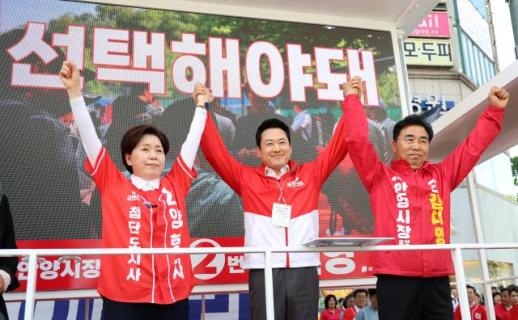 Jang Dong-hyuk Appeals for Support for Yang Hyang-ja in Gyeonggi Province Jang Dong-hyuk, chairman of the People Power Party, visited Gyeonggi Province on May 22 to urge voters to support Yang Hyang-ja, the party's candidate for governor. He called for overwhelming support for a "clean and capable candidate who will shape the future of Gyeonggi Province." During a campaign rally at Beomgye Intersection in Anyang, Jang criticized Choo Mi-ae, the Democratic Party candidate, stating, "While Yang was on a hunger strike to prevent a strike at Samsung Electronics for the future of South Korea, Choo was nowhere to be seen. How can such a candidate be trusted with the future of Gyeonggi Province?" He further accused Choo of being a key player in damaging the country for the benefit of Lee Jae-myung, saying, "Choo knows nothing about Gyeonggi Province. She proved her ignorance during the internal party debate, yet she became a candidate by securing votes from the 'Kkaedal' (a strong support group for the Democratic Party)." Jang praised Yang as a "high school graduate who made a name for herself at Samsung Electronics," emphasizing her qualifications as the true capable candidate to lead Gyeonggi Province, the heart of the semiconductor industry. "Yang is the one who understands semiconductors and can best drive the future advanced industries," he asserted. He also endorsed Kim Dae-young, the candidate for Anyang mayor, describing him as a "true worker who has dedicated over 30 years to Anyang City," stating that he knows the city well and has devoted everything to its betterment. In response, Yang addressed Choo, saying, "I don't want to talk about a candidate who viewed Gyeonggi Province as just a stopover for two years. Gyeonggi is my life, my everything. The People Power Party will unite to take care of the lives of each citizen in Anyang." Yang announced her campaign slogan, "A Profitable Gyeonggi Province," pledging to create a region where young people do not struggle with finances, delaying education, marriage, or housing. The rally included Jang and other party leaders, such as Kim Min-soo, Jo Kwang-han, Choi Ji-ye, and Park Jun-tae. After the event in Anyang, Jang continued campaigning in Suwon and Ansan.* This article has been translated by AI. 2026-05-23 18:45:26