
Journalist

Tthe Embassy of Uzbekistan in the Republic of Korea
-
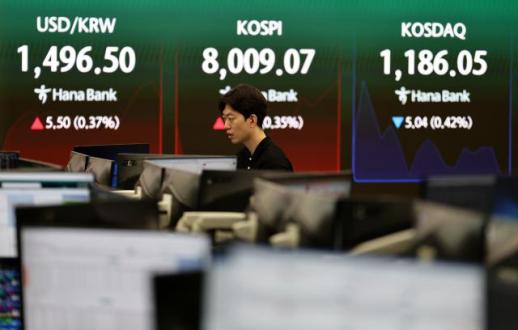 KOSPI breaks 8,000 as oil retreat lifts Asia, though the rally rests on unfinished Iran deal SEOUL, May 26 (AJP) - South Korea's Kospi pushed above the 8,000 mark at Tuesday's open, reaching roughly 8,060 as the market reopened from a holiday to a weekend of falling oil prices and record highs across Asia, even as the diplomatic breakthrough driving the move remained far from settled. The benchmark traded about 2.7 percent above Friday's close of 7,847.71. It marked only the second time the index has crossed 8,000 and the first time it has opened and sustained the level, after an earlier attempt on May 15 collapsed into a 6.1 percent rout by the close. The advance reflected a sharp reversal in the single variable that has governed Korean equities for three months: the price of oil. The war between the United States, Israel and Iran, which erupted in late February, had effectively closed the Strait of Hormuz and driven crude sharply higher, weighing on energy-importing economies across Northeast Asia. That pressure eased over the weekend after U.S. President Donald Trump said an agreement with Iran to reopen the strait would be announced shortly. Crude fell accordingly in early Asian trade. West Texas Intermediate dropped 5.87 percent to $90.93 a barrel and Brent declined 5.58 percent to $97.76. The relief was immediate, but its foundation was not. Trump himself cautioned that the framework was not yet final and that his negotiators should "not rush" into a deal — a reminder that the catalyst behind Tuesday's rally remains a provisional understanding rather than a concluded settlement. Korean markets were closed Monday for the substitute holiday for Buddha's Birthday, as were those in Hong Kong, while U.S. exchanges were shut for Memorial Day. The Asian markets that did trade rose in unison. Japan's Nikkei 225 climbed 2.87 percent to a record close of 65,158.19, its steepest three-day gain in more than six years, while Taiwan's Taiex reached an all-time high, rising 2.91 percent to 43,495.92. China's CSI 300 added 0.91 percent, Australia's ASX 200 gained 0.45 percent and India's Nifty 50 rose 1.09 percent. For Seoul, the implication was direct. Japan and Taiwan are Korea's closest structural counterparts — energy importers whose indices are anchored by semiconductors — and both set records while Korean markets were dark. Tuesday's open, in that light, was less a breakout than a convergence: Korea catching up to a move the region had already priced over the long weekend. That distinction also separates this attempt from the failed one a fortnight ago. The Kospi had advanced from 7,000 to its first touch of 8,000 in just seven sessions. When it arrived on May 15, however, it was running ahead of an overnight gain on Wall Street rather than alongside a regional consensus. Foreign investors that day sold a net 5.6 trillion won, sending Samsung Electronics and SK hynix down more than 7 percent and dragging the index to a 6.1 percent loss. The behavior of foreign investors remains the decisive variable. Overseas funds net-sold roughly 24 trillion won of Kospi shares over a recent six-session stretch, with the selling concentrated in the very chip stocks leading the rally. Domestic brokerages have characterized that flow as profit-taking after a rapid ascent rather than a structural withdrawal from Korean equities, though the distinction will only become clear in the sessions ahead. A labor dispute at Samsung Electronics adds a further domestic overhang, and the won — which weakened beyond 1,500 per dollar during the May 15 sell-off — will signal whether foreign sentiment is genuinely turning. Analysts had anticipated the level before the holiday. NH Investment & Securities projected the Kospi to trade between 7,200 and 8,500 this week, citing earnings momentum, valuation appeal and hopes for an Iran ceasefire. By the opening bell on Tuesday, the market had claimed the upper half of that range. Yet the durability of the move depends on a settlement that Washington itself has declined to finalize. Should the Iran framework stall — over uranium enrichment, the duration of restrictions or the timing of sanctions relief — the oil-price relief underpinning Tuesday's gains could prove as provisional as the diplomacy behind it. For now, the Kospi's record open reads less as a verdict on Korea's fundamentals than as the local expression of a regional bet that the worst of the energy shock has passed. 2026-05-26 09:15:33
 -
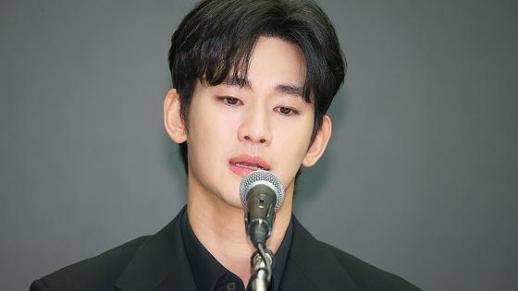 S. Korean prosecutors seek arrest of YouTuber over AI-fabricated rumors involving actor Kim Soo-hyun SEOUL, May 25 (AJP) - South Korean prosecutors have sought an arrest warrant for a prominent YouTuber on charges of defaming actor Kim Soo-hyun and the late actress Kim Sae-ron through heavily fabricated evidence, including AI-manipulated audio. The legal representative for Kim Soo-hyun reaffirmed on Sunday their policy of not directly responding to the allegations, emphasizing that the actor is strictly a victim of a cybercrime. "Actor Kim Soo-hyun is simply a victim of a crime, not a party engaging in a legal dispute on equal footing with the suspects," lawyer Go Sang-rok said in a statement posted on social media. "We have not responded to these nonsensical claims and will continue to maintain this principle." The statement follows a recent police conclusion that rumors spread by the YouTuber, identified as Kim Se-eui, were entirely false. Kim had publicly claimed that the actor dated and had sexual relations with the late Kim Sae-ron between 2015 and 2018, when she was a minor. The Seoul Central District Prosecutors' Office requested an arrest warrant for Kim Se-eui on May 19 on charges including defamation, violation of the sexual violence punishment act, and attempted coercion. According to the police warrant request, Kim allegedly manipulated text messages from 2016 by altering the sender's name and profile picture to make it appear as though the deceased actress was conversing with Kim Soo-hyun. Furthermore, he is accused of playing an AI-generated voice file at a press conference in May of last year, falsely mimicking the late actress's voice to claim a relationship dating back to middle school. Police concluded that Kim Se-eui repeatedly distributed these fabricated materials with the malicious intent to defame the actor, fully aware that the allegations were untrue and that the actor had no connection to the actress's passing. A court hearing to determine whether to grant the arrest warrant is scheduled for 10:30 a.m. on Tuesday at the Seoul Central District Court. 2026-05-25 17:58:38
 -
![[AJP Watch] Samsungs fixed stock bonus deal sends shockwaves across chip sector and supply chain](https://image.ajunews.com//content/image/2026/05/25/20260525145611972834_518_323.jpg) [[AJP Watch]] Samsung's 'fixed stock bonus' deal sends shockwaves across chip sector and supply chain SEOUL, May 25 (AJP) - Samsung Electronics’ tentative wage agreement is nearing ratification with near-record union turnout, crystallizing a new dilemma in the AI era: how far semiconductor giants can go in sharing windfall profits before it begins to strain investment capacity, deepen social divisions and unsettle global competitors. The deal can avert an immediate strike that threatened to disrupt the memory supercycle underpinning South Korea’s exports and stock rally. But the agreement’s centerpiece — a fixed stock-based profit-sharing structure tied directly to operating profit — is now reverberating far beyond Samsung’s Suwon campuses, unsettling shareholders, stirring resentment across Samsung affiliates and increasingly drawing attention from rival chipmakers abroad, particularly TSMC in Taiwan. As of Sunday afternoon, turnout for the union ratification vote had exceeded 84.6 percent, according to industry sources, with approval widely expected when voting concludes Wednesday. The unusually strong participation reflects how profoundly the agreement could reshape compensation expectations across Asia’s semiconductor sector. At the heart of the controversy is Samsung’s newly introduced “special management performance bonus,” which guarantees employees stock compensation equivalent to 10.5 percent of a business division’s operating profit. While performance-linked bonuses are common globally, industry analysts say institutionalizing a fixed percentage inside a labor agreement marks a sharp departure from prevailing international practices, where boards typically retain discretion to balance compensation against strategic investment needs. Foreign brokerages have already begun flagging concerns. Citi analyst Peter Lee warned of “downside risks to earnings due to bonus-related provisions amid escalating labor strikes,” lowering operating profit projections for Samsung Electronics. The timing is especially sensitive. AI-driven demand has triggered one of the most capital-intensive cycles in semiconductor history. TSMC plans as much as $56 billion in capital expenditure this year, while Micron Technology has pledged more than $25 billion for fiscal 2026 in addition to a $100 billion long-term megafab investment in New York. Samsung itself has earmarked more than 110 trillion won ($81 billion) for research, development and facility expansion this year alone. Analysts caution that locking in fixed double-digit profit-sharing formulas could eventually constrain Samsung’s flexibility in funding next-generation high-bandwidth memory (HBM), advanced packaging and foundry expansion at a time when competition against TSMC, Micron and SK hynix is intensifying. Unlike traditional industrial cycles, the AI infrastructure race increasingly rewards companies capable of reinvesting enormous sums with speed and consistency. The ripple effects are no longer confined to South Korea. The turbulence inside Samsung’s semiconductor complex in Suwon is now reverberating through Hsinchu, Taiwan’s chipmaking hub. Employees at TSMC — the world’s most critical contract chip manufacturer supplying firms from Nvidia and Apple to Tesla — have grown increasingly vocal over their own compensation structure after reports emerged that performance bonuses could be reduced to offset the mounting costs of building 12 overseas fabrication plants. Despite TSMC posting a 58 percent year-on-year jump in first-quarter net profit, frustration has reportedly spread across anonymous employee forums. According to Taiwan’s Liberty Times, workers explicitly referenced Samsung’s labor negotiations while criticizing TSMC management. Some posts complained that “the company changes everything on a whim,” while others openly discussed the possibility of collective action, writing: “It’s time we strike too,” and “May 27 will be the real turning point.” For decades, Asian semiconductor champions largely maintained an implicit social contract: workers accepted grueling hours and hierarchical cultures in exchange for stability, prestige and gradual prosperity. Samsung’s new fixed-profit-sharing model threatens to reset those expectations. Workers across the sector are increasingly asking why extraordinary AI profits should remain concentrated at the corporate level while employees shoulder intense workloads and geopolitical uncertainty. At the same time, investors and executives fear the opposite risk — that institutionalized profit-sharing could gradually erode the massive capital discipline required to sustain semiconductor leadership. The agreement is also exposing widening internal fissures inside Samsung Group itself. Under the proposed structure, employees in Samsung Electronics’ memory business could receive roughly 600 million won ($438,000) in annual bonuses if operating profit reaches 300 trillion won, including both the new stock-based incentive and existing excess profit-sharing payments. Even loss-making non-memory semiconductor divisions such as System LSI and foundry operations would reportedly receive more than 200 million won in combined bonuses through shared Device Solutions division funding pools. That has triggered growing frustration across Samsung affiliates including Samsung Display, Samsung SDI and Samsung Electro-Mechanics, where employees complain of widening disparities despite their own operational contributions. Internal discontent has become severe enough that employees increasingly use the self-deprecating nickname “Samsung huja” — implying second-tier Samsung workers — to describe themselves. The contrast is stark even within the conglomerate. Samsung Display recorded a 6.2 percent wage increase this year, Samsung Electro-Mechanics 5.9 percent and Samsung SDI 4 percent, while their bonus formulas remain tied to the older Economic Value Added (EVA) framework instead of operating profit. The spillover is beginning to reshape labor expectations across the broader Samsung empire. Samsung Display’s union plans to negotiate an alternative compensation structure later this year, while Samsung Electro-Mechanics is reviewing whether to shift its OPI formula toward either EVA-based 20 percent calculations or operating profit-linked 10 percent formulas similar to Samsung Electronics. Industry observers warn the agreement could embolden labor activism across major Korean corporations. Samsung Biologics unions are already engaged in strike action, while Samsung C&T reportedly raised planned wage increases to avoid similar disruptions. The social implications extend far beyond Samsung. According to Leaders Index, employees at South Korea’s top 211 companies earned an average annual compensation package of 102.8 million won last year including bonuses. Across all Korean businesses, the average worker earned about 50.61 million won annually, according to the Korea Enterprises Federation. Under Samsung’s new structure, some semiconductor employees could effectively receive compensation equivalent to the annual salaries of more than a dozen ordinary workers in a single year. The widening divide reflects how the AI boom is concentrating extraordinary wealth into a narrow segment of strategic industries. What was once primarily a technological race is increasingly becoming a political and social challenge as governments, unions and corporations struggle to redefine compensation norms during the transition into the AI economy. For Samsung, the immediate crisis may have been contained. Production lines continue operating, investors have avoided the shock of an 18-day strike and the AI memory cycle remains intact for now. But the agreement may ultimately prove to be more than a labor settlement. It could become an early test case for how democracies, corporations and workers negotiate the distribution of AI-era wealth — and whether the race for technological supremacy can coexist with mounting demands for economic equity without weakening the enormous reinvestment needed to sustain the boom itself. 2026-05-25 15:02:25
[[AJP Watch]] Samsung's 'fixed stock bonus' deal sends shockwaves across chip sector and supply chain SEOUL, May 25 (AJP) - Samsung Electronics’ tentative wage agreement is nearing ratification with near-record union turnout, crystallizing a new dilemma in the AI era: how far semiconductor giants can go in sharing windfall profits before it begins to strain investment capacity, deepen social divisions and unsettle global competitors. The deal can avert an immediate strike that threatened to disrupt the memory supercycle underpinning South Korea’s exports and stock rally. But the agreement’s centerpiece — a fixed stock-based profit-sharing structure tied directly to operating profit — is now reverberating far beyond Samsung’s Suwon campuses, unsettling shareholders, stirring resentment across Samsung affiliates and increasingly drawing attention from rival chipmakers abroad, particularly TSMC in Taiwan. As of Sunday afternoon, turnout for the union ratification vote had exceeded 84.6 percent, according to industry sources, with approval widely expected when voting concludes Wednesday. The unusually strong participation reflects how profoundly the agreement could reshape compensation expectations across Asia’s semiconductor sector. At the heart of the controversy is Samsung’s newly introduced “special management performance bonus,” which guarantees employees stock compensation equivalent to 10.5 percent of a business division’s operating profit. While performance-linked bonuses are common globally, industry analysts say institutionalizing a fixed percentage inside a labor agreement marks a sharp departure from prevailing international practices, where boards typically retain discretion to balance compensation against strategic investment needs. Foreign brokerages have already begun flagging concerns. Citi analyst Peter Lee warned of “downside risks to earnings due to bonus-related provisions amid escalating labor strikes,” lowering operating profit projections for Samsung Electronics. The timing is especially sensitive. AI-driven demand has triggered one of the most capital-intensive cycles in semiconductor history. TSMC plans as much as $56 billion in capital expenditure this year, while Micron Technology has pledged more than $25 billion for fiscal 2026 in addition to a $100 billion long-term megafab investment in New York. Samsung itself has earmarked more than 110 trillion won ($81 billion) for research, development and facility expansion this year alone. Analysts caution that locking in fixed double-digit profit-sharing formulas could eventually constrain Samsung’s flexibility in funding next-generation high-bandwidth memory (HBM), advanced packaging and foundry expansion at a time when competition against TSMC, Micron and SK hynix is intensifying. Unlike traditional industrial cycles, the AI infrastructure race increasingly rewards companies capable of reinvesting enormous sums with speed and consistency. The ripple effects are no longer confined to South Korea. The turbulence inside Samsung’s semiconductor complex in Suwon is now reverberating through Hsinchu, Taiwan’s chipmaking hub. Employees at TSMC — the world’s most critical contract chip manufacturer supplying firms from Nvidia and Apple to Tesla — have grown increasingly vocal over their own compensation structure after reports emerged that performance bonuses could be reduced to offset the mounting costs of building 12 overseas fabrication plants. Despite TSMC posting a 58 percent year-on-year jump in first-quarter net profit, frustration has reportedly spread across anonymous employee forums. According to Taiwan’s Liberty Times, workers explicitly referenced Samsung’s labor negotiations while criticizing TSMC management. Some posts complained that “the company changes everything on a whim,” while others openly discussed the possibility of collective action, writing: “It’s time we strike too,” and “May 27 will be the real turning point.” For decades, Asian semiconductor champions largely maintained an implicit social contract: workers accepted grueling hours and hierarchical cultures in exchange for stability, prestige and gradual prosperity. Samsung’s new fixed-profit-sharing model threatens to reset those expectations. Workers across the sector are increasingly asking why extraordinary AI profits should remain concentrated at the corporate level while employees shoulder intense workloads and geopolitical uncertainty. At the same time, investors and executives fear the opposite risk — that institutionalized profit-sharing could gradually erode the massive capital discipline required to sustain semiconductor leadership. The agreement is also exposing widening internal fissures inside Samsung Group itself. Under the proposed structure, employees in Samsung Electronics’ memory business could receive roughly 600 million won ($438,000) in annual bonuses if operating profit reaches 300 trillion won, including both the new stock-based incentive and existing excess profit-sharing payments. Even loss-making non-memory semiconductor divisions such as System LSI and foundry operations would reportedly receive more than 200 million won in combined bonuses through shared Device Solutions division funding pools. That has triggered growing frustration across Samsung affiliates including Samsung Display, Samsung SDI and Samsung Electro-Mechanics, where employees complain of widening disparities despite their own operational contributions. Internal discontent has become severe enough that employees increasingly use the self-deprecating nickname “Samsung huja” — implying second-tier Samsung workers — to describe themselves. The contrast is stark even within the conglomerate. Samsung Display recorded a 6.2 percent wage increase this year, Samsung Electro-Mechanics 5.9 percent and Samsung SDI 4 percent, while their bonus formulas remain tied to the older Economic Value Added (EVA) framework instead of operating profit. The spillover is beginning to reshape labor expectations across the broader Samsung empire. Samsung Display’s union plans to negotiate an alternative compensation structure later this year, while Samsung Electro-Mechanics is reviewing whether to shift its OPI formula toward either EVA-based 20 percent calculations or operating profit-linked 10 percent formulas similar to Samsung Electronics. Industry observers warn the agreement could embolden labor activism across major Korean corporations. Samsung Biologics unions are already engaged in strike action, while Samsung C&T reportedly raised planned wage increases to avoid similar disruptions. The social implications extend far beyond Samsung. According to Leaders Index, employees at South Korea’s top 211 companies earned an average annual compensation package of 102.8 million won last year including bonuses. Across all Korean businesses, the average worker earned about 50.61 million won annually, according to the Korea Enterprises Federation. Under Samsung’s new structure, some semiconductor employees could effectively receive compensation equivalent to the annual salaries of more than a dozen ordinary workers in a single year. The widening divide reflects how the AI boom is concentrating extraordinary wealth into a narrow segment of strategic industries. What was once primarily a technological race is increasingly becoming a political and social challenge as governments, unions and corporations struggle to redefine compensation norms during the transition into the AI economy. For Samsung, the immediate crisis may have been contained. Production lines continue operating, investors have avoided the shock of an 18-day strike and the AI memory cycle remains intact for now. But the agreement may ultimately prove to be more than a labor settlement. It could become an early test case for how democracies, corporations and workers negotiate the distribution of AI-era wealth — and whether the race for technological supremacy can coexist with mounting demands for economic equity without weakening the enormous reinvestment needed to sustain the boom itself. 2026-05-25 15:02:25 -
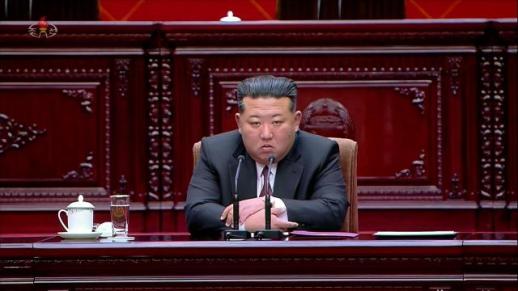 North Korea to convene party plenum and may harden 'two-state' line SEOUL, May 25 (AJP) - North Korea will convene a key Workers’ Party meeting in late June to review first-half policy implementation and discuss its agenda for the rest of the year, state media reported Monday, in what could offer clues to Pyongyang’s next steps after formally erasing unification from its constitution. The ruling party’s Political Bureau adopted a decision on Sunday to call the second plenary meeting of the ninth Central Committee in late June, the Korean Central News Agency said. The meeting will “review the implementation of party and state policies for 2026” and discuss second-half tasks and “a series of important issues,” according to KCNA. The plenum comes after North Korea’s ninth party congress in February and a March session of the Supreme People’s Assembly, where Pyongyang revised its constitution to reflect leader Kim Jong Un’s “two hostile states” doctrine. The amended constitution defines North Korea’s territory as only the northern part of the Korean Peninsula and removes references to eventual unification with the South. Attention is also focused on whether the meeting will produce follow-up guidelines on South Korea or the United States, particularly as speculation grows that Chinese President Xi Jinping may visit Pyongyang for talks with Kim after his recent meeting with U.S. President Donald Trump. Pyongyang’s hardened stance toward Seoul was on display last week when North Korea’s Naegohyang women’s football club visited South Korea for the AFC Women’s Champions League finals in Suwon, the first visit by a North Korean sports delegation in more than seven years. The team won the title but avoided contact with South Korean officials, civic groups and reporters throughout its stay. The players used passports rather than inter-Korean travel certificates, underscoring Pyongyang’s insistence on treating the relationship as one between separate states. After the final, coach Ri Yu-il abruptly left a press conference after objecting to a South Korean reporter’s reference to “the North,” asking that the country’s official name be used. 2026-05-25 13:37:58
 -
 China accelerates semiconductor ecosystem push, courting South Korean SMEs SEOUL, May 25 (AJP) - Chinese local governments are intensifying efforts to build comprehensive semiconductor supply chains, aggressively targeting South Korean materials, parts, and equipment suppliers with extensive incentive packages. During a recent South Korea-China economic cooperation forum in Zhangjiagang, Jiangsu Province, Chinese municipalities showcased a strategic shift from simply attracting individual factories to developing entire high-tech industrial parks. Local governments are offering South Korean small and medium-sized enterprises (SMEs) a suite of benefits, including tax exemptions, factory sites, research and development (R&D) funding, and human resource support. China's supply chain strategy involves distinct regional specializations. The Shanghai area is focusing on artificial intelligence (AI) chips and fabless design, while Jiangsu and Zhejiang provinces are expanding advanced manufacturing and packaging. Guangdong Province is building automotive and AI device ecosystems around local tech giants like Huawei and BYD, and the Sichuan-Chongqing region is investing heavily in backend processing and testing. The aggressive Chinese outreach highlights structural vulnerabilities within South Korea’s domestic industry. While South Korea remains a global memory chip powerhouse led by Samsung Electronics and SK Hynix, its domestic SMEs are increasingly grappling with labor shortages, regulatory burdens, and a heavy concentration of resources in the Seoul metropolitan area. The situation mirrors a broader global race in which the United States and Japan are deploying massive state subsidies—such as the U.S. CHIPS Act and Japan's support for Rapidus and TSMC's Kumamoto plant—to secure their national semiconductor ecosystems. In response, industry observers in South Korea are urging the government to adopt a long-term national strategy. Experts suggest utilizing surplus tax revenues generated by the recent semiconductor boom to fortify the domestic ecosystem. Key recommendations include establishing regional semiconductor clusters beyond the capital region, upgrading the status of materials and parts suppliers, and creating university-industry pipelines to secure future technical talent. 2026-05-25 12:50:39
 -
 LG OLED TV secures top ratings in 14 global consumer media evaluations SEOUL, May 25 (AJP) - LG Electronics’ OLED TV secured the highest scores in performance evaluations conducted by consumer media outlets across 14 countries globally. The product achieved top rankings in major markets across North America, Europe, and Australia. Consumer media assessments, which were conducted independently on commercially available products, noted the TV's performance in key features such as accurate color reproduction, High Dynamic Range (HDR) performance, and wide viewing angle. In North America, the LG OLED TV received the highest scores in all tested size categories (70-inch and above, 65-inch, 55-60-inch, and 46-52-inch) in the latest assessment by U.S. consumer media Consumer Reports. Specifically, the 65-inch LG OLED evo AI model was reviewed, with the publication noting “very impressive HDR performance,” “excellent viewing angle with virtually no degradation from any seat,” and “satisfactory top-level sound” for general viewing of movies, music, and TV. In Europe, the U.K.'s Which? gave the 65-inch LG OLED evo AI the highest score. The publication called it "one of the best OLED TVs currently available," citing its "overwhelming 4K picture quality" and "rich yet accurate color reproduction". Portugal’s DECO PROteste awarded the 55-inch model the highest score, describing it as a "highly complete product" with "the best performance among equivalent products with virtually no flaws" and excellent power consumption. The product also received the highest marks from Australia's CHOICE for the 65-inch LG OLED evo AI model, which was praised for its excellent user interface, detailed and well-balanced picture quality, and delicate sound quality. The 14 countries where LG OLED TV received top scores include the U.S., U.K., Portugal, Australia, Italy, France, Belgium, Canada, Spain, Netherlands, Sweden, Germany, Denmark, and Finland. LG OLED TV has maintained its global No. 1 market share in the OLED TV category for 13 consecutive years since its launch in 2013. The 2026 LG OLED evo AI model features the '3rd generation Alpha 11 AI Processor 4K Gen3' and 'Reflection Free Premium,' which combine to enhance brightness and color with reduced light reflection. The TV also offers five enhanced AI features, including AI Concierge and AI Search, designed to provide a personalized viewing experience. "The rigorous evaluations by consumer media in each country prove that the LG OLED TV is the best TV," said Vice President Lee Choong-hwan, Head of LG Electronics Display Business Division. "We will continue to lead the premium TV market with our advanced technology." 2026-05-25 12:07:56
 -
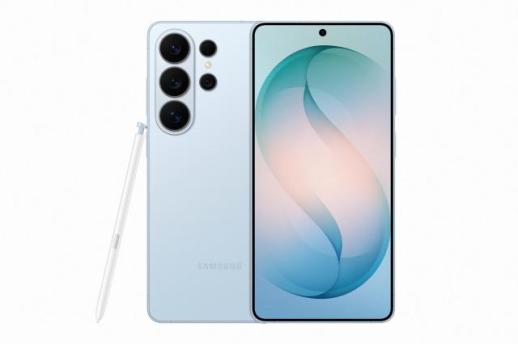 Samsung leads Q1 smartphone markets in LatAm, Middle East, SE Asia SEOUL, May 25 (AJP) - Samsung Electronics retained its top position in smartphone market share across Latin America, the Middle East, and Southeast Asia in the first quarter of 2026, despite a broader global market slowdown and rising memory costs. In Latin America, Samsung shipped 12.9 million units, reflecting a 9 percent year-on-year increase and securing a 37 percent market share. This marks the company's highest quarterly share in the region since the first quarter of 2023. The overall Latin American market grew 3 percent to 34.8 million units during the period. The company also maintained its lead in the Middle East and Southeast Asia, even as both regional markets contracted. The Middle East smartphone market shrank 6 percent year-on-year to 11 million units amid geopolitical uncertainties, slowing consumer sentiment, and rising memory costs. Nevertheless, Samsung held a 34 percent share in the region. In Southeast Asia, total shipments fell 9 percent to 21.6 million units. Samsung shipped 4.6 million units in the region to take a 21 percent share, even as the average selling price (ASP) in the market surged 19 percent year-on-year to $349. Market research firm Omdia noted that Samsung managed to increase its share in this environment through continued brand investment and channel expansion. Omdia attributed Samsung's performance across these regions to the solid initial sales of its flagship Galaxy S26 series and the diverse mid-tier A-series lineup. Industry analysts suggest that in the face of macroeconomic uncertainty and rising memory prices, consumers are gravitating toward proven brands that offer premium experiences and reliable after-sales service. Globally, Samsung captured a 22 percent share of the smartphone market in the first quarter. During its recent earnings call, the company indicated plans to pursue year-on-year revenue growth in the second quarter, driven by the rollout of new A-series models 2026-05-25 11:26:19
 -
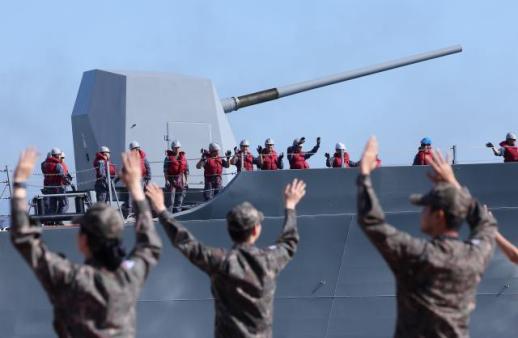 AJP Focus: Uncertain weekend for Iran deal that leaves much to be desired SEOUL, May 25 (AJP) - President Donald Trump’s warning on Sunday that U.S. negotiators should “not rush into a deal” with Iran underscored growing doubts over an emerging framework agreement that could reopen the Strait of Hormuz while leaving many of the Middle East conflict’s most dangerous questions unresolved. The remarks came soon after Washington officials said a deal with Tehran had been “largely negotiated” aimed at ending the war that erupted in late February following U.S. and Israeli strikes on Iran. “I have informed my representatives not to rush into a deal,” Trump wrote on Truth Social, adding that the U.S. blockade on Iranian shipping would remain “in full force and effect until an agreement is reached, certified, and signed.” The evolving stance reflected mounting concern inside Washington that the framework under discussion remains politically risky, strategically incomplete and economically uncertain despite hopes that the Strait of Hormuz could soon reopen. Under the proposed arrangement, Iran would restore commercial shipping access through Hormuz while the United States would eventually ease its naval blockade on Iranian ports. Tehran has also reportedly accepted the principle of disposing of its highly enriched uranium stockpile, although critical details remain unsettled. Iranian officials insist that no binding nuclear commitments have yet been finalized and say substantive negotiations over uranium enrichment, sanctions relief and inspections would continue over the next 30 to 60 days. Washington appears increasingly wary of locking in sanctions relief or military de-escalation before securing enforceable guarantees over Iran’s nuclear program. Major unanswered questions include whether Tehran would permanently dismantle uranium enrichment capability or merely suspend it temporarily, how long restrictions would last, and whether Iran’s ballistic missile program and regional proxy networks would be included in future negotiations. Trump reportedly wants restrictions lasting up to 20 years, while Tehran is pushing for a significantly shorter timeline. The deal has also triggered concern in Israel and Gulf Arab states, which fear the agreement could restore Iran’s economic breathing room while leaving its regional military leverage largely intact. Israeli officials remain especially uneasy that Hezbollah and Iran’s missile infrastructure have not been directly addressed in the framework. At the same time, the White House is facing mounting pressure from energy markets and inflation concerns ahead of the U.S. midterm election cycle. The Strait of Hormuz handles roughly one-fifth of global oil trade and a major portion of LNG shipments bound for Asia. Iran’s effective closure of the waterway following the outbreak of war triggered sharp increases in oil prices, tanker insurance premiums and fuel costs worldwide. White House National Economic Council Director Kevin Hassett acknowledged during an interview with CBS News' Face the Nation Sunday that even after Hormuz reopens, energy markets will require weeks or months to normalize. “Once the straits are open, then the tankers are going to go back and they're going to refill the refineries almost right away,” Hassett said. “A tanker goes about 300 nautical miles a day … between a month and two months, we expect everybody to have all the oil they need at every refinery on earth.” Hassett noted that nearby importers such as India and Pakistan would recover faster than more distant economies. “Places like India and Pakistan, which are close to the straits, are going to get their oil and then turn it into refined product right away … if you're down in New Zealand, it'll take a little bit longer.” For Asia, the comments reinforced expectations that oil and gas prices are unlikely to normalize any time soon even if the strait fully reopens. Physical energy deliveries to Northeast Asia still require roughly 15 to 20 days after loading resumes, while refiners continue processing expensive emergency inventories accumulated during the nearly three-month disruption. Shipping bottlenecks, elevated insurance costs and uncertainty over whether the ceasefire will hold are also expected to keep volatility high. Markets are particularly concerned that Hormuz may no longer function as a stable commercial waterway but as a recurring geopolitical bargaining chip. Iranian officials have suggested the strait would reopen under Iranian management terms, while Gulf states worry Tehran could emerge from the conflict with greater strategic leverage after demonstrating its ability to disrupt one of the world’s most vital energy corridors. South Korea and other Asian economies remain especially vulnerable. Although Seoul has diversified portions of its energy imports in recent years through increased purchases from the United States and other suppliers, Gulf crude and LNG remain structurally critical for Korean refiners and petrochemical manufacturers. That means even a successful diplomatic breakthrough may offer only partial relief. Iran is meanwhile demanding broader sanctions relief and access to frozen overseas assets estimated at tens of billions of dollars. U.S. officials have so far resisted confirming any immediate economic concessions, insisting sanctions easing would depend on verified Iranian compliance. The disagreement may become the defining obstacle in the next phase of negotiations. For now, Trump’s insistence on slowing the process signals that Washington itself recognizes the emerging accord remains far from a final peace settlement. Instead, the deal increasingly resembles a fragile economic truce designed to reopen Hormuz and calm energy markets temporarily while deeper disputes over nuclear capability, sanctions leverage and regional security remain unresolved. 2026-05-25 10:03:24
 -
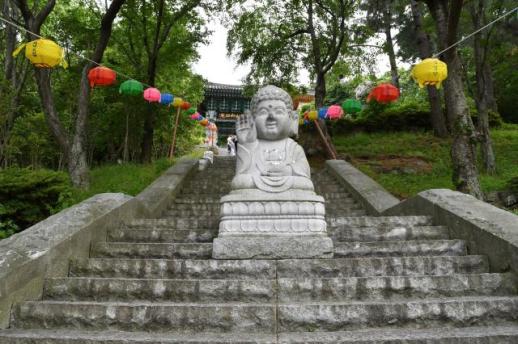 How wishes rise from cliff-side temple on Buddha's birthday SEOUL, May 24 (AJP) - Lotus lanterns glowed across South Korea on Sunday as temples filled with worshippers marking Buddha's Birthday, one of the country’s most widely observed religious celebrations and a day centered on compassion, reflection and prayer. At Hyangiram Hermitage in the southern coastal city of Yeosu, visitors climbed steep stone stairways beneath rows of colorful lanterns hung in honor of the birth of Siddhartha Gautama, the founder of Buddhism. The holiday, observed on the eighth day of the fourth month of the lunar calendar, commemorates the birth of the Buddha more than 2,500 years ago. In South Korea, where Buddhism has shaped art, architecture and spiritual life for centuries, the day is both a religious observance and a cultural tradition that draws believers and nonbelievers alike to temples nationwide. At Hyangiram, monks led chanting ceremonies inside prayer halls thick with incense smoke while worshippers bowed repeatedly before golden Buddha statues. Families arrived carrying children dressed in bright traditional clothing, elderly couples moved carefully along the uneven cliffside paths and younger visitors stopped to write personal wishes beneath hanging lanterns. Many of the lanterns carried handwritten prayers for peace, health and family. Others bore wishes reflecting anxieties of modern life: hopes for employment, recovery from illness or comfort during uncertain times. As sea winds swept through the temple grounds overlooking the South Sea, the lanterns shifted gently above visitors’ heads throughout the day. At Hyangiram, the occasion drew visitors who came not only to pray but also to experience a place where mountain, sea and centuries of faith converge. Families carrying lotus lanterns climbed the winding granite paths together, while elderly worshippers paused along the stone stairways to catch their breath before continuing upward. The scent of incense drifted through the narrow passages between the rocks as temple bells echoed faintly over the shoreline below. Some kneeled quietly before the main hall, pressing their palms together in prayer. Others stood near the cliff’s edge, looking out over the waters off Yeosu in silence. Monks in gray robes moved steadily between the prayer halls and lantern-lined courtyards, occasionally stopping to speak softly with visitors or help light candles placed before Buddhist statues. The hermitage’s name, meaning “hermitage facing the sun,” reflects both its geography and its spirit. Perched on the cliffs of Geumo Mountain at the southern tip of Dolsan Island, it looks directly toward the horizon where the sun rises over the South Sea. Even on a cloudy morning, shafts of light occasionally broke through the haze and reflected across the water beneath the temple cliffs. According to temple tradition, the site dates to 644 CE, when the Buddhist monk Wonhyo is said to have built a small hermitage here, originally called Wontongam. It was later known as Geumoam during the Goryeo period before taking its current name during the reign of King Sukjong in the Joseon era. Wonhyo is also said to have encountered Avalokitesvara, the Bodhisattva of Compassion, during meditation, a tradition that helped establish the site as a place of devotional prayer facing the sea. Hyangiram is best known as one of southern Korea’s most popular sunrise spots. On New Year’s Day, its narrow paths are often packed before dawn with visitors waiting for the first sunrise of the year. But on Buddha’s Birthday, the atmosphere carried a quieter rhythm. Instead of countdowns and celebration, there were hushed conversations, the soft rustling of prayer tags in the wind and the steady sound of footsteps against worn stone. The path up is not easy. Visitors must squeeze through tight gaps in the rock and climb steep, uneven stairs carved into the mountainside. Some sections are so narrow that people must turn sideways to pass. There are no shortcuts. But that effort is part of what the place gives back. At the top, the sea opens suddenly in front of you, and the climb makes the view feel earned. By mid-morning, the rock ledges around the temple had begun to fill. People sat alone or in small groups beneath strings of pink, blue and yellow lanterns. Some wrote wishes for health, peace or family on paper tags tied beneath the lanterns, while others carefully inscribed messages onto roof tiles that would remain at the temple long after the holiday ended. Small details gave the site much of its character: stacks of coins balanced in the hands of weathered stone Buddhas, tiny monk statues tucked between lanterns, candles flickering in lotus-shaped holders and handwritten prayers swaying in the ocean wind. Near one hall, visitors lined up quietly to pour water over a small baby Buddha statue resting inside a lotus basin, a traditional ritual symbolizing purification and renewal. The scenery here is not grand in the usual sense. What lingers instead is the layering: sea and rock, lantern and footstep, old story and today’s climb. On Sunday, the small cliff-top temple faced the sun as it always has, while those who came carried their prayers, memories and quiet intentions toward the water. 2026-05-25 09:34:50
 -
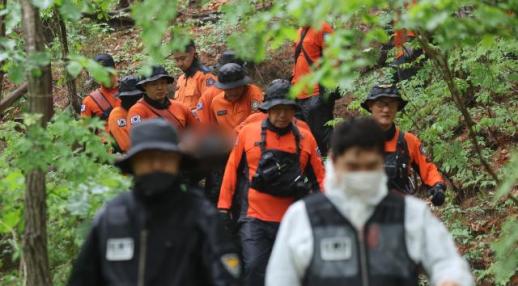 Police locate missing foreign national hiker in Korea after safe return home SEOUL, May 24 (AJP) -A woman believed to be a foreign national who was feared missing on Mount Cheolma after reporting that she had lost her way while hiking had safely returned home, authorities said Sunday, ending a two-day intensive search operation. According to the Gyeonggi Northern Fire and Disaster Headquarters, police located the woman at her residence in Seoul’s Gangbuk district at 10:51 a.m. Sunday. Officials said she was found in stable condition with no apparent injuries. The woman first contacted emergency services around 9 p.m. Friday, telling them in English that she had become lost while hiking. During the call, she repeatedly mentioned “Iron horse,” which authorities interpreted as a reference to Cheolmasan — the Sino-Korean term for “iron horse” and the name of the mountain in Namyangju. Rescue efforts were complicated because the call came through what authorities described as an “abnormal international network number,” preventing emergency services from accurately tracing her location. Police and firefighters nevertheless determined that the woman was likely referring to Mount Cheolma in Jinjeop-eup, Namyangju, and launched a search operation in the area. The woman contacted authorities again around 5:50 a.m. Saturday, saying she was still wandering the mountain and that her phone battery had fallen to 7 percent. Communication was lost after the call, and her phone was later switched off, intensifying concerns for her safety. Police and fire authorities deployed helicopters, drones, rescue dogs and dozens of personnel to comb trails leading toward Jinjeop, Onam and Sudong. Search teams continued operations throughout Saturday but found no trace of the woman before police eventually located her at her Seoul home Sunday morning. 2026-05-24 19:32:22