

Journalist

Woo Joo Seung
-
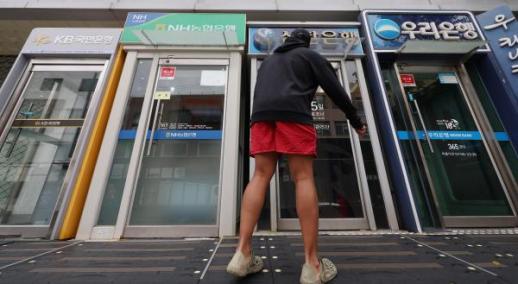 KB Kookmin Bank Raises Non-Face-to-Face Mortgage Rates by 0.2% KB Kookmin Bank has increased the variable interest rates on its non-face-to-face mortgage products by 0.20 percentage points. According to the financial sector on June 8, KB Kookmin Bank has reduced the preferential interest rate for its 'KB Star Apartment Loan I and II' products, which are based on the six-month new balance COFIX (Cost of Funds Index), by 0.2 percentage points. This reduction in the preferential rate will lead to higher loan rates for customers.As a result, the interest rate for 'KB Star Apartment Loan I' has risen from an annual rate of 3.62% to 4.12% to a new range of 3.82% to 4.32%. Similarly, the rate for 'KB Star Apartment Loan II' has been adjusted from an annual rate of 3.52% to 4.92% to a new range of 3.72% to 5.12%. However, this rate adjustment is limited to loans for purchasing homes.A Kookmin Bank official explained, "The interest rate adjustment was made as part of appropriate portfolio management."Meanwhile, Woori Bank also raised the interest rate on its flagship mortgage product, 'Woori Apartment Loan (New COFIX 6-Month Variable)', by 0.70 percentage points on June 4, after exhausting the preferential interest rate limit. The interest rate increased from a range of 3.67% to 5.57% to a new range of 4.37% to 5.57%.* This article has been translated by AI. 2026-06-08 09:03:00
 -
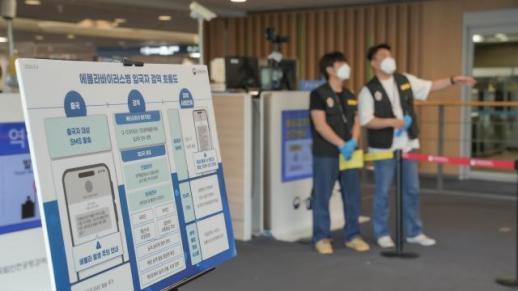 Ebola Alert Issued as Labor Ministry Advises Monitoring of Workers Returning from Abroad Recent outbreaks of Ebola virus disease in parts of Africa have prompted the South Korean government to take action to prevent the disease from entering the country. The Ministry of Employment and Labor has recommended that companies, particularly those with frequent overseas travel, establish preventive measures and closely monitor the health of workers for the virus's maximum incubation period upon their return.On June 8, the Ministry announced that it would distribute guidelines titled 'Workplace Prevention Measures for Ebola Virus Disease' to businesses nationwide in an effort to proactively prevent the disease's entry and spread within workplaces.This initiative follows a meeting held by the Korea Disease Control Agency on May 28 to assess the situation regarding overseas infections. The guidelines aim to enable companies with overseas operations or frequent travel to Africa to respond quickly in the event of an outbreak.According to the guidelines, employers must designate a quarantine manager before any overseas travel and establish an emergency contact system with the Korea Disease Control Agency (1339) and local health authorities. They are particularly advised to avoid or postpone non-essential trips to high-risk areas, such as the Democratic Republic of the Congo.During trips, employees are instructed to adhere strictly to personal hygiene practices, such as handwashing, and to avoid contact with wildlife or corpses. If symptoms such as fever arise while abroad, they should immediately notify their headquarters and the embassy, and cooperate with relevant authorities for evacuation and treatment.The government emphasized the importance of monitoring after returning home. Workers should be checked for fever and other unusual symptoms for the maximum incubation period of 21 days, and employers are encouraged to utilize remote work or paid leave to minimize the risk of secondary infections in the workplace.The Ministry also noted that employers could face liability if they neglect health measures to prevent infectious diseases and an infection occurs. This underscores that managing overseas travelers is not merely a recommendation but is directly linked to workplace safety and health management obligations.Ryu Hyun-cheol, head of the Occupational Safety and Health Agency, stated, "Ebola virus disease has a high fatality rate and strong transmissibility, making thorough preemptive measures in workplaces crucial. I urge strict adherence to the step-by-step procedures from pre-trip training to monitoring for 21 days after returning."* This article has been translated by AI. 2026-06-08 09:03:00
 -
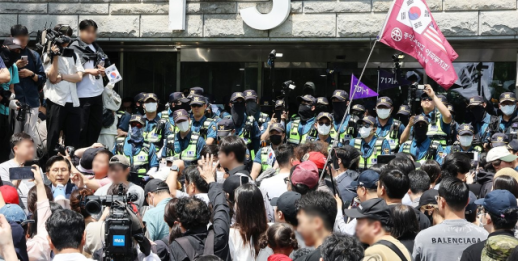 Youth Protest for Voting Rights Highlights Generational Divide in South Korea South Korea's democracy has always evolved through the participation and sacrifice of its citizens. From the April 19 Revolution to the June Democratic Uprising of 1987, the young generation has consistently been at the forefront of significant historical turning points, questioning the systems and realities established by older generations while demanding a better future. The recent protests led by the 2030 generation in front of the ballot counting center in Jamsil, Seoul, should be viewed through this lens. The immediate catalyst for the protests was a shortage of ballots during the local elections. Some citizens claimed that their voting rights were not adequately protected, gathering in front of the counting center to voice their concerns. This situation sparked various political interpretations and debates. However, viewing this phenomenon solely as a movement of a particular party or faction misses the essence of the issue. More importantly, we must consider why so many young people took to the streets. Today’s youth in South Korea are navigating one of the most complex eras in history. During the industrialization period, a clear ladder of success existed: studying hard led to job opportunities, which in turn allowed for home ownership and family formation. However, the current reality is starkly different. Artificial intelligence and automation are reshaping the industrial landscape. Companies are becoming cautious about hiring, pushing young people into increasingly fierce competition. Housing costs are rising, with rent and mortgage burdens in the metropolitan area putting pressure on young lives. Marriage and childbirth are shifting from personal choices to economic burdens. Global economic uncertainties are also increasing. Low growth, high interest rates, the restructuring of global supply chains, and the prolonged U.S.-China rivalry are contributing to a sense of anxiety about the future among the youth. When young people feel that their trust in the national system is shaken, their anxiety only intensifies. As we reflect on these protests, the first step for our society should not be to blame or stigmatize the youth. Instead, we must listen to their voices. In a democratic society, citizens' concerns deserve respect. The anxieties and frustrations felt by the younger generation are directly linked to the future of South Korea. However, conflict and confrontation are not the answers. What South Korea needs now is not a generational war but generational reconciliation. The youth should not view older generations as adversaries. The progress of South Korea toward industrialization and democratization was made possible by the sweat and sacrifices of the older generation. Conversely, older generations should not see the youth merely as inexperienced. Today's young people possess higher education levels, international perspectives, and digital skills than any previous generation. The future competitiveness of South Korea will ultimately stem from their creativity and spirit of challenge. The issue lies not with the generations but with the system. One of the greatest challenges facing South Korea is the need to innovate its bureaucratic and vested interest structures. While administrations have changed multiple times, the bureaucratic system has seen little transformation. Regulations have increased, and administrative procedures have become more complex. A culture prioritizing evasion of responsibility over innovation is also prevalent. The political arena is no different. Regardless of party affiliation, calls for reform are made during elections, yet the changes felt by the public often fall short of expectations. Reforms in the labor market, education, pensions, and regulations remain largely unfinished tasks. Ultimately, the anger of the youth is not solely directed at a specific party. It stems from a reality where opportunities are dwindling and a sense of hopelessness prevails, where hard work does not guarantee a visible future. When this despair accumulates, society loses its vitality, and conflicts escalate. The Italian thinker Antonio Gramsci described a crisis era as one where "the old is dying, but the new cannot be born." Today, South Korea may be at a similar crossroads. The institutions of the industrialization era are becoming outdated. However, new systems and institutions suitable for the age of artificial intelligence have yet to be adequately established. In this void, it is the youth who feel the greatest anxiety. Therefore, what our society needs now is not to suppress anger but to transform it into hope. We must provide more opportunities for young people. An environment conducive to entrepreneurship and innovation must be created. The labor market and education systems need to be reformed for the future. Bureaucracy and unnecessary regulations should be reduced. Vested interests must also make gradual concessions. Just as experienced players in golf allow younger players to start a new round, society must create space for the next generation to grow. The future of South Korea will not be shaped by the victory of one generation over another. Only through mutual understanding and cooperation can a new leap forward be achieved. It is hoped that the voices of the 2030 generation, which began in front of the Jamsil counting center, will not end in mere anger but will serve as a catalyst for institutional innovation and generational reconciliation in South Korea. True democracy lies not in amplifying conflicts but in listening to diverse voices and working together to create a better future. What South Korea needs now is not another ideological confrontation, but the courage to move beyond vested interests and bureaucracy, along with leadership that fosters reconciliation and innovation between generations. * This article has been translated by AI. 2026-06-08 08:57:00
 -
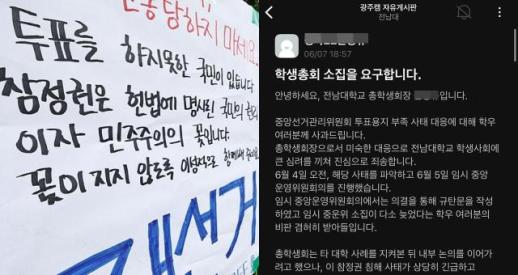 Students at Chonnam National University Address Voting Rights Concerns During the recent local elections on June 3, the student council at Chonnam National University, a symbolic site of the Gwangju Uprising, voiced concerns over a ballot shortage issue. On June 7, a post was made on the anonymous student community platform Everytime by the president of the university's student council. In the post, the student council president, identified as A, apologized to fellow students regarding the Election Commission's handling of the ballot shortage, stating, "I apologize to our fellow students. The infringement on voting rights is a serious and urgent matter, yet the student council's response was delayed." A continued, "We intended to discuss this internally after observing other universities' responses, but we realized a quicker reaction was necessary. I believe the student council misjudged the situation." The student council characterized the ballot shortage not merely as an administrative error but as a violation of voting rights. A declared, "With the resolution of the student assembly, we warn against the infringement of voting rights and condemn the Election Commission for failing to ensure these rights on behalf of all students." To address this, the student council announced it would convene a student assembly on June 9 at 4 p.m. in front of the Democracy Hall. The student council emphasized, "The student assembly is the highest decision-making body at our university. If the assembly's resolution is passed, it will mark a new chapter in our history as we strive to uphold democracy." Additionally, they stated, "We will ensure that the assembly takes place during a time when classes are not in session, allowing students to participate in democracy, and we will adequately prepare ballots to avoid shortages." Chonnam National University is recognized for its pivotal role during the Gwangju Uprising in May 1980, when students were at the forefront of pro-democracy protests. The actions of the student council are seen as a reflection of the university's ongoing commitment to democratic values and voting rights. Previously, major universities across the country, including Seoul National University, Korea University, Yonsei University, Sungkyunkwan University, Hanyang University, and KAIST, have also issued statements and posted notices addressing concerns over election management failures.* This article has been translated by AI. 2026-06-08 08:57:00
 -
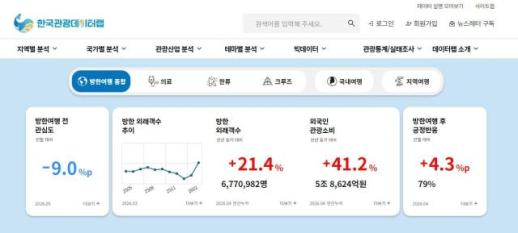 Google and Naver Launch First 'Interest Prediction' Service in South Korea A new predictive service analyzing Google search trends of global visitors to South Korea will be launched, marking the first of its kind in the country. This intelligent platform will comprehensively track the entire journey of inbound tourists and domestic travelers, from initial interest to spending patterns during their trips, significantly enhancing data-driven tourism marketing strategies. ◆ Lowering Barriers to Big Data: A Tool for Reading Trends The Korea Tourism Organization (KTO) has revamped its tourism-focused big data platform, the Korea Tourism Data Lab, which first launched in 2021. The platform has been recognized as a model for public data openness by integrating various data sources, including domestic and international tourism statistics, mobile communications, credit card transactions, and social media. However, the vast amount of data was previously presented in a single dashboard format, making it difficult for local governments and small tourism businesses to derive actionable insights. The recent overhaul of the Data Lab, implemented on June 5, reflects feedback from the field. The key change is a shift from a supplier-centric model to one that allows users to track the actual behavior patterns of tourists more comprehensively. The previous single dashboard has been segmented into six themes: inbound travel, medical tourism, Korean Wave, cruise tourism, domestic travel, and regional travel. Each dashboard is structured according to the stages of a tourist's journey: pre-trip (interest), during the trip (movement and spending), and post-trip (feedback). Local governments can now analyze visitor flows and spending changes in their areas, while the tourism industry can identify demand for specific purposes, such as Korean Wave or cruise tourism, enabling immediate marketing strategy adjustments. ◆ Analyzing Interest to Forecast Future Demand: Detailed K-Culture Categories One of the most notable features of the overhaul is the introduction of the 'Interest Analysis Service.' While the previous Data Lab focused on analyzing past movement and spending behaviors, the revamped platform opens the door to predicting future demand. Global inbound demand is assessed using Google Trends data from seven major markets, including Japan, Taiwan, and the United States, while domestic travel demand is analyzed based on search volume from Naver Data Lab. For instance, if search volumes for key terms like 'flights to Korea,' 'Korea visa,' or 'Korea weather' surge in a specific country, this is interpreted as a signal of increased likelihood for inbound travel, allowing the industry to proactively adjust marketing timing and targets. The platform also provides tools to closely examine the spending habits of diverse Korean Wave tourists. Credit card spending data from inbound visitors is categorized into K-Culture-specific areas such as performances, beauty, wellness, and Korean cuisine, allowing for intuitive insights into where recent visitors are spending their money. ◆ Advancing Data Utilization: Aiming for an Intelligent Compass in the Tourism Industry The Data Lab's upgrade aligns with KTO's ongoing efforts to innovate tourism through data. The organization has been focusing on creating a data ecosystem within the tourism industry and promoting digital transformation (DX) by holding annual data-centered tourism summits. This enhancement is part of a broader strategy to break down data access barriers and drive substantial value creation in the tourism sector. KTO plans to further enhance the precision of its analyses by securing additional data from online travel agencies (OTAs) regarding accommodation bookings and payments within the year. Furthermore, there are plans to gradually introduce a natural language-based data assistant service that will allow users to ask questions and receive answers without complex data manipulation, integrating artificial intelligence (AI) technology. Im Ji-sook, head of the KTO's Tourism Data Hub team, stated, "The focus is on connecting users with insights into tourist behavior and demand changes in a way that can be immediately applied in practice. We aim to develop the revamped Data Lab into an intelligent data platform widely utilized in tourism policy and industry settings."* This article has been translated by AI. 2026-06-08 08:51:00
 -
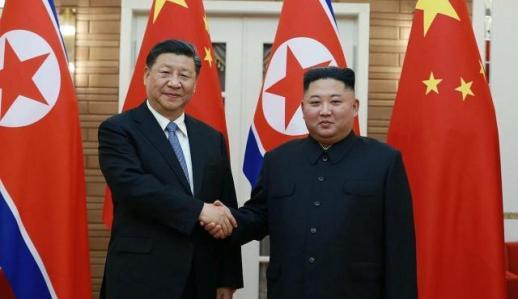 Xi Jinping Emphasizes Strategic Communication and Multilateral Cooperation with North Korea Chinese President Xi Jinping, on his first visit to Pyongyang in seven years, emphasized the importance of strategic communication and cooperation with North Korea while expressing a commitment to advancing global multipolarity. In an op-ed published on the front page of the North Korean ruling party's newspaper, the Rodong Sinmun, Xi stated, "We must strengthen strategic communication and cooperation in line with the trends of the times, and jointly uphold the international order based on international law and the United Nations as its core." He added, "We must oppose hegemony and power politics, and reject all ambitions and actions that threaten regional security and stability," calling for a joint effort to promote a multipolar world that is equitable and inclusive in economic globalization. Xi's reference to 'global multipolarity' aligns with China's foreign strategy aimed at challenging U.S. hegemony, while his mention of 'revival of militarism' is interpreted as a warning against Japan's military expansion. He urged the implementation of four global initiatives, which appear to refer to his proposals for a Global Security Initiative (GSI), Global Development Initiative (GDI), Global Civilization Initiative (GCI), and Global Governance Initiative (GGI) that he has advocated since the 2020s. Xi emphasized that the traditional friendship between China and North Korea remains "unbreakable, regardless of how times change and international circumstances evolve." He stated, "The highest-level strategic guidance is the greatest advantage of China-North Korea relations," asserting that the leaders' direction ensures that the 'great ship' of China-North Korea relations will bravely advance through winds and waves. Xi also highlighted the historical significance of high-level strategic cooperation, stressing the need to firmly support the protection of national sovereignty, security, and development interests, while jointly safeguarding regional peace, international fairness, and the post-war international order. Although Xi did not directly address inter-Korean relations, denuclearization, or issues related to the Korean Peninsula, he emphasized the importance of supporting each other in following a socialist path suited to their respective national conditions to ensure political security for both countries. This could be interpreted as a tacit endorsement of North Korea's ongoing nuclear development and its hostile stance toward South Korea, despite strong opposition from the international community. Xi also mentioned the potential for strengthening military cooperation between the two countries in light of the upcoming 65th anniversary of the signing of the China-North Korea Treaty of Friendship, Cooperation, and Mutual Assistance on July 11. He stated, "On the occasion of the treaty's 65th anniversary, we will enhance communication and exchanges across various sectors and levels between our parties, governments, and militaries, injecting strong momentum into the development of China-North Korea relations by effectively implementing our important common understandings." Xi referred to China's 15th Five-Year Plan and North Korea's recently concluded 9th Party Congress, expressing a desire to combine the development strategies of both countries, mobilize cooperation potential in various fields, and share opportunities for mutual development to benefit both peoples. Professor Lim Eul-chul from Kyungnam University’s Institute for Far Eastern Studies analyzed that, "In the past, military closeness was often downplayed in favor of party and government exchanges due to considerations of relations with the U.S. and international scrutiny. This time, however, the emphasis on 'military exchanges' as a core diplomatic issue marks a significant shift and distinction."* This article has been translated by AI. 2026-06-08 08:51:00
 -
 Naver and NVIDIA Form Alliance to Build Gigawatt-Scale AI Factory Naver announced on June 8 that it has reached an agreement with NVIDIA to jointly establish a gigawatt-scale global artificial intelligence (AI) factory. The collaboration aims to leverage NVIDIA's global infrastructure standards alongside Naver's cloud operations to position the company as a key player in the business-to-business (B2B) AI infrastructure market. Naver described the partnership as an integrated collaboration that spans the entire value chain, from identifying global demand to capital cooperation. Notably, Naver will participate as a core global partner, sharing both the successes and risks of the venture. The companies plan to initiate the AI factory project next year, starting with a capacity of 55 megawatts (MW) to capture the surging global demand for AI. One gigawatt (GW) is approximately four times the maximum capacity of Naver's hyperscale data center, Gak Sejong, which can accommodate hundreds of thousands of NVIDIA's latest graphics processing units (GPUs) simultaneously. Naver Chairman Lee Hae-jin and NVIDIA CEO Jensen Huang met at Naver's headquarters to discuss the specific roadmap for their ongoing projects and detailed cooperation strategies for entering global markets. Naver stated that both companies have already agreed on a direction to secure leadership in the AI infrastructure ecosystem beyond the Asia-Pacific region, extending to Europe and the Middle East. Naver will utilize its hyperscale data center, Gak Sejong, as a base for operations. The company plans to begin operations with 55MW in the first half of next year, expanding to 100MW within the same year and reaching 200MW by 2028 to meet global demand. This is part of a phased roadmap aimed at establishing a gigawatt-scale infrastructure that will dominate the market. Gak Sejong will serve as a base for Naver's AI 'HyperCLOVA X,' with its power infrastructure designed to support the operation of large GPU clusters from the outset. It is six times larger than Naver's first data center, Gak Chuncheon, with a maximum server capacity of 600,000 units. The two companies will also enhance their technical collaboration. Naver's capabilities in building and operating large-scale GPU clusters and its expertise in hyperscale data centers will be integrated with NVIDIA's next-generation high-performance infrastructure platform, DSX. This partnership aims to maximize data center operational efficiency and significantly improve business viability. Additionally, they will begin next-generation technological cooperation in spatial intelligence, utilizing Naver's own spatial modeling and street view data to build the 'Seoul World Model' based on NVIDIA's world foundation model, Cosmos. Recently, Naver joined the 'NVIDIA NeMoTron Alliance,' which includes 12 top-tier global AI companies such as Cursor, Mistral AI, and Perplexity. Naver aims to accelerate the performance enhancement and global applicability of HyperCLOVA X by combining its own data and accumulated learning expertise with the collaborative technological developments from NeMoTron. Chairman Lee Hae-jin expressed optimism about the alliance, stating, "This partnership will provide concrete alternatives for regions and countries around the world to build their own sovereign AI capabilities. It signifies a pivotal moment for Naver's technological infrastructure competitiveness to advance into the global market."* This article has been translated by AI. 2026-06-08 08:51:00
 -
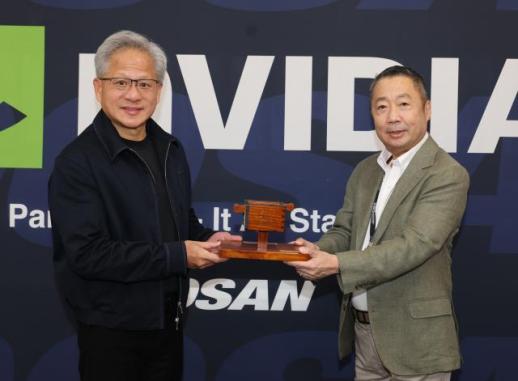 Doosan Group Partners with NVIDIA to Accelerate AI Transformation Doosan Group is set to enhance its collaboration with NVIDIA in the fields of Physical AI, robotics, and AI factories. This partnership is expected to support Chairman Park's vision of expanding Doosan's heavy industry portfolio into semiconductor materials and robotics. On June 8, Doosan announced plans to broaden its cooperation with NVIDIA across its core businesses, including energy, electronic materials, and robotics. The collaboration is driven by the close relationship between Doosan's key sectors and NVIDIA's AI factory initiatives, which focus on intelligent robotics, energy solutions, and high-performance electronic materials. The two companies aim to integrate Doosan's products, technologies, and manufacturing capabilities with NVIDIA's accelerated computing and Physical AI platforms. Doosan's Electronics BG will also collaborate with NVIDIA. They will explore opportunities to support next-generation AI data center infrastructure, including the modular server design for producing copper-clad laminates (CCL), a key material used in NVIDIA's AI infrastructure. Doosan Robotics plans to focus on enhancing its ongoing Physical AI collaboration with NVIDIA, aiming to enable robots to more accurately perceive and operate within their environments. This effort will be based on an agentic robotic operating system that handles perception, reasoning, and simulation. Doosan intends to expand its robotics collaboration by integrating NVIDIA's various Physical AI technologies into Doosan Bobcat's construction, landscaping, agriculture, and logistics equipment. This will accelerate the development of world models tailored for industrial settings, allowing equipment to autonomously recognize diverse work environments and make situational judgments. Doosan's energy solutions, including gas turbines, small modular reactors (SMR), and hydrogen fuel cells from Doosan Fuel Cell, are expected to be utilized within NVIDIA's DSX AI factory platform, which serves as a standard for AI factories. Chairman Park Jung-won stated, "Doosan Group is continuously advancing technologies necessary for the AI era in the fields of energy, robotics, and advanced materials, based on our long-accumulated manufacturing capabilities. This collaboration with NVIDIA will greatly assist us in applying AI to our business areas and exploring new opportunities in the AI factory era." NVIDIA CEO Jensen Huang remarked, "Korea is a global manufacturing powerhouse, and Physical AI presents new growth opportunities for companies that build, move, and supply energy to the world. By combining NVIDIA DSX and Physical AI with Doosan's energy, robotics, and advanced materials businesses, Doosan Group can secure new growth engines in key areas of the AI era, such as intelligent robots, autonomous industrial equipment, and next-generation infrastructure." Industry insiders noted, "Since Doosan Electronics BG is already part of NVIDIA's supply chain, this meeting is likely to expand the scope of collaboration into the robotics sector. The partnership between the two companies is expected to strengthen further."* This article has been translated by AI. 2026-06-08 08:48:00
 -
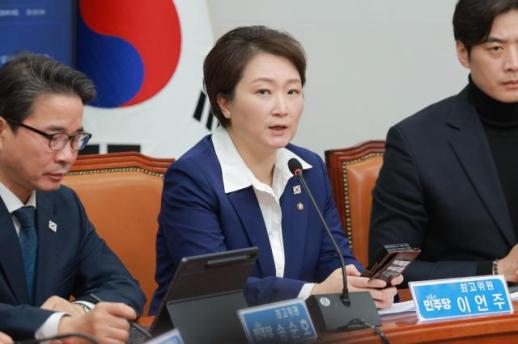 Lee An-joo Resigns as Democratic Party's Supreme Council Member After Local Election Results Lee An-joo, a member of the Democratic Party's Supreme Council, announced her resignation in response to the results of the June 3 local elections. She criticized the party leadership for relying solely on presidential approval ratings rather than presenting strategies that align with public sentiment. In a Facebook post on the morning of June 8, Lee stated, "Facing the results of this local election, I feel a heavy sense of responsibility as a member of the Democratic Party's Supreme Council. Therefore, I intend to step down from my position today and return to being a regular party member. I sincerely apologize for not fulfilling my role in this outcome." She added, "Although I am stepping down from my party position, I will dedicate myself to supporting the success of the Lee Jae-myung administration, the reform of the Democratic Party, and the future of South Korea. I will strive to listen more closely to the voices of the people and work towards regaining the public's trust in our party." Lee also pointed out that the party's reliance on President Lee Jae-myung's approval ratings led to insufficient support in key battlegrounds, including Seoul and the metropolitan area. "Our party failed to present adequate strategies and visions that resonate with regional sentiments, as we depended solely on the president's approval ratings," she said. "We should have engaged more with the public, listened to their voices, and proposed solutions tailored to local characteristics. The loss of support from the centrist and younger demographics, as evidenced in the metropolitan area, must be taken seriously."* This article has been translated by AI. 2026-06-08 08:45:00
 -
 Korea Expands Digital Tourism Resident Card Program to 52 Regions The "Digital Tourism Resident Card" service aimed at revitalizing tourism in declining population areas will significantly expand. Additionally, a large-scale lodging discount event targeting non-capital regions is expected to energize local tourism this summer. On June 8, the Ministry of Culture, Sports and Tourism announced that it will increase the number of local governments participating in the Digital Tourism Resident Card program from 44 to 52 in collaboration with the Korea Tourism Organization. The eight new local governments joining the program include Boeun County in North Chungcheong Province, Sunchang County in North Jeolla Province, Goheung, Damyang, and Wando Counties in South Jeolla Province, Uljin County in North Gyeongsang Province, and Sancheong and Hamyang Counties in South Gyeongsang Province. With the addition of these new regions, the number of locations where visitors can enjoy benefits from the Digital Tourism Resident Card has increased from about 1,100 to over 1,400. Notable new benefits include a 30% discount at the Wando Marine Healing Center, a 35% discount on the Damyang Air Experience, and a 25% discount on the Wangpicheon Cable Car in Uljin. To promote the expanded service, an event will be held from June 22 to 30 at a pop-up store in Starfield Suwon for registration verification. An invitation event linked to the Andong "Hahoe Seonyu Fire Festival" is also planned. Gang Dong-jin, the tourism policy director at the Ministry, stated, "Recently, the Tourism Promotion Act was amended to include provisions that support the sustainable and stable operation of the Digital Tourism Resident Card. The Ministry will gather opinions from various sectors until November to revise the enforcement ordinance, which will refine the issuance criteria and benefit standards, preparing for qualitative growth beyond mere expansion. We will work with local governments to provide more benefits to digital tourists, establishing the card as a practical measure to increase the resident population in declining areas." In conjunction with the expansion of the Digital Tourism Resident Card, the "Summer Lodging Sale Festival" will run from June 11 to July 31, aimed at extending the stay of visitors. The event will include hotels, condos, resorts, and pensions located in 85 local governments in non-capital regions. Lodging discount vouchers will be available starting at 10 a.m. on June 11 through online travel agency channels, limited to one per person on a first-come, first-served basis. This year, a new "Extended Stay Discount Voucher" has been introduced to alleviate the burden on long-term travelers. For reservations of one night, discounts of 30,000 won for stays over 70,000 won and 20,000 won for stays under that amount will be offered. For two or more nights, discounts of 70,000 won for reservations over 140,000 won and 50,000 won for reservations under that amount will be provided.* This article has been translated by AI. 2026-06-08 08:45:00