
Journalist

Xingchao Chen
-
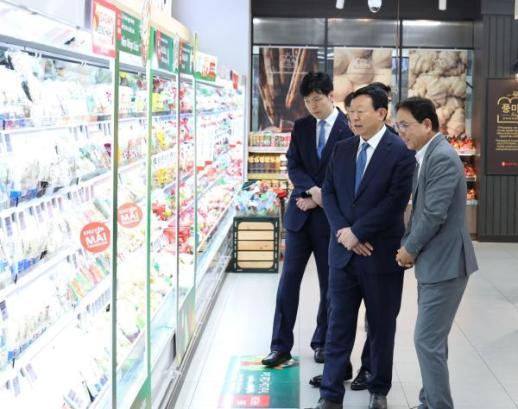 Emart and Lotte Mart Expand Profitability Through AI and International Growth As South Korea's leading discount retailers, Emart and Lotte Mart, report improved profitability for the first quarter, they are pursuing distinct strategies for continued growth this year. Emart is focusing on artificial intelligence (AI) commerce, while Lotte Mart is seeking opportunities in international markets and automation logistics infrastructure. According to the retail industry on May 15, Shinsegae Group's Emart recorded an operating profit of 178.3 billion won for the first quarter, the highest figure for that period since 2012. With improved profitability in its core business, Emart is expected to accelerate investments in future projects. Earlier this year, Shinsegae Group announced a partnership with U.S. AI company Reflection AI to implement AI commerce. Emart is anticipated to lead this transition within the group due to its extensive product offerings and customer interactions. Shinsegae Group is also pursuing a project to build a 250 MW AI data center in South Korea in collaboration with Reflection AI. While specific locations and timelines have yet to be confirmed, both companies are reportedly discussing project directions through regular video conferences. Once the transition to AI commerce is fully underway, Emart is expected to develop a model that connects product search, recommendations, payment, and delivery through conversational AI. This approach will shift from customers searching for products to AI suggesting items based on purchase intent, preferences, and price range. An Emart representative stated, "We will accelerate investments in future new businesses, including the construction of the AI data center, based on the growth of our existing operations." Lotte Mart is looking for growth drivers abroad. The company reported an operating profit of 33.8 billion won for the first quarter, a 20.2% increase from the previous year, with international operations leading the improvement. Sales across all product categories increased steadily, particularly in Vietnam, where overseas operations generated an operating profit of 25 billion won. With an 18% increase in sales from Vietnam driving overall international performance, Lotte Mart plans to continue leveraging its presence in Vietnam this year. Currently, Lotte Mart operates 15 stores in Vietnam and plans to open two new locations in the second half of the year. Shin Dong-bin, Chairman of Lotte Group, is also emphasizing the importance of the Vietnamese market. During a visit to Lotte Mall Westlake Hanoi on April 23, he remarked, "Vietnam is a key country for our global business, and it is encouraging to see growth in our core sectors such as food and retail." Strengthening online grocery competitiveness is another growth avenue. Lotte Mart aims to launch its automated logistics center, the Busan Zeta Smart Center, in August, utilizing the smart platform from the UK’s Ocado. This center will feature AI and robotics to reduce the time from customer orders to product picking and delivery preparation. Following the center's opening, Lotte Mart plans to introduce early morning delivery and two-hour delivery services in the Busan and Gyeongnam regions to continue its performance improvement. Meanwhile, the situation with Homeplus could also impact the profitability of Emart and Lotte Mart. Homeplus, currently undergoing corporate rehabilitation, has temporarily suspended operations at 37 stores until July 3. An industry insider noted, "Even if Homeplus resumes operations, if it cannot quickly recover its product assortment, many customers who switched to Emart and Lotte Mart may remain with them." * This article has been translated by AI. 2026-05-15 10:07:04
 -
 LG Electronics Shares Surge Over 15% Amid Robotics Business Hopes LG Electronics' stock price rose by over 15% in early trading, driven by optimism surrounding its new robotics business. According to the Korea Exchange, as of 9:46 a.m. on May 15, LG Electronics shares were trading at 249,000 won, up 14.75% or 32,000 won from the previous trading day. The company's stock has been on the rise since May 8, following a reassessment of its valuation related to the robotics initiative. With significant capital inflow into LG Electronics, shares of the broader LG Group also experienced gains. LG's stock was trading at 137,300 won, up 17.35% or 20,300 won. Additionally, LG Corp. shares rose by 10.53%, while LG Electronics preferred shares increased by 7.56%. Other LG affiliates, including LG CNS (up 6.74%), LG Innotek (up 7.11%), and LG Display (up 3.06%), also showed strong performance, contributing to a collective rise in LG Group stocks. Analysts expressed optimism about the potential expansion of LG Electronics' robotics business. Hana Financial Investment recently raised its target price for LG Electronics to 230,000 won, an increase from its previous estimate. Kim Min-kyung, an analyst at Hana Financial Investment, stated, "Despite the ongoing unfavorable business environment, LG Electronics is expected to secure profit resilience through company-wide cost structure improvements and efficient marketing spending, while aggressively pursuing growth in its robotics-related new business."* This article has been translated by AI. 2026-05-15 10:03:10
 -
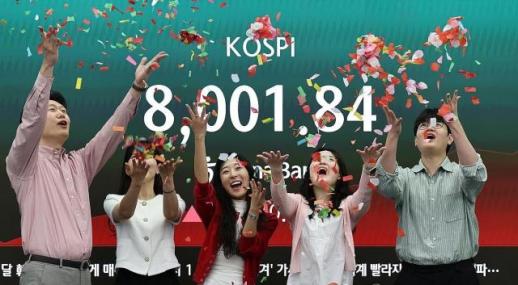 KOSPI Surpasses 8000 Points for the First Time, Marking a New Era The KOSPI index has crossed the 8000-point mark for the first time, signaling an unprecedented bullish phase in the South Korean stock market. Just a week after surpassing 7000 points for the first time, the index has risen by another 1000 points in only seven trading days, ushering in the '8000-point era.' Analysts attribute this rapid increase to a rally in the semiconductor sector, inflows of foreign capital, and expectations surrounding government policies. According to the Korea Exchange, the KOSPI index reached an intraday high of 8046.78 on May 15, setting a new record. This surge comes just seven trading days after it first crossed the 7000-point threshold on May 6, when it recorded an intraday high of 7426.60. The most notable aspect of this rally is its speed. The KOSPI first broke through the 3000-point mark in January 2021, during a liquidity-driven market following the COVID-19 pandemic. It took 13 years and five months to rise from 2000 to 3000 points, a period when increases of 1000 points were considered to take years. However, recent trends have shown a dramatic shift. It took 92 days for the KOSPI to rise from 4000 to 5000 points, and only 25 days to move from 5000 to 6000 points. While the index took 70 days to climb from 6000 to 7000 points, it reached 8000 points in just seven trading days after breaking through 7000. This indicates that the cycles of market growth are becoming increasingly shorter. Market analysts report that the semiconductor sector is driving this bullish trend, with significant foreign investment flowing into major semiconductor stocks like Samsung Electronics and SK Hynix amid growing expectations for artificial intelligence (AI) investments. Additionally, government policies aimed at boosting the stock market and stimulating the capital market are also enhancing investor sentiment. There are projections that the speed of the index's rise could accelerate further. Historically, moving from 2000 to 3000 points required a 50% increase, but reaching from 7000 to 8000 points required only about a 15% increase. A rise to 10,000 points would necessitate approximately 25% more growth from the current level. As the absolute value of the index increases, the percentage increase required for the same point gain decreases. Market sentiment is now shifting from the '8000-point era' to the potential for a '10,000-point era.' However, there are concerns about increased volatility following such rapid gains, highlighting the need for caution among investors. 2026-05-15 10:00:00
 -
 iM Securities Raises Target Price for Samsung Fire & Marine Insurance Amid Market Slowdown iM Securities reported on May 15 that Samsung Fire & Marine Insurance is maintaining stable profit and loss flows despite a slowdown in the market, raising its target price to 630,000 won. The investment recommendation remains a "buy." In a report released that day, analyst Seol Yong-jin noted, "Despite the market downturn, the company has shown stable profits, prompting us to adjust our earnings estimates. This includes the impact of rising book value per share (BVPS) due to the increase in the stock price of Samsung Electronics, which we hold." Samsung Fire & Marine Insurance's standalone net profit for the first quarter of this year rose 4.4% year-on-year to 634.7 billion won, aligning with market consensus. Investment income also increased by 17.5% during the same period, reaching approximately 295.6 billion won. Seol explained, "A key factor contributing to this growth is the increase in dividend income due to a special dividend from Samsung Electronics, which rose significantly to 50 billion won from about 32 billion won in the same period last year. Additionally, stable investment income has been supported by overall improvements in the investment environment." He added, "Similar to Samsung Life Insurance, Samsung Fire & Marine Insurance is expected to see one-time gains related to its equity holdings, including asset disposals and special dividends. Investor interest is growing regarding whether these gains will be included in shareholder returns." Regarding this, he mentioned, "The company has consistently maintained its principle of expanding its dividend payout ratio to 50% by 2028. It plans to separately account for gains from equity disposals and special dividends in its overall dividend resources," predicting a gradual upward trend in the dividend per share (DPS). This year, he forecasts a common stock DPS of 21,500 won, with a dividend yield of 4%. However, he cautioned that investment risks include low return on equity (ROE) due to rising equity values and concerns related to excess capital.* This article has been translated by AI. 2026-05-15 09:57:28
 -
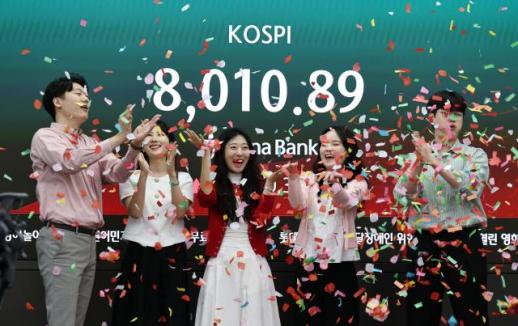 KOSPI hits 8,000-point mark as Trump-Xi summit further fuels AI rally SEOUL, May 15 (AJP) - South Korea's benchmark KOSPI rose above the 8,000-point mark for the first time on Friday, extending a powerful artificial intelligence (AI)-driven rally. Investor sentiment was further lifted by an ongoing summit between U.S. President Donald Trump and Chinese leader Xi Jinping in Beijing, while overnight gains on Wall Street, led by technology stocks, also boosted momentum. As of 9:25 a.m., the KOSPI was trading at 8,032.67, up 0.64 percent, while the junior KOSDAQ slipped 0.40 percent to 1,186.30. It took just a week to climb from the 7,000 level to the 8,000 mark, one of the fastest rallies on record. Samsung Electronics and SK hynix have been at the center of South Korea's AI-driven market rally, increasingly dominating the country's equity market amid explosive global demand for AI chips and memory semiconductors. Both stocks hit fresh intraday record highs in the previous session and remained near those levels in early Friday trading. Samsung Electronics edged down 0.17 percent to 295,500 won, while SK hynix rose 0.96 percent to 1,989,000 won. Among other major stocks, Hyundai Motor Company jumped 5.48 percent to 751,000 won, while Hyundai Mobis gained 4.31 percent to 678,000 won. Kia Corporation also rose 1.63 percent to 181,000 won. In the battery sector, LG Energy Solution climbed 3.51 percent to 457,500 won, while Samsung Electro-Mechanics surged 8.30 percent to 1,109,000 won. Industrial and shipbuilding shares traded mixed, with HD Hyundai Heavy Industries edging up 0.15 percent to 672,000 won, while Doosan Enerbility slipped 0.60 percent to 116,400 won. Defense shares weakened, with Hanwha Aerospace falling 3.45 percent to 1,261,000 won. The South Korean won remained broadly weak, trading at 1,497.50 per dollar compared with the previous close of 1,491.0 won. The momentum in Seoul followed another strong session on Wall Street overnight, where investors continued pouring into AI and semiconductor-related shares. Nvidia rose 4.39 percent after expectations grew that the company could expand sales of its H200 AI chips in China following its CEO Jensen Huang's participation in the Beijing delegation. The Dow Jones Industrial Average rose 0.75 percent to 50,063.46, reclaiming the 50,000 level for the first time since February. The S&P 500 and Nasdaq Composite gained 0.77 percent and 0.88 percent, respectively, both setting new record highs. Overall investor sentiment improved after Trump and Xi signaled that both sides would seek to stabilize relations despite continuing disagreements over Taiwan and Iran. During a state banquet, Xi said China's "great rejuvenation" and Trump's "Make America Great Again" vision could "go hand in hand," while Trump described the meetings as "very positive and productive." Markets interpreted the summit more as a sign that tensions between the world's two largest economies were unlikely to escalate immediately. 2026-05-15 09:54:45
 -
 IMF Welcomes Constructive US-China Dialogue Amid Trade Tensions The International Monetary Fund (IMF) has positively assessed the summit between U.S. President Donald Trump and Chinese President Xi Jinping, believing that a reduction in tensions between the two nations will benefit not only their economies but also the global economy. On May 14, during a briefing, IMF spokesperson Julie Kozak stated that it is crucial for the world's two largest economies to engage at the highest levels. She expressed her approval of the constructive dialogue taking place between the two countries, noting that it is beneficial for both economies and the global economy to reduce trade tensions and uncertainty. The IMF has long urged the U.S. and China to resolve trade conflicts through dialogue rather than unilateral actions. This statement aligns with the IMF's ongoing position that the burden of U.S.-China tensions on global trade and investment sentiment must be alleviated. However, the summit was not without its challenges. President Xi warned during the meeting in Beijing that mishandling the Taiwan issue could lead U.S.-China relations to a "very dangerous place," underscoring that Taiwan remains a core point of conflict between the two nations. Discussions on trade and investment reportedly progressed positively. President Trump announced in a Fox News interview that China has agreed to order 200 Boeing passenger jets. U.S. Treasury Secretary Scott Bancen also mentioned in an interview with CNBC that discussions included U.S. energy and agricultural exports, as well as the establishment of a bilateral trade and investment framework in non-strategic sectors. The IMF also pointed out the deteriorating conditions of the global economy. Kozak noted that due to the ongoing conflict in the Middle East and the closure of the Strait of Hormuz by Iran, international oil prices have exceeded $100 per barrel, pushing the global economy toward a negative scenario outlined in the IMF's April World Economic Outlook. This scenario predicts a 2.5% growth rate for global real GDP this year, which is 0.6 percentage points lower than the baseline forecast of 3.1% that assumes a quick resolution to conflicts. Last year's global growth rate was 3.4%. The IMF's negative scenario is based on the assumption that oil prices will remain around $100 per barrel throughout the year, financing conditions will worsen, and inflation expectations will rise. However, Kozak explained that while short-term inflation expectations have increased due to rising energy prices, medium-term inflation expectations remain stable. She also assessed that global financial conditions are still accommodative. The IMF is discussing support measures for member countries facing increased energy and raw material costs due to the Middle East conflict. Kozak did not specify any countries but mentioned that several nations have requested policy advice and assistance. IMF Managing Director Kristalina Georgieva is scheduled to discuss global economic issues with finance ministers and central bank governors from the Group of Seven (G7) in Paris next week. Dan Katz, the IMF's Deputy Managing Director, will attend a meeting of finance deputies and central bank deputies from the Group of Twenty (G20) in Miami this week.* This article has been translated by AI. 2026-05-15 09:54:29
 -
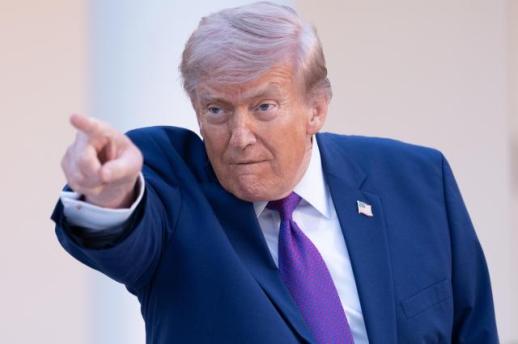 Trump Secures Commitment for 200 Boeing Aircraft from China President Donald Trump announced that he has secured a commitment from China to purchase 200 Boeing aircraft. This announcement came shortly after a US-China summit. In an interview, Trump emphasized this as a key achievement of his diplomatic efforts. Even amid the prolonged US-China tensions, this development highlights that the primary focus for the United States remains on protecting its industries and jobs. Market reactions were cooler than expected. Initially, industry insiders speculated that the deal could involve up to 500 aircraft, but the actual figure was limited to 200. Boeing's stock even fell, reflecting disappointment over the outcome. However, regardless of the numbers, this situation underscores a new era where the US president directly engages in promoting sales for domestic manufacturers and linking these efforts to diplomatic success. Trump's approach to diplomacy is firmly rooted in pragmatism. He does not separate security, trade, and industrial policies. Tariff negotiations, summits, and military alliances ultimately connect back to strengthening US industrial competitiveness. This is particularly evident in strategic sectors like aviation, semiconductors, and energy. Whereas the US once emphasized free trade and market principles, it now employs state power to secure markets for its companies. Boeing serves as a symbolic example of this shift. The aviation industry is not merely a manufacturing sector; it is intertwined with advanced technology, supply chains, high-skilled jobs, and military capabilities, making it a core industry for the US. The president's direct involvement in sales diplomacy reflects this interconnectedness. The tradition of 'Boeing diplomacy' by US presidents is not new. Large aircraft contracts have been announced during trips to the Middle East, and Boeing purchases have repeatedly been used as negotiation leverage in relations with China. Selling aircraft has functioned not just as export contracts but as symbols of diplomatic relations. This state-level support has been a key factor in maintaining US dominance in the global aviation market. Interestingly, US-China relations remain complex. Despite fierce clashes over tariffs, technology, and security issues, the two economies are not completely decoupled. China remains one of the largest aviation markets, and Boeing cannot afford to abandon it. From China's perspective, managing tensions with the US is also crucial. Ultimately, aircraft purchases become an area where economic logic and diplomatic strategy operate simultaneously. This announcement also reveals a shift in the nature of global industrial competition. While it may appear as competition among companies, it is closer to competition between nations. The US president actively secures contracts for companies, while China controls markets and supply chains at the national level. Behind the rhetoric of free market competition lies a powerful state apparatus. The aviation industry is closely tied to national prestige. The rivalry between Boeing and European Airbus transcends mere corporate competition, reflecting a broader industrial hegemony struggle between the US and Europe. China is also investing heavily in developing its own passenger aircraft, pushing for its own aviation ascendance. The sale of a single aircraft has now evolved into a comprehensive competition that intertwines technology, diplomacy, and national strategy. Trump's announcement of the 200 Boeing aircraft underscores that securing markets for national representative industries and companies has become a battleground. In this arena, state power, industrial strategy, and diplomacy operate as one.* This article has been translated by AI. 2026-05-15 09:51:54
 -
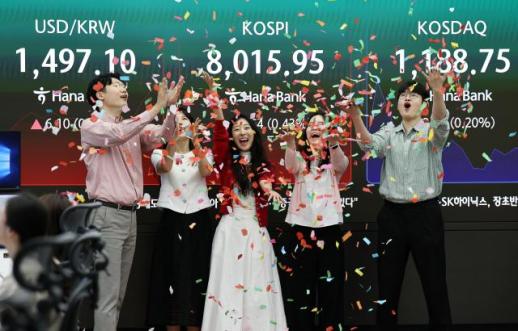 British Pound's Plunge Fuels Strong Dollar, Exchange Rate Starts at 1490 Won The won-dollar exchange rate opened higher amid a global strong dollar trend. As of 9:18 a.m. on May 15 in the Seoul foreign exchange market, the exchange rate for the Korean won against the U.S. dollar was 1,496.4 won. The rate opened at 1,494.2 won, up 3.2 won from the previous session. The New York stock market closed higher overnight, buoyed by a rally in technology stocks, while international oil prices remained stable. The sharp decline of the British pound appears to have triggered the dollar's strength. On Wall Street, the Dow Jones Industrial Average rose by 370.26 points (0.75%) to close at 50,063.46. The S&P 500 index increased by 56.99 points (0.77%) to finish at 7,501.24, and the Nasdaq Composite rose by 232.88 points (0.88%) to close at 26,635.22. International oil prices showed slight gains. The price of Brent crude for July delivery closed at $105.72 per barrel, up 0.1% from the previous session at the ICE Futures Exchange. Meanwhile, West Texas Intermediate (WTI) crude for June delivery settled at $101.70 per barrel, a 0.2% increase. The British pound fell sharply amid calls for Prime Minister Keir Starmer's resignation and speculation about increased fiscal spending under a left-leaning leadership. In the domestic stock market, foreign investors sold a net 977 billion won. Min Kyung-won, an economist at Woori Bank, stated, "Despite the technology stock rally, we expect upward pressure on the strong dollar due to the pound's decline. The growing political uncertainty in the UK is leading to a drop in the pound against the dollar, contributing to a global strong dollar atmosphere." He added, "The U.S. long-term interest rates, which have rebounded to nearly 4.5%, could also exacerbate the weakness of major reserve currencies and increase valuation pressures on emerging market stocks, likely accelerating the outflow of foreign capital."* This article has been translated by AI. 2026-05-15 09:48:54
 -
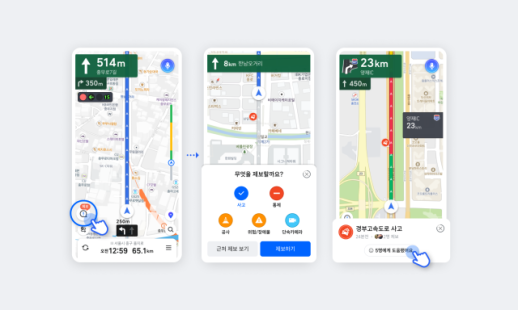 Tmap Launches Real-Time Traffic Reporting Feature for Drivers Tmap Mobility is enhancing its participatory traffic platform by introducing a feature that allows drivers to share real-time road conditions. On May 15, Tmap Mobility announced the launch of its real-time road information sharing feature, called 'social reporting.' The 'social reporting' feature enables drivers to share road conditions they encounter while driving with other users in real-time. Users can instantly report various information, including accidents, road closures, construction, hazards, and speed cameras, through the 'Report' button on the driving screen. To improve the accuracy and reliability of the information, Tmap Mobility has implemented a user-participation verification system. Drivers passing by the reported location can respond with options such as 'Yes,' 'No,' or 'Resolved' to verify the report. Additionally, users can acknowledge helpful reports by selecting 'Helpful.' Reports that do not receive updates for a certain period or are marked as resolved will be automatically closed to maintain current information. Users can also track the impact of their reports. In the 'My' tab under 'Driving Report Management,' they can view the status, number of views, and reactions to their reports in real-time, enhancing user engagement. Jeon Chang-geun, Chief Product Officer of Tmap Mobility, stated, "The importance of real-time information sharing among drivers is increasing in situations where unexpected accidents or sudden road closures cause inconvenience. Through social reporting, we aim to provide faster and more accurate road information and expand a trustworthy driving experience created with our users." Meanwhile, Tmap Mobility is expanding its business focus on mobility data and AI-based services. In the first quarter of this year, the company reported a 4.3% increase in revenue compared to the same period last year, strengthening its competitiveness as a daily mobility platform.* This article has been translated by AI. 2026-05-15 09:48:00
 -
 Kian84 Expresses Interest in Singer and Actress Kang Mina Webtoon artist and broadcaster Kian84 has expressed his feelings for singer and actress Kang Mina. On May 14, a video titled "Kang Mina Finally Returns" was uploaded to Kian84's YouTube channel, "Life84." During the video, Kian84 reminisced about a time he spent with Kang Mina, saying, "When we visited my aunt's house, my aunt and uncle really liked Mina. They asked if she would be the one to come for holidays in the future. I told them not to say such things, but they kept insisting." Kang Mina responded with a smile, asking, "So did that end with 'please don't say that'?" Kian84 replied, "I said that, but I didn't mind it either." When Kang Mina mentioned that she likes tall people, Kian84 chimed in, "I’m 180 cm tall. It’s just that my head is big, but I’m tall." Kian84 then asked, "So am I okay?" When Kang Mina laughed without answering, he followed up with, "A little more than 180 cm?" To which Kang Mina replied, "A little," prompting Kian84 to show a disappointed expression. Kang Mina also shared her secret to losing 10 kg, stating, "I didn’t do any special exercise; I just reduced my food intake. I ate two sandwiches a day. I would order one, cut it in half, and eat it for lunch and dinner."* This article has been translated by AI. 2026-05-15 09:43:08