

Journalist

by Abraham Kwak
-
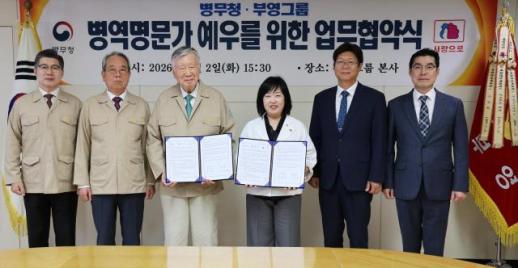 Buhyung Group Partners with Military Manpower Administration to Offer Discounts for Military Families Buhyung Group has partnered with the Military Manpower Administration to provide discounts on resort, hotel, and golf course usage for military families. On June 2, Buhyung Group announced that it signed a memorandum of understanding (MOU) with the Military Manpower Administration at its headquarters in Jung-gu, Seoul, to offer preferential treatment for military families. The signing ceremony was attended by over ten officials, including Lee Joong-geun, Chairman of Buhyung Group, and Hong So-young, Commissioner of the Military Manpower Administration. The agreement aims to honor military families who have fulfilled their service obligations and to foster a culture of pride in military service. Under the agreement, military families with three generations of active service will receive discounts at six Buhyung Group recreational facilities across the country, including Muju Deogyusan Resort, Taebaek O2 Resort, Jeju Buhyung Hotel & Resort, Jeju Buhyung Country Club, Jeju The Classic Country Club, and Suncheon Buhyung Country Club. During the signing ceremony, Chairman Lee stated, "We initiated this agreement with the Military Manpower Administration to express our respect and gratitude to military families who have dedicated themselves to serving the nation across generations. I hope the culture of honoring military service spreads widely throughout society, and we will continue to collaborate with the Military Manpower Administration in the future." Since 2004, the Military Manpower Administration has been promoting the 'Military Family Honor Project' to enhance pride in military service and to spread respect and gratitude for military families. A military family is defined as one where all three generations have completed their active service diligently. Additionally, Buhyung Group has consistently engaged in social contribution activities in the field of national defense and veterans' affairs. For 27 years, it has provided care packages to military personnel and, in 2023, donated 10 billion won to the Air Force Sky Love Scholarship Foundation to support the families of deceased Air Force pilots. The company also supports various national defense activities, including sponsoring the Ministry of Veterans Affairs' 'Heroes in Uniform' project, donating to the Korean War Foundation, improving facilities for remote military units, and participating in the 'One Company, One Barracks' campaign. Buhyung Group has reported a cumulative total of over 1.22 trillion won in social contributions to date. In addition to its veterans' activities, Buhyung Group has contributed to national housing stability by providing 230,000 rental units out of approximately 300,000 homes nationwide. The company has also attracted attention for its bold childbirth incentive policy, offering 100 million won for each employee's child to address the country's low birth rate issue.* This article has been translated by AI. 2026-06-02 17:00:00
 -
 Prosecutors Indict Jang Yoon-ki for Murder of High School Student in Gwangju Jang Yoon-ki has been indicted for the murder of a high school student in Gwangju, whom he killed on the street without any prior acquaintance. Prosecutors determined through further investigation that sexual assault was the primary motive behind the crime. According to the legal community on June 2, the Gwangju District Prosecutors' Office's Criminal Division 3, led by Chief Prosecutor Kim Jin-hee, has charged Jang with murder under the Special Act on the Punishment of Sexual Violence Crimes. On May 5, at approximately 12:10 a.m., Jang fatally stabbed 17-year-old Lee Chae-won near Namseong University in the Gwangsan District of Gwangju. He also injured a male student who attempted to intervene. Immediately after the attack, Jang fled in his vehicle and discarded both the car and the weapon about a kilometer from the crime scene. He turned off his phone and washed his blood-stained clothes at a nearby laundromat, demonstrating a calculated effort to evade capture. Despite these actions, Jang was apprehended by police at 11:24 a.m., just 11 hours after the incident, near his residence. During police questioning, Jang reportedly stated that he was contemplating suicide when he saw the passing high school student and decided to kill her. The weapon used in the crime was purchased prior to the attack. Initially, police treated the case as a random murder, but prosecutors concluded through additional investigation that Jang had planned to abduct Lee for sexual assault. Prosecutors cited evidence that Jang attempted to overpower Lee from behind and drag her toward his vehicle, as well as similarities between this incident and a previous sexual assault he committed against a foreign female coworker in her twenties. While police initially charged Jang with general murder, prosecutors have now applied charges of rape and murder. The minimum sentence for general murder is five years in prison, whereas the penalty for rape and murder can be death or life imprisonment. Additionally, prosecutors have added charges of assault, attempted murder, confinement, and violations of the Stalking Punishment Act related to the previous assault on the female coworker. In response to Jang's indictment, Justice Minister Jung Sung-ho expressed his condolences to Lee's family on Facebook, noting that just two days prior, they had publicly appealed for severe punishment for Jang. "As a father of two daughters myself, I can hardly fathom the grief of parents who have lost their beloved child overnight," he wrote. Jung emphasized that the Ministry of Justice will ensure strict penalties for Jang's crimes, as well as for heinous acts targeting vulnerable groups such as youth and women. He pledged to prevent offenders from receiving unjust leniency through claims of mental instability or false remorse during trial.* This article has been translated by AI. 2026-06-02 16:57:00
 -
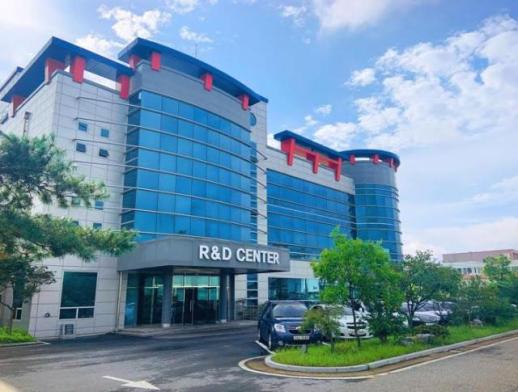 Namsun Aluminum Named GM's Supplier of the Year for 15th Consecutive Year SM Group's manufacturing subsidiary, Namsun Aluminum, has once again been named Supplier of the Year (SOY) by General Motors (GM). According to industry sources on June 2, Namsun Aluminum's automotive division was recognized at GM's 34th Supplier of the Year awards ceremony held recently in Austin, Texas, marking the 15th consecutive year it has received this honor from 2011 to 2025. Namsun Aluminum's CEO, Jeong Soon-won, attended the ceremony to accept the award. The SOY award is given annually by GM to approximately 6,000 global partners based on a comprehensive evaluation of their technology, innovation, supply stability, and sustainability. This year, a total of 103 companies, including 20 from South Korea, received the prestigious award. Namsun Aluminum's key bumper systems and large injection molds supplied to GM Korea were highlighted as factors in its selection. A representative from SM Group stated, "Notably, there have been no issues with the Supplier Parts Quality System (SPPS) in the past year, and we achieved the highest rating of 'BIQS Level 5' in GM's quality evaluation system, which significantly contributed to our assessment." SPPS is a communication tool used by suppliers and customers to resolve product quality issues. Jeong Soon-won commented, "Being named SOY for 15 consecutive years is a recognition of our consistent efforts in enhancing quality, developing new technologies, and ensuring stable supply. Our entire team has proven that we are at a global top level in quality management." He added, "We will not rest on our laurels but will maximize our expertise and business know-how to become a more trusted partner in the global automotive parts market." Meanwhile, Namsun Aluminum, a key subsidiary of SM Group, focuses on its aluminum division, which manufactures window frames and curtain walls, as well as its automotive parts division, which supplies bumpers to GM Korea and others. Recently, it has expanded into eco-friendly and high-value markets, including solar structures and high-performance window systems.* This article has been translated by AI. 2026-06-02 16:57:00
 -
 Jensen Huang Expands AI Full Stack, Tests Samsung and SK Hynix's Memory Strategies Jensen Huang, CEO of NVIDIA, is demonstrating a keen interest in the South Korean semiconductor ecosystem while on a busy schedule in Taiwan. As the AI semiconductor market shifts towards NVIDIA's leadership, the strategic importance of South Korean memory companies like Samsung Electronics and SK Hynix is becoming increasingly prominent. On June 2, industry sources reported that Huang hosted a "Korea Partner Night" event in Taipei the previous evening. When asked by reporters about the possibility of holding GTC Seoul, he indicated that it could happen. He also expressed a desire to invest in South Korea's robotics sector, highlighting Taiwan's role as a key hub in the AI supply chain while sending a clear message of collaboration with South Korean firms. That same evening, Huang met separately with Choi Tae-won and SK Hynix executives, showcasing their camaraderie by putting their arms around each other. Huang's ongoing engagement with South Korean companies is driven by the growing importance of memory in NVIDIA's AI ecosystem. The performance of AI accelerators relies not only on graphics processing units (GPUs) but also on the supply capabilities of high-bandwidth memory (HBM), low-power DRAM, and high-performance storage. As demand for AI computing expands from data centers to AI PCs, robotics, and autonomous vehicles, the role of South Korean memory companies is also broadening. On the same day, Samsung Electronics unveiled its next-generation HBM technology at Computex 2026 in Taipei. Song Jae-hyuk, CTO of Samsung's Semiconductor Division, introduced the HBM5 prototype for the first time and presented a new heat management technology called "HPB (Heat Path Block)." He stated, "As AI systems evolve into ultra-high-performance and ultra-dense architectures, not only memory performance but also data processing efficiency and heat control are becoming key competitive factors." Samsung aims to enhance operational stability by adding a separate heat transfer path to HBM5, thereby reducing thermal resistance. SK Hynix is recognized as having the closest HBM partnership with NVIDIA. Choi's unique leadership style has facilitated their third meeting this year, solidifying a strong trust relationship. Recently, SK Hynix also introduced a next-generation heat management technology called iHBM, aimed at enhancing the competitiveness of high-density AI memory. Kim Yong-seok, a distinguished professor at Gachon University’s Semiconductor College, noted, "There are two main reasons for Jensen Huang's visits to Korea. First, he seeks product supplies from Samsung and SK Hynix for NVIDIA's chips and software solutions. Second, he aims to secure stable access to memory, including HBM and DRAM, necessary for building AI infrastructure like smart factories."* This article has been translated by AI. 2026-06-02 16:57:00
 -
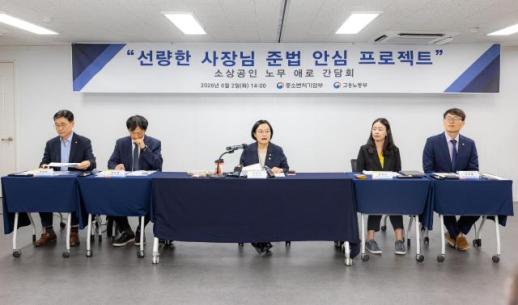 Ministry of SMEs and Startups to Ease Labor Burden for Small Businesses The Ministry of SMEs and Startups and the Ministry of Employment and Labor are taking steps to alleviate the labor burdens faced by small businesses and provide support for hiring lawyers when necessary to prevent disputes. On June 2, Minister Han Seong-sook announced a plan to support small business owners in hiring lawyers during a meeting focused on labor issues at the Korea Certified Labor Attorneys Association in Yeongdeungpo-gu, Seoul. The meeting included small business owners from sectors such as convenience stores, restaurants, and cafes, where labor-related disputes frequently arise due to high employee hiring rates. Participants shared their challenges in labor management and discussed potential improvements. The Small Business Association explained the labor-related difficulties faced by on-site small business owners and proposed an expansion of government support to address these issues. Previously, on May 29, the association signed a memorandum of understanding with the Korea Certified Labor Attorneys Association to establish a management safety net for small businesses and improve labor conditions. Following this, the Ministry of SMEs and Startups and the Ministry of Employment and Labor announced government support measures to resolve labor issues for small businesses. The Ministry of SMEs and Startups plans to collaborate with the Korea Certified Labor Attorneys Association to create a Q&A-style guidebook focusing on common labor cases that small business owners often overlook. Additionally, they will hold regional briefings and produce online informational videos, including short-form content. Furthermore, the Small Business Association will operate a counseling center where small business owners can seek advice in the event of labor disputes. For serious labor issues, they will support consultations and the hiring of specialized labor attorneys. The Ministry of Employment and Labor introduced a 24-hour 'AI Labor Law Counseling' service for individual small business owners and plans to integrate it with the 'Small Business 24' support platform to enhance accessibility. Participants expressed the need for government consulting support due to the significant management burden caused by complex wage and allowance systems, such as weekly holiday pay and severance pay. Minister Han Seong-sook stated, "Small business owners often find it difficult to keep up with complex labor laws while focusing on their daily operations. We will implement the announced support measures effectively and strive to create an environment where small business owners can manage their businesses with peace of mind by better understanding and preventing common labor issues."* This article has been translated by AI. 2026-06-02 16:54:00
 -
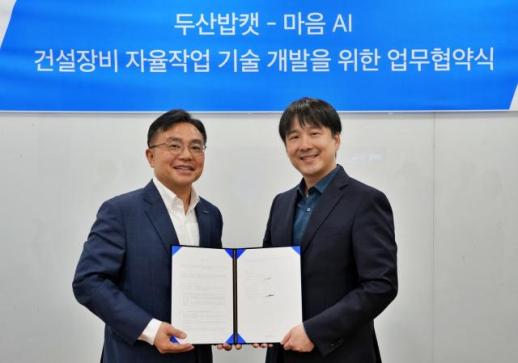 Doosan Bobcat Partners with Mind AI to Develop Construction Equipment Technology Doosan Bobcat announced on June 2 that it has signed a memorandum of understanding (MOU) with AI solutions company Mind AI to develop autonomous operation technology for construction equipment at Doosan Tower in Bundang, Seongnam. This collaboration is part of Doosan Bobcat's initiative in physical AI for the construction equipment sector. Doosan Bobcat will provide small construction equipment products and data, while Mind AI will explore the application of vision-language-action (VLA) based AI technology for autonomous operations on Doosan Bobcat equipment. The two companies plan to jointly verify the feasibility and conduct practical demonstrations of the autonomous operation technology. Doosan Bobcat has accumulated key technologies and data necessary for autonomous operations and automation through collaborations and investments with global companies, focusing on areas such as radar, equipment automation, information recognition, and decision-making. Mind AI possesses capabilities in VLA model-based AI technology and has experience in commercializing related technologies across various sectors, including agriculture, manufacturing, logistics, and defense. Park Hyun-cheol, Vice President of Doosan Bobcat, stated, "This collaboration will enhance the practical applicability of autonomous operation technology in the construction equipment sector. We will continue to develop technologies that improve productivity and operational efficiency for our customers, leading the future construction equipment market." Choi Hong-seob, CEO of Mind AI, remarked, "The scope of tasks that AI can understand and perform in the construction equipment industry will rapidly expand. Mind AI will focus on elevating the level of autonomy in industrial equipment through VLA-based physical AI technology and implementing AI technologies that can be utilized in real-world applications." Meanwhile, Park Jung-won, Chairman of Doosan Group, visited Doosan Bobcat's Incheon facility in February, where he received reports on the business performance of products produced for the ALAO (Asia, Latin America, and Oceania) region, including forklifts, skid loaders, and mini excavators, and inspected the manufacturing site.* This article has been translated by AI. 2026-06-02 16:54:00
 -
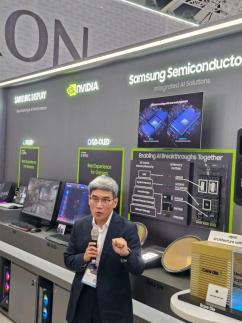 Samsung Electronics unveils HBM5 roadmap, new cooling tech at Computex SEOUL, June 02 (AJP) - Samsung Electronics on Tuesday showcased a mock-up of its next-generation High Bandwidth Memory 5 (HBM5) chips and introduced a new thermal management technology at the Computex exhibition in Taipei. The South Korean tech giant is moving to secure its position in the expanding artificial intelligence (AI) memory sector, following its recent mass production of HBM4 and sample shipments of HBM4E chips. Song Jae-hyuk, Chief Technology Officer of Samsung’s Device Solutions (DS) division, stated at the event that turnkey solutions spanning memory, foundry, logic, and packaging are becoming increasingly critical as AI infrastructure demands higher performance and density. To address overheating issues in advanced AI systems, Samsung introduced its Heat Path Block (HPB) technology for HBM5. The HPB design lowers thermal resistance and improves operational stability by creating additional heat dissipation paths, specifically targeting the physical layer (PHY) of the chip. Samsung noted that it has already implemented and verified the HPB technology in its HBM4E chips to ensure structural and package reliability. The company plans to fully integrate HPB into its upcoming HBM5 lineup, which will also feature a 2-nanometer base die. During the exhibition, Samsung also displayed its HBM4E wafers and chipsets. The HBM4E integrates a 1c-nanometer DRAM core die with Samsung’s own 4-nanometer foundry base die. Having commenced sample shipments on May 29, the HBM4E operates at a pin speed of 14 Gbps, with the capacity to reach up to 16 Gbps, delivering a maximum bandwidth of 4 Terabytes per second (TB/s). Market research firm Omdia projects the global HBM market will more than triple from approximately $58.9 billion in 2026 to $198.3 billion by 2029. Samsung also highlighted its supply chain role for Nvidia Corp's next-generation Vera Rubin AI platform. A Vera Rubin system equipped with Samsung memory was displayed at the pavilion. According to the company, it is currently the only vendor capable of supplying a comprehensive portfolio for the platform, including HBM4, LPCAMM2/SOCAMM2, and PM1763 storage solutions. Samsung's HBM4 chips, which entered mass production in February, achieve a performance rate of 11.7 Gbps, with peak speeds reaching 13 Gbps. "We plan to continuously strengthen our next-generation memory competitiveness through ongoing collaborations with global partners, including Nvidia," Song said. 2026-06-02 16:52:26
 -
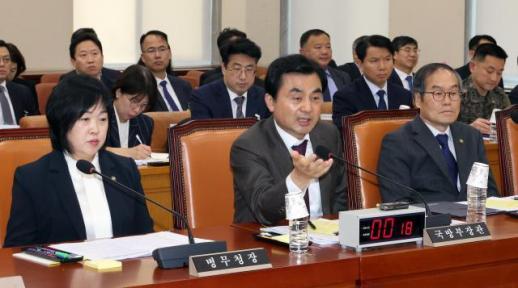 South Korea to Systematically Develop Defense Semiconductors The South Korean government is set to systematically develop defense semiconductors, which serve as critical components in future combat systems, including AI-based manned and unmanned hybrid combat systems. The "Defense Semiconductor Development and Support Act" passed the Cabinet meeting on June 2, aimed at securing the capability to develop and manufacture defense semiconductors and establishing an industrial ecosystem. The Ministry of National Defense and the Defense Acquisition Program Administration announced that the act, which includes the establishment of a basic and implementation plan for the development of defense semiconductors and prioritizing the purchase of domestically developed semiconductors, is expected to be announced in June. Despite being essential components of advanced weapon systems, defense semiconductors have lacked dedicated legislation, limiting the ability to reflect the unique characteristics of the defense sector in policies and to establish comprehensive support. With the advent of the AI era, the importance of defense semiconductors as a strategic asset has been increasingly recognized, raising ongoing calls for self-sufficiency and stable supply chains. It is reported that approximately 99% of the defense semiconductors used in South Korea's domestic weapon systems are imported. In response, the Blue House and the Defense Acquisition Program Administration have been operating a government-wide "Defense Semiconductor Development Task Force" since October 2025 to support the enactment of the Defense Semiconductor Act and to promote policies for the development of defense semiconductors. The recently passed Defense Semiconductor Act includes provisions for the establishment of a basic and implementation plan for the development of defense semiconductors, support for specialized research and development projects, the establishment of reliability testing and certification systems, prioritizing the purchase of domestically developed semiconductors, reducing penalties for applying defense semiconductors to weapon systems, and designating defense semiconductor businesses to foster domestic industry and self-sufficiency. Lee Yong-cheol, head of the Defense Acquisition Program Administration, stated, "The enactment of the Defense Semiconductor Act will mark a significant turning point for our defense industry, moving beyond merely manufacturing weapon systems to securing self-reliance in core semiconductor technologies. We aim to strengthen the competitiveness of defense semiconductors and contribute to revitalizing the national economy through synergies with the civilian industry." The Defense Semiconductor Act is expected to take effect as early as the fourth quarter of this year, following the establishment of subordinate regulations and implementation rules. * This article has been translated by AI. 2026-06-02 16:51:00
 -
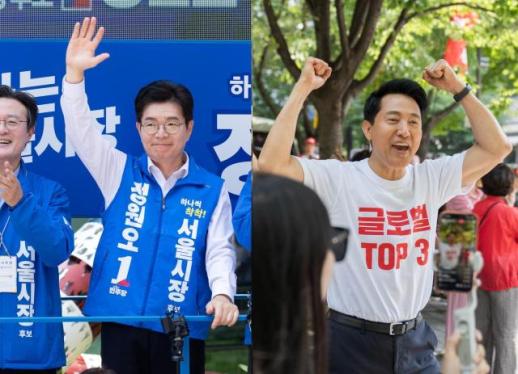 Seoul Mayoral Candidates Exchange Final Attacks Ahead of Election As the June 3 local elections approach, Jung Won-oh of the Democratic Party and Oh Se-hoon of the People Power Party have exchanged sharp criticisms of each other. Jung's camp claimed that Oh's decade-long tenure as mayor has been marked by incompetence, irresponsibility, and wartime administration. They attributed recent issues, such as the omission of rebar at the GTX Samsung Station and the Seosomun overpass accident, to Oh's alleged negligence regarding safety. They also pointed to the recent housing crisis as a consequence of inadequate housing supply during Oh's time in office. In response to Oh's campaign statement urging voters to preserve Seoul as a final bastion of government checks and balances, Jung's team accused him of cowardice, saying, "It shows a willingness to save only himself even if his fellow opposition candidates fail." They labeled Oh as a "tax-eating hippo," citing the city's plan to cover a 13.5 billion won deficit for the Han River Bus operation with taxpayer money over two years. Jung's camp questioned whether taxpayer funds should be used to support Oh's stubbornness and wartime administration. During a campaign event in Yeouido, Jung urged voters to replace the "incompetent and irresponsible" Oh Se-hoon and establish new leadership. He appealed for votes to create a safer, more convenient, and happier Seoul. Oh, in a press conference held in front of Hyochang Park, criticized Jung as an unqualified candidate. He stated that only by creating a platform for self-verification can one be deemed fit to lead Seoul, directly addressing Jung's refusal to participate in a one-on-one debate. Oh also criticized Jung for failing to provide clear explanations regarding allegations of favoritism in the Jupok and Haengdang-dong Baby Goods Store and hiring irregularities related to Cancun trips. He remarked, "Labeling unfavorable media coverage or comments from opponents as negative campaigning shows a fear of self-verification." Oh asserted that Jung is unprepared to take responsibility for a city that the world wants to visit and that citizens admire for its lifestyle. He emphasized, "We cannot turn Seoul into a practice course for a novice driver," intensifying his criticism by declaring Jung unqualified and unprepared.* This article has been translated by AI. 2026-06-02 16:45:00
 -
 KOSPI ekes out gains as rally extends beyond tech giants SEOUL, June 2 (AJP) - South Korea's benchmark KOSPI edged to another record close on Tuesday, finishing slightly higher in a session whose flat headline masked one of the most dramatic shifts of the year. The index closed at around 8,799 points, up 0.1 percent, after having fallen more than 1 percent around midday on oil-price nerves before clawing the entire loss back by the close. Beneath the surface, the top performers that had defined the rally for months gave way. Money rushed out of the semiconductor giants that carried Monday's record, with SK hynix and Samsung Electro-Mechanics both falling, and into three very different destinations: the companies expected to meet Nvidia's visiting chief executive, the robotics names riding the same theme, and a startling rotation into South Korea's long-discounted financials. The biggest of those was a genuine surprise. Samsung Life Insurance soared nearly 15 percent to around 471,000 won (US$311.9), leading the single best-performing sector on the day, as some investors began to look past the crowded AI trade toward value names that have lagged most of the year. The robotics and telecom moves, by contrast, ran on what local investors are calling the "Jensen Huang effect": with Nvidia's chief executive due in Korea this week after appearances at Computex and GTC Taipei, SK Telecom surged more than 12 percent to around 126,000 won on hopes tied to sovereign AI infrastructure, while Doosan Robotics jumped more than 20 percent to around 167,000 won, with Huang expected to meet Doosan's chairman and to throw the ceremonial first pitch at a Doosan Bears baseball game. China's Shanghai Composite was the region's quiet outperformer, rising about a third of a percent to around 4,070, a clear break from its recent habit of trailing Seoul and Tokyo. The driver was structural: the Shanghai Stock Exchange has raised the weightings of technology and chipmaking stocks in its key indexes this month, a change Goldman Sachs estimates could draw in roughly 3 billion dollars of fresh inflows. That lit a fire under China's chip-sovereignty names. Cambricon, often described as China's answer to Nvidia, jumped more than 5 percent to around 1,300 yuan, while SMIC, the country's largest foundry, edged up to around 133 yuan. CNOOC rose nearly 1 percent to around 35 yuan as oil held firm. Japan's Nikkei 225 was the region's only decliner, slipping about a third of a percent to around 66,734, though the headline masked an important detail: the AI trade did not unwind. SoftBank Group, after Monday's historic surge that made it Japan's most valuable listed company, held its ground and edged up about half a percent to around 8,592 yen, while Advantest, the chip-testing equipment maker, rose more than 2 percent to around 26,200 yen. What dragged the index lower was the old economy, as Toyota Motor fell about 2 percent to around 2,846 yen, extending Monday's decline as investors kept rotating out of the traditional exporters. The day's pattern across the region pointed to an AI trade that is broadening rather than breaking. In Korea it spread out from memory chips into robotics, telecom, and even life insurers; in China it rotated into domestic chipmakers on an index reshuffle; in Japan it held firm even as the broader index dipped. Whether that breadth holds or the money rushes back into the chip leaders is likely to turn on two events now in view, Huang's Seoul visit this week and China's Politburo meeting in July, either of which could set the region's next direction. 2026-06-02 16:44:35