


Latest by
-
 Youth Financial Counseling Requests Surge 17-Fold Amid Special Interest Rates "I applied for online financial counseling to receive the special interest rate, but I was told it would take about five weeks to complete. With the hot weather, I found it more convenient to apply online rather than go in person," a young applicant said. Requests for youth financial counseling have surged more than 17 times compared to usual levels, driven by the special interest rates associated with the Youth Future Savings program. This increase has also highlighted the latent demand for financial management among young people. According to the Korea Financial Services Agency, the number of online counseling requests for the 'Financial Counseling for All Youth' program averaged 986 per day as of August 16. This is a significant increase from the average of 57 requests per day prior to the launch of the Youth Future Savings program, marking an increase of approximately 17.4 times. Notably, from July 27 to August 7, during the account opening period, about 76.1% of all financial counseling requests were concentrated. The surge in applications has led to longer waiting times for counseling. Typically, online financial counseling takes about two weeks from application to completion, but it is currently taking over four to five weeks. The financial counseling website has posted notices indicating that increased applications may result in longer wait times. The increase in applications is believed to be influenced by the benefits of the special interest rates associated with the Youth Future Savings program. The 'Financial Counseling for All Youth' service allows young individuals to input their average monthly income, expenses, savings, investment assets, and debt status, after which a professional financial coach provides personalized one-on-one counseling. Participants in the Youth Future Savings program can receive a 0.2 percentage point interest rate boost if they complete one of the following: 'in-person financial counseling,' 'financial counseling from financial institutions,' or 'online financial counseling' by the end of the month three months prior to their maturity date. Online financial counseling is conducted based on the financial diagnosis results and concerns submitted by the youth, allowing financial coaches to respond online. Unlike in-person counseling, it offers greater convenience due to fewer time and location constraints. To reduce delays in counseling, the Korea Financial Services Agency has deployed additional online counselors and is processing applications in order. They will also assess whether this surge in applications leads to sustained demand for financial counseling. If demand continues to rise, they are considering increasing the number of financial coaches appointed next year and securing additional budget resources. Currently, there are 119 financial coaches providing in-person counseling across the country. In the financial sector, the special interest rate benefits are seen as a catalyst for attracting young people to financial counseling, revealing previously unrecognized demand for financial management. Feedback on blogs and social media indicates that many have reflected on their spending habits or clarified vague asset-building goals after counseling. Experts emphasize the need for systematic asset management support as interest in home ownership and investments in stocks and cryptocurrencies grows among young people, and as financial decision-making becomes more complex. Professor Seo Ji-yong of Sangmyung University stated, "This surge can be interpreted as the immediate incentive of special interest rates converting the latent financial management demand of young people into action. It is essential to establish ongoing counseling tailored to the income and employment patterns of youth in the future." * This article has been translated by AI. 2026-08-20 18:04:00
 -
Lamborghini CMO: V12 Remains the Heart as Electrification Maximizes Potential Automobili Lamborghini has maximized vehicle performance with the introduction of the Revuelto SV, the brand's first model to feature a plug-in hybrid (PHEV) architecture. The company aims to leverage electrification not just as an eco-friendly technology but as a means to enhance driving performance. In an interview coinciding with the unveiling of the Revuelto SV, Federico Foschini, Lamborghini's Chief Marketing and Sales Officer, stated, "Electrification is not about changing the essence of the car, but rather about elevating driving dynamics to the next level." He emphasized that the naturally aspirated V12 engine remains the heart of the vehicle, adding that electrification technology is applied to maximize its potential. Lamborghini first revealed the Revuelto SV at The Quail during Monterey Car Week on August 14. The SV designation signifies a high-performance model aimed at extreme performance, marking the first time a derivative model from the Revuelto lineup has been introduced. The significance of this model lies in its pioneering application of a PHEV system within the high-performance lineage. The Revuelto SV combines a V12 engine with three electric motors and a 7.3 kWh high-performance lithium-ion battery. This launch opens a new chapter in the Super Veloce lineage, with Lamborghini producing a limited run of 1,963 units to reflect the year of the company's founding. Foschini explained that the goal of implementing electrification is to enhance the driving experience. He noted, "Electrification plays a crucial role in fully utilizing the potential of a vehicle with over 1,000 horsepower, making it possible for both professional racing drivers and everyday customers to handle such performance safely and enjoyably." He added, "With electrification, drivers can more effectively harness the performance of the V12 engine. The hybrid system not only allows for limited pure electric driving by combining the V12 engine and battery but also significantly enhances performance through the three electric motors." Furthermore, Lamborghini has committed to maintaining the unique emotional appeal of the V12 during this electrification transition. Foschini stated, "The excitement and immersion that a naturally aspirated V12 provides, along with the connection between the driver and the engine, remain core elements. Electrification does not undermine Lamborghini's unique values; rather, it enhances the overall enjoyment."* This article has been translated by AI. 2026-08-20 18:04:00
-
Ministry of Science and ICT Releases Results of Second Evaluation of AI Foundation Project The Ministry of Science and ICT has released the detailed results of the second evaluation phase of the Independent AI Foundation Model (Dukpamo) project. SK Telecom (SKT) and LG AI Research Institute each ranked first in two evaluation categories, while Motif Technologies, which joined through an additional application, scored the highest in one category but was eliminated in the second evaluation.On August 20, the ministry disclosed the detailed scores and average scores for the five evaluation categories of the second phase.In the evaluation results, Motif achieved a score of 11.9 in the Artificial Analysis (AA) AI index evaluation, ranking first. The average score among the four teams was 9.48. In the NIA benchmark, which assessed seven categories including mathematics, knowledge, long text comprehension, safety, reliability, Korean language, and instruction execution, SKT received the highest score of 13.4.In the expert evaluation, which allocated a total of 35 points, LG AI Research Institute secured first place with a score of 29.5. The average score among the four teams was 28.75.In the AI specialist user evaluation, which had a maximum score of 15 points, SKT achieved the highest score of 11.6, with an average score of 10.53.In the newly introduced public evaluation for the second phase, LG AI Research Institute also ranked first.The ministry stated, "The Dukpamo project is not merely a ranking competition or a means to eliminate teams, but aims to foster growth among our AI companies beyond competition and to drive qualitative growth and expansion of the domestic AI ecosystem." It added, "We will expand policy support to ensure that the elite teams of Dukpamo and various companies do not stop at the results of this project but continue to develop their AI models and technologies for practical use and dissemination in the field."Meanwhile, the ministry announced on August 18 that it is reviewing plans to reorganize the competitive support system for the Dukpamo project. The third phase evaluation will proceed as originally planned, but the continuation of the scheduled fourth phase evaluation will be subject to further review. Specific directions for developing frontier-level AI models linked to the Dukpamo project will be announced soon.* This article has been translated by AI. 2026-08-20 17:56:00
-
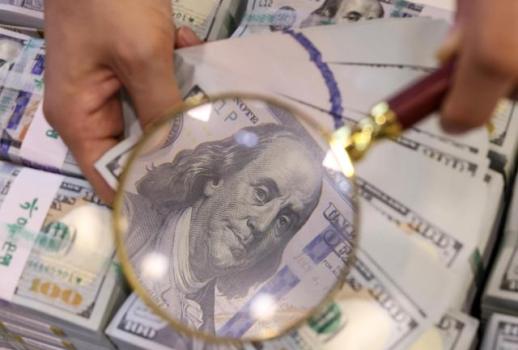 South Korea's short-term external debt ratio hits 15-year high SEOUL, August 20 (AJP) - South Korea's short-term external debt relative to its foreign-exchange reserves rose to the highest level in about 15 years in the second quarter, even as the government said the country's overall external payment capacity remained sound. The ratio climbed to 46.5 percent at the end of June from 43.3 percent three months earlier, the Ministry of Economy and Finance said Thursday. It was the highest reading since the second quarter of 2011, when the ratio stood at 50.8 percent, according to quarterly data compiled by the Bank of Korea. Short-term external debt, defined as obligations with maturities of one year or less, increased by $15 billion from the previous quarter to $198.5 billion, while its share of total external debt rose to 24.4 percent from 23.7 percent. Total external debt increased by $38.4 billion to $812.8 billion, with long-term debt rising by $23.5 billion to $614.3 billion. The ministry said the increase in short-term debt largely reflected settlement-related liabilities generated as foreign investors sold Korean equities rather than an increase in overseas borrowing. External debt held by nonbank financial institutions, public corporations and private companies rose by $36.3 billion, while government external debt increased by $8.4 billion, partly as foreign inflows into South Korean government bonds accelerated with the country's phased inclusion in the World Government Bond Index. Bank external debt fell by $4.8 billion and central bank liabilities declined by $1.5 billion over the quarter. South Korea's external claims rose by a larger $40.7 billion to $1.181 trillion, lifting net external claims — external claims minus external debt — by $2.3 billion to $367.8 billion, the first increase in three quarters. The ministry said the increase in net external claims and foreign-exchange reserves indicated that the country's external payment capacity remained adequate despite the rise in short-term debt indicators. Foreign-currency liquidity at domestic banks also remained well above regulatory requirements, with their foreign-currency liquidity coverage ratio at 167 percent at the end of the second quarter, compared with the regulatory minimum of 80 percent. 2026-08-20 17:55:16
 -
 SK hynix buyback, foreign buying send KOSPI up nearly 6% SEOUL, August 20 (AJP) - South Korean stocks rebounded sharply on Thursday, as a record share buyback plan sent SK hynix surging and foreign investors piled back into the country's semiconductor heavyweights following the previous day's rout. The benchmark KOSPI closed at 6,852.58 points, up 5.89 percent from the previous session, after rising as high as 6,904.55 during the day, as sharp gains in SK hynix and Samsung Electronics helped the index recover from Wednesday's nearly 6 percent plunge. SK hynix jumped 12.73 percent to close at 1,691,000 won, rebounding sharply from a 9.75 percent plunge a day earlier and climbing as high as 1,720,000 won during the session. The rebound came after the chipmaker announced after the previous day's market close that it would buy back 40 trillion won ($28 billion) worth of its own shares and cancel all of them, the largest share cancellation ever announced by a South Korean listed company. The company also strengthened its shareholder return policy, pledging to return at least 50 percent of cumulative free cash flow (FCF) over three years through share buybacks, cancellations and dividends. Analysts said the buyback could help lift the stock by creating steady demand for shares over the next three months. They also said canceling the repurchased shares would cut the number of shares outstanding by about 3.3 percent, boosting the value of remaining shares and showing confidence in future earnings. The optimism spilled over to its rival Samsung Electronics, which surged 9.49 percent to 271,000 won. The shares rose as much as 10.30 percent to 273,000 won during intraday trading. The gains were also fueled by expectations that the chipmaker could follow with a major shareholder return plan. However, it faces constraints on large-scale share cancellations. Such move would raise the combined stake held by Samsung Life Insurance and Samsung Fire & Marine Insurance, potentially forcing the two insurers to sell some Samsung Electronics shares to keep their combined stake below the 10 percent limit. The rebound in the two chipmakers was backed by strong foreign buying. Overseas investors snapped up a net 1.14 trillion won of Samsung Electronics shares and 541 billion won of SK hynix, making them the two most heavily bought stocks by foreign investors on the KOSPI. That helped fuel a broader reversal in foreign flows, with overseas investors buying a net 1.72 trillion won of KOSPI shares after selling 3.49 trillion won a day earlier. Retail investors, meanwhile, sold a net 2.28 trillion won, while institutions offloaded 488.1 billion won. The turnaround followed Wednesday's heavy foreign selloff, when overseas investors dumped a net 3.49 trillion won of KOSPI shares. Sentiment also improved after long-term U.S. Treasury yields stabilized overnight, easing the pressure that had triggered the previous day's global technology selloff. The U.S. Treasury said it would at least double the size of individual buybacks of longer-dated government securities to $4 billion from $2 billion. Wall Street's three major indexes subsequently finished higher. The Dow Jones Industrial Average gained 0.22 percent, the S&P 500 rose 0.21 percent and the Nasdaq Composite added 0.16 percent. Major technology stocks including Apple and Amazon climbed 2.19 percent and 2.46 percent, respectively, while Meta Platforms gained 0.43 percent. The semiconductor picture, however, were mixed. SK hynix's U.S.-listed American depositary receipts rose 0.35 percent, while Marvell Technology surged 9.85 percent. Broadcom fell 4.61 percent, AMD lost 3.71 percent and Intel dropped 4.02 percent, pulling the Philadelphia Semiconductor Index down 2.12 percent. Despite Thursday's sharp rebound, analysts cautioned that shareholder returns alone may not sustain the rebound, with longer-term gains depending on whether growth in HBM and AI chip demand continues to translate into stronger earnings and cash flow. Across Asia, major markets also rebounded from the previous day's losses. Japan's Nikkei 225 rose 1.36 percent to 66,216.79, rebounding from a 3.16 percent plunge a day earlier, with semiconductor shares leading the gains. Chinese stocks posted a more modest rebound after Wednesday's technology-led selloff. The Shanghai Composite edged up 0.24 percent to 3,903.72, after tumbling 2.40 percent in the previous session. Hong Kong outperformed the mainland market, with the Hang Seng Index gaining 0.91 percent to 25,726.23. AJP Takeaways • South Korea's KOSPI surged 5.89 percent to 6,852.58 on Aug. 20, 2026, recovering from a 5.80 percent plunge on Aug. 19. • SK hynix jumped 12.73 percent to 1,691,000 won after announcing a 40 trillion won ($28 billion) share buyback and cancellation plan, the largest of its kind announced by a South Korean listed company. • Samsung Electronics surged 9.49 percent to 271,000 won amid expectations for a major shareholder return plan, although ownership rules involving Samsung Life Insurance and Samsung Fire & Marine Insurance could constrain large-scale share cancellations. • The rebound came as long-term U.S. Treasury yields stabilized and Wall Street's major indexes advanced, although the Philadelphia Semiconductor Index fell 2.12 percent. • Asian markets also recovered on Aug. 20, with Japan's Nikkei 225 gaining 1.36 percent, China's Shanghai Composite rising 0.24 percent and Hong Kong's Hang Seng Index advancing 0.91 percent. 2026-08-20 17:53:31
 -
 Will Trump's joint drill reduction revive talks with North Korean leader? SEOUL, August 20 (AJP) - U.S. President Donald Trump's abrupt call to scale back a joint military exercise with South Korea has quickly moved from presidential rhetoric to security concerns, amid growing signs that he is seeking another face-to-face meeting with North Korean leader Kim Jong-un. The annual Ulchi Freedom Shield exercise (UFS), which began earlier this week and was originally scheduled to run for 11 days through Aug. 27, is being cut to five days and end on Friday. South Korea and the U.S. have also agreed to reduce some field training. The shortened schedule effectively eliminates a second phase that had been scheduled for next week and focused on counterattack operations after an initial defensive phase. Fourteen battalion-level or larger combined field training drills had originally been planned. The development comes after Trump ordered the Pentagon on Aug. 16 to make a "substantial" reduction in the exercise. Trump cited the cost of the exercise, his close personal relationship with Kim and Seoul's refusal to support a U.S. request for help in its war against Iran. Foreign Minister Cho Hyun told lawmakers last Wednesday that neither South Korean nor U.S. officials had known about the order in advance, an unusual breakdown in coordination over an exercise at the heart of the alliance's combined defense structure. The military move has been accompanied by increasingly explicit diplomatic signals from Trump. On Monday, he said Kim had responded to his overtures without elaborating. On Wednesday, Trump went further, saying he expected to meet Kim later this year and asserting that North Korea possessed 57 "very powerful" nuclear weapons. The Wall Street Journal reported that Trump has been pressing aides to arrange a meeting as early as this fall, possibly around his trip to China for the APEC summit in Shenzhen. The APEC Economic Leaders' Meeting is scheduled for Nov. 18-19. No formal summit preparations have been announced. The nuclear stakes were underscored on Thursday when South Korean Defense Minister Ahn Gyu-back told lawmakers that estimates by private institutions put North Korea's stockpile at roughly 80 to 120 nuclear warheads, while cautioning that Seoul's military could not verify an exact figure. Pyongyang, meanwhile, has sent deliberately mixed signals. Kim Yo-jong, the North Korean leader's powerful sister, denied that there had been recent communication between Washington and Pyongyang and argued that reducing the exercise did not fundamentally change what North Korea sees as hostile U.S. policy. At the same time, she said that the personal relationship between Trump and her brother remained "excellent," leaving open at least the possibility of renewed high-level diplomacy. Taken together, the rapid sequence has raised a broader question in Seoul. Is Trump using the reduction in the joint exercise as a tactical gesture to bring Kim back to the negotiating table, as he did during his first term, or does the decision signal a deeper reassessment of the U.S.-South Korea alliance? Three motives — and a warning from Yoo Seong-min Former conservative lawmaker Yoo Seong-min, who previously chaired the National Assembly's National Defense Committee, sees a potentially much broader and more dangerous convergence. Yoo told AJP that he believes three factors may have driven Trump's decision: a desire to stage another high-profile encounter with Kim after the Singapore, Hanoi and Panmunjom meetings of 2018 and 2019; resentment that South Korea has not joined U.S. military efforts in the Iran war; and frustration over the slow implementation of Seoul's $350 billion U.S. investment pledge while South Korean President Lee Jae Myung pushes ahead with a massive semiconductor cluster in Jeolla provinces. Seoul's $350 billion commitment was made as part of last year's trade agreement with Washington. South Korea launched a state-backed investment corporation in June to manage the package including $200 billion in strategic investments and $150 billion in shipbuilding-related investment, but no individual projects had been finalized at the time. Cho said Wednesday that implementation had been slower than Washington wanted because Seoul had to consider commercial viability and legal procedures. Separately, Samsung Electronics and SK hynix have pledged a combined 800 trillion won ($573.8 billion) in investment for four memory-chip fabrication plants as part of the government-backed semiconductor cluster in Gwangju and the wider southwestern region. There is no public evidence that Trump personally linked the project to his decision on military exercises and Yoo presented that connection as his own assessment. Trump himself publicly cited the Iran issue, the cost of the exercise and his relationship with Kim. South Korea's foreign minister, however, also said that he believed Trump's message was partly aimed at pressuring Seoul over the Iran war and unresolved investment issues. "Trump always tends to speak first and act first, so there has been an argument that we should watch his actions rather than his words," Yoo said. "But in this case, UFS was cut in half immediately after Trump's instruction, and the counterattack portion that had been conducted every year was dropped. I think it would be complacent to dismiss this as mere verbal intimidation." Yoo warned that repeated or permanent reductions in combined training could eventually raise more fundamental questions about the practical roles of the South Korea-U.S. Combined Forces Command, the United Nations Command and U.S. Forces Korea. "A drastic reduction in South Korea-U.S. joint military exercises could ultimately lead to questions about the reason for the existence of the Combined Forces Command, the United Nations Command and U.S. Forces Korea, and could lead to a process of weakening or dismantling the alliance," Yoo said. His concern also extends to Seoul's push to regain wartime operational control or OPCON from Washington. That connection is not merely theoretical. Before Trump's intervention, the allies said this year's UFS would specifically support preparations for the conditions-based OPCON transition. Seoul is in the second phase of a three-stage process, and the exercise has been used to assess South Korea's capacity to lead the future combined command. President Lee has said his administration wants to complete the transition during his term while strengthening South Korea's ability to defend itself. Yoo also pointed to Lee's Aug. 15 Liberation Day address, delivered just one day before Trump's exercise directive. Lee proposed discussions among relevant parties to formally end the Korean War, transform the armistice regime into a peace regime and find "effective measures" to halt further advances in North Korea's nuclear capabilities. He said peace on the Korean Peninsula could become a milestone toward "a world without nuclear weapons." Yoo argued that Trump's willingness to reduce military pressure and Lee's peace-oriented approach could reinforce each other in ways that increase centrifugal pressure on the alliance. Kim Gunn sees a diversion, not yet a diplomatic breakthrough PPP Rep. Kim Gunn, a member of the National Assembly's Foreign Affairs and Unification Committee and a former diplomat, took a considerably more cautious view. "It is still unclear how this will develop," Kim told AJP. Kim said Kim Yo-jong's reaction was particularly important because her denial of recent U.S.-North Korean communication casts doubt on the idea that Trump reduced the exercises as the result of an already functioning back channel with Pyongyang. "Judging from Kim Yo-jong's response, it does not appear that the exercises were scaled back because some communication is already taking place between the United States and North Korea," Kim said. "At this point, it looks more like a diversionary tactic by President Trump." Kim's comments highlight the gap between Trump's claims and North Korea's statements. Trump said Kim had responded to his efforts to contact him, but Kim Yo-jong later said she was not aware of any recent communication between the two leaders. U.S. and British scholars urge caution Theda Skocpol, the Victor S. Thomas Professor of Government and Sociology at Harvard University, was even more skeptical that Trump’s decision could be interpreted through a conventional policy framework. "Who knows why he does anything?" Skocpol told AJP. She pointed instead to Trump's frustration over the Iran war and weakening domestic political standing as possible context for the timing. "The U.S. president is frustrated he is not in control of the Iran war and increasingly unpopular at home," Skocpol said. The Iran conflict remains unresolved nearly six months after U.S.-Israeli attacks began on Feb. 28. A Reuters/Ipsos poll released Aug. 17 put Trump's approval rating at 33 percent, the lowest of his presidency, while 80 percent of respondents said they expected the Iran war to be prolonged. U.S. military resources have also been pulled toward the Middle East, including the redeployment of the USS George Washington aircraft carrier from the Pacific. Skocpol also cautioned Seoul against interpreting Trump’s conduct as being uniquely unfavorable toward South Korea. "South Korea should realize that Trump treats all allies this way," she said. "Not specific to South Korea." Asked what Seoul should watch for next, she offered an equally stark assessment. "With Trump, nothing remains consistent." Michael Zürn, professor of international and transnational relations at the Hertie School in Berlin, saw Trump's move as part of a broader pattern in his dealings with U.S. allies. "There is a general pattern of collaborating with authoritarians to shift the burden onto allies," Zürn told AJP, pointing to Trump's approach toward NATO, his treatment of Ukrainian President Volodymyr Zelenskyy and now South Korea. While such an approach could produce "short-term success in reducing American costs," Zürn warned that its longer-term consequences could be far more profound. He said the systemic effect could ultimately be "the end of the Non-Proliferation Regime," reversing what he described as one of the most important U.S. foreign-policy objectives since World War II. Andrew Hom, senior lecturer in international relations at the University of Edinburgh, identified two plausible explanations but said the evidence is not yet strong enough to conclude that Washington has adopted a new Korea strategy. Hom said the decision was most likely driven either by pressure on U.S. munitions and military hardware from the ongoing war in Iran or by a broader shift in Washington's "Asia pivot," although he cautioned that the latter explanation would require much more evidence. Hom said the exercise reduction "could" indicate a deliberate effort by Trump and his team to reengage Kim, but warned against extrapolating a durable policy shift from one presidential decision. "No one would be surprised if he were to qualify his statement, alter, or reverse course in the near future," Hom said. On deterrence, Hom assessed the immediate impact as relatively limited, arguing that major exercises are partly signaling mechanisms within the broader structure of long-term and extended deterrence. But he drew a sharp distinction between a one-off reduction and an enduring change in U.S. force posture. If Trump's decision marks "the beginning of a significant shift in U.S. policy toward the Korean Peninsula," Hom said, the consequences could become "multiple, complex and possibly dangerous." A familiar Trump-Kim playbook — in a more dangerous environment Trump has used joint exercises as diplomatic currency before. After his first summit with Kim in Singapore on June 12, 2018, Trump surprised both allies and U.S. officials by moving to suspend what he called expensive "war games" with South Korea. The Singapore declaration called for new U.S.-North Korean relations, a peace regime on the Korean Peninsula and work toward denuclearization. A second summit in Hanoi in February 2019 collapsed without an agreement after Washington and Pyongyang failed to bridge differences over sanctions relief and nuclear dismantlement. Trump and Kim met a third time at Panmunjom on June 30, 2019, when Trump became the first sitting U.S. president to step across the military demarcation line into North Korea. Those meetings produced extraordinary images but no lasting agreement curbing North Korea's nuclear arsenal. Trump has recently returned to those images. On Aug. 15, he posted a photograph of himself and Kim at Panmunjom on Truth Social, writing that although they did not look particularly friendly in that particular image, there were many pictures of them smiling and adding that he and Kim "get along GREAT!" But the strategic environment in 2026 is substantially different from that of 2018. North Korea's nuclear and missile forces are larger and more sophisticated, while Pyongyang has developed a far deeper security relationship with Moscow. North Korean forces have also gained battlefield experience through their involvement in Russia's war against Ukraine, a factor the U.S. military itself said it was incorporating into this year’s UFS scenarios. From Venezuela to Greenland, Iran — and now North Korea Trump's renewed focus on the Korean Peninsula also fits a striking pattern in his second term: the center of his foreign-policy attention has repeatedly shifted among dramatically different geopolitical theaters. The progression is not perfectly linear. In particular, Trump revived his Greenland campaign in July even while the Iran war was continuing. But the administration's headline focus has ricocheted in a matter of months from Venezuela to Greenland, then to the war with Iran and now back to North Korea. The pace of the shifts has been striking. On Jan. 3, U.S. forces carried out a surprise operation in Venezuela that captured Nicolás Maduro, marking Washington's most dramatic military intervention in Latin America in decades. Barely a day later, Trump renewed his push for U.S. control of Greenland, telling The Atlantic that the United States "absolutely" needed the territory for defense. His administration subsequently said military options remained on the table. By Feb. 28, the administration's attention had shifted to Iran, as the United States and Israel launched major attacks that triggered a conflict still unresolved as of Aug. 20. Yet Greenland had not disappeared entirely from Trump's agenda. On July 8, while the Iran war was still underway, Trump again raised the issue at the NATO summit in Ankara, saying Greenland should be controlled by the United States and calling the dispute "a big problem." Those were the most recent direct public comments by Trump on Greenland that AJP could verify through Aug. 20. By mid-August, North Korea had moved rapidly back to the center of Trump's foreign-policy attention. On Aug. 15, he posted a photograph of himself with Kim from their 2019 Panmunjom meeting and emphasized that the two leaders still had a good relationship. The following day, Trump ordered a substantial reduction in U.S.-South Korean joint military exercises. On Aug. 17, he said Kim had responded to his overtures, and on Aug. 19, Trump said publicly that he planned to meet the North Korean leader later this year, while reports indicated that he was pressing aides to explore a summit around his planned trip to Asia in November. The July 8 Greenland remarks are particularly revealing about the overlap among Trump's foreign-policy campaigns. At the same NATO summit where he again pressed for U.S. control of Greenland, Trump also lashed out at European allies for failing to help Washington in the Iran war. What would show that this is more than a one-off? Hom said the decisive evidence would come not from Trump's next statement but from whether the administration follows through institutionally. "I would need to see significant follow-through from the Trump team and the U.S. military to conclude that this moment marks the start of a sea change in U.S.-Korean relations," Hom said. Among the signs he would watch are long-term reductions in U.S. troop deployments to South Korea and the wider region, an actual Trump-Kim summit, and whether the Pentagon and Congress replenish depleted U.S. weapons stocks and redirect military systems back toward East Asia. 2026-08-20 17:52:14
 -
President Yoon Meets with Chinese Diplomat Wang Yi, No Peace Talks Discussed President Yoon Suk Yeol met with Wang Yi, a member of the Political Bureau of the Chinese Communist Party and Foreign Minister, at the Blue House on August 20 to discuss the development of Korea-China relations and the situation on the Korean Peninsula.Following meetings with Chinese President Xi Jinping last year and this year, President Yoon stated, "We are achieving a clear outcome in the full restoration of Korea-China relations." However, the discussions did not confirm any specific multilateral talks on ending the war, as suggested in Yoon's Liberation Day speech.According to the Blue House, President Yoon emphasized that the two governments are strengthening horizontal and mutually beneficial cooperation in the economic sector based on political trust. He positively assessed the growing friendship and trust between the two nations' citizens.Wang conveyed President Xi's regards to President Yoon and expressed gratitude for the hospitality of the South Korean government. He noted that the Korea-China relationship continues to develop steadily based on the mutual understanding reached during state visits by both leaders.Wang also expressed his commitment to actively implement the follow-up measures agreed upon by the two leaders in anticipation of the 35th anniversary of Korea-China diplomatic relations next year.The upcoming Asia-Pacific Economic Cooperation (APEC) summit in Shenzhen, China, was also a key topic of discussion. Wang expressed hope that the South Korean government, which successfully hosted the APEC summit in Gyeongju last year, would support the Shenzhen summit.Wang stated that he would ensure that high-level exchanges between Korea and China yield results during the APEC summit. President Yoon responded by wishing for the successful hosting of the Shenzhen APEC summit and pledged necessary support.President Yoon highlighted the significance of the meetings between the two leaders, which have taken place in Gyeongju last November, Beijing this January, and will continue in Shenzhen this November. He expressed hope for fruitful outcomes that would contribute to the lives of both nations' citizens and further strengthen Korea-China relations.President Yoon urged Wang to maintain close strategic communication regarding Korea-China relations and issues on the Korean Peninsula with Foreign Minister Park Jin and National Security Advisor Kim Sung-han. At the conclusion of the meeting, he requested Wang to convey his warm regards to President Xi, recalling their meeting in January.The focus of the discussions leaned more towards restoring Korea-China relations and following up on agreements between the leaders rather than concretizing plans for ending the war on the Korean Peninsula.Wang's demeanor during the Korea-China foreign ministers' meeting the previous day supports this analysis. While he stated that China would continue to play a constructive role in ensuring peace and stability on the Korean Peninsula, he distanced himself from mediating U.S.-North Korea talks.Wang remarked that the U.S. should change its existing hostile policy towards North Korea, emphasizing that the decision-making lies between North Korea and the U.S. This indicates a reaffirmation of principles for cooperation on peace in the Korean Peninsula while suggesting that China would not directly intervene or take on mediation responsibilities.Meanwhile, North Korea launched unidentified projectiles into the East Sea on the same day as Wang's visit. Notably, North Korea also fired two short-range ballistic missiles into the East Sea on September 15, 2021, during Wang's visit to then-President Moon Jae-in. As attention turns to North Korea's provocations, the previous Korea-China meeting, which discussed restoring inter-Korean relations and cooperation for the Beijing Winter Olympics, left only general messages. The recurrence of North Korea's missile launches during Wang's visit, five years later, has drawn parallels.While North Korea's exact intentions remain unclear, it is evident that North Korea continues its independent military actions, separate from the peace messages of Korea and China and China's diplomatic schedule. This raises questions about the limited influence China has over North Korea.Recently, U.S. President Donald Trump emphasized his relationship with North Korean leader Kim Jong Un, directing a reduction in the scale of U.S.-South Korea joint military exercises and leaving open the possibility of a U.S.-North Korea summit later this year. President Yoon has also positioned himself as a "facilitator" for U.S.-North Korea dialogue, but North Korea's missile launches have reaffirmed that significant variables remain before dialogue can resume.Both Korea and China are expected to focus on facilitating additional summits during the November Shenzhen APEC summit and concretizing follow-up measures from the leaders' agreements. Managing the flow of restored relations through tangible cooperation in areas such as economy, trade, and supply chains will also be a challenge.A political insider stated, "Ultimately, a balanced strategy is required to secure constructive cooperation from China while promoting peace on the Korean Peninsula centered on direct dialogue between North Korea and the U.S. Wang's visit should be viewed not as a catalyst for initiating discussions on ending the war, but rather as an opportunity for Korea and China to clarify their respective roles and distances in the changing dynamics on the Korean Peninsula." 2026-08-20 17:52:10
-
New Youth Housing Loan Program Launching in January 2027 Interest among young people is high for the 'Youth Future Housing Loan' set to launch in January 2027. This policy financial product is aimed at young renters without homes looking to purchase non-apartment properties such as villas and officetels. With a loan-to-value ratio (LTV) of up to 80%, it could serve as a valuable means for young individuals without initial capital to secure their own homes. However, there are important considerations. The housing price recognized by financial institutions is based on appraisal value, not the actual sale price. If the appraisal value is lower than the expected sale price, borrowers may not receive the anticipated loan amount. How can young people fully utilize the Youth Future Housing Loan? What is the Youth Future Housing Loan? The Youth Future Housing Loan is a new policy product introduced by the government as part of the comprehensive real estate finance measures announced on August 13. It targets young individuals under 39 years old who are first-time homebuyers and have an annual income of less than 70 million won. The loan allows for a maximum LTV of 80% when purchasing non-apartment properties (villas and officetels) valued at 400 million won or less, and it retains first-time LTV benefits when transitioning to an apartment. This option could help reduce housing costs for those looking to secure their own homes using non-apartment properties. However, the '400 million won or less' condition can be challenging. In areas with good access to downtown Seoul or high expectations for redevelopment, many villas exceed this price point. Expanding the search to the outskirts of Seoul or the metropolitan area may yield suitable housing within the price range eligible for the Youth Future Housing Loan. LTV of 80% Based on Collateral Value, Not Sale Price If planning to purchase a villa using this product, it is crucial not to base financial plans solely on the 'LTV 80%' figure. The method of assessing collateral value for villas differs from that of apartments. Apartments have frequent transactions within the same complex and size, making it easier for financial institutions to access reliable pricing data, such as KB Real Estate prices. In contrast, villas can vary significantly in price based on factors like floor level, direction, year of construction, and building condition, making it difficult to establish a uniform market price. As a result, financial institutions assess the collateral value of villas through individual appraisals due to insufficient market data. The appraisal process considers comparable sales, location, and building condition. This discrepancy can lead to differences between the actual sale price and the collateral value recognized by financial institutions. Officetels may also require separate collateral appraisals if there is no established market price. Therefore, when preparing funds to purchase a villa, calculating the potential loan amount based solely on the sale price and applying the LTV can lead to disappointment. For example, if a villa is priced at 200 million won, but the financial institution assesses its collateral value as lower, applying the LTV of 80% may result in a loan amount that falls short of expectations. Relying solely on the sale price for loan calculations could necessitate additional personal funds. Future Demand and Resale Potential Should Be Considered For this reason, it is essential to verify the expected collateral value and potential loan amount before signing a sales contract. Consulting real estate agencies for recent sale prices and appraisal cases of similar villas in the area, as well as discussing expected loan limits with financial institutions, is advisable. The publicly announced prices of multi-family housing can also serve as a reference for gauging housing prices. To prepare for the possibility of not receiving the expected loan amount, including loan-related clauses in the sales contract is a prudent approach. Another factor to consider is that the Youth Future Housing Loan retains first-time LTV benefits when transitioning to an apartment. Therefore, it is important to evaluate resale potential when choosing the first home. Prospective buyers should carefully assess whether the location will continue to attract demand and if the property can accommodate future family growth. Song Seung-hyun, CEO of Urban and Economy, stated, "Choosing the right location for a villa is crucial for future liquidity. In areas with high demand, finding villas priced under 400 million won can be challenging, so it is essential to consider future demand and resale potential as well."* This article has been translated by AI. 2026-08-20 17:52:10
-
Government to Issue 500 Billion Won in Treasury Bonds in August The Ministry of Finance announced on August 20 that it will issue 500 billion won in treasury bonds through a non-competitive bidding process. Since being included in the World Government Bond Index (WGBI) in April, demand for treasury bonds has increased. The term "treasury bonds" refers to bonds that have been newly issued while transferring benchmark status from previously issued bonds. To enhance liquidity in treasury bonds, the government will conduct a non-competitive bidding process for these bonds. In this process, primary dealers (PDs) can bid for the amount of bonds they require based on the pre-announced issuance volume and interest rate. The allocation of successful bids will be proportionate to the amount bid by each PD within the limits of the issuance volume for each bond type. The issuance will include four types of 20-year bonds totaling 425 billion won and one type of 30-year bond totaling 75 billion won. A Ministry official explained, "PDs can bid in two groups based on their performance evaluations from the previous month. The first group, which includes all 20 primary dealers, will receive 60% of the planned issuance amount. The second group, consisting of the top 10 primary dealers based on their performance evaluations, will receive 40% of the planned issuance amount." The interest rates for the bonds to be issued in August will be announced on the bond market's website on the bidding date, August 28, taking into account market conditions such as prevailing interest rates.* This article has been translated by AI. 2026-08-20 17:52:10
-
Intense Legal Debate Over Electric Vehicles and Critical Minerals at WTO Mock Trial 전기차 충전 인프라와 핵심광물을 둘러싼 각국의 산업정책이 국제 통상현안으로 떠오른 가운데 대학생과 대학원생들이 세계무역기구(WTO) 규범을 토대로 치열한 법리 공방을 벌였다. 산업통상부는 20일 한국국제경제법학회와 공동으로 서울시립대학교 법학관에서 '제17회 WTO 모의재판 경연대회'를 개최했다. 서울시립대학교가 후원한 이번 대회에는 전국 15개 대학에서 21개 팀, 총 76명이 참가를 신청했다. WTO 모의재판 경연대회는 미래 통상 전문인재를 발굴·양성하고 국제통상규범에 대한 관심을 높이기 위해 2010년 시작됐다. 17회째를 맞은 올해는 학부생뿐 아니라 대학원생까지 참여하면서 국제통상 분야에 대한 청년층의 높은 관심을 보여줬다. 서면 심사를 통과한 8개 팀은 이날 본선에서 제소국과 피제소국으로 나뉘어 맞붙었다. 참가자들은 통상법 전문가들로 구성된 심사위원단 앞에서 WTO 협정과 판례 등을 토대로 자국의 조치가 국제통상규범에 부합하는지를 주장했다. 상대 팀의 논리를 즉석에서 반박하고 심사위원들의 질문에 답하는 과정도 이어졌다. 미리 준비한 변론을 발표하는 데 그치지 않고 사실관계와 협정상 쟁점을 파악해 논리를 구성해야 하는 만큼 실제 WTO 분쟁해결절차를 연상시키는 공방이 펼쳐졌다. 올해 문제는 최근 글로벌 통상환경의 변화를 반영해 전기차 충전 인프라와 핵심광물을 둘러싼 가상국의 산업정책을 소재로 구성됐다. 친환경 산업 육성과 공급망 안정이라는 정책적 필요성이 WTO 규범과 어떤 관계를 갖는지가 주요 쟁점으로 다뤄졌다. 특히 참가자들은 정부조달과 경제통합협정 등 여러 통상규범을 함께 검토하며 각국 산업정책의 정당성과 규범 합치 여부를 따졌다. 최근 주요국이 핵심광물 공급망 확보와 친환경 산업 육성에 적극 나서면서 실제 통상현장에서도 중요성이 커지고 있는 사안들이다. 경연 결과 서울대학교 'ANTI-DUMPLINGS'팀이 가장 높은 평가를 받아 산업통상부 장관상인 대상을 차지했다. 연세대학교와 전남대학교 학생들로 구성된 'Bona Fide'팀은 한국국제경제법학회장상인 최우수상을 받았다. 서울시립대학교 '비상'팀과 고려대학교 '토마통상'팀은 공동 우수상에 이름을 올렸으며 8강에 진출한 나머지 팀에도 장려상이 수여됐다. 권혜진 산업부 통상교섭실장은 "보호무역주의가 확산되고 통상환경이 복잡해질수록 국제통상규범은 국가 간 경쟁이 지켜야 할 공통의 기준이 되고 규범에 기반한 분쟁해결의 중요성도 더욱 커진다"고 말했다. 이어 "이번 대회를 통해 우리 청년들이 규범을 정확히 이해하는 능력과 산업·정책의 현실을 함께 읽는 시각을 키워 앞으로 실제 통상현장에서 대한민국의 국익과 기업의 이익을 지켜내는 전문인재로 성장하기를 기대한다"고 덧붙였다.* This article has been translated by AI. 2026-08-20 17:52:00