


Latest by
-
 Innovation and Accreditation Must Work Together for Survival, Experts Say In the face of declining school-age populations and financial crises, experts suggest that small universities must integrate university accreditation and innovation support projects into a single operational system to survive. They emphasize the need to avoid one-time achievements and superficial paperwork, advocating for a genuine improvement in institutional quality and sustainable development through the organic connection of these two systems. On August 19, the '2026 Korea Small University EXPO' was held at the Novella Hall of The Riverside Hotel in Seocho-gu, Seoul, co-hosted by Chugye University of Arts and seven other universities. The event, themed 'AI and IR-Based University Innovation,' brought together university presidents, administrators, and innovation project officials to discuss development directions and survival strategies in depth. In his opening remarks, Lim Sang-hyuk, President of Chugye University of Arts, stated, "The significance of this expo lies in expanding each university's innovation into our collective innovation. The competitiveness of small universities is determined not by their physical size but by their clear identity, specialization, responsiveness to change, and meticulous support for each student." In a congratulatory speech, Ahn Se-geun, former head of the Korea Accreditation Institute for Higher Education and a professor emeritus at Konkuk University, noted, "Universities currently face a complex crisis due to declining school-age populations, changes in accreditation systems, the expansion of non-major programs, and the rise of artificial intelligence. It is difficult to achieve sustainable innovation by addressing these issues in isolation at the project or departmental level." Ahn emphasized, "If AI expands the content and methods of education, IR verifies whether these changes lead to actual student growth based on evidence. University evaluations should not merely rank institutions or categorize them as successes or failures; they should serve as a quality assurance process that checks whether promised education is being delivered and helps improve it." The keynote address, a highlight of the event, was delivered by Ahn Sang-du, chair of the Certification Operations Committee at the Korea Accreditation Institute for Higher Education. He discussed 'Response Strategies for Small Universities in Accreditation: Focusing on Integration with Innovation Support Projects.' Ahn addressed the realities faced by small universities, stating, "Small universities are severely understaffed, with one person often handling multiple roles. It is practically impossible to respond individually to the numerous policies the government is rolling out, such as the Anchor (formerly RISE) project, glocal universities, structural optimization, and AI digital transformation." He warned against negative strategies that merely evade government policies or aim to meet minimum standards. He cautioned, "If universities pursue excessive restructuring or indiscriminate recruitment of international students solely to secure financial support, it will lead to disastrous outcomes that ultimately choke the universities themselves. They must carefully consider strategic suitability aligned with their identity and respond positively and responsibly." Ahn's key survival strategy centers on establishing an 'integrated operational system.' He highlighted that starting in 2024, the Ministry of Education will require university accreditation as a prerequisite for government financial support. Failure to obtain accreditation could result in the loss of innovation project funding and even students' national scholarships and loans, creating a dire situation. He explained, "University accreditation is a process that verifies the minimum 'correct standards' to ensure educational quality as a higher education institution, while the innovation support project demands substantial resources to drive real change and requires universities to excel." Ahn stressed that if these two elements are prepared separately, the workload for staff will double, and documentation will become fragmented between the annual innovation projects and the three- to five-year accreditation evaluations. He urged that achievements and reports generated during innovation projects should seamlessly serve as robust evidence for accreditation within a 'single operational system.' A response strategy for the newly introduced fourth-cycle accreditation system was also presented. Ahn noted, "In the fourth cycle evaluation, the existing five areas will be completely integrated, assessing social responsibilities and outcomes within the broader framework of university management. The head of the evaluation team will now review the entire university's operations, making fragmented responses by department ineffective." He proposed a 'mapping' strategy as a practical method for integration. This involves closely linking the 24 evaluation criteria specified in the accreditation manual with the detailed tasks of the innovation support project. Ahn advised, "The definitions and formulas for the indicators required for accreditation should be used without deviation in the innovation projects, and the information disclosure materials should serve as common raw data to eliminate discrepancies. Any weaknesses identified during the accreditation process should not be neglected but should be set as new innovation tasks, with budgets allocated immediately to create a virtuous cycle of improvement." He also urged that when evaluation criteria or interpretations are ambiguous, universities should not rely on rumors or practices from other institutions but should seek official clarification from the Korea Accreditation Institute through formal channels like email. Ahn further emphasized the importance of sustainability in projects and the leadership of university presidents. He expressed concern that in small universities, innovation projects might end up being mere 'projects for the sake of projects' or 'one-time events to exhaust budgets.' He stressed that if meaningful outcomes are achieved, they must be institutionalized through amendments to official regulations, integration into regular organizational structures, and budget planning to ensure continued operation even after government support ends. He pointed out that in small universities, the role of the president is crucial for the institution's survival. He criticized unilateral leadership, stating, "While it may seem effective in the short term, it ultimately undermines the autonomy of the organization and poses a risk of leading the university to the brink of collapse." Ahn urged presidents to rationally redistribute personnel and resources to ensure the integrated operational system functions smoothly, continuously question and check the field, and foster a healthy and flexible organizational culture where staff can freely report weaknesses and negative opinions. In the afternoon session of the Small University Expo, following Ahn's keynote address, programs were conducted to explore practical cooperation and innovation strategies among small universities. Lee Tae-hee, head of the Education Innovation Office at Hanyang University, delivered a lecture titled 'An Invitation to Collaborative Education: Focusing on AI Literacy Education,' assessing the potential for collaborative education among universities. Subsequently, innovative cases rigorously developed by each university were presented. Notable examples included Ryu Jeong-ho's analysis of educational outcomes for students in free major programs at Incheon Catholic University, Jeong Jae-min's establishment and operation of a university-wide support system for student retention at Chugye University of Arts, and Wi Soo-in's creation of a non-engineering AI education model (DSU AI for ALL) at Daeshin University, which captured the audience's attention. Additionally, successful formulas from eight small universities were shared, including Calvin University's ESG community engagement project, Yeongnam Theological University's student competency management system (Young Shiny), Jesus University's development and operation of liberal arts courses linked to local institutions, Pyeongtaek University's practical educational innovation model through extracurricular programs (Team up), and Halla University's AI literacy-based future talent development project.* This article has been translated by AI. 2026-08-19 16:32:00
 -
Lee Chan-won's Winning Dishes on 'Pyeon Restaurant' Reach 10 Lee Chan-won has finally achieved '10 Chan-won' on 'Pyeon Restaurant.' From his first winning dish to the latest Kkae Poktan Sundae Jeongol, he has now lifted the trophy for a total of 10 dishes.On August 13, KBS 2TV's 'New Release Pyeon Restaurant' featured a menu competition themed around 'snacks.' Lee Chan-won showcased Kkae Poktan Sundae Jeongol, made with meat sundae, perilla leaves, and perilla powder, securing his tenth victory. He expressed his ambition, stating, "I will aim for 20 Chan-won and 30 Chan-won records on 'Pyeon Restaurant.'" Lee Chan-won's winning streak began in 2022.The first victory came with 'Jintto Galbi,' which aired on May 20, 2022. Inspired by the spicy braised ribs from his hometown Daegu, the dish combined pork ribs with a spicy seasoning and corn mayo, leading to his first win.The day after the broadcast, it was commercialized as 'Jintto Baegi Mapssak Galbi Triangle Kimbap' at GS25, selling over 500,000 units within four days, setting a record for the fastest sales of 500,000 units for a single item at GS25.His second winning dish, 'Spicy Cheonggukjang,' aired on September 2, 2022. This dish added diced radish and dried radish to the traditional Cheonggukjang, enhancing its flavor. It was later released as 'Chan Tto Baegi Doenjang Sullabap' at GS25.Just three weeks later, on September 23, he won again with 'Garlic Butter Jajang Rice.' Inspired by his close friend Hwang Yoon-seong, who was about to enlist, this dish featured garlic and butter-infused jajang rice in a triangle kimbap form. It was also released as 'Jintto Baegi Garlic Egg Fried Jajang Rice' in convenience stores and as a meal kit online.His fourth win came on December 23, 2022, with 'Ssamjang Chicken Stir-fry,' utilizing Korean-style fermented soybean paste. This dish was later commercialized as 'Jintto Baegi Ssamjang Dakgalbi' meal kit and 'Corn Cheese Ssamjang Dakgalbi' lunch box.On April 21, 2023, he won for the fifth time with 'Triple Crown Cheese Burger & Salad,' which featured cheddar, mozzarella, and a homemade cheese sauce, along with tteokgalbi. This marked the first time a burger and salad set was released as a winning product on 'Pyeon Restaurant.'On July 7, 2023, he achieved his sixth victory with 'Spicy Chicken Braised Bibimbap,' which combined braised chicken with scrambled eggs and mayonnaise. This dish was also released as a triangle kimbap and as 'Chan Tto Cheese Spicy Chicken Braised Fried Rice.'After a year-long wait, he won again on September 27, 2024, with 'Spicy Potato Soup Ramen,' which translated the spicy flavor of potato soup into a ramen dish. This was later commercialized as a convenience store meal and meal kit.His eighth win came on May 2, 2025, with 'Dogani Yukgaejang,' a soup dish made with beef tripe and spicy beef soup. It was later produced as a frozen meal called 'Chan Tto Baegi Dogani Yukgaejang' by Our Home.On October 24, 2025, he won for the ninth time with 'Great Pork Cutlet,' a large pork cutlet weighing 250 grams, served with a sauce he created. This dish was later released as 'Chan Tto Baegi Great King Pork Cutlet.'Finally, on August 13, 2026, he secured his tenth win with 'Kkae Poktan Sundae Jeongol,' a hot pot dish made with meat sundae, perilla leaves, and perilla powder. Our Home has since launched a single-serving meal called 'Chan Tto Baegi Meat-filled Sundae Jeongol,' which is available online and in some restaurants and catering menus.In summary, Lee Chan-won's winning record includes four victories in 2022, two in 2023, one in 2024, two in 2025, and one in 2026. Starting with 'Jintto Galbi,' his menu has expanded to include rice, stews, burgers, ramen, yukgaejang, pork cutlet, and hot pot dishes.Having reached ten victories, Lee Chan-won is now set to pursue his self-declared goals of '20 Chan-won' and '30 Chan-won.'* This article has been translated by AI. 2026-08-19 16:32:00
-
KOSPI Plummets Over 5% as Semiconductor Stocks Decline, Falls Below 6500 The KOSPI index dropped more than 5%, falling below the 6500 mark. The decline was driven by a broad sell-off in semiconductor stocks, which had recently led the market's gains, as foreign and institutional investors engaged in significant selling, causing the index to fall over 6% at one point during the trading session. The KOSDAQ index managed to reduce some of its losses, closing around the 820 level.On August 19, the Korea Exchange reported that the KOSPI closed at 6471.17, down 398.66 points (5.80%) from the previous trading day.The index opened at 6528.77, down 341.06 points (4.96%), and continued to widen its losses. At one point, it fell to 6400.81, marking a 6.83% drop, before slightly recovering but ultimately failing to regain the 6500 level by the end of the session.As the market continued to decline early in the session, a sell-side circuit breaker was triggered at 9:06:02 AM, marking the 25th such occurrence in the securities market this year.The sharp decline in the stock market was primarily attributed to the recent downturn in semiconductor stocks. On the previous day, U.S. markets saw significant drops in memory-related stocks, including Micron (-6.9%), SanDisk (-9.0%), and Western Digital (-7.4%), leading to profit-taking in domestic semiconductor stocks.Analysts noted that the recent strong performance of global memory stocks had created a significant pullback pressure. In Japan, Kioxia also experienced a 12.60% drop, reflecting a broader weakness in global memory stocks.Additionally, high U.S. long-term interest rates and geopolitical uncertainties in the Middle East dampened investor sentiment. The yields on 10-year and 30-year U.S. Treasury bonds remained elevated at 4.69% and 5.27%, respectively. Tensions in the Middle East escalated after Iran's parliamentary speaker stated that the country would maintain the closure of the Strait of Hormuz until promises made in a tentative agreement with the U.S. were fulfilled, alongside reports of airstrikes in the region.On this day, individual investors made net purchases of 5.5617 trillion won, engaging in bargain hunting. In contrast, foreign and institutional investors sold a net 3.8188 trillion won and 1.9043 trillion won, respectively, leading the index's decline.Among the top market capitalization stocks, Samsung Electronics (-7.82%), SK Hynix (-9.75%), SK Square (-11.54%), Samsung Electro-Mechanics (-3.68%), Hyundai Motor (-4.83%), KB Financial (-1.25%), and Samsung C&T (-5.96%) all saw declines. Conversely, LG Energy Solution (1.85%), Samsung Biologics (0.85%), and Hanwha Aerospace (2.71%) recorded gains.The KOSDAQ index closed at 824.46, down 9.74 points (1.17%) from the previous trading day.In the KOSDAQ market, foreign and institutional investors made net purchases of 48.1 billion won and 45.7 billion won, respectively, while individual investors sold a net 102.1 billion won.Among the top KOSDAQ stocks, EcoPro (-1.03%), Rainbow Robotics (-1.60%), JUSUNG Engineering (-4.29%), HLB (-2.43%), and Wonik IPS (-2.76%) closed lower. In contrast, Alteogen (1.85%), EcoPro BM (0.64%), Rino Technology (0.15%), IOTech (0.24%), and Peptron (3.28%) finished higher.Lee Kyung-min, a researcher at Daishin Securities, stated, "The domestic stock market experienced a sharp decline due to the turnaround of foreign investors to net selling and the exit of institutional funds. The sell-side circuit breaker was triggered, and a pullback was observed, particularly in the semiconductor sector, which had recently led the market's sharp rebound." He added, "Profit-taking in memory-related stocks such as Micron, SanDisk, and Western Digital was also seen in the U.S. market, and major semiconductor stocks like Samsung Electronics and SK Hynix showed weakness domestically. Geopolitical tensions in the Middle East and high market interest rates also contributed to the dampened investor sentiment."* This article has been translated by AI. 2026-08-19 16:28:00
-
National Assembly's Judiciary Committee Votes to Summon Chief Justice Cho Hee-dae The National Assembly's Judiciary Committee voted on August 19 to summon Chief Justice Cho Hee-dae, led by the Democratic Party. Although the request for Cho's appearance was not on the original agenda, it was accepted by Judiciary Committee Chair Seo Young-kyu at the request of ruling party lawmaker Kim Seung-won.During the full committee meeting, members voted on the agenda change and the request for the Chief Justice's appearance. All members of the opposition People Power Party voted against the motion, but it passed with support from the Democratic Party and other ruling coalition members.Chair Seo explained that the request for Chief Justice Cho's appearance aims to inquire about the prolonged vacancy in the Supreme Court justice nomination process and the reasons for referring specific cases to the Supreme Court's en banc.Previously, Chief Justice Cho faced criticism for submitting two final candidates for Supreme Court justices to President Yoon Suk Yeol in writing, which was seen as disregarding the president and the National Assembly. In response, the People Power Party asserted that the authority to nominate justices lies with the Chief Justice.People Power Party lawmaker Joo Jin-woo criticized the situation, stating, "The Blue House has abused its power by interfering in the nomination process and is now blaming the Chief Justice, who exercised his legitimate authority. This is legislative tyranny and an embarrassment to the public."Despite opposition from the People Power Party, the ruling party's demand for Chief Justice Cho's appearance led to a press conference by the People Power Party's Judiciary Committee members, who claimed, "The Democratic Party is directly infringing upon judicial authority."Opposition lawmaker Park Hyung-soo stated, "The Democratic Party's attack on the principle of separation of powers has gone too far," emphasizing that the essence of the controversy over the delay in nominations is not the method of nomination but rather why the Blue House intervened in the nomination process, leading to the current delays.He added, "We must clarify whether the Blue House insisted on specific candidates, whether preferences or exclusions were communicated, and who from the presidential office contacted the Supreme Court during this process. The person who should come to the National Assembly to provide a sincere explanation is not Chief Justice Cho, but President Yoon."Concerns were also raised that allowing the president to dictate nominations under the guise of 'prior coordination' would undermine the nomination authority, potentially leading to an unconstitutional concept of 'prior approval' not found in the constitution.Lawmaker Kim Tae-kyu urged, "This administration has been directly infringing upon judicial authority since it took office, and this behavior must stop."* This article has been translated by AI. 2026-08-19 16:28:00
-
Prosecutors Seek $10,000 Fine for Yoon Suk Yeol in Perjury Case The special prosecution team investigating the insurrection case has requested a fine of 10 million won ($10,000) for Yoon Suk Yeol, who was previously acquitted of perjury charges in the trial of former Prime Minister Han Duck-soo.During the appeal hearing held on August 19 at the Seoul High Court, the prosecution asked the court to overturn the lower court's not guilty verdict and impose a fine of 10 million won along with a payment order.Unlike the initial trial, where the prosecution sought a two-year prison sentence, they have now shifted to requesting a fine in the appeal.The prosecution explained their reasoning, stating, "The defendant has been sentenced to life imprisonment for leading the insurrection and 30 years for general treason in the first trial, and he recently received a confirmed sentence of seven years for obstructing special public duties. Considering the purpose of punishment and the effectiveness of execution, we believe a fine is appropriate for achieving a substantial punitive effect."Yoon appeared as a witness in Han's trial last November. When asked by the court if he believed it was necessary to call the required personnel to the Cabinet meeting from the beginning, he responded, "Yes. I knew that a Cabinet meeting was necessary since we were declaring martial law to inform the world." The prosecution claims this statement was perjury.According to the prosecution's investigation, Yoon initially called only six Cabinet members without intending to hold a Cabinet meeting. After hearing Han's suggestion, he later summoned six more members, including Choi Sang-mok, the former Minister of Economy and Finance, to meet the quorum for the meeting.In previous hearings, the prosecution presented evidence, including CCTV footage from the presidential office's reception room, stating, "Even after the additional Cabinet members arrived, no formal meeting was held, and there was an attempt to declare martial law without waiting for the second group of summoned members. Therefore, the testimony that a Cabinet meeting was planned before Han's suggestion is false."In contrast, Yoon's defense team completely denied the charges. In their closing argument, they stated, "Most of the objective evidence, including CCTV footage and investigation reports, actually proves the defendant's innocence," arguing that the second summoning of Cabinet members began at 9:14 PM on December 3, before Yoon's private meeting with Han. They also criticized the prosecution for abusing its prosecutorial authority by filing charges without conducting interviews or requesting written opinions.Yoon himself defended his actions during a five-minute closing statement, saying, "Due to security concerns, we initially called only a few members for discussion, and then we needed to hold a Cabinet meeting with a quorum to declare martial law, so we called additional members. If we weren't going to hold a Cabinet meeting, we could have just called the Prime Minister and the Minister of National Defense; why would we have called other ministers like the Minister of Foreign Affairs?"In the earlier trial, the court found that Yoon appeared to have planned to summon additional Cabinet members regardless of Han's suggestion, and deemed his courtroom testimony as subjective, leading to a not guilty verdict. The prosecution has appealed, citing factual misinterpretation and legal misunderstanding.The court concluded the arguments on this day and is set to deliver its ruling on Yoon's perjury appeal on September 16.* This article has been translated by AI. 2026-08-19 16:24:00
-
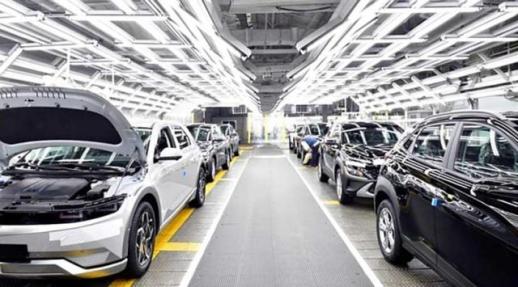 Hyundai Motor faces first full-day strike in a decade this week SEOUL, August 19 (AJP) - Unionized workers at Hyundai Motor are set to stage their first full-day strike in a decade later this week as South Korea's metalworkers' union expands labor action across the auto industry. Beginning with four-hour partial strikes on Wednesday and Thursday, the automaker's union has decided to launch an eight-hour full-day strike on Friday, followed by another four-hour walkout next Monday and Tuesday. Another round of strikes follows a series of walkouts last month and earlier this month after wage talks with management failed to reach an agreement. Friday's full-day strike would mark the automaker's first such strike since 2016. Meanwhile, the Korean Metal Workers' Union said it will stage a broader auto-sector strike later this week, with auto-parts and subcontracted workers stopping work on Thursday, followed by finished-vehicle workers on Friday. The union said the strikes are intended to pressure the automaker over supplier prices, direct talks with subcontracted workers and demands to raise the retirement age. It also accused the company of asking suppliers to cut costs by up to 20 percent by 2027, saying that this could put more pressure on smaller parts makers and their workers. It also urged the government to set up a joint body with labor and businesses to protect parts workers, ensure direct talks with parent companies and raise the retirement age without cutting workers' pay. Industry estimates put Hyundai Motor's accumulated production stoppage this year at 88 hours, following several rounds of partial strikes since mid-July. Based on the company's domestic production and sales last year, the strikes so far are estimated to have affected about 40,000 vehicles and 1.7 trillion won in revenue. If the additional strikes halt production for a combined 48 hours, the losses could rise to about 62,000 vehicles and 2.6 trillion won in revenue. Workers at affiliate Kia are expected to decide separately whether to join the joint strike. Similar moves are also spreading to the steel industry, where POSCO's union has secured the legal right to strike for the first time since the steelmaker was founded in 1968, though it plans to continue negotiations before taking any immediate action. AJP Takeaways • Hyundai Motor workers are set to hold their first full-day strike in 10 years on Friday. • The walkout is part of additional Hyundai union action scheduled across five days. • The Korean Metal Workers' Union will stage a two-day auto-sector strike involving parts, subcontracted and finished-vehicle workers. • Industry estimates put Hyundai's potential production loss at up to 62,000 vehicles if the latest stoppages proceed. 2026-08-19 16:20:52
 -
Public Employee's Popular SNS Channel Suspended, Sparking Speculation A public employee's social media channel, 'Bonghwa County Bongsung Monkey,' which gained attention for its creative promotion of local tourism and agricultural products, has abruptly ceased operations, leaving online users disappointed.On August 19, the Instagram channel 'Bonghwa County Bongsung Monkey' posted a notice announcing its suspension. The channel's operator, Kim Su-seong, stated, "Due to internal circumstances, we inform you that the operation of the 'Bonghwa County Bongsung Monkey' channel has been suspended. Future news about Bonghwa County will be available through the official county promotion Instagram. We appreciate your continued interest in Bonghwa County."The channel had been well-received for its unique and friendly approach to showcasing local attractions and products. Recently, Kim gained national attention by personally funding an advertisement for 'Bonghwa apples' displayed on a digital billboard in New York's Times Square.As a public employee actively engaging in local promotion, Kim's creative content sparked excitement online, with many anticipating the emergence of a 'second Chungju man,' a reference to a popular local figure known for similar promotional efforts.However, the sudden announcement of the channel's suspension has led to speculation among netizens about the reasons behind it. Many expressed their disappointment, with comments such as, "I was rooting for the second Chungju man, so this is really unfortunate," and "Why would they suddenly stop a channel that was doing so well?"Some users raised questions about the lack of detailed information regarding the suspension, suggesting that internal issues or negative complaints may have influenced the decision. Comments included, "I suspect someone filed a malicious complaint," and "Given the conservative nature of the public service, there might have been jealousy or disapproval of his unconventional actions. It seems like someone is trying to undermine his efforts."Despite the lack of official confirmation regarding the reasons for the suspension, there are voices urging caution against jumping to conclusions. Some speculate that the suspension could be due to the pressures arising from the adjustment of roles between the official account and the personal channel. As the community mourns the loss of this engaging communication platform, the disappointment is likely to linger for some time.* This article has been translated by AI. 2026-08-19 16:20:00
-
Kang Hoon-sik: Parking Enforcement Without Infrastructure is Ineffective 강훈식 대통령 비서실장은 19일 이륜차 주차공간 등 기반시설을 충분히 마련하지 않은 채 불법 주정차 단속과 처벌만 강화할 경우 배달노동자의 현실을 외면한 탁상행정이 될 수 있다고 지적했다. 강 비서실장은 이날 오후 청와대에서 수석보좌관회의를 주재하고 경찰청에 배달 업무의 특성과 생계형 운전자의 경제적 부담을 고려한 이륜차 주정차 제도 개선 방안을 마련하라고 주문했다. 안귀령 청와대 부대변인의 서면 브리핑에 따르면 경찰청이 이륜차 불법 주정차에 과태료를 부과하는 내용의 도로교통법 시행령 개정안을 입법 예고한 이후 4000건이 넘는 의견이 접수됐다. 접수된 의견에는 이륜차 주차공간을 확보하지 않은 상태에서 처벌부터 강화한다는 지적과 단시간 주정차가 불가피한 배달 업무의 특성을 고려해야 한다는 요구, 생계형 운전자의 경제적 부담을 우려하는 목소리 등이 담겼다. 강 실장은 지난 14일 경찰청이 실시한 배달노동자 간담회에서도 이륜차 주차공간 확보와 단속 유예가 필요하다는 의견이 제기됐다고 설명했다. 그러면서 “이러한 상황에서 불법 주정차 단속에만 치중한다면 배달노동자의 생계와 현장의 고충을 외면하는 탁상행정이 될 가능성이 높다”고 지적했다. 이어 경찰청을 향해 “현장에서 청취한 의견을 적극적으로 반영해 제도 개선의 취지는 살리되, 이륜차 주정차 인프라 부족과 배달노동자들이 처한 현실, 업무 특성을 고려한 개선 방안을 마련해 달라”고 주문했다. 또한 최근 남해안을 중심으로 발생한 집중호우 피해와 관련해서는 기후변화에 맞춰 국가 방재성능을 높이고 관련 시설을 지속적으로 점검해야 한다고 강조했다. 강 실장은 지난해 전남 무안과 함평에서 기존 방재성능 목표를 크게 뛰어넘는 시간당 140㎜ 이상의 집중호우가 발생한 점을 언급하며 “집중호우의 빈도와 강도가 높아지는 상황에 대비해야 한다”고 말했다. 정부는 기후변화에 대응하기 위해 지난해 12월 방재성능 목표를 대폭 상향했다. 강 비서실장은 관계부처에 강화된 방재성능 목표에 맞춰 하천 제방과 하수관로 등 관련 인프라 정비를 조속히 마무리하고 실제 현장에서 제대로 운영되는지 지속해서 점검하라고 지시했다. 특히 최근 경남 거제에서 발생한 극한 폭우처럼 강화된 방재성능 목표만으로 감당하기 어려운 재난에도 대비해야 한다고 주문했다. 강 실장은 “홍수와 산사태 예·경보 발령, 선제적 대피체계 운영 등 비구조적인 위험관리 방안까지 면밀히 점검해야 한다”며 “예상을 뛰어넘는 재난에서도 국민의 생명을 지킬 수 있도록 대응 역량을 강화해 달라”고 당부했다. 다가오는 국정감사와 관련해서는 국회가 반복적으로 지적한 사안의 개선 성과부터 점검하라고 주문했다. 강 실장은 “국정감사는 정부가 국회의 평가를 받고 부족한 부분을 바로잡을 수 있는 중요한 계기”라며 “해마다 비슷한 지적이 이어진다면 개별 부처나 기관 차원에서 바로잡기 어려운 문제이거나 제도와 관행에 국민 눈높이에서 납득할 수 없는 부분이 있다는 뜻일 수 있다”고 말했다. 이어 “국회가 반복적으로 지적한 사항을 확실하게 개선하고 그 성과를 바탕으로 다가오는 국정감사에 충실히 대응해야 한다”며 “국회의 지적이 정부의 실질적인 개선으로 이어지고 그 변화를 국민이 체감할 수 있도록 끝까지 챙겨 달라”고 강조했다. 그러면서 “국회와 국민으로부터 더욱 신뢰받는 책임 있는 정부가 될 수 있도록 청와대부터 각별히 노력해 달라”고 당부했다. * This article has been translated by AI. 2026-08-19 16:20:00
-
IBK Bank to Launch 100% Foreign-Owned Branch in Vietnam After 9 Years IBK Bank has received approval to establish a 100% foreign-owned bank in Vietnam, marking a significant entry into the local market. This is the first time in nine years that the State Bank of Vietnam has authorized the establishment of a fully foreign-owned bank, as IBK joins Shinhan Bank and Woori Bank in a market where they have already established a presence.According to local reports on August 19, IBK Vietnam is set to open on September 25, with a capital of 7.3 trillion dong (approximately 392 billion won), fully owned by IBK Bank. The bank received its establishment and operational license from the State Bank of Vietnam on March 24, and its headquarters will be located in the Landmark 72 building in Hanoi. Park Kyung-il will serve as the legal representative and CEO.The approval for a 100% foreign-owned bank comes after the establishment of Public Bank and UOB in 2016-2017. With IBK Vietnam's launch, the number of fully foreign-owned banks in Vietnam will increase to ten, with South Korea holding three of them, alongside Malaysia, making it the country with the most in this sector.However, the entry requirements are stringent. According to the revised Credit Institutions Law and related guidelines, foreign financial institutions must demonstrate five consecutive years of profitability and maintain total assets of at least $10 billion to establish a fully foreign-owned bank in Vietnam. They must also meet capital adequacy, risk management, and non-performing loan provisions.The reopening of this avenue for South Korean state-owned banks is noteworthy, especially as IBK aims to focus on SME financing. Vietnam is emerging as a beneficiary of the global manufacturing supply chain reshuffle, leading to increased funding demands from SMEs. The presence of South Korean companies and their suppliers in Vietnam is further driving the financial needs of local SMEs.However, obtaining a license is just the first step; establishing a foothold in the market presents its own challenges. Existing banks have already built their networks and customer bases, making it crucial for IBK to navigate its initial years effectively.The market environment is also challenging. The performance of previously established South Korean banks has been mixed. Shinhan Vietnam reported total assets of approximately 237 trillion dong at the end of last year, a more than 22% increase from the previous year, with loans and customer deposits rising by 23.8% and 14%, respectively.Despite this growth, profitability has declined. Pre-tax profit fell to 54.12 trillion dong, a decrease of 6.2%, while net profit dropped to 43.17 trillion dong. Improvements in non-interest income were not enough to offset declines in net interest income and service revenue.Other foreign banks have faced similar challenges. HSBC Vietnam also reported a decline, with pre-tax profit of 41.415 trillion dong, down 6.9%, marking its lowest level in four years, while net profit fell by 6.8% to 33 trillion dong.In contrast, Woori Bank Vietnam was one of the few foreign banks to increase profits, reporting a pre-tax profit of 15.1 trillion dong, a nearly 10% increase from the previous year, with operating profit rising by 18% and net profit reaching 12.05 trillion dong.* This article has been translated by AI. 2026-08-19 16:12:20
-
KOSPI Plummets Amid U.S. Interest Rate Shock, Semiconductor Stocks Hit Hard The domestic stock market suffered another significant drop due to a long-term bond shock, as interest rates in major countries like the United States and Japan reached their highest levels in decades. Concerns over the U.S. fiscal deficit and large corporate bond issuances by AI big tech companies have driven rates up, leading to a massive sell-off, particularly in semiconductor stocks. Samsung Electronics and SK Hynix fell by 7% and 9%, respectively. Experts believe this bond shock will persist for the time being.Another Collapse for KOSPIAccording to the Korea Exchange, the KOSPI index closed at 6,471.17, down 398.66 points (5.80%) from the previous trading day, marking the largest drop since July 29 (-5.98%). The index opened 341.06 points (4.96%) lower at 6,528.77 and plummeted to 6,400.81, a decline of 6.83% in early trading.As the index fell sharply, a sell-side circuit breaker was triggered at 9:06 a.m. to temporarily halt program sell orders in the securities market. This was the 25th time this year that a sell-side circuit breaker was activated. Foreign and institutional investors sold a net 4.24 trillion won and 1.79 trillion won, respectively, contributing to the index's decline. Although individual investors bought a net 5.64 trillion won in a bid to capitalize on lower prices, it was insufficient to defend the index. The KOSDAQ index also closed down 9.74 points (1.17%) at 824.46.Semiconductor Stocks Hit Hard by Bond ShockThe root cause of the stock market crash is the surge in long-term U.S. Treasury yields. In the New York bond market, the yield on the 30-year U.S. Treasury bond reached 5.33%, the highest level in 19 years since 2007. The benchmark 10-year Treasury yield also rose to around 4.75%. Meanwhile, Japan's 10-year bond yield surpassed 2.9%, setting a new 30-year high.The sharp rise in long-term bond yields is primarily attributed to concerns over the massive U.S. fiscal deficit and increased supply of government bonds. With the national debt approaching $40 trillion, rising military expenditures due to the prolonged conflict in Iran and increased social security costs have led to a significant rise in the term premium demanded by the market.Additionally, large-scale long-term corporate bond issuances by big tech companies for AI investments have added pressure to the bond market. Companies like Microsoft and Meta are increasing their issuance of long-term bonds to fund data center construction and AI semiconductor supply, competing with government bonds for financing.The surge in long-term rates has raised concerns about increased borrowing costs for companies, impacting stocks in the semiconductor and AI value chain that had previously driven market gains. The Philadelphia Semiconductor Index fell 4.98% overnight, with Micron down 7.0%, and this trend carried over to the domestic market. On this day, Samsung Electronics (-7.82%) and SK Hynix (-9.75%) plummeted, while other major stocks like SK Square (-11.54%), Samsung Electro-Mechanics (-3.68%), and Hyundai Motor (-4.83%) also saw significant declines, leading the index lower.Exchange Rate Drops to 1300 Won LevelAmid the panic in the stock market, the won-dollar exchange rate in the Seoul foreign exchange market fell to the 1300 won level for the first time in about 11 months. The exchange rate closed at 1,397.7 won, down 14.1 won from the previous trading day's weekly closing price. This is the first time the won-dollar rate has fallen below 1400 won since September of last year. The dollar's weakness is attributed to expectations that the U.S. Federal Reserve will not raise interest rates next month, along with an influx of dollar-selling from exporters contributing to the decline.Market analysts believe that the impact of this interest rate shock will not be resolved quickly. Structural issues such as the fiscal deficit, debt, and inflation uncertainty are expected to support long-term rates, overshadowing short-term monetary policy variables. There are also concerns about the synchronization of U.S. and Japanese interest rates and the potential repatriation of Japanese funds.Park Sang-hyun, a researcher at iM Securities, warned, "As Japanese bond yields surge and hedging costs increase due to yen depreciation, there is a growing possibility that funds from Japanese life insurance companies and pension funds invested overseas will return to Japan. If Japanese funds reduce or sell U.S. Treasury purchases, there is a risk of a repeat of the 'Truss Shock' that occurred in the UK in 2022 in global asset markets." Kim Gi-baek, a researcher at Shinhan Investment Corp, added, "The simultaneous rise in global long-term rates raises the discount rate for growth stocks and highlights the burden of corporate capital expenditures, halting any rebound in the stock market. The uncertainty in the bond market is likely to limit the upper range of the stock market for the time being." 2026-08-19 16:12:10