


Latest by
-
 Hong Jun-pyo Criticizes Ruling Party's Internal Dynamics Hong Jun-pyo, a former mayor of Daegu, criticized the People Power Party's three-term lawmakers on August 19 for their decision to rally around floor leader Jeong Jeong-sik, stating they are "ignoring and shaking the party leader who has the support of party members and the public."In a Facebook post, Hong remarked, "This is disregarding the 1.5-term party leader." He added, "It seems that the inept three-term lawmakers have decided to gather around Jeong Jeong-sik, claiming that Jang Dong-hyuk cannot lead the party in the upcoming general and presidential elections. I hear that even those with four terms will follow suit soon."He continued, "These individuals have previously flattered under a zero-term party leader and include members of the expelled 0.5-term faction led by Han Dong-hoon. They are shaking the party leader who has the support of party members and the public out of fear of losing their seats, unable to even run for the Supreme Council."Hong expressed skepticism about the legitimacy of a floor leader elected solely by a vote among lawmakers, questioning, "What legitimacy does a floor leader have to represent the party?" He concluded, "It is pitiful and sad that they are too busy looking out for themselves and cannot unite in times of crisis."* This article has been translated by AI. 2026-08-19 09:48:00
 -
SoftBank Issues Record 1 Trillion Yen Bond for AI Investments SoftBank Group (SBG) is set to issue a 1 trillion yen (approximately $9 billion) bond aimed at individual investors to expand its investments in artificial intelligence (AI). This marks the largest bond issuance by a Japanese company targeting individual investors.According to the Nihon Keizai Shimbun on August 19, SBG is preparing to issue a seven-year bond, with the total amount expected to reach 1 trillion yen. Specific terms, including interest rates, will be determined in early September. This will be SBG's third issuance of bonds for individual investors this year, following offerings in April and June.The 1 trillion yen issuance is unprecedented in Japan's individual bond market. The previous record was set by SBG itself last year with a 600 billion yen issuance. Even when including bonds for institutional investors, this issuance matches the all-time high of 1 trillion yen issued by NTT Finance in December 2020.The funds raised are expected to be used for repaying existing bonds and investing in AI. Specifically, SBG plans to allocate funds for mergers and acquisitions in the 'physical AI' sector, where AI controls robots autonomously. SBG intends to acquire the robotics division of Swiss automation company ABB for $5.4 billion. The funds may also be used to repay bridge loans borrowed from Japanese and U.S. financial institutions for additional investments in OpenAI.SBG's ability to issue large bonds is attributed to improved financial conditions. The company's creditworthiness is assessed by its loan-to-value (LTV) ratio, which measures net debt against the value of its holdings. A lower LTV indicates a smaller debt burden relative to assets. As of the end of June, SBG's LTV was 13%, down 4 percentage points from March. The increase in the value of its stake in subsidiary Arm, a British semiconductor design firm, has provided SBG with more capacity to take on debt. S&P Global Ratings has assigned SBG a credit rating of 'BB+' and recently upgraded its outlook from 'negative' to 'stable' due to improved financial conditions following Arm's stock price increase.However, despite the improved financial conditions, the burden of raising funds is increasing. Market forecasts suggest that the interest rate for this seven-year bond could reach the high 4% range. The interest rate for SBG's individual seven-year bond issued last year was 3.98%, while the rate for the December 2024 issuance was 3.15%.The rising cost of capital is not unique to SBG. The demand for funds in the global bond market has surged due to the significant capital required for expanding AI investments. Major cloud service providers are issuing large bonds, and governments are increasing their bond issuance to fund defense spending and tax cuts, intensifying competition for investor funds in the bond market.While rising interest rates have dampened institutional investor demand, the issuance of bonds for individual investors is on the rise. The total issuance of bonds for individual investors this year, including SBG's upcoming issuance, is projected to reach 2.8 trillion yen, surpassing last year's total and setting a new record. An executive from a major securities firm noted, 'There is a limit to the amount of individual bonds available for sale, and many companies are eager to issue bonds.'* This article has been translated by AI. 2026-08-19 09:44:00
-
Hyundai Unveils All-New Tucson, Revamping SUV Design After Six Years Hyundai Motor Company has unveiled the design of the all-new Tucson, a complete redesign of its popular SUV.On August 19, Hyundai revealed the interior and exterior design of the all-new Tucson, marking the debut of the fifth-generation model after the fourth generation was launched in September 2020. This new model features a bolder SUV design and class-leading spaciousness.The all-new Tucson reinterprets the tension and strength of steel, based on Hyundai's design philosophy known as the Art of Steel, and showcases a confident image of a next-generation SUV through its futuristic lighting design.The front end features vertical H-edge lighting daytime running lights inspired by architectural lighting, along with a slim horizontal center lamp, creating an overwhelming presence and a wide, stable appearance.Notably, the slim horizontal center lamp utilizes an indirect lighting structure that conceals the light source, emphasizing the bold structure of the front and imparting a futuristic impression.The side profile adds rich, three-dimensional volume to the fenders and rear doors, revealing distinct contrasts depending on the direction of light. The rear incorporates a three-dimensional prism rear lamp structure that enhances visual depth when illuminated.The vehicle's dimensions have increased compared to the previous model, measuring 4,700 mm in length, 1,905 mm in width, and 1,685 mm in height, with a wheelbase of 2,785 mm. The length and wheelbase have grown by 60 mm and 30 mm, respectively, while the width has expanded by 40 mm.Headroom in the second row has increased by 29 mm to 1,031 mm, providing class-leading interior space. The opening angle of the second-row doors has been widened from 73° to 83°, enhancing ease of entry and exit.The exterior color options include a total of eight colors, featuring five new shades: Serenity White Pearl, Driftwood Gray Matte, Driftwood Gray Metallic, Red Rock Orange Matte, and Quiet Copper Pearl.The interior offers four color schemes, adding three new options to the existing black monotone: Mud Gray & Dove Gray two-tone, Black & Sand Beige two-tone, and Black & Inlay Soil Brown package.For customers who prefer an outdoor lifestyle, the all-new Tucson XRT trim is available, featuring a rugged design that emphasizes a tough, off-road SUV image.A Hyundai representative stated, "The all-new Tucson embodies the presence of a robust SUV based on our design philosophy. With its expanded space and meticulous design that can be felt in daily life, we aim to provide customers with a new SUV experience."* This article has been translated by AI. 2026-08-19 09:44:00
-
Nongshim Provides Emergency Food Packs to Flood-Affected Areas in Gyeongnam Nongshim announced it will urgently provide 1,200 'emergency food packs' to areas in Gyeongnam affected by extreme rainfall.The emergency food packs consist of instant noodles and bottled water, designed for immediate consumption in disaster situations. The supplies will be distributed to evacuees staying in shelters, as well as firefighters and volunteers involved in recovery efforts.A Nongshim representative stated, "We decided to provide this support to help those suffering from the impacts of the extreme rainfall." The emergency food pack initiative is part of Nongshim's social contribution program, aimed at providing food to vulnerable groups in need of urgent assistance during disasters or those overlooked by public support systems. The program has been ongoing since 2020.In February, Nongshim held a launch ceremony for the emergency food pack initiative at its headquarters in Dongjak-gu, Seoul, committing to provide relief supplies worth 300 million won this year. Last year, the company distributed a total of 18,000 emergency food packs.Earlier, extreme rainfall during the Liberation Day holiday caused casualties and damage in areas such as Geoje and Tongyeong. According to the Gyeongnam Disaster Safety Headquarters, one person died and three were injured due to the heavy rain on August 17, and 498 residents were evacuated.* This article has been translated by AI. 2026-08-19 09:44:00
-
Han Yu-won Introduces Outstanding Agricultural Products at Gmarket's 'Co-Prosperity Market' The Korea Small Business and Startups Agency and the Korea Agricultural Technology Promotion Agency announced on August 19 that they will jointly host the 'Showcase of Outstanding Agricultural Innovation Products' at Gmarket's co-prosperity dedicated hall, 'Co-Prosperity Market.'Han Yu-won explained that this showcase is designed to support innovative small and medium-sized agricultural enterprises facing challenges in market access.The Korea Agricultural Technology Promotion Agency is a public institution under the Rural Development Administration, established to promote the practical application of agricultural research and development (R&D) results and to advance the agricultural industry. Since 2022, Han Yu-won has partnered with the agency to support the online market entry and digital self-sufficiency of small agricultural businesses.Running until December 31, this showcase will feature a variety of innovative products, from fresh produce utilizing new technologies to high-quality processed foods created through differentiated processing techniques. During the event, exclusive discount coupons will be provided to encourage sales.Lee Tae-sik, CEO of Han Yu-won, stated, "I hope this showcase serves as a stepping stone for promising small agricultural enterprises to take a leap forward. We will continue to promote the value of our agricultural industry and strive to be a strong partner in co-prosperity."* This article has been translated by AI. 2026-08-19 09:36:10
-
KOSPI Plummets Over 5% Amid Rising Interest Rates and Weak Semiconductor Stocks The KOSPI index opened sharply lower, dropping more than 5% due to a surge in U.S. long-term Treasury yields and weakness in semiconductor stocks. Following significant declines in semiconductor shares like Micron and SanDisk on Wall Street, foreign and institutional selling pressure pushed the index down to the 6,400 level. The early drop triggered a sell-side circuit breaker in the securities market.As of 9:23 a.m. on August 19, the KOSPI was trading at 6,436.59, down 433.24 points (6.31%) from the previous trading day. The index started at 6,528.77, down 341.06 points (4.96%), and continued to widen its losses.At 9:06:02 a.m., a sell-side circuit breaker was activated, temporarily halting the effectiveness of program sell orders in the securities market. The KOSPI 200 futures, based on the index, fell 6.02% to 1,013.26 from the previous day's closing price of 1,078.26. Consequently, the effectiveness of program sell orders was suspended for five minutes from the activation time.This sell-side circuit breaker marked the 25th activation in the securities market this year. Including 23 buy-side circuit breakers, the total number of activations in the securities market this year reached 48.U.S. markets also fell sharply overnight due to rising long-term Treasury yields and uncertainties in the Middle East. On August 18, the Dow Jones Industrial Average dropped 0.20%, the S&P 500 fell 0.70%, and the tech-heavy Nasdaq declined by 1.30%.Investor sentiment was dampened as expectations for a ceasefire negotiation between the U.S. and Iran faded, with the yield on 30-year U.S. Treasury bonds surpassing 5.33%, the highest level since 2007. The yield on 10-year bonds also rose to 4.70%.Recently strong semiconductor stocks faced profit-taking, with Micron down 6.9% and SanDisk plunging 9.0%. Nvidia also fell by 2.3%. In the domestic market, selling pressure on major semiconductor stocks contributed to the index's decline.At this time, foreign and institutional investors were net sellers of 1.2135 trillion won and 480.5 billion won, respectively. In contrast, individual investors were net buyers, purchasing 1.7159 trillion won as they sought bargain opportunities.Among the top market capitalization stocks, Samsung Electronics (-7.36%), SK Hynix (-9.27%), SK Square (-11.63%), Samsung Electro-Mechanics (-4.38%), Hyundai Motor (-5.98%), LG Energy Solution (-1.99%), Samsung Biologics (-2.29%), KB Financial (-4.75%), and Samsung Life Insurance (-10.71%) all experienced declines. However, Hanwha Aerospace rose by 3.66%.At the same time, the KOSDAQ index recorded a decline of 17.97 points (2.15%), trading at 816.23. The index opened at 810.08, down 24.12 points (2.89%), before slightly reducing its losses.In the KOSDAQ market, foreign investors were net buyers of 75.9 billion won, while individuals and institutions sold 24.5 billion won and 47.9 billion won, respectively.Among the top KOSDAQ stocks, most were in the red, including Alteogen (-1.17%), EcoPro (-2.76%), EcoPro BM (-2.84%), Rainbow Robotics (-3.19%), JUSUNG Engineering (-4.24%), HLB (-3.59%), Wonik IPS (-3.91%), Rino Technology (-5.31%), and ABL Bio (-0.63%).Han Ji-young, a researcher at Kiwoom Securities, stated, "With the retreat of expectations for U.S.-Iran ceasefire negotiations and the surge in U.S. 30-year Treasury yields, there is pressure for profit-taking on semiconductor stocks that have recently rallied. The KOSPI 200 futures' sharp decline will also lead to a lower opening for the domestic market."However, she added, "The pressure from rising interest rates has already been largely factored in through the previous day's drop, so there is a possibility of a recovery during the trading session. Compared to the sharp decline in July, the proportion of leveraged trading volume and volatility indicators for individual stocks has significantly decreased, reducing the likelihood of a repeat of the abnormal supply-demand deterioration and market crash seen at that time."* This article has been translated by AI. 2026-08-19 09:36:00
-
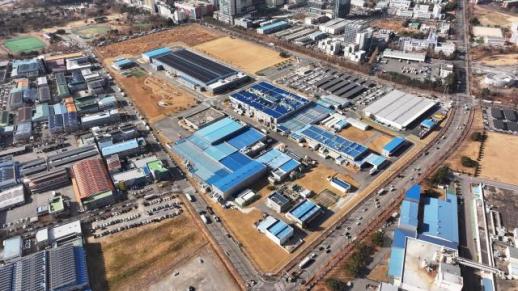 Samsung bets $173 million on Korea HVAC line as AI data-center cooling demand heats up SEOUL, August 19 (AJP) - Samsung Electronics is stepping up its bet on AI data-center cooling with a 240 billion won ($173 million) production line in South Korea, targeting growing demand to manage the heat generated by increasingly powerful AI servers. The company said Wednesday it will build the new heating, ventilation and air conditioning (HVAC) production line at its Gwangju complex, expanding its push into AI data-center cooling following its acquisition of FläktGroup last year. Samsung, FläktGroup Korea and the local government signed an investment agreement Wednesday for the facility at Samsung's Gwangju manufacturing complex. The new line will span 21,800 square meters, roughly the size of three soccer fields, and is scheduled to begin operations in early 2028. The facility will manufacture coolant distribution units, or CDUs, a key component of liquid-cooling systems used in AI data centers, as well as fan wall units, computer room air handlers and air handling units. Demand for liquid cooling has been rising as increasingly powerful AI servers generate more heat, putting pressure on conventional air-cooling systems. CDUs regulate the temperature and pressure of coolant circulating between a data center's chiller and cold plates attached to servers. The Gwangju line will become FläktGroup's 15th production facility globally. The HVAC specialist currently operates 14 production sites and eight research centers across the United States, Europe and Asia, supplying equipment for data centers, industrial plants and commercial buildings. The investment marks Samsung's first major expansion of production facilities at its Gwangju complex since the site was established in 1989. The plant currently produces appliances including refrigerators, washer-dryers and air conditioners. Samsung plans to combine FläktGroup's central HVAC technology with its SmartThings Pro connectivity platform and building management systems as it expands sales to AI data centers and advanced manufacturing facilities. "Samsung Electronics will rapidly expand HVAC as a future growth engine and seek to become a leading player in the global market," said Kim Cheol-gi, head of Samsung's Digital Appliances business. "The new Gwangju production line will provide an important foundation for strengthening our competitiveness in HVAC." AJP Takeaways Samsung will invest 240 billion won in a new Gwangju HVAC production line scheduled to begin operations in early 2028. The facility will produce CDUs used in liquid cooling for AI data centers, turning Samsung's FläktGroup acquisition into additional manufacturing capacity in Korea. The investment extends Samsung's AI infrastructure push beyond semiconductors, targeting the rapidly growing cooling requirements of increasingly power-dense AI data centers. 2026-08-19 09:35:22
 -
Samsung Electronics to Invest $240 Million in New HVAC Line in Gwangju Samsung Electronics is establishing a large-scale production infrastructure at its Gwangju facility to respond to the rapidly growing global HVAC market.On August 19, Samsung Electronics signed an investment agreement with the Gwangju Metropolitan City and Plack Group Korea at the Gwangju City Hall. The ceremony was attended by Gwangju Mayor Min Hyung-bae, Samsung Electronics DA Division Vice President Kim Cheol-ki, and Plack Group Korea CEO Lim Sung-taek.Samsung will invest approximately 240 billion won to set up a new HVAC production line covering an area of 21,800 square meters (about 6,600 pyeong), equivalent to three soccer fields, within the third campus of its Gwangju facility. This marks the first major investment in production facilities since the establishment of the Gwangju site for home appliance manufacturing 37 years ago in 1989.The new production line is expected to begin operations in early 2028, focusing on the production of cooling distribution units (CDUs), which are key equipment from the global central air conditioning specialist Plack Group, acquired by Samsung last year.CDUs are essential components of AI data center liquid cooling systems, precisely controlling the pressure and temperature of the cooling water generated by chillers and removing impurities before supplying it to server equipment.Additionally, the production plan includes fan wall units (FWUs), computer room air handling units (CRAHs), and air handling units (AHUs) for large buildings.Samsung plans to utilize the new Gwangju line as the 15th global production facility for Plack Group, actively targeting the B2B HVAC market, including AI data centers and advanced manufacturing facilities. The company aims to provide energy management solutions by integrating Plack Group's central air conditioning technology with the B2B connectivity and integrated control platform 'SmartThings Pro' and building integrated solutions (b.IoT).Kim Cheol-ki, Vice President of Samsung Electronics' DA Division, stated, "Samsung Electronics will rapidly expand its HVAC business, a future growth driver, to become a leading company in the global market. The establishment of this production line in Gwangju will serve as a crucial foundation for securing differentiated competitiveness in the HVAC business." 2026-08-19 09:32:00
-
U.S. Tech Stocks Plunge, Bond Yields Surge, Pressuring Won-Dollar Exchange Rate U.S. tech stocks fell sharply overnight, and global bond yields surged, increasing pressure on the won-dollar exchange rate.As of 9:15 a.m. in the Seoul foreign exchange market, the exchange rate for the Korean won against the U.S. dollar was trading at 1,412.2 won.The rate opened at 1,412.5 won, up 0.7 won from the previous trading day as of 6 a.m.In New York, tech stocks, particularly in the semiconductor sector, saw significant sell-offs, leading to a broader market decline. On August 18 (local time), the Dow Jones Industrial Average closed down 116.38 points (0.22%) at 53,343.40. The S&P 500 index fell 53.30 points (0.69%) to finish at 7,691.76, while the tech-heavy Nasdaq Composite dropped 355.20 points (1.33%) to close at 26,289.71.The rise in global long-term interest rates is dampening investor sentiment towards riskier assets. The yield on the U.S. 30-year Treasury bond soared to 5.34%, marking its highest level in 19 years. Japan's 10-year bond yield also reached a 30-year high, while the 30-year bond yields in Germany and France hit their highest levels since 2011 and 2008, respectively.Recently, increased foreign investment in Korean won-denominated assets had contributed to a decline in the exchange rate. However, a slowdown in foreign capital inflows due to risk aversion is expected to support the lower end of the exchange rate. Demand for dollars from importers and overseas stock investors is also contributing to upward pressure on the exchange rate.Min Kyung-won, an economist at Woori Bank, stated, "The demand for dollars from importers seeking to capitalize on lower exchange rates and overseas investors exchanging currency is also a factor pushing the rate higher. The early settlement of export companies' month-end negotiations and concerns over yen intervention will likely keep the upper limit rigid."He added, "As the yen-dollar exchange rate approaches 160 yen, there is a growing concern that Japanese authorities may intervene again, which could trigger worries about the correlation between the yen and won, potentially restraining long positions."* This article has been translated by AI. 2026-08-19 09:32:00
-
One in Five High Earners at Major Corporations Received Stock Compensation In the first half of this year, one in five high earners at major corporations in South Korea received stock-based compensation. Among the 145 high earners who received such compensation, the total amount reached 368.9 billion won, with SK and Doosan accounting for over 60% of the total.On August 19, CEO Score, a corporate data research institute, reported that 661 employees received over 50 million won in total compensation during the first half of the year. Of these, 145 individuals, or 21.9%, received stock-based compensation, including restricted stock units (RSUs), performance stock units (PSUs), stock options, and stock appreciation rights (SARs). The stock-based compensation amounted to 368.9 billion won, which represents 36.4% of the total compensation of 1.0145 trillion won, excluding retirement income.By group, SK had the largest stock-based compensation amounting to 153.4 billion won, accounting for 41.6% of the total. Doosan followed with 80.8 billion won (21.9%). Together, the stock-based compensation from these two groups totaled 234.3 billion won, or 63.5% of the overall amount. This increase in stock compensation value is attributed to improved performance in the semiconductor and power generation sectors, driven by growth in the artificial intelligence (AI) industry, which has led to rising stock prices for related affiliates.Following SK and Doosan, Orion reported 24.1 billion won (6.5%), HYBE 22.5 billion won (6.1%), Samsung 20 billion won (5.4%), and both LS and Kakao recorded 15.9 billion won (4.3%) each.In terms of the number of recipients, SK had the highest with 30 individuals, making up 20.7% of the total. Doosan had 18 recipients (12.4%), Samsung 16 (11.0%), LS and Kakao each had 9 (6.2%), Mirae Asset 7 (4.8%), and Hyundai Motor 6 (4.1%).Stock-based compensation was predominantly awarded to professional managers rather than owners. Among the 145 recipients, 136 were professional managers, representing 93.8%. They received a total of 302.3 billion won, or 82.0% of the total stock compensation. The owner families accounted for 9 individuals, receiving 66.6 billion won.The highest stock compensation among owner families went to Park Jung-won, Chairman of Doosan Group. He received 37.6 billion won, which is 82.5% of his total compensation of 45.6 billion won for the first half of the year.Notably, the RSUs granted to Chairman Park in 2023 were valued at approximately 2.8 billion won at the time of issuance, but due to the rise in Doosan's stock price, the value increased to about 37.6 billion won at the time of actual stock issuance, reflecting a 13-fold increase.Following Chairman Park, Park Ji-won, Chairman of Doosan Enerbility, received 17.4 billion won in stock compensation. Other notable recipients included Koo Ja-eun, Chairman of LS Group, with 7.4 billion won, Cho Won-tae, Chairman of Hanjin Group, with 1.2 billion won, and Yoon Sae-bom, Vice Chairman of Woongjin Group, with 1.1 billion won.Among professional managers, the top five recipients of stock-based compensation were all from SK Group. Kwon No-jung, President of SK Hynix, received 21.8 billion won, followed by Song Jae-seung, CIO of SK Square, with 17.9 billion won, Jeong Jae-hun, President of SK Telecom, with 16.7 billion won, Park Jeong-ho, Management Advisor at SK Hynix, with 16.0 billion won, and Choi Jun-ki, also from SK Hynix, with 12.4 billion won.Recently, major corporations have been expanding stock-based compensation, such as RSUs, to align long-term employee performance with corporate value and to prevent key talent from leaving. As stock prices rise, the payouts also increase, leading to a trend where improved corporate performance and rising stock prices contribute to higher compensation. 2026-08-19 09:32:00